




Usinar alumínio parece fácil no papel, e na maioria das vezes é, ligas de alumínio cortadas várias vezes mais rápido do que o aço e deixar chips limpos quando a configuração é direita Mas “aluminum” não é um material A liga que você carrega, o revestimento em seu moinho final, ea velocidade do fuso que sua máquina pode realmente chegar decidir se você obter um acabamento espelhado ou uma bagunça gomosa de borda construída Este guia cobrir seleção de grau, alimentações e velocidades, ferramentas, refrigerante, eo lado do torno que a maioria dos guias focados em fresagem saltar.
Em resumo: Usinagem de alumínio é o corte subtrativo de ligas de alumínio em um moinho ou torno A maquinabilidade depende quase inteiramente da liga: free-machining 2011 corta mais limpo, 6061-T6 é o padrão de loja all-round, e alta resistência 7075 e ligas fundidas de alto silício cortadas mais duramente Use afiado, polido, não revestido ou carboneto revestido com ZrN, 23 flautas, alta velocidade de superfície e boa evacuação de cavacos.
Principais conclusões
- Pule os revestimentos de afinidade de alumínio: soldas de fricção TiAlN/AlTiN para acabamento em alumínio e ruínas, execute polido sem revestimento, ZrN, TiB2, DLC ou PCD.
- A usinabilidade é a liga, não o metal: taxas de 2011 ~280%, 6061 ~270%, 7075 ~170%, fundido ~100% no índice padrão.
- Encontre RPM com RPM = (3,82 × SFM) /diâmetro do cortador; w; 800 corridas de alumínio forjado1500 SFM.
- O teto do fuso da sua máquina, e não o gráfico, geralmente define o limite real para o corte de pequeno diâmetro e alto SFM.
- A borda construída é batida com três alavancas: mais velocidade de superfície, uma borda mais afiada/polida e lubrificação.
Especificações rápidas: usinagem de alumínio
| Velocidade da superfície (forjada) | 800 S (500 S (24245 FM 60 m/min) |
| Velocidade da superfície (fundida) | 5000 S (1000 S (substantivo 150 305 m/min) |
| Contagem flauta | 2 ou 3 (limitação de chip limitada) |
| Ângulo hélice | 35°4° (45° para acabamento/HSM) |
| Material ferramenta | Carboneto não revestido polido; ZrN, TiB2, DLC, PCD |
| Evitar | Revestimentos TiAlN/AlTiN (borda construída) |
| Refrigerante | Inundação, MQL/névoa ou explosão de ar |
O que “Machining Aluminum” realmente significa (e o mito da usinabilidade)
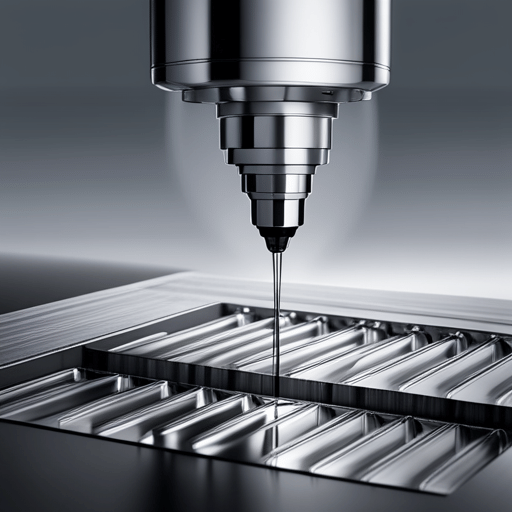
Usinagem de alumínio é o processo de corte de ligas de alumínio em um moinho, torno ou roteador, e ganha sua reputação de material “easy” porque o alumínio é cerca de 2,5 vezes menos denso que o aço e forma cavacos com força de corte muito menor.
Mas a realidade do chão de fábrica é mais matizada: uma barra de usinagem livre e uma fundição com alto teor de silício não se comportam da mesma forma sob a mesma ferramenta. Tratar cada trabalho de alumínio como “set para jejuar e ir” é o caminho mais rápido para uma borda construída e uma peça sucateada.
A usinabilidade é classificada em um índice relativo onde maior é melhor e mais rápido De acordo com dados compilados na referência do Instituto Nacional de Padrões e Tecnologia dos EUA Usinagem de Alumínio e Ligas de Alumínio, ligas de alumínio fundido carregam suas próprias classificações de usinabilidade que ficam bem abaixo dos graus forjados macios porque o silício adicionado os torna abrasivos e acelera o desgaste da ferramenta Portanto, a regra é simples: identifique a liga e o temperamento antes de tocar no cancelamento de alimentação.
O alumínio é fácil de usinar?
Sim para a maioria dos graus forjados, com uma ressalva As ligas forjadas macias e de usinagem livre estão entre os materiais de produção mais fáceis de cortar, classificando duas a três vezes o índice de usinabilidade de linha de base As exceções são as ligas de alta resistência 7 xxx, que cortam com mais força, e as ligas fundidas de alto silício, cujas partículas abrasivas desgastam as bordas rapidamente.
Então “easy” realmente significa “easy se você escolher a nota certa e manter a borda afiada.” Para uma atualização fundamental nas próprias máquinas, consulte nossa visão geral como funcionam os tornos e moinhos.
Classes de alumínio comparadas: 6061, 7075, 2011, 5052 e fundidas
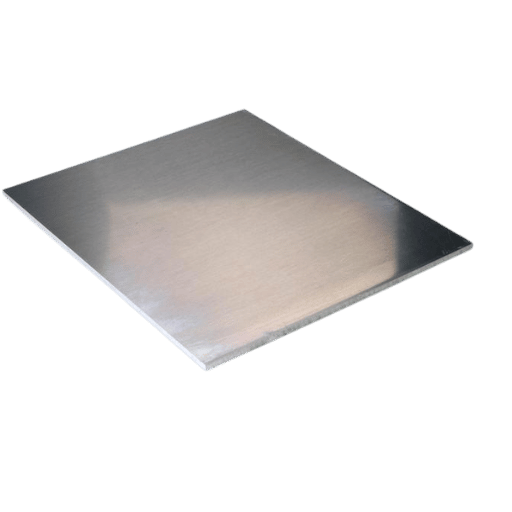
Sua única decisão mais útil em um trabalho de alumínio é a liga Nós chamamos o ranking abaixo a Escada Maquinabilidade Alumínioligas ordenadas por sua classificação de usinabilidade relativa, com os trade-offs que importam no fuso As classificações são porcentagens relativas contra uma linha de base de 1001TP10 T; quanto maior o número, mais rápido e limpo o corte da liga.
| Liga (classe de série) | Classificação de maquinabilidade | Dureza (aprox.) | Melhor para |
|---|---|---|---|
| 2011 (usinagem livre) | ~280% | 95HB | Peças de máquina de parafuso, acessórios |
| 6061-T6 | ~270% | 95HB | CNC geral, suportes, quadros |
| 6063 | ~270% | 73HB | Extrusões, acabamentos, perfis |
| 5052 | ~260% | 60HB | Folha, marinha, peças formadas |
| 2024 | ~210% | 75HB | Estrutura aeroespacial |
| 7075-T6 | ~170% | 150HB | Moldes, aeroespacial de alta tensão |
| 5056 | ~270% | 65HB | Rebites, ferragens marítimas |
| 3003 | ~260% | 40HB | Chapa, dutos, tanques |
| Elenco (356, 380 alto Si) | ~100% | Variar | Carcaças, rodas, peças fundidas |
Classificações de usinabilidade compiladas a partir de dados de referência de usinagem; Os valores de dureza Brinell são nominais para temperamentos típicos.
Por que a escada inclina-se desta maneira? free-machining 2011 contém bismuto e chumbo que quebram lascas em pedaços curtos, o que mantém as forças de corte e calor baixo, então roscas e peças limpas em uma máquina de parafuso sem cordas gomosas Forjado 6 xxx e 5 xxx graus sentar-se logo abaixo dele e cobrir a maioria do trabalho da loja Queda para 7075 e o zinco-rico, matriz de alta resistência corta mais duro e mantém o calor; ligas fundidas com silício 7151TP10 T são abrasivo e desgaste bordas mais rápido Essas designações de liga são padronizadas por A Associação Alumínio, que é o registro oficial de séries forjadas e fundidas.
Nota de Engenharia
Quando uma peça deve ser forte e de corte limpo, 6061-T6 é o padrão: ela contém usinabilidade de ~2701TP10 T com resistência à tração de ~310 MPa. Reserve 7075-T6 (~570 MPa) para peças genuinamente de alta tensão e orçamento para velocidades mais lentas, ferramentas mais nítidas e inspeção de borda mais frequente, sua classificação de ~1701TP10 T e dureza de 150 HB significam borda embutida e desgaste da ferramenta chegam mais cedo.
Feeds e Velocidades para Alumínio (Com um Exemplo Trabalhado)
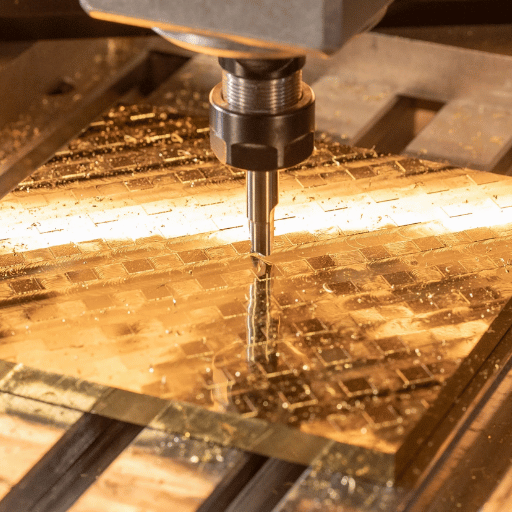
As alimentações e velocidades para o alumínio começam a partir da velocidade da superfície (SFM), convertem em RPM do fuso, depois definem uma taxa de alimentação a partir da carga e contagem de flautas As ligas forjadas executam 8000 SFM 500 SFM e as ligas fundidas 5000 SFM como faixas iniciais Aqui está a conversão do núcleo que cada maquinista usa:
RPM = (3,82 × SFM) /diâmetro do cortador (polegadas)
A constante de 3,82 é 12/π, convertendo pés superficiais por minuto em rotações para um determinado diâmetro.
Exemplo trabalhado. Digamos que você esteja encaixando 6061-T6 com um moinho final de carboneto de três flautas de 1/2″ (0,5″) e escolha 1000 SFM como um ponto de partida conservador:
- RPM = (3,82×1000) /0,5= 7.640 RPM
- A uma carga de cavacos de 0,002″ por dente: alimentação = 7.640 × 0,002 × 3 flautas = 45,8 IPM
Empurre o SFM em direção a 1500 e a matemática quer ~11.460 RPM, que é onde a máquina, não o gráfico, assume Uma ferramenta de pequeno diâmetro nas altas velocidades superficiais do alumínio pode exigir RPM além do teto de um fuso, forçando um SFM efetivo mais baixo do que os livros sugerem Em nossos tornos CNC de velocidade variável e centros de usinagem, essa redução do teto do fuso é a razão mais comum pela qual um feed de“ de ”by-the-book tem desempenho inferior, sempre verifique se o seu RPM alvo está dentro do alcance da máquina antes de confiar no gráfico Para o conjunto completo de fórmulas de velocidade de corte, consulte nosso mergulho profundo alimentações e velocidades para fresamento e torneamento.
Erre isto e o custo é imediato: alimente muito devagar e a ferramenta esfregue em vez de cortes, endureça a superfície e solde lascas até a borda; empurre com muita força além do torque do fuso e você pode encaixar um fresa de topo de 1/2 polegada no meio do corte Os maquinistas experientes perseguem o ponto ideal de torque porque a taxa de remoção de material, a vida útil da ferramenta e terminam todas as trocas entre si na mesma RPM, então não há um único número de“ ”correto que ignore a máquina.
“Não se trata de disparar a máquina até a maior RPM e ter nela Você precisa encontrar o ponto ideal na curva de torque do fuso, uma vez que você tenha encontrado onde está, então você começa a aumentar as taxas de alimentação e jogar com a profundidade axial e radial de corte.”
Escolhendo ferramentas de corte: fresas de topo, inserções e revestimentos
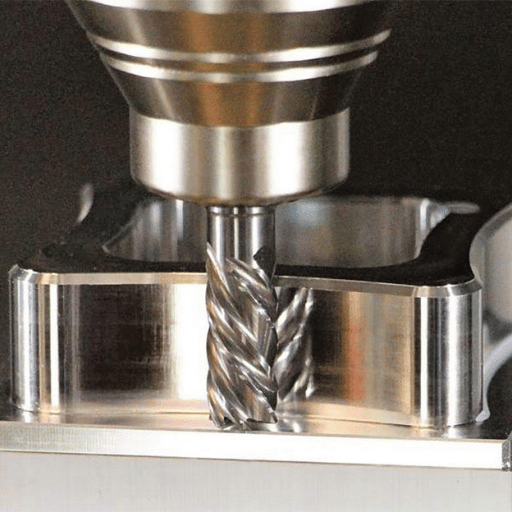
Um cortador de metal duro afiado, polido e de baixa contagem de flautas é a melhor escolha para o alumínio e o revestimento que você deixa desligado importa tanto quanto a geometria que você coloca Alumínio forma um grande chip, então moinhos finais usam 2 ou 3 flautas; maior encolher os vales de chip e entupir nas velocidades de alumínio quer ângulos de hélice correr alto, 35° a 45° conta com 45° favorecido para acabamento e alta velocidade de caminhos de ferramentas.
Qual é a melhor ferramenta para cortar alumínio?
O carboneto polido sem revestimento é a melhor escolha padrão para a maioria do trabalho de alumínio, ele permanece afiado, lança chips e resiste à borda construída que arruína o acabamento Quando a produtividade justifica o custo, o revestimento DLC (carbono semelhante a diamante) pode quase dobrar a velocidade de corte e a ponta PCD (diamante policristalino) pode quase triplicar para inserções e noções básicas de HSS no torno, nosso guia para ferramentas essenciais de corte de torno é um bom ponto de partida.
A armadilha revestimento. Aqui está a parte contra-intuitiva que pega novas lojas: os revestimentos de suporte de alumínio vendidos como “high performance para alumínio TiAlN e AlTiN, são a escolha errada Porque o alumínio tem uma afinidade química para aqueles revestimentos ricos em alumínio, os chips fricção-solda para a aresta de corte, construindo uma aresta que mancha o acabamento Os maquinistas em r/Machinists e Practical Machinist relatam o mesmo resultado: uma ferramenta TiAlN dá um acabamento muito pior em alumínio do que um liso polido Alcançar sem revestimento, ZrN, TiB2, DLC ou PCD.
Bom para alumínio
- Carboneto de flauta polida não revestido
- Revestimento ZrN (nitreto de zircônio)
- TiB2 (diboreto de titânio)
- DLC e PCD para alta velocidade
- 2 flautas, hélice de 35°, inclinação alta
0 Avóide para alumínio
- Revestimentos TiAlN/AlTiN
- 4+ moinhos finais de flauta (embalagem de chips)
- Bordas afiadas ou opacas
- Ferramentas de uso geral de baixa hélice
Perfurar e bater o alumínio seguem a mesma lógica: manter as ferramentas afiadas, peck-drill para limpar lascas de furos profundos e adicionar um toque de lubrificante ao bater os fios para que o material gomoso não se apodere Um bônus do alumínio sobre o aço é que a maioria das ligas forjadas não endurece agressivamente sob a ferramenta, então os problemas de acabamento remontam à borda e rigidez acumuladas, em vez do endurecimento do metal à medida que você corta.
Refrigerante, lubrificação e borda embutida
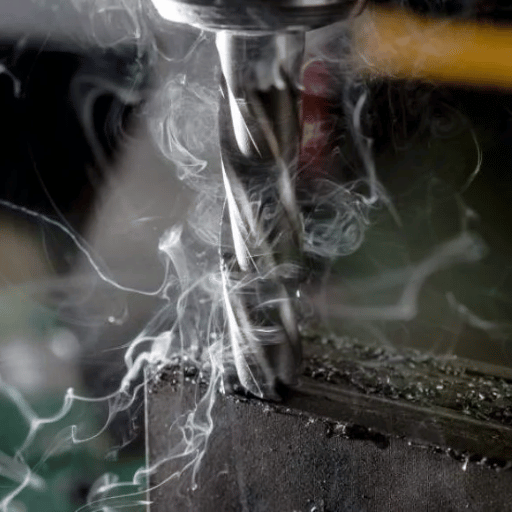
Built-up edge (BUE) é o modo de falha definidor em alumínio: soldas de metal macio na aresta de corte, em seguida, rasga e arrasta através da superfície, deixando um acabamento áspero e manchado Como o Referência NIST sobre usinagem de alumínio notas, borda construída é um desafio central ao cortar ligas de alumínio macias Batendo-o vem para baixo o Triângulo BUEtrês alavancas que você pode puxar em qualquer combinação.
Uma correção de BUE de 3 alavancas
O BUE Triangle (Triângulo BUE) três alavancas contra borda construída
- Elevar a velocidade da superfície. O SFM mais alto mantém o chip em movimento e a borda livre, em vez de deixar o metal soldar.
- Afie e polir a borda. Uma ferramenta afiada, polida e de alto ancinho em vez de esfregar, o maior fator no acabamento.
- Adicionar lubrificação. Inundação, refrigerante de névoa/MQL ou até mesmo uma explosão de ar transporta calor e lascas para longe da peça de trabalho e reduz a aderência.
Você precisa de refrigerante ao usinar alumínio?
Nem sempre, mas a lubrificação ajuda mais do que o resfriamento O alumínio corta com baixa força, de modo que os trabalhos leves secam enquanto os cavacos limparem e a peça não superaquecer Durante o corte sustentado, o refrigerante de inundação ou a lubrificação de quantidade mínima (MQL) reduzem a borda construída e melhoram o acabamento; uma explosão de ar por si só é frequentemente suficiente para evacuar os cavacos em recursos abertos.
Um mito comum que vale a pena corrigir: WD-40 não é um lubrificante de usinagem Os maquinistas descrevem-no como um MQL improvisado na melhor das hipóteses, ele nevoenta mal e não tem a lubricidade de um fluido de corte real Se você quiser MQL, use um lubrificante de névoa adequado; se você quiser inundação, use inundação.
Inundar um pequeno corte com óleo de corte “para ser seguro” pode causar mais danos do que um bom corte de hobby. Em passes leves, uma ferramenta polida afiada mais uma explosão de ar geralmente supera a lubrificação excessiva.
Estratégias de fresagem CNC para alumínio
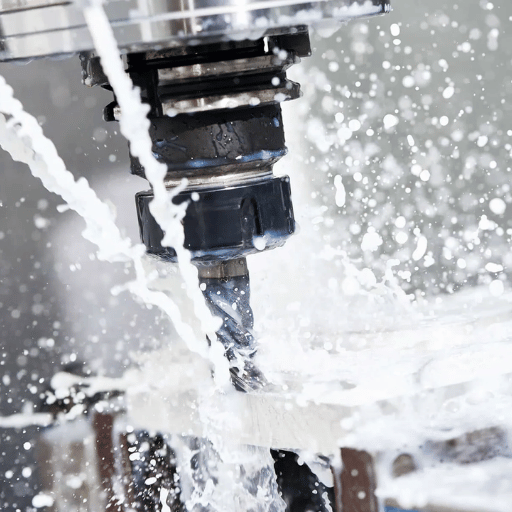
Uma vez que a liga, a ferramenta e o líquido refrigerante estejam definidos, a estratégia de fresagem decide sua taxa de remoção de material e acabamento Use a fresagem de subida para um melhor acabamento e forças de corte mais baixas, mantenha os cavacos evacuando e favoreça caminhos de ferramentas de usinagem de alta velocidade (HSM), também chamados de Fresagem de Alta Eficiência, que usam uma baixa profundidade radial de corte e uma alta profundidade axial de corte para espalhar o desgaste ao longo de toda a flauta Esses caminhos de fresagem trocoidal e limpeza adaptativa permitem executar alimentações agressivas sem sobrecarregar a ferramenta, e é por isso que eles assumiram o desbaste de alumínio.
A embalagem de lascas, não o metal em si, é o risco real na fresagem de alumínio: deixe-os embalar nas flautas e a ferramenta recorta seu próprio cavilhas, o que aumenta as forças de corte, tagarela a peça e pode quebrar uma borda de metal duro em segundos. Essa é a razão pela qual os maquinistas mantêm o engajamento radial baixo (geralmente 10-151TP10 T do diâmetro da ferramenta) e se apoiam na evacuação de lascas, porque os cavacos embalados em uma liga de goma não têm para onde ir.
Imagine uma loja embolsando uma caixa profunda 6061 com um slot convencional de largura total: as flautas embalam com lascas, a ferramenta recorta seu próprio cavilho e o acabamento se transforma em marcas de vibração Mudando o mesmo trabalho para um caminho trocoidal em baixo engate radial cai as forças de corte, limpa lascas em cada loop e deixa o fuso manter um ponto ideal de torque constante O rendimento sobe enquanto a carga da ferramenta cai, a promessa central do HSM em alumínio A rigidez também importa: um centro de usinagem mais pesado e bem amortecido mantém a forma que um roteador leve não pode Ver nossa gama de Fresadoras CNC e a maior rigidez centros de usinagem verticais construído para esse tipo de trabalho.
Se você está programando esses caminhos, nossa referência ao Lista de código G e código M abrange os ciclos enlatados e os comandos modais que você usará.
Torneamento de alumínio em um torno
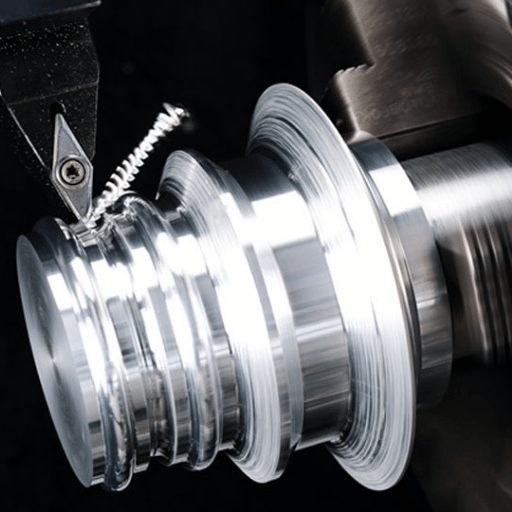
A torneamento de alumínio é onde as guias focadas na fresagem ficam silenciosas, mas é metade do trabalho na maioria das lojas Os princípios são transferidos, alta velocidade superficial, bordas polidas afiadas, com uma torção específica da ferramenta: a geometria da inserção e o raio do nariz acionam o acabamento Use uma inserção polida e de freio positivo projetada para alumínio (uma geometria “AK” estilo CCGT é a escolha clássica); sua borda afiada e quebra-cavacos no solo resistem à borda construída que uma inserção giratória de aço convida.
No torneamento de alumínio, o acabamento é onde a dor aparece: uma inserção opaca ou de geometria de aço mancha a superfície e constrói uma borda que deixa um eixo rasgado e fosco em vez de um espelho. Uma inserção de freio positivo polida vence porque cisalha o chip de forma limpa na polegada 0,002-0,004 alimenta as necessidades de um acabamento fino, em vez de esfregar e rasgar.
O raio do nariz é a variável de acabamento mais importante na curva. Uma regra de campo útil é o 1/3 regra de raio nasal/3: mantenha sua alimentação de desbaste entre um terço e dois terços do raio do nariz da inserção para que a ferramenta se quebre de forma limpa sem esfregar Para um acabamento espelhado em um eixo, escolha uma inserção de metal duro polido ou PCD com um raio de nariz pequeno, uma alimentação de acabamento fino e boa lubrificação Construa o resto do seu kit de ferramentas de torneamento com nosso guia para tornos torneamento metal e o focado na produção Máquinas torno CNC.
A regra do nariz-rádio 1/32/3
Uma regra de campo simples mantém o giro alimenta honestamente: mantenha sua alimentação de desbaste entre um terço e dois terços do raio do nariz da inserção Alimente abaixo de 1/3 e a ferramenta esfrega e constrói uma borda; alimente acima de 2/3 e você rasga a superfície e corre o risco de lascar o canto Para um raio do nariz de 0,4 mm, que coloca a janela de alimentação de desbaste em aproximadamente 0,13.27 mm/rev.
Nota de Engenharia
O acabamento superficial (Ra) escala com alimentação ao quadrado e inversamente com raio do nariz Reduzir pela metade a alimentação corta Ra teórico para um quarto, e um raio do nariz maior o abaixa ainda mais, mas apenas até o ponto em que o raio começa a esfregar e reintroduz borda construída Para um acabamento fino em 6061, uma inserção polida de raio pequeno em uma alimentação leve bate uma inserção de raio grande empurrada lentamente.
Problemas e correções comuns de usinagem de alumínio
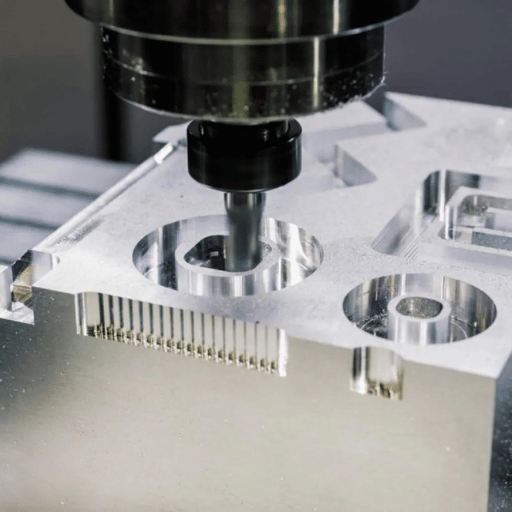
A maioria dos defeitos de usinagem de alumínio remonta a um punhado de causas, borda construída, controle deficiente de cavacos e baixa rigidez, todos documentados no Referência de usinagem NIST. Esta tabela mapeia o sintoma para a correção para que você possa diagnosticar na máquina.
| Sintoma | Causa provável | Consertar |
|---|---|---|
| Acabamento manchado e áspero | Borda construída | Levante SFM, mude para ferramenta polida/não revestida, adicione lubrificante |
| Ferramenta de embalagem longa e fibrosa de chips | Baixa alimentação/sem quebra de chip | Aumente a carga da microplaqueta, use a geometria do quebra-lacas |
| Soldagem de chips de goma em flautas | Muitas flautas/má evacuação | Gota para 23 flautas, jato de ar, hélice superior |
| Marcas de vibração | Baixa rigidez/esgotamento | Stickout ferramenta mais curto, hélice variável, dispositivo bonde da verificação |
| Oversize/tolerância à deriva | Crescimento de calor, mandíbulas macias | Refrigerante para controle térmico, re-cortar mandíbulas macias |
Os maquinistas frequentemente relatam que a mesma ferramenta que bate papo em longo stickout corre limpa uma vez que está sufocada no suporte, rigidez e runout corrigir mais problemas de acabamento de alumínio do que qualquer revestimento Um indicador de mostrador no fuso pega runout antes que ele aparece como um defeito.
Perspectivas da indústria: o que está mudando na usinagem de alumínio (2026)
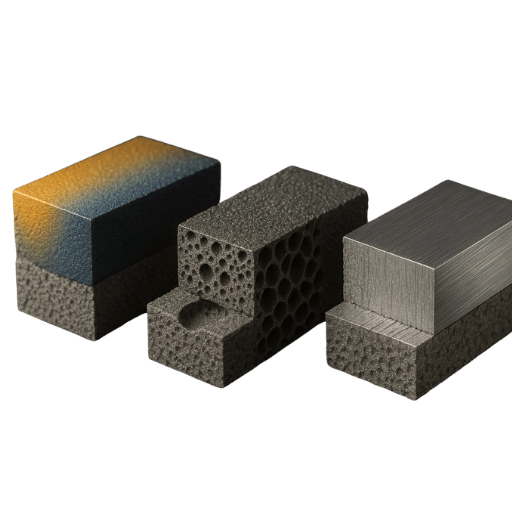
A maior mudança na usinagem de alumínio no momento não está no fuso, está na cadeia de suprimentos e muda a forma como você planeja um trabalho De acordo com a Seção 232, os Estados Unidos impuseram tarifas sobre o alumínio importado (uma taxa de 251TP10 T definida em fevereiro de 2025 sob Proclamação Presidencial 10895 e elevado para 501TP10 T no final de 2025).Para uma oficina mecânica, isso significa que o bloco 6061 ou 7075 dentro de sua peça ficou materialmente mais caro, os relatórios da indústria colocaram os preços dos produtos da fábrica cerca de um terço mais altos ano após ano em 2026, e que mais alumínio secundário e reciclado está entrando no fornecimento O risco prático: a usinabilidade lote a lote pode derivar à medida que o conteúdo reciclado varia, portanto, verifique os certificados da fábrica e mantenha uma margem em seus feeds, em vez de executar o programa perfeito de ontem às cegas.
No lado da tecnologia, a usinagem de alta velocidade e as ferramentas DLC/PCD continuam reduzindo o custo por peça, aumentando as taxas de remoção de material, as oficinas adotando caminhos de ferramentas trocoidais e ferramentas de alto equilíbrio estão avançando no rendimento. Um cenário de patentes de 2026 que inclui geometrias de cortadores específicas de alumínio (por exemplo, Patente dos EUA US6655880B2 descrever um moinho final que fornece amortecimento de processo em alumínio) mostra que os fabricantes de ferramentas ainda estão ativamente projetando para corte de alumínio sem vibração As previsões mais amplas do tamanho do mercado para usinagem de alumínio de precisão são apenas direcionais; a mudança de suporte de carga para os compradores em 2026 é o custo do material orientado por tarifas e a variação de fornecimento Se você estiver cotando o trabalho de 2026, precifique o metal separadamente e revisite-o, porque o bloco, e não o tempo de ciclo, está se movendo.
Perguntas frequentes
Q: Qual é o metal mais duro para a máquina?
Ver Resposta
Superligas à base de níquel como Inconel e titânio são os metais comuns mais difíceis de usinar, porque eles permanecem fortes mesmo em alta temperatura e trabalho-harden rapidamente sob a ferramenta Alumínio senta-se no extremo oposto, fácil da escala de usinabilidade que a maioria das lojas trabalham com.
Q: Qual é o melhor grau de alumínio para usinagem?
Ver Resposta
Para a maquinabilidade pura, a liga de usinagem livre de 2011 leva a aproximadamente 2801TP10 T no índice relativo Para um equilíbrio entre usinabilidade, resistência, soldabilidade e custo, 6061-T6 é o padrão da oficina em cerca de 2701TP10 T e é a liga de alumínio mais usinada no trabalho CNC.
Q: Por que o alumínio adere à ferramenta de corte?
Ver Resposta
Built-up edge é o culpado usual: alumínio macio solda quimicamente na aresta de corte sob calor e pressão, em seguida, se separa e arrasta através da superfície, deixando-a áspera Ela piora com bordas opacas ou afiadas, baixa velocidade superficial e, contra-intuitivamente, revestimentos de suporte de alumínio, como TiAlN, que o metal felizmente se solda. Você o fixa executando uma ferramenta afiada polida ou não revestida, aumentando a velocidade da superfície e adicionando lubrificação, as três alavancas que chamamos de Triângulo BUE.
Q: Pode você o alumínio da máquina em um roteador do CNC?
Ver Resposta
Sim, o trabalho de alumínio leve é executado em um roteador CNC rígido com um moinho final de alumínio de flauta única ou de duas flautas, passes rasos e uma explosão de ar ou névoa A rigidez é o limite real, os roteadores flexionam mais do que um moinho, então cortes profundos e tolerâncias apertadas pertencem a uma fresadora ou centro de usinagem.
Q: Que alimentações e velocidades devo usar para o alumínio 6061?
Ver Resposta
Comece 6061 na faixa de 800 a 1500 SFM e converta para RPM com a fórmula RPM é igual a 3,82 vezes SFM dividido pelo diâmetro do cortador Para um carboneto de três flautas de meia polegada a 1000 SFM, isso é cerca de 7.640 RPM; a uma carga de chip de 0,002 polegadas por dente, a alimentação funciona perto de 46 IPM Trate-os como pontos de partida e confirme se seu fuso pode realmente atingir essa RPM antes de se comprometer com o corte.
Q: Preciso de rebarbar ou anodizar após a usinagem de alumínio?
Ver Resposta
A rebarba é quase sempre necessária para derrubar as arestas vivas e rebarbas que a usinagem deixa para trás, especialmente em graus mais macios como 6061 A anodização é opcional e depende da aplicação Uma superfície usinada limpa e de baixo Ra anodiza mais uniformemente, então planeje suas passagens de acabamento antes de enviar peças para revestimento.
Cortando alumínio em produção?
1TP3 T constrói os tornos rígidos CNC e centros de usinagem verticais que mantêm o acabamento apertado e tolerância em alumínio em altas velocidades do fuso, desde a barra de usinagem livre 2011 até a placa resistente 7075 Fale com nossos engenheiros sobre como combinar a máquina certa, a faixa do fuso e a rigidez com sua liga e mistura de peças.
Sobre Este Guia
Este guia baseia-se em dados de referência de usinabilidade de alumínio e a perspectiva que obtemos como um construtor de máquinas-ferramenta, onde a gama de fuso e rigidez decidir se um feed publicado realmente funciona no chão Onde a prática de chão de fábrica está envolvida, descrevemos o que os profissionais relatam consistentemente em vez de reivindicar uma única resposta certa, porque os resultados de alumínio variam com lote de liga, ferramentas e configuração Revisado pela equipe técnica ANTISHICNC.
Referências e fontes
- Usinagem de Alumínio e Ligas de AlumínioInstituto Nacional de Padrões e Tecnologia dos EUA (NIST)
- Ajustando as importações de alumínio para os Estados Unidos (Seção 232, Proclamação 10895)Registro Federal dos EUA
- Designações e padrões de ligas de alumínioA Associação Alumínio
- Patente US US6655880B2, End Mill (amortecimento de processo para alumínio)Escritório de Marcas e Patentes dos Estados Unidos
- ISO 513, Classificação de materiais de corte duro (grupo N para não ferrosos)Organização Internacional de Normalização
Artigos Relacionados
- Feeds e Velocidades: RPM, Taxa de Alimentação & Fórmulas SFMa matemática por trás de cada trabalho de alumínio
- Ferramentas essenciais de corte de torno para iniciantesinserções e porta-ferramentas explicados
- Preço da máquina de torno CNC: Guia de custos de 2026quanto custa uma máquina de tornear