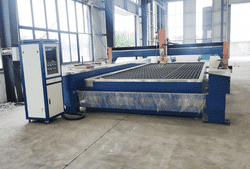
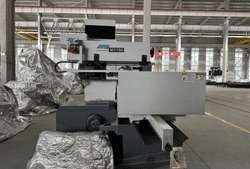


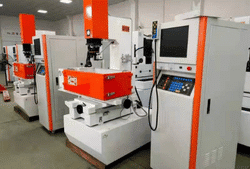
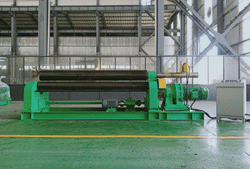



CNC waterjet cutting has barely been adopted into modern manufacturing; it offers more precision and accuracy than any other manufacturing technique while cutting through all sorts of materials. Crafting high-pressure water streams with abrasives, the technology gives clean, accurate cutting without imparting any heat or distortion to the workpiece. Materials that can be cut by CNC waterjet cutting include metal, glass, stone, and composites; the method is far from being just another technique in the cutting shop. This article explains how the precision cutting method is taking off alongside other advantageous features over other conventional cutting techniques and why it is gaining rapid adoption across industries. Stay ahead to see how manufacturing and design will benefit from this versatile cutting technology.
Introduction to Waterjet Cutting
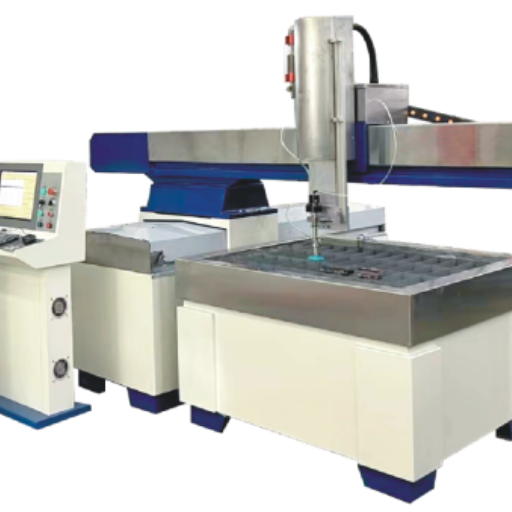
Waterjet cutting is a type of process that utilizes an extremely pressurized jet of water, often mixed with abrasive, to cut through numerous different materials. It is highly regarded for precision since cutting intricate shapes and designs without damaging adjoining material is within its capability. In general, in terms of versatility, the system may be used to cut metals, ceramics, glasses, or even composite materials. Being a waterjet cutting, it does not pose any question of heat generation, and therefore heat-induced warpage or a change in the physical properties of the working materials does not occur. So, it stands to reason that it is perfectly suitable for delicate, heat-sensitive operations.
What is Waterjet Cutting?
Waterjet cutting is considered to be the best for ultra-precision and versatility. Modern-day waterjet machines can go to tolerances where one can ask for ±0.001 inches, giving them the power to attain highly intricate, complex designs and describe the processes. This reduces a great deal of secondary work on the pieces that are cut and also saves time and cost. The waterjet can cut material thicker than 12 inches, thereby enabling it to engage in jobs of varying sizes and complexities.
The other major advantage is environmental protection. Waterjet cutting does not generate noxious fumes, nor does it cause thermal stress in material; most systems use a closed-loop water system wherein water goes into the system, is used in cutting, and goes out in the same condition, thus saving water. Consultants regard this process as providing size freedom over materials-from soft materials such as rubber and wood to hard substances such as titanium and ceramics. The waterjet cutting methods are relied on by aerospace, automotive, and architectural industries for their reliability and ability to finish smooth cuts without affecting the integrity of the material.
Additionally, further advancements in waterjet technology have led to the formation of automated systems integrated with CAD software. This factor has tremendously enhanced the efficiency of production by offering pre-programmed cutting paths, reducing human error, and cutting down manufacturing time.
How CNC Waterjet Machines Operate
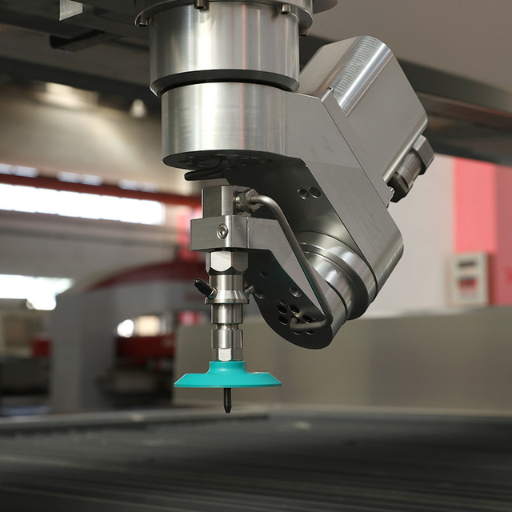
CNC waterjet systems are set to operate with a high stream of water pressure and sometimes abrasive materials for cutting various materials with high precision. The process begins with a pump pressurizing the water up to 60,000 PSI (pounds per square inch). This water at pressure goes through a small diameter nozzle that speeds up the water jet almost three times the speed of sound, making it a powerful method for cutting. Water with abrasives, like garnet, is used as a water jet stream to cut harder materials such as metals, glasses, or stones; this method for cutting enhances its cutting power.
The machine tracks in a moving motion through a CNC system, wherein it converts a digital drawing to actual cutting instructions with precision. Such drawings are created through CAD software, allowing for complex patterns, tighter tolerances, and better use of materials. Thanks to CNC technology, every cut is made as per the exact specification and in several cases with tolerances as low as ±0.001 inch.
Today, the waterjet machine is considered very versatile, in the sense that it practically cuts anything, be it steel, aluminum, composites, ceramics, and even food items. Concerning some industry sectors, it finds heavy use in aerospace, automotive, and manufacturing. Defects that may form due to heat on cut edges are prevented since the waterjet cuts coldly, thus avoiding material distortions or weaknesses. The global waterjet cutting machine market has a forecasted CAGR (compound annual growth rate) of about 6.8% from 2023 to 2030. This is mainly due to the increasing demand for precision cutting across different industries.
Comparison: Laser Cutting vs Waterjet Cutting
| Aspect | Laser Cutting | Waterjet Cutting |
|---|---|---|
| Speed | Quick and precise cuts on thin materials | Usually works slower but is more versatile |
| Material Compatibility | Good for metals and plastics, but trouble with reflective surfaces | Can cut thick materials and non-metallic ones like stone and composites |
| Heat Effects | Can cause heat-affected zones | No heat distortion |
| Material Thickness | Best for thin materials | Excellent for thick materials |
For me, it all comes down to job needs, as the selection between laser cutting and waterjet cutting methods for cutting is dependent on job needs. Laser cutting is good at quick and precise cuts on thin materials and is particularly adapted to metals and plastics; however, it faces trouble with reflective surfaces and can cause heat-affected zones. Another flexible service includes water-jet cutting, which may cut through thick materials or those of non-metallic nature, whether stone or composites, without imparting heat distortion; the only disadvantage is a slower pace of operation. The two processes are best suited for a specific function; hence, choosing between them depends on the types of materials involved, their thickness, and the nature of finishing preferred.
Applications of CNC Waterjet Cutting
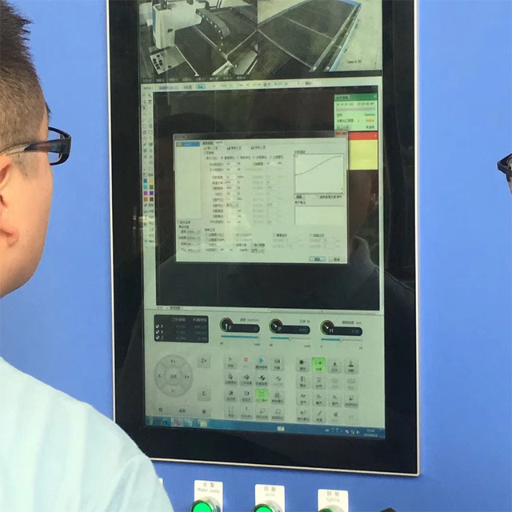
CNC waterjet cutting applications are far and wide due to its precision and versatility. Major applications encompass fabrications for aerospace, automotive, and architectural projects. The ideal application would be cutting thick material like metal, stone, glass, and composites that undergo issues of heat distortion. It is also used for custom manufacturing, prototyping, and artistic designs where elaborate forms with smooth edges are required. Its strong suit remains its adaptability to cut almost every material with supreme precision, showcasing the capabilities of waterjet CNC machines.
Industries Utilizing Waterjet Cut Technology
Aerospace
Cutting components made from titanium, aluminum, and other high-strength materials for aircraft and spacecraft.
Automotive
Manufacturing vehicle components, including engine parts, gaskets, and interior materials
Construction & Architecture
Custom stone, glass, and metal designs for decorative elements and structural members
Medical Industry
Manufacturing surgical instruments and prosthetic parts with extremely high precision
Waterjet cutting technology has gained a reputation for being a highly precise and versatile tool across various industries. The aerospace sector uses it in cutting components of titanium, aluminum, and other high-strength materials required in the making of aircraft and spacecraft. It needs to make precise cuts into materials without compromising the structural integrity of the materials themselves, which becomes indispensable for all aerospace considerations of safety and application.
In the automotive industry, waterjet cutting is often used to manufacture vehicle components, including engine parts, gaskets, and materials for interiors. The process makes production more accurate and generates less waste, two production necessities in the automotive industry.
In construction and architecture, the technology is used for custom stone, glass, and metal designs. It is highly valued for producing detailed decorative elements and structural members that are almost devoid of defects or waste.
Additionally, the medical industry uses waterjet cutting for manufacturing surgical instruments and prosthetic parts with extremely high levels of precision. The process confers the utmost standards of cleanliness and quality required for medical applications.
Market reports indicate large growth prospects for waterjet-cutting, where the market size may well cross $1.6 billion by 2030. This growth is geared toward increased demand in sectors like manufacturing, renewable energy, and infrastructure development, while its applicability over a vast variety of materials and applications assures the trustworthiness of waterjet cutting in a gamut of industries.
Prototyping and Customization in Design
One designer who crossed over this jet of water theory is Antonio Gaudí (eighteenth century), a designer who left his own personal brand of idiosyncrasy all through the process. Designers today can now take it to a whole other level through level prototyping and customizations associated with technology advancements or waterjet operational processes. Waterjet fabrication is fairly complicated and highly precise for designers to test and modify their concepts with a very high degree of accuracy. The possibility of using waterjet cutting to cut different kinds of materials, such as metals, composites, and ceramics, without affecting their structural integrity, makes it one of the best solutions for prototyping.
In recent stirrings, recent data has come and told the tale of increased demand for customized designs in such areas as automotive, aerospace, and consumer products, driving the need for advanced water jet machines. For example, the custom product manufacturing market is expected to enjoy an annual growth rate of above 8%, at least until 2025, mainly because industries require tailor-made solutions to address the aforementioned needs of clients. Waterjet cutting remains flexible and precise enough to change a prototype’s tardiness while maintaining exact tolerances. These capabilities, therefore, increase the speed of prototype iterations and achieve conformance of the product with specific dimensions, be that for utility or aesthetics.
Waterjet Cutting in the Food Industry
The waterjet cutting method has successfully entered food processing. It is known for precision in processing and conservation of the product’s integrity during processing. High pressure is used, and water streams are manipulated to clean and separately cut foodstuffs such as meat, vegetables, or bakery products-no compromise on quality. Being a heatless method, a waterjet cut helps allergens of delicate food substances retain their freshness and texture.
The newest research gives a growing demand for hygienic-cut-and-labelling systems in food processing shops, with waterjet cutting claiming consideration due to its sanitary, non-contact method. Industry analysis says that the global food processing equipment market size is forecasted to reach a CAGR of 6.4% through 2028, and waterjet cutting is one of the driving forces in this transformation. Moreover, food manufacturers see these waterjet cutting systems as cost-effective since they help reduce wastage and increase yield, besides assisting in complying with stringent safety and regulatory standards.
Advantages of Waterjet Cutting
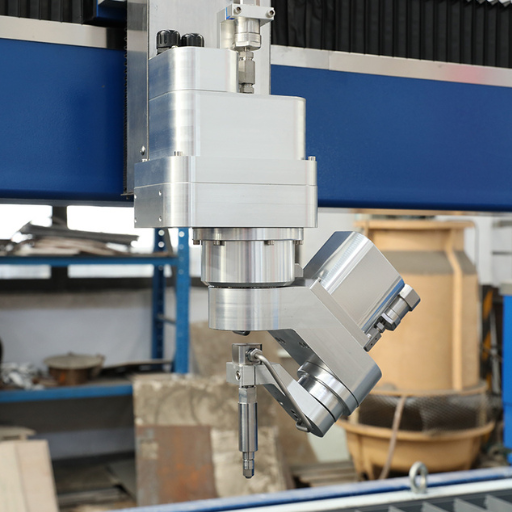
Waterjet systems guarantee precise cuts and minimal wastage of material with neat edges that call for no secondary finishing.
This method can cut through a staggering variety of materials, from metals, glass, stones, and composites, to meet the demands of several industries.
Waterjet cutting could be called a cold process, which prevents heat from damaging or distorting the materials.
The waterjet cutting method is less harmful to the environment as it produces less waste with no emissions-considered energy-efficient and sustainable.
Because of low wastage and no secondary processing, waterjet cutting really saves on the total cost of production.
Benefits of Waterjet Cutting Over Traditional Methods
Precision and Accuracy
Waterjet cutting can ensure an accuracy up to ±0.003 in., perfect for fine intricate designs and complex shapes. It eliminates secondary finishing processes to a great extent because it can cut with such accuracy.
Versatility
Anything from metal, plastic, glass, stone, ceramic, and composite material can be cut using this method. It even cuts through highly reflective or heat-sensitive material, which some of the other methods, including traditional CNC cutting, cannot do too well.
No Heat-affected zones
Being a cold cutting process, Water Jets do not induce any heat-related damage, distortion, or alteration in the structure and properties of the material(s), making it suitable for an application wherein material integrity is judged strictly.
Environmentally Friendly
This is the process of using water and abrasives to minimize harmful emissions and wastes. Recycled water may also be used in cutting, which then aids sustainability.
Material Optimization
Narrow kerf of waterjet cutting minimizes waste; hence, manufacturers get maximum yield from raw materials, thus saving cost and environmental impact.
Versatility for Prototyping and Production
Waterjet cutting accommodates the one-off prototype irrespective of full-scale production or smaller batch jobs without the need for expensive tooling processes.
Noise Limiting
Water jet cutting will not create as much noise as mechanical cutting methods, which keeps the atmosphere safe and clean.
Save Time and Money
Time and money are saved because this method reduces the job cycle through high precision and material savings and versatility, eliminating other steps such as deburring or grinding, which will, of course, increase the production cost.
Eco-Friendly Aspects of Waterjet Technology
Waterjet cutting offers a much greener option for the manufacturing and fabrication industry. Contrary to the conventional method, waterjet cutting does not lead to airborne pollutants, including fumes and gases. Thorough cleanup after cutting also means no requirement for oils or lubricants, thereby reducing chemical waste disposal concerns.
On the greener side, there’s water conservation. Most of the newer machines come with closed-loop recycling systems that can recover up to 90% of the water used during cutting. This significantly cuts water usage and prevents littering the river. Further, abrasive materials such as garnet used in waterjet cutting are nontoxic, recyclable, or in some cases, reusable after processing.
In cutting, there is no heat being generated, so no thermal damage to the materials is done. Hazardous by-products are then never generated, unlike laser or plasma cutting. As a result, wastes from the waterjet process contribute very little pollution to the environment and usually prove an easy matter to dispose of responsibly or recycle. All these point toward waterjet cutting as a green process for any industry looking to reduce carbon footprint without compromising precision and productivity, particularly through the use of water jet machines.
High Precision and Versatility
Waterjet cutting is an extremely precise process, capable of achieving tolerances of ±0.001 inch on advanced machines. Such precision is required in assembling highly complex designs such as in aerospace, medical, and art pieces, especially when advanced waterjet CNC machines are used. Due to its flexibility, waterjet technology is capable of cutting materials ranging from metals, glass, stone, rubber, and composites without at all compromising their structural integrity.
Modern waterjet cutting technology developments have further advanced the capabilities. With abrasive waterjet systems, the upper material thickness for cutting is 12 inches; this makes a distinction for delicate and heavy-duty work. Industry case studies also state that there are numerous cases in production where, in some manufacturing setups, waterjet systems have increased production efficiencies by as much as 30%, given that they undertake multiple complex cuts in one operation, rather than one tool change in between. This versatility has made waterjet cutting a champion solution in different industries, thereby catering to complicated demands while maintaining constant quality and speed.
CNC Waterjet Cutting Machines

A CNC waterjet offers multi-faceted cutting capabilities with extreme finesse and detailing precision. With the cutting path defined almost like a blackboard, it literally cuts through any material put in front of it: metals, stones, glass, or composites. Since the cut is a purely mechanical force, heat is not generated, there is no warping, and no damage to the material. They are quite environmentally friendly, at least they do not release water and abrasive particles, posing no hazardous fumes or toxic wastes. By making the hardest cuts or patterns of high-grade accuracy, they are also used for aerospace, automotive, and architectural industries.
Types of Waterjet Cutters and Their Features
Pure Waterjet Cutters
High-pressure streams of water cut away softened materials like foams, rubbers, textiles, and foodstuffs in pure waterjet cutting. This process does not use any abrasives, and hence the cuts are very fine, having immaculate edges suitable for applications wherein the content of the material should be free from contamination or where the material needs to keep its integrity. Therefore, they are prominent in food processing and packaging industries, where product purity takes precedence.
Abrasive Waterjet Cutters
The abrasive waterjet cutters cut brittle materials with high-pressure water mixed with abrasive particles such as garnet, while metals are cut with abrasive waterjet cutters. Because these types of abrasive cutters can slice through different thicknesses with a very high level of precision, they are used in aerospace engineering, automotive manufacturing, and construction. For example, depending on the material and specifications of the particular machine, they can cut through 8 inches or more of metal.
3-Axis Waterjet Machines
Typically, 3-axis waterjet machines work with a conventional XY plane for 2D cutting of flat sheets or panels. They specialize in cutting very fine designs and shapes with high precision and are useful for industries such as sign manufacturing and custom fabrication.
5-Axis Waterjet Machines
5-axis waterjet machines further enhance precision cutting by allowing angled cuts and 3D profiles. By tilting the cutting head, these machines can undercut complex geometries for advanced manufacturing processes such as turbine blade manufacturing and components that require precise beveling. They are thus much more versatile than their 3-axis counterparts.
Micro Waterjet Cutters
With a ±0.001-inch tolerance level, these cutters perform alongside micro water jets in high-accuracy machining processes. They find applications in the fields of microelectronics and medical device arms, where tiny, exquisite parts demand safety from infringements on quality due to extreme tolerance.
Every type of waterjet cutting machine, therefore, comes with its own set of benefits to be matched up to a certain industry. The selection of the waterjet, therefore, will be based on the material type and thickness, the precision needed, and the design intricacy at hand.
Choosing the Right CNC Water Jet Cutting Machine
When choosing an ideal model of cutting machine, the operation-specific and industry-specific needs for CNC water jet cutters need to be taken into consideration. The most modern machines can cut anything-from the softest of foams to hard metals such as titanium and tool steels-with very high precision.
Among the main concerns in prospective buyers’ minds is the type of material to be cut. Hard materials like metal alloys, ceramics, or composites are required to be cut by abrasive water jet cutting. Such cutting uses abrasive particles together with water for a clean and precise cut. Pure water jets may only be used to cut smaller materials like plastic, rubber, or textiles because they are softer and need only pressurized water to do the cutting.
Another consideration would be precision: Today, the water jet cutting methods go down to 0.001 tolerance, allowing for highly intricate and technical abstract design. Whenever accuracy is of paramount importance for manufacturing, such as aerospace or medical devices, manufacturers usually go for machines with integrated and sophisticated motion control systems.
Both productivity and cutting speed are factors worth considering; at pressure levels in excess of 90,000 psi, cutting speed and throughput are raised in consequence and need to be considered, as this is a production capable of mass manufacture. Software compatibility is another feature to consider, since a majority of these machines work with CAD/CAM software that helps an operator convert a complex design into an efficient cutting path quickly and easily.
Keeping energy consumption and maintenance in mind is also important. For one, choosing electric pumps helps lessen the burden of operating expenses. Adoption of energy-efficient systems also meets sustainability aspects. Also, ensure that the components of the system are robust and can be serviced quickly and with low cost due to the interchangeability of parts.
Recent statistics have demonstrated that steadily growing the international market of water jet cutting machines would reach $ 1.5 billion by 2030. It indicated very extensive industrial applications in the automobile, aerospace, mechanical, and robotic settings. Taking these considerations seriously and incorporating technological advances enables a business to decide on the CNC water jet cutting machine best suited for its operational, technological, and cost requirements.
Maintenance and Care for Waterjet Machines
For the longevity and efficiency of waterjet cutting machines, proper care must be provided. Proper care comprises inspection and replacement of high-wear parts such as nozzles, orifices, or seals. Doing so will decrease downtime considerably. For example, some manufacturers state and recommend an orifice and nozzle check every 40 to 80 hours of operation, as the wear of these parts affects the cutting precision of the water jet cutter. Similarly, water quality must be maintained at an adequate level. Above a certain level, minerals or unwanted contaminants will start scaling the high-pressure pump, and repairs to this can become very costly.
Data indicates that preventive maintenance could prolong the life of waterjet components by up to 30%. Having a scheduled maintenance program including rough, daily inspections and more refined inspections on a monthly basis will greatly enhance the performance of the machine. It is also worth keeping the abrasive delivery system clean, since blocked lines, worn hoses, and irregularities can all interfere with material feeds and slow down productivity. With regular care put first, companies can maximize uptime and maximize their return on the investment in waterjet CNC technology.
Market Trends and Future of CNC Waterjet Cutting
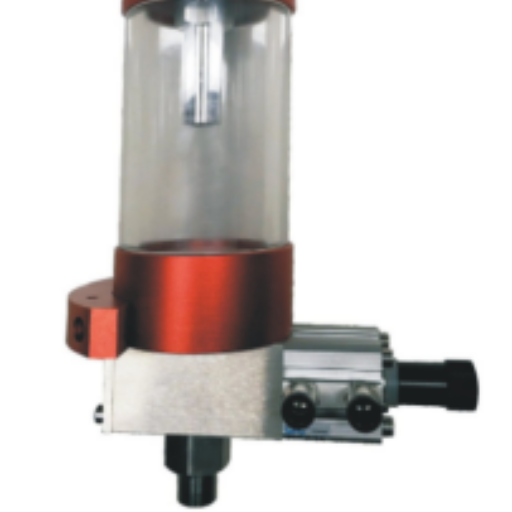
With advances in technology and the need for accuracy, the CNC waterjet cutting market is developing at a good pace. Some of the trends witnessed in this market include the generation of more energy-efficient systems, embracing automation and smart technologies, and employing newer materials for manufacturing. So, the future might see the industry running towards more sustainable, higher precision CNC waterjet cutting systems with greater aerospace, automotive, healthcare, and other applications for CNC waterjet cutting processes. They benefit consumers with cost reduction, productivity enhancement, and environmental benefits.
Future Innovations in Waterjet Cutting Machines
Some of the crucial advancements in waterjet cutting technology are abrasive recycling systems. These allow used abrasive material, usually garnet, to be recovered efficiently, cleaned, and returned into the cutting process without excessive loss of cutting properties. Research shows that if used to the utmost, such recycling systems reduce the waste of abrasives by up to 60%, thus cutting down the production cost on one hand and minimizing environmental effects on the other. Also, recycled abrasives still retain nearly 80-90% cutting ability of fresh abrasives, so they are an option in some uses.
Improvement in Cutting Precision Through AI
Integration of Artificial Intelligence is contributing largely to the precision and efficiency achievements of the waterjet cutting machines. Cutting parameters may be made active or adjusted on-the-fly by these modern systems based on the AI algorithms, including water pressure, feed rate of abrasives, and positioning of the nozzle. Such a mechanism brings in tighter tolerances, smoother edges, and less material wastage. It is said that these intelligent technologies can increase cutting accuracy by at least 20%, which becomes ever so paramount when industries demand complex designs, such as aerospace and medical manufacturing.
Eco-Friendly Waterjet Systems
What a glimpse into the future for environment-friendly treatments! The manufacturers are investing loads of money into developing an environmentally friendly waterjet system that uses a high degree of water-saving technology through closed-loop water recycling arrangements where used water is recycled nearly 85-90% in the cutting process. In addition, the use of abrasives that can biodegrade is picking up pace, thus offering another layer of responsibility in cutting down harmful waste byproducts. These measures equally support the global agenda aimed at greener industrial practices while maintaining high performance and cost-efficiency standards.
Broader Applications Through Material Diversity
Modern farmers must address a multitude of demands. Whereas the most stringent machining application required the abrasive to cut through diamond, newer systems are being used for applications spanning soft and delicate biodegradable polymers. Improvements in precise control have enabled waterjet cutting to enter new applications such as the fabrication of components for renewable energy, for example, wind turbine blades, and for medical purposes, including micro-machined medical devices. Consequently, waterjet technology is assisting market creation in new markets and underserved areas, helping in the further growth of the global waterjet market.
Hence, this collectively can change the way waterjet cutting is operated and used across industries for many years.
Reference Sources
- IEEE Xplore
Title: Control system for the waterjet cutting machine
Description: Discusses the development of CNC systems for waterjet cutting machines, providing insights into control systems and robotics applications. - SpringerLink
Title: Formation of an energy-efficient cutting tool path in waterjet and laser cutting CNC machines
Description: Explores optimization of cutting tool paths for waterjet and laser CNC machines, focusing on energy efficiency and cutting precision. - MDPI (Materials Journal)
Title: A Review of Waterjet Cutting Research towards microAWJ and the Definition of the Waterjet Digital Twin
Description: A comprehensive review of 25 years of waterjet cutting research, including advancements in micro-abrasive waterjet (microAWJ) technology. - Top High Speed Circular Sawing Machine HY-150NC Suppliers in China
Frequently Asked Questions (FAQs)
The nature of cutting by means of waterjet is achieved by means of a forceful stream of water or water mixed with abrasive materials. Given that this cold cutting method allows for very precise cuts, it generally serves many materials such as metals, glass, and stone.
How does CNC waterjet cutting work?
Being guided by CNC to control the cutting head, the machine generally shoots the material with high-pressure water or water mixed with abrasives, thus cutting it. The CNC control provides the exact method, which is repeated when cutting.
What materials waterjet-cutting machine work on?
Some of the workpieces the water jet cutting machine cuts-everything from metals to plastics, ceramics, and composites. It is this very versatility of water jets that allows it not only to work on cutting very thick materials without any heat generation, but also very delicate design work and detailing.
What could the applications of waterjet cutting be?
Waterjet cutting has its own peculiarities-the customizations. In essence, waterjet cutting could cut thick materials, perform precise cutting, and produce clean edges without an adjoining heat zone as laser cutting or plasma cutting does. Also, water could be recycled into the system; thus, it is an ecologically good working process.
Unlike waterjet cutting, how does laser cutting compare?
Both waterjet cutting and laser cutting have their shine of advantages. At laser cutting, speed matters when cutting on thin materials; it is a full-fledged waterjet that comes into the act for thick materials for their smooth edge, lack of heat application, and heat distortion qualities. The demanding nature of the project then usually dictates the preference for a production method.
Can CNC waterjet cutting create finer designs?
Waterjet CNC cutting has given a major role to working with finer designs, in terms of its precision ability. The system can cut in complicated shapes, plus those with fine detail. Artists, architects, and manufacturers requiring high-quality cuts have made this process very popular.
The difference: abrasive and pure waterjet cutting?
The abrasive water jet cuts better when the water stream has to be abrasive to cut harder materials. Pure waterjet cutting cuts by the sheer force of water alone, generally for softer materials. Naturally, one has to choose between the two, depending on the kind of material to be cut.
What are the types of CNC waterjet cutting machines?
There are all sorts of CNC waterjet cutting machines, some designed to work on special materials or jobs. The more sophisticated machines come with a multi-axis cutting head and integrated CNC controls, making them far superior in cutting capability and versatility in various cutting applications.