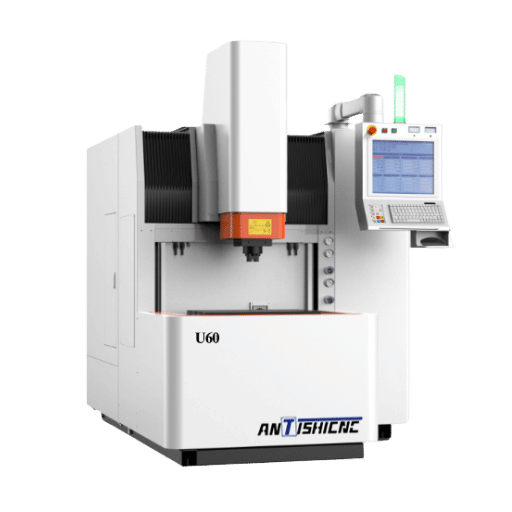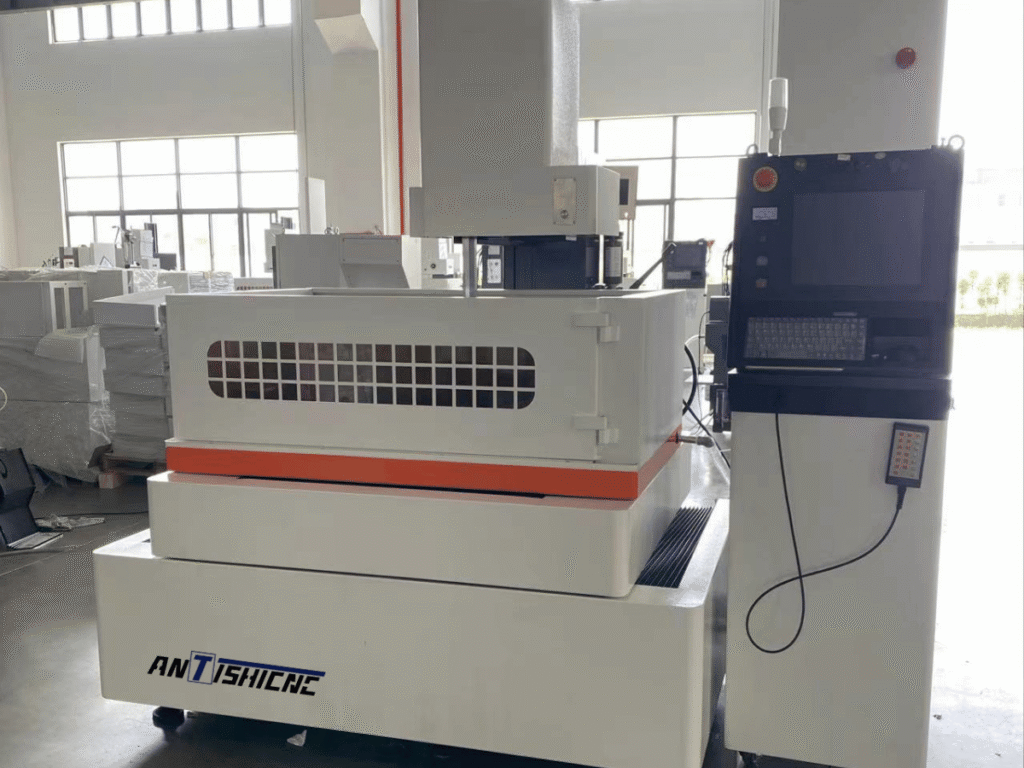
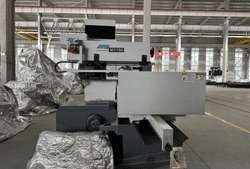
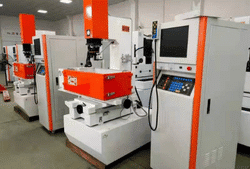
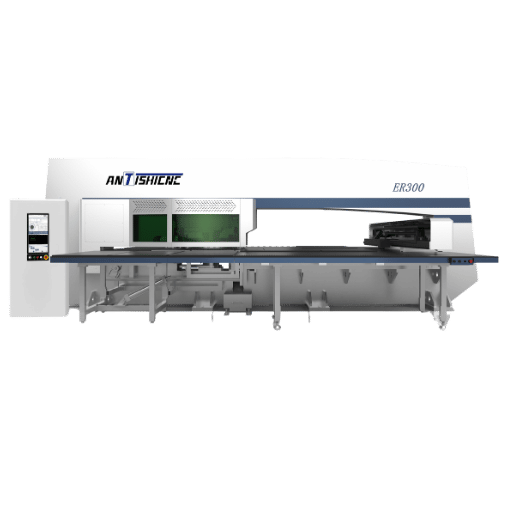
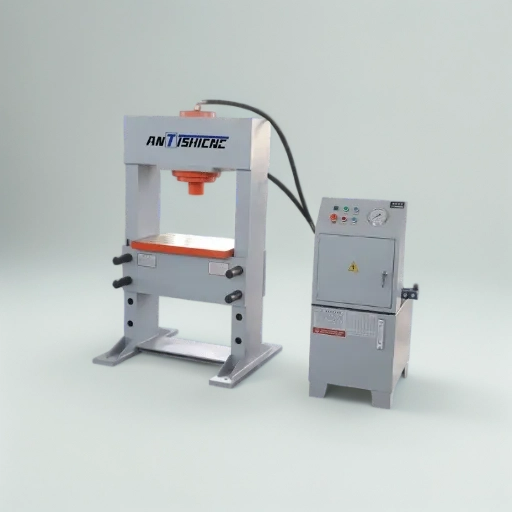
Technologies of Electrical Discharge Machining for Advanced Precision Manufacturing. With our EDM systems, we can achieve sub-micron tolerances while machining the hardest materials.

Cut titanium, tungsten, carbide, and hardened steels, among the hardest materials, with no mechanical stress and no tool wear.
With our precision wire EDM and micro-machining technologies, achieve tolerances of up to ±0.012mm.
EDM's non-contact procedure allows for achieving impossibly complex geometries with absolute precision.
Our hole drilling EDM removes broken tools while ensuring the associated workpiece remains undamaged.
EDM’s zero mechanical force avoids any deformation of the workpiece as well as stress-induced cracking.
Micro-EDM allows us to create features smaller than human hair with high repeatability.
We utilize state-of-the-art EDM equipment, which offers unparalleled accuracy and flexibility for even the most complex machining problems.
Modern CNC controls coupled with Industry 4.0 integration, IoT oversight, and automatic electrode swapping for unmanned operation and optimal productivity.
Offering Wire EDM, Sinker EDM, and Hole Drilling EDM on flexible platforms. From 0.065mm micro-holes to intricate 3D cavities.
For optical components and precision instruments, achieve mirror-like finishes to 0.18 microns Ra, without needing secondary operations.
Every machine manufactured undergoes stringent testing and quality control procedures as per ISO 9001 requirements, guaranteeing industry-accepted standards of quality.
Explore premier EDM tools for sale, EDM tools and machines for all your electrical discharge machining requirements.
Voltage: 3-phase 380V
Power Consumption: 1.5 kW
Max Cutting Thickness: 400 mm
Wire Diameter: 0.1–0.2 mm
Surface Roughness: ≤Ra2.5 µm
Max Cutting Speed: ≥120 mm²/min
Dimensional Tolerance: ±0.004 mm
Max Workpiece Length: Up to 47 inches
Electrode Material: Graphite or copper
Surface Finish: Highly smooth, uniform results
Axis Travel (X, Y, Z): 30", 38", 24"
Max Workpiece Weight: Up to 4000 lbs
Positioning Accuracy: ±0.0005 inches
Surface Finish: High precision, smooth results
Automation: Automatic electrode/tool changers
Electrical Discharge Machining (EDM) uses controlled electrical sparks between an electrode and a conductive workpiece to erode material precisely. A dielectric fluid ionizes under voltage, creating high-intensity sparks that generate extreme heat (up to 12,000°C), vaporizing and melting the material, which is then flushed away. This allows for the creation of intricate shapes.
| Wire EDM Specifications | ||
|---|---|---|
| Parameter | Specification | Capability |
| Wire Diameter | 0.004" - 0.012" (0.1mm - 0.3mm) | Ultra-fine to heavy-duty cutting |
| Position Accuracy | ±0.0001" (±0.003mm) | Exceptional precision |
| Tolerance Capability | ±0.00004" - ±0.0002" | Sub-micron accuracy |
| Maximum Taper Angle | 30° @ 8" material thickness | Complex angular cuts |
| Kerf Width | 0.006" - 0.014" | Minimal material loss |
| Maximum Workpiece | 27" x 40" x 15" thick | Large component capability |
| Surface Finish | 0.18 - 3.2 μm Ra | Mirror to textured finish |
| Cutting Speed | Up to 300mm2/min | High productivity |
| Sinker EDM Specifications | ||
| Parameter | Specification | Application |
| Accuracy | ±0.004mm (±0.00015") | High-precision molds |
| Electrode Materials | Graphite, Copper, Tungsten | Various applications |
| Maximum Current | 80 Amperes | Fast material removal |
| Orbital Capability | 3D orbital machining | Complex cavity creation |
| Table Load Capacity | Up to 2,000 kg | Heavy workpiece support |
| Z-Axis Travel | Up to 500mm | Deep cavity machining |
| Dielectric System | Oil or water-based | Optimized for material |
| Hole Drilling EDM Specifications | ||
| Parameter | Specification | Precision |
| Minimum Hole Diameter | 0.065mm (0.0025") | Micro-hole capability |
| Maximum Aspect Ratio | 150:1 (depth to diameter) | Deep hole drilling |
| Diameter Tolerance | ±0.0025mm | Exceptional accuracy |
| Straightness Tolerance | ±0.025mm over 150mm depth | Precise hole geometry |
| Maximum Depth | 1000mm (39.4") | Deep hole capability |
| Drilling Speed | 1" deep in ~1 minute | High productivity |
See why EDM is superior for precision applications
| Aspect | EDM Technology | Traditional Machining | Advantage |
|---|---|---|---|
| Material Hardness Limit | No limit (any conductive material) | Limited by tool material (≤45 HRC) | EDM |
| Tolerance Capability | ±0.5 μm achievable | ±5-10 μm typical | EDM |
| Complex Geometries | Any electrically conductive shape | Limited by tool access | EDM |
| Tool Wear | No mechanical contact | Continuous tool degradation | EDM |
| Surface Finish | Mirror finish possible | Additional finishing required | EDM |
| Cutting Speed | Slower for simple shapes | Faster for basic operations | Traditional |
| Setup Complexity | Requires programming knowledge | Simpler for basic operations | Traditional |
| Operational Cost | Higher energy consumption | Lower energy, higher tooling | Depends |
Here’s what our customers say about our EDM Machines
EDM or Electronic Distance Measurement is a surveying method that employs electromagnetic waves to obtain precise measurements of the distance between two designated points.
Electronic Distance Measuring (EDM) devices utilize electromagnetic radiation, such as lasers or microwaves, for distance measurement, particularly useful in surveying for timely and precise measurement.
Desktop Wire EDM machines are small, cost-effective pieces of equipment manufactured for the precise metal cutting needed for small scale intricate designs and prototyping.
As a distinction, traditional EDM uses a custom-shaped electrode that erodes material, while Wire Cut EDM uses a continuously moving wire to cut intricate shapes.
Wire EDM employs a continuously supplied, tensioned wire electrode to generate electrical discharges that erode and cut through conductive materials with precision.
Wire EDM parts such as wire electrodes, wire guides, power feed contacts, filters, and dielectric fluids are consumables that are crucial for ensuring EDM operations are done precisely and efficiently.
Similar to EDM, Electric Discharge Grinding (EDG) uses a rotating conductive wheel as an electrode which uses controlled electrical discharges to refine the surface of the workpiece.
Wire EDM achieves tolerances of up to 0.0001 inches or 2.5 microns. These tolerances are quite helpful for precision-focused tasks.
A CNC EDM machine is an electrical discharge machining tool that is computer-operated, equipped with electrical discharges that enable precision cutting or shaping of conducting materials. Best suited for detailed patterns and difficult metals.
Wire EDM equipment comprises sophisticated machines adapted for the precise cutting of electrically conductive materials through a thin wire electrode, providing exceptional precision, machining efficiency, and the capability to form intricate geometries.
Although EDM machines cost more, are slower, have limitations in conducting materials, and are more expensive, they do have merits such as precision cutting of hard materials, reduced workpiece stress, and exceptional surface finishes.
Machine programming for EDM requires specific CAM software. Examples are CAMWorks and Mastercam. These programs extract detailed toolpaths and machine code for efficient and automated machining.
Electrodes for EDM, such as graphite, copper, or tungsten, along with wire spools, dielectric fluid, diamond guides, tool holders, and pulse generators for discharging electricity in precise intervals, are also used as EDM tools.
Standard Wire EDM cutting technologies achieve depth ranges of three hundred to five hundred millimeters. However, under bespoke configurations, these technologies are capable of achieving depth ranges of over thirty six inches.
No, EDM wire is not reusable since it undergoes erosion and degradation in the machining stage, leading to a loss in both precision and effectiveness.
EDM wires snap as a result of low-fracture toughness, mechanical misalignment, improper tensioning, or worn power contacts, which apply stress and introduce flaws during the machining process.
Read our latest blog posts to find out the latest EDM Equipment.
EDM has changed the way precision manufacturing was once perceived. Sinker EDM is a much newer method that can offer higher accuracies, greater versatility, and efficiency in making complex...
The high remedy and high malleability of the EDM process in manufacturing complex parts place it as inexorably revolutionary. The two main EDM types, sinker EDM and wire EDM,...
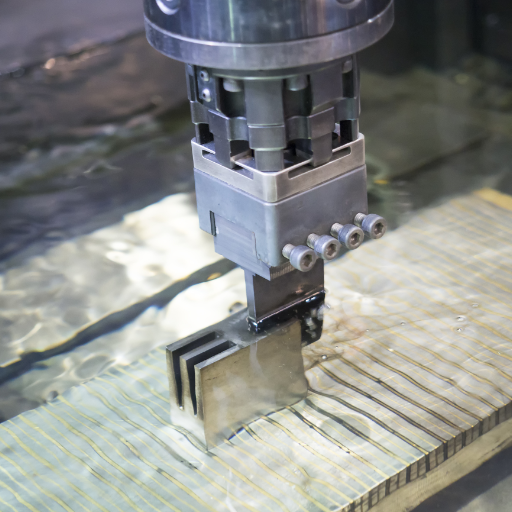
The selection of an electrode material is the most critical aspect concerning precision and efficiency in EDM. The right choice of material goes a long way in determining representations...
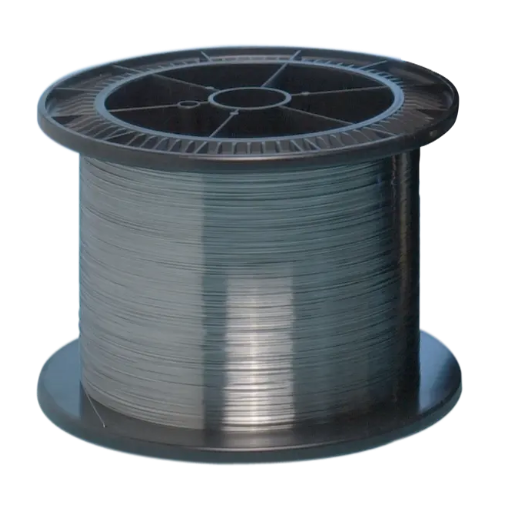
In terms of precision machining, there is no match for the efficiency of the EDM (Electrical Discharge Machining) process. Choosing a wire for the EDM machinery, either molybdenum wire...
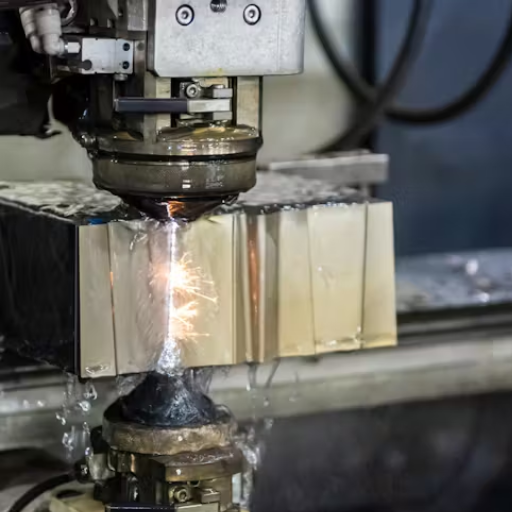
Electrical Discharge Machining Drilling Machines are changing industries on a larger scale to accommodate precision machining. EDM drilling machines are famous for drilling very fine holes and engraving very...
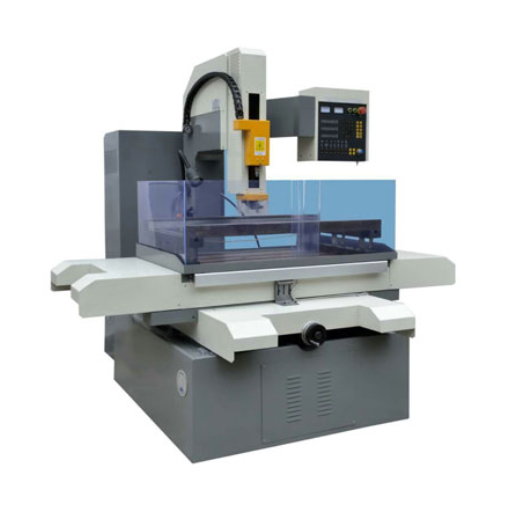
Of highest importance within precision manufacturing and modification industries that require complex and minute drilling operations, Electric Discharge Drilling Machines use advanced technology to cut through the hardest of...
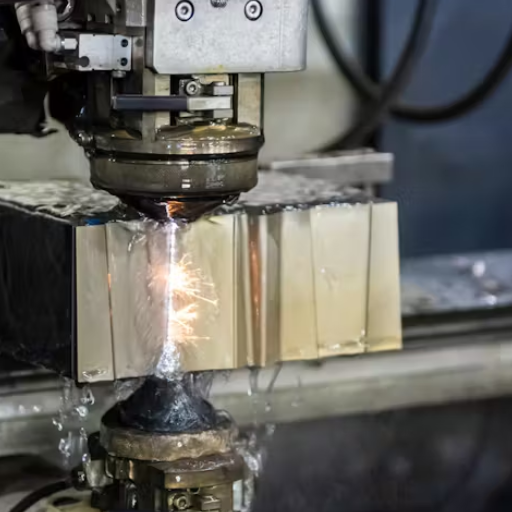
Adorned with by EDM drill machining, modern manufacturing acts on delivering precision into complicated components. EDM works with an interesting principle of shaping a material by electrical energy acting...
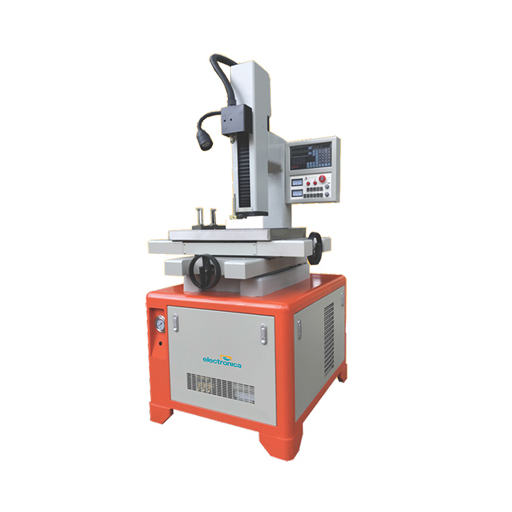
In precision manufacturing, an Electrical Discharge Machining Drilling Machine is something of a revolutionary tool; also called EDM drilling, it has the capability of making very tiny holes and...
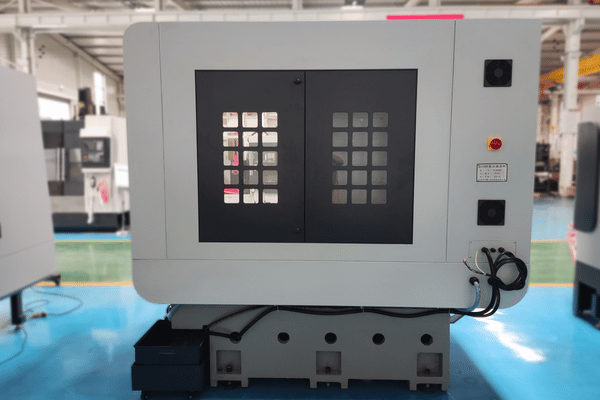
Receive an immediate and precise estimate for an EDM cutting machine structured around your individual manufacturing needs. Discover dependable and high-performance selections designed to impact precision, streamline efficiency, and maximize productivity in your processes.
Conventional machining usually demands the physical and direct contact machining of materials such as hard metals and complex designs, which leads to greater wear of tools. In contrast, EDM, or electrical discharge machining, makes contact-less machining possible, which drastically reduces tool wear.
In the electrical discharge machining process, dielectric fluid is critical as it cools, flushes debris, and maintains sparks. However, the selection of dielectric fluid does impact the surface finish and over quality of the part. It is noted that deionized water and certain hydrocarbon-based fluids serve these functions to a variety of applications in machining with good results.
Productivity in the EDM processes is low due to down-time of machines. However, automated EDM machines fitted with CNC controls can perform complicated machining processes with great but minimal operator input, which serves continuous production and quality. This is especially important in high-volume manufacturing, where profit is made.
The electrode material choice in EDM is affected by the type of electrode, EDM process, workpiece material, and the required work surface finishing. Customers often require copper and graphite as EDM electrodes, though graphite is preferred due to its ability to produce intricate details and its superior abrasion resistance. Choosing the correct electrode material is essential to ensure satisfactory machining rate and part fidelity.
Enhancements in EDM technology increase precision, speed, and operational efficiency, affecting fundamental manufacturing processes. Advanced systems of spark generation, flushing, and CAD/CAM systems improve the quality of workpieces and decrease the time of cycle. Therefore, these enhancements enable remediation manufacturers to handle more complex issues while still meeting the requirements of contemporary businesses and industries.
WhatsApp us