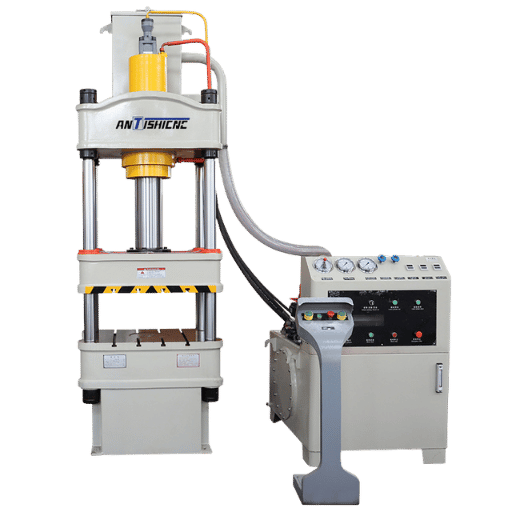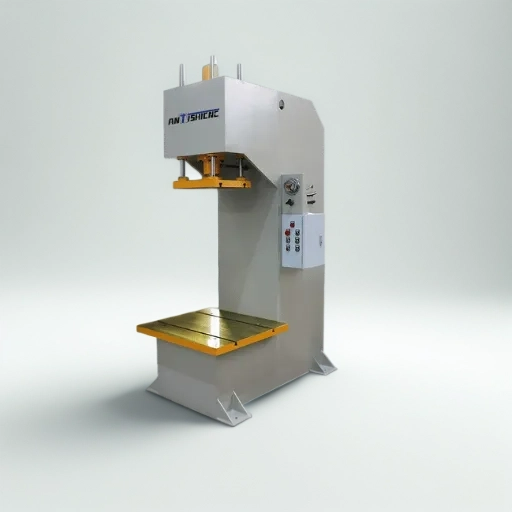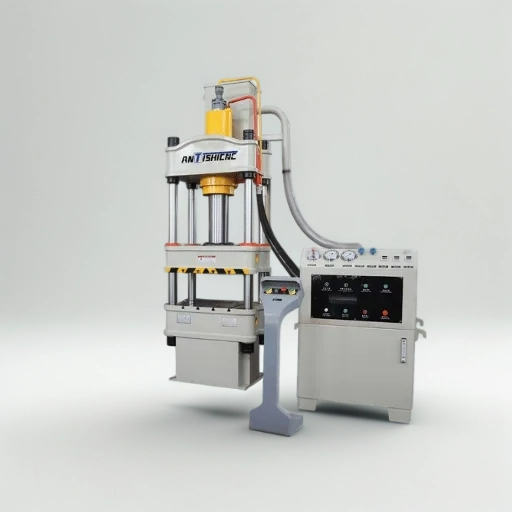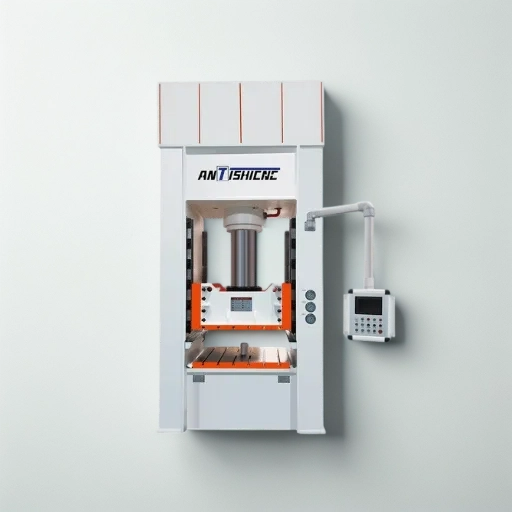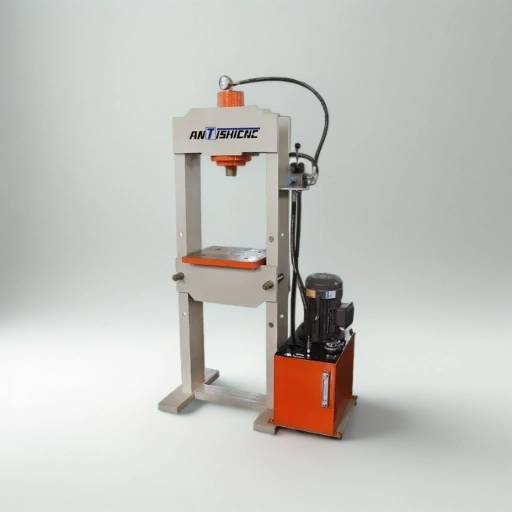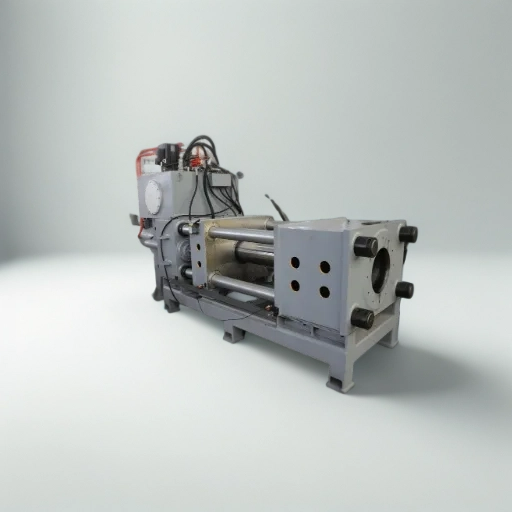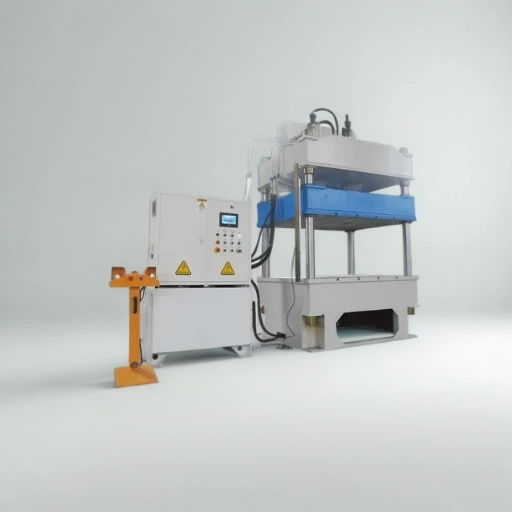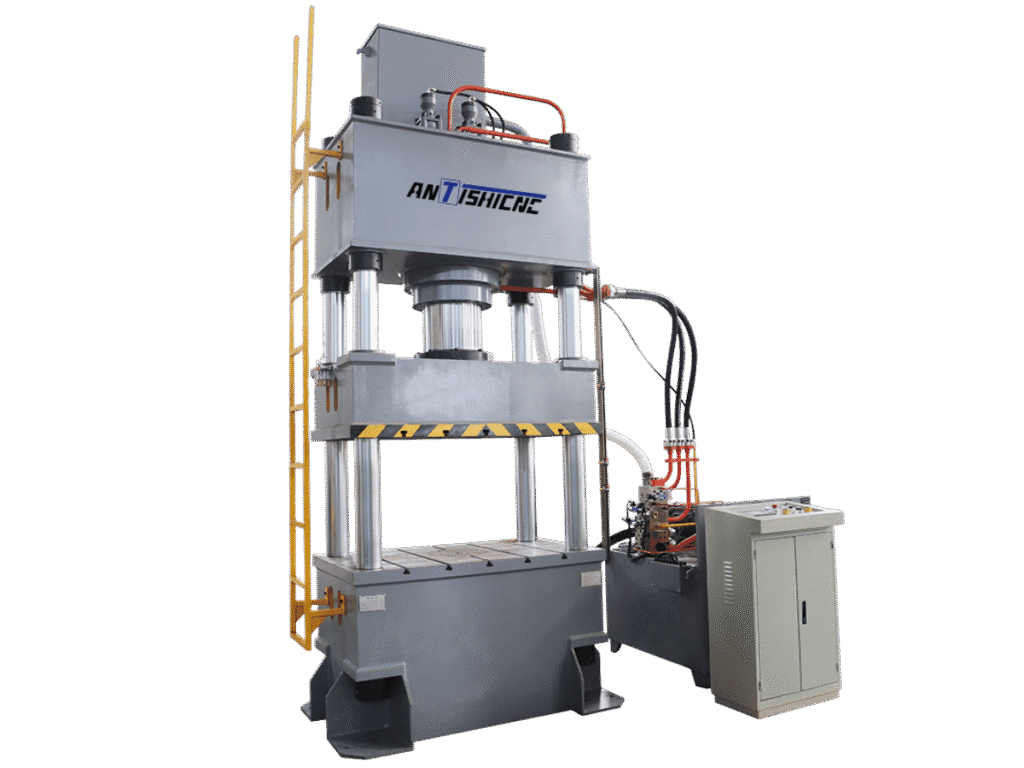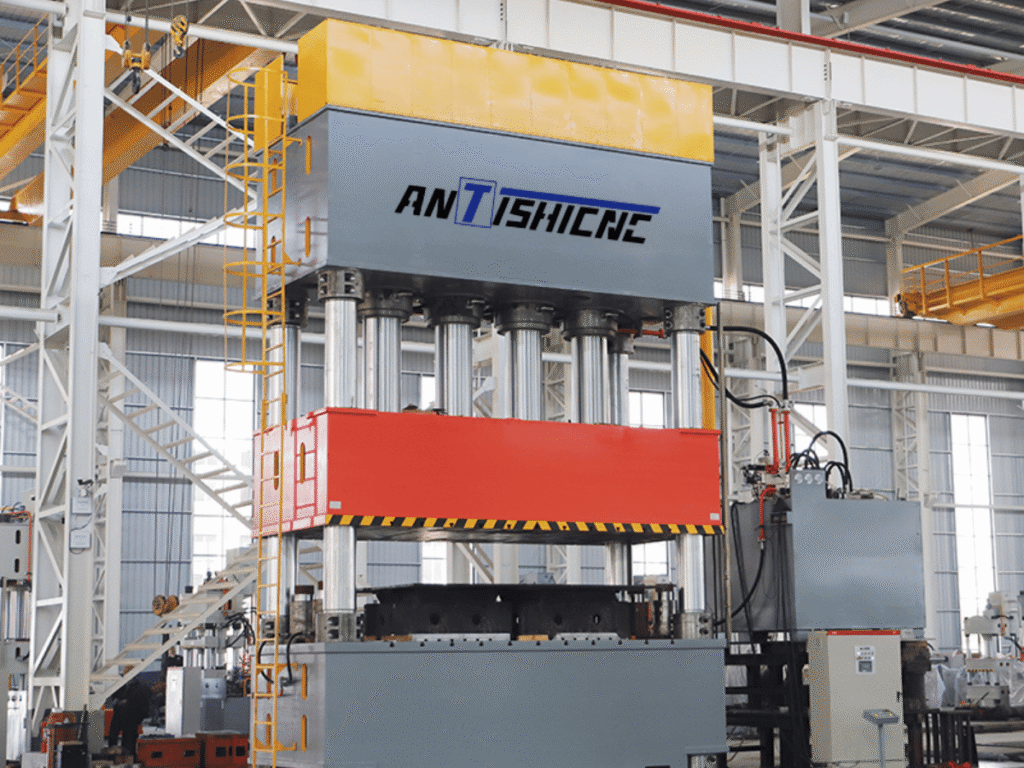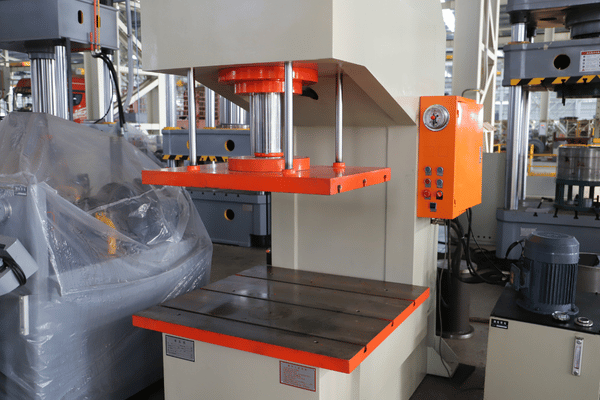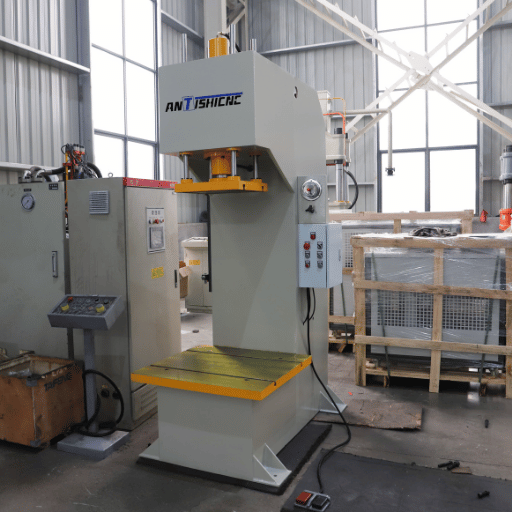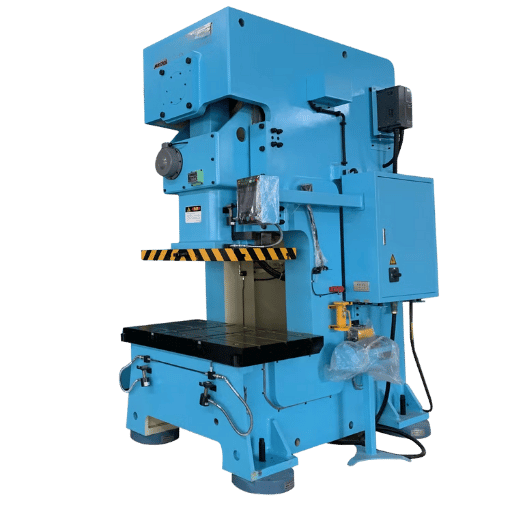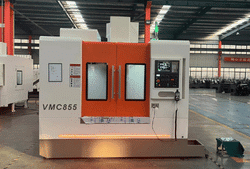
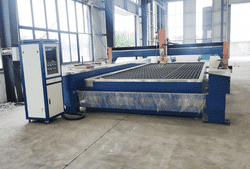
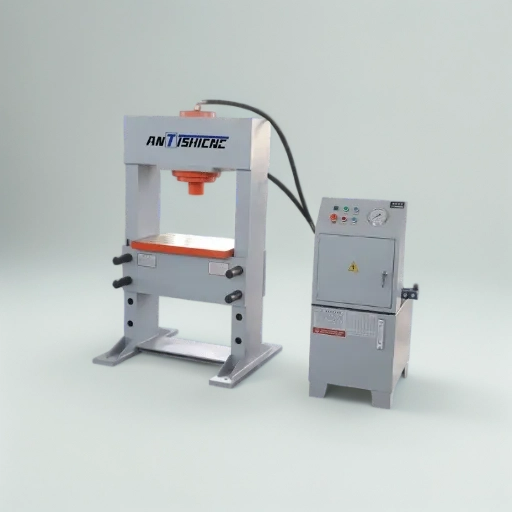
Crafted for industrial applications, our hydraulic press machines offer nominal operating force of 10 tons up to 10000 tons with precision, unparalleled force, and reliability.
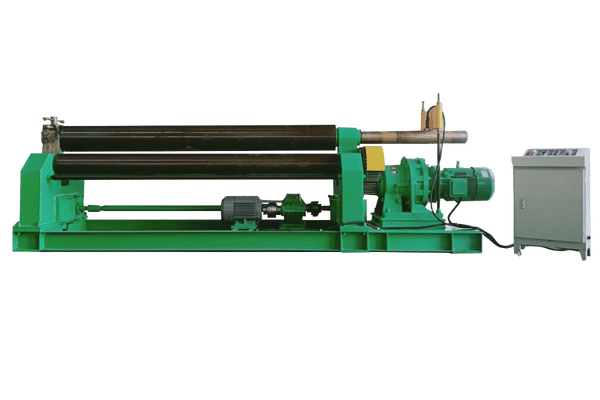

Improve safety and cut back workplace noise pollution using submerged pumps and vibration damping systems.
Lower energy expenses by as much as 40% with our ecosystem-friendly manufacturing VFDs (Variable Frequency Drives) and servo pumps.
Utilize top-of-the-line sealing systems to avert oil leaks and pressure drop.
Reduce costly interruptions with IoT predictive maintenance and robust, dependable IoT equipment supported by complete assistance.
Explore the benefits that set our hydraulic presses apart in the industry.
Our hydraulic presses offer the necessary force for the most demanding applications. Sophisticated servo-hydraulic systems guarantee superb energy efficiency.
Protect operators with OSHA-compliant light curtains, emergency stops, dual palm controls, and safety gates.
Achieve precision tolerances of ±0.001” with cutting-edge PLC and HMI programs that feature motion profile automation.
Dated reliability and low maintenance come from precision hydraulic systems, the firm’s stress-relieved frames, and meticulous machine parts.
💪 Robust, effective, and crafted for longevity, this Hydraulic Press Machine stands out in the market.
Motor Power: 1.5–30 kW
Max Working Pressure: Up to 25 MPa
Throat Depth: 105–500 mm
Slide Stroke: 125–800 mm
Maximum opening height: 210-1000mm
Table Size: 520x520 to 2000x2000 mm
Slide Stroke: 400–900 mm
Max Hydraulic Pressure: Up to 25 MPa
Motor Power: 5.5–150 kW
Maximum opening height: 700-1600mm
Frame Type: C-frame or H-frame
Press Force: 100–2000 tons
Nominal force(KN):1000-20000
Motor Power: 7.5-4.5*2kw
Slider stroke(mm): 600–1000
Liquid pressure (MPA): 18-31.5
Table size (mm):360*400-1000*600
Motor power (kw): 2.2-7.5
Gantry span (mm): 420-1010
Stroke (mm): 200-300
Maximum liquid pressure (MPa): 25
Slider stroke (mm): 500
Motor power (kw): 7.5-11
Maximum opening height (mm): 900
Table size (mm): 660X660-1000X900
Pressing Capacity: 100 tons
Hydraulic Pressure: 4,000 PSI
Voltage: 400V/3-phase
Motor Power: 5 HP
Frame Type: H-frame design
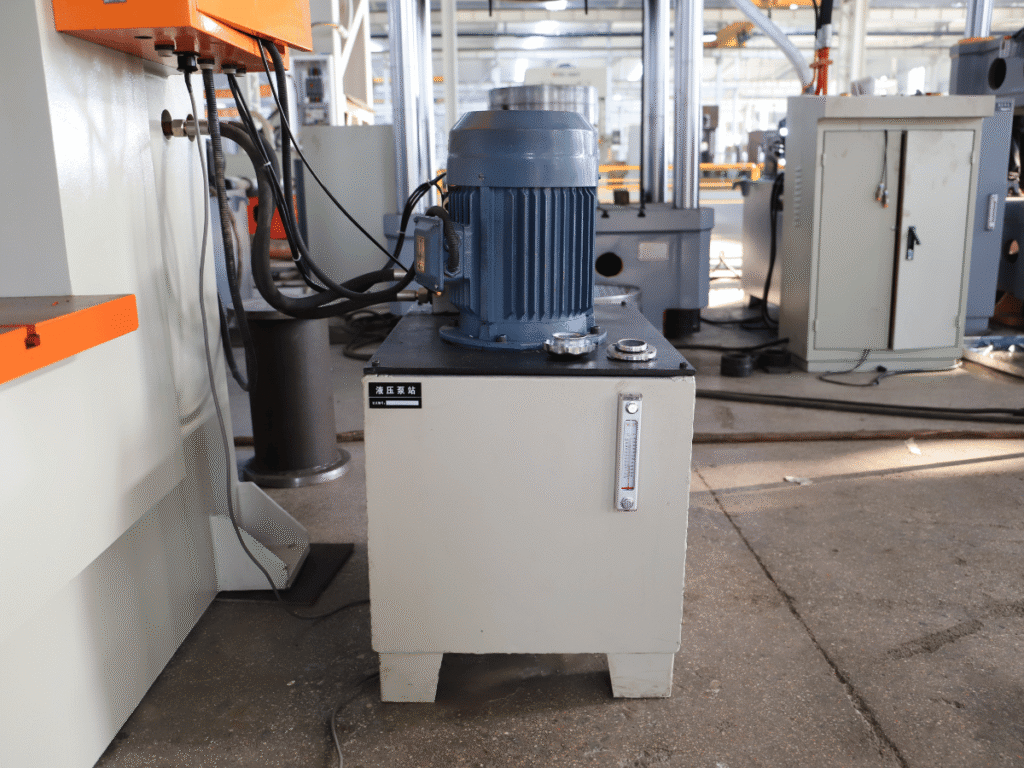
The system of a Hydraulic Power Unit (HPU), hydraulic pump, hydraulic cylinder, control valves, fluid, the frame structure, working table, and ram, comprises a Hydraulic press. Automation and precision monitoring instrumentation, such as accumulators and advanced control instruments, are optional.
Quality Management
European Compliance
Safety Compliance
Quality and Performance
| Specification | Range/Options | Features |
|---|---|---|
| Tonnage Capacity | 10 - 10,000 tons | Customizable |
| Frame Types | H-Frame, C-Frame, Four-Column, Single-column,Gantry,Horizontal | Multiple Options |
| Cylinder Sizing | Various bore & rod diameters | Optimized Force |
| Pressure Adjustment | Manual & Automated | Precision Control |
| Pump Types | Gear, Piston, Dual-Stage | High Efficiency |
| Motor Power | 1-50 HP (1 HP per 1 GPM) | Power Optimized |
| Control Systems | Digital, PLC, Automation Ready | Industry 4.0 |
| Safety Features | Emergency stops, Guards, Relief valves | Safety First |
Genuine reviews from delighted clients from different fields who rely on our solutions for hydraulic presses
The HSN code for hydraulic press machines is 846291, with 84629190 specifically categorized as “Other” hydraulic presses
A hydraulic press machine’s price ranges significantly; for instance, a 100-ton model will usually run between $10,000 and $30,000, while a 150-ton model will set you back anywhere from $20,000 to $50,000.
A manual hydraulic press machine is a piece of equipment which uses hydraulic pressure to perform the pressing operation on materials for processes such as molding, pressing of bearings, and testing of materials.
A small hydraulic press machine is an incipient multitasking device as it is used in metal fabrication, automotive repairs, and even in jewelry making, making it highly mobile and easy to store with an approximate capacity of twenty tons.
Through platforms such as dedicated machinery websites, one can find second-hand hydraulic press machines for sale.
An automotive, manufacturing, and other such industries that deal in metal fabrication have tasks such as cutting, bending, and punching, which can be done using a hydraulic press machine designed for a sheet of metal.
In operating a hydraulic press machine, one must position the material between the press plates, operate the pump handle to build pressure, and monitor the gauge to apply the proper amount of force.
While hydraulic presses offer versatility alongside precision, maintaining a consistent and steady force through fluids, mechanical presses are more efficient and better suited for high-speed production.
Addressing common issues with hydraulic presses, such as oil leaks, worn piston packing, and failure of pressure buildup, can be resolved by leak check, replacing worn components, and proper upkeep.
Hydraulic systems that utilize pressurized fluids excel at heavy lifting and meticulous work, whereas pneumatic systems that utilize pressurized air or gases work best for inexpensive applications in construction and medicine, such as in dentistry.
Indeed, the hardest material, a diamond, can be shattered with a hydraulic press utilizing the diamond’s natural cleavage and brittleness.
Due to their unique tensile strength characteristics, materials such as tungsten carbide, hardened steel ball bearings, select industrial ceramics, and rare earth magnets are exceedingly challenging or nearly impossible to compress using a hydraulic press.
A gas cannot be employed in a hydraulic press because it is compressible and would result in an irregular motion together with an energy loss whereas liquids are incompressible and provide a consistent force.
Check out the newest tips and insights from the industry regarding the use and application of hydraulic presses in the blog section.
Mechanical Press: Essential Solutions for Modern Manufacturing The mechanical press stands as the basic tool in a modern factory, having transformed production in numerous industrial areas through a wide...
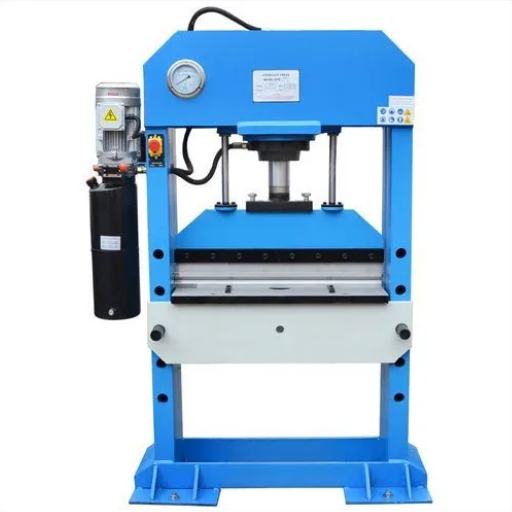
Precision, power, and efficiency are key terms in an industrial setting. Due to its ability to do heavy-duty work, the electric hydraulic press finds appreciable use in workshops and...
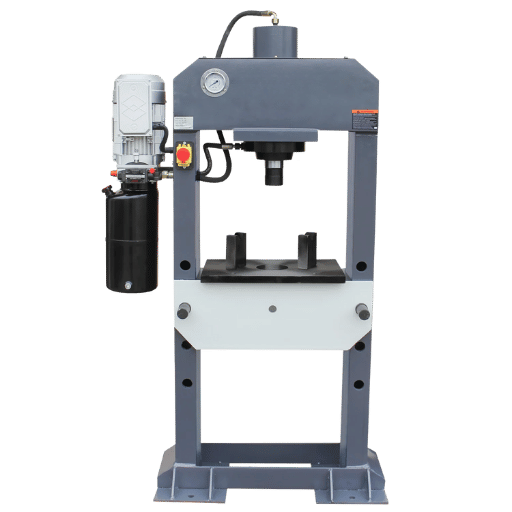
Hydraulic Press: Innovations and Solutions for 12 Ton Applications Hydraulic presses have, in fact, been a bedrock of many industrial applications requiring precision and power for high-pressure operations measured...
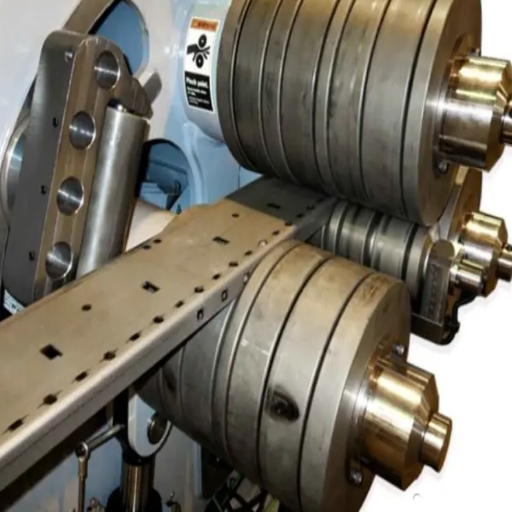
The metal forming is the essential process in the modern set of manufacturing processes, imparting shape to industries as they go about making automotive components or conversely fine aerospace...
Get in touch with our specialists today for bespoke hydraulic press solutions designed with your specific requirements in mind.
Tonnage refers to the load a hydraulic press can withstand. A machine with a higher tonnage rating can perform metal forming tasks due to the higher force it can exert.
While choosing a hydraulic press machine manufacturer, it is important to focus on the specific machine and customization options, their brand reputation, and the industry’s rating. Hydraulic press machine manufacturers should provide warranty options, customer service, and hydraulic press machine customer service.
Hydraulic press machines are plastic molding machines. They possess the capability to shape materials by providing the requisite force. Utilizing hydraulic presses, reliable temperature and pressure control offers the production of quality plastic components for the automotive and consumer goods industries.
Due to operational efficiency and lower energy consumption, hydraulic press systems are cheaper because of their multifunctional use. Increased multitasking efficiency reduces the number of machines needed, thus lowering maintenance and making them ideal in manufacturing.
H-frame presses are well-known for their robust “H” shape which offers high rigidity and stability, which is ideal for high tonnage and precise operations such as metal forging. C-frame presses are easier to access from three sides due to their compact “C” shape. While C-frame presses offer lower tonnage capacities, they are more suited to lighter operations which require frequent changes of the work pieces.
Optimization includes right sizing the motor and pump, for example, following the 1 HP per 1 GPM rule, implementing regenerative circuits for speed, using dual stage pumps, keeping hydraulic fluid levels within the needed range, changing filters on schedule, and using adequate hose and fitting diameters that would reduce pressure drops.
Tonnage requirements are determined by the material characteristics, their cross-sections, as well as the complexity of the process. Combined with light assembly work, a press with a capacity of 10-50 tons is sufficient. In automotive stamping, the tonnage capacity ranges from 100-1000 tons. Heavy forging operations can require up to 1,000-10,000 tons. To determine the optimal capacity for the application, our engineers are at your disposal.
WhatsApp us