




Mechanical Press: Essential Solutions for Modern Manufacturing
The mechanical press stands as the basic tool in a modern factory, having transformed production in numerous industrial areas through a wide range of pressing processes. From automotive to aerospace, these machines provide the large precision, efficiency, reliability, and fast processing speed so demanded by mass production. In greater detail, this guide will elaborate on how mechanical presses facilitate the innovation of metal forming, assembly, and fabrication processes.
Understanding Mechanical Presses
Definition and Core Purpose
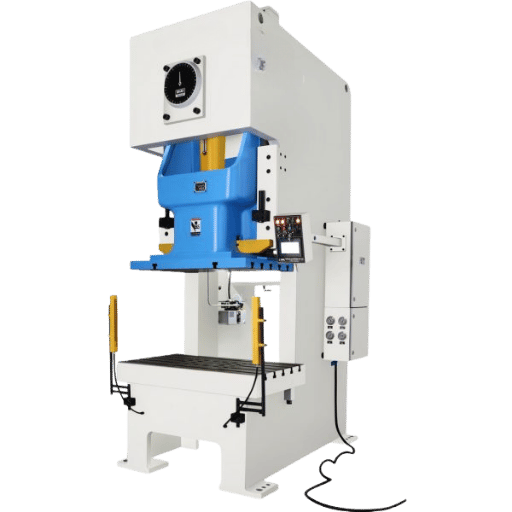
A mechanical press is a complex machine intended to transmit forces mechanically to form, deform, or cut materials, usually metals and sheets. The mechanical media contains a motor that drives a complex assembly of gears and levers, creating the accurate linear motion required for stamping, forming, punching, and cutting operations.
Key Operating Principles
The principle of operation of mechanical presses is the conversion of rotary motion into linear motion to cut and shape workpieces. These are electric motor-driven systems, which provide energy to the flywheel, and then the energy is transmitted to the crankshaft or cam mechanism. The press ram always descends with controlled eccentricity, ensuring repeatability and accuracy for every single operation cycle.
Industrial Applications
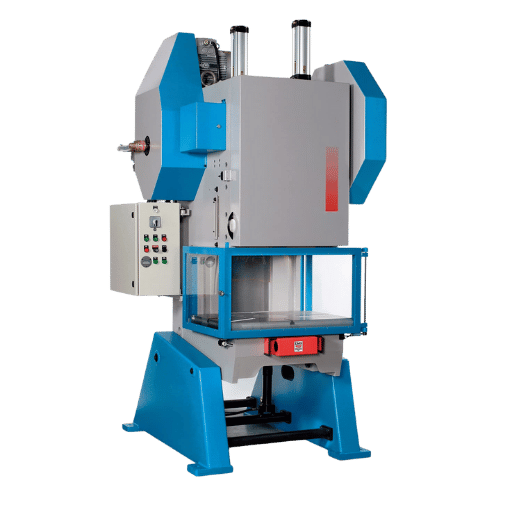
Automotive Manufacturing
Stamping and forming vehicle components, including body panels, brackets, and structural elements, at a very high rate and with precise accuracy.
Electronics Industry
Forming and assembly of miniature metal parts for circuits and electronic devices, requiring superior precision.
Aerospace Applications
Production of lightweight yet durable aircraft components against safety and performance criteria.
Metal Fabrication
Cutting, punching, and shaping metal parts for high-volume production in several industries.
Appliance Manufacturing
Components for household appliances such as washers and dryers are fabricated.
Types of Mechanical Presses
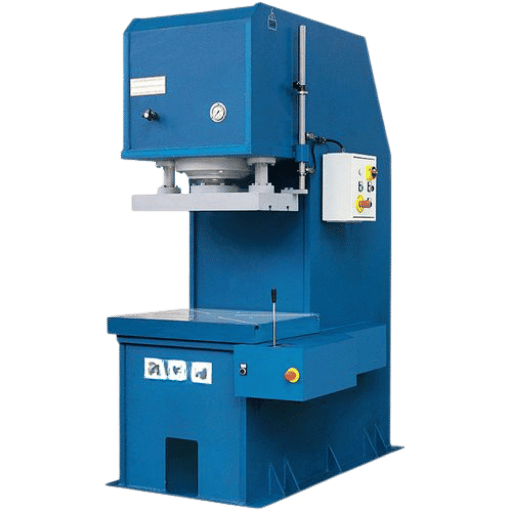
Crank Presses: Versatility and Performance
The crank press is considered the most common mechanical press in industrial fields. The crankshaft mechanism would convert rotational drive motion into precise linear movements, enabling highly accurate and repeatable operations.
Capacity Range: 10 tons to over 1,000 tons
- High cycle rates: For a high-volume production environment
- Adjustable stroke length: To adapt to different part configurations and materials
- Robust construction: The industry benchmark for the automotive and metalworking applications
- Modern enhancements: Automatic feeding systems and programming controls
Eccentric Presses: Advanced Engineering Solutions
Eccentric presses provide an exceptionally versatile range of metal-forming and stamping operations. The engineering advantage utilizes an eccentric mechanism that efficiently applies force during the specified strokes.
Performance Enhancement
With eccentric presses having an edge over conventional systems in mechanical work, they can bring about an increase of up to 25% in production capacity. Therefore, having found varying areas of precision manufacturing.
- Variable stroke length capabilities
- Overload protection systems
- Dynamic balancing mechanisms
- Advanced control systems for precision adjustments
Specialized Mechanical Presses
Specialized mechanical presses offer machinery engineering solutions for niche and high-precision applications, including servo drives, hybrid force systems, and custom-built tooling configurations tailored to each application.
| Feature | Specification | Benefit |
|---|---|---|
| Speed Range | 20-150 strokes/minute | Flexible production rates |
| Positional Accuracy | ±0.005 mm | Precision manufacturing |
| Modular Design | Customizable configurations | Easy integration with automation |
| Control Systems | Closed-loop feedback | Real-time monitoring and adjustment |
Key Features and Benefits
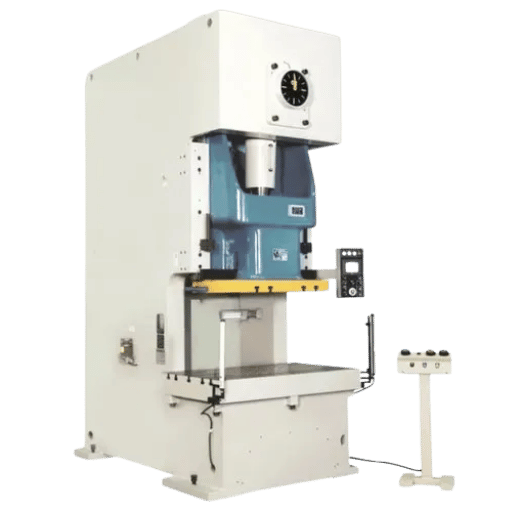
High-Speed Operation and Precision
Modern mechanical presses may run at astonishing speeds of 1,500 strokes per minute in fully automated settings. Such speeds are required by industries with a heavy demand for products in automotive, aerospace, and electronics manufacturing.
Precision Level: Micron-level accuracy with servo systems
Durability and Reliable Production
Mechanical presses have been designed robustly, utilizing high-quality materials that impart durability and high performance even in the most rigorous environments. Today, the components are made from advanced steels and machined by precision methods to withstand continuous operation under heavy loads.
- Operational lifetime: Exceeding 20 years with proper maintenance
- Advanced lubrication systems minimize component wear
- Condition monitoring sensors enable predictive maintenance
- Temperature, vibration, and load monitoring prevent equipment failure
Energy Efficiency and Cost-Effectiveness
Present-day mechanical press designs incorporate energy-saving technologies that significantly reduce power consumption while maintaining an equivalent level of operational performance.
Energy Savings
Servo presses save energy by 30-50% compared to conventional mechanical presses due to motor operations and regenerative braking systems optimized for energy-saving purposes.
Maintenance Best Practices
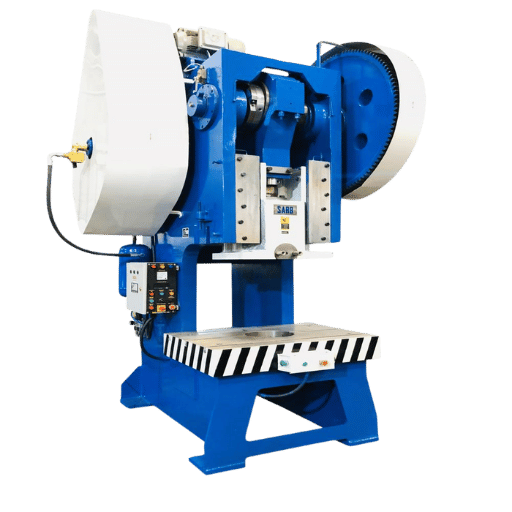
Essential Maintenance Tips
1. Routine Inspection and Lubrication
- Regular inspection of clutch and brake systems
- Bearing and slide adjustment mechanism monitoring
- High-grade lubricant maintenance for optimal performance
- Synthetic lubricants for high-temperature applications
Proper lubrication reduces equipment breakdowns by 30%
2. Common Problem Resolution
- Overheating issues: Maintain clean air filters and proper lubrication
- Misalignment problems: Utilize laser shaft alignment systems
- Electrical faults: Regular insulation resistance testing
- Preventive measures: Thermal imaging for hotspot detection
3. Genuine Spare Parts Importance
- Maintain optimal performance levels and safety standards
- Ensure compatibility and reliability with manufacturer systems
- Reduce failure rates by up to 40% compared to non-genuine parts
- Benefit from warranties and technical support
Technology Innovations and Future Trends
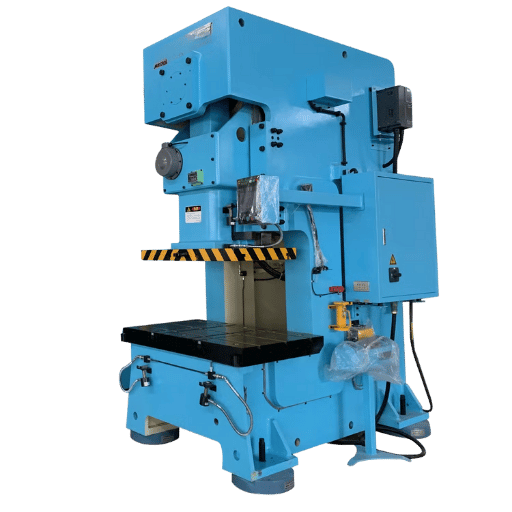
Enhanced Precision and Energy Efficiency
Technological advances in mechanical press systems focus on enhancing precision and energy efficiency by adopting sophisticated control methods. The servo-drive systems introduced significant innovations, offering motion and force controls for complex manufacturing operations.
Position Accuracy: Within microns for enhanced product quality
Smart Technology Integration
Developing an innovative system leads to measurable improvements in productivity, energy efficiency, and the operational lifespan of mechanical presses, providing real-time monitoring data to support proactive decision-making and predictive maintenance solutions.
- IoT-enabled sensing devices for comprehensive monitoring
- Predictive maintenance capabilities minimize downtime
- Real-time performance optimization through data analysis
- Energy consumption monitoring for sustainability goals
Future Design Trends
| Trend | Technology | Expected Impact |
|---|---|---|
| Industry 4.0 Integration | Internet connectivity and monitoring | Optimized operations and reduced waste |
| Servo Press Systems | Controlled speed and position | 50% energy consumption reduction |
| Modular Design | Customizable machine configurations | Extended equipment lifecycle and ROI |
| Advanced Materials | High-strength, lightweight components | Improved durability with reduced wear |