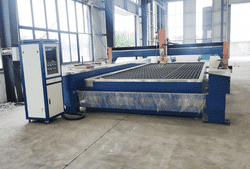
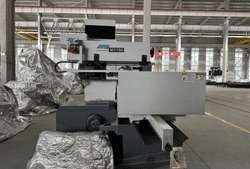


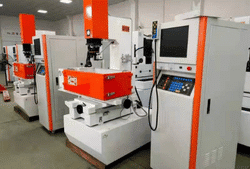
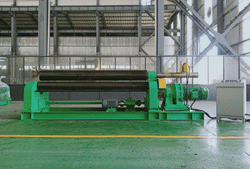

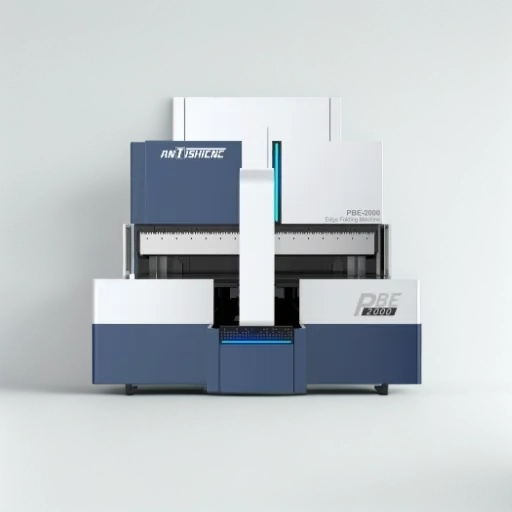
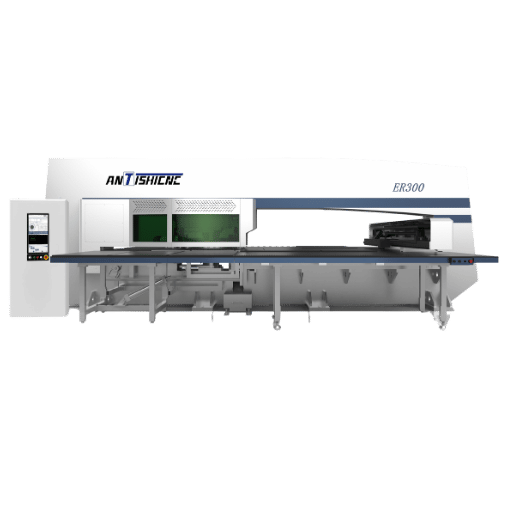
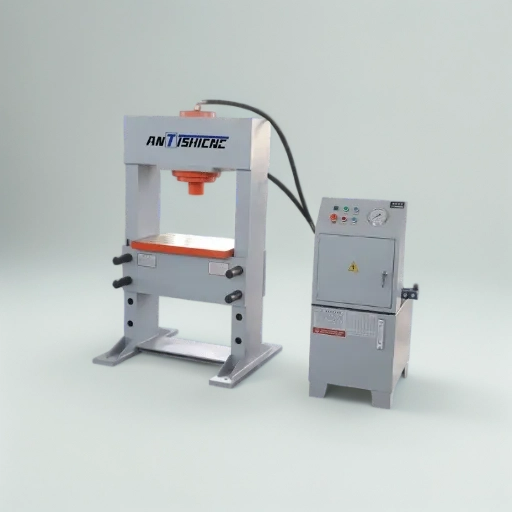


In the demanding world of metal cutting, precision and efficiency are not just preferences—they’re necessities. The High Speed Circular Sawing Machine HY-230NC represents a quantum leap in cutting technology, delivering unprecedented performance that transforms traditional manufacturing processes.
🔧 High-Speed Circular Saw Machines: An Overview
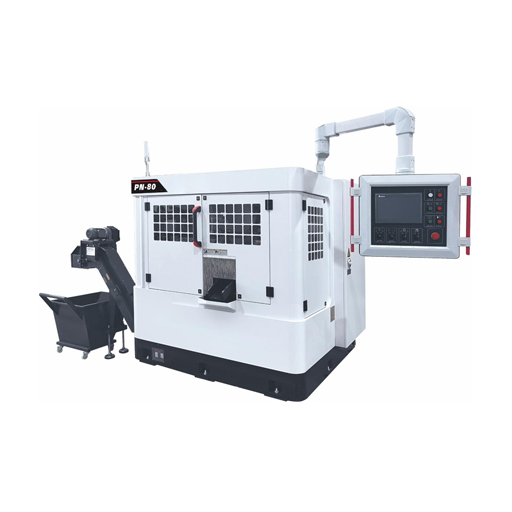
High-speed circular saw machines are considered the heart of modern manufacturing, with applications in the automotive, construction, and manufacturing industries. Based on advanced blade metallurgy, these cutting tools provide immaculate cuts with minimal burrs, which are typically formed through conventional methods.
Industry Impact: The latest industry statistics demonstrate that high-speed circular saw machines can increase production by up to 30% compared to traditional band saws, while operating with precision tolerances of ±0.1mm, which enables further integration into automated production lines.
Key Technology Advantages
- Intelligent CNC Controls: Advanced programming capable of setting cutting patterns complex to
- Servo-Driven Feed Mechanism: Precise handling and positioning of material
- High-Speed Spindles: Rotations up to 5,000 rpm for high-demand techniques
- Blade Technology: Carbide-tipped or cermet for extended durability
🚀 Key Features of the HY-230NC
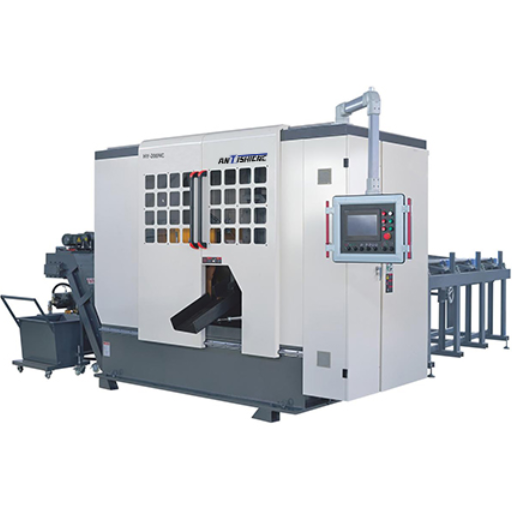
🎯 Precision Cutting Technology
Magnifying accuracy, tolerance may be strained to the extent of ±0.05mm with little wastage, perfect for connection with automatic systems.
⚡ High Cutting Speed
The best speed for cutting was established at 3,000 RPM through the implementation of the servo-drive system, which abridged execution time by 35% over a conventional saw.
💻 User-Friendly CNC System
With real-time monitoring and diagnostics, the advanced touchscreen interface shortens setup times for cutting and reduces operational errors.
🛡️Durable Construction
Especially designed with a wide-range heavy-duty stainless steel frame to provide linear guides that require zero maintenance and guarantee lasting reliability in industrial environments.
🌱 Energy Efficient
The eco-mode suits energy demand to meet a maximum of 20% energy saving.
🔧 Material Versatility
Cuts most metals with incomparable precision: these metals include steel, aluminum, copper, and titanium.
📊 Technical Specifications
| Specification | Value | Industry Advantage |
|---|---|---|
| Cutting Capacity | Up to 230mm diameter | Versatile application range |
| Motor Power | 15kW main motor | Enhanced cutting speed and yield |
| Control System | PLC touchscreen interface | Precise control and smooth operation |
| Cutting Speed Range | 20-120 RPM (adjustable) | Material-specific optimization |
| Precision Tolerance | ±0.05mm | Superior accuracy standards |
| Safety Features | Emergency stops, safety enclosures | Workplace safety compliance |
🏭 Industrial Applications
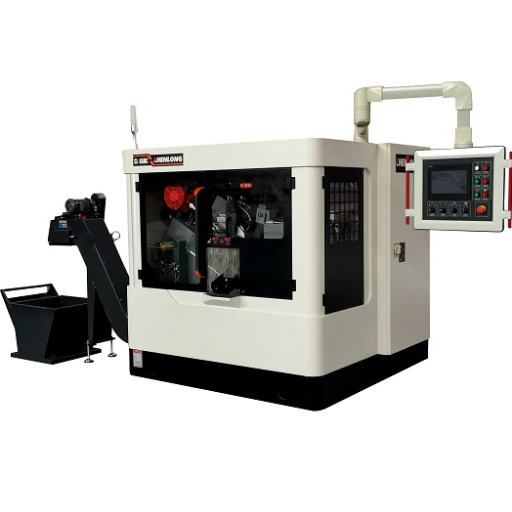
🛩️ Aerospace Industry
With the aerospace market valued at $298 billion in 2023, precision cutting of titanium and aluminum components for structural frames and engine parts is critical for maintaining competitive advantage.
🚗 Automotive Industry
The global automotive manufacturing sector, projected to reach $2.9 trillion by 2025, relies on the HY-230NC for cutting steel and aluminum parts for vehicle bodies, chassis, and engine systems.
⚡ Energy & Oil Gas Industry
Supporting pipeline construction and wind turbine manufacturing, with the renewable energy sector expected to reach $1.5 trillion by 2030.
🏗️ Construction & Metal Fabrication
Serving the $14.4 trillion global construction market with precise cuts for metal frames, beams, and architectural components.
🏭 Manufacturing Applications
Contributing to modern manufacturing processes that account for approximately 16% of global GDP.
30-50%Production Efficiency Increase
40%Downtime Reduction
90%+Automated System Uptime
60%Workplace Injury Reduction
⚖️ Comparison: HY-230NC vs Traditional Machines
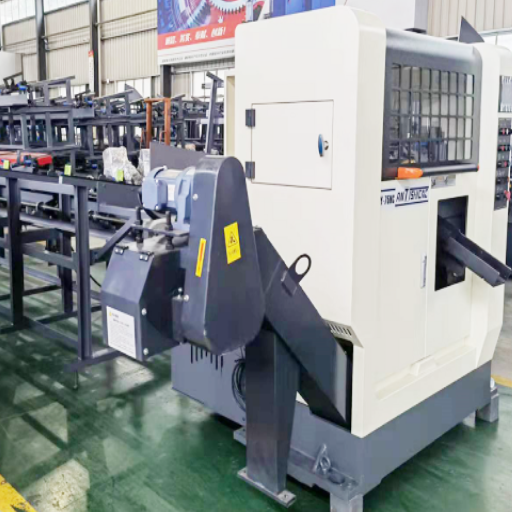
| Feature | Manual Machines | Semi-Automatic | HY-230NC (Fully Automatic) |
|---|---|---|---|
| Daily Production | 100-150 parts | 200-250 parts | 300-400 parts |
| Precision Tolerance | ±0.5mm | ±0.2mm | ±0.1mm |
| Labor Requirements | Continuous operator | Frequent intervention | Minimal supervision |
| Safety Rating | Standard | Improved | Advanced (60% injury reduction) |
| Energy Efficiency | Standard | Moderate | 20% energy savings |
| Total Cost of Ownership (5 years) | High | Moderate | 20-30% lower |
💰 Cost Efficiency & ROI Benefits
Market Outlook: The global metal-cutting tool market is forecasted to reach $97 billion by 2028, driven by demand for precision and efficiency across industries.
Key Cost Savings
- Material Waste Reduction: 20-25% reduction through optimal cutting paths
- Energy Consumption: 30-40% decrease in operational power usage
- Labor Costs: 30-50% reduction in direct labor requirements
- Maintenance Costs: Extended blade life and reduced equipment wear
- Production Efficiency: Up to 40% improvement over traditional systems
🌟 Real-World Success Stories
“The HY-230NC has revolutionized our assembly line, increasing throughput by 15% while maintaining rigorous quality standards. This machine is truly a game-changer for our production process.”
“Since incorporating the HY-230NC, we’ve recorded a 12% reduction in material waste. The user-friendly interface reduced our training time by 25%.”
Industry Case Studies
Aerospace Application
- 25% increase in production efficiency for titanium parts
- 15% reduction in assembly defects
- Enhanced safety standards compliance
Automotive Manufacturing
- 30% reduction in chassis processing time
- 20% decrease in material waste
- Improved tolerance for modern vehicle designs
Industrial Machinery
- 40% reduction in cutting time for dense materials
- 18% energy consumption savings
- Enhanced sustainability goals achievement
📈 Market Position & Future Prospects

The HY-230NC is strategically positioned in a rapidly growing market. With the global metal cutting machine market projected to grow at a CAGR of 5.6% from 2023 to 2030, driven by technological advancement and manufacturing efficiency demands.
Competitive Advantages
- Advanced CNC technology: for high precision and repeatability
- Eyed for Sustainability: rolls out under green manufacturing agendas
- Market Adaptability: moving in areas such as EV manufacturing
- Innovation Leadership: behind ever-evolving technology
5.8%Market CAGR 2023-2030
$3.1B2022 Market Value
$370BMedical Device Market by 2030
❓ Frequently Asked Questions
How does the HY-230NC differ from regular sawing machines?
In terms of working speed, the HY-230NC cuts at more than five times the speed of a conventional saw; it uses advanced servo feeding systems; it has a three-point clamping mechanism; and it requires minimal maintenance, thus keeping the operational costs very low.
Why does automatic operation increase efficiency?
The famous fivefold speed circular saw clings on to works using a three-point system and has an automatic lubrication system that lubricates blades and prolongs their life, thus cutting downtime for blade adjustment.
What industries are mainly served by this HY-230NC?
It finds its applications in automotive manufacturing, metal fabrication, construction, aerospace, and high volume production applications. Its precision spindle gearbox and automatic lubrication system are apt for uses where surface quality preserving is a major concern.
What are the technical specifications of this machine?
It offers a cutting capacity of up to 230mm, a main motor of 15 kW, a PLC touchscreen interface control, automatic feeding, variable cutting speeds adjustable from 20-120 RPM, state-of-the-art noise reducing technology, and absolutely every safety device, including emergency stops.
How does the HY-230NC contribute to the sustainability movement?
The machine has an Eco Mode for optimised energy consumption and power saving of up to 20%. Its accuracy in cutting also means lesser wastage of material, and its sturdy build assures very few replacements over time, having less environmental impact.
🎯 Conclusion
The HY-230NC High Speed Circular Sawing Machine is more of a business opportunity with an art form of manufacturing. Aspects of precision are expected at the cutting edge of fast and efficient sustainable developments that suit the very nature of how modern industry is growing.
Key Takeaways:
- Cutting service increased by 35% up to ±0.05mm accuracy
- Cost-economizing due to wasting less energy and resources
- Strong protective measures ensuring 60% reduction in work injuries
- Usable in different high-growth industries
- Equivalent to a strong ROI due to a 20-30% discounted total ownership cost
The manufacturing processes, being more of automated and precise, continue to develop, and HY-230NC has come into existence to represent the possibilities that hybrid technology provides for practical industrial purposes. As companies strive to shore up their competitive positioning while remaining committed to sustainability, the HY-230NC becomes their ultimate tool, marrying performance, exigency, and warranty.
Reference Sources
-
Dynamic Performance Optimization of Circular Sawing Machine Gearbox
This study explores the dynamic performance and efficiency of circular sawing machines, focusing on high-speed operations.
Link to source -
Forces and Wear in High-Speed Machining of Granite by Circular Sawing
This paper analyzes the performance and tool wear during high-speed cutting, providing insights into efficiency and durability.
Link to source -
High-Speed Circular Sawing Using Temporary Tensioning
This article discusses techniques like thermal tensioning to optimize the performance of high-speed circular sawing machines.
Link to source -
Research on High-Speed Vibration and Structure Optimization of Multiwire Sawing Machine
This study focuses on structural optimization and vibration control in high-speed sawing machines, enhancing precision and stability.
Link to source -
The Critical Rotational Speed of Circular Saw: Simple Measurement Method and Its Practical Implementations
This research examines the critical rotational speed of circular saws and its practical applications in sawing machines.
Link to source