




Electrical Discharge Machining (EDM) is a specialized manufacturing process that has revolutionized industries dependent on shredding for intricate and detailed cutting work. This guide is specifically designed for you, as it provides comprehensive information about wire EDM, whether you are an experienced machinist looking to enhance your skills or a new and eager learner seeking to understand how the machine functions. From explaining the principles involved in ADM wire cutting to a detailed walkthrough of the process, and from its various applications in aerospace, automotive, medical, and other industries, this article provides a comprehensive overview. By the end, you will have learned what wire EDM machines are, how they work, their benefits, and practical tips for selecting, using, and maintaining one for outstanding performance. Prepare for a journey of exploring the potential applications of this tool and discover how it can elevate precision manufacturing to the next level.
Understanding EDM Wire Cutting

Wire EDM, more formally referred to as wire electrical discharge machining, is a manufacturing process that cuts conductive materials using a thin wire modelled electrically. It is essentially a non-contact cutting process in which sparks are generated through electrical discharges. Wire EDM often enables the machining of materials that require intricate shapes and details, as well as fine tolerances, in metals and alloys. It is mainly appreciated for its accuracy and ability to process difficult material that may otherwise be blasted or made to stress or distort by mechanical means.
What is EDM Wire Cutting?
Electrical discharge machining, also known as wire cutting, is a painstaking process wherein thin, electrically charged wires cut through materials by sparking and eroding the surface of the material. These wires are usually of brass or copper and are highly accurately maneuvered by CNC machines. The entire process occurs in a dielectric fluid, traditionally deionized water, which controls the sparks, cools down the material, and washes away the debris generated during the cutting.
It also avoids the mechanical stress caused by cutting tools, thereby maintaining material integrity.
Industry data validate the most effective EDM wire cutting applications in tool and die making, aerospace, and medical fields. In the medical field, it is employed to manufacture complex surgical instruments and implants. Its high precision is also required in producing molds and parts in the automotive and electronic industries. Lately, EDM machines have evolved in the direction of automation, advanced control systems, and wire materials to optimize efficiency, reduce energy consumption, and provide a broader scope of applications for the EDM process.
How Does Wire EDM Work?
Wire Electrical Discharge Machining (EDM) is an exceptionally controlled machining process that requires an electrically charged wire, typically made of brass or copper, to cut through conductive materials by creating numerous minor electric discharging voltage differences. The heat generated during discharges melts or vaporizes the work material along a precise path, thus allowing for excellent cuts and intricate designs.
It is essential to note that deionized water is utilized as a dielectric fluid in Wire EDM, thereby preventing the wire and workpiece from actually making contact. The dielectric fluid cools the piece during cutting and washes away the debris formed, thereby contributing to accurate accuracy in cutting. Presently, Wire EDM machines can maintain tolerances of the order ±0.0001 inches. This process is, therefore, proper wherever utmost precision is required.
It can cut through hard-to-machine materials such as titanium and tungsten carbide, preserving its applicability in cutting-edge sectors like aerospace, electronics, and micro-manufacturing.
This is supported by industry data, which consistently shows a rising utilization level in Wire EDM due to its ability to impart intricate designs without thermal distortion, thereby warranting its preference in areas demanding unmatched precision.
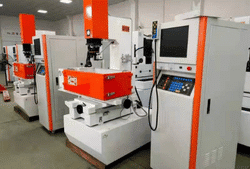
Components of an EDM Wire Machine
An EDM wire machine comprises several components that collaborate to ensure precision and efficiency:
- Power Supply Unit The power supply unit generates electrical pulses that enable the spark erosion process to cut through materials with high precision.
- Worktable and Clamping System The worktable securely holds the workpiece, while the clamping system maintains its position during machining.
- Wire Feed Mechanism The wire feed mechanism continuously feeds a thin wire through the machine. The wire acts as a cutting tool that travels in a controlled manner.
- Dielectric System A dielectric fluid is used to cool the wire and flush out debris created during the cutting process; typically, deionized water is used.
- CNC Control Unit This is a computer-based control system that enables the accurate programming and automation of the cutting path for intricate and detailed designs.
- Drive System Motors and guides impart precise movement to the wire and the workpiece, enabling them to maneuver along complex geometries and meet tight tolerances.
Each component is essential for the exact and efficient operation of an EDM wire machine and thus is an indispensable tool for the modern manufacturing industries.
Types of EDM Wire Machines

- Conventional EDM Wire Machines – The machines are traditionally set up and used for simple cuts. A widespread application for these machines is a general-purpose one.
- CNC EDM Wire Machines – These machines feature CNC systems, enabling greater automation and precision, making them ideal for intricate designs and high tolerances.
- High-Speed EDM Wire Machines – Ideal for maintaining the highest cutting speeds when accuracy is paramount, a high-speed and high-accuracy EDM wire cutting machine is utilized in mass production environments.
- Micro EDM Wire Machines – They can be used to produce minimal features with fine details, and are helpful in various fields such as electronics and medical devices for working with miniaturized components.
These types of machines cater to a diverse industrial landscape, ensuring that every application gets the right amount of flexibility and precision.
Wire EDM Machine Overview
Wire EDMs have advanced significantly with the incorporation of advanced technologies, offering superior services for industries that demand high precision. These machines utilize an electrically charged thin wire to cut detailed shapes and intricate features with unmatched accuracy. Usually, the wire is made of brass or zinc-coated materials.
Modernized versions of Wire EDMs are more automated, featuring automatic wire threading (AWT), which ensures less downtime and higher productivity. The software controls the machine path for machining operations, ensuring the program on the controller utilizes the least amount of material and operates most efficiently. These systems achieve tolerances as low as ±0.0001 inches and are commonly used in the aerospace, automotive, and medical industries.
Advanced monitoring checks operational parameters to provide real-time feedback on machine performance, ensuring long-term operations remain reliable and consistent.
Wire EDM, through these interlinked developments, is setting new standards in manufacturing to meet the rising demand for precise, complex, and efficient components across various sectors.
Comparison of Different Wire Cut Machines
When evaluating other wire-cutting machines, various factors, including cutting speed, accuracy, surface finish, and cost, must be considered to make the right choice for a specific application.
| Factor | Specification | Leading Brands | Performance Range |
|---|---|---|---|
| Cutting Speed | 500 mm²/min and above | Mitsubishi, Makino | High-efficiency product lines |
| Accuracy and Precision | ±0.001 mm to ±0.003 mm | GF Machining Solutions | Submicron precision |
| Surface Finish | Ra 0.1 µm | Various manufacturers | Extremely smooth finishes |
| Cost Range | $50,000 – $200,000+ | Multiple brands | Feature-dependent pricing |
Cutting Speed
Wire EDM machines are designed to provide varying cutting rates, depending on the type and capability of the machine. Higher-end machines reach cutting speeds of 500 mm²/min and above, thus making them fit for high-efficiency product lines. For example, some brand names known for their high-speed cutting ability include Mitsubishi and Makino, with special models designed for high precision and demanding applications.
Accuracy and Precision
Wire EDMs of the highest order of performance offer an extraordinary level of accuracy, typically ranging from ±0.001 mm to ±0.003 mm. These advanced models from manufacturers like GF Machining Solutions operate with submicron precision, which is fine enough to produce intricately designed parts with critical tolerances, such as in aerospace, medical, and microelectronic manufacturing.
Surface Finish
Surface finishing is another crucial factor, with top-line machines capable of achieving extremely smooth finishes as low as Ra 0.1 µm, thereby reducing the need for further finishing, saving time and cost.
Automation and Monitoring Features
Present-day systems often employ the most advanced automation technologies, such as automatic wire threading (AWT), to minimize downtime and enable unattended operation. Integrated monitoring software with IoT capabilities offers real-time information about operations; thus, predictive maintenance and optimization are performed to increase reliability.
Cost and Maintenance
A machine from a reputable brand starts at around $50,000 and can reach over $200,000, depending on its features and specifications. Maintenance costs vary in this regard, but at least the newer systems are designed to require minimal maintenance, with advanced diagnostics for easy troubleshooting.
Versatility Across Applications
Different brands work in various industrial applications. Sodick EDM machines, in this case, are used in industries where high-speed machining and low energy consumption are required, whereas Makino machines are used in precision engineering.
By considering factors such as the type of material being machined, production volume, and budget, manufacturers can select an ideal wire EDM machine to ensure optimal performance and efficiency.
Choosing the Right EDM Wire Machine for Your Needs
There are several aspects in different fields where the best operation of EDM wire may depend on your manufacturing requirement. One of the key factors to consider when selecting an EDM wire machine is precision, cutting speed, software, and cost efficiency.
- Precision and Tolerance: Processes that require high precision demand machines offering top-notch positioning accuracy and tight tolerances. New-age wire EDM machines, such as Mitsubishi’s MV Series, achieve positioning accuracies as tight as ±1 micron, making them suitable for aerospace and medical device manufacturing.
- Cutting Speed: Cutting speed determines productivity. They can vary significantly in cutting speed, from a few millimeters per second across to the machine that can cut up to 500 mm²/min in speed, such as the advanced FANUC ROBOCUT. High-volume production should prioritize cutting without compromising precision.
- User-Friendly Software: The software evolution has completely transformed wire EDM. All features, such as automated programming, 3D simulation, and error prediction, are significant. For example, GF Machining Solutions’ CUT P Series features advanced software, including the AC CUT HMI, which enables users to easily optimize machining parameters.
- Material Compatibility: Depending on the materials being machined, specific equipment excels to a greater degree. Titanium, for example, requires machines capable of handling its high thermal conductivity and strength. Such demanding materials are handled efficiently by well-known manufacturers like Makino, which provide machines specifically designed for the task.
- Energy Efficiency and Environmental Considerations: Another shift is energy efficiency design that modern EDM machines have moved toward, thereby lowering operational costs and environmental impacts. The Sodick AQ Series, for example, utilizes a linear motor drive to minimize power consumption while maintaining a high level of accuracy.
- Budget and Total Cost of Ownership: In consideration of any given machine, one must scrutinize long-term expenses such as the costs incurred for installation, maintenance, and replacement of parts. Charmilles, known by many unique names, may be the higher-priced machine; if so, its superiority in terms of durability and reduced maintenance costs would more than justify this choice as the more economical one.
Making a decision that weighs all of these factors places the selection of equipment in conjunction with production requirements and business goals, thereby actually leveraging state-of-the-art technology to obtain a competitively positioned product in the market.
Applications of Wire EDM

Wire EDM finds its worldwide applications in accommodating various industries that require precision cutting and shaping of hard materials. Fabrication of aerospace, automotive, and medical industries, along with tool and die manufacture, are some typical applications. It finds applications for intricate designs, fine details, and complex geometries that cannot be machined with traditional machining processes. Wire EDM has also become the preferred method for manufacturing with very thin tolerances and achieving superb surface finishes, making it vital in high-precision manufacturing.
Industries Utilizing Wire EDM Technology
Aerospace Industry
The aerospace industry depends on Wire EDM for the manufacture of high-precision components with exceptional stability and tight tolerance. With turbine blades, engine components, and structural parts requiring designs that only Wire EDM could provide, the industry places great demand on it. With expected growth to $1 trillion by the early 2030s, made-ready manufacturing techniques like Wire EDM are crucial for designing lightweight, efficient, and reliable aircraft.
Automotive Industry
Transmission parts, fuel injectors, custom tooling, and many more complex automotive parts are precisely the areas where Wire EDM is applied. The growth of automotive markets toward electric vehicles and automated driving systems has increased the demand for high-precision parts that Wire EDM can produce. This precision contributes to the development of the industry, transforming a $3 trillion global market expected by 2030.
Medical Industry
The Wire EDM process is utilized in the medical field for the manufacturing of surgical instruments, orthopedic implants, and other delicate medical devices. With the global medical device market projected to be worth $964 billion by 2030, manufacturers are now utilizing high-precision Wire EDM to meet stringent standards, surface finish requirements, and the demands for life-saving equipment with intricate geometries.
Electronics and Semiconductor Industry
It requires extreme precision in producing components such as microelectronic circuits, connectors, and molds. Wire EDM is especially favored, as it can carry out wonderful designs needed for miniaturized parts. The growth of this industry is driven by consumer electronics and IoT devices, underscoring the strength of EDM in delivering highly repeatable results at microscopic scales.
Tool and Die Manufacturing
The tool and die-making industry can significantly benefit from Wire EDM for cutting hardened steels and creating extremely complex shapes with utmost accuracy. The continued growth of this industry is driven by the demand for advanced machinery and precision tooling in various manufacturing sectors, including plastics and metal stamping.
Wire EDM technology forms the foundation for industries that require high precision, reliability, and adaptability in complex designs. Not only does it continue to thrive in existing markets, but it also allows new technologies to emerge and grow.
Typical Applications and Use Cases
Wire EDM, also known as Electric Discharge Machining, has applications in many industries due to the need for very high precision and complex designs. Here are some key examples of the range of applications and uses demonstrating the flexibility and value of Wire EDM:
| Industry | Applications | Materials | Market Value |
|---|---|---|---|
| Aerospace | Turbine blades, fuel systems, gear systems | Titanium, nickel-based alloys | Over $900 billion (2022) |
| Medical Device | Surgical instruments, implants, and dental apparatus | Titanium, stainless steel, and biocompatible materials | Beyond $600 billion by 2025 |
| Automotive | Engine parts, transmission components, molds | Various advanced materials | $3 trillion by 2030 |
| Electronics | Connectors, frames, heat sinks | Various conductive materials | Multi-billion dollar industry |
| Tool and Die | Injection molds, stamping dies, extrusion dies | Hardened steels | Supporting mass production |
Aerospace Industry
Since Wood EDM and Drilling are generally the preferred tool choices for Wire EDM in the manufacture of turbine blades, fuel systems, and gear systems, the aerospace industry prefers it due to its high tolerances and the difficulty of the materials used, which include titanium and nickel-based alloys. With the aerospace parts manufacturing market valued at over $900 billion in 2022, one can appreciate the value of precision machining technology as a catalyst for industry growth.
Medical Device Manufacturing
Wire EDM is an excellent production process for manufacturing components used in medical devices and implants, including orthopedic tools, surgical instruments, and dental apparatus. Materials such as titanium, stainless steel, and biocompatible materials typically require the finesse and finer cuts that are attainable only through Wire EDM. With the medical device market forecasted to grow beyond $600 billion by 2025, precision machining is a steadily growing area.
Automobile Industry
The automotive industry utilizes Wire EDM for various components, including engine parts, transmission components, and molds for plastic interiors. The Wire EDM process enables manufacturers to achieve the most stringent tolerances with the use of advanced materials, thereby enhancing the product’s performance and reliability. In Electric Vehicle (EV) manufacturing, there is an increasing demand for precision machining for battery systems and EV components.
Tool and Die Industry
Wire EDM is a prime method for machining parts in hardened steels, especially when intricate shapes need to be produced by tool and die makers. It is the primary method for machining various types of molds used in plastic injection, stamping dies, progressive dies, and extrusion dies. These tools are essential for mass production in industries as diverse as packaging and consumer electronics. These activities thus help scale up manufacturing activities in a short period.
Electronics Manufacturing
With further miniaturization of electronic components, Wire EDM further helps achieve exact machining of tiny and intricate parts, such as connectors, frames, and heat sinks. The trend favoring smaller and more powerful electronic gadgets has kept the demand for precision tools alive, as Wire EDM is one of the contemporary processes in this multi-billion-dollar industry.
The overarching concept of Wire EDM technology enables manufacturing industries to push the boundaries of what they can achieve, thereby advancing other sectors and responding to modern demands for precision, efficiency, and flexibility. It is one of the avenues through which development can be fostered, and thus, modern industries can emerge from challenges.
Advantages of Using Wire EDM in Manufacturing
Wire EDM is a valuable offering due to its numerous benefits, making it an indispensable tool in modern manufacturing. One advantage is utmost precision. Wire EDM maintains tolerance upper limits of ±0.0001 inch, making it suitable for producing highly intricate and complex components required in industries such as aerospace, medical devices, and electronics. Such a level of precision allows manufacturers to meet strict standards and produce highly detailed parts.
- Exceptional Precision Wire EDM maintains tolerance upper limits of ±0.0001 inch, making it suitable for producing highly intricate and complex components required in industries such as aerospace, medical devices, and electronics.
- Complex Material Compatibility The process can work with complex and exotic materials, such as titanium, tungsten, and hardened steels, which are used in high-performance applications. Standard machining processes struggle to cut such materials, whereas Wire EDM glides through without compromising the strength of the workpiece or causing thermal damage.
- Manufacturing Efficiency Manufacturing efficiency gains an added advantage from Wire EDM, as it can be set up for automation and unmanned operation. The latest Wire EDM machines are equipped with state-of-the-art software and CNC controls that enable continuous operation, thereby increasing production efficiency.
- Material Waste Minimization Since the process cuts with very high precision, it minimizes material wastage due to unnecessary removal, contributing to cost-effective manufacturing.
- Unmatched Versatility Due to the machine’s enormous versatility, it is gaining increased prevalence in the market. Some of the shapes produced by wire EDM would not be feasible with conventional machining; sharp internal corners, small holes close to the dimensional limit, and fine features are just a few examples.
- Economic Viability. While equipment may initially require a significant investment, the longer life of the tool and fewer subsequent processes result in lower production costs. The widespread adoption of wire-cut EDM machinery for precision components in global manufacturing is on the rise.
Another advantage of the process is that it can work with complex and exotic materials, such as titanium, tungsten, and hardened steels, which are used in high-performance applications. Standard machining processes struggle to cut such materials, whereas Wire EDM glides through without compromising the strength of the workpiece or causing thermal damage to the workpiece material.
The medical field uses it, for instance, to produce parts such as surgical instrumentation and implants that have highly demanding design requirements.
According to studies, market reports forecasting growth in the market over the coming decade show that the widespread adoption of wire-cut EDM machinery for precision components in global manufacturing is on the rise.
These advantages position Wire EDM as a core manufacturing technology, thereby facilitating innovation and creating pathways for further progress in various industries. High precision, a diversity of materials, and design freedom offer modern manufacturers the utmost value.
EDM Wire and Electrode Selection

Choosing the correct wire and electrode for EDM processes depends on several critical factors:
- Material Compatibility: Ensure the wire or electrode material is suitable for the workpiece material to achieve adequate conductivity and kicking precision. These commonly include brass, copper, and coated wires.
- Dimensional Accuracy: Select a wire diameter or electrode size by considering the feature size and tolerance requirement of the project at hand.
- Surface Finish Requirements: Consider premium-grade wires or special electrodes that produce a finer surface finish for applications that require it.
- Cutting Efficiency: Fast wire cutting is particularly effective in cases involving coated and composite wires.
- Cost Efficiency: Balance performance against cost by judging wire consumption rate and project needs.
Proper selection guarantees the efficiency, precision, and economy of the EDM operation. Always concur with manufacturers’ guidelines and specifications to be on the safe side.
Types of EDM Wires
There are various types of EDM wire available to meet application requirements and performance criteria. They are as follows:
| Wire Type | Composition | Applications | Key Benefits |
|---|---|---|---|
| Brass Wires | Copper and zinc | General machining to precision work | Cost-effective, reliable performance |
| Coated Wires | Zinc-coated and diffused wire | High-speed, demanding applications | Faster cutting, greater accuracy, reduced breakage |
| Copper Wires | High-conductivity copper | Low power settings, minimal thermal impact | Superior electrical conductivity |
| Specialty Wires | Composite wires, uncommon alloys | Ultra-precision machining, hard materials | Specialized performance for demanding applications |
Brass Wires
These wires are most widely used in EDM and consist of copper and zinc. They are less expensive and provide dependable performance for a variety of applications, ranging from general machining to precision work.
Coated Wires
Zinc-coated and diffused wire cuts faster and with greater accuracy. The coatings also serve to increase conductivity while minimizing wire breakage, so these wires become solutions for high-speed, demanding applications.
Specialty Wires
These wires include composite wires and those made from uncommon alloys or materials, which are specifically designed for applications such as ultra-precision machining or handling hard materials. They tend to be quite costly, but in this regard, indispensable for the project.
Copper Wires
This wire-type category comprises high-conductivity copper wires usually suited for operations involving machining with lower power settings or parts with minimal thermal impact.
Consequently, wire selection is influenced by factors such as the workpiece being machined, the degree of precision required, the cutting speed, and the project budget. Typically, suppliers or manufacturers are consulted to agree on a wire type suitable for a specific EDM application.
Choosing the Right Electrode for Your Project
Selecting the appropriate electrode for the project is crucial for achieving maximum performance in EDM. This choice is contingent upon several important factors, including the material being machined, the required finish, and the intricacy of the task.
| Electrode Type | Key Properties | Best Applications | Advantages |
|---|---|---|---|
| Graphite Electrodes | Lightweight, easily machinable | High-precision applications with fine finishes | Lower wear rates, intricate details |
| Copper Electrodes | High electrical conductivity, thermal stability | Fine finishes, precision machining | Superior conductivity, long-lasting effectiveness |
| Copper-Graphite Electrodes | Combined properties of copper and graphite | Most machining applications | Excellent wear resistance and conductivity |
Graphite Electrodes
Graphite is ideally suited for high-precision applications that require fine finishes. It is lightweight, easily machinable, and has lower wear rates for long working hours that require intricate details.
Copper Electrodes
These kinds of electrodes are used wherever higher electrical conductivity and thermal stability are required. They are particularly well-suited for fine finishes and can remain effective over time.
Copper-Grafoil Electrodes
By virtue of both copper and graphite, these electrodes provide the best properties, including proper working wear resistance and conductivity, making them superior for most machining applications.
Electrode materials should be selected based on various factors regarding the workpiece, such as electrical conductivity, abrasion resistance, and the specific properties of the workpiece material. For instance, graphite electrodes are typically used in large projects where speed and efficiency take priority over the process, and copper dominates in precision machining. Suppliers should always be consulted when testing various electrode materials to ensure a match with their particular project’s requirements.
Factors Influencing Wire Selection
Choosing wire for the EDM process to gain optimal performance from the application involves many key considerations:
- Material Composition: The specified wire material affects the cutting performance. Brass wires are typically used due to their characteristics of relative strength, conductivity, and cost-effectiveness. Coated wire, viewed as a general class of wire, enhances cutting speed and accuracy, with the uncoated division of the class consisting solely of brass wire. Molybdenum wires, on the other hand, are suited for high-temperature and very specialized cutting applications.
- Wire Diameter: Cutting accuracy and speed vary depending on the wire diameter. Thinner wires (for instance, 0.1mm) allow for intricate cuts and tight tolerances, while thicker wires (for 0.3mm) are generally used for bulk material removal and fast cutting.
- Tensile Strength and Durability: The greater tensile strength finally discourages wire breakage in long machining operations and is favored for demanding jobs. However, very strong wires can reduce the flexibility and hence the cutting efficacy of the wire; therefore, a balance must be maintained between strength and flexibility.
- Conductivity: Wires with greater conductivity would allow faster machining but would compromise the surface finish. Hence, the choice of conductivity would depend on whether speed or precision is of paramount importance for the job.
- Work Material: For example, hard materials may require special wires to reduce wear on the wire and keep cutting power. So, their compatibility with cables is a significant factor.
You should carefully consider all these buying factors and consult with suppliers or manufacturers to fine-tune your choice. Testing and experience also come in handy when selecting the ideal option.
Maintenance and Inspection of EDM Wire Machines
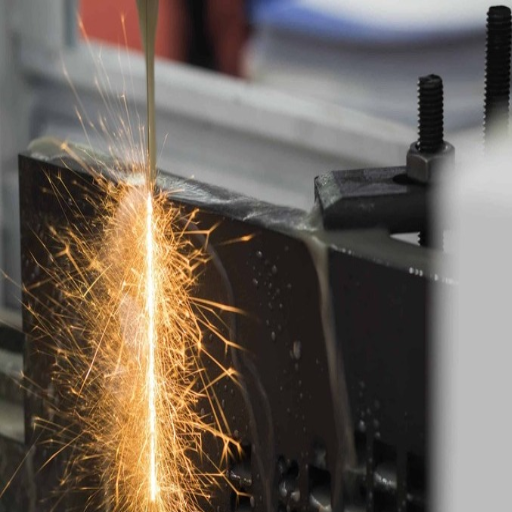
Proper maintenance and periodic inspections are crucial to ensure the machine operates optimally and to prolong the equipment’s lifespan. Some of the primary steps are:
- Daily Cleaning: Usually made during regular operation to remove debris, spent wire, and other residues to prevent clogging and enhance accuracy in working.
- Wire Tension Check: This should be checked and adjusted regularly to achieve consistent cutting results.
- Filter Replacement: Should be performed as indicated by the manufacturer to maintain a clean dielectric fluid.
- Guide and Roller Inspection: Wire guides and rollers should be regularly inspected and cleaned to minimize wear and maintain accuracy.
- Lubrication: Lubricate all the moving parts on the machine as prescribed to diminish friction and prevent scratching.
- Software Updates: Software updates will keep machines up to date with new implementations and fixes.
Following these practices will increase cutting efficiency and reduce the chances of costly downtime. Always refer to the machine manual for the specific maintenance schedule and procedures.
Regular Maintenance Practices
Routine maintenance of EDM wire machines ensures that the machines perform consistently, their lifespan is accordingly increased, and, of course, that expensive downtime is avoided. Some checks and maintenance procedures include:
- Check wire guides and clean them regularly: Make it a daily practice to inspect wire guides for wear and clean them to prevent debris from settling inside, which could interfere with cutting accuracy.
- Check Dielectric Fluid: The fluid may become contaminated at any time; therefore, the dielectric fluid should be constantly monitored regarding its level and quality. Whenever necessary, replace or filter the fluid to maintain its performance at the required level of conductivity and cooling.
- Wire Tension and Alignment: The correct wire tension and alignment are crucial for proper cutting; therefore, these must be checked periodically, adjusted as needed, and both must be checked if wire breaking is observed.
- Clean Interior of the Machine: Any residue, sludge, or particles that may be deposited inside the machine or within the flushing system can interrupt smooth operations. Clean thoroughly using recommended tools and solutions.
- Lubricate Moving Components: Apply the lubricant specified by the manufacturer to any moving parts, such as ball screws and linear guides, to reduce wear and ensure smooth motion.
- Check Electrical Components: Inspect power cables, connectors, and contacts for signs of wear or damage. Tighten loose connections and replace faulty components immediately.
If an operator follows this maintenance plan, they will see consistent production results and maximize the useful life of their EDM wire machines. Always follow specific maintenance schedules and procedures as outlined by the manufacturer’s instructions.
How to Inspect EDM Wire Machines
Inspection of EDM wire machines is performed by focusing on a few essential steps. First, I check for apparent wear or damage on machine components such as wire feed, rollers, or guides. Then, I check the wire tension and alignment, as the exact operation requires them to be correct. I check the fluid cleanliness and its flow. Lastly, I check the machine’s electrical connection and settings to ensure everything is working correctly. Maintaining consistent inspections enables high performance at all times and facilitates early detection of potential problems.
Important Inspection Checklist:
- Visual inspection of all machine components for wear or damage
- Wire tension and alignment verification
- Dielectric fluid quality and flow rate assessment
- Electrical connections and settings review
- Software functionality and parameter verification
- Safety systems and emergency stops testing
Conclusion
Wire EDM technology represents a pinnacle of precision manufacturing, offering unparalleled accuracy, versatility, and efficiency across multiple industries. From aerospace components requiring tolerances of ±0.0001 inches to medical devices demanding biocompatible materials processing, Wire EDM continues to push the boundaries of what’s possible in modern manufacturing.
The evolution of Wire EDM from conventional machines to today’s automated, CNC-controlled systems with advanced software integration demonstrates the technology’s adaptability to changing industrial needs. With cutting speeds reaching 500 mm²/min and the ability to process complex geometries in materials like titanium, tungsten carbide, and hardened steels, Wire EDM has established itself as an indispensable tool for precision manufacturing.
The diverse applications across aerospace, automotive, medical, electronics, and tool and die industries highlight the technology’s broad impact on global manufacturing. As these industries continue to grow—with aerospace reaching $1 trillion, automotive expanding to $3 trillion, and medical devices approaching $964 billion by 2030—the demand for Wire EDM precision will only intensify.
Success with Wire EDM technology requires careful consideration of machine selection, proper wire and electrode choice, and diligent maintenance practices. By understanding the factors influencing cutting performance, material compatibility, and cost-effectiveness, manufacturers can leverage this technology to achieve competitive advantages in their respective markets.
As Wire EDM continues to evolve with advances in automation, energy efficiency, and material science, it will remain at the forefront of precision manufacturing, enabling the creation of increasingly complex and demanding components that drive innovation across all industries.
Reference Sources
“About the Evolution of Wire Tool Performance in Wire EDM” (ScienceDirect)
“The Latest Technology of Wire-cut EDM” (ScienceDirect)
“A Comprehensive Review on Wire EDM Performance Evaluation” (SAGE Journals)
Frequently Asked Questions (FAQs)
What Is EDM Wire Cutting and How Does It Work?
EDM wire cutting is a method of machining where a skinny wire is used as an electrode to cut intricate shapes and designs out of conductive materials. The wire, typically made of brass or copper, passes through the workpiece, stripping material from it through electrical discharge. It is better suited to creating exact, complex parts with slight deformation.
Which Materials Can Be Cut with EDM Wire?
EDM wire cutting is generally performed on conductive materials, from precious metals such as gold, silver, and platinum to harder ones like steel, titanium, and even certain ceramics, thus making it a very versatile technique in manufacturing applications.
What Effect Does the Thickness of the Workpiece Have on Wire EDM?
Generally, the thickness of a workpiece determines the schedule for the wire EDM. Thicker materials may take hours or even a day or two to be cut using energy, and consequently, thinner materials pass through much faster. Depending on the thickness, the settings of an EDM must be adjusted to maximize cutting performance and surface roughness.
Which Is the Best Brand of EDM Wires for Your Application Needs?
Depending upon the wire EDM application, the best type of wire depends on various factors such as the metals being cut, the desired surface finish, and the thickness of the workpiece. The commonly used wires are brass and copper. Such cables are also available with coatings to enhance their performance in specialized applications, such as cutting precious metals or achieving a reduced surface finish.
What Is the Difference between Wire EDM and Other Cutting Processes like Plasma Cutting?
Wire EDM operates on several parameters in plasma cutting processes, particularly in the context of precision and finish. Plasma cutting is typically used for thicker materials. It produces rough edges, whereas wire EDM makes exact cuts with minimal deformation, making it best suited for intricate designs and tight tolerances.
Can the Sinker EDM and Ram EDM Be Used for Wire EDM Applications?
Before delving into the question of cutting quality inspection, one should bear in mind that there are two techniques: Ram EDM, also known as ‘electro-discharge’ machining, which primarily etches cavities or shapes into solid workpieces. While they do not have the processing capabilities of wire EDM, they may serve as complementary techniques in the manufacturing process where one might be required alongside the other to attain or fabricate a component, especially when the part is complex.
What is the Role of Numerical Control in EDM Wire Cutting?
Numerical control in EDM wire cutting refers to the automated system that controls the movement of the wire electrode and the workpiece. This technology ensures cuts that are more precise and repeatable, with increased efficiency and accuracy, transforming the manufacturing process. NC systems could also automatically feed the wire spool, allowing uninterrupted cutting operations without any manual intervention.
How does one inspect cutting-quality standards of Wire EDM?
This procedure involves inspecting the various quality aspects of the cuts made using EDM wire cutting. Inspection of surface roughness, conformity with dimensions, and material integrity are key aspects that should be considered. Techniques such as visual inspection, coordinate measuring machines (CMMs), and surface roughness testing are commonly employed to ensure that the product meets the standard requirements and application needs.