




CNC Vertical Milling Machine: Overview, Applications, and Future Trends
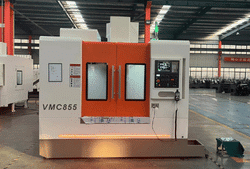
Very few instances exist where the CNC Vertical Milling Machine has made its way into a technological advancement, which finds wide use in various industries such as aerospace, automotive, and manufacturing of medical devices. This representation serves as a more detailed treatise, covering basic operations, applications, and future trends in the technology considered for significant manufacturing purposes.
Introduction

The CNC Vertical Milling Machine technology is a significant convenience in the industrial sector, made so by its incredible tech-savvy aspects such as precision, speed, and adaptability. With this technology, tools can be automatically manipulated on the computer vertically. It is especially beneficial for the specialist engineers who have to develop more complex components.
Brief Overview of CNC Vertical Milling Machines
CNC Vertical Milling Machines are used in complex manufacturing procedures for their remarkable accuracy and efficiency at machining tasks. Different from most machines, vertical milling machines have movement on the Z-axis. This means they can machine difficult parts and shapes of complicated nature to astonishingly high precision. Furthermore, they can work with a multitude of materials such as aluminum, steel, and plastics, which also becomes an asset in many industries.
Key Advantages
- Cost Reduction: Lower production costs through efficient material utilization
- Enhanced Uniformity: Consistent part quality across production runs
- Reduced Manual Labor: Automation minimizes physical exertion requirements
- Versatile Material Handling: Capability to work with diverse material types
Historical Development

Early Developments
The journey of CNC Vertical Milling Machine development began in the mid-20th century. Early milling machines were manually operated and required significant operator skill. The 1940s marked the introduction of numerical control (NC) technology, which addressed many limitations of manual operation and paved the way for programmed machining operations.
Transition to Automation
It was in the 1950s when the combination of computers and machining systems brought the CNC (Computer Numerical Control) systems into the manufacturing sector. This change was accompanied with a capability to bring a considerably more refined level of precision automation to the production process, which was a game changer for the industry.
Latest Technological Advancements

AI and Machine Learning Integration
Advanced CNC systems use machine learning technology and artificial intelligence to drive process performance. This is generally facilitated by:
- Forecasted Maintenance: The early detection of potential machine malfunctions
- Automatic Quality Control: The real-time detection of configuration errors
- Supply Chain Optimization: The light touch with the advanced demand and procurement process
- Enhanced Process Performance: The continuous operation of the equipment in the propelled system
IoT and Smart Connectivity
By combining IoT systems, devices can be interconnected to offer ease with linking devices to utilize them in machining in all given ecosystems. It can efficiently improve production procedures and provide real-time magnificent outlooks.
Advanced Materials in Milling
Primary material for precision tools due to exceptional hardness and wear resistance
High-temperature and high-strength capabilities for high-speed milling applications
Enhanced cutting performance for precision finishing operations
Optimal for non-ferrous metals with superior hardness and wear resistance
Second-hardest material globally, ideal for machining hardened steels
Versatile steel for general machining operations and cutting applications
Software Innovations for CNC Machines
Computer Numerical Control (CNC) Vertical Milling Machines have seen a considerable increase in precision and productivity, largely owing to this:
- Computer-Aided Manufacturing (CAM): Automated tool path generation and optimization
- Internet of Things (IoT) Integration: Real-time monitoring and maintenance scheduling
- Artificial Intelligence Applications: Intelligent parameter optimization and error prevention
- Cloud Computing: Remote access and real-time operation monitoring across multiple locations
Benefits and Applications

Primary Benefits
- High quality: Tighter tolerances and surface standards to which it can be machined
- Multiple materials: Metals, plastics, and composites that it works with
- Improved yield: Faster machining and less material loss.
- Consistency: Uniform component production for bulk manufacturing
- Cost Effectiveness: Lower labor requirements through automation
- Enhanced Safety: Reduced worker exposure to cutting tools
- Customization Capabilities: Complex design fabrication without complications
- Production Flexibility: Suitable for both low and high-volume production
Applications Across Industries
Automotive Industry
Manufacturing engine components, transmission parts, and precision automotive systems
Aerospace Industry
Production of impellers, rotor blades, and critical aircraft components
Medical Device Manufacturing
Precision surgical instruments, orthopedic implants, and medical equipment
Electronics Industry
Circuit boards, printed wiring components, and electronic housings
Furniture Industry
Custom furniture components and specialized woodworking applications
Renewable Energy
Wind turbine components, solar panel frames, and clean energy systems
Tool and Die Manufacturing
Precision molds, dies, and specialized tooling components
Jewelry Industry
Intricate detailing and custom jewelry piece manufacturing
Defense Sector
Military equipment components, weapon systems, and defense accessories
Packaging Industry
Molding components and specialized packaging machinery parts
Machine Comparisons

Horizontal vs. Vertical CNC Milling Machines
| Feature | Horizontal CNC | Vertical CNC |
|---|---|---|
| Spindle Orientation | Horizontal | Vertical |
| Tooling | Short, thick tools | Long, cylindrical components |
| Cutting Capability | Deep, heavy cuts | Precise, shallow cuts |
| Versatility | Limited | High |
| Initial Cost | High | Moderate |
| Space Requirements | Large footprint | Compact design |
| Chip Evacuation | Highly efficient | Moderately efficient |
| Operating Speed | Faster processing | Moderate speed |
| Best Applications | Large, bulky parts | Precision, detailed work |
Multi-Axis vs. 3-Axis Machines
| Parameter | 3-Axis Machines | Multi-Axis Machines |
|---|---|---|
| Axis Configuration | X, Y, Z | X, Y, Z + A, B (rotational) |
| Precision Level | Moderate | High precision |
| Part Complexity | Basic geometric shapes | Intricate, complex parts |
| Processing Speed | Moderate speed | High-speed processing |
| Setup Requirements | Multiple setups needed | Minimal setup changes |
| Investment Cost | Lower initial cost | Higher investment |
| Operator Training | Basic skill requirements | Advanced training needed |
| Target Industries | General manufacturing | Aerospace, medical devices |
CNC Milling vs. 3D Printing
| Parameter | CNC Milling | 3D Printing |
|---|---|---|
| Manufacturing Process | Subtractive manufacturing | Additive manufacturing |
| Precision Tolerance | High (±0.005 mm) | Moderate (±0.1-0.3 mm) |
| Material Strength | 100% material strength | 10-100% material strength |
| Setup Time | Longer setup time | Minimal setup time |
| Processing Speed | Fast cutting operations | Slower layer building |
| Volume Economics | High cost for low volume | Cost-effective for low volume |
| Material Range | Extensive (metals, plastics) | Limited by printer capabilities |
| Surface Finish | Smooth, high-quality finish | Layered, stepped appearance |
| Design Complexity | Limited by tooling access | High (freeform geometries) |
Selection Guidelines

Key Considerations for Machine Selection
- Testing Lines: A machine must be able to use various materials such as metals, plastics, and composites.
- Product Size: Ability to take workpieces of various sizes.
- Mass Production: Determining the level of precision and accuracy that a machine can achieve should be the priority.
- Defining Tool Configuration Required: Planning should include defining the number of axes.
- Performing a Spindle Review: Supervising the power and speed that a machine works with.
- Control-System Programming: Examining the machine’s ability to be programmed and customized.
- Production Efficiency: Match the desired output volumes to the appropriate machines.
- Investment Analysis: Studying the cost of buying the machines and the running cost.
- Building the Machine: Inquiring into its shelf life and how long it can be relied upon
- Automating the Machine: Looking at how it can be combined with existing machines.
- Assessing: Looking at the available parts and the support they offer the machine.
Budget and ROI Analysis
Developing a financially sound project budget requires detailed analysis of different cost categories. Use a total costs model to include all costs, such as the price of the machine, its installation, training, in addition to the cost of operations. Total cost analysis can also calculate ROI and evaluate the economic measures and is taken over the lifetime of the machine.
Pro Tip: Consider multi-purpose equipment that can handle diverse applications to maximize utilization and minimize additional equipment investments.
Future Trends and Predictions

Sustainability in CNC Machining
Environmental awareness is the driver for all CNC machining innovations, observing energy-efficient operations to making the processes of waste elimination, and environmental-friendly material usage. Modern methods focus on the optimization of tool path designs not wasting material, on predictive maintenance in keeping machines functioning efficiently, and on materials and processes that are greener.
Hybrid Manufacturing Techniques
The combination of additive and subtractive manufacturing provides unparalleled capabilities in working on complex geometries with precision finishing. In other words, this hybrid approach embodies the concept of design freedom of 3D printing combined with the precision and surface-quality-based capabilities of CNC machining that is very beneficial in aerospace, medical, and automotive sectors.
Digital Twins and Virtual Commissioning
Digital twin technology constructs virtual realities of physical systems. As a result, manufacturers can simulate, analyze, and optimize the operations before implementation. By testing procedures, virtual commissioning assures that a piece of equipment or a production system can be comprehensively examined even without physical access. This reduces commissioning time and monetary penalties for errors.
Market Growth and Opportunities
Growing at a CAGR of more than 30% in the coming years, this market is predicted to be propelled by increased demand for operational optimization, cost reduction, and the integration of IoT and AI technologies. Such growth renders a significant opportunity for manufacturers to improve system reliability and optimize product lifecycles.
Frequently Asked Questions
Conclusion
The state of CNC vertical milling machines evolves right alongside the direction that manufacturing takes in the present. These systems bring new efficiency, precision, and functionality to the production of complex parts that the industry needs for operations like aerospace and medicine, and the machines themselves have to be able to meet extremely high quality requirements.
Machining industries are currently transitioning towards the digital age, and as part of this move, CNC vertical milling machines are being outfitted with advanced tools like AI and the ability to connect to the IoT, as well as the addition of hybrid manufacturing technology. These advancements means that these machines will be used for advancement of sustainable and efficient practices in manufacturing, as well as the new innovation.
While investing in CNC Vertical Milling Machine technology, one nolonger seeks only equipment but also manufacturing excellence, operational efficiency, and competitive edge improvement to cope with the international demanding marketplace.
Additional Resources and References
Educational Resources
- University Programs: CNC Milling Machines – University of North Carolina at Charlotte, Bridgeport Vertical Mill (CNC Retrofit) – University of California, Berkeley, CNC Equipment – Colorado State University
- Government Resources: Fully Enclosed CNC Vertical Milling Machine – U.S. Department of Defense
- Research Publications: The Usage of Error Compensation Tools of CNC for Vertical Milling – OSTI.GOV
- Milling (machining)
- Machining
- Machine
Maintenance and Best Practices
Essential Maintenance Guidelines
Daily Maintenance Tasks
- Check coolant levels and quality
- Inspect cutting tools for wear and damage
- Clean chip evacuation systems
- Verify spindle operation and temperature
- Review machine error logs
Weekly Maintenance Procedures
- Calibrate machine axes and spindle alignment
- Lubricate moving components per manufacturer specifications
- Check hydraulic and pneumatic system pressures
- Inspect electrical connections and control systems
- Update software and backup programs
Monthly Comprehensive Checks
- Perform complete accuracy testing with certified test pieces
- Replace filters in coolant and hydraulic systems
- Inspect belt tensions and replace worn belts
- Analyze vibration patterns for bearing condition
- Review production data for performance trends
Safety Considerations
Critical Safety Measures
Operator Safety Protocols
- Personal Protective Equipment: Safety glasses, hearing protection, and appropriate clothing
- Machine Guards: Ensure all safety interlocks and guards are functional
- Emergency Procedures: Know location and operation of emergency stops
- Chip Handling: Use proper tools for chip removal, never hands
Workplace Safety Standards
- Maintain clean, well-lit work areas free from slip hazards
- Implement lockout/tagout procedures for maintenance
- Provide adequate ventilation for coolant mist and fumes
- Establish clear communication protocols for multi-operator environments
Training and Skill Development
Essential Skills for CNC Operators
Technical Competencies
- G-code programming and editing
- CAD/CAM software proficiency
- Blueprint reading and GD&T interpretation
- Tool selection and optimization
Operational Skills
- Machine setup and calibration
- Quality control and inspection
- Troubleshooting and problem-solving
- Preventive maintenance procedures
Advanced Capabilities
- Multi-axis programming
- Process optimization
- Lean manufacturing principles
- Statistical process control
Industry Standards and Certifications
Relevant Standards and Certifications
| Standard/Certification | Description | Application |
|---|---|---|
| ISO 9001 | Quality Management Systems | Manufacturing process quality |
| AS9100 | Aerospace Quality Management | Aerospace manufacturing |
| ISO 13485 | Medical Device Quality Systems | Medical device manufacturing |
| IATF 16949 | Automotive Quality Management | Automotive component production |
| ISO 14001 | Environmental Management | Sustainable manufacturing practices |
| NIMS Certification | National Institute for Metalworking Skills | Operator skill verification |
Cost Analysis and Financial Planning
Comprehensive Cost Breakdown
Initial Investment Costs
- Machine Purchase: $30,000 – $500,000+, depending on specifications
- Installation and Setup: 10-15% of machine cost
- Training and Certification: $5,000 – $15,000 per operator
- Initial Tooling Package: $10,000 – $50,000
- Software and Licensing: $5,000 – $25,000 annually
Operational Expenses
- Energy Consumption: $50 – $200 per day depending on usage
- Maintenance and Service: 5-8% of machine value annually
- Tooling Replacement: $500 – $2,000 monthly
- Coolant and Consumables: $200 – $500 monthly
- Insurance and Facility: Variable based on location
Environmental Impact and Sustainability
Green Manufacturing Initiatives
Modern CNC Vertical Milling Machine operations increasingly focus on environmental sustainability through several key strategies:
Advanced motor technologies and intelligent power management systems reduce energy consumption by up to 30%
Optimized tool paths and near-net-shape manufacturing minimize material waste and maximize yield
Closed-loop coolant systems and bio-degradable alternatives reduce environmental impact
Metal chip recovery and recycling programs convert waste into valuable raw materials
Final Recommendations
Succeeding in CNC Vertical Milling Machine involves thorough preparation, clear training, and unwavering determination to correctness. You need to take into consideration the specific technology needed for manufacturing, the budget you are working with, and the company’s goals for expansion.
Work with reputable suppliers who are willing to offer technical assistance and who are focused on operator training and skills development and safety and quality-centered features. In the long run, the world of manufacturing would belong to entities that embrace advancement, coupled with the need to stick to exactness, productivity, and the issue of sustainability.
Keep in mind that CNC Vertical Milling Machine technology is not a piece of equipment on its own, it’s a lasting and unparalleled technology that will remain at your disposal to serve your manufacturing with unparalleled excellence.