




Today’s manufacturers are more concerned with precision and productivity, and the equipment we employ is essential towards achieving these goals. For turning enthusiasts, the use of digital readouts (DROs) has augmented the capabilities common in the past thus allowing unprecedented precision among machinists. There are some tasks where these instruments are systematic so as to improve the operation of the machine, repetition, and wastage of time. For both the experienced and amateur machinists, there are certain Benefits of Digital Readouts for Lathes which help to remain it’s a helping hand promotional. This will not only give the reader what DROs can actually do but also why such instruments are changing the process flow of lathe activities.
Introduction to Digital Readouts
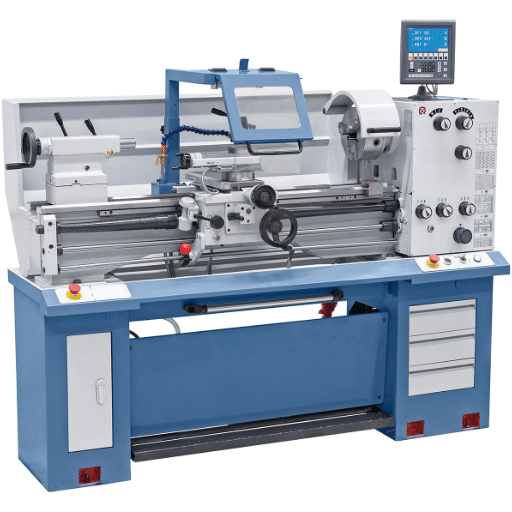
Digital Readouts for Lathes (Dro) are equipment that assists in the execution of operations on turning centers, displaying readings that show accurate readings. They take the positional change of different components of the machine and coded into digital signals that show numerically correct values. This feature enhances the precision and speed of performance of machinists, avoiding some calculations, and errors. In all manufacturing sectors, Digital Readouts have become relevant particularly with the reductions in cycle times, improvements in performance and quality as well as simplification of work processes as is the case here.
What is a Digital Readout (DRO)?
DRO (Digital Readout) functions as a modern-day scale that assists machinists in ensuring precision in their machining operations. DRO is a unit that is found attached to machines such as lathes, mills, grinders and others it helps the operator to monitor the movement of a machine component and also read out its position accurately. The units make use of linear scales or encoders to carry out measurements along specified axes, which can be displayed in numeric form on a digital display panel. In this way, the working members are relieved of the necessity of manual measurements and the potential errors that may arise from calculations are minimized. The state of the art DRO systems are loaded with features such as keyboard integer preset features, tool length offsets, and programming making them much more functional and effective for the range of applications they can be used in within the manufacturing sector.
How Digital Readouts Work in Machining
Digital Readouts (DROs) are devices that ensure the high accuracy of measurements in machine tools without the need for manual readings of scale dials. The measuring scales are linear or rotary encoders, installed on the parts of the machine that move, for example, the lathes, mill or grinder, etc. Each of the encoders measures the axis on which the mechanical system moves and translates this motion into electrical signals. These signals are then decoded by the DRO and displayed on a digital screen showing the current coordinates. This makes it possible for machinists to provide very precise measurements with very little possibility of errors. In addition, some of the more recent DROs are equipped with additional options such as settings already set so that there are no need of making all the settings of the machine manually, tool offsets and predetermined patterns which greatly enhances the working conditions and increases the output. Considering the speed and precision in these systems, machinists can perform the intricate activities that are very definitive in precision demanding industries efficiently.
Importance of DROs in Modern Machining
Digital Readout Systems (DROs) have revolutionized machining as we know it; enhancing productivity, accuracy and efficiency. They help in determining the exact position of the tool in real time giving a machinist little to no room for mistakes as far as measurement is concerned. Without this level of precision, it would be difficult to manufacture parts with higher tolerances demanded by industries like the aerospace earthquake automotive medicine and the like. Additionally, the concept of employing DROs has paved the way for faster and smoother operations thereby completely eliminating and minimizing some of the tedious change ordering processes. With programmable functions, tool offsets and preprogrammed machining designs, the clear operations are simplified and the operators are able to concentrate on the intricate parts of the machining. Thus, it has become possible for all the old and CNC machines to incorporate the so-called DRO with the help of which precision demands of contemporary world are being met without compromising on the efficiency of the machine.
Core Benefits of Using a DRO for Lathes
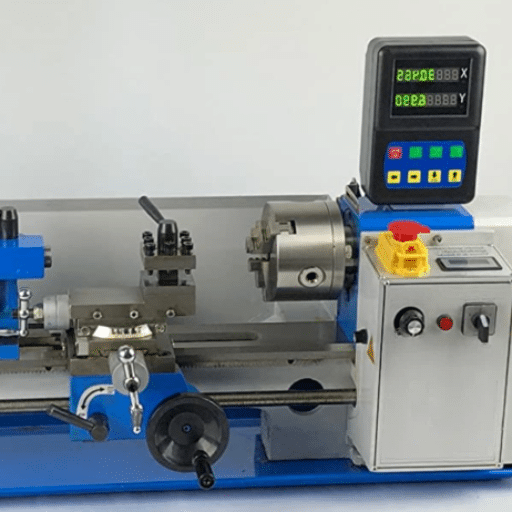
- ✓
Improved precision:
DRO systems deliver helpful readings to an operator, increasing the chances of successive and accurate machining of the parts, which is necessary for the high quality of components. - ✓
Higher efficiency:
Using DRO means all calculations and measurements are no longer performed manually thus significantly shortens the time used for part setup and machining. - ✓
Better reproducibility:
Use of DROs allows machine operators to reproduce exact sizes of any part on figures designed with this purpose, and therefore, uniformity is achieved in the case of batches production. - ✓
Ease of use:
Digital readout devices are always fitted with simple-to-use components, such as user-friendly panels and easily read displays, which facilitate the operators in performing otherwise difficult tasks thus; even a non-skilled worker can make use of DROs. - ✓
Less materials wastage:
Using DROs significantly reduces such errors thanks to their precision thereby minimizing scrap and other related costs.
Improved Precision in Machining Operations
Many of the importances of machining have less relation to execution than preparation. Digital Readouts (DROs) and digital refine the tooling activities and provide much more safety and quality in the activity. As such machining times are prolonged because pieces need to be redone until specifications are met. One can also assert that the production process is enhanced leading to improved work rates, thanks to special provision for replication of machined parts which is again the reason why they are presented as essentials for high precision machining.
Increased Productivity and Workflow Efficiency
One of the great benefits of using a digital readout handheld device for lathes is that it eliminates manual measuring and calculation thereby speeding up the machine setup process. It accurately displays the position of machine tools helps provide precision that, does not strain or misalign the parts or tools, reduces tool changers and frequencies, wears less. Moreover, DRPs feature makes repetitive work so much easier since they store previous reference positions hence W, W W can be made with very little efforts and very high accuracy. All the above factors combine to increase the rate of production as well as other verticals too while minimizing wastages which means more efficiency. In addition to this, development of technology like introduction of touch screen surfaces, improved memory cards are the reasons why these devices have become more easy to use and balanced, thus essential for ensuring high quality results every time one does machining in this day and age.
Reduction of Human Error in Measurements
Using Digital Readouts for Lathes significantly decreases human errors related to measurements as it gives accurate positions and issued measures during the process. Instead of using conventional calculation methods to determine distances or analog acuity that may or may not reproduce the actual distances, a DRO provides digital values that are considerably free from errors. Such precision helps in producing parts consistently across the board even when the geometry offers some intricacies while the tolerance levels are pretty stunted. With the removal of the burden of checking distances workers are able to concentrate on the machining operation rather than making measurements, thereby reducing the number of errors made in production.
Components of a Digital Readout System
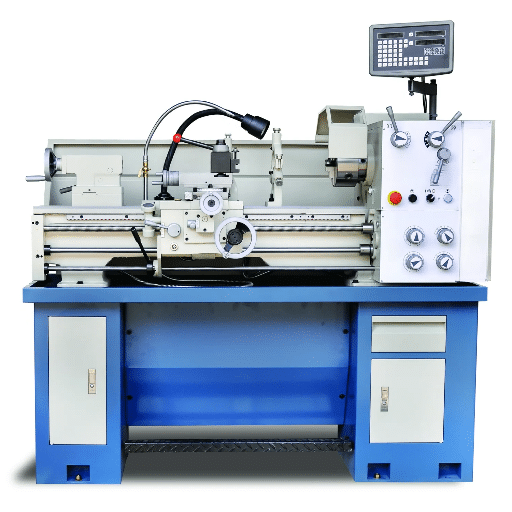
Digital readout systems typically comprise of a display unit, linear scales and a reader head. A digital display serves as the video output which provides exact measurements or allows the user to input data or perform specific commands. Linear scales are machinery attachments fixed to specific axis to monitor movement for conversion from mechanical to electrical signals. The reader head processes these signals and sends them to the display unit to give a true position in real time. Using these, machining operations can be greatly enhanced.
Understanding the DRO Encoder
A DRO encoder is one of the most important parts of Digital Readout (DRO) systems- a position sensor that converts movement into readable electronic signals for the system. The principle of OPC is based on tracking the position of an object with respect to the defined axis and sending this information to a display. Encoders employed in a system can be optical, magnetic, or capacitive in nature. They provide the accuracy and response time needed in machining processes. In other words, a DRO encoder may be likened to the eyes making it possible to monitor such variations accurately.
The Role of Axes in Digital Readouts
When plotted on digital readout (DRO) systems, axes indicate the directions of the various measurements that can be monitored. For instance, the most common set of the three axes is X, Y and Z for horizontal, vertical and depth linear moves. Each axis reads out its position, so various operations can be performed via manipulating machining or other processes precisely. With these axes being tracked over time, the DRO machines help maintain alignment and performance which are indispensable to preserve the work’s standard and quality.
Types of Digital Readouts for Lathes
Digital readouts (DROs) play a very important role in lathe operations with several configurations available for different uses and purposes. The main types run as follows:
Two Axis DRO Units – They are the most basic DROs found on lathes showing the position in X-axis and the position of the cross-slide in the Z-axis. The system covers almost all standard turning processes without unduly sacrificing accuracy in alignment or span of cutting.
Three Axis DROs – Users who need further enhancement in functionality go for Three-axis DRO which brings in an additional Y axis or changes in combination begin, for instance angles or compound slides. More complex tasks are done using the latter since they are more flexible.
DROs Exclusively for Lathe’s – Contrary to most DROs, which are based on general applications, some designs are aimed at lathe functions and have such features in them, like conversion from dia to radius and vice versa, among others, like threading tools of those specific dimensions and adjustment. These machines augment the fencing assembly, ensuring all machine fittings and fencing are completed on time.
Selecting an appropriate DRO system depends on the simplicity of the operations, the required accuracy, and the tasks the lathe is expected to perform.
Precision Machining with Digital Readouts
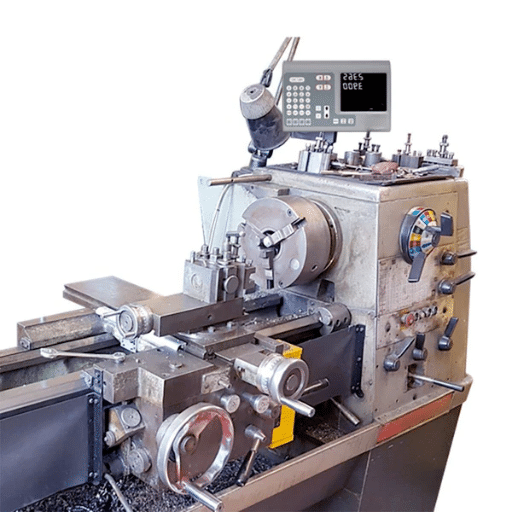
Digital Readout (DRO) systems are an essential complementary device on machine tools as they enhance the positional accuracy for an operator and in real time without putting considerable effort into gathering information. As you select a DRO system, take into consideration the scope of work undertaken, the degree of precision needed, and lathe applications. A system with built-in features which are characteristic for a lathe such as threading and the ability to measure a radius or diameter, have the potential to bring about great workflow and setup improvements.
How DROs Improve Machining Precision
Benefits of Digital Readouts for Lathes include their ability to improve machining accuracy through the ability to track tool positions and movements within a given time-frame. DROs tackle direct measurement issues by providing accurate control over the measurements and reducing the reliance on hand calculations and enabling the process to be repeated within the required precision. Similarly, different operational systems which have axis position data, incremental measurement, or pre-setting integration are especially beneficial when precise adjustments of undermined variables are answered relatively quickly. Not to mention, DROs can be perfectly executed in complex scenarios of machinists such as threading or contouring as they preserve their stillness and ensure uniformity. As per the current scenario in machining, latest DRO’s are generally equipped with long edge displays and can be connected to computers for functional purposes explaining that users can make easier processes and offer more fine and precise tolerances as compared to the tissue based approach. Thus its most advisable to make use of them in novice as well as experienced machinists who want to maintain a high quality of work.
Applications in CNC and Manual Mills
Most machine shops are equipped with CNC, computer controlled lathes, and mills with digital readouts (DRO) at the very least. The machine operator would then adjust or alter the position of the workpiece or beats based on the readout to match the programmed position. But in case there is no fresh input of the workpiece, the process becomes entirely manual, for example while mechanical gauges are used to monitor movement of tools in the workpieec stock, which tries the patience of the machinist to the breaking point. DROs in any machine – be it automated or not – is vital as it gives the machinist the ability to obtain satisfactory results utilizing least amount of energy or resources.
Comparing Digital Readouts with Traditional Methods
Digital Readouts (DROs) offer enhanced precision, efficiency, ease of use, reduced errors, and consistent results compared to traditional methods in CNC machining.
| Parameter | DROs | Traditional Methods |
|---|---|---|
| Precision | High | Moderate |
| Efficiency | Increased | Time-Intensive |
| Ease of Use | Simple | Complex |
| Error Rate | Low | Higher |
| Consistency | Reliable | Variable |
| Calculation Need | Minimal | Manual |
| Setup Time | Fast | Lengthy |
Choosing the Right DRO for Your Lathe
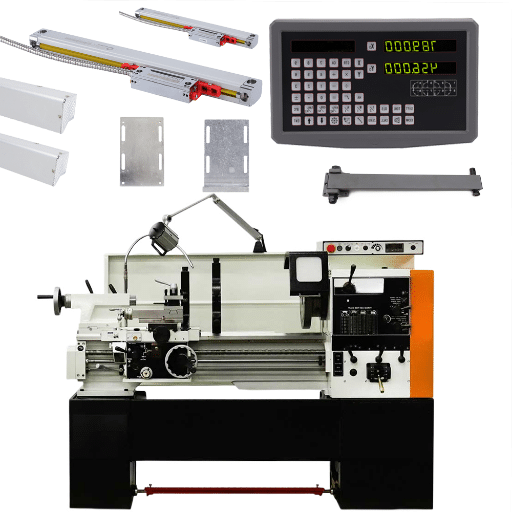
When choosing currency type of the DRO for appropriate lathe, there are some initial factors to take into account. These include compatibility, resolution of the scales, ease of Do it Yourself installation, and any other features as well. The DRO should be of a proper size so that it suits a lathe in terms of inter hardware specifications, ability to measure to the relevant standard and meet the user’s operation specifications as desired. Users can also think of control panels, which can easily be used and made of tough materials, and accessible technologies like preprogramming or memory that enhance the efficiency of the gadget during use. It is important to keep in mind that one’s budget should be proportional to Hands’s capability of providing an appropriate DRO so as to avoid making any wrong decisions.
Factors to Consider When Selecting a DRO
Compatibility with Recipient Equipment – Reassure the DRO is meant for the specific input which is either a lathe or a milling machine. Evaluate the suitability for the machine in terms of the size, the position, and also the connection.
Measurement Accuracy – Select holidays that do not encourage loose shavings measure on both sides. This feature is essential for consistency and dependability in both accuracy and precision performance.
Ease of Installation and Use – Sometimes, importing a DItool is very easy and the workings of it don’t require any specific knowledge.
Durability and Build Quality – However, unless one takes the necessary precautions to ensure that the DRO is made out of durable material which can withstand industrial practices, it is certain that the DRO won’t last for long.
Advanced Features – While weighing the possibility of purchasing a DRO, options like preset, memory, or support of more than one axis should be also considered, as they increase the processes and the levels of challenge in machining.
Two-Axis vs. Multi-Axis Readout Systems
Simple two-dimensional measurements are considerably easier with two-axis readout systems, whereas multi-axis systems really need to be leveraged to dominate complex milling applications.
| Key Point | Two-Axis | Multi-Axis |
|---|---|---|
| Usage | Simple tasks | Complex tasks |
| Dimensions | 2D | 3D+ |
| Precision | Basic | Advanced |
| Features | Limited | Versatile |
| Cost | Lower | Higher |
| Complexity | Easy | High |
Recommendations for Various Lathe Needs
The choice of the right Digital Readout (DRO) module for a lathe depends on the specific requirements due to the nature of the work performed on the machine:
Simple Work
If one does mostly simple work-2D work like turning, facing, etc.-then a two-axis Digital Readout is more than enough. These are undoubtedly cost- effective and are easy to use and offer enough features to carry out the smallest task.
Complicated high-precision work
When faced with requirements for 3-dimensional measurements, complicated contouring, high precision, etc., it would be far better to choose a multi-axis DRO module. This way advanced systems can get even more exact measurements, better add-ons, and carry out the more demanding tasks. Such consideration best suits professional or industrial uses.
Choosing the Price-over-Function Route.
For users with moderate needs, such as small workshop lathe operations, a moderately priced DRO system can attract expectations for a limited range of unremovable advanced features and might be a good option. It is above simplicity and sufficiently versatile without making things overly complicated.
By looking at your work envelope and budget, then relate a DRO system to the lathe needs, securing efficiency and precision in the processes of machining operations.
Reference Sources
-
Digital Model and Assembling of a Lathe – This research focuses on the design and assembly processes of multiaxis lathes, providing insights into the integration of digital systems.
-
The Digital Readout Index – This article discusses the use of digital readouts (DROs) to upgrade older machinery, including lathes, enhancing precision and usability.
-
A Comprehensive Analysis of Lathe Machine Usage and Hammer Fabrication in Metalworking – This paper highlights the importance of precision and training in lathe operations, indirectly supporting the benefits of digital readouts.
- Premium Metalworking Lathes for Sale
Frequently Asked Questions (FAQs)
Is it correct to say that it corrects only a screw back backlash in designing a DRO system lathe?
While working in an actual lathe environment, a design source from a DRO that normally specifies a precise gauge of its follower measuring its true position along a linear encoder or a float glass scale measures the amount of backlash necessary. This eliminates any backlash-during-coupling from the turning screw threads, which are the opposite of practical operations. In most case, either display or DRO kits either are spoiled with being backlash compensationists or allow availability of verniers/interpolations, in most case, so that backlash value (corrector) can then be subtracted, in exchange for a digital readout to allow one for accurate position determination of the cutting tool during milling and rotation processing without counting down time.
Can a digital readout replace dial gauges and dial measurement?
Certainly. Digital readouts will continuously display the position digitally and will be used for dispensing with separate instruments—dial gauges or manual readings, particularly for many operations. In conclusion, instead of dealing with a dial or dial gauges and hand-wheel revolutions, the lathe dro or mill dro will show exact axis positions and may be used with a micrometer or an engineer’s caliper to check line-to-line for final workpiece dimensions.
What are the reasons for machinists preferring DRO lathe over older instruments of measurement?
Now moving on to that, it is certainly clearer that the combination method of use for machinists entails measurement while accomplishing the task and the immediate, exact reading required to follow up on the exactness that involves least reluctance in providing solutions occupies a crucial position from the entire set of the descriptions for the new DRO, i.e., through the capability stay silent to the limited sundry of immensely mechanical conditions that can be a bit too fast to react to situations.
How do I know that my lathe needs a DRO or if it can work without one?
If you get to perform a repetitive machining operation, need to achieve high accuracy, and want to eliminate counting revolutions of the hand wheel, not to mention human errors, you might decide your lathe needs a dro system; otherwise, without a dro system, you measure by dial indicators, count revolutions, and rely upon your gray-mattered brain to calculate. Dro system with kits such as the Newall dro converts this into a system that accepts digital readout for better setup speed with fewer mistakes and a system that tends to pay back in terms of shop floor timing saved.
What precautions and considerations are essential for a digital read-out display on a lathe concerning maintenance and environmental regulations?
Taking care of the linear encoder glass scale structures and the display console is of prime importance; the linear encoder housing should maintain a free-flowing system of lubricant mixed with chips and coolant. The other preventive action would be having a cover over the scales to keep out the chips and solvents. Maintenance includes regularly checking that accumulations are not preventing the movement of the machine portion involved, and calibration might be checked with standard measurement tools like micrometer or gauge. Many dro systems are made conditions to withstand the worst circumstances machines could offer but are extended life systems in respect to keeping them clean and inspected regularly so that the DR will give correct readings with each cycle and revolution very usefully.