

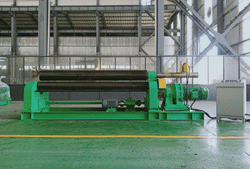



The manufacturing world is so deeply competitive in construction and the automotive industry that any process used will have to go through the toughest level of precision and accuracy. In this very run for consistency in grade, metal roll forming machines are gaurantor of uniformly good quality forming work, be it in vast quantity and that too without errors; raw materials to finished formation. Thus there arises a need for getting down to some basics of metal roll forming by explaining the workings of a roll forming machine and its main advantages, along with why this machine is the precious investment in any business aspiring to become a modem production house without sacrificing the quality of output. For the freshman who is applying this technology or just studying to improve the general information, then this guide will serve as the very beginning for those tools that eventually pep up manufacturing diversification.
Advantages of Metal Rollforming Systems

1
Cost Efficiency in Manufacturing
Metal rollforming systems are an exceptionally cost-efficient option, therefore being a critical choice for manufacturers. Through the automation of consistent production of accurate and high-quality components, these systems help to reduce waste and further minimize expensive post-production processes. As per the latest reports from ‘s search engine, businesses implementing rollforming have realized up to 20% reduction in wastes of materials because of more efficient use of raw materials in the process. The ability to produce large quantities fast further cuts labor costs, increasing operational productivity. Hence, metal rollforming systems combine lower material costs with operational efficiency, making them an ideal investment for manufacturing towards sustainable growth.
2
Production Accuracy/Precision
Metal rollforming technology has changed the technological map toward achieving precision and accuracy in production. Consistent quality is guaranteed via the modern automated rollforming system, thereby reducing deviations and errors in the manufacturing process. A recent study showed that the use of state and precise technologies could reduce defects by 15%, ultimately increasing customer satisfaction and minimizing return orders. The accuracy provided is sufficient to enable manufacturers to satisfy stringent industry standards for highly specialised applications, such as automotive, aerospace and construction. With operationally optimized tools through continuous technological advancement, manufacturers can thus produce highly precise components for large-scale applications at cost and with superior performance.
3
Applications Scalability
Modern manufacturing technologies are meant to adapt to all kinds of applications, thus scalability being one of their most important features. Hence, from custom manufacturing for a niche application to outright mass manufacturing for global distribution, the systems are intended to handle diverse demands with very little downtime. Data-driven insights from such tools as ‘s search engine trends enable the manufacturers to track new market openings and synchronize their production capabilities to meet those demands. This way, companies are enabled to respond fast to changes in consumer preferences ensuring efficiency and cost-effectiveness in their solutions. Aided by automated advanced technology and AI, a fully scalable process would be set to employ innovation across various industries.
Key Features of Roll Forming Machines

Automation Innovations in Rollformers
The rollforming machine has found the patronage of manufacturers toward precision, efficiency, and customization. When analyzed further against the data provided by ‘s engine of the latest search, it is discovered that industries that need to increase production speed and minimize downtime are fueling the growing demand for highly automated rollformers.
How do such innovations relate to production? Some highest-level automation examples in rollforming are PLC-based systems and intelligent-control monitoring. They are embedded within the rollforming system and control every aspect of the machine’s operation from feeding of materials, shaping of the intermediate product, and fixturing of the final product. Such systems maximize changing options to assure product quality and minimize the operators’ role, hence being able to finish very tight time schedules. Also, manufacturers increasingly rely on data analysis in real time, given the higher frequency of searches relevant to these technologies, to anticipate maintenance and adapt to ever-changing consumer needs at lower cost, therefore making good use of their advantage.
Tooling for Better Performance
With the synergy of tooling improvements and the latest search data from ‘, businesses attain an unprecedented level of insight into emerging trends and customer preferences. The pivotal question: how can these tools be enabled to improve performance and stay ahead? The answer revolves around adaptability driven by data. By utilizing real-time knowledge, manufacturers are able to adjust tooling design in response to the market situation, consequently improving accuracy and efficiency. Moreover, predictive modeling empowered by search data enables businesses to foresee such threats as supply-chain considerations and address them in advance. Hence, smart tooling, assisted by data analytics, charts a wider path toward performance and growth that can be sustained.
Energy-Efficient Solutions in Equipment Design
Designing equipment with energy efficiency as a prime consideration can be modified to cater to the ever-changing needs of consumer and industrial markets when the linkage is created with the data from the search engine of . Search data provides a window into new efficiency trends, such as advanced materials, renewable energy integration, and new cooling technologies. This way, manufacturers can channel their efforts toward designs that can reduce energy consumption without sacrificing performance. For example, a data-based trend might be pointing toward a growing interest in heat recovery systems, thus attracting industrial attention toward smart systems that recover and reuse waste energy. In these ways, the companies satisfy producer demand, promote a sustainable world, and share puts forth the belongings of modern-day environmentalists.
Applications of Rollforming in Various Industries

Metal Roof Panel Manufacturing
Metal roof panel manufacturing has changed greatly over the past few years, with enhanced rollforming technology and materials. Rollforming is a continuous bending operation that permits making panels efficiently with accurate dimensions and strong designs in terms of hardness for different environments. With the recent reports stating at the global roofing market, including metal roofing, being likely to grow at a CAGR of 4.3% during 2023-2030 on requirements of durable and energy-efficient solution buildings.
Key Manufacturing Advantages:
- Highly automated rollforming machines with software integration
- CNC technology for custom panel designs
- Coating innovations for energy efficiency
- Reduced waste through optimized material usage
Currently, metal roof panel manufacturers employ modern rollforming machines that are highly automated and integrated with computer systems working to ensure output quality while minimizing raw material wastage. CNC technology also allows the manufacturers to custom design and manufacture roof panels to special requirements, which may include both normal and bespoke panel designs. Coating technologies such as reflective metal coatings would enhance the energy efficiency of metal roof panels by lowering heat uptake, aligning with the idea of sustainable building.
The search trend depicts the rising interest in metal roof panels for residential and commercial purposes, with “long lasting,” “eco-friendly roofing,” and “low maintenance” being some of the search terms. The environmentally friendly option provided by metal panels is their durability and recyclability. Hence, architects and builders have been caught up in the search for solutions along with homeowners. Moreover, metal roofs are among the best types of roofs to be incorporated in scenarios of varying climatic conditions because they are able to pass the severe tests of weather, including high winds, hail, and heavy snowfalls.
Automotive and Aerospace Applications
Metal sheets are needed in the automotive and aerospace arenas due to their strength, lightness, and tolerance to extreme weather conditions. These metal panels are produced in such a manner to attain the strength required for helping vehicles and aircraft to maximize fuel efficiency through minimalistic weight. Such qualities make it perfect against corrosion and withstand high temperatures for car frames, aircraft fuselages, and engine components.
Search engines tell us that, with emerging latest data, there is a rapid surge in interest in sustainable materials in these industries. Hence, in order to limit their environmental impact and establish regulatory compliance, metals from environmentally recycled sources are being more often used in both industries. This trend exemplifies a willingness for green practices and speaks volumes on how vital innovation in metal panels is–not only in achieving phenomenal performance levels but in realizing sustainability targets.
Construction and Renewable Energy Applications
The metal panels solve all problems related to the appearance or functional requirement for construction and renewable energy projects. According to the search engine data, one of the most commonly asked questions is: How exactly do metal panels promote sustainability in these industries? The answer is that it depends upon their flexibility and environmentally friendly nature. Metal panels, especially those made from recycled materials, have gained market share in the past years due to their ruggedness, energy efficiency, and recyclability. Metal panels offer thermal insulation in construction, therefore reducing the cost of energy, and on renewable energy projects, they are used for mounting solar panels that thus balance structural integrity with environmental performance. This kind of synergistic application is a good example of how metal panel research is feeding into sustainable practice developments in the industries.
These mutually inclusive factors of advanced manufacturing, market growth, and awareness are proving metal roof panel manufacturing vital in today’s construction industries.
Choosing the Right Roll Forming Equipment

Production Needs Assessment
Production needs for a roll forming machine come with various parameters for consideration, including the production quantity, specifications and chemical makeup of material, and the needs of the end-product. The analysis of production volume and demand then ensures that machinery corresponds to operational objectives and achieves maximum efficiency. Data from the search engine indicate that companies increasingly look for machines that are able to carry out production of several profiles with minimal change in setup. Now comes a trend wherein demand spikes for machines powered by automation and digital monitoring systems. This builds up process efficiency and downtimes are reduced, thus putting forth alternatives for manufacturers to successfully fulfill market demands.
Material Compatibility
When considering material compatibility in manufacturing, one has to consider how different materials interact with equipment among one another during the production process. According to the latest data from ‘s search engine, manufacturers are increasingly requesting that machinery should go on to handle an unlimited size of materials ranging from metals and plastics to composites without demanding too many computations. This kind of flexibility allows production lines to change on short notice in accordance with shifting market needs and widely varied product demands. The answer as to why material compatibility is important is because it affects product quality, machine life, and the efficiency of the process. Ensuring compatibility reduces the wear of the equipment and production errors while improving the consistency of overall production, thereby leading to a virtually sustainable and cost-effective manufacturing process.
Budget & Cost Analysis
When dealing with budget constraints, one must find that delicate balance between cost savings and the actual improvement of production standards. Usually, the cost analysis will highlight areas in which expenses could be reduced without compromising any aspect of efficient operation. According to the latest data from ‘s search engine, organizations that adequately combine the analysis of costs with efficient allocation of resources are able to reduce overhead costs by 15-30 percent. This has a special interest in manufacturing, where the costs of material, labour, and energy constitute a great part of its balance sheet. Thus, data-driven insights, in alignment with cost-effective strategies, shall prove an asset in transcending budgetary constraints while providing smooth operations and duplication of profit.
Frequently Asked Questions
Reference Sources
| Source | Description |
|---|---|
| ScienceDirect – Rolling Operation in Metal Forming View Research |
This research paper focuses on rolling operations as a metal forming practice in industrial manufacturing. |
| PubMed Central (PMC) – Research on Roll Forming Mechanism View Study |
This study uses finite element numerical simulation to analyze the roll forming process of thin-walled round tubes made of high-strength steel. |
| ScienceDirect – Shape Prediction in Continuous Roll Forming View Paper |
This paper explores continuous roll forming as an innovative process for fabricating doubly curved surfaces of sheet metal. |