


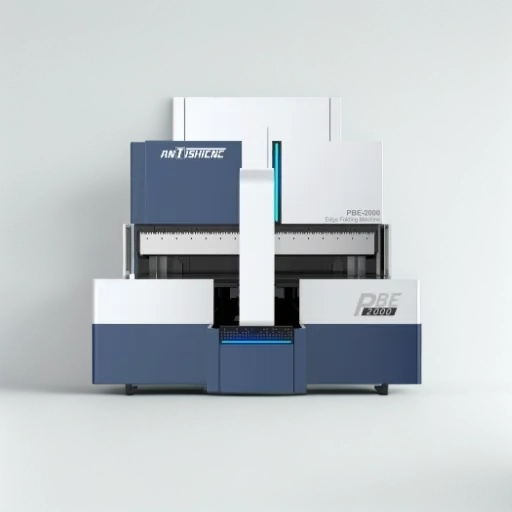
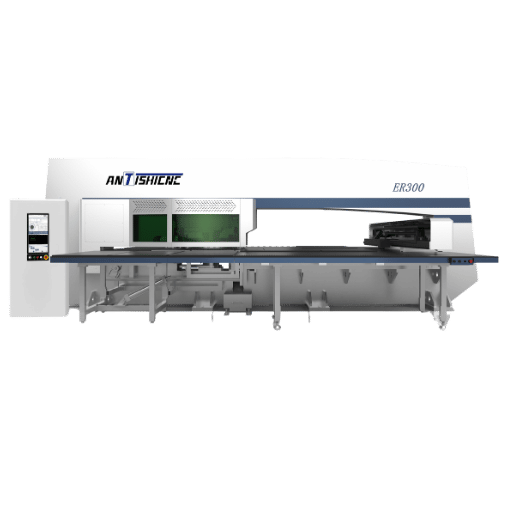
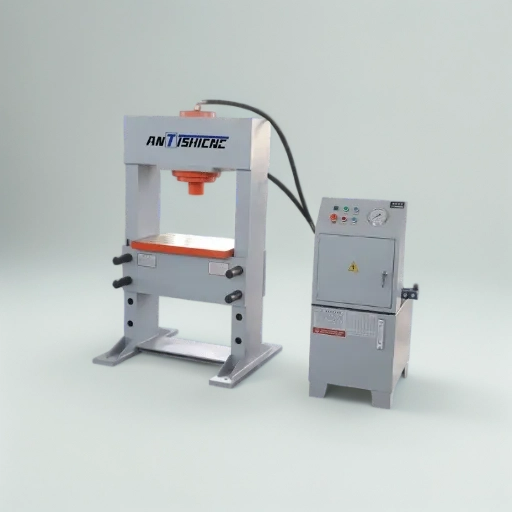


CNC water jet cutting holds a unique position in the industry as a truly modern and new-age cutting tool when it comes to precision manufacturing and intricate design. Driven by powerful high-pressure jets of water, sometimes combined with abrasive materials, water jet cutting machines can accurately and efficiently cut through myriad materials. But just what sets water jet cutting so apart from laser or plasma, or for that matter, abrasive cutting? Questions surrounding the increasing patronage of industries that range from aerospace to architecture for their cutting needs through this technology go unanswered. This article will look into how CNC water jet cutting machines work, the various ways they can be applied, and the great benefits they offer for both small workshops and big manufacturers. So fasten your seat belts and get ready to see what lies in store for cutting solutions that are precise, clean, and eco-friendly.
Introduction to Waterjet Cutting Technology
Waterjet Cutting is an adaptable and precise method of cutting materials using a jet of water with ultra-high pressure, sometimes in conjunction with abrasive particles. The process assures almost flawless cuts across various materials-six metals, plastics, ceramics, and composites-haven’t been altered by heat, preventing change in the inherent properties of the material. A waterjet cutter is capable of accomplishing very intricate designs with minimal waste and may also be used in both prototype and large-scale manufacturing processes.
Overview of CNC Water Jet Cutting
CNC water jet cutting offers several advantages that contribute to its versatility and high degree of efficiency in manufacturing. By cold-cutting, this process eliminates the creation of a HAZ against which the material would have been degraded by heat during conventional machining processes-and thus maintains the original properties of the material. Hence, the process may be used for materials where exposure to heat will cause a change in property, for example, tempered glass or certain metals.
The water jet cutting process yields very precise tolerances, up to ±0.001 inches, suitable for accurate and repeatable results on both simplistic and complex designs. Producing smooth edge finishes, sometimes obviating the need for secondary finishing, it is an environmentally friendly process with little to no waste produced, and the water could often be recycled within the system.
A lot of development has taken place in recent days; modern CNC water jet cutters cut materials up to 12 inches thick, depending on the materials, at 90,000 psi pressure. These go with all kinds of things, from the very soft ones, such as foams and gels, to the very hard ones, like titanium and cemented carbide. This speed, along with efficiency and adaptability, ensures great productivity in aerospace, automobile, architectural, and manufacturing industries.
Importance in Various Industries
With such a vast range of capabilities, CNC waterjet machines have now become pivotal equipment used in many industries, especially in applications where water jet cutting is used. They cut semi-finished products from aerospace high-performance alloys and composites with extreme precision to reduce wastage and ensure utmost structural integrity.
The automotive sector benefited the most from this technology to cut custom gears and other intricate parts without heat distortion of material properties. Further, the architecture and construction industries need water jets to cut marble, granite, and glass into bespoke designs with utmost detail of aesthetics.
Manufacturing industries use CNC water jet machines in automated systems because of their versatility to cut many different materials without changing the tool used for cutting. Industry reports show that the water jet cutting machine industry has crossed the billion-dollar revenue mark in 2022 and will continue growing further due to demand from various sectors. The wide applicability justifies the importance of this water jet technology in industrial processes of today.
Growing Demand and Applications
The demand for CNC water jet cutting machines is witnessing an upsurge, primarily owing to their wide applications in aerospace, automotive, construction, healthcare, etc. Recent market research states that the automotive industry remains the largest consumer of water jet cutting technology for the accurate shaping of components of metals, composites, and plastics. The aerospace industry realizes the benefits offered by water jet cutting without heat, since that enables them to process materials that cannot tolerate structural damage.
The market of water jet cutting machines is predicted to witness a CAGR of about 6-7 percent from 2023-2030. Due to their promise to reduce lesser wastage of materials and being environmentally friendly, emerging countries are increasingly applying this technology. Further, an improvement in abrasive water jet technology is now enabling one to cut ultra-hard materials like titanium and ceramic, thereby broadening its applications into critical industries. These trends demonstrate the crucial importance water jet machines play in imparting precision and sustainability to industries.
What is a CNC Water Jet Cutting Machine?
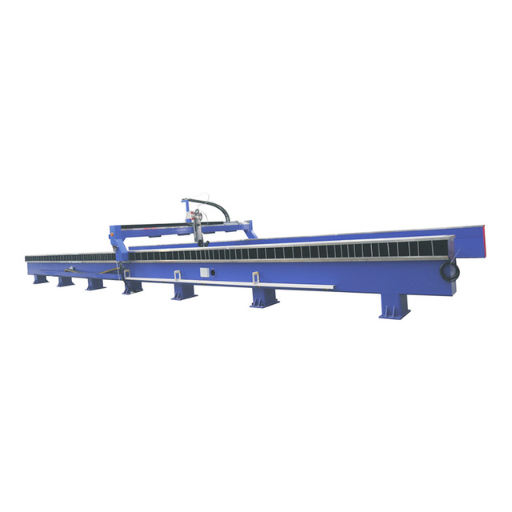
Waterjet Cutting is basically a tool that uses a high-pressure water stream, with or without abrasives, to cut materials. Controlled by a CNC system, it allows for very precise cutting with accuracy based on program designs. Their versatility lends to base materials like metal, plastic, glass, stone, and composites that are being cut without any thermal effect on them, for use in any application where being able to maintain the material properties is extremely important.
Definition and Working Principle
Waterjet cutting functions by pressurizing water up to 60000-90000 psi (pounds per square inch) and concentrating the energy into a coherent stream that can penetrate through the hardest materials. If garnet or any abrasive is added, the cutting effect intensifies so that it can cut some of the tougher materials, such as steel or granite.
The accuracy of waterjet cutting is unmatchable, often holding tolerances of ±0.003 inches, thus providing perfect detailing and accurate cut-outs for complex designs. Due to exactness in its cutting path, waterjet cutting causes negligible waste of materials, hence its economic benefits for manufacturing processes. The other advantage of this method is that it does not heat the materials with temperature changes that might create thermal distortions or change the integrity of the materials, something that occurs in other traditional heat-based methods of cutting, like laser or plasma.
Market research estimates the global market for waterjet cutting machines to have been valued at approximately USD 1.3 billion in 2022 and to reach higher CAGR of 5.5% from 2023 to 2030; growth driven by increasing demand from the aerospace, automotive, and construction industries, wherein the versatility and precision of waterjet technology match the requirements for solutions in advanced material processing.
There are therefore eco-benefits one has to consider with the waterjet cutting process. Because the process does not give out any pollution, harmful fumes, or hazardous wastes, industries that profit from being dearly environmental have been mostly on this process, having tried actively to reduce their carbon footprints.
Key Components of CNC Waterjet Machines
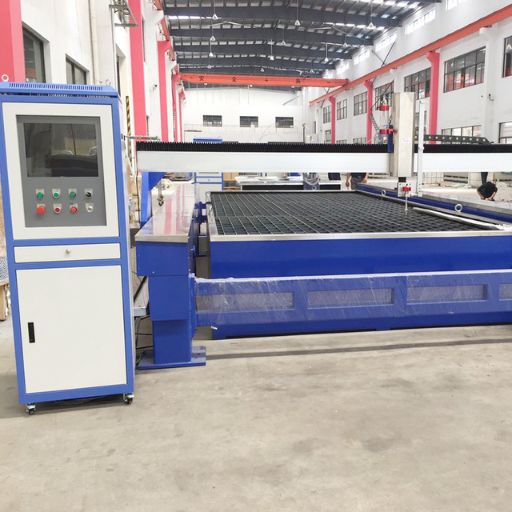
CNC waterjet machines contain several interrelated parts working together for high precision and the best cut.
Whatever the pressure of the high-pressure pump is, water is forced to prohibitively high pressures; seldom below 30,000 PSI, sometimes above 90,000 PSI. It is this kind of pressure that enables waterjet to cut any kind of material with ease.
From the cutting head, the pressurized water is ejected through a tiny nozzle as an exact jet stream. When abrasives such as garnet are added to the stream, it can cut steel, titanium, and ceramic.
A nozzle, for the waterjet, is usually made from a wear-resistant material such as diamond or sapphire. It is a very important part that guarantees the nozzle maintains maximum precision and consistency in cutting operations.
The abrasive delivery system carries out the task of supplying particles to the jet stream in abrasive waterjet cutting. It should meter and mix the abrasive so as to increase efficiency in material removal, especially for thick and dense materials.
The CNC system (computer numerical control) accurately controls the movements of the cutting head. After translating designs into machine instructions using sophisticated software, it allows the cutting of intricate patterns and complex parts, a feature that is enhanced by CNC waterjet cutters.
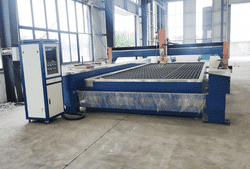
The cutting table serves as the support for the material to be processed, generally providing a water-filled base to cut the noise and prevent distortion of the materials. Based on industrial requirements, such tables vary in size from small scale to large format.
You can look at a few of these key components, which make CNC waterjet machines extremely versatile and precise, and hence useful from intricate artistic work to heavy industrial manufacturing.
How Water Jet Cutting Works
Water jet cutting is a process wherein high-pressure streams of water-the abrasive-contribute to cutting different kinds of materials. The water is first pressurized in the pump, which increases the pressure to anywhere between 60,000 to 90,000 psi. This water is then directed through a very small and precisely engineered nozzle to form a cutting stream that is very powerful.
Abrasive particles are added to cut harder materials with extreme precision; these materials include metals such as steel and titanium, ceramics, composites, and hard stone. These water jet cutters can maintain very tight tolerances of around ±0.001 inch, thus being preferred where very basic, intricate, and delicate cutting is required.
One of the greatest advantages of water jet cutting is that it operates as a cold-cutting process; no heat is generated, thereby avoiding heat-affected zones (HAZ), and without any warping or change of material attributes. For this reason, it finds applications in materials that are heat sensitive. Also, CNC interfaces allow fully automated and error-free execution of complex designs, thus increasing productivity and reducing costs for labor.
Types of CNC Water Jet Cutting Machines

Water Jet Cutting Pure Machines
These machines cut using only high-pressure water, processing soft materials such as foam, rubber, or textiles. This makes them suitable for cutting non-metallic materials really precisely and cleanly.
Abrasive Water Jet Cutting Machines
These machines mix an abrasive material in water; generally, garnet is used for cutting some hard materials like metal, stone, and glass. They are an industrial-scale solution for heavy-duty needs requiring strong and durable materials.
Hybrid Water Jet Cutting Machines
These systems combine the attributes of pure and abrasive water jets, offering versatile options to attack a very wide range of materials and balancing depending on the precision and strength needed for a given application.
Pure Water Jet Cutting
With softer materials like foam, rubber, paper, and some kinds of plastic, the pure water jet will cut through a thin stream of high-pressure water. It is a green and precise way to do things where abrasives are not needed.
Abrasive Water Jet Cutting
Abrasive water jet cutting uses this mix of high-pressure water and abrasive particles such as garnet to cut tough materials like steel, titanium, ceramics, and concrete. The process suits applications in which both precision and power are of the essence. The abrasive particles assist in cutting by surface erosion of the material with fine precision, thereby keeping HAZ to a minimum.
Abrasion cutting with water jets is now capable of pressures above 90,000 psi, thereby enabling magnificent production efficiencies. The production cuts can be within a tight tolerance as low as ± 0.003 inches; hence, the technology is trusted within the aerospace, automotive, and construction fields. It also facilitates highly complex designs, as the system can adeptly cope with intricate shapes and patterns without sacrificing precision. Being green, the abrasive water jet consumes less energy, fewer materials, and hence less glass waste on its matrix; thereby making it the ideal cutting choice for every precise and high-performance cutting need.
Comparison of Cutting Types
| Cutting Method | Precision | Speed | Material Compatibility | Heat Effects |
|---|---|---|---|---|
| Abrasive Water Jet | ±0.003 inches | Moderate | Metals, composites, ceramics | No heat-affected zones |
| Laser Cutting | ±0.005 inches | Fast for thin materials | Limited to reflective materials | Creates heat-affected zones |
| Plasma Cutting | Less precise | Very fast | Thick metals (steel, aluminum) | Rough finish, requires post-processing |
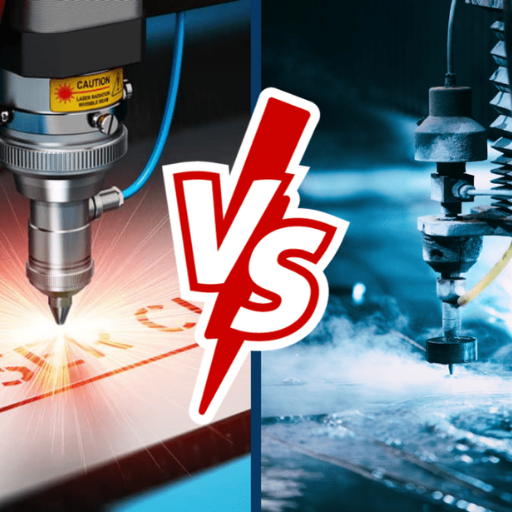
Following are the cutting types ranked according to precision and efficiency; abrasive water jet cutting, laser, and plasma cutting machines, each of which will have its own advantages in particular applications. Due to the fact that abrasive water jet cutting can treat many materials, metals, composites, and ceramics alike, without introducing heat that could alter or warp the material, it is sought after. It can work with ±0.003 in. precision and is excellent in fulfilling mathematical designs and tight tolerances.
Laser cutting, on the other hand, can provide quicker speeds for thin materials and offer accuracy in producing clean edges, similar to what CNC waterjet cutters achieve for various applications. It makes use of concentrated laser beams and speeds to achieve faster tolerances of ±0.005 inches. However, the laser may have some difficulty with highly reflective or thicker materials and can generate heat-affected zones (HAZ) that may sometimes compromise the material properties.
Plasma cutting, meanwhile, is quite cheap to cut thicker metals but less precise than water jet and laser cutting. It is fast and is preferably used in heavy industrial metalwork because it can cut materials like steel and aluminum up to several inches thick. The edges, however, will have to be post-processed because of the rough finish.
Every one of these cutting processes offers different pros and cons, and thus the selection depends highly on material type, required precision, and project parameters. Finding that perfect fit for the application means weighing factors like cost versus time, versus sustainability.
Key Features and Capabilities of Waterjet Cutters

- Precision Cutting: Waterjet cutting involves extremely precise cuts, with thin distortions, and hence is used for elaborate designs with very tight tolerances.
- Material Versatility: If there is any matter to cut, it would be metals, stones, glass, or even ceramics, composites, without heat or physical transformation aboard waterjet cutting.
- Cold Cutting Process: The process is cold cutting, so waterjet does not create heat-affected zones and thus retains the excellent properties of sensitive materials.
- Environmentally Friendly Operation: Waterjet operations produce less waste, the primary medium is water, and the abrasive is sometimes recyclable.
- Thickness Adaptability: It cuts from thin sheets to thick materials, depending on the material type and setup.
- No Tool Changes Required: They give freedom without the need for tool change, allowing a smooth flow between different material types or project requirements.
Precision Cutting of Various Materials
Waterjet cutting is known for fine slicing on a variety of materials, hence serving many industries. The cutting system can cut everything from metal, including steel and aluminum, to non-metals such as glass, plastics, ceramics, and composites, clean and highly accurately. In aerospace manufacturing, titanium and carbon fiber components are cut with precision; otherwise, any heat when cutting would adversely affect the integrity of the material.
An important further advantage of this process is the tight tolerances of ±0.003 inch, depending on machine setup. Hence, little finishing might be required when using waterjet CNC machines, which in turn saves a fair amount of time and cost. Higher-end systems can even cut materials up to 12 inches thick, offering excellent performance while heavy-duty shaping of stone slabs or black metals.
Industries using this equipment have attested to their ever-increasing productivity and the minimal landfill remittances, through the reuse of abrasives and water from the system. Their utmost versatility, offered by waterjet systems, is what makes them indispensable in all applications for precision cutting, such as architecture, automotive, and industrial manufacturing.
Thickness Range and Material Compatibility
The technology of waterjet cutting is second to none when versatility in terms of thickness range and materials. The newer systems of waterjet can, in functionality, cut a material having a thickness of 0.010 inches up to an incredibly massive thickness of 12 inches or more, with the variation being that the materials are different, and so is the system setup. Hence, it can be said that the waterjet cutting technology is most suitable in applications needing a precision cut on varying dimensions of materials.
In terms of working with materials, waterjet cutting can be performed on metals such as steel, aluminum, and titanium, and those that are nonmetals, such as glass, ceramics, composites, and rubber. Waterjet cutting has successfully processed hardened steels of the thickness of several inches to clean cuts without any loss of steel integrity. On the other hand, cutting thin and delicate materials like glass or laminates without heat greatly reduces the chances of warping or cracking. With the evolution of abrasive waterjet cutting mechanisms, hard materials such as tungsten or engineered stone can be very well cut, again proving the adaptability of this up-to-date technology.
Speed and Efficiency in Cutting
Through abrasive waterjet cutting, precision and efficiency were created to be synonymous with respect to the demands industries are placing daily. Depending on various materials and thicknesses, today’s waterjets can achieve cutting speeds of up to 600 inches per minute. In rapid fashion, the technology allows different layers of material to be cut simultaneously, drastically reducing production time.
The cutting process produces no heat; it saves time to cool down the materials or thermal distortion. It has been investigated that abrasive waterjet cutting wastes about 40% less than regular cutting tools, and this directly affects cost-effectiveness. Considering these advantages, waterjet cutting is preferred from aerospace to automotive to custom-fabrication industries, where production speed and precision are of the essence.
Applications Across Industries for Water Jet Cutting
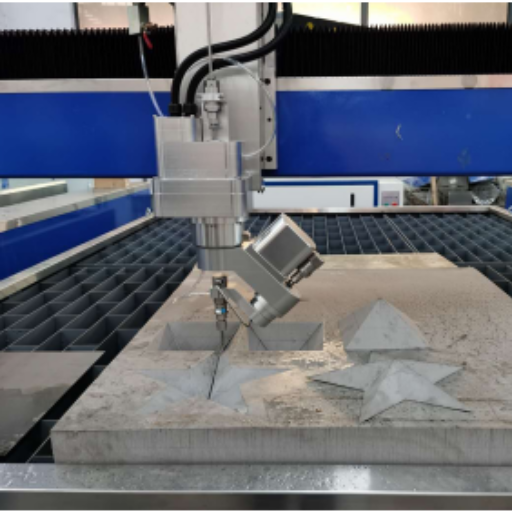
Water jet cutting is an esteemed method and is deemed fit for several other industries, depending on its versatility and accuracy. In aerospace, jet cutting is used to carry out intricate cutting of parts in titanium, composite, and aluminum without leaving or imparting any structural deformities on them. Water jet cutting is considered the best for custom components and prototype development, with good accuracy in the automotive industry. Stone, glass, and metal are cut for intricate designs in construction and architectural water jet cutting processes. By offering a diverse choice of materials to work with, it can be an advantageous process in manufacturing and fabrication.
Aerospace and Automotive Industries
This industry welcomes water jet cutting technology for the precision and versatility it affords. Very tight tolerances, usually ±0.003 inches, have to be adhered to by the machining of turbine blades, tiny brackets, and structural frames, which is not a problem for water jet cutting. Such levels of precision are a fundamental prerequisite in keeping aerospace standards in respect of safety and performance; this is especially so in kinds of CNC cutting technologies. Furthermore, using water jet cutting in the process means there are no heat-affected zones, so the material integrity is retained for titanium, aluminum, and composites-that are common materials of aerospace work, which is vital for their endurance and also for their performance under severe tests.
For automotive uses, water jet cutting is an accepted method for cutting metals, plastics, and interior materials such as rubber and carpet. Different manufacturers are also using it to produce lightweight components for the new focus on electric vehicles (EVs), where lightweight components are the most important item to increase the range. The global water jet cutting machine market, according to recent market data, is expected to grow at a CAGR of over 6% from 2023 to 2028, with increased demand from these industries. This is what makes water jet cutting invaluable to industries because it is very adaptable and precise enough to handle intricate designs while simultaneously cutting down on materials wasted and costing less to manufacture.
Manufacturing and Artistic Uses
The water jet cutting system has become an invaluable tool for a gamut of manufacturing and art processes in its quest for the highest level of precision and versatility. The industrial sectors in which this system finds application include aerospace, automotive, and construction to produce tiny components with minimal wastage. For example, aerospace water jet cutting is advantageous, capable of cutting through high-strength materials like titanium and composites without compromising structural integrity. According to recent publications, water jet cutting can reduce material waste up to 30% thus maximizing savings for the industries concerned, especially when using advanced waterjet CNC machines.
Artist searchers use water jet cutting to fabricate detailed designs and sculptures from glass, metal, and stone. These artists and architects utilize it for customized projects like decorative panels, flooring patterns, and contemporary sculpture. With the precision of water jet cutting down to tolerances as fine as 0.005 inches, design possibilities are endless, yet consistent. The collaboration between human creativity and technology keeps water jet cutting alive and relevant in any industrial and creative domains.
Real-World Case Studies
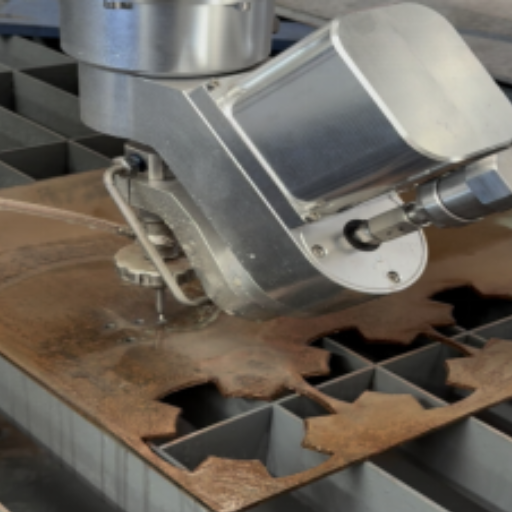
Water jet cutting is an established method for precision cutting in the aerospace industry, where it is further regarded for its adaptability. For example, titanium, aluminum, and composite materials involved in aircraft construction are cut by respective firms using this technology. Particular materials do not get worn away by traditional methods, so maximizing the cutting with respect to maximum material validity has rather remained an objective. Reports state that water jet cutting may provide up to 20 percent improvement in material efficiency, which theoretically translates to discounted costs and, hence, meets the sustainability commitment in the industry.
Water jet cutting has found its second-most crucial use for crafting surgical instruments and medical device components in the medical field. The strength of metals being cut is never compromised, as well as their material properties, due to the fact that this method has the ability to cut through metals while preserving the heat integrity of the material. This has been very important, for example, in the machining of precise components for implantable devices within the range of tolerances to allow compatibility with medical procedures and safety.
Automotive manufacturers are turning to water jet cutting for cutting and prototyping with precision. This technology is particularly valued for cutting interior parts, for example, custom dashboards or panels, as it leaves only minimal secondary processing after cutting. This has been shown by studies to reduce production times for certain components by 15-30%, which results in increased manufacturing efficiency.
Water jet cutting is one of the techniques adopted by artists and designers around the world to render their concepts into actuality. For instance, large-scale public art projects and intricately detailed ornamental work on metals and ceramics have been undertaken by this process. The first instance involves the fabrication of a stainless-steel sculpture made up of approximately 1,000 components, all of which were so meticulously cut that the assembly was essentially flawless, attributable to the extremely accurate water jet cutting process.
In a nutshell, these projects raised in tandem complicate the versatility and powers of water jet cutting in varied realms, thereby asserting the presence of water jet as a platform for innovation, efficiency, and artistic prowess.
Advantages of CNC Water Jet Cutting
- Accuracy and Precision: The CNC water jet cutting performs extremely precise cuts with very close tolerances of about ±0.003 inch, accommodating finer and intricate designs.
- Versatility: The abrasive water jets treat any material irrespective of hardness-fabric, metals, glass, ceramics, and composites.
- Absence of Heat Affected Zones: Cold cutting assures that the materials do not get heat treatment, hence retaining their structural integrity and avoiding any sort of warping and distortion.
- Environmentally Friendly Process: Water jet cutting uses the raw water and abrasives and hence saves the environment from harsh chemicals.
- Less Wastage of Materials: The method maximizes the actual use of materials, thus giving less wastage and later becoming cost-efficient.
Hence, these are the reasons that render CNC water jet-cutting an important tool where precision is needed, along with the styles of sustainability and flexibility.
High Precision and Minimal Waste
High precision in CNC water jet cutting is gained through advanced technologies, allowing a tolerance as precise as ±0.001 inches. Such accuracy accommodates manufacturers in designing intricate and highly complicated designs without compromising on quality. Moreover, since cutting is performed by cold cutting, the possibility of thermal distortion is nil-would-be-a-great-threat in the usual cutting methods where heat is considered versus a cutting process.
The water jet cutting method boasts of reducing waste. According to various reports, material utilization may exceed the 90 percent mark because of the precise cutting action and kerf width offered by this method. With so much efficiency in cuttings, the raw material costs are reduced high; thus, green manufacturing can be done through minimizing scrap or excess waste. Such parameters render this stage of CNC water jet cutting processes of utmost importance for the aerospace, automotive, and construction industries, wherein characterizing precision and optimization of resources is paramount for the continued manufacturing of products.
No Heat-Affected Zones (HAZ)
One of the most significant benefits that CNC water jet cutting offers is the elimination of heat-affected zones (HAZ). Unlike traditional cutting methods such as laser or plasma machining, CNC water jet machining is a cold cutting process. Thus, HAZs do not form on the material surface since materials remain unaltered under thermal influence during the cutting process. For instance, metals such as aluminum and steel that distort upon the application of heat are kept with their original properties when water jet cut. Further, this method also does not cause warping, hardening, or micro-cracking that can accompany the heat-affected cutting methods; hence, perfectly aligned with precision engineering where material quality is paramount.
Versatility in Materials Cut
A cutting method has been considerably considered, primarily because of its fantastic versatility with respect to the materials it can handle and the capabilities of waterjet CNC machines. To name a few applications, from soft materials like rubber, foam, and plastics to hard and dense materials such as granite, ceramics, and titanium-water jets will cut them all with precision. In aerospace, waterjets cut composites like carbon fiber in order to fabricate a light yet durable component that is engineered to strict specifications. In contrast, in the construction field, water jets are well known for accurately cutting glass and decorative tiles to high-quality standards.
Water jets can quickly change the tolerances of plus or minus 0.003 inches with the utmost accuracy, depending upon the application in question. Moreover, since a heat-affected zone is not created by the procedure, it is preferable for materials sensitive to temperature variations and subject to degradation. This massive cuvette can carry cutting pressures in excess of 60,000 psi, thereby providing unrivaled versatility for those applications that require both precision and material integrity.
Limitations and Challenges of Waterjet Machines
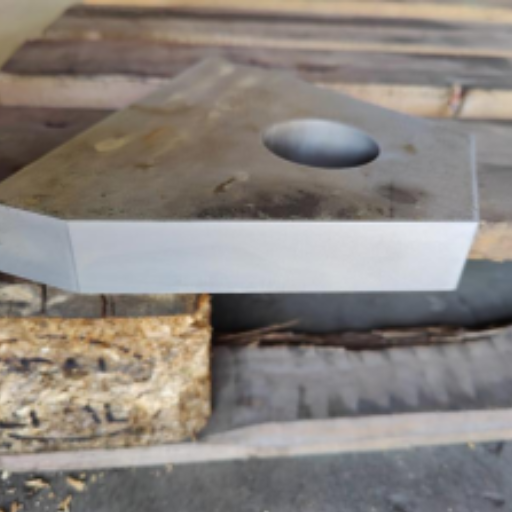
Because of their remarkable accuracy and immense flexibility, waterjet machines present some problems. Operational costs, for example, are very high, as waterjet systems consume a lot of energy and water in addition to requiring maintenance. Speed of cutting is comparatively slow, though, and that goes against production needs when large volumes of work have to be handled. Noise during operation is also an issue, and sometimes soundproofing is a necessity in certain places. Disposal of abrasive waste materials and the environmentally safe disposal thereof can be an issue, too, and proper care should be taken according to environmental laws. These must be well thought through to decide if the waterjet operation is the most suitable for the given applications.
Initial Cost and Maintenance Concerns
Depending upon its capabilities, such as size, pressure levels, and advanced features like 5-axis cutting, industrial-grade waterjet cutting systems generally end up costing around $60,000 and can sometimes even cross the $300,000 threshold; this can be quite a substantial investment for an industry. On top of that, operational costs cannot be ignored. The maintenance of a high-pressure pump or the replacement of the nozzles, seals, and other consumables will fast eat away at the budget. Garnet, the most common abrasive, may vary from $0.20 to $0.40 per pound in price. However, in a normal course of operation, the abrasive may be consumed at a rate of several pounds per minute, depending upon the thickness of the material and the speed at which one wishes to cut it.
These maintenance intervals are crucial, especially in high-use scenarios. The associated downtime can disrupt production schedules and lead to an increase in costs. An evaluation should be made regarding this matter when a waterjet process is compared with other options to guarantee it fits both the budget limits and the long-term operational interests of the entity.
Limitations on Cutting Thickness
Other than being versatile, waterjet cutting, however, has some constraints with respect to the thickness of the materials that it can cut effectively. For instance, the materials can be finely cut with an allowance of 6 inches (150 mm) of material thickness by state-of-the-art machines, whereas an increment in thickness restricts the cutting accuracy and quality. Going beyond is when the tapering or inconsistency, either on the top or at the edge of the cut, comes in along with the thickness, and might require finishing.
Material type is another important factor influencing these limitations. Soft materials such as foam or rubber are easier to cut when thick, whereas harder or sturdier materials such as titanium, stainless steel, or hardened alloys tend to stretch the limits of the waterjet system. Furthermore, cutting real thick materials involves a marked increase in water pressure and abrasive application, both of which would significantly hike up operating costs.
In some industrial applications where thick materials must be cut, other cutting methods such as plasma or laser cutting may be preferable, given precision requirements; however, understanding these limitations ensures that waterjet technology is kept technically efficient within operational limits.
Other Technical Challenges
Another respectable technical limitation is nozzle wear and maintenance in waterjet cutting. The high water pressure mixed with abrasive substances renders considerable erosion upon it over time, thus reducing its precision and efficiency. Data shows abrasive nozzles tend to be replaced every 50 to 250 hours of use, depending on the material and cutting parameters, adding downtime and cost to production.
Kerf width control is also a major concern when it comes to very intricate designs or small parts. Instruments need to be employed so that parameters are finely tuned – factors including water pressure, abrasive flow rate, and nozzle condition – because inconsistent kerf width will affect the cut quality and trap materials, resulting in wastage.
Water purity must be maintained at an optimal level to ensure the waterjet system does not experience operational downtime. Water impurities can serve to damage the pump and other components, which, in turn, can bring unexpected failure upon the equipment. An advanced filtration system and regular purity checks on water quality are, therefore, a must for so many industries.
Secondly, the noise and mist generation during waterjet cutting are consequential concerns in any workplace. Prolonged exposure to both can be hazardous to the health of the workers, thereby necessitating soundproofing and good ventilation in a modern waterjet cutting plant.
Choosing the Right CNC Water Jet Cutting Machine

A CNC waterjet machine selection should revolve around precision, versatility, and material compatibility.
- Material Type and Thickness – Identifying the materials you will be cutting, as well as their thickness, to make sure that the machine’s capacity conforms to what you need for your business.
- Cutting Accuracy – Identifying how much accuracy is present and needed for your project. The more precise machines are available for delicate/convoluted designs.
- Pump Pressure – Find yourself a machine suitable for the pressure required to work through your expected workload because, generally, the higher the pressure, the more rapid and cleaner the cut.
- Table Size – Go for a machine that comes equipped with a table size fitting your regularly used material measurements.
- Maintenance and Support – Go for a manufacturer with solid customer support, spare parts availability, and maintenance service.
- Budget – Go for a machine that satisfies your operational needs within your financial capability.
Considering the above will help you choose the water jet cutting machine for your applications and operational objectives.
Factors to Consider: Budget and Material Type
Once you have considered waterjet cutting machines, it will be best to balance your budget and the type of materials you want to work with. An investment of anywhere between $50,000 and over $300,000 has to be made for a water jet cutting machine, depending on the performance, size, and specifications of any particular machine. The operation expenses, such as abrasives, water, electricity, and maintenance, run around $15 to $30 per hour. You need to be aware of all these costs to ensure that they never go beyond your limits.
It is also very much reliant on the material. Whereas the water jet is a perfect cutting system for softer materials like foams, rubber, or plastics, abrasive material is needed for the cutting of harder materials such as stainless steel, aluminum, or titanium. The higher-end grade abrasive water jet cutters capable of cutting through thicker or harder substances come with a higher cost; however, this generally puts more versatility at your disposal in the future for industrial applications. These considerations are the ones that will guide you to fit a machine within the limits of your budget as well as operational requirements.
Production Needs and Efficiency
Operating speed and precision in production need and efficiency are no less than that of output. Today’s water jet cutting machines incorporate the most modern technologies, such as dynamic-waterjet systems capable of reducing taper and enhancing cutting accuracy. Depending on the material, the machines cut anywhere between 2,000 and 3,500 inches per minute and hence can allow for huge throughput in industrial setups.
Energy consumption must also be considered. Most water jet systems require anywhere between 37 and 95 kWh per hour, depending on pump capacity, nozzle size, and cutting pressure. An energy-efficient pump in the machine will keep utility costs on the lower side, thus increasing the efficiency of your operations.
Furthermore, most of these models are equipped with software-driven productivity features such as multi-axis cutting or custom pattern programming automation. These functions reduce manual work and prevent errors. Such machines are indispensable in industries where precision and speed are of utmost importance, including aerospace, automotive, and manufacturing.
Popular Brands and Models Overview
When they talk about waterjet cutting tools, it’s implied that a select group of brands sets the standards in quality, performance, and innovation. Here are a few popular brands and models:
Flow is widely spread in waterjet circles with various models under the Flow Mach Series. These machines, having Dynamic Waterjet® technology, are said to be very precise and efficient. The Flow Mach 500 cuts materials with an accuracy of up to ±0.001 inches, which finds usage in highly demanding applications.
OMAX manufactures particularly versatile and user-friendly waterjet systems. OMAX 55100, which has a fairly large cutting table for large-scale projects, is one of their famous models. Additionally, there is IntelliMAX software that enhances the user experience of OMAX systems by simplifying multi-axis cutting and repeatable precision.
Free to customize their solution, WARDJet designs the X-Series to offer great flexibility. The machines can be engineered to satisfy any cutting need, from small intricate designs to large industrial applications. The control systems and modular design implementation are two key advantages inclined towards a user-friendly environment on the WARDJet side.
KMT specializes in cutting systems that are highly durable and efficient. Streamline PRO series machines work with ultra-high pressures, up to 90,000 psi, to achieve faster speeds without compromising cutting quality. The compactness of their machines also tends to save space in the workshop.
Jet Edge machines enjoy a reputation for rugged construction and reliability in the most severe production environments. The Edge X-5 has five axes of motion for cutting more complex profiles. These are long-lasting pump systems primarily made for heavy-duty use.
Besides, every brand continues towards improvements in energy conservation, automation, and pinpoint accuracy so that businesses can have technology tuned to their own specifications. For speed, precision, or flexibility, this list has something that every industry can avail.
Future Trends in CNC Water Jet Cutting
Focus goes into the making of the systems that require less energy with high performance attributes. Hence, it cuts operational costs and pollution.
Automation technologies, such as AI and machine learning, are being integrated into CNC waterjet systems to increase precision, reduce human errors, and make the systems easier to operate.
Trades with abrasive water jet technology are now capable of cutting harder and thicker materials with greater accuracy and precision, giving them a lot of possible applications across industries.
Water recycling and the use of green abrasives are the chief trends now, considering costs and environmental consciousness.
Real-time monitoring, coupled with very conveniently usable interfaces that are accessible to all, enhances productivity and service areas for the people working with these machines at any level of skill.
These trends present the evolving circumstances in CNC water jet cutting technology to confront the demands of modern industry for efficiency, sustainability, and precision.
Technological Advancements in Waterjet Machines
Recent advancements in waterjet-cutting technologies have increased its use in industrial applications as being precise, efficient, and more versatile. An ultra-high-pressure pump, with pressures of more than 90,000 psi, today finds a place in any modern waterjet machine. This combination can cut thick and hard materials like titanium, glass, and composites with utmost accuracy. Abrasive waterjet systems have also been innovated to reduce abrasive consumption by up to 30% to reduce operational costs while still preserving cutting performance.
Automation and CAD and CAM integration have changed the nature of the workflow, allowing the software to optimize the cutting path more efficiently. This optimization contributes to an approximately 20% reduction in material wastage. Production downtime is also being reduced as real-time monitoring and state-of-the-art diagnostic systems foresee maintenance requirements and reduce unplanned downtimes.
Going green is the current trend, with various manufacturers creating machines capable of recycling 85-90% of the used water and thus making the entire process relatively eco-friendly. Such features are an indication of the increase in industry pressures to lessen environmental impacts while maintaining high-level productivity standards. This upgrade tells how waterjet cutting technology has not only been upgraded lately but also is driving modern manufacturing to newer levels.
Integration with Automation and AI
This integration of automation and AI with waterjet cutting processes has changed manufacturing processes for good. AI algorithms translate smarter operational parameters for waterjet cutting, maximizing cutting paths, minimizing material waste, and reducing downtime. With automation, machines now run for hours, with very low human intervention, resulting in greater output and consistency. For example, in such advanced systems backed by AI, materials properties are instantly analyzed in real time, with adjustments to be made in water pressure and abrasive levels so that project accuracy is not compromised in the face of material variation. Recent industry reports state that efficiency has been improved by up to 30% in factories that have adopted AI-driven automation, showing that these technologies can be a huge force in optimizing manufacturing workflows. This is not to say that such developments are purely oriented toward production; on the contrary, they have greatly fostered the fields of customization and flexibility, where bespoke manufacturers are now apt to speed up the delivery of varied customer demands.
Emerging Applications and Markets
The AI-driven automation is changing a plethora of industries, with emerging applications showing a marked promise. One major area is the health sector, where AI-powered systems are being applied in the analysis of medical images, early diagnosis of diseases, and determination of plans for personalized treatment. For example, AI algorithms for image analysis demonstrated considerably higher accuracy than the traditional ways for identifying breast cancer and diabetic retinopathy in diagnostic scans.
Another growing market is the automotive sector, mostly regarding autonomous vehicle technology, where reports show that investments into self-driving car development have surpassed $50 billion globally, while the AI-based advances allow for safer navigation, real-time decision making, and analysis of traffic patterns. The retail sector is likewise exploiting AI for supply chain management, customer experience improvements, and inventory control. Recent studies show that retailers with AI mention a 20% reduction in operational costs.
Relevant also to renewable energy, AI comes into the front seat. Smart grids allow intelligent operations for distributing energy and estimating upcoming energy requirements. Predictive analytics keeps maintenance of wind turbines and solar panels on track by reducing downtime and increasing efficiency. In sight of all these evolving markets, it will totally prove the adaptability and scalability of AI Technology as an innovative power in the world across other sectors.
Reference Sources
- IEEE Xplore: Control system for the waterjet cutting machine
Discusses the control systems and algorithms used in CNC waterjet cutting machines, highlighting their importance in achieving precision and efficiency. - SpringerLink: Formation of an energy-efficient cutting tool path in waterjet and laser cutting CNC machines
Explores energy-efficient cutting paths for water jet and laser CNC machines. - OSTI (Office of Scientific and Technical Information): CNC water-jet machining and cutting center
Provides insights into the applications and benefits of CNC water jet cutting technology. - AIP Publishing: Cost minimizing of the cutting process for CNC thermal and water-jet machines
Research on cost optimization strategies for waterjet cutting processes. - Top CNC Water Jet Cutting Machine Suppliers in China
Frequently Asked Questions (FAQs)
With high-pressure water, abrasive, or both, a waterjet performs cuts by force. CNC waterjet cutting is perhaps the most versatile.
Water jet cutting is an operation in which very high-pressure or ultra-high-pressure water is passed through a very small orifice to create a stream or jet of water. In the abrasive water cutting system, an abrasive material is used, which is injected into the jet in the chamber right after the orifice. Hard materials such as metals and stones get cut by the mixture of abrasive particles and water.
What types of material can be cut with a CNC waterjet?
CNC water jets can cut almost any material, including metals, glass, stone, ceramic, plastics, and composites. This tool’s versatility allows it to satisfactorily handle soft and hard materials.
What are CNC water jet cutting and conventional cutting?
Unlike traditional cutting methods such as plasma cutting and laser cutting, CNC waterjet cutting uses a high-pressure jet of water to cut through materials and does not generate heat. This absence of heat prevents any warping or changes to the material property. It is thus preferred for cleaning up composites and other materials, while admitting that plasma and laser cutting would perform better on steel.
What is CNC control in waterjet machines?
CNC control stands for Computer Numerical Control systems in waterjet machining that automate the cutting process. Using this technology, implemented waterjet machines, operators can manually input exact movements and selection of speeds, resulting in the cutting of complex designs and patterns with high accuracy and repeatability.
Can computers be used to increase the efficiency and productivity of water jet cutting?
Water jet cutting is very much aided by cutting software, which means the CNC waterjet operation can be exploited at its best. Cutting software helps the operator create, alter, or control cutting paths while optimizing material usage and cutting time. Some advanced software can also run through a simulation mode that predicts the results much before the actual cutting begins.
Can waterjet machines cut thick materials?
Water jets can cut materials on the thicker end, depending on the jet power and abrasive being used. Materials with a thickness of several inches can be dealt with, depending on the power of the water jet and configuration of the cutting head, making it the choice of cutting method for industrial applications.
What is a 5-axis waterjet?
The 5-axis waterjet allows for advanced complex cutting capabilities by giving motion on five different axes. The machine, therefore, is able to cut intricate shapes and angles for applications requiring complex designs.
How does water jet cutting compare to plasma cutting?
For heat-sensitive materials, water jet cutting is generally preferred since there is no heat generated that could warp or damage the material. Another point to consider is that the waterjet cutting method also yields a much smoother finish, and more types of materials can be cut without affecting their properties.