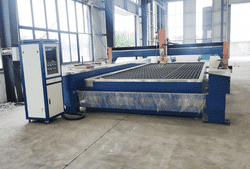


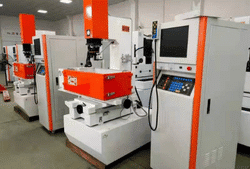
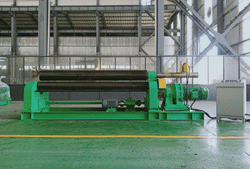



The evolution of laser fabrication has undergone significant revolutions, with industries adopting new technologies to implement their designs and production. Laser tube processing is an insight into doing things it stands for supreme precision, efficiency, and versatility. The article discusses laser tube cutting services and how this modern technology is being introduced to other metal fabrication industries. If one wants high production speeds, complex cuts, and reduced material wastage, laser tube processing can fulfill almost all the modern needs of manufacturing. Continue reading to learn about this outstanding technology and start thinking about metal fabrication with it.
Introduction to Laser Tube Cutting

What is Laser Tube Cutting?
Laser tube cutting is a very versatile manufacturing process, which knows how to cut, bend, or perforate metal tubes and profiles. It can be extension to working on steel, aluminum, brass, and titanium, thereby offering opportunities for applications across a broad range of industries-from automotive, aerospace, and construction to furniture-making.
Elaborate and exquisite cuts can be obtained on laser tube cutting with an integrated control of 3D CNC laser systems within the tolerance limit of ±0.1 mm. Hence operations may suit all forms of operations on complicated cuts where conventional cutting processes may fail, such as curved holes, chamfers, and irregularly shaped notches.
Performance Improvement:
Operational Efficiency Improvement by 30%
Raw Material Consumption Reduction by 25%
Apart from being quite efficient speedwise, another major advantage that laser tube cutting possesses is its economic aspect, stretching from very little wastage of raw materials to still less processing time. According to recently observed research, a 30% improvement in operational efficiency as well as a 25% reduction in the consumption of raw materials have been realized since the introduction of laser tube cutting into the manufacturers’ panel. With automatic loading and unloading systems being implemented, laser tube cutting is left alone for high-speed fabrication of big projects whilst ensuring highest accuracy throughout.
Laser tube cutting facilities several designs using tubes in several shapes: among round, square, and rectangular, open profile-which enhances creativity and design options for new products. The integration of CAD data allows seamless transitioning from digital design to physical product, ensuring flexibility and precision throughout the manufacturing.
From small prototype working through to full-blown production, this machine technology sees the entire spectrum of manufacturers tremble, providing sound structures and beautiful finishes. With reduced secondary environmental hazards, it is a 21st-century metal fabrication process that meets modern industry levels.
Advantages of Laser Cutting in Tube Processing
Technologically, laser cutting aligns with significant operational benefits like chief accuracy and high speeds, thus serving tube processing itself as a versatile and modern manufacturing solution. Without a doubt, one of the advantages of laser cutting processes is to minimize waste and thus simultaneously reduce costs by cutting with more precision. According to recent industrial data, laser cutting produces almost 30% better material utilization than conventional cutting processes. This ensures the entire resource efficiency, particularly in instances where materials are cost-intensive, such as stainless steel or titanium.
Key Performance Parameters:
• Cutting speeds over 100 inches per minute
• 30% improvement in material utilization
• Non-contact processing deforms softer materials
The remaining one is something about speeding up production. The latest laser machines can make cutting tubes pretty fast, and in some cases, the speed can go beyond 100 inches per minute-a function of tube material and wall thickness. This far expedites lead time and delivery, which serves as an important factor to consider in industries that have stringent times, such as automotive and aerospace industries. Laser cutting further allows sharp cuts into intricate designs and complex geometries, providing manufacturers uniquely with the ability to make specialized and customized products with great consistency and repeatability.
Besides that, being the best, it is a non-contact technology, thereby lessening deformation of the material so that clean edges are created that require little post-processing. Furthermore, since the technology can cut through various materials and tube diameters with ease, these allow for further possible applications. The very nature of the machine makes the laser cutter mergible with automated systems such as CNCs (Computer Numerically Controlled) for higher accuracy and reduction in human errors.
Lastly, first from the economic view, laser cutting cards shall perform better in optimizing material uses and conserving energy. In spirit, it is sustainable and even aids sustainability. Being such, the sheer amalgamation of accuracy, speed, and adaptability makes laser cutting a must-have in tube processing.
Overview of Tube Lasers and Their Applications
Tube laser systems marked the revolution in the manufacturing, providing such synthesis of precision and efficiency in the different modes of metal tubing and profile processing. These machines deploy a highly concentrated laser beam to cut, drill, or engrave materials, in the manner that less profuse traditional machines vary by the level of precision that the operator is willing to submit. With modern improvements in tube laser technology, their areas of application have so much increased, and they fit in so well within the framework of modern production lines.
Tube lasers largely find application in automotive precision components where reliability stands as a paramount consideration: exhaust systems, chassis frames, and structural components. All of these have very complex designs that tube lasers can work on with a fine degree of precision whereas traditional operations of cutting seem rough and crude; e.g., saws and plasma cutters. In the aerospace field, tube lasers lend a helping hand in manufacturing structural components while remaining light and yet meeting all of the safety and performance requirements.
Market Growth Projection:
Global laser cutting market expected to exceed
$6.7 billion by 2030
Tube laser machines have a blooming market. According to market reports, the global laser cutting market is forecasted to cross $6.7 billion by 2030. The demand is seen to be on a rise from the automotive, aerospace, and construction industries. Sustained environment-friendly development has emerged as a successful factor behind making tube lasers a winning worldwide solution for manufacturers.
Tube lasers invaded the other elite area of construction and architecture. The highest prices were paid for complete designs of metal structures of artistic facades or custom decorations created by tube laser systems. From steel and stainless steel to aluminum and even titanium-we have seen it all. The versatility is truly increased by the turn-key automation and software-based controls (like CAD/CAM integration), which drastically cut down setup time while upping the production rate.
Essentially, tube lasers seize center stage in joining modern manufacturing spirit with that of efficiency, capability, and sustainability. The application areas of tube lasers will continuously expand as industrial sectors pursuecomplementing top quality output and environmentally friendly solutions. For either mass production or non-repetitive products, tube lasers will always continue to set benchmarks for engineering excellence.
Types of Laser Cutting Technologies

Fiber Laser vs. CO2 Laser: Which is Better for Tube Cutting?
In opposing the choices that serve more traditional industries wherein CO_2 lasers outsell fiber lasers, laser technology has developed largely favoring fiber lasers in all other tougher competition.
1. Efficiency and Speed
Fiber lasers are very energy efficient and also faster in cutting thin materials. They operate at the conversion efficiency of at least 25-30% of the input electrical energy into an electrical laser beam, whereas CO2 laser conversion efficiencies are, at best, in the range of 10-15%. It has been proven through research that fiber lasers will cut thin materials (less than 5 mm) practically 2-3 times faster than CO2 lasers, and for this reason, these have become the fastest among those industries that require fast production.
2. Materials
Texture lasers bode well against materials that tend to be highly reflective, usually aluminum, copper, and brass, most of which pose problems for CO2 lasers. Such materials reflect the CO2 laser beam thus delaying the processing; whereas fiber lasers do not have the same problem at reflection by materials because they operate at shorter wavelengths. This very factor makes fiber lasers much more applicable in the aerospace, automobile, and electronics industries.
3. Maintenance and Operating Costs
CO2 lasers are heavier maintenance-wise, as these cavities involving mirrors and optical components need cleaning, alignment, or, on occasions, replacement. Also, consumable gases like nitrogen or helium are used by the CO2 laser since the operation of the CO2 laser depletes these gases. Maintenance-wise, fiber lasers with minimal moving parts and no consumable gases require less upkeep, with nearly negligible downtime.
4. Cutting Quality
CO2 lasers still cut better with smoother edges and finish for thicker materials, although with improved beam quality and power, fiber lasers are fast closing this gap. Fiber lasers usually cut quick and precise but may have some difficulty with edge smoothness if it concerns the cutting of thicker materials where the dispersal of intensity of heat is considered.
5. Lifespan and Durability
Fiber lasers offer a longer lifespan, which is around 100,000 operating hours according to the average, CO2 lasers would last approximately 25,000 hours. This huge operational life adds value and does away with frequent equipment replacement.
6. Ecological Footprint
Fiber lasers are a lot more eco-friendly because they consume very low power and need no consumable gases. Such companies that consider sustainability as well as being a core value turn to fiber laser technology as the greener avenue.
Key Performance Overview
| Feature | Fiber Laser | CO2 Laser |
|---|---|---|
| Cutting Speed (Thin Metals) | Faster | Moderate |
| Cutting Capability (Thick Metals) | Moderate | Smoother, higher-quality cuts |
| Material Compatibility | Excellent (Reflective Metals) | Limited (Reflective Metals) |
| Energy Efficiency (%) | 25-30% | 10-15% |
| Maintenance Needs | Low | High |
| Operating Costs | Low (No Consumable Gases) | High |
| Lifespan (Hours) | ~100,000 | ~25,000 |
Final Verdict
Many industries considered fiber lasers their choice mainly because of the speed at which it works with various materials and the lower operating costs, along with being energy-efficient. That said, for thick work materials, it will be better to go with CO2 lasers, since these produce better edge quality. The technology to choose depends on the task at hand, the material involved, and what is expected from the production.
Understanding Tube Laser Cutters
Tube laser cutters are modern tools used in precision cutting, engraving, and marking of metal tubes and pipeworks. Working on laser-fiber or CO2 laser technology, these machines work on several materials such as steel, aluminum, brass, and even titanium, serving industries like automotive, aerospace, construction, and furniture manufacturing.
Processing very complex geometry with supreme precision is the mark of modern tube laser cutting machinery. The cutting machine can execute intricate cutting, beveling, and drilling operations that oftentimes make secondary operations redundant. For instance, an advanced tube laser cutter would hold limits of tolerance tight down to ±0.1 mm, which is crucial whenever precise assembly is required.
Advanced Features:
• Tolerance limit: ±0.1 mm
• Speed: 120 meter/min
• Increased Productivity by 30%
The fact that there are other modern developments that also allow certain levels of automation in the tube laser-cutting technology should, therefore, be emphasized. Loading and unloading systems, for instance, can significantly reduce down time, while integrated software has been designed to ensure that the transition from design to cut is smooth. Using CAD/CAM-designed systems, operators can optimize nestings and cutting paths to reduce waste. Such automated laser systems boost production effectiveness by 30% and reduce human error and operational costs.
Comparatively, tube laser cutters provide processing better than any usual technique in terms of speed and eta on energy. For thin-walled tubes of 5 mm thickness, a fiber tube laser cutter applies speed up to 120 meters per minute, and it does so while consuming less electric power since fiber optic technology offers a direct and efficient path for energy delivery.
The tube laser cutters boast an unimaginable level of productivity and precision to stand without about when the industry is involved in high-quality low-cost manufacturing processes. Surely keeping an eye on changes in laser-processing technologies, manufacturers will not miss the opportunity to get this machinery to streamline production processes and quality so as to outrun competitors.
Automation in Laser Tube Cutting
Automation in laser tube cutting became the current evolution in the industry pushing for productivity, precision, and cost-effectiveness. Advanced automation applied in tube laser-cutting machines removed the human element, allowing a non-stop uninterrupted work cycle. Automated laser cutting machines take care of the internal functions such as automatic loading and unloading, quality control through sensors, and programming for difficult designs.
It’s all about the latest research emphasizing AI and smart technologies that can give performance enhancement. For example, the automated software analyses material properties, reduces waste, optimizes cutting pathways, and cuts down cycle time by up to 30 percent, as opposed to traditional techniques. The latest tube laser cutter is also capable of offering tight tolerance of ±0.1 mm, a degree of accuracy never before attained in the aerospace, automotive, and medical industries.
Market Forecast:
Global laser cutting machine market expected to exceed
$6 billion by 2027
The market demands for such automated laser cutting solutions continue to increase and are expected to go beyond $6 billion by 2027 by way of increased industrial automation. Addressing the most critical of versatile systems for processing many materials such as steel, aluminum, and copper for many applications, automation affords manufacturers with scalability and curtails downtime from production escalated by the streamlining of production.
Precision and Efficiency in Metal Fabrication

Acknowledgment of Precision in Laser Tube Processing
Precision must be offered to laser tube processing because it deeply affects the quality, efficiency, and capabilities of manufacturing. Industrial laser tube cutting makes use of high-energy laser beams-so high that they can cut-shaped-groove tubes into exact orientation. The working tolerance for these machines is ±0.2 mm, and such neatness is required while making products needed for industries like aerospace, automotive, or even medical devices.
Besides, advanced types of laser cutting machinery combine CNC operation to produce generic designs with unrestricted repeatability even in cases of the most complex geometries. Research has shown that such a level of control can reduce material waste by almost 30%, thus dropping operational expenditure and boosting the sustainability. Another remarkable advantage of modern laser tools is their ability to handle different materials and thicknesses, ranging from aluminum tubes with thin walls to heavy stainless steel pipes.
Laser cutting, however, is a massive enabler for reducing secondary processing. Since the systems incorporate a laser in the process, they usually offer the cleanest cut with almost no edge deburring or polishing required, so one saves lots of time and effort. The benefits multiply through the use of software systems that provide a seamless design-to-production workflow, introducing more speed and accuracy.
In summary, precision in a laser tube process guarantees quality output along with sustainability and on versatile industrial applications while decreasing active efforts and thereby costing. Hence, the technology is deeply favored in modern metal fabrication.
Reducing Lead Times with Advanced Laser Cutting Services
Advanced cutting methods have revolutionized manufacturing by shortening lead times. While precision and quality are uncompromised in expeditious turnaround times, the use of fiber lasers and an automated system gives the manufacturers that edge. Modern laser cutters have been reported in recent years to be able to cut at speeds of 10,000 mm/minute, depending upon the material types and thickness. The manufacturers not only make timely delivery but also react to market demands with such efficiency.
The automatisation of cutting shaves lead time by breaking the barriers that come in its working. With an intelligent software, programming, nesting optimization, and real-time monitoring become seamless with minimal manual intervention, hence less error. And since the best of laser systems can work an insane variety of materials ranging from steel, aluminum, copper of varied thickness, operations can again be streamlined by avoiding frequent tool changes.
Performance Benefits:
• Cut speeds up to 10,000 mm/minute
• 40% reduction in production time versus mechanical methods
• 5-Axis for-complex 3D-geometries
The capability of cutting complex design in a single setup is another advantage. With 5-axis capabilities, laser cutting machinery carries out complex geometric three-dimensional cutting, precision of which no other technology like mechanical cutting can compete with. Market Research Future pointed out that an advanced laser cutting system generally finds a 40% reduction in production time when compared to mechanical cutting methods.
Aside from cutting down on production time, these newer cutting technologies lend themselves to greater cost efficiencies and less down-time. Higher material utilization rates and turbo programming cycles mean manufacturers can process higher volumes of production while cutting cost. Keeping ahead in demand worldwide is fast and flexible productions, and advanced laser cutting promises to keep metal fabrication industry competitive as a part of the answers.
Case Studies: Success Stories in Aerospace
Advanced laser cutting services in the aerospace industry have influenced basic manufacturing of components at manufacturing tolerances. Turbine engine components have to be cut without damages, without thermal distortions in high-strength alloys such as TITANIUM, to act according to safety standards. Laser cutting means least thermal deformation and material wastages, and, therefore, it is considered one of the best methods to cut these materials.
Recent reports track and show the very trajectory that the aerospace laser cutting markets will draw at a CAGR of 7.1% till 2028, owing to the demand for lighter and more fuel-efficient aircraft. Boeing and Airbus are into laser cutting for trimming composite fuselage sections and fabricating complex internal structures.
It can also jostle the microfabrication of satellite and spacecraft parts. For instance, SpaceX laser cuts parts into its rocket systems to keep the design iteration fast and maintain modular assembly. The precision and versatility afforded by laser cutting brought down lead time and uplifted performance. In this regard, the aerospace industry is also acting as an incubator for building innovations and efficiencies to guarantee quality in this very demanding sector.
Industry Trends and Innovations

New Innovations in the Laser Cutting of Tubes
In recent years, the realm of laser tube cutting has undergone major transformations, fostered by automation, AI, and laser precision. Then comes fiber laser technology, which speeds up laser tube cutting and puts up with plenty efficiency in doing so, very unlike the CO2 laser cutting. Fiber lasers are thus marketed as cutting speeds increased by around 50% while lowering operating costs by 30%-a proposition that any manufacturer would find attractive.
Another trend is enabling AI and ML to the set of skills of laser tube cutting systems. The systems would be able to monitor in real time, undertake predictive maintenance, and adaptively control cutting paths to reduce path wastage for sure. The incorporation of smart sensors and software might dynamically vary laser intensity and laser position to accommodate the geometries so as to guarantee laser cuts.
Benefits of automation:
Fully automated systems show
40% improvement in production efficiency
Opposingly, automation has become a factor. Building upon robotic advanced systems allows laser cutting systems to load, unload, and sort materials with minimal manual intervention, thus reducing production time and the opportunity for human error. According to an industry report from 2023, manufacturers that have adopted the fully automated laser tube cutting system have seen an improvement of about 40% in production efficiency.
Another edge would come from the software for tube design and simulation for producing complicated and customized parts. Using cloud-based software would allow various teams to work and collaborate remotely, thereby shortening the phase of design-to-production time. These combined technologies are hitting themselves on the demand for precision, flexibility on industries like aerospace, automotive, and construction, thus opening new records on productivity, and innovation.
Possible Innovations for Tube Processing Services
The tube processing sector finds itself at the beginning of technological innovation brought on by ongoing advances in automation, AI, and sustainability. This must-be-thought-into-how-to-think-wonderful innovation includes an AI-based algorithmic optimization of cutting, bending, and welding processes that, in turn, minimizes material wastes and maximizes production efficiency. Industry reports indicate that AI integration in manufacturing projects an increase in productivity by 20% with corresponding reductions in errors.
Another trend is the adoption of Industry 4.0 principles, such as real-time monitoring of machinery through the internet by means of IoT. IoT sensors embedded inside tube-processing machines could transmit live data regarding their efficiency, hence allowing predictive maintenance and cutting downtime by about 30%, according to remarks cited by top manufacturers.
Benefits of Technologies in the Future:
• AI Integration: 20% Productivity Increase
• Internet-of-Things Vigilance: Decrease in Downtime by 30%
• Eco-Friendly Manufacturing: Decrease of 15%-25% in Cost
Sustainability shapes the backdrop for tube processing. Funding is flowing in for energy-efficient machinery and recyclable materials all geared toward reducing the carbon footprint. Recent researches have certified that green manufacturers reported a reduction in operating costs from 15% to 25%, besides abiding by regulatory standards.
Another disruptive force in tube manufacturing is 3D printing, which allows quick prototyping and manufacturing of intricate designs previously impossible to do so. This, subsequently, accounts for an enormous pace of growth with Statista quoting the global manufacturing market for 3D printing to reach $51 billion by 2030.
With the end result of AI, IoT, sustainability initiatives, and additive manufacturing coming together, the next-generation tube processing services are rapidly becoming a reality. Such modernizations assure their existence today and pave the way to an efficient and environmentally conscious tomorrow.
Automation in the Metal Fabrication Industry
Automation, therefore, sets the metal fabrication industry in stormy transformations by streamlining operations and raising productivity beyond imagination. Integration of advanced robotic systems equipped with AI and machine learning delivers pinpoint precision with a tremendous reduction in production time. The world industrial automation market was valued at nearly $192 billion in 2022 and is thus expected to grow with a CAGR of 9.8% during 2023-2030, according to Fortune Business Insights.
Some of automation benefits include human error reduction and quality control issues. Consider, for example, automated cutting and robotic welding; these machines go about their processes with so much precision and repeatability that each product has a low level of material waste and is consistent with quality. Moreover, advanced MES could track and modify the process on the go, thereby improving efficiency levels.
Labor efficiency, besides job displacement fear, has been another major motivation for adopting automation. Integration usually uplifts jobs to supervisory and programming levels and opens avenues for up-skilling. As matter of fact, according to Deloitte data, many fabrication firms witness productivity gains in the range of 25 to 30 percent after integrating automated systems.
Additionally, automation helps green the environment by assuring sustainability. Optimization means less power consumption and improved use of materials. This development for green operations pairs perfectly with the growing consumer preference and regulatory requirements for environmentally friendly manufacturing processes that assure its existence in competitive markets.
With the utilization of smart technologies like IoT and predictive maintenance along with automation, the bridge to be fabricated is smooth with reduced down time. For example, with IoT sensors monitoring the equipment’s performance, they could send alerts on need for maintenance before the failure occurs, ensuring saving of time and costs associated with unplanned delays.
All through this, automation in metal fabrication has undergone phases of drastic transformations with profound and far-reaching impacts. With the advancement taking pace at a swift speed with paramount focus on efficiency, accuracy, and sustainability, greater transformations are in the offing.
Practical Applications of Laser Tube Cutting
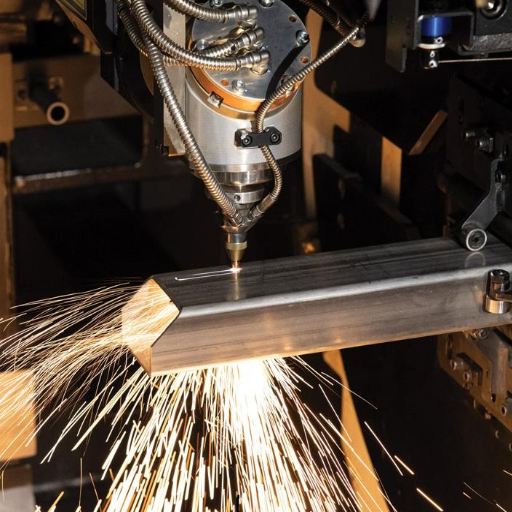
Industries That Employ Laser Tube Cutting Services
Laser tube cutting technology serves as a gateway for infinite possibilities; being a very versatile, precise, and efficienct means of industrial production, it could be administered on either metallic surfaces or all other surfaces. Those specific industries are the ones relying highly on these laser tube-cutting services:
1. Automotive Industry
Laser tube cutting is highly valued in offering lightweight and stronger parts in the automotive industry. It is said that laser-cut parts enhance fuel efficiency of a vehicle by reducing the weight added on it. The method is mostly used for assembling exhausts, chassis, and some rather difficult interior application parts to ensure consistency and good finish.
2. Construction and Architecture
Laser tube cutting is put into application in construction industries for fabrication of structural components, railings, and frames. Architects also use these machines to cut decorative metallic designs with precision so that artistic and functional designs can be developed. The high precision of laser cutting also facilitates lesser wastage of materials, thereby saving expenses especially for large-scale projects.
3. Furniture Designing
Metal tubes have set new standards among modern furniture designs for clean and elegant aesthetics. Laser tube cutting allows manufacturers to develop intricate patterns and bespoke designs in the shortest possible time, bypassing the tedious manual processes. In 2022, the global laser cutting machines market was estimated to be worth roughly $6 billion, representing a large chunk of which comes from furniture designing.
4. Medical Field
Surgical instruments, implants, and other special medical devices call for the utmost precision in a medical field. The tube cutting services would fulfill the utmost accuracy for these complex and minute components used in medical applications.
5. Aerospace and Defense
Tube laser cutting is extensively used in the aerospace and defense industries for parts with extremely rigid tolerances and safety requirements. In these high-risk sectors, from airframe components through to sophisticated missile systems, the capability of this technology to handle high-strength metals such as titanium has resulted in reduced lead times and improved reliability.
Market Statistics:
• Global laser tube cutting market projected to grow at a CAGR of 7.5% from 2023-2030
• Over 40% of European manufacturers view laser technology as being crucial for the upgrade of production
Integrating laser cutting into production aptly conditions industries to streamline their production processes, manufacture quality products, and meet market standards.
Real-Life Applications of Tube and Pipe Processing
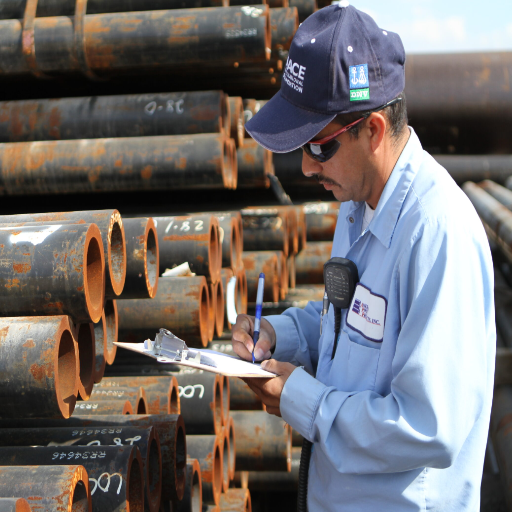
Automotive Industry
Laser tube cutting has made a great deal of precision manufacturing possible to a level of efficiency, where systems including exhaust systems, chassis, and structural components are concerned in the automotive industry. A latest report indicates a 30% reduction in production time due to laser cutting in automotive manufacturing, thus enabling manufacturers to meet the huge demand for vehicles. Laser tube cutting is viewed by BMW and Tesla as an enabler of lightweight designs that boost vehicle fuel efficiency. It also sets standards for the laser tube cutter to operate with high precision and consistency suitable for modern vehicle requirements.
Construction and Infrastructure
The new implementation of laser technology cuts the wastage of material by at least 20 percent and enables more intricate constructions than by any other means. In brief, because the industrial sector faced a heavy dependence on pipes and tubes for frameworks, bridges, and piping systems, laser technology has made life easier for engineers. Laser tube cutting was used to replace the old piping system in the renovation of the Eiffel Tower with minimum delays to the project schedule and thereby improving the overall project delivery.
Furniture Manufacturing
The furniture industry exploits laser tube processing to manufacture intricate designs and products. Researchers say manual cost can get reduced 15% or more by utilizing laser technology while ensuring precision to design standards. A few companies, such as Steelcase and Herman Miller, use the laser cutting process to produce new ideas in furniture that are strong and beautiful.
Aerospace
Precision and weight control are essential for an aerospace manufacturer in its design; therefore, laser tube cutting becomes necessary for hydraulic systems and fuselage framework components. The latest advancements have increased laser cutting at least by 25%, thereby ensuring faster production cycles. Boeing uses laser technology to manufacture parts with such precision as to meet stringent safety and performance criteria, without which the aircraft could not be deemed reliable.
Energy Sector
Energy companies, predominantly under the segment of renewable energy, are utilizing laser tube cutting for solar panel structures, components of wind turbines, and piping systems for power plants. A 2023 study revealed that laser cutting technology can reduce the maintenance cost of energy equipment by almost 18%. The companies Siemens and General Electric use precise lasers for reliability and efficiency maintenance, supporting the global mission for energy transition.
With the promotion of laser tube processing industry-wide, certain companies are able to correlate enhanced operational efficiency with reduced production costs and opportunities for greater product quality, which are the global market demands in fast evolutionary processes.
Integration of Laser Cutting with Other Construction Methods
These opportunities are there to have the laser cutting process interfaced with other fabrication methods for a higher grade of precision of the vacuum and a greater grade of efficiency. These are processes normally combined: laser cutting followed by CNC machining and sometimes robot welding for some very complex and highly automated workflows. Therefore, recent statistics claim that production time can be reduced by almost 30% in hybrid fabrication processes, in which, for example, laser cutting can be integrated with bending processes. In such a manner, a myriad of complex shapes can be made, all while preserving the integrity of the material with respect to the final product.
Laser-cut-and-stamped components of the automotive industry integrate a little bit of starchy smarts towards the realization of lighter but stronger-to-absorb force components-fuel efficiency. Experts also maintain that a hybrid system approach leads to about 25% better material utilization, thus lessening the wastes and costs. The new and advanced Industry 4.0 technologies for the concierge will certainly only aid seemingly without interruption, interfacing the laser cutting machine and other fabrication equipments with much chance. The synergism shall respond well to dynamic market demands yet encourage sustainable manufacturing.
Frequently Asked Questions
What is tube laser cutting, and how is it done?
Tube laser cutting was considered as basically the use of a laser beam to cut tubes and pipes of any possible shape or size. The method is used for very precise cutting of intricately designed patterns and complex shapes that conventional methods cannot reproduce. The cutting head of the laser tube-cutting machine follows a programmed path, generating a laser beam under careful control that melts or vaporizes the material. The most versatile tube laser cutting application will find use with all materials from metal tube sections to structural shapes. The process can handle several ranges of wall thickness and tolerances, good cuts, and very little wastage of material.
What are the advantages of having a laser cutter for tube processing?
Laser cutter for tube processing comes with several advantages versus the existing ones. Speaking of absolutely precise tolerances, the laser cutter provides the precision and repeatability that are needed for such applications. Laser cutting systems can be applied to many materials; some will require very little manual handling of sheet metal or tubular. The cuts are so clean that in many instances, subsequent processes such as the deburring may not be needed at all. Laser tube cutting service processing also improves throughput and reduces lead time as the processes are computerized. The end result is a part of quality that costs less to produce.
Are laser tube cutting machines better compared to other cutting methods?
Laser tube cutting machines can outperform the other traditional ones in many ways, however offering better precision and not compromising quality when cutting complicated shapes and designs. The traditional methods require so much manual working and thus can vary in the cut quality and increase in waste materials. Also, laser technology offers faster cutting processes that will enhance production capacity and lead to reductions in lead times. An added advantage of the laser tube cutting machine cuts tubes of varying shapes and materials that cannot be met by any other traditional saw or drill methods.
What kinds of materials can be cut through by tube laser cutting?
Tube laser cutting can go for materials that include all kinds of metals, plastics, and composites. Such materials may be stainless steel, aluminum, and carbon steel, which rank among the most widely known within metal fabrication. The process can also be handled in different thickness and wall thickness, thus promoting customized solutions based on the project requirements. In addition, these tube laser cutting services will enable adaptation to so many sizes and shapes and, in return, stand as an excellent choice for a smaller project or on the other side, big-manufacturing runs. This adaptability makes it possible for such companies to employ laser technology to the widest array of cutting applications.
What is laser power meant in cutting processes?
Since the manner in which the cut is most efficiently and cleanly produced depends on power, cutting processes demand laser power. Their increased power allows lasers to cut faster and cut through thicker materials, yet it is important to match power to thickness and material type without bringing in too much heat or burning through. Cleanliness depends on laser power, the movement of the cutting head, and careful focusing of the laser beam. With correct manipulation of laser power, manufacturers will be able to achieve clean cuts and generally better quality of the cut parts.
Reference Sources
- Laser Material Processing – This paper discusses the mechanisms and advantages of laser bending for tube and pipe products, highlighting the absence of wall thinning as a key benefit.
- Laser Forming Tubes: A Discussion of Principles – This article explores the principles of laser forming for tubes, including the effects of laser heat sources on bending processes.
- Laser Processing of Engineering Materials: Principles, Procedure, and Industrial Application – A comprehensive book that covers the principles and industrial applications of laser processing, including the use of CO2 lasers for tube processing.
- An Analytical Model for Laser Tube Bending – This research presents a flexible forming process for metal tubes using laser bending, supported by analytical modeling.
- Finite Element Analysis of Laser Tube Bending Process – This study uses finite element analysis to simulate and discuss the mechanisms of laser tube bending, providing detailed insights into the process.