




What are the Benefits of Using a Rolling Machine?
The use of rolling machines is widely accepted in various industries and fitness centers for their versatility and ability to do things efficiently. If you want the machine for work or to improve exercise, then the rolling machines provide various benefits for every specific need.
Introduction to Rolling Machines

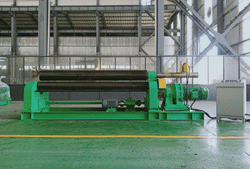
A rolling machine works by shaping, pressing, and thinning materials, with the force applied through cylindrical rollers that usually rotate. Manufacturing, construction, and metalworking industries utilize these machines, as well as hemp as a material, because the machines can handle materials with consistency and precision. The objective is to automate the process so the item will always be a specific size or weight and to reduce the amount of manual labor involved.
Rolling machines are versatile and can be applied to fabricating sheet metals, thinning materials, or structural rolling, making them one of the essential tools in various professional fields.
What Is a Rolling Machine?
A moving machine is used to take and form materials, commonly metal or some other more malleable substance, by allowing them to run through a series of rollers. These machines also press to obtain desired thickness, curvature, or structural form and are thus necessarily positioned for manufacturing and industrial uses. Along with precision and efficiency, they also achieve reproducibility for all the manufacturing procedures.
Importance of Rolling Machines in Various Industries
Rolling machines come to the rescue in engineering constructions, automobile manufacturing, and aerospace applications-for instance, producing elements of specific dimensions and forms. Their timely processing of materials to ensure quality is extremely important for mass production.
- Construction: Used to make steel beams and pipes that are required for structural frameworks
- Automotive Industry: Produce parts such as panels and chassis components
- Aerospace Industry: Benefits from capacity to produce lightweight materials that can retain strength for aircraft
Such machines considerably enhance productivity and are often looked upon as saviors, reducing wasteful material utilization in any process.
📋 Overview of Benefits
- Increased Efficiency: Rolling machines increase production speed and uniformity for manufacturing processes
- Material Optimization: Designed to shape material exactly as per specifications, minimizing waste
- Versatility: Application in varied industries, processing different materials such as metals, composites, and alloys
- Higher Structural Strength: Rolling gives shape to materials in such a way that the resulting product is uniform and sturdy
- Cost-Effective: Minimizing waste and maximizing precision, rolling machines reduce production costs
Types of Rolling Machines

🔧 Manual Rolling Machines
Manual rolling machines are operated by hand and are typically used for smaller-scale operations or instances that require precise control. These become an easy solution for artisans and smaller workshops to manipulate lighter materials cost-effectively. Being simple in construction, these machines require minimal maintenance and draw no power from external sources, allowing for flexible use applications.
⚡ Electric Rolling Machines
Electric rolling machines, driven by a motor mechanism, are designed to efficiently and effectively roll metal sheets in larger production setups. These machines and power tools handle materials of a thicker gauge at greater speeds and with greater precision than manual ones. More advanced types have programmable settings that allow the operator to input parameters for rolling speed, thickness adjustment, and feed rate.
Speed Range: According to industry experts, hinged rolling machines typically operate at speeds ranging from 10 feet per minute to 60 feet per minute, depending on the model and material being processed.
Electric rolling machines are in high demand in the automotive, metal forming, and construction industries, providing a reliable processing head on demand.
🔗 Joint Rollers
This is one of the tools of the trade used to facilitate the operation of material alignment or attachment, such as pipes, tubes, or structural components. It comes in various forms and configurations to meet the different requirements of the industry.
| Specification | Range |
|---|---|
| Load Capacity | 2,000 to 60,000 pounds |
| Materials | Alloy steel or polyurethane |
| Features | Self-aligning, adjustable tension controls |
Key Benefits of Using a Rolling Machine

⚡ Efficiency and Time Savings
As a contrast to how massive manual labor would render the processes slow and cumbersome, the modern rolling machines remove all such inconveniences.
🕒 Up to 50% reduction in labor time
With the infusion of automation, the time saving aspect gets fully accentuated as pre-determined tasks execute with pinpoint precision and minimal human intervention. For example, error detection is possible at an early stage with automated rolling machines and processes being monitored in real time, thereby eliminating downtime due to rework.
💰 Reduction of Labor Costs
The introduction of automated and smart machines significantly reduces the cost of labor, as they do not require much manual intervention for repetitive and time-consuming tasks.
📊 30% reduction in labor costs in manufacturing industries
This is mainly achieved when intelligent technologies, such as robotic process automation (RPA), are made to execute actions like assembly line operations, quality checks, and material handling. Besides this, the automated workflow eliminates the need to ask workers to come on shift overtime, so the company can use the saved capital somewhere else.
🎯 Consistent Quality and Precision
Applied automation technologies in industrial and business processes result in consistency and precision of an unparalleled level.
🔍 95%+ accuracy in defect detection with AI systems
Advanced robots equipped with AI-powered quality control can detect any deformation or inconsistency in real-time and make corrections before the item advances further on the production line. This level of precision is reserved for certain industries, where the slightest inconsistency may spell disaster: namely, pharmaceuticals and aerospace.
Choosing the Right Rolling Machine

🎯 Factors to Consider
When choosing a rolling machine, production capacity, material compatibility, and other precision requirements should be considered.
- Production Capacity: The machine should be able to handle the required amount of output without dropping performance so that it fits production requirements
- Material Compatibility: Make sure the machine accepts the material you intend to process, as some are more suited for certain grades such as metal or composite materials
- Precision Requirements: The matter of precision should be raised and given utmost priority, especially since some industries demand strict tolerances on their finished product
⚠️ Common Mistakes to Avoid
- Neglecting Routine Maintenance: Skipping regular maintenance results in efficiency reduction, unforeseeable breakdowns, and expensive repairs
- Ignoring Compatibility: Using materials or components that are incompatible with the machine could lead to operational issues and damage
- Inadequate Operator Training: Operators not fully trained could make mistakes, be inefficient, and create safety hazards
- Exceeding Capacity Limits: Overloading a machine beyond its rated capacity can easily cause damage or outright failure
- Not Monitoring Performance: A failure for performance indicators to issue an early warning will be detrimental to the efficiency of the production line
💡 Expert Tips for Choosing a Rolling Machine
Pros and Cons of Using a Rolling Machine

✅ Advantages
- Enhanced Efficiency: Output speeds of approximately 1,500 items per hour
- High Precision: CNC-controlled machines work with a tolerance as low as 0.01 millimeter
- Cost Savings: Payback time is only 6 to 12 months in the fields of manufacturing and construction
- Flexibility: Steel, aluminum, composites, and many other materials can all be processed
- Improved Safety: Safety of operators through automatic shut-off devices
- Sustainability: Energy-efficient components and less material waste
❌ Disadvantages
- High Initial Investment: Cost of purchase, installation, calibration, and training
- Material Limitations: Less efficient through extremely hard or brittle materials
- Maintenance Requirements: Maintenance is to be done regularly to retain performance
- Design Constraints: Fixed specifications may constrain the ability to adapt production requirements
- Energy Consumption: Energy-intensive may be the rolling process when done on a large scale
🗣️ Expert Consultation
John Stevenson, Mechanical Engineering Consultant:
“Rolling machines should be bought with consciousness of the operational demands and material specifications. The best machine enhances efficiency and minimizes waste. Admittedly, a slow machine consumes very little power and is low in maintenance, so one must consider it in long-term efficiency.”
Dr. Bennett, Industrial System Analyst:
“Rolling technologies working in tandem with automated control systems allow for precise adjustments that maximize quality and reduce errors. However, businesses must establish a continuous training process for their operators to realize the benefits of the new technology fully.”
❓ Frequently Asked Questions
Q: What are the basic perks of using a rolling machine?
The use of rolling machines can afford a lot of hands-on benefits; primarily, convenience and uniformity in the rolling. These machines will assist you to make perfectly shaped joints or cigarettes so effortlessly that they will gladly ensure an even burn and an even better smoking experience.
Q: How can a rolling machine save labor costs?
Rolling machines streamline the rolling process and avoid labor costs. Rather than rolling joints or cigarettes by hand, an automatic rolling machine can roll several of them in a short amount of time and also save a lot of effort.
Q: Which rolling machine can a beginner select?
For the beginner, an important feature to consider when selecting a rolling machine is ease of use. Opt for high-quality items with adjustable settings for various sizes and shapes; this way, you will become familiar with the rolling procedure.
Q: Can rolling machines help in the case of uneven rolls?
Yes, rolling machines can go a long way towards solving problems related to uneven rolls. By offering a consistent rolling mechanism, these machines minimize the introduction of human error, ensuring that every roll is the exact fit and burns evenly.
Q: How can rolling machines enhance the smoking experience?
Rolling machines enhance the smoking experience by allowing one to have uniform joints that burn evenly. This leads to each session being enjoyed without the irritation of a poorly rolled joint, resulting in a smoother and more satisfying smoke.
📚 Reference Sources
In material forming research using flexible roll forming machines, the focus is on their advantages and further possibilities.
In this paper, the rolling technology is discussed from the perspective of its cost minimization, quality improvement, and reliability enhancement.