




The centerless grinding machines thereby opened up horizons in manufacturing precision parts, offering great efficiency, accuracy, and versatility. Unlike traditional machining processes, which use a work holding device, these machines eliminate the work holding stage; thus, speed of operation is ensured with very fine finishes and tight tolerances. If your work involves automotive, aerospace, or medical components, understanding the centerless grinding characteristics and benefits will give you a significant advantage. An in-depth discussion on the primary functions and working of the machine, as well as the reasons for its widespread use in precision operations and production optimization without compromising quality, is provided here. Get ready to discover key benefits and latest innovations that make centerless grinding machines an essential tool in today’s competitive environment.
Understanding Centerless Grinding
Principles of Centerless Grinding
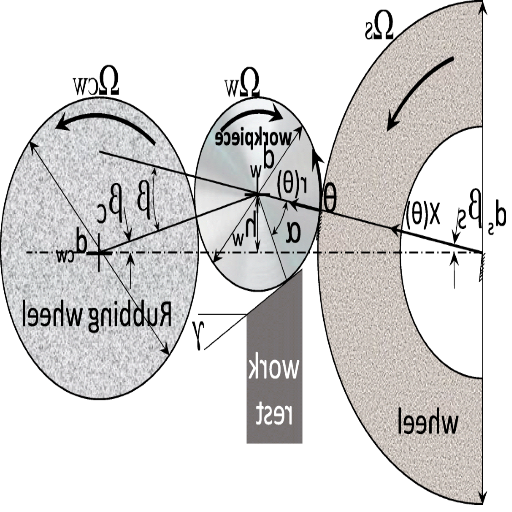
The process of centerless grinding can be considered a machining operation, wherein material removal goes from the outside diameter of the workpiece with no mounting between the centers or chucks. Here, the workpiece is supported by the grinding wheel, the regulating wheel, and the work rest blade. The tight bearing established between the workpiece and the wheels enables the operations to shape and size with great precision and with an efficiency that is unrivalled in high-volume production.
Key Components Working Together: A set of two wheels is central to the process: the grinding wheel, which does the cutting, and the regulating wheel, which controls the rotational speed of the workpiece and feeds it through the system. The positioning of the workpiece on the work rest blade between these wheels guarantees the best possible stability without the need for long setup times.
The materials that centerless grinding can machine include metals, plastics, and composite materials—an exceptionally versatile setup that finds applications across a multitude of industries.
Modern innovations have enhanced this traditional method by integrating advanced sensors and automated systems to meet tighter tolerances and achieve consistent performance levels. With many of these automatic adjustment systems and real-time monitoring systems in place, manual intervention is reduced to a bare minimum, resulting in a significant increase in productivity. These enhancements are driven by the need to increase efficiency and precision in manufacturing industries, with the automotive, aerospace, and medical device manufacturing being prominent examples.
Types of Centerless Grinding
Centerless grinding is an exact and efficient production method. The three primary types of centerless grinding are through-feed grinding, in-feed grinding, and end-feed grinding, each suited for specific applications and requirements.
Through-Feed Grinding
This grinding method is largely used in the production of cylindrical pieces having uniform diameters over the respective lengths. The workpiece moves axially between the abrasive and regulating wheels while resting on a work-rest blade. Through-feed grinding is pursued with great efficiency and cost effectiveness in mass production of automotive parts, like shafts and valves.
In-Feed Grinding
Also known as plunge grinding, this process is suited for pieces of varying sizes, the geometry of a more complex type, or stepped ones. The workpiece is held in position, and the grinding wheel moves to the radial select material removal in one area or the other. For highly-precise work, this one is used when making medical-device parts or aerospace parts, which must deal with the complexities of geometry and tight tolerances.
End-Feeding Grinding
This process is carried out on tapered workpieces, where material removal occurs at either one end or both ends. The workpiece is fed into the machine at an angle to ensure the proper grinding of conical sections. End-feed grinding is often used for the finishing of pins, spindles, or special fasteners where the ends require precise finishing.
Recent Improvements: In recent years, improvements in precision and flexibility have been added to these types of centerless grinding through the insertion of CNC systems and real-time monitoring. These are the techniques used by industries to meet the ever-changing needs of quality manufacturing, with reduced lead times and optimized processes.
Major Components of a Centerless Grinding Machine
A centerless grinding machine is composed of various components that must work in coordination to ensure precision and efficiency during the grinding process. These components include:
| Component | Function | Material/Features |
|---|---|---|
| Grinding Wheel | Removes material from the workpiece | Aluminum oxide or silicon carbide abrasives |
| Regulating Wheel | Controls rotating speed and feed of workpiece | Rubber or resin surface material |
| Work Rest Blade | Supports and positions workpiece during grinding | Hardened steel or carbide for wear resistance |
| Bed and Base | Provides stability and component support | Vibration-damping materials in modern designs |
| Coolant System | Prevents heat distortion and wheel wear | Removes contaminants for extended coolant life |
| Feed Mechanism | Continuous feeding of workpiece into grinding zone | Automated systems for rapid throughput |
| CNC Control Unit | Precise parameter setting and monitoring | Real-time monitoring and data integration |
Grinding Wheel
Primarily serving as a grinding machine tool, the grinding wheel is used to remove material from the workpiece. Choosing the abrasive materials is mostly dependent on the intended results and the hardness of the material. Besides aluminum oxide and silicon carbide, other materials are also available. Recent grinding-wheel manufacture emphasizes durability alongside consistency so that frequent replacement of wheels is avoided.
Regulating Wheel
The regulating wheel controls the rotating speed and feed of the workpiece. It is placed at an angle that causes the workpiece to be fed along a proper path. The surface material of the regulating wheel is generally rubber or resin, providing versatility for different application requirements.
Work Rest Blade
It rests between the grinding and regulating wheels during the process of grinding to keep the workpiece in position. The work rest blade is usually made of hardened steel or carbide to resist wear so that the workpiece remains stable and accurate even when subjected to great pressure. It is also angle-adjustable so that it can grasp workpieces of different sizes and shapes.
Bed and Base
The bed and base of the machine serve as the support foundation, providing stability and thereby enabling all components to be fastened securely. The latest designs have incorporated vibration-damping materials to enhance grinding accuracy and ensure the machine’s further longevity.
Coolant System
With a fine coolant system, the in-between grinding area stays cool, preventing heat from distorting the workpiece and confirming wear on abrasive wheels. Contaminants are removed from the coolant system to ensure that the coolant remains effective and usable for a longer period.
Feed Mechanism
The feed mechanism is meant for continuous feeding of the workpiece into the grinding zone. In modern machines, the automated feed system also enables rapid throughput and maximum reduction in downtime, allowing for the handling of different batch sizes.
CNC Control Unit (Modern Machines)
Many modern centerless grinders also feature CNC systems that enable grinding parameters to be set with ultimate precision, as well as a higher degree of accuracy, repeatability, and ease of processing complex geometries. Monitoring in real-time and data integration increase productivity and reduce the likelihood of errors.
Modern Enhancement: That being said, the components as mentioned earlier, coupled with state-of-the-art technologies such as automation, are what further enhance the capacity of centerless grinding machines. Therefore, these issues put industry standards front and center, prioritizing higher accuracy, speed, and reduced waste, thereby catering smoothly to the needs of modern manufacturing.
Key Features of Centerless Grinding Machines
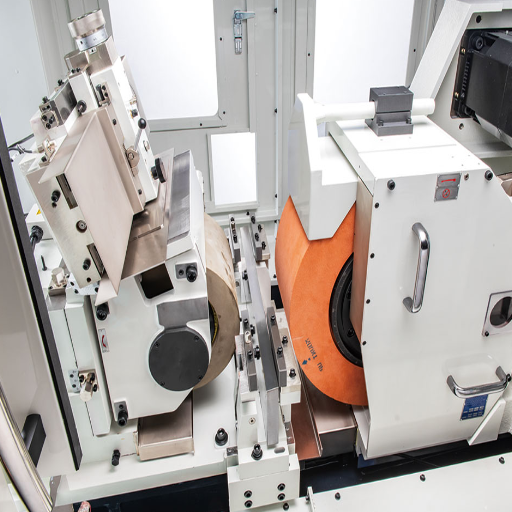
Grinding Wheel and Regulating Wheel
The grinding wheel and regulating wheel are the core working parts of a centerless grinding machine upon which concentrations of very fine accuracy and efficiency are made. The grinding wheel, made usually from abrasive particles of aluminum oxide or silicon carbide, gives for the very precise dispersion of material from the workpiece. Thus, the wheel is rotated at a very high speed while keeping a thin sharp cutting edge for the entire process, making edge quality consistent through repeated use.
The regulating wheel controls speeds and supports the workpiece for proper guidance through the grinding zone. Such wheel would, for example, be rubber-bonded, or made of any other resilient material to maintain good grip and control. Thus, combining both works in a high throughput rate, smooth operation, with minimal distortion caused by either vibration or misalignment. The grinding-wheel and the regulating-wheel, cooperating together, portray the highest levels of modern technology in centerless grinding machines which guarantee precision, reliability, and efficiency to a wide array of industries. Continuous further improvements in available data thus allow for even better design of such systems to give them long service life and performance in doing their assigned task.
Spindle and Grinding Process
A centerless grinding machine’s spindle sits at the heart of grinding accuracy and consistency. High-speed rotations of these fitted spindles impart force and provide stability to abrasive actions of the grinding wheel. Usually, states-of-the-art materials such as high-quality steel or ceramic-coated alloys are used in spindle construction as they render resistance to wear and thermal expansion, which are the factors that work against precision in the longer term.
The grinding method has many choices, including feed rate, wheel speed, and rate of material removal, that have to be fine-tuned in performance optimization. Present grinders usually work with sensors and automated monitoring that detect parameters such as surface roughness, temperature, and vibration during operation. This makes adjustments possible while running, hence guaranteeing process quality and enhancing the life of the spindle and grinding wheel. Just a few examples of how in the direction of enhancing precision, speed, and reduction of operational cost of the entire industrial world, improvement is being rendered in the spindle and grinding methodologies.
In-Feed Grinding Techniques
The highest accuracy is attained in in-feed grinding when the wheel and workpiece are brought together at an exact radial position for material removal. Modern techniques have increasingly adopted automated control systems and sensors that afford a higher degree of precision. For example, an adaptive control system governs wheel wear, force feedback, and material removal rates, making real-time adjustments during the grinding process. This subsequently reduces cycle time and improves dimensional accuracy.
In addition, improvements in wheel composition, such as the use of hybrid and superabrasive abrasives, have elevated performance to a higher level by increasing durability and setting barriers against heat generation. These very advanced wheels, together with properly applied coolant delivery systems, eschew any thermal damage to the workpiece and extend wheel life. With CNC supporting the creation and reproducibility of even complex geometries, in-feed grinding is a widely accepted method, ranging from aerospace manufacturing to precision medical equipment production. Through its versatility and precision, in-feed grinding continues in reshaping the possible for performance material removal.
Advantages of Centerless Grinding
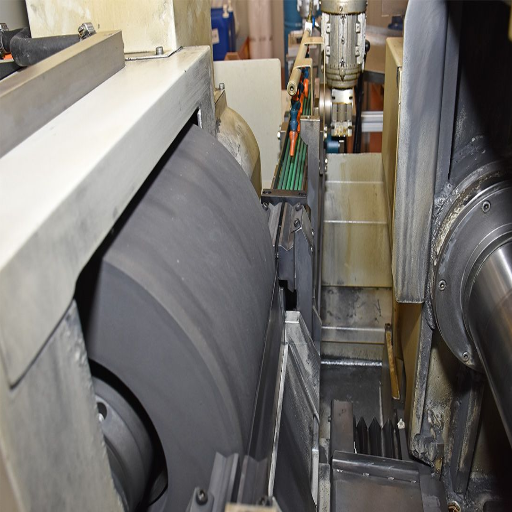
Requirements of Centerless Grinding for Precision Work
There are numerous benefits that centerless grinding affords for meeting precision requirements in manufacturing. One of the utmost advantages is that it can machine large volumes of components with unmatched consistency and accuracy. In contrast to conventional grinding operations, a centerless grinder operates without the assistance of any workholding devices, which means operators are unaware of improper settings or errors in clamping methods. Thus, this eliminates dimensional variations caused by human operators or errors in workpiece positioning. This greater tolerance and surface finish are required for aerospace, automotive, and medical device manufacturing industries.
That implies speed. Continual processing helps manufacturers to minimize their cycle time, which consequently reduces the cost of production. Centerless grinding is also very adaptable, enabling manufacturers to handle materials of all kinds-whether hardened steels, softer metals, or composites-with minimum wastage of material.
Further improvements in automated systems and CNC technology significantly enhance the capabilities of centerless grinding. Systems that are new maintain precise control over variables such as speed, pressure, and tolerances, allowing manufacturers to comply with predefined specifications for complex geometry. Therefore, these technologies directly lead to productivity and quality improvements, making centerless grinding preferable for some modern precision jobs.
Cost Efficiency and Production Speed
The prospect is still located uniquely between the process being cheap and a faster way of production with the vital balance it offers. True to its nature, there are no work-holding devices; hence, setup times are minimized and parts can be processed faster, and thus in bigger volumes. To build upon and further streamline production domains, technology has given first consideration to processes such as automatic loading and unloading to minimize manual intervention in work. Studies showed that producers equipped with modern centerless grinding machines can make a high yield of products and adopt energy-efficient systems to minimize the operational costs along with material being less wasted. Considering all scenarios, speed coupled with low cost makes the centerless grinding process relevant to those industries requiring precision components on a larger scale.
Quality and Consistency in Manufacturing
Manufacturing high-quality, consistent fulfillment requires a clear focus on the optimization process and cutting-edge technology. To maintain consistency, enterprises may have adopted precision machines and automated systems that minimize variability during manufacturing. For example, with industries equipped with a real-time performance monitoring system, performance metrics can be analyzed, and deviations can immediately be detected to ensure product consistency. The defective analysis and predictive maintenance, i.e., decision support systems, further improve quality checks by reducing downtime and costly errors. Hence, manufacturers may opt for an optimal mix of quality output and large-scale production demands by ensuring precision at every stage, along with these tools of integrated AI analytics and IoT-enabled machinery, etc.
Applications of Centerless Grinding
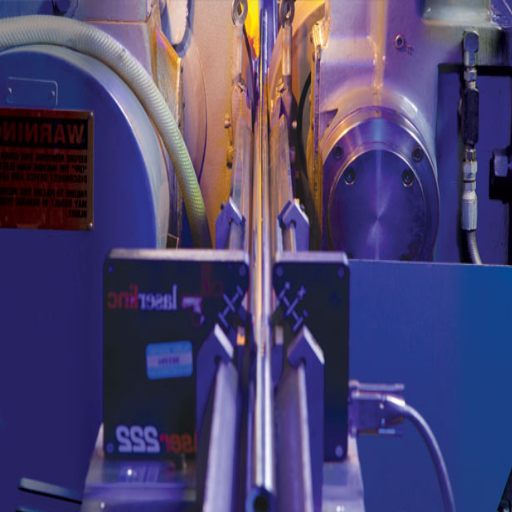
Industries Using Centerless Grinding
Centerless grinding is critical to many industries because it provides precise and efficient operation on a larger scale.
Automotive Industry
The automotive industry heavily relies on centerless grinding for its ability to produce high-tolerance components, such as camshafts, crankshafts, piston rods, and transmission parts. Considering the growing demand for electric vehicles, this process now assumes importance in machining small, lightweight yet rigid components that increase the performance and efficiency of a vehicle.
Aerospace Industry
Aerospace manufacturers rely on centerless grinding to produce components that meet stringent safety and performance standards. From turbine shafts to landing gear components, the technology provides the precision required for parts that operate in extreme environments under high stress.
Medical Sector
Centerless grinding is highly beneficial in the medical world for manufacturing surgical instruments, dental tools, and orthopedic implants, including bone screws and joint replacements. Patient safety and patient comfort require precision and smoothness at the micro-level in the medical instrument world.
Energy Industry
With the advent of renewable energy technologies, centerless grinding has found applications in the manufacturing of components for wind turbines, solar panel assemblies, and high-efficiency motors. It aids in the production of these parts with the specific precision and volumes required for sustainable energy solutions.
General Manufacturing
In addition to specialized applications, centerless grinding is widely used in general manufacturing for producing shafts, rods, and cylindrical components across various industries, including agriculture, construction, and consumer goods. It lends itself readily to both small-batch and mass production runs; thus, a manufacturer can quickly adapt to slight variations in product market demands.
Industry Evolution: Using this technique, capabilities continue to be enhanced to meet ever more stringent quality and performance requirements. Centerless grinding, due to its versatility and scale of manufacturing, has become a core application in modern-day manufacturing.
Products Benefited from Centerless Grinding
Centerless grinding indeed holds much importance in finishing given products in many industries. Precision components go into many applications such as engine parts, the camshaft, and crankshaft. They rely almost entirely on this process to attain tight dimensions and surface finish. These processes serve the automotive industry significantly, so the components achieve ultimate performance and durability.
In the aerospace industry, high-performance turbine shafts and fasteners are ground using the centerless process to meet stringent specifications and aerospace-quality standards. Likewise, the medical industry utilizes this technology to manufacture surgical instruments and precision medical devices, where precise dimensions and smooth surfaces are crucial for patient safety and optimal functioning.
From manufacturing heavy machinery to construction equipment and beyond, centerless grinding plays a crucial role in the manufacture of various parts, including rollers, rods, and bearings, which require sturdy and reliable equipment. Consumer goods also undergo this process so that hand tools, kitchen utensils, or high-end electronics can strike the right balance between durability and aesthetic appeal.
In serving a wide array of industries, therefore, centerless grinding has become one of the essential technologies for manufacturing high-quality, precision-engineered products. Its capacity to work with materials of different types, including metals, alloys, and composites, speaks about its unrivaled versatility and value in modern manufacturing.
Future Trends in Centerless Grinding Technology

Grinding Method Innovations
One of the most inventive and exciting developments in centerless grinding is considered by me put forth in smart technology and automation. The modern grinding machines-with advanced sensors and monitoring systems-can provide feedback in real-time and adjust the parameters automatically to optimize precision and efficiency. Errors are reduced, and materials are saved, resulting in increased productivity. When combined with machine learning algorithms, they start to learn over time from previous experience and optimize tasks more efficiently, even complex-shaped tasks.
Next in order of priority may lie the development of hybrid grinding processes combining grinding methodologies with the latest technologies, including the likes of laser-assisted grinding, cryogenic cooling systems, or additive manufacturing. Such processes allow grinding of ultra-hard materials, engraving complex shapes never thought possible, and furnishing surface finishes almost with absolute consistency. These developments are very much in tune with the industries of aerospace, medical devices, and energy where great precision/material integrity cannot be compromised.
Finally, sustainability starts to emerge as a key topic in grinding innovations. Within this ambit, eco-friendly coolants, energy-efficient types of machinery, and recyclable materials are considered among the primary areas where the industry is making efforts to limit its footprint on the environment. Such trends lay at the very heart of promoting and sharing expectations ever-changing towards efficiency and sustainability in industrial production.
Automation Effects on Centerless Grinding
From my viewpoint, the advent of automation in centerless grinding has been transformative, increasing both productivity and precision in the processes. With the implementation of automation, processes become streamlined- less manual intervention implies fewer human errors and consistent quality when manufacturing in large volumes. Advanced robotics and automated controls ensure the optimal setup alignment with minimal downtime between cycles, yielding accuracy that human hands can hardly match.
Automation functions way beyond such terms as accuracy and repeatability. Take, for example, an organization looking to utilize it to maximize operational efficiency and reduce turnaround time. Automated loading and unloading reduce manual handling, whereas intelligent dashboard systems give instant information on a machine’s performance for predictive maintenance, lowering unscheduled breakdowns. Production gets kept from falling behind schedule, in due time bundled with cost reduction, by utilization optimization of resources and enhancement of machine life.
According to me, each new automation-related project and the activities thereunder are undoubtedly instances of innovation. The newer technologies propagate smart, data-driven processes, translate loosely into becoming a little bit more productive while still conforming to very stringent standards in such industries as automotive, aerospace, or the manufacture of medical devices. Automation skills provide more than just the mechanisms to deal with the greater demands for production speeds and tolerance requirements; these abilities also empower us to stay competitive for better finishes.
Emerging Technologies in Precision Grinding
For me, the emerging technologies I discuss in the field of precision grinding include adaptive controls and machine learning. Therefore, they have revolutionized precision manufacturing by enabling real-time monitoring and automatic adjustments of processes. In an adaptive control scenario, sensor data are used to dynamically modify machining parameters for optimal performance and to minimize variations. Together with machine-learning methods, these systems learn to analyze historical data to predict equipment or process failures or to mitigate errors, and thereby improve efficiency. This produces better consistency in quality and minimizes downtime and material waste, all of which are highly important factors in manufacturing today.
In a way, we can say that the implementation of precision grinding became conducive to the rise of additive manufacturing, thus creating even greater opportunities. It is the combination of AM to create complicated geometric shapes hitherto impossible to fabricate by conventional means, and precision grinding to achieve the highest tolerances post production. In this way, more freedom for designers can be given without making real compromises on the exactness required for technically demanding parts that go into aerospace and medical devices.
Lastly, the developments in the field of superabrasive materials are creating big waves. With extraordinary wear and corrosion resistance, CBN and diamond-based grinders provide speed to grinding operations while maintaining accuracy for a longer period. The integration of these technologies into our production workflows will enhance our output and keep us abreast of rising industry demands for faster yet sustainable production avenues. Therefore, a transformation is underway, solidifying the age-old truth that precision grinding is one of the foundational processes in advanced manufacturing.
Reference Sources
-
Centerless Grinding: Principles and How It Works – Xometry
Explains the principles of centerless grinding and its material removal process. -
8 Principles of Precision Centerless Grinding – Metal Cutting
Discusses the precision and efficiency of centerless grinding in machining processes. -
Exploring the Benefits and Features of Centerless Grinder Machines – Xielizz
Highlights the unique features and benefits of centerless grinders for precision engineering. -
Centerless Grinding – Superior Thread
Focuses on the ability of centerless grinding to achieve tight tolerances and excellent surface finishes.