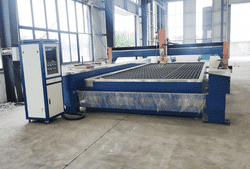





Water jet cutting has revolutionized traditional methods for the precision manufacturing and processing of materials. High-pressure water streams, often charged with abrasive particles, this latest way of cutting assures maximum accuracy and versatility for a range of applications. While water jet cutting can create intricate designs on delicate materials, it can also cut through challenging metals, making it a reliable technology for industries such as aerospace, automotive, and architecture. This blog post explores the workings of water jet cutting, its advantages, and various applications, highlighting why future generations will likely rely on this technique for manufacturing. If you’re in the field or an enthusiast interested in modern technologies, this article will provide you with some insights into the extraordinary working capabilities of waterjet cutting.
Introduction to Water Jet Cutting
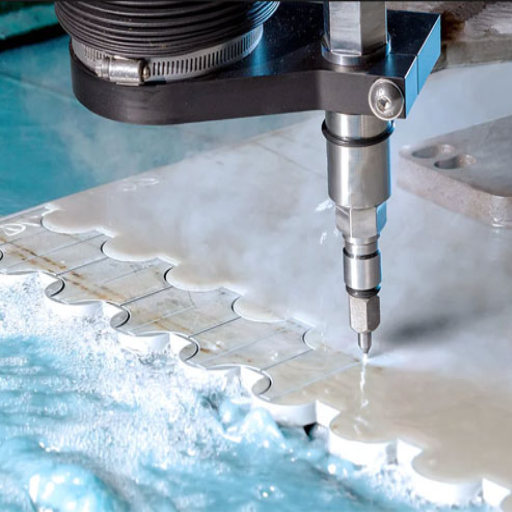
Water jet cutting is an industrial process that utilizes a high-pressure water stream, sometimes combined with abrasives, to cut through materials with precision. This technique reduces metals, glass, stone, and composites at ambient temperatures, thus retaining the material’s properties. Water jet cutting is primarily valued for its accuracy, flexibility, and ability to produce complex designs, making this technology indispensable to the aerospace, automotive, and construction industries.
Definition of Waterjet Cutting
Waterjet cutting utilizes the power of water, sometimes combined with abrasive particles such as garnet, to erode and cut materials with precise accuracy. Water is pressurized up to 90,000 PSI (pounds per square inch) and can then be forced out through a tiny nozzle to form a very focused cutting stream. When mixed with abrasives, the stream becomes capable of slicing through harder materials such as metals, ceramics, and composites.
The technology boasts a cold cutting process, which negates the possibility of heat-affected zones (HAZ) that could alter material properties, resulting in warping or structural weakening. Another advantage is the ability of waterjet systems to set tolerances as tight as ±0.001 inches, making them an option for intricate patterns or parts that require high precision.
The waterjet also holds strong in environmental factors. It produces no toxic fumes, no thermal waste, and utilizes recyclable water in closed-loop systems. Studies consider waterjet cutting to be a genuine blessing for the aerospace, automotive, and manufacturing industries, with technological advancements capturing greater cutting speeds and reducing material waste. With further innovations, waterjet cutting remains the premier solution for precision machining, both on large scales and at custom levels.
History and Development of Water Jet Technology
The inception of water jet technology dates back to the mid-20th century. The technology had its roots in hydraulic mining, which was initiated in the late 1930s. Initially, it was used to produce high-pressure water streams to remove materials such as gravel and gold from riverbeds. By the 1950s, greater sophistication in nozzle designs enabled somewhat more controlled water jet streams, thereby establishing its use in industrial applications.
Another landmark was created in the 1970s when Dr. Mohamed Hashish invented the abrasive waterjet process, which utilized water and abrasives to cut into harder materials such as metals and stones. This outright improvement and extension of waterjet cutting methods enabled the machining of complex geometries with ease and precision. Abrasive waterjet cutting has become increasingly popular in many industries due to its ability to cut through thick and dense materials while maintaining surface integrity.
A water jet system with extreme cutting speed, up to 30% faster than earlier types, used advanced pumps to produce pressures beyond 90,000 psi. CNC systems allow exact cuts with tolerances of ±0.001-inch accuracy. Waterjet cutting has severe applications within aerospace, automotive, and electronics manufacturing due to its versatility and environmentally friendly nature. Further installations of AI and 3D imaging technology ensure the water jet continues to evolve as a premier precision machining tool, remaining relevant in the increasingly competitive industrial landscape.
Overview of Cutting Processes
These types of treatment cover, in general, all those that shape, resize, and separate materials during manufacturing and fabrication. Among the cutting methods are laser cutting, plasma cutting, water-jet cutting, and mechanical cutting. Each process has its own advantages, depending on the type of material, thickness, and intended application for the final product.
Comparison of Cutting Methods
- Laser Cutting – Possibly the most precise method, as it employs a highly focused laser beam to cut material like metals, plastics, and wood. It can produce clean edges and intricate designs, but may struggle with working with thicker materials or reflective metals.
- Plasma Cutting – Uses plasma at very high velocity and temperature to cut electrically conducting materials like steel, aluminum, and brass. It can cut rapidly through thick materials, but may lose precision compared to laser or waterjet cutting.
- Waterjet Cutting – Waterjet technology utilizes a high-pressure cutting stream of water, which, when combined with abrasives, can cut almost any material without imparting heat. Thus, any work that demands precision and material integrity can be accomplished with the waterjet.
- Mechanical Cutting – These methods physically engage with the material and dispose of it, such as saws, shears, and milling. While the cost might be kept down and the application widespread, such techniques might not confer the precision afforded by more advanced techniques.
Choosing one over the other depends on factors such as material type, the level of accuracy required, project cost, and environmental concerns. These diverse methods provide manufacturers with numerous solutions for various industrial and design challenges.
How Water Jet Cutters Work
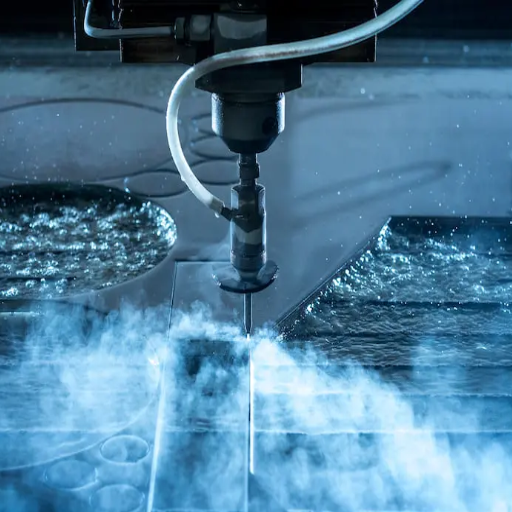
Depending on the program, a water jet can perform a variety of cutting tasks on metals, abrasive materials, stone, wood, glass, tiles, fiberglass, and almost any other material. From its forty-five-thousand psi, water is forced there through a skinny opening, commonly called a jewel. The abrasion of metallic particles with high silica content, typically 60-80% SiO(2), into the water jet increases its cutting ability, permitting it to cut harder materials such as metals, stones, and ceramics. Due to its precision, water jets do not generate heat and alter surface materials in any way. Hence, it can be a worthy choice in delicate or intricate applications.
Mechanics of a Water Jet Cutter
A water jet cutter draws its power from highly pressurized water, typically with pressures of up to 60,000 PSI or higher, which is expelled through a tiny orifice usually made of diamond or ruby to ensure durability. Under heavy pressure, the water is transformed into a laser-like cutting stream. The addition of abrasive materials, such as garnet or aluminum oxide, dramatically increases the cutting power, allowing the machine to cut through harder materials, including steel, titanium, and quartz, with precision.
Laser jet cutting technology best serves accuracy and versatility. New systems allow for tolerances as tight as ±0.001 inches, serving the aerospace, automobile, and medical device industries, where precision is of utmost importance. These industries utilize the system to create components with intricate patterns, such as turbine blades or implants.
Water jet cutting is indeed noted for its environmental benefits. Whereas traditional cutting methods release hazardous fumes and cause thermal distortion, water jet cutting inhibits any alteration from happening to materials from this side of the seine. The water jet also aids in improving sustainability by utilizing optional recycled water systems to reduce water consumption and discharge. With CNC machining improvements, 3D capabilities are now integrated into water jet cutters, enabling the production of highly complex geometry with exceptional accuracy.
The Role of Pressurized Water in Cutting
The technology of cutting using pressurized water involves very high pressures, often exceeding 60,000 psi, for slicing through various materials. A skinny stream of water, or water coupled with abrasives, essentially uses erosion to remove a specific part of the material with great precision. The higher the cut capability of the abrasive waterjet, the harder materials it can cut, including steel, titanium, ceramics, and composites.
It has been demonstrated that water jet machines can achieve tolerances as tight as ±0.001 inches; thus, they are favored by industries such as aerospace and healthcare, where utmost precision is of concern. Additionally, water jet cutting does not produce heat-affected zones (HAZ), thereby avoiding thermal deformation and preserving the original properties of materials, such as metals and glass. The environmental and ecological aspects include minimal byproducts and nearly 98 percent water recycling during the process, significantly reducing operational waste. These characteristics make pressurized water cutting one of the most versatile and sustainable manufacturing technologies available today.
Types of Water Jets Used in Cutting
Essentially, there are different types of jets for water jet cutting, depending on the material to be worked on and the application. Mainly, there are pure water jets and abrasive water jets.
1. Pure Water Jets
Pure water jets employ only high-pressure water to cut softer substances. They cut thin and pliable substances, including foam, rubber, paper, and textiles. The advantage of these jets is their extreme precision and softness due to their pressure reaching beyond 50,000 psi. This makes pure water jet cutting an excellent solution for delicate treatment. Thin materials can be cleaned up with the abrasive nature of the plane to provide neat edges without any fraying or distortions, a vital area in the packaging industries and the manufacture of textiles.
2. Abrasive Water Jets
The abrasive water jet combines streams of water at very high pressure with an abrasive material, such as garnet, to cut through harder and denser materials, including metals, ceramics, and composites. With abrasives incorporated, cutting becomes more aggressive, allowing the machine to slice through materials several inches thick with utmost precision. Abrasive jets can easily go through materials as hard as titanium and are widely used in aerospace, automotive, and construction industries. For example, some of the very advanced systems maintain tolerances to ±0.001 inches, making them ideal for intricate patterning and tight specifications.
Both types of water jets have the advantage of never compromising a material’s structure, as the cutting is always cold, thereby avoiding the heat-affected zones that are common with laser or plasma cutting. Hence, the adaptability of this tool makes it an invaluable asset for any modern manufacturer, and ongoing improvements continually expand its capabilities.
Types of Waterjet Cutting
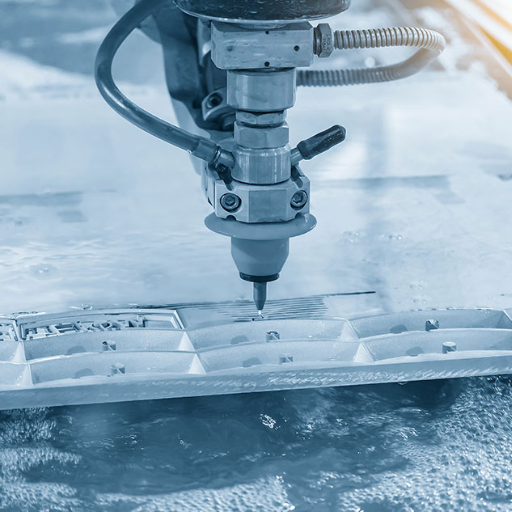
Two primary types of waterjet cutting exist:
| Type | Description | Best Applications |
|---|---|---|
| Pure Waterjet Cutting | Uses pure water to cut through soft materials like foam, rubber, and textiles | Clean, crisp, and rapid cuts on non-metallic materials |
| Abrasive Waterjet Cutting | Adds abrasive agent (such as garnet) to the water stream | Cutting harder materials including metal, stone, and composites |
Abrasive Waterjet vs. Pure Waterjet Cutting
The two types of waterjet cutting serve different purposes for their respective applications and material combinations. In pure waterjet cutting, only high-pressure water is used, which is suitable for soft materials, such as foam, rubber, textiles, and food products. It ensures clean and accurate cutting of objects without affecting the material structure.
In contrast, abrasive waterjet cutting injects abrasive particles, such as garnet, through the water stream to slice metals, stone, ceramics, and composites. It is suited for industrial applications that require great precision and work with intricate shapes or thick materials.
The choice between the two methods depends on the material being cut, the precision required, and the specific characteristics of the application. In the abrasive-free waterjet category, cutting is sufficient for softer materials, causing minimal wear to the machine; however, abrasive waterjet cutting may also be considered more flexible and stronger for even harder materials.
Applications of Different Waterjet Cutting Methods
Various industries use waterjet cutting owing to its versatility and precision. Pure waterjet cutting is used for applications involving softer materials, such as rubber, foam, textiles, and certain plastics. It is used in the packaging industry to produce clean and precise edges made of foam and cardboard without deforming the material.
The abrasive waterjet cutting works best on metal, glass, stone, and composite materials. Due to the stringent requirements of safety and durability, the aerospace industry utilizes these methods to cut titanium and aluminum parts. Abrasive jet cutting is used in the automotive sector for cutting complex parts, including engine components and interior metal panels.
Recent data clearly indicate a surging demand for waterjet technology in construction, primarily for cutting marble, granite, and ceramics to fabricate countertops and decorative tiles. These cutting and finishing methods significantly reduce waste and can maintain tolerances of ±0.003 inches; thus, they are a worthy consideration for high-precision architectural applications.
From another standpoint, waterjet cutting has also gained its importance in eco-friendly areas, with the increasing stress on environmentally conscious production methods. Waterjet cutting does not generate heat-affected zones or fumes that could be detrimental; therefore, it represents a green manufacturing process and a safe working environment. Moreover, when coupled with newer applications of software integration and robotic automation methods, there have been significant industrial revolutions, enabling faster production cycles and more complex custom designs.
Choosing the Right Cutting Method for Your Needs
Choosing the proper cutting method involves evaluating various factors to ensure the process aligns with a person’s unique project requirements. The primary factors to consider are the type of material, the precision required, the speed of production, the costs involved, and environmental friendliness.
Material and Thickness
Different cutting methods have varying effects on specific materials. For example, laser cutting provides high-quality precision for thin metals and non-metal materials, such as acrylic, but it does not work well with reflective materials like aluminum. Waterjet cutting can be applied to a wide variety of materials, including metals, stones, composites, and ceramics. It is capable of cutting thicker materials, typically providing for thicknesses exceeding 6 inches.
Precision and Tolerances
The waterjet cutting method provides immense precision, deriving tolerances within ±0.003 inches and very minute tolerances for more intricate designs and complex geometries. While plasma cutting excels at cutting maximum thickness sheet metals, accuracy is somewhat undermined, as it is generally considered for large-scale applications.
Production Speed
Plasma cutting is the fastest of processes and is even faster when cutting thicker mild steel and aluminum. Laser cutting lies somewhat in the middle, being fast with thin materials but slowing down with complex patterns or thicker metals.
Cost and Consideration
Different methods have different cost implications. Laser cutting often implies a higher upfront machinery cost, but it has lower maintenance costs over time. Waterjet cutting contributes to ongoing operational budgets through abrasives, whereas plasma cutting allows for a cheaper initial setup, provided that the user keeps track of their consumable parts, such as electrodes.
Environment Factors
Cooling when machining is essential to preserve the integrity and surface finish of the component. Misapplied, it could cause the material to melt or generate fumes that may be harmful to workers. As laser and plasma cutting produce waste materials and thermal waste, they pose a challenge in terms of disposing of these materials.
Automation and Integration
Increasingly, advanced cutting technologies are integrated with robotic arms and CAD/CAM software, streamlining workflows in various ways. Laser cutting machines benefit from advanced software that can quickly import designs for immediate cutting, thereby minimizing lead times. Waterjet and plasma systems also provide means for automation, increasing the efficient usage of production.
Being aware of these factors will enable you to strike a balance between functionality, cost, and sustainability in your thinking. It would also be worthwhile to consider scalability and environmental concerns for the future during the conceptualization stage of your cutting solutions, to ensure that efficiency and success continue in the long term.
Advantages of Water Jet Cutting Technology
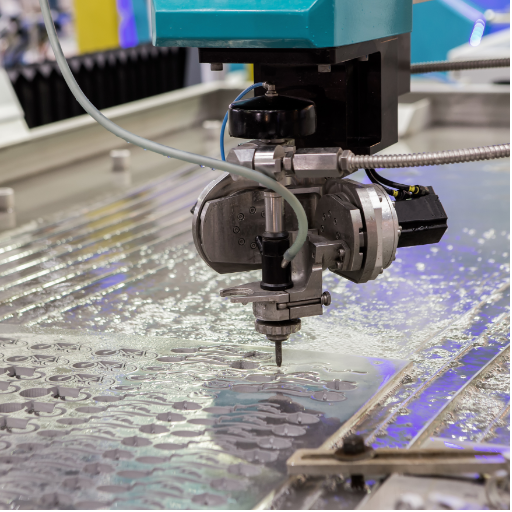
Some advantages of water jet cutting include:
- Precision: It enables extremely precise cuts, ideal for detailed designs and complex shapes.
- Very versatile: It can cut virtually any material, from metals, glass, ceramics, to composites.
- No Thermal Damage: Since cold cutting is used, there are no heat-affected zones, thereby preserving the material’s integrity.
- Environmentally safe: It uses water and abrasive materials, resulting in minimal waste and an ecologically safe process.
- Cost-effective: Since waste is minimal and no further finishing is required, production becomes more cost-effective.
Considering these features, it is a versatile tool that suits various industries and applications.
Precision and Accuracy of Water Jet Cuts
Overall, water jet cutting has presented particular and accurate features, and it has thus maintained its status as a superior technology in modern manufacturing. With cutting tolerances of only ±0.001 inches, the systems can deliver intricate designs featuring very fine details that are subject to stringent quality standards. This level of precision is paralleled only by the CNC software that guides the water jet with incredible pinpoint accuracy.
In addition, depending on the sort of material, water jet systems cut anything from 0.01 inches thin to 12 inches or more in thickness. Since there is no mechanical stress or heat-affected zone, cuts remain clean with little distortion, if at all, which becomes a significant advantage for materials such as titanium, aluminum, and composites, as they tend to be thermally sensitive. Exact, detail-oriented component production that must be consistently repeatable is achieved through water jet-cutting processes in industries such as aerospace, automotive, and medical device manufacturing.
Moreover, the flow of water and abrasive mixing equipment has made this technique even more precise, ensuring uniform quality even at high production volumes. Such a combination of variety and accuracy ascribes to the prominent role of water jet cutting in production, yielding finer manufacturing results.
Material Versatility and Types of Materials That Can Be Cut
The unusual versatility of a water jet cutting process has long rendered one of the indelible names in several industries. Water jet machines cut almost every type of material imaginable, from very soft ones like foam and rubber to tough calculation steel, titanium, or even ceramics.
With the advancements in water jet technology, a wider range of materials is being processed, including composites, laminates, glass, and reflective materials. For example, an abrasive water jet can easily cut through titanium up to 6 inches thick with edge quality so perfect that it cannot be distinguished from edges made by a high-end CNC milling machine with minimal thermal distortion. Though tempered glass is often difficult to work with other cutting methods and techniques, it can be easily worked with water jet cutting methods.
The installation of water jets indicates one of the most adaptable manufacturing processes, with slightly above 40% of cases involving metals, some 30% involving plastics and composites, and the rest pertaining to materials such as stone, ceramics, and wood. Additionally, the transition from the pure water jet method, which is suitable for softer materials, to the abrasive water jet method, which is more appropriate for harder materials, enhances its usefulness, allowing industries such as aerospace, automotive, and construction to optimize their production processes.
The great variety of materials being cut with great precision and the reduced material leftover make water jet cutting an essential technology in modern manufacturing.
Environmental Impact and Benefits
Water jet cutting technology is another apt metaphor, as it places versatility at the forefront. On the environmental side, the technology proves to be a better choice when compared to many traditional cutting procedures. One of the virtues of being away from heat-affected zones is that the process requires no heat generation. Thus, it reduces the emission of harmful gases and prevents thermal distortion, which is beneficial in the sustainable production of materials. The process produces narrower kerfs, and hence, in terms of waste, the technology stands at a minimum due to optimal material utilization.
This process primarily utilizes water, and occasionally employs abrasives such as garnet, which are non-toxic and easily disposable. According to scientific literature, up to 60% of the water can be recovered using a closed system, thereby minimizing its environmental impact. By the very nature of the process, water jet cutting is still more energy-efficient than most other methods, such as laser or plasma cutting; therefore, it is a greener option for industries seeking to reduce their carbon emissions. Moreover, reduced scrap generation and the non-generation of hazardous chemical byproducts further support sustainable manufacturing and clean industrial environments.
Common Uses of Water Jet Cutting
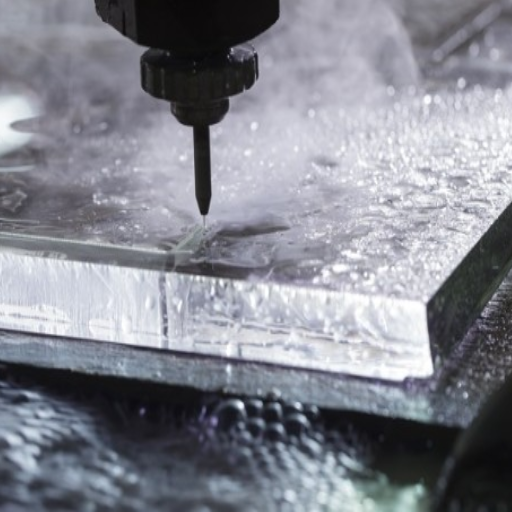
Water jet cutting has a wide range of applications due to its accuracy and versatility. Common applications include:
Aerospace
Cutting parts from titanium or aluminum and maintaining the structural integrity of the components.
Automotive
Uniting the production of its parts, including gaskets, dashboards, and other custom parts.
Construction
Cutting stone, tile, and glass for architectural purposes.
Manufacturing
Cutting any type of materials, such as metals, plastics, or composites, for prototyping or in the case of final production.
Art & Design
Creating detailed designs in materials like metal, stone, or wood that are useful for both decorative and functional purposes.
This multifunctionality makes water jet cutting suitable for industries that require both accuracy and minimal material waste.
Industries That Utilize Water Jet Cutters
Being appreciated and having the customer respect its precision and versatility to cut through a variety of materials without heat generated, the water jet is now considered an invaluable technology in various industries and trades:
- Aerospace: It cuts high-strength materials like titanium, aluminum, and composites, thereby ensuring proper precision and structural integrity.
- Automotive: Water jet cutting produces complex parts and prototypes with minimal waste, making it ideal for parts that require precise tolerances.
- Construction: Cutting and shaping of stone, ceramics, and metals for architectural projects and decorative purposes.
- Manufacturing: Provide semi-finished materials for the production of machines and tools by cutting metals, plastics, and other materials.
- Medical: Producing precise components for medical devices and surgical instruments from advanced materials.
- Art and Design: Constructing custom designs in metal, wood, or glass to create unique finishes, which can be functional or artistic.
This demonstrates how industries of various kinds can also utilize the water jet cutter for their operations, enabling the manufacture of detailed, high-quality products with minimal time investment.
Innovative Applications in Modern Manufacturing
Water jet cutting stands at the forefront of modern manufacturing due to the versatility and precision it can achieve. I consider that it finds innovative applications in aerospace, where it is used in shaping intricate components out of high-strength alloys. Automotive manufacturing is, in a way, its second showcase: It can produce precise components with little to no wastage of materials. Moreover, working with delicate materials like glass has set new paradigms for design and architecture. The efficiency achieved through this method is incomparable, making it an invaluable tool.
Comparison with Other Cutting Methods, Like Laser Cutting
Depending on the application, waterjet and laser cutting have distinct advantages. Since waterjet cutting is a cold process, it offers the benefit of making cuts on materials that are heat-sensitive or reflect laser beams, such as glass, ceramic, or aluminum, without incurring thermal distortion or surface burning. Laser cutting, alternatively, is faster and more precise on thinner materials, such as metals or plastics, where minute shapes and details are required.
The term “laser cutting” refers to a process that achieves greater efficiency when cutting softer or thinner materials, as it is faster. Nevertheless, when it comes to thicker materials, this method can encounter some difficulties, whereas waterjet cutting cuts through with ease and yields good results across the entire depth of the material. Another consideration is that waterjet machines typically do not emit harmful fumes or create heat-affected zones, making them safer in specific environments. The process one will use depends on factors such as the material, thickness, precision required, and environmental considerations of the project.
Final Comparison: Waterjet vs Laser Cutting
| Factor | Waterjet Cutting | Laser Cutting |
|---|---|---|
| Material Compatibility | Works with heat-sensitive and reflective materials | Best for thin metals and plastics |
| Thickness Capability | Excellent for thick materials (6+ inches) | Limited with thicker materials |
| Speed | Moderate cutting speed | Faster on thin materials |
| Heat Effects | No heat-affected zones | May cause thermal distortion |
| Environmental Impact | No harmful fumes, eco-friendly | May produce fumes and thermal waste |
Reference Sources
2. Review on the Abrasive Water-Jet Machining of Metal–Carbon Fiber Hybrid Materials
3. Analyzing Costs of Space Debris Removal based on Three Kinds of Methods
Frequently Asked Questions (FAQs)
Waterjet Cutting Technologies
Waterjet cutting utilizes a high-pressure water stream, or a water stream mixed with an abrasive, to cut through various materials. The process is exact and versatile, making it ideal for cutting multiple materials without generating heat.
How Does a Waterjet Cutter Work?
The waterjet cutter works by pressurizing water to very high pressures, which are then forced through a small orifice in the waterjet nozzle to create a high-pressure water jet. This jet cuts materials via erosion, which is highly efficient and offers superior design capabilities.
What Are the Advantages of Waterjet Cutting?
This method offers several advantages, including the benefit of not heating materials during the cutting process, which prevents warping or distortion of the workpiece. It offers excellent cutting accuracy and is easy to cut through intricate shapes. Additionally, waterjet cutting is an effective solution for cutting through a wide range of materials, including metals, glass, and composites.
Materials That a Water Jet Can Cut
Waterjet cutting can cut almost everything that can be placed in its path: metals, stones, ceramics, glass, and plastics. The versatility that waterjet cutting brings in combining processes has proved widely persuasive to the aerospace, automotive, and architectural industries.
How Is Waterjet Cutting Performed?
The waterjet cutting process requires setting up a cutting machine carrying a cutting head and a waterjet nozzle. The material to be cut is placed under a high-pressure water jet, which then cuts using CNC technology to achieve the desired shape and accuracy.
What Is the Difference Between Abrasive and Pure Waterjet Cutting?
Abrasive waterjet cutting involves mixing abrasive materials into the high-pressure water stream, allowing it to cut harder materials more efficiently. Pure waterjet cutting, which is abrasives-free primarily, is particularly suited for softer materials and those that require a smoother finish.
What Are the Different Types of Waterjet Cutting Machines?
There are two main types of waterjet cutting machines: abrasive waterjet cutters and pure waterjet cutters. CNC water jet cutting machines are popular, especially in automating the cutting process and enabling very tight manufacturing tolerances.
Is Waterjet Cutting Considered to Be Environmentally Friendly?
It is an environmentally friendly method in the cutting industry because it does not release harmful gases or waste, both of which are reduced compared to other methods, such as laser cutting. Additionally, the water used in the process is a renewable resource.
How Does the Waterjet Cutting Machine Provide Control over the Cutting Process?
Waterjet cutting enables precise control over processes through CNC technology, allowing operators to program exact cuts and shapes, which results in better cutting accuracy and reduced material waste during machining.