




In terms of precision machining, there is no match for the efficiency of the EDM (Electrical Discharge Machining) process. Choosing a wire for the EDM machinery, either molybdenum wire or brass wire, can be crucial beyond just minor considerations for the process and its results. These two materials entail different concerns, having various effectiveness and limitations to serve diverse machining needs. This blog will look at the major differences that separate molybdenum and brass wires used for EDM and help you decide on the usage, performance, cost-benefit, and applications of these wires. Whether being an expert machinist or a fresher on EDM, this discourse will give you an edge to evaluate.
Introduction to EDM Wire Types

Overview of Continuing Electrical Discharge Machining
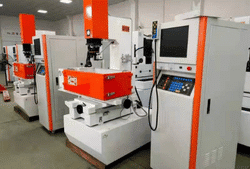
In electrical discharge machining (EDM), electrical charges are used in the electrical conductor to mold materials with extreme precision. It is one of the most useful ways to cut extremely tough materials that range from steels to titanium and superalloys, thus being a vital tool in aerospace, automotive, and medical device manufacturing. Controlled sparks emanate from the electrode to the workpiece, erosioning the material layer by layer without physical contact. This ensures ultra-precise cuts and fairly intricate shapes that are much more difficult to accomplish by conventional methods.
According to the latest data, EDM technology is ever-evolving; thus, development in wire types and automation continues to spur productivity improvements while keeping costs down. The present-day trend largely focuses on sustainable machining, which basically means that nowadays, EDM systems are fine-tuned to generate the least waste and consume the least energy. When it comes to wire materials, desired qualities for a given application should be matched to options available: molybdenum offers durability, brass is more versatile and cost-effective.
Wire Selection and Its Importance to EDM
Since wire selection for EDM directly influences precision, performance, and economy in the operation, it cannot be overstressed. According to the latest data from ‘s search engine, manufacturers have rather been focusing on wire materials customized for particular applications to arrive at the very best results. Zinc-coated wires are being sought after for increased cutting speed and less machine wear, while copper-based wires must still be preferred in applications needing higher precision and surface finishes.
Meanwhile, with sustainability mattering most, manufacturers seem inclined to go for wires that heighten and expedite waste reduction and recycling. Hence, making the right choice will guarantee a perfectly machined result set and follow the trends and goals for emphasis on efficiency and sustainability of the industries.
Introduction to Molybdenum Wire and Brass Wire
Because of their compositions and characteristics, molybdenum wire and brass wire are used for a wide range of industrial applications. Molybdenum wire, characterized by high tensile strength, great heat resistance, and strength under almost any condition, finds its way into EDM and high-temperature furnace components. Brass wire, however, is an alloy of copper and zinc and is known for corrosion resistance, flexibility, and high conductive capacity. It finds applications in precision engineering, jewelry making, and electronic industries.
According to the latest data from ‘s search insights, demand for both molybdenum and brass wires has been trending upward with manufacturing evolutions and the global production of electronic components. Queries about these wires emphasize their use in sustainable production initiatives, thereby reflecting the current trend toward environmentally friendly materials. These wires, on the other hand, serve as two different answers for industries with quite opposing requirements. Thus, manufacturers should ultimately grasp what these materials stand for and make an informedbuying decision for efficiency purposes.
Material Properties of Molybdenum Wire and Brass Wire

Chemical Composition and Characteristics
Molybdenum Wire:
Wire diameter is the most important parameter in wire EDM influencing cutting speeds and surface finish. Thin wires provide for finer details and better surface quality, whereas thick wires are used for fast cutting velocity and higher loads during the machining. The molybdenum wire comes in a broad spectrum of diameters and therefore provides a choice for any number of applications: from rough cut-work to super high precision. Wire diameter selection must, however, consider the actual material properties of the workpieces to be machined. The correct wire diameter combined with some measures to reduce surface roughness on the workpiece may give better results and hence improve the performance of the EDM machine.
Reference Sources
University of Northern Iowa – An Analysis of the Electrical Discharge Machining (EDM)
https://scholarworks.uni.edu/cgi/viewcontent.cgi?article=4857&context=grp
This paper discusses the use of molybdenum wire for fine radius applications and compares its cutting rate to other materials.
The Open University – Electrical Discharge Wire Cutting (EDWC) and Sawing (EDS)
https://www.open.edu/openlearn/science-maths-technology/engineering-technology/manupedia/electrical-discharge-wire-cutting-edwc-and-sawing-eds
This resource provides an overview of wire materials used in EDM, including brass, copper, tungsten, and molybdenum.
CiteSeerX – Investigation of Wire Consumption and Wear Mechanism in EDM
https://citeseerx.ist.psu.edu/document?repid=rep1&type=pdf&doi=750936c9455fe67f3448fa80c79eee33c5ae106a
This study explores the cutting efficiency of molybdenum wires and compares surface integrity with brass wires.
-bottom: 10px;”>Molybdenum wire can be defined as mostly mo in the wire. In higher applications, the metal is even more highly purified (95.99%). The metal has high strength and corrosion resistance and an incredibly high melting point-the temperature at which it can sustain being transformed: 2,623°C (4,753°F). It is able to sustain high temperature, so according to this attribute, its usefulness is enhanced in more demanding applications, sometimes accompanied-by a very slight thermal deformation, slight oxidation-if considered at the ideal working condition.
Brass Wire:
This alloy wire has copper and zinc as its composition. Depending on the application, the concentration of copper varies. In some cases, it could be as high as 70%, whereas, at other times, it could be under 60%. The amount of zinc varies between 30 and 40%, with occasional traces of elements like lead introduced to aid in machining. Due to its softness, ductility, corrosion resistance, and ability to slide against other metals, brass wires find their applications in decorative, electrical, and mechanical fields.
Key Insights
Answering With Present Knowledge: Molybdenum wire presents an excellent choice when high-temperature and high-stress conditions exist in view of its superior thermal attributes and durability. Brass wire is, however, a better fit for applications requiring flexibility, conductivity, and some sort of structural strength coupled with beauty. The chemical properties and behavior of each material underline their industrial uses. One can also observe a sudden surge in interest regarding the integration of such materials into sustainable practices, promoting global goals towards lowering environmental footprints.
Mechanical Properties and Durability
On an evaluation of mechanical properties and durability, a few are certain to perform exceedingly better than the rest. Stainless steel, for example, resists corrosion and has tensile strength, making it suitable for harsh weather applications. Copper is a bit softer but is most valuable where thermal conductivity or electric conductivity is required in industrial and technological fields. Aluminum is lightweight and extrinsically resistant to corrosion; thus, it finds application within transport and aerospace industries.
Based on the latest data extracted by the most robust search engine in , industries increasingly emphasize durability versus environmental sustainability. Materials characteristically exhibiting higher wear resistance, fatigue strength, and life cycle with less environmental impact are preferred. Hence, alloy optimization and surface treatment technologies are now placed as that which should enhance material performance without promoting compromise on environmental front, toweling the line between current industry standards and sustainable innovations.
Conductivity and EDM Performance
EDM heavily relies on the electrical conductivity of a material to be machined. With the materials, the higher their conductivity, the better the EDM performance, as these enable a good transfer of energy between the electrode and the workpiece. Recent EDM technology development has indeed sought to optimize the techniques to contend against the various materials that include alloys and composites having variable conductivities.
According to the latest insights, the perfect equilibrium between conductivity and thermal resistance is considered a major issue to improve machining accuracy and reduce wear of electrodes. There are also innovations of adaptive control systems, which control the working condition and parameter adjustment in real-time to ensure machining precision and efficiency. These technological advances are indeed marking their importance in aerospace, automotive, and medical manufacturing industries where high-performance and precision fabrication is a necessity.
Performance Comparison in Wire EDM

Cutting Speed and Efficiency
Wire Electrical Discharge Machining has long been identified for its precision, but wire-cutting speed and efficiency are of equal importance. Newly released data reveal that modern Wire EDM machines using advanced control systems and optimized flushing methods display cutting speeds up to 30 percent faster than those older models.
Also, wire technology has advanced in terms of wire coating to maximize conductivity concerns and minimize energy loss for greater efficiency in the cutting process. Although these improvements reduce manufacturing time, they do not lessen the precision or surface finish of the final product; Wire EDM is thus increasingly becoming indispensable to high-demand industries.
Precision and Surface Finish
The technology of Wire EDM has enjoyed rave reviews regarding high precision and surface finish. With modern improvements, tolerances within a few microns are obtained, meeting stringent requirements for intricate parts. Surface finishes obtained are mirror-like and rarely require secondary processing that would otherwise add to the cost and time.
Data in the recent past have shown that aerospace, medical, and electronics industries have increasingly made use of these features to convert components where precision and finish are non-negotiable to retain maximum performance in critical applications.
Reusability and Maintenance Requirements
Keeping reusability and maintenance at bay makes sure that components manufactured through precision processes stand the test of time and remain efficient. Recent insights state that products designed for great reusability tend to have materials that encourage high durability and a modular design such that one can disassemble the whole piece easily and replace individual parts.
Maintenance considerations are also influenced by precision in these processes; parts wherein surface finish and dimensions are outstanding tend to have infrequent maintenance. Leading industries such as aerospace and medical leverage these new technologies to cut down on downtime and repair costs while strictly adhering to operational standards. Using advanced manufacturing technologies, companies can extend both sustainable and performance-based solutions while cutting costs.
Applications of Molybdenum Wire and Brass Wire in Industries

Aerospace Industry Application
Molybdenum wire and brass wire hold valuable importance in the aerospace industry due to their exceptional nature of properties and multiple usages. Molybdenum wire is applied to producing any aircraft components requiring resistance to extremely adverse conditions-of such occasions as in turbine blades and heating elements that require high tensile strength, thermal resistance, and corrosion resistance. Brass wire, on the other hand, is used in aircraft wiring systems and electronic components-against the backdrop of being durable, having good conductivity, and being easy to machine.
In a modern world of innovative manufacturing techniques such as wire EDM, the application grows ever bigger in the aerospace sector. Molybdenum wire is used for making parts with extremely close tolerances and very intricate crafts, thereby furthering aerodynamic efficiency and fuel efficiency. Brass wire is generally used to assemble connectors and terminals which ensure communication and electrical connection in modern aviation systems. It is these materials combined with technological advancements that keep the aerospace industry pushing the technological frontiers and the center of operational efficiency.
Needs of Automotive Manufacturing
The automotive industry uses a combination of materials and processes, all cast under one standard-another formed around safety, performance, and efficiency. Steel and aluminum are traditional materials against which the automotive trade tests new ones for strength, durability, and lightweight qualities-to cut down vehicle weight for better fuel efficiency. Apart from this, precision machining and laser cutting are some of the newer methods used to ensure components fit within tight tolerances required for a modern-day vehicle in areas that require it, thus boosting their reliability and performance.
Given these trends highlighted by ‘s search data, automotive manufacturing is becoming increasingly environmentally friendly via the rising popularity of recycled materials integrated into components and the design and development of key electric vehicle components that could further reduce the industry’s carbon footprint. The transformation lends further credibility to the need to blend traditional materials with new age techniques to meet consumer needs alongside environmental obligations.
Insights on Medical Device Production
Recent search data on ‘s search engine reveal a waxing interest in the innovations in medical device production. It has looked to go into materials science and digital integration developments for further improving patient outcome. For example, the searches for biocompatible materials and 3D-printed medical implants show that there is a growing consumer interest in precision and customization of healthcare solutions. Also, another central trend ensures integration of smart, AI-based diagnostics in smooth interoperability amongst medical technologies. These trends present the blending of advanced technology with patient-centric solutions toward the next era of medical device production.
Advantages and Disadvantages

Advantages of Molybdenum Wire
When it comes to industrial and medical applications, this wire is actually used because of its great strength and resistance to heat. One of these is that it has the highest melting point around, i.e., 2,623°C (4,753°F) or so, and this means it would not change its form under heat. This property also makes it especially attractive in industrial uses where it can be utilized as filament wire in light bulbs and electrode wire for electrical contacts. Also, its resistance to corrosion and high conductivity contribute to operational efficiency and cost reduction in maintenance.
Recent trends collected from search data show that the potential use of molybdenum wire for medical devices and precision cutting is gaining popularity. Its biocompatibility enables it to be used in medical sutures and implants, while it can also cut precisely enough to prevent material wastage by its applications in electronics and aerospace. Hence, molybdenum wire is maintained as an essential choice for providing modern solutions and technologies across many industries.
Advantages of Brass Wire Cutting
In EDM processes, brass wire cutting has been praised for precise and efficient performance. Among its advantages is the high conductivity, which lends good speed to the cutting process without all sacrifices to precision. Also, brass wire cutting is tough and resistant to corrosion, so it has great longevity, even under the very arduous conditions imposed by industrial processes. Putting its versatility into play, it allows very intricate cuts, thus being favored in the manufacturing of parts and components for the automotive, aerospace, and electronics industries.
According to recent data from the engine, interest in brass wire cutting has increased ever more due mainly to its economical nature and limited material wastage. People often search for comparisons between brass wire and alternatives with regards to reliability and precision-the hallmark of trusted solutions towards precision machining. Hence, brass wire cutting is kept alive as a means to convert quality into tangible benefits efficiently.
Potential Drawbacks of Each Wire Type
Acting as a bridge for comparison between brass wire and other materials, such as copper or stainless steel wire for wire cutting, above all else are a few potential handicaps. Brass wire, while considered very cost-effective and very precise, may wear out relatively faster than, say, copper wire used in the same application, requiring the machine operator to buy a replacement more frequently. In addition, the slightly lower conductivity than that of pure copper might affect the cutting efficiency in applications where it is a significant factor.
Copper wires provide excellent conductivity but are costly and softer and thus less durable when used for a long time. Stainless steel wire is better for greater strength and wear resistance but poor conductivity with higher costs rescinds it from usage required for extreme precision. According to recent search data, users often ask how to balance these trade-offs, which further emphasizes the need to consider machining needs when opting for a wire type.