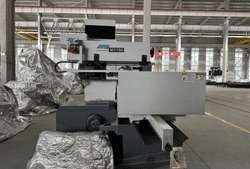





Universal shaper machines are well-regarded for their stability and emphasized for their great versatility and accurate finishing. By the shape and cut metals amongst many others, this machine has paved the way for the mass manufacture of various components for multiple industries. So then, what actually constitutes the Universal Shaper Machine? What are its features that keep it in such high demand and how does it keep up with the rapid changes in industry demands? This article will analyze at length the working principle of the machine and its features, together with the applications of the machine in different industries. Whether you aim at redesigning your production systems or just to get detailed knowledge on how this versatile machine works, this article will surely contribute a lot to your enhanced decision-making capability.
Understanding the Shaper Machine
What Is a Shaper Machine?
Shaper machines are versatile metalworking tools used to shape or cut materials, such as metal, to precise specifications with a single-point cutting tool, depending on the movement and axis of the tool or workpiece. The tool moves in a linear path and is capable of creating flat, angular, or curved surfaces to finished-level accuracy. Shaper machines are commonly used in operations like cutting grooves, cutting keyways, cutting slots, shaping flat surfaces, and shaping irregular contours.
In modern times, various shaping machines have been modified with automatic tool feed and increased cutting speeds to enhance efficiency and meet the requirements of industries. The ability to perform simple to complicated cuts brings it into use, being found from industries to repair workshops. These very tools significantly contribute to achieving the highest productivity and precision in production tasks.
Types of Shaper Machines
Orienting a shaper machine: These machines are diverse, with each type adapted for a specific task that supports a particular output. Some more common varieties include:
Standard Shaper Machines
These machines are quite versatile and are used mainly for general types of cutting and shaping. They are straightforward machines and hence find application mostly in small- to mid-scale industries. For tool feed of a variable magnitude at moderately high speeds, they are used chiefly for straight-line cuts on flat or angled surfaces.
Horizontal Shaper Machines
These machines are commonly used when operations require a horizontal cut, as their rams are placed horizontally. These machines are used for producing grooves, keyways, and other horizontal features and are greatly appreciated for their stability during operations.
Vertical Shaper Machines
Unlike horizontal ram and tool arrangements, these machines feature vertical-type rams, making them ideal for working on vertical and angular planes. For maintaining exact accuracy in shaping, slotting of internal and external grooves is undertaken.
Slotter Machines (Vertical Slotters)
To be more precise, slotter machines can be referred to as a branch of vertical shapers, specialized in slotting and grooving mainly in circular objects. Their precise cutting is crucial in creating internal gears and other intricate features.
Universal Shaper Machines
These machines offer adaptability, enabling them to perform both vertical and horizontal types of operations. Depending on their design, their rotation features may be built in, allowing them to perform highly different tasks, thus saving a significant amount of time in workshops and increasing productivity.
Geared Shaper Machines
Utilized for high-speed work, these geared shaper machines essentially incorporate a gear mechanism for the ram movement. The gear mechanism ensures smooth operation with adequate precision, thereby favoring mass production processes.
Hydraulic Shaper Machines
Utilizing hydraulic power, these machines exert greater cutting force and can perform larger tasks. They are highly consistent and efficient when handling heavy loads and large materials.
Each category addresses certain industrial requirements, and hence they will retain the essence of precision, utility, and efficiency. Choosing a right shaper machine is a critical step in enhancing manufacturing processes and generating high-grade outputs in various applications. Developments of this sort indicate how the industry is evolving by integrating engineering solutions with the conventional tools.
Key Components of a Universal Shaper
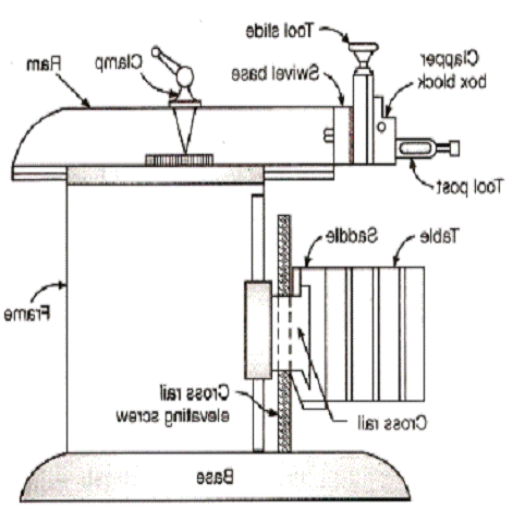
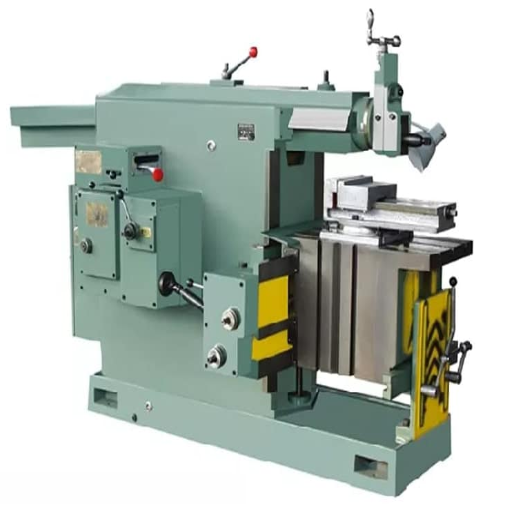
The universal shaper machine comprises various essential components designed to facilitate a smooth cutting, shaping, and finishing operation on a given material. One essential component is the ram, in which reciprocating tool heads perform cutting operations. The ram moves in a linear motion back and forth to remove the material any time the workpiece is directly fed into it. The tool post is attached to the ram to hold the cutting tool firmly in position, while also allowing for the cutting angle and depth to be adjusted.
Critical Components Overview
- Ram: Performs reciprocating motion for cutting operations
- Tool Post: Holds cutting tool firmly and allows angle adjustments
- Worktable: Supports and positions workpiece accurately
- Gear Mechanism: Controls ram movement and power transmission
- Clapper Box: Lifts tool during return stroke
- Base: Provides structural support and vibration absorption
An important factor in any universal shaper is the worktable that supports the material being shaped. The worktable is capable of moving in both vertical and horizontal directions to correctly position the workpiece in front of the tool. Usually, some grooves, or possibly clamps, are mounted onto the worktable to hold the workpiece in place during shaping. Since it has to hold workpieces of varying sizes, a universal shaper can thus be used in various applications.
It is having some other components like a gear mechanism that is vital here as imparting energy to and controlling the movement of the ram. This would involve a spur gear and crank mechanism working together to effect smooth operation. The clapper box is another important element, which permits the cutting tool to lift when the ram is returning, thereby preventing unnecessary wear of the tool and clean cutting. Other components include the base, which gives structural strength and absorbs vibration, and the feed mechanism, which permits the worktable to be moved in minute steps. All these components, together, render the universal shaper versatile, precise, and capable of performing many manufacturing operations.
The Working Principle of a Universal Shaper
Mechanics of the Shaping Process
Planning the process of being shaped by a universal shaper is all about arranging different mechanical members so that they can act in unison to perform the cutting operation with precision. In brief, the back-and-forth movement of the machine originates from the quick return mechanism. This mechanism enables the quick return stroke to move faster, while the cutting stroke proceeds slowly in a controlled manner, allowing for the removal of material. The cutting tool is usually attached to the ram and is fed forward to shape the material.
Key Process Features:
- Quick return mechanism for efficient operation
- Controlled cutting stroke for precise material removal
- Incremental worktable feed for layered shaping
- Hydraulic systems for enhanced speed and accuracy
The incremental feed motions of the worktable are coordinate with the tool motions, thereby permitting layer-wise material shaping. With the advent of modern designs, some universal shapers are now being operated on hydraulic systems, thus enabling them to attain higher speeds and accuracies without compromising on their reliability. These systems resist wear and use lesser energy, conforming to the standards of modern manufacturing. With steady and consistent motions, therefore, the machine works the stock accurately enough to be used for fine work while creating intricate and identical parts for auto, aerospace, and heavy machinery industries.
Comparison with Other Machining Tools
Being unique in machining, shapers work with linear cutting, in contrast to other tools such as milling machines, lathes, or grinders. A shaper is meant for flat, linear, or uniform surfaces with high accuracy. They perform well in low- to medium-volume manufacturing, as a shaper is often considered beneficial for short setup times and machining of various operations, rather than CNC machines.
Comparing shapers and lathes, the former are better suited for creating grooves, slots, and slants in surfaces, while the latter are used for cylindrical/round ones. Grinders typically provide finishing, imparting a smoother surface, while shapers implement shaping and forming according to the initial design.
Hydraulically driven types of machines offer greater competitiveness, simply because they are easy to operate and consume less power, while CNC, being the most advanced, requires very intricate programming and a high cost of equipment. Thus, these factors make shapers a cost-effective and reliable option for specific manufacturing situations, striking a balance between precision and cost.
Role of the Tool Room in Shaping
The tool room plays a key role in ensuring that all shaping operations occur efficiently and with the precision expected, by providing tools, equipment, and training for maintenance. It forms the backbone of the manufacturing operation by supporting the shop floor with a high-quality selection of cutting tools, fixtures, and gauges that satisfy the very exact design specifications. The tool room maintains and calibrates shaping tools and equipment within specific tolerances to minimize defects and material wastage, allowing maximum production and profitability for the manufacturer.
Contemporary tool rooms are investing in automation systems and innovative materials to improve their durability and performance in advanced shaping technologies. For example, heat-treated alloys and coated cutting edges can be used to increase tool life, whereas measurement systems are integrated into the shaping operation to ensure greater accuracy. On the other hand, several toolrooms now seem to stress the implementation of lean inventory policies to ensure tools are available when required, thereby reducing unnecessary stock and minimizing downtime.
Ultimately, the tool room’s complete integration in shaping workflows results in enhanced outputs, reduced lead times, and alignment with production standards that are in high demand in today’s competitive environment.
Applications of Universal Shaper Machines

Industrial Uses of Shaper Machines
Those industries that use precision metalworking and shaping operations often find shaper machines incompatible. Capable of generating flat surfaces, keyways, grooves, and angular cuts with the highest accuracy, the shaper is used in many fields. They are mainly used for machining shop work, like repairing machine parts and working on manufactured parts for larger assemblies.
Automotive Industry
- Gearbox housing machining
- Engine block components
- Complex automotive parts
Aerospace Sector
- Fine-graining metal components
- Special aircraft parts fabrication
- Precision aerospace components
General Manufacturing
- Machine part repairs
- Custom component fabrication
- Small to medium-scale production
Modern shaper machines, together with CNC technology, are now considered possible tools for use in the automotive, aerospace, and general manufacturing sectors. For the automotive industry, shaping gearbox housings and engine blocks, which are complex components, is another application. In the aerospace field, operations such as fine-graining metal components and fabricating special parts are required to enhance airplane performance. All these industries have started to use automated and programmable shaping machines in order to satisfy the increasing demands of precision engineering and speed in the final product with virtually minimal mistakes.
Another advantage is that shaper machines are cost-efficient for small- to medium-scale production. They are perfect for jobs involving one-off projects or customized jobs without a need for an extensive tooling change, thus decreasing overhead costs. Put another way, these advantages have ensured their continued survival in production and industrial undertakings to this day.
Shaper Machines in Tool and Die Making
In the tool-and-die profession, shapers have remained an essential tool for machining precision and shaping custom components necessary in a wide range of industrial applications, as well as for creating flat surfaces, grooves, and complex geometries. This is achieved through the processing of materials into high-grade tools and dies. The working of the shaper machines is that it starts moving the tool in reciprocating motions, projecting downward. Their operations are further enhanced and controlled using automated solutions, which provide programmable modes of working as a setup for increased accuracy and efficiency.
Such recent innovations have taken abilities as far as possible with the integration of software systems for automating complex tasks and reducing human errors. These newer shaper machines would be immensely useful in tool and die-making due to their utmost importance of precision and repeatability. Moreover, from an industrial point of view, one can say that the greater the acceptance of advanced shaping machines, the shorter the lead times, and a higher level of productivity would be attained to meet the ever-growing demand for high-performance tools used in the automotive, aerospace, and electronics industries.
These technologies can be utilized by manufacturers to enhance competitiveness while maintaining cost efficiency, thereby making sharper machines a necessity in modern tool and die production core processes.
Integration with CNC Technologies
The merger of CNC mechanisms with foundry-based shaping machinery has significantly changed factory processes, yielding an extraordinary degree of precision and efficiency. While CNC-controlled shaper machines autonomously move the tools along their paths according to their control laws, minimizing manual intervention-based errors during complex machining processes, consistent production can be ensured, even for intricate designs, while achieving a drastic reduction in setup times.
CNC Integration Benefits:
- Real-time monitoring and feedback systems
- Tighter tolerances and repeatable outcomes
- Adaptive machining strategies
- Reduced setup times and manual errors
Technologically advanced CNC systems have become capable of providing dynamic monitoring and feedback; operators could change parameters as necessary, which further ensures better quality of outputs through different production cycles. This means that the remaining industries, including aerospace and automotive, maintain a tighter tolerance and a repeatable output for high-performance applications. CNC-based shaper machines have now become a must for carrying out adaptive machining procedures that can change according to varying material property or unpredictable deviations in order to provide best possible output in random industrial scenarios.
By combining the flexibility of a shaper machine with the accuracy and output of CNC technology, firms will be able to face an increasingly competitive environment while maintaining scalability without compromising on quality. This synergy justifies further investment into CNC-enabled shaper machines as an integral part of modern manufacturing flows.
Advantages of Using a Universal Shaper
Efficiency in Material Removal
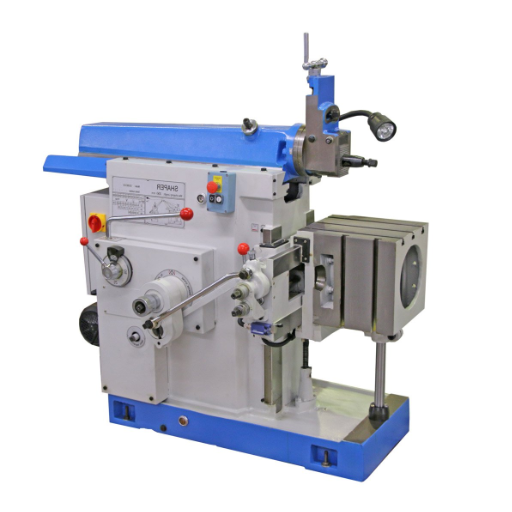
With an entire range of cutting machines named universal shaper, the existence of these machines is guaranteed to function with precision and adaptability. Therefore they can work on any metal or wood surface and, depending on the hardness of the material or intricacy of the surface, maintain accuracy. Considering CNC integration would raise the efficiency through automation, which basically means reducing manual intervention, so an operator can simply set the most suitable cutting speed and feed. Selective cutting results in less waste and time in production time and, therefore, lower manufacturing costs. With automation and data-oriented corrections, manufacturers can guarantee prime finishing results, whether handling complex designs or high-volume orders.
Versatility Across Different Materials
Depending on the raw materials of concern and hardness, texture, or thermal sensitivity, in the present day, almost any term could describe the very concept of considering the current technologies. Aluminum in the material of metals, especially metals. They can really be very fragile things-composites, ceramics, or polymers that do have engineering value. Such systems have to preserve absolute accuracy at the farthest and give quality at the utmost standard possible. Tooling algorithms and software allow manufacturers to cut, form, mold, or manipulate materials into useful forms without damaging their qualitative characteristic or purpose. The main advantage of versatility is allowing the industry to produce more kinds of products geared towards the niche marketing and maintain competitiveness in the fast-changing environment. In addition, by optimizing processing parameters for different materials, operators help to protect installation equipment from premature wear and tear and thus extend service life and reduce cost.
Cost-efficient Compared to Other Machines
With all the cutting-advanced techniques, modern industrial machines assure an unmatched cost-benefit ratio compared to conventional machinery. When combined with precise controls, various automation features work to minimize the wastage of materials, enhance production capability, and lessen operational costs to a large extent. For instance, automated systems maintain the consistency of the production rate and also reduce the need for human intervention; as time goes, this reduces labor costs. Further, these machines are energy-conscious, thereby reducing utility costs but ensuring environmental conservation mandating maximum saving.
Moreover, adaptive machines are frequently equipped with modular components and simplified maintenance procedures that lessen repair incidents and the associated repair costs. Any industry that makes use of such a type of machinery for manufacture tends to achieve greater ROI because of its efficiency and durability. Usually, any study would conclude that production costs would drop 20-30% with the introduction of enhanced machines, thereby raising the point to prove that it is better for competing manufacturing industries to stay alive in today’s environment.
Conclusion and Future of Shaper Machines

Emerging Trends in Machining Technology
According to me, machining technology is a growing, ever-evolving field with everything in engineering occurring in the direction of automation, sustainability, and precision. Among the few trends implemented under smart manufacturing is the application of computers along with IoT sensors, providing real-time data about machine performance and maintenance requirements. These developments will reduce time wastage and up the efficiency levels, allowing manufacturers to streamline their activities while maintaining even productivity. These act as a key driver to the concept of digital transformation in response to assuring a machining process to change according to varying demand.
Key Technology Trends:
- Smart Manufacturing: IoT sensors for real-time performance monitoring
- Sustainability: Energy-efficient machines and green technologies
- Hybrid Processes: Combining machining with additive manufacturing
- Precision Engineering: 5-axis CNC and laser-based systems
In another major movement for sustainability, conservation is appreciated through awareness of the negative environmental impacts worldwide, hence paving the way for new energy-efficient machines and materials. These green technologies minimize the waste generated while keeping consumption at the lowest level possible during the production stage. In addition, hybrid methods in combining either machining or milling with additive manufacturing methods open a new avenue for component development than can design highly complex geometries while saving raw materials, making them one of the most economical to the environment-friendly avenues available.
Precision engineering innovations have altered the concept of machining “accuracy,” with the introduction of 5-axis CNC machining centers and laser-type systems. These technologies enable manufacturers to produce very intricate parts in very fine detail; aerospace and healthcare industries need such measurement at the utmost accuracy. Traditionally, such trends bode well for machining technology, as innovation will always lead the way in engineering factories to develop and evolve products to many applications.
Possibilities for Improvements in Universal Shapers
From my perspective, universal shapers possess so much power that they can even become more practical and efficient with the evolution of technology. The significant developments I find could be implemented from an innovative technology perspective into these machines, considering AI and IoT, for instance. Imagine AI-integrated shapers that have learned from past jobs and optimize the machining process in real-time, with error rates approaching zero. Every other optimization seems to diminish in importance from this point forward. Although connected to IoT, these machines would perform predictive maintenance by evaluating their performance and foreseeing any hardware faults that could eventually lead to downtime, thereby enhancing the lifespan of the equipment.
🤖 AI Integration
Real-time process optimization with near-zero error rates
🌐 IoT Connectivity
Predictive maintenance and performance monitoring
🔧 Material Adaptability
Advanced composites and eco-friendly alternatives
⚡ Energy Efficiency
Renewable energy integration and reduced power consumption
Another interesting frontier is that of material adaptability. Future beings capable of universal shaping would perhaps smoothly test an even wider panorama of materials, from advanced composites to new alloys to green ones. Such flexibility can allow them to cater to highly specific needs of an industry or two, such as that of electric vehicle manufacturing or renewable energy. Conversely, high automation will intimidate a sharper that will soon near full automation, will be fast in output production, and will generate quality results.
Ultimately, one can expect improvements in energy efficiency and environmental impact. Universal shapers could be considered in the achievement of global sustainability objectives when it works either by interfacing a renewable power source or simply demanding less electric power. Presently this, coupled with the smaller mechanism, may bring it to the smaller operation and democratize high-precision fabrication applications; such would, in itself, bring revolutionary changes in the role of universal shapers in the area of modern-day manufacturing.
Final thoughts on the importance of shaping machines
My assessment reveals that shaping machines hold a critical position in manufacturing technology. They are not simply tools; they empower precision and provide the flexibility and efficiency needed to stimulate innovation in various industries. Either by fabricating highly complex components or by repetitive, high-accuracy operations on components, shaping machines help manufacturers meet demanding specifications and modify production requirements while also being cost-effective.
What excites me about shaping machines is that they contribute to big issues like sustainability and worldwide access. A shaping machine is slowly going green, integrating solar power and other energy-efficient designs that minimize their impact on the environment without affecting their performance. Sixty-eight smaller, cheaper designs will put extremely precise shaping instruments in the hands of smaller enterprises, thereby inciting mass rage!
Indeed, shaping machines are considered indispensable in modern manufacturing, not only due to their technical competencies but also because they develop alongside industry challenges and opportunities. Their ability to innovate, evolve, and promote sustainability—thereby signaling an efficient, all-inclusive, and progressive manufacturing sector.
Reference Sources
-
Shaper Machine Guide: Principles, Types & Applications – CNC WMT
Explains the principles, types, and applications of shaper machines, focusing on their robust and cost-effective design. -
What’s a Shaper Machine? Is it the Same as a Router Table? – Tools Today
Discusses the use of shaper machines in metalworking and other materials like wood and plastic. -
Shaper Machine | Definition, Types, Parts, Operations & Size – Mechanical Notes
Provides a detailed overview of shaper machines, including their definition, types, and operations. -
Shaper Machine: Definition, Working, Types – Scribd
Highlights the working mechanism, types, and cutting capabilities of shaper machines.
Frequently Asked Questions (FAQs)
What are the working principles of a shaper machine?
In the simplest description, the working principle states that the ram reciprocates to perform the cutting action. It is the most fundamental terminology of any shaper operation. A shaper employs a single-point cutter which moves linearly with respect to the workpiece and removes metal during the forward stroke. During the forward stroke, the tool is engaged in machining so that, due to the quick return mechanism, the tool is lifted away from the workpiece during the return stroke, saving time. Both flat surfaces and complex shapes are created through the horizontal and vertical operations of shapers. The cutting tool is usually held in the tool head, which can be swiveled to different angles of cutting.
What are the different types of shaper machines?
There are several types of shapers, such as the conventional, hydraulic, and crank-type shapers. Generally, the original or conventional shaper is used for commercial and general machining uses. The hydraulic shaper has been bestowed with power from hydraulic pressure for extra performance and is used mostly on heavy-duty applications. The crank shaper positions the crank mechanism to convert rotary motion into reciprocating motion, and it is thus efficacious for different machining operations. Each type of shaper machine finds its own particular application, ranging from shaping flat surfaces to producing complex contours on the workpiece.
How does the hydraulic shaper function?
In a hydraulic-type shaper machine, hydraulic fluid is used to move the ram that carries the cutting tool. It allows the movement through the hydraulic mechanism against certain forces and at speeds, as required for the job. Such equipment is ideal for very heavy types of shaping machinery, for they can accept larger workpieces and manufacture harder materials.The hydraulic ram will perform its cutting stroke by reciprocating and then quickly return to its starting point. Great confidence is placed on the use of vertical guideways so as to give stability and precision to the operation.
What is the function of the clapper box in the shaper machine?
Crucial to the operation of a shaper machine is the clapper box, which enables the cutting operation to lift during the return stroke when the tool is withdrawn from the workpiece. Otherwise, dragging of the tool on the surface might spoil it and impart a bad finish. The box usually mounts on the tool head above the tool to provide a slight upward movement, preventing a bad surface from being imparted to the workpiece during shaping. Hence, good surfaces can be obtained, thereby preventing wastage and making shaping faster. The clapper box is one of the essential components that contribute to the utility of a shaper machine.
What materials can be machined on a shaping machine?
Shaping machines are versatile machines used to work on all types of materials, including metallic materials such as steel, aluminum, and cast iron. They are thus used to produce flat surfaces, keyways, and other shapes. The material, on the other hand, depends upon the kind of cutting tool to be used and the specification of the machine. Shaping machines can be used for softer materials; hence, it can fit into different manufacturing processes. By appropriately modifying the cutting speed and tool, one can achieve accurate results on almost all materials.
What are the advantages of using CNC shaper machines?
The operational profit that CNC shaping machines bring in is in terms of accuracy and automation. CNC technology enables one to generate intricate designs and delicate shapes with accuracy. Hence, operators are expected to program the cutting paths and settings, thus decreasing human errors and accelerating productivity. CNC shaping machines can also work on multiple workpieces at once, fostering profuse avenues for mass production. The saving of a machining process for repetition also results in the consistent quality of finished products.