




Advantages of Shaper Machine: Understanding Its Specifications, Working Principle, and Applications
Shaper machines have stood out as fundamental facilities in machining, because they are easy, intuitive, and multipurpose, efficient. They enable the performance of intricate and fine shaping of the metal or any other materials in the industries. Whether you are a professional in the field or an aspiring machinist, knowing and appreciating the design and peculiarities of this particular machine will enable you to improve the way you manufacture goods. On one side, it provides possibilities to produce complex shapes, and on the other, there are many jobs in which the shaper machine can be utilized, and it is simply impossible to do such work without this equipment in the workshop.
Introduction to Shaper Machines

A shaper machine is a style of machine tool that is used for shaping and cutting metal and other hard materials. It functions to move a single-point cutting tool along the surface of the workpiece and remove material in order to generate flat surfaces, arcs, slots, or other geometrical features. The workpiece does not move; instead, the tool cutting motion is enabled, which performs the job accurately.
What is a Shaper Machine?
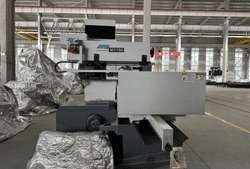
A shaper machine is a mechanical tool that is utilized in the machining process of workpieces to machine flat surfaces, or create grooves and other profiles on metallic or non-metallic materials. It is able to function by the cutting tool with a straight edge, moving back and forth on the workpiece. Advantages of a shaper machine include precision, efficiency, versatility, and industrial uses, which are particular.
Historical Evolution of Shaper Machines
Machine tools known as shapers have been around since the start of the 19th century, when there was a need for fixation of precision in machining work. The first generation of them was hand-operated and composed of only bare bones structures for cutting on metal surfaces. It was not until the middle of the 1800s that technological progress made possible the appearance of power-operated shaper machines, which made use of steam or belts for execution. These were game changers, leading to a drastic improvement in productivity and quality of work output.
Types of Shaper Machines

Horizontal Shaper Machines
Machines with a horizontal ram are typically used to machine flat surfaces. They are flexible and are mostly used in small and medium-sized workshops.
Vertical Shaper Machines
A machine that has a vertical ram is also called a slotter. These machines are best for cutting slots, keyways, and other similar vertical operations.
Standard Shaper Machines
They are intended for general-purpose machining, often utilizing a common type of shaper for versatility. They are capable of performing a wide array of machining tasks at moderate speeds, with moderate precision.
Universal Shaper Machines
This machine has a table that tilts both sideways and forage vertically for oblique cutting or angular surfaces.
Crank Shaper Machines
This machine has a crank and is useful in converting rotary motion into reciprocating motion for light-duty shaping.
Gear Shaper Machines
Specifically designed for the cutting of gear teeth, these machines use special tools that ensure very precise and consistent gear profiles.
Plano Shaper Machines
A bit advanced from the regular shaper, such a machine is used for heavy operations on large workpieces, often having a larger size of shaper.
Hydraulic Shaper Machines
Hydraulic machines use a hydraulic system for operation rather than mechanical gears. This results in a smoother motion requiring less maintenance.
Working Principle of Shaper Machines

Mechanics of the Quick Return Mechanism
In the shaper machine, the quick return mechanism is construed to improve the equipment’s performance due to the fact that less time is spent during the return stroke. It achieves this by means of turning rotary inputs into the reciprocating outputs such that the cutting stroke is achieved at slower, controlled rates and the return stroke at a quicker rate. This becomes possible by the application of offset crank mechanisms or hydraulic techniques that enhance stroke speed manipulation at differing intervals.
Detailed Working Principle of the Shaper
- Tool-head motion: This is the tool mounted on a ram in the shaper and it carries out its cutting action when it moves forward. The cutting stroke is carried out during the forward stroke, such that the forward stroke is slower to maintain the correct speed for material removal.
- Return Stroke: The return stroke is carried out at a higher speed since this is where the ram reciprocates and the tool head moves away from the work. Usually, the return motion is inactive in terms of cutting to allow for preparation for another cutting stroke.
- Ram Movement: Linear motion is provided to the ram that carries the tool head, moving back and forth. This movement of the ram could either be produced by a crank and slider mechanism or it could be power-assisted with hydraulic actuators to give precise motion control.
- Clamping the Workpiece: The workpieces are rigidly clamped on the work table so there is no movement during the cutting. The work table can be adjusted in height and laterally to ensure precision in alignment with the tool.
- Feed Mechanism: When the workpiece travels after a cutting stroke, it is advanced through an automated feed mechanism, providing continuity to the cutting depth and surface finish.
- Stroke Length Adjustment: The length of the stroke may or may not be altered depending on the size of the workpiece and the depth of the cut.
- Cutting Tool Position: Depending on the job, the cutting tool shall be set by adjusting its position, height, and angle to do the cutting at optimum conditions on the material and shape required.
- Lubrication System: There is a lubrication system installed on the shaper to lessen the wear between moving components, ensure smooth movement of parts, and lengthen the life of the machine.
- Power Transmission: The power from the motor is conveyed to the mechanism controlling the motion of the ram either through gears, belts, or hydraulic systems.
Components of a Shaper Machine
| Component | Function |
|---|---|
| Base | This element is the core of the system, which holds all other parts together. |
| Column | This is the part that moves the mechanism and provides structure. |
| Table | This is the structure that holds the workpiece in place, crucial for the operation of any machine tool used in machining processes. |
| Cross Rail | A structure that supports the table and provides the table with some lateral movement. |
| Ram | The actuating component of the shaper that executes the cutting motion. |
| Tool Head | The component that holds the cutting tool in place and performs the machining process. |
| Clapper Box | Provides the ability to reposition the cutting tool on a return stroke without clashing. |
| Feed Mechanism | Controls the coordinate of the workpiece in relation to the cutting tool. |
| Lubrication System | To minimize excessive wear and tear of parts. |
| Power Transmission System | This system transfers motion from the motor into a shaper with the use of belts, gears, or hydraulics. |
Advantages of Using Shaper Machines

🎯 Precision Cutting Capabilities
The main advantage of shaper machines is the precision of cutting operations. The surface obtained is precise and doesn’t change its shape. Straight, flat, or shaped surfaces are easily obtained on the common type of shaper machines, making them a staple in machining. This is achieved due to very precise cutting strokes with the controlled feed mechanisms.
💰 Cost-Effectiveness in Manufacturing
Manufacturing cost reduction is achieved by an optimal usage of resources, quality, and productivity to lower the expenditure while ensuring production targets. The sophisticated devices mentioned earlier reduce costs as they operate accurately, which minimizes mistakes as well as retakes.
🔧 Versatility with Various Materials
In terms of performance and flexibility in the composition of the machine, it likewise demonstrates the capacity to work with quite a number of materials including metals, plastics, composites, wood products, glass, ceramics, textiles, and rubber.
Materials That Can Be Processed:
- Metals: Aluminium, steel, and copper
- Plastics: Polyethylene, polycarbonate, PVC
- Composites: Carbon fibre and fibreglass
- Wood products: Hard, soft, and plywood
- Glass: Formulated glass and structure-laminated glass
- Ceramics: Porcelain wares and stoneware
- Textiles: Cotton, polyester, or nylon
- Rubber: Natural or synthetic rubber
Applications of Shaper Machines in Different Industries

🏭 Shaper Machines in Metalworking
In metalworking, shaper machines help eliminate unwanted material through cutting, surfacing, and shaping metal workpieces. They provide a great upgrade over simple manual and labor-intensive operations by performing operations such as creating flat surfaces, angles, or grooves on the metals. The shaper machine is primarily used in the manufacture of gears and was of great use when low production volumes were required for the fabrication of detailed designs.
🪵 Applications in Woodworking
- Making of wood products such as panels, boards, and shelves by planing off extra material to the accurate thickness
- Machining for woodworking joints by routing dadoes, grooves, and dovetail ends
- Shaping wooden materials on its periphery for design purposes
- Flattening of uneven surfaces and surfaces that have a rugged configuration
- Cutting wood to create ornamental patterns in the material as part of decoration applications
- Cutting or resizing parts of a piece of wood that are to be fitted in wooden construction or cabin furniture
- Modelling of patterns in the form of wooden blocks that can be employed for processes of manufacturing and prototyping
🔬 Use in Prototype Development
The accurate cutting and shaping of wooden parts are needed from the very beginning of prototyping, and therefore, woodworking tools such as routers and mills are very useful. The advantages of such tools can hardly be exaggerated, taking into consideration the fact that they enable the fabrication of intricate molds, frames, or even structural geometry that is required during the testing and decision-making phases with respect to this geometry.
🚀 The Future of Shaper Machines

Why Shaper Machines Remain Relevant
Despite the advancements in modern technology, shaper machines are still in production and are even used to assist others. They are very efficient in producing safe components that fit the purpose for prototyping, limited runs, and where only a bespoke product is required. Looking at its relatively basic construction, operation, and price, the machine is easily deployable for different sectors such as woodwork and metal disruption.
Innovations and Improvements in Shaper Technology
Today, most of the shapers come with digital controls, which are less laborious in precisely correcting and updating figurative faults. Improved flexible speed provision equipped motors for the drive have continued to expand the possibilities of the working materials. Systems that enhance guarding integrity and also guarantee the machine shuts down when in danger have been introduced in an attempt to prevent workplace illnesses and injuries.
Final Thoughts on the Role of Shaper Machines in Manufacturing
Even today, shaper machines are essential for manufacturing as they are used mostly for jobs that demand linear cutting. The reasons behind this are that these machines are inexpensive, have a high degree of accuracy, and are very dependable, making them suitable for workshops as well as industries that do tailor-made production of small quantities.
❓ Frequently Asked Questions (FAQs)