




Industry machining and metalworking: precision or efficiency-thus selection of machinery makes a huge difference. Surface grinder and milling machines are two common machines operating in this field. They might seem similar at a glance, but each has different functions intended for different tasks. This article will discuss the fundamental differences between surface grinder and milling machine, highlighting each one’s use and advantage. Whether newly employed or seasoned, knowledge of these differences will aid any machinist in making the right decision in choosing the correct machine for working on a job.
Introduction to Surface Grinding and Milling
What is Surface Grinding?
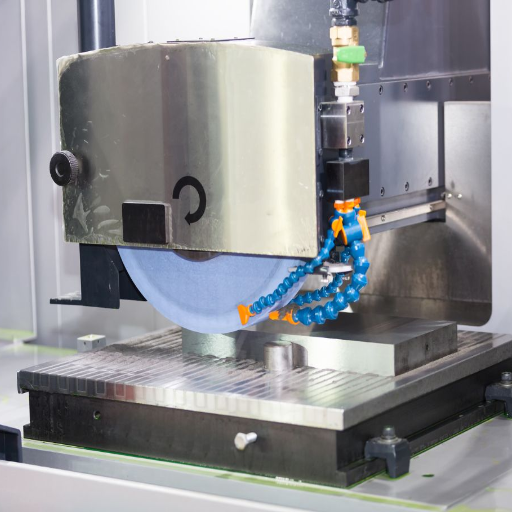
In essence, surface grinding implies machining for the purpose of smoothing or flattening any surface of a work. It bears a specific application for attaining accurate surface finish and dimensional quality, such as in manufacturing, automotive, and tool industries.
The wheel, mounted on a spindle, swiftly rotates, while the grinding surface moves across the workpiece that’s firmly set on a magnetic chuck or fixture. Onward with material removal, it leaves behind a flat surface finish. Surface grinders can provide parts with tolerances within the range of about ±0.001 inch; hence, it may be regarded as an instrument for finer machining operations.
According to recent industrial reports, surface grinding is extensively used for castings ranging from cast iron to steel and also for finishing components to a fine degree of precision, such as shafts, dies, and molds. Advanced surface grinders also include CNC systems that enhance efficiency, accuracy, and repeatability. Along with enhancements in wheel technology, new types of wheel materials, including cubic boron nitride (CBN) and diamond, have been developed for working on harder materials, thereby opening up much wider possibilities for the application of surface grinding.
In any case, surface grinding remains indispensable to modern machining, known for providing accurate parts consistently.
What Is a Milling Machine?
A milling machine has great versatility in manufacturing and metalworking. It removes material from the workpiece with the revolving cutting tools. Such milling cutters could be end mills and face mills rotating at very high speeds to perform cutting, shaping, or drilling on a wide variety of workpieces including metals, plastics, and wood. Milling machines are said to be used for more complex operations such as those having grooves, slots, and holes, or even more complex 3D geometries.
Currently, milling machines are of many types, comprising ones having their spindle axis vertical, thus being called vertical milling machines. On the other hand, the name horizontal milling machines refers to those having their spindle along the horizontal direction. Since CNC milling machines perform highly precise and automated processes with just a small amount of human interference, they become paramount.
Recent analyses have predicted that the global milling machine market is expected to exhibit substantial growth in terms of market value and is thus estimated to grow at an approximate market value of $16.01 billion by 2027, being driven by the automation and a rising demand for high precision machinery. More recent technology developments have seen the advancement of five-axis milling machines, which bring in additional flexibility by allowing a cutting tool to move simultaneously on all five axes and are, therefore, extensively used in aerospace and automotive manufacturing.
Now, the milling machines perform fast, accurate, and reliable processes, thanks to excellent continuous modification and innovation. They are valued by business establishments on both a small and great scale around the world.
Grinding and Milling Processes-Overview
Grinding and milling are important machining processes commonly applied in manufacturing to shape, smooth, or indeed refine any given material. Grinding constitutes the removal of materials from surfaces through abrasive wheels or belts to achieve surface finishes and dimensions. Milling cuts away materials, using rotating tools, from components, which may be dressed intricately in design.
With the intervention of technology, recent development has been witnessed in these processes. CNC machining boasts higher precision, automation, and repeatability. Following these trends come high-speed milling or HSM technologies, machining at the rates much higher than conventional techniques, with respective advantages in minimizing cycle time and enhancing productivity. Recent market research data reveal the global CNC machining market to have been worth around $83.54 billion in 2022 and to register a CAGR of 6.2% from 2023 to 2030, exhibiting the increasing demand for precision manufacturing.
Grinding, conversely, is most likely to witness great improvements by way of super-abrasive grinding wheels for better efficiency or more advanced creep-feed grinding techniques for deeper, precise cuts with minimal thermal damage to materials. This grinding is best suited to manufacturers in the energy and aerospace industries, which facilitate complex shapes and tough materials.
In collaboration with one another, these processes are coordinated into intelligent manufacturing systems, which take advantage of the IoT to ensure real-time machine performance monitoring with maximum productivity and minimum downtime. Grinding and milling advancements are continually setting manufacturers in a better position, with resources, to cope with the increasingly huge demands of complex production lines.
Key Differences Between Surface Grinders and Milling Machines
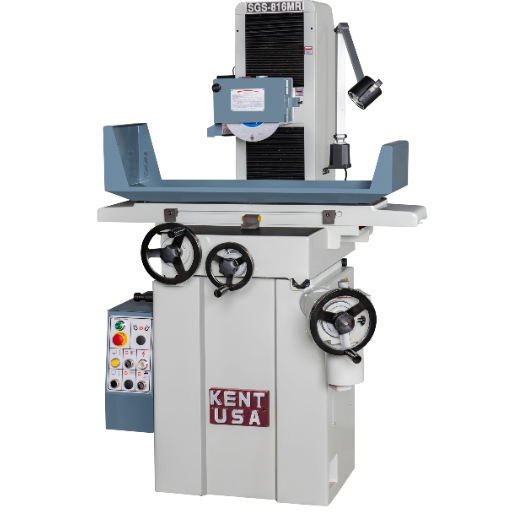
Comparing Functionality: Grinding vs Milling
Grinding and milling are two distinct operations that require specialized skills in manufacturing; however, both play leading roles in production as subcontracting operations, with each other’s usefulness depending on the application. Grinding uses abrasive wheels, mostly for very fine finishes, and it is generally applied whenever fine dimensional tolerances or surface qualities are required. Milling, on the contrary, employs rotary cutters that constitute material removal and are, therefore, considered processes of workpiece shaping and profiling for various applications.
Grinding – For Tolerance and Finishes
Learning for tolerance grinding and finer corrections on the smooth finish. CNC system is installed in modern surface grinders to perform accurate operations with limited interaction with humans. For the production of precision surfaces, such as aerospace, automotive, or medical devices. Moreover, with advances in grinding, use of superabrasive materials, e.g., diamond or CBN wheels, grinding provides enormous advantages in terms of efficiency and life of products. Recent research reveals grinding that achieves a surface roughness level of Ra 0.2 microns.
Milling – More Flexibility and Faster
Milling presents an unrivaled flexible way in material removal. It can process materials between plastics, in a sense, to hard steel. It can drill, tap, and slot. Thanks to the advances in milling-machining technology, especially multi-axis machinings, it is now possible to manufacture highly complicated geometrical shapes with high accuracy. Moreover, developments in high-speed milling have improved the entire machining cycle without sacrificing the quality of machining-from investment casting mold to die. Reports have stated the material removal rate can extend to 700cm3/minute through high-speed milling; therefore, it is the most-favored method in mold, die, and general machining.
Achieving Balance: Using Grinding and Milling Techniques Together
Combining grinding and milling enables a manufacturer to strike a fine balance between accuracy and output. Following milling processes for shaping and roughing of a particular component, grinding is applied whenever the component requires a superior finish. Industries that demand efficiency as well as product quality are a common ground for the hybrid process. Recent case studies concerning hybrid machining have revealed savings of up to 30% in efficiency improvements when using both methods in conjunction.
Now, technology advancing day by day, grinding and milling are well placed to take the next strides in manufacturing innovation; they indeed have filled the demands of an increasingly competitive global scenario.
Precision Levels: Surface Grinding vs Milling
In the comparison between surface grinding and milling with respect to precision, particular consideration should be given to their inherent nature and the contemporary manufacturing applications they find themselves in. Surface grinding attains exceptional degrees of flatness and smoothness, permitting tolerances generally of the order of ±0.0001 inches. This is therefore considered in finishing operations wherever surface quality is of paramount importance, such as making components in aerospace or medical fields. For example, modern CNC-controlled surface grinders can produce Ra (Roughness Average) values as low as 0.4 microns to really tighten components down to specification.
Unlike grinding, which is better for surface finish, milling stands best when it comes to material removal and shaping complex 3D structures efficiently. Modern CNC milling machines maintain tolerance to the order of ±0.002 inches, and that is well within the requirement for most industrial usages.
Now that technology keeps maturing, the differences in process have practically diminished to insignificance. The 5-axis mill and adaptive grinding techniques have almost nullified all barriers posed by precision and versatility. Industry practitioners thus may now use hybrid techniques where a surface is milished, and then ground, balancing fast material removal with fine finishing. In support of this, some studies assert that expedited cutting lowers manufacturing time by 20 percent butterized with no compromises made on quality control.
Surface grinding versus milling: understanding the contrast allows manufacturers to select the most suitable stage for their application and thereby ensure an efficient and precise production workflow.
Material Compatibility in Grinding and Milling
Material compatibility with surface grinding and milling is a major factor in the success of either for high-efficiency and high-quality results in manufacturing processes. Surface grinding is suitable for hard and brittle materials, such as hardened steels, ceramics, and some composites. It ensures working to an accurate finish and tolerances of these materials. Milling is considered highly flexible and mostly used in softer materials, such as aluminum, brass, and plastics, and harder alloys in cases where a more complex operation and shaping and slotting are required.
The last generation developments in the material-science and tool-technologies have greatly enhanced the possibilities of machining demanding materials. For example, diamond-tipped grinding-wheels have enhanced the grinding of superhard materials like tungsten carbide or ceramics. At the same time, high-speed steel and carbide tools have enabled milling operations on tough alloys including titanium and Inconel. As per a technical review in 2023, coupled machining technologies, combining grinding and milling, are increasingly being resorted to for machining advanced materials such as carbon-fiber-reinforced polymers (CFRPs). These developments render the cutting possible in advanced industries such as aerospace and medical device productions, where the materials are usually characterized by very high strength-to-weight ratio and tight tolerance specifications.
Highest compatibility between materials is borne out in selection of tooling, cutting fluid, and parameters, according to respective materials. For example, coolant must be supplied during grinding and milling of material such as titanium to prevent any opportunity of heat deformation or micro-cracking. The appropriate abrasives for grinding and cutter geometry for milling should also be selected to achieve the best results and quality.
Technical Specifications and Features
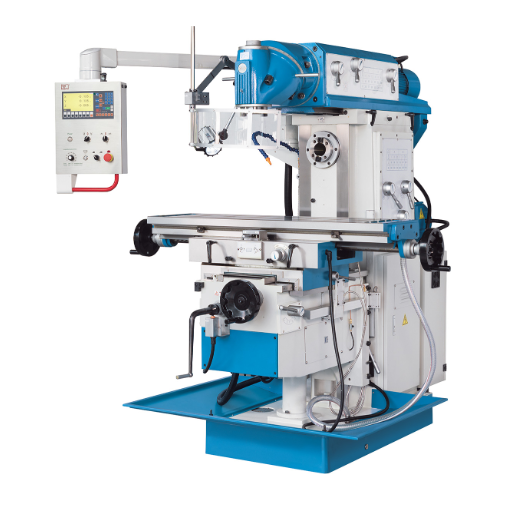
Surface Grinder Specifications
Surface grinders are specialized instruments that create fine finishes or attain extreme dimensional accuracy on flat surfaces. Some of the technical specifications and features that may be found on modern surface grinders are:
| Specification | Range/Details | Purpose |
|---|---|---|
| Table Size | 6″ x 18″ to 16″ x 32″ | Accommodates variety of workpiece sizes |
| Spindle Speed | 1,400 to 3,500 RPM | Works with different materials and grinding methods |
| Grinding Wheels | 8″ x 1″ x 1.25″ or 12″ x 2″ x 5″ | Standard sizes for various applications |
| Tolerances | ±0.0001 inches | High-precision grinding applications |
| Power Requirements | 3 HP to 15 HP | Varies by application needs |
| Feed Options | Manual to fully automatic | General and repetitive use flexibility |
These surface grinders in its generation are fitted with digital controls for more automation and precision. Computer programs, touch-screen controls, and intelligent diagnostic systems save setup times and reduce downtimes and ensure that the finished product is made to the customer’s standards every time. Some other features available are a mist granulizing system, as well as a coolant filter, which makes these safer for various environments and operators.
For custom applications or industries, further additions may be found on premium equipment, including dynamic balancing systems for heads of grinding or high-speed spindles for precision work. Do check the manufacturer’s data sheet for each particular model to know exact specifications.
Specifications for Milling Machines
Milling machines are a versatile type of tool equipped with features that cater to every aspect of production. In today’s era of modern milling machines, technical specifications are often incorporated to improve accuracy and efficiency. On a high-end machine spindle speed could range from 1,000 to well above 20,000 RPM depending upon the variety of materials worked on, which may range from soft plastic to hard steel; hence, in typical circumstances, table size varies per the varying dimension of parts being worked. Normal sizes are 600 mm by 300 mm and going up to huge diameters of about 2,000 mm by 1,000 mm.
Many machines today come with CNC (Computer Numerical Control) systems for automatic and highly precise machining processes. Higher machines include touch-screen interfaces for complex geometry, with CAD/CAM software compatibility. Power range is very broad, from 3 HP to 50 HP, depending on the model and use.
All things milling combined with outstanding precision, manufacturers constantly offer newer versions and functions so that you stay ahead of the curve. Always match technical specs with your project requirements to find the right pick for your machining needs.
CNC Milling Vs. Traditional Milling
CNC or conventional milling, in reality, varies mainly in terms of precision, methodology, functionality, and versatility. Milling, therefore, by traditional definition, is a manual operation, in which the operator had to possess a very high skill level. In CNC milling, however, the operations are computer-automated to achieve high precision, repeatability, and complex operations.
1. Precision
In terms of precision, CNC milling comes far ahead of all other procedures with oomph to tolerances up to the order of ±0.001 inches. Conventional milling and its precision depend largely on the skills of the operator, being susceptible to human errors. CNC face milling machines can repeat the same result for various occasions even for complex designs, though capable of mass production.
2. Productivity and Speed
CNC milling trumps conventional methods in productivity, speed, and machining efficiency. CNC machines mill at top speed and consider multi-axis machining for geometrically complex parts that are labor-intensive or impossible to do with the conventional method. It still decreases the manufacturing time by up to 50 percent compared with a manual milling process, according to studies.
3. Versatility
CNC machines are the most versatile, allowing any type of material to be fabricated, including metals and plastics and composites, with precision. They are equally highly adaptable to rapid design changes via reprogramming of the codes. Traditional milling is a little less competent with versatility and generally only capable of simpler tasks.
4. Cost Effectiveness
CNC milling machines might have a higher initial cost but low labor cost, less time consumption in machining, and reduction in waste make them most favorable for large-volume manufacturing. On the other hand, traditional milling methods are cheaper when there is less production or if projects are one-off types, i.e., not highly demanding ones.
5. Human Skill versus Technology
Traditional milling requires manual operation performed by skillful machinists, thus accruing high labor costs and resulting in inconsistency arising from human fatigue; CNC, however, works with a much-reduced human contribution, lowering the labor factor but enhancing productivity.
Current Trends
The continuous improvement of CNC milling under industry 4.0 still offers attractiveness for integration with AI control working off IoT and automation. According to Global Market Insights, the CNC machine market shall exceed USD 100 billion by 2032, owing chiefly to the limited demand for precision manufacturing in aerospace, automobile, and healthcare.
Albeit distinguishing the unique features of CNC milling in industrial applications, it is far superior to conventional milling in terms of versatility, precision, and efficiency. It would be worth considering a traditional approach only for smaller and straightforward projects. In any case, project characteristics vis-à-vis complexity, accuracy, and budget should take precedence.
Applications of Surface Grinders and Milling Machines
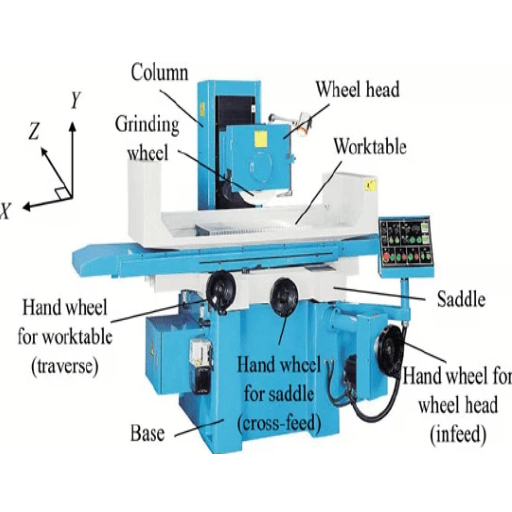
Industries Utilizing Surface Grinding
Surface grinding plays a vital role in many industries wherein high precision and smooth surface finishes are essential for certain critical components. Some key industries dependent on surface grinding are as follows:
Automobile Industry
Surface grinders operate on the stuff of engine-making plants, such as pistons and connecting rods, and to ensure flatness of cylinder heads and blocks. Surface grinding provides tolerance and finish that is too tight for automotive requirements but essential for performance and efficiency.
Aerospace Industry
The aerospace never works with its precise components for engines, landing gear, and structural parts. Surface grinding assures flatness and surface. The aerospace safety and functionality certify the use of titanium, aluminium, and composite alloys.
Tool and Die Making
The production of fine molds, dies, and tools relies on surface grinding. With tolerances often within microns, surface grinding is indispensable in shaping and finishing components used in stamping, injection molding, and machining.
Medical Industry
Surface grinding is a machining process used in the fabrication of medical devices such as surgical instruments, implants, and prostheses. It must provide flat, polished surfaces, sometimes from materials like stainless steel, titanium, or ceramics, with the highest degree of precision and sterilization required for medical use.
Electrical and Electronics Industry
For semiconducting wafers, heat sinks, and insulators in electrical works, truly flat and polished surfaces are a must. Electrical grinding ensures that these components meet the prescribed functioning specification and reliability standards in the rapidly evolving sector.
Construction and Heavy Machinery
Surface grinding is used for shafts, rods, plates, and frame components of the machines, where durability with greasy smoothness is needed.
Surface grinding, to provide the precision and utility required for different production requirements, remains a very important process across many industries. With the advent of new techniques and demands from numerous industries, surface grinding is expected to continue alongside steady growth.
Common Applications for Milling Machines
Milling machines are multi-purpose machines that are used in numerous industries for various applications. Mainly, they are utilized in shaping the solid materials like metal, wood, or plastics by removing excessive material. The following are some of the common applications for milling machines:
Prototyping and Product Development
Milling machines are heavily relied upon during the creation processes of prototypes so manufacturers can make improvements to product designs ahead of mass production. CNC machining milling machines produce to a high degree of precision; that is why they are thus necessary for fast and cheap prototyping. Trending industry reports depict how 68% of manufacturing companies employ milling machines in this regard.
Making Parts for Machines
Milling machines are used to create complex parts required for machines, including gears, screws, and brackets. These machines cut intricate patterns, threads, and grooves necessary in mechanical components. CNC milling has grown in demand with the aerospace and automotive industries since more safety approvals and quality certifications require high-grade accuracy.
Custom Molds and Tooling
Custom tooling and molds are machined by milling for industries such as plastic recycling and die-casting. High-speed milling works best because it gives a good finish on dimensions and is accurate. Five-axis milling, which is an improvement on existing technologies, has provided manufacturers with improvements in productivity that reaches up to 30 percent.
Metalwork Repair and Restoration
Milling machines find wide applications to repair or restore metal parts. Repairs and restoration of worn-out parts in the rails and marine engineering are carried out with milling machines requiring precise cutting and removal of materials.
Manufacturing of Medical Instruments
A manufacturing company-milling machines make quite useful medical devices like implants, surgical instruments, and also prosthetic components. A high level of demand for precision and customized machining of medical equipment has stimulated the development of milling technologies, with 3D milling gaining more momentum to produce highly detailed and patient-specific devices.
Educational and Training Uses
A substantial volume of schools and universities makes use of milling machines to train students in engineering and manufacturing. Knowing how to operate both manual and CNC milling machines has become one of the foundation blocks of modern engineering courses.
With such widespread applications, the milling machine still remains an essential element to commence the modern-day manufacturing process. With new technologies being added such as artificial intelligence and robotics, these machines will remain on an important track for further growth of the industry.
Real-World Scenarios
Case Study 1: CNC Milling at Boeing in Aerospace Manufacturing
Boeing, an aerospace giant, extensively uses CNC milling equipment in endeavoring the manufacture of aircraft components. As the smallest deviation in aerospace engineering may pose a threat to safety, precision takes utmost importance. Hence, CNC milling caters to making the most complicated parts within micron tolerances, including wing ribs or fuselage panels, resulting in accuracy and integrity. According to a report by Boeing, it was found that machining operations, when combined with automation, encumbered the whole range of production activities by at least 25%, providing significant cost savings.
Case Study 2: Custom Prosthetics Production in Healthcare
Defense milling technology has also boosted the healthcare sector. Companies such as Ottobock have started to use CNC milling to manufacture customized prosthetic limbs. In CNC milling, prosthetics are designed and exported for manufacturing using CAD/CAM software to allow the prosthetics to be precisely manufactured to meet the anatomical and functional requirements of a particular patient. Reported statistics have recently indicated that efficiency levels increased by 30%, reducing prosthetics time for patients and making the provision of high-quality prosthetics more easily accessible.
Case Study 3: Automation of the Automotive Sector at Tesla
Tesla employs CNC milling to develop highly precise parts, battery cases, and motor components. Using AI-driven CNC milling for manufacturing enhancement has increased production speed and efficiency at Tesla, according to industry insiders. It is an example of how state-of-the-art milling technology will provide the necessary thrust for scalable sustainable electric vehicles.
Case Study 4: Jewelry Making and Artistic Design Companies
CNC milling machines are employed in the jewelry and design domains to produce highly specified and customized items. One of the companies that use CNC milling for gemology operations with extreme precision upon precious metals and stones is Cartier. Prior to the coming of CNC milling, several hours were spent finishing the artwork that was to enter into production. With CNC milling, production is now cut to only about 40% of the time, so design engineers and artists are now allowed a lot more liberty to fully develop their own creativity and market an artistic achievement of beauty to their patrons.
These case studies are a testament to this versatility and applicability of milling machines in various industries, showing that the continuing technological advancements remain a transforming force shaping the utility and impact of these machines.
Choosing the Right Machine for Your Needs
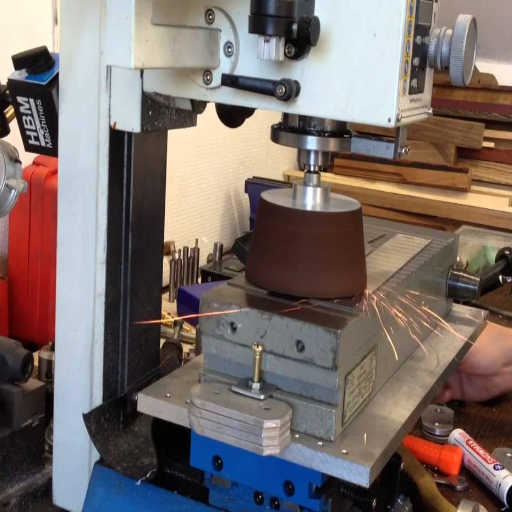
Factors to Consider: Budget and Project Specifications
In purchasing a milling machine, a balance has to be struck between the budget and the project requirements. Milling machines are sold at a wide range of prices; low-end machines are approximately $2,000, whereas very advanced industrial units can go beyond $100,000. Major price determinants include size, the number of axes involved (for example, 3-axis, 4-axis, or 5-axis), level of precision, and a few additional factors like whether they are CNC automated and if they have tool changers.
These desktop CNC milling machines for prototyping, fine engraving, or similar purposes should be good enough for smaller projects or hobby work and are really affordable. They come in the range of $2,000 to $10,000. High precision, heavy-duty machines, and shock automation are demanded by aerospace and automotive industries. These are capable of handling complex designs, more variety of materials, etc., which in turn justifies their production value when fabricated on a large scale. Prices for such machining start at around $50,000 and will go over $200,000, depending on its capabilities.
Besides the cost of purchase, factor in the accessories, maintenance, software, or training costs. For computer-aided design/computer-aided manufacturing (CAD/CAM) packages for CNC operations, such as Fusion 360 and Mastercam, stand an extra licensing charge. Also, consider the material type and volume to be dealt with. Handling and processing steel or titanium probably involves machines that are more pricier and powerful, whereas those that are intended for wood, plastic, or aluminum are not so highly priced.
Doing a proper analysis of your project needs versus your budget allows you to focus on a machine that can give you the utmost good work in the least time. If you invest in a good machine right from the beginning, it will save you time in repairs because of downtime and lessening errors; it also increases your capacity for production.
Helpful Hints in Choosing Between Surface Grinder and Milling Machine
In deciding to select a surface grinder or a milling machine, it would be steep to consider the requirements of your particular projects, the type of material, and the finish quality required. The following are tips for making your choices:
Understand Your Material Types and Desired Finish
Surface grinders offer tight tolerances and ultra-smooth finish to metal or composite surfaces. They sharpen tools and grind to very precise notions for flat polished surfaces. Milling machines, however, will work on a larger variety of materials, including wood, aluminum, and many alloys, to fabricate more complicated and multidimensional shapes.
Consider Size and Project Scope
Surface grinders are suitable only for smaller flat surfaces. Milling machines, however, for larger parts or with more intricate geometries, are better and more efficient to machine. CNC milling machines, for example, are able to mill parts from very small sizes to large scale with very high accuracy, while surface grinders are conversely limited to grinding for the small scale at large.
Cycle Times and Efficiency
Milling machines more often provide speedy cycle times to cut and shape in heavy tooling. Based on the 2023 production line trends, CNC milling machines are confirmed to feature higher processing capability with automated feed systems, therefore providing faster processing for large production runs. Surface grinders will, of course, have a slower processing time because of their high-precision requirements but are truly preferred for cases requiring application of a high-quality surface.
Evaluate Costs and Maintenance Requirements
Surface grinders are generally cheaper than milling machines to buy. On the other hand, milling machines, and CNC in particular, has gradually turned the corner and could still be more economical in the long run because of improvements in energy efficiency and uplift in software capabilities. Yet, of course, in this respect, maintenance considerations also become important: A milling machine generally will require more extensive maintenance (often on moving parts and computerized controls), while surface grinders are simpler to maintain.
Technology Advancements and Automation
Modern milling machines have been geared towards building in an automated solution with CAD/CAM integration to achieve utmost precision with reduced human intervention. On the other hand, the surface grinder itself has made strides of improvement, with CNC-controlled grinders having been made readily available in automated grinding processes, thus relieving the operator of casual fatigue.
Energy Consumption and Environmental Impact
The experiments conducted within the past decade have shown that milling machines generally draw more power than surface grinders due to the number of operations that are executed. In contrast, the new generation milling machines have slowly been aimed at the promotion of energy-efficient motors and controls to conserve consumption.
By examining these issues with regard to your budget and production criteria, you form a perspective toward a choice that sits comfortably in your manufacturing needs. If the existing need or monetary consideration lies with high-level surface finishes with little complexity, then the surface grinder would be apt. Conversely, if you are in search of a very versatile piece of machinery capable of doings suitable to more complex machining, then the money now spent on milling will certainly be a worthwhile investment further down the road.
Future Trends in Grinding and Milling Technology
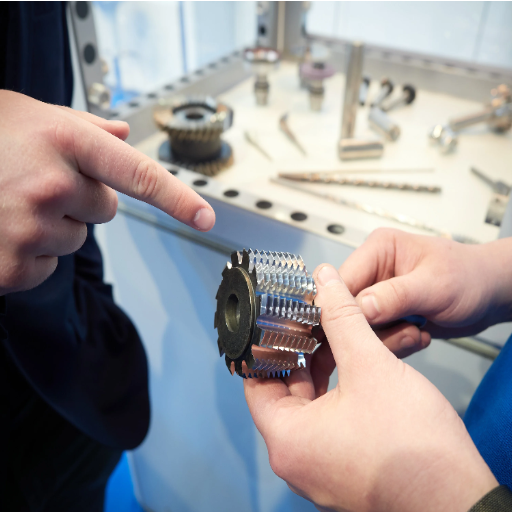
Technological integration encompasses features such as grinding and milling for more streamlined, automated, and energy-efficient working systems.
Out of some major trends toward the Industry 4.0 technologies, IoT sensor systems and machine learning algorithms will be followed for improved equipment efficiency and accuracy. Smart systems will watch over machine health, foresee maintenance, and ensure performance at the stipulated level. As per MarketsandMarkets report, the telemetry will increase down to $437 billion by 2026 in line with smart manufacturing market made up of IoT and automation technologies. Hence, reduction in downtime, operational cost, and higher quality of the product come into the frame.
Green manufacturing process is the big trend issuing now as ever before, in an effort to save energy so that carbon emission and direct cost become faraway concepts. Newer milling machines, for example, are fabricated with regenerative braking systems where the energy from braking is returned back to the power grid, reducing energy consumption.
Material science developments drive improvements in machinery design, where new grinding wheels and milling tools are being considered superabrasives with cubic-boron-nitride (CBN) or diamond for supreme durability and precision. By the use of this material, processing speed is increased while the tool life is extended considerably, thus a larger impact on production efficiency.
With the increase in prominence also goes hybrid machining technology, which amalgamates milling, grinding, and additive manufacturing processes. Hybrid or multifunctional systems permit manufacturers to achieve complex geometry and finishes from a single setup, which translates to less time in production and lower production costs.
Wherefore advanced AI software capable of autonomously optimizing cutting parameters or adjusting tool speed according to material resistance is to limit human intervention for better output, which is demanded by aerospace and medical devices with minute tolerances, will become common.
While the business is evolving yet, forward-thinking companies embarking on the implementation of the latest solutions and trends equipped to respond rapidly to market needs. Those stuck on the pathway of emerging technology and green manufacturing bridges will continue to serve excellence on the platform of environmental responsibility.
FAQ
How are milling and surface grinding different?
In what ways are surface grinding and milling different processes?
When should I select face milling instead of surface grinding?
What are the grinding processes involved in surface grinding?
Do CNC machines play a part in milling and grinding?
Reference Sources
- A Study on Surface Grinding of 300 mm Silicon Wafers
This paper explores surface grinding processes, providing insights into precision and applications, which can be compared to milling operations.
Link to the source - An Investigation into the Influences of Grain Size and Grinding Parameters on Surface Roughness and Grinding Forces
This study examines the parameters affecting surface grinding, offering a technical perspective on its differences from other machining processes like milling.
Link to the source - Principles of Modern Grinding Technology
This book provides a comprehensive overview of grinding technology, including its principles, applications, and distinctions from other machining processes such as milling.
Link to the source