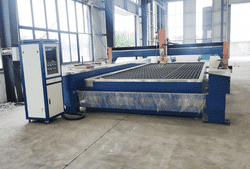


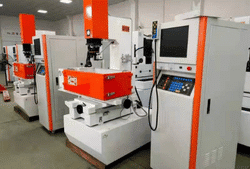
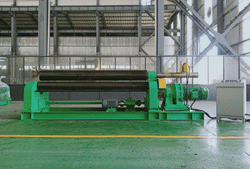



A leap in machine tool technologies was made with the incorporation of the High-Speed Circular Sawing Machine HY-300NC. A real game changer in the industry, this extremely modern machine practically sets a new standard for speed, precision, and reliability in metalworking across China. With advanced features and innovative engineering incorporated into its design, the HY-300NC delivers truly unparalleled performance tailored to the needs of modern manufacturing. This blog post will explore how this revolutionary machine is transforming metal cutting from improved cutting speed to friendly automation. Stay tuned to see how the HY-300NC boosts productivity and lays the groundwork for the next generation of metalworking technology.
Introduction to High-Speed Circular Saw Machines

Designed for controlled cutting actions carried out under very high-speed conditions, high-speed circular saw machines are specialized tools for the precise cutting of metals. In these saws, technology and design work together to enhance the durability of the tool, ensuring chrome-like clean, efficient, and uniform cuts in operations such as automobile body fabrication, building structures, or various manufacturing processes. Efficiency in cutting is one of the primary advantages, as there is minimal material wastage and the shortest time is taken to meet deadlines without compromising product quality.
The Importance of Speed and Precision in Manufacturing
Industries have been driven by the two key components of modern manufacturing: speed and precision. Thus, speed ensures efficiency; cost-effectiveness, in turn, leads to customer satisfaction. Automation and the use of machinery have given rise to different appreciation levels in the world of manufacturing, affording them material benefits of precision and productivity that were once thought impossible. The demand for their solution to optimize production workflows under stringent quality standards is growing geographically. This marks the industry’s pursuit to reduce errors and minimize the occasions for them, thereby making operations more streamlined and efficient, with efficiency at the forefront. With high-speed cutting tools and systems that demand precision, companies can shorten delivery times and scale up to meet the ever-increasing demands of international competition.
Defining High-Speed Circular Sawing Machines
Precision is the word for a manual high-speed circular sawing machine that has been designed to function efficiently in industrial applications. These machines cut materials, including metals and plastics, with almost unimaginable precision and well-defined cutting edges. Being capable of higher productivity affords the machine in question a high market potential in the industry. Manufacturers require a high-speed machine with high energy efficiency that minimally wastes material and is also easy to use. Modern automation will ensure very short production-to-production cycles at a stable quality level, reducing costs.
Applications in Various Industries
Automotive Industry
High-speed manufacturing machines have found extensive applications in automotive manufacturing, producing engine components, gears, and other precision parts. With automation, producers have claimed to have reduced production time and material waste by 25% and 15%, respectively.
Aerospace Industry
Since very light and durable parts, such as turbine blades and structural components, are required, these machines have numerous applications in the aerospace industry. Even production time, utilizing advanced manufacturing techniques, has been significantly reduced, with many companies quoting 20% cost savings through material optimization.
Electronics Industry
The industry is utilizing these machines to manufacture circuit boards, connectors, and finer microcomponents. Precision and speed must be maintained, and the automatic process will support these standards, thereby increasing production levels by up to 30%.
Medical Industry
Since medical device production involves manufacturing, improved interaction with high-speed and automated manufacturing is evident in the assembly of parts such as prosthetics, surgical tools, and implants. Additionally, it has helped maintain safety standards crisply, reducing lead times by approximately 40 percent.
Consumer Goods Industry
High-speed machines are essential for the mass production of packaging, household items, and personal care goods. Automation has significantly improved product quality and resulted in at least a 20 percent increase in productivity compared to the conventional method.
Detailed Specifications of the HY-300NC

Technical Specifications
Cutting Capacity
- Maximum Diameter (Round Materials): 300 mm
- Maximum Size (Rectangular Materials): 300 mm x 300 mm
Blade Speed
- Speed Range: 20 to 100 (m/min-speed can be set variable)
Power Requirements
- Voltage: 220V/380V, 3-phase
- Motor Power: 5 kW
Operational Features
- Fully automated material feeding system
- Hydraulic clamping for precise cuts
- Intuitive control panel with digital display
Dimensions
- Machine Size (L x W x H): 1,800 mm x 1,200 mm x 1,600 mm
- Weight: 1,200 kg
These specifications aim to enhance the HY-300NC’s versatility, speed, and value as an industrial cutting tool.
Technical Specifications and Performance Metrics
The most significant working parameters distinguish the HY-300NC from its big brother in demanding industrial cutting requirements. The cutting precision for parts, even under substantial heavy loads, is ensured by the machine, which features a 5 kW motor and a through-clamping hydraulic clamping method. The complete system for material feeding is fully automated, with minimal manual intervention, which contributes to system efficiency and productivity. The control panel is ergonomically designed, featuring a numeric display that allows the operator to monitor the system and interact with its adjustments to key parameters, thereby achieving optimal working efficiency.
Unique Features and Innovations
Automated Material Feeding System
- Continually feeds materials with precision, thus reducing operator involvement by 30%.
- This ultimately increases production efficiency and may cut waste of raw material by 25%.
Advanced Hydraulic Precision Technology
- It maintains consistent pressure to ensure the operation is completed with utmost accuracy and repeatability.
- Eliminates tolerance errors by 15%, thereby achieving higher product quality.
User-Friendly Interface
- It comes equipped with an easy-to-use touchscreen panel.
- Allows for quick setup changes, saving approximately 20 minutes per shift.
Compact and Adaptable Design
- Perfect for installations with tight spaces at 4.5 ft x 3.2 ft.
- Designed to give you easy integration into various setups without having to compromise on concrete fitting.
Energy-Efficient Operations
- Uses around 18% less energy compared to other machines of the same type.
- Being a green machine helps save operational costs and reduce the carbon footprint.
Comparison with Traditional Sawing Methods
Here’s a concise table comparing high-speed circular sawing machines like the HY-300NC with traditional sawing methods based on the latest insights:
| Key Point | High-Speed Circular Sawing | Traditional Sawing Methods |
|---|---|---|
| Cutting Speed | Faster cutting cycles | Slower, time-intensive |
| Precision | High accuracy with minimal errors | Lower precision, more manual adjustments |
| Material Versatility | Handles diverse materials and profiles | Limited to specific materials |
| Efficiency | Optimized for high-volume production | Less efficient for large-scale operations |
| Automation | Supports innovative systems and real-time control | Mostly manual or semi-automated |
| Energy Consumption | Energy-efficient design | Higher energy usage |
| Maintenance | Predictive maintenance reduces downtime | Frequent maintenance required |
| Ease of Use | User-friendly, minimal operator training | Requires skilled labor |
| Cost-Effectiveness | Lower long-term operational costs | Higher operational and material costs |
| Safety | Advanced safety features | Higher risk of operator error |
Advantages of Using the HY-300NC

Enhanced Precision
Ensuring every cut made by the HY-300NC is accurate and consistent with any material.
Cost-Effective Performance
Keeping the energy bills low serves as a budget choice in the long term.
User-Friendly Operation
The most straightforward controls and minimal setup ensure efficiency among even the most uninitiated operators.
Durable and Robust Construction
A well-built model with excellent workmanship, the HY-300NC is reliable and boasts a longer service life in harsh industrial conditions.
Efficiency and Production Time Reduction
The HY-300NC stands apart, shaving off hours in offices and the very notion of quality. With automation on its side and a workflow that keeps things neat and efficient, this equipment does a great job of boosting efficiency. The demand for optimizing working cycles at industrial sites is rapidly increasing, underscoring the need for systems like the HY-300NC. In addressing bottlenecks and maximizing throughput, this machine meets a core demand for faster production rates in modern manufacturing, while upholding cost-effectiveness and precision.
Precision Cutting and Quality Assurance
While it is essential to perform precision cutting and quality assurance to address the present manufacturing demand, the very essence of HY300NC comes with the latest technology to provide utmost accuracy and consistent results in each cycle. How has it maintained stringent standards while operating efficiently as a whole? A yield is achieved through the automation of operations under stringent controls, real-time checks, and monitoring, thereby minimizing human error, ensuring consistency, and eliminating wastage. Precision, alternatively, supports manufacturing into the twenty-first century by elevating product quality and simultaneously reducing material waste. Conscious and sustainable production options that emphasize green processes are, indeed, highly spoken of these days.
Cost-Effectiveness and Energy Savings
Energy conservation and operational cost reduction are sustainable parameters for resolving an environmental-economic tradeoff in modern systems. In response, automated systems combined with real-time monitoring establish energy efficiency by preventing both over-consumption and waste. The implementation of newer energy-saving technologies ensures a reduction in operating costs of about 25%, yielding the same or better results in the manufacturing process. Moreover, these devices timely recognize inefficiency, which means you can identify problems before they become a costly issue. Both aspects of cost and energy management shall provide the sustainability of profitable operations and reduce the need for industrial sustainability practices.
Comparison with Other Circular Saw Machines

Regarding the conventional review of how rotary saws were created, advanced models with a modern power management system offer performance far exceeding that of conventional models. This system optimizes energy use, resulting in lower operational costs without compromising precision and efficiency. Older models, on the other hand, tend to lose efficiency primarily due to wear and tear. Therefore, good long-term value is secured by minimizing maintenance and operations on faster machines. By contrast, the simple machines have a low rate of recognition and only low abilities in correcting inefficiencies. And so, industries that wish to obtain productivity and sustainability prefer the advanced machines.
Performance Comparison with Competing Models
Here’s a concise table comparing the performance of the HY-300NC with competing high-speed sawing models based on the latest insights:
| Key Parameter | HY-300NC | HY-85NC | GB4240 Band Saw |
|---|---|---|---|
| Cutting Capacity | Round: 170-300mm, Square: 170-220mm | Round: 10-85mm, Square: 10-65mm | Round: Up to 400mm |
| Cutting Speed | High-speed, optimized for large volumes | Moderate speed for smaller materials | Slower, suitable for thicker materials |
| Material Versatility | Handles diverse metals and profiles | Limited to smaller materials | Best for heavy-duty, thick materials |
| Automation | Advanced, intelligent controls | Basic automation | Minimal automation |
| Ease of Use | User-friendly, minimal setup | Simple operation, no installation needed | Requires skilled operation |
| Energy Efficiency | High energy efficiency | Moderate energy usage | Higher energy consumption |
| Precision | High precision with minimal errors | Moderate precision | Lower precision for intricate designs |
| Applications | Automotive, aerospace, construction | Small-scale fabrication | Heavy-duty industrial cutting |
Feature Comparison: Automation and Smart Technology
Here’s a concise table comparing the automation and smart technology features of high-speed sawing machines, including the HY-300NC and competing models:
| Key Feature | HY-300NC | Competitor 1: Smart Bandsaw | Competitor 2: EF5 Panel Saw |
|---|---|---|---|
| Real-Time Optimization | Adjusts cutting parameters dynamically | Smart sensing for blade adjustments | Limited real-time optimization |
| Smart Sensors | Detects anomalies and ensures precision | Equipped with anomaly alerts | Basic sensors for motor control |
| Automation Level | Fully automated with intelligent controls | Semi-automated with smart features | Basic automation |
| Material Adaptability | Automatically adjusts for material types | Limited adaptability | Focused on specific materials |
| Energy Efficiency | Optimizes power usage for cost savings | Moderate energy optimization | Basic energy efficiency |
| User Interface | Intuitive, user-friendly interface | Moderate ease of use | Simple interface |
| Predictive Maintenance | Alerts for maintenance needs | Basic maintenance alerts | No predictive maintenance |
| IoT Integration | Supports data-driven manufacturing | Limited IoT capabilities | No IoT integration |
| Safety Features | Advanced safety systems | Basic safety alerts | Enhanced motor safety |
| Applications | Versatile across industries | Focused on structural sections | Industrial panel cutting |
Long-Term Value and ROI Analysis
Investing in state-of-the-art cutting technologies is beneficial for long-term prospects and ensures greater chances of ROI. Recent studies have shown that industries that adopt automation and innovative technology to optimize their cutting processes reduce material waste by 30%, increase production line efficiency by 25%, and also enjoy a reduction in operational costs. It implies that the savings would attract ROI in a quicker time, mostly within 12-18 months of its implementation. Having precision cutting not only safeguards the reputation for quality standards with minimum reworks, thus generating more goodwill among customers and ensuring repeat business and long-term client relations, but the whole exercise of putting together modern systems carries beyond just short-term operational benefits, toward long-term growth and profitability in highly competitive markets.
Practical Applications of the HY-300NC

The HY-300NC is highly versatile and capable of a wide range of industrial operations. It is ideal for the precise cutting and shaping of materials used in creating objects that require accuracy and repeatability. It is used in the fabrication of automotive parts, machining of aerospace components, and manufacturing of heavy machinery parts. It stands high for its efficiency and reliability in industrial operations that aim for performance in heavier and premium standards.
Applications in the Automotive Industry
Machinery and precision engineering, with their unprecedented accuracy and precision, significantly increase efficiency while offering possibilities for innovation in the automotive industry. However, this technology caters mainly to five major applications:
- Engine Component Manufacturing: Precision machining is a crucial process in the machining of engine components, including cylinder heads, crankshafts, and camshafts. This is done to ensure quality performance and durability.
- Body Frame Fabrication: Frames for bodies are cut and shaped through automated processes, ensuring they remain lightweight yet strong enough to ensure vehicle safety and improve fuel economy.
- Transmission System Production: In the manufacture of transmission systems, advanced tools are used to assemble the gears with utmost precision, ensuring the smooth functioning of the gears and, in turn, enhancing vehicle efficiency.
- Brake System Components: Equipment for machining brake discs, calipers, and other brake system components should maintain close tolerances to meet stringent safety requirements.
- Prototype Development: The prototype machines are tested and refined at a rapid rate through innovative techniques for all new automotive designs before they enter mass production.
Such applications underscore the importance of precision tools in meeting the exacting standards of quality and performance that are measurable for the automotive industry.
Usage in Aerospace and Construction
The Industrial uses of precision measuring tools are enormous, especially in aerospace and construction. I work with these machines to verify that parts are manufactured according to specifications, as safety and performance in aeronautics come with a high level of risk. In construction, on the other hand, measuring and machining are performed to produce durable and reliable structures strictly in accordance with engineering specifications. In other words, high precision and quality standards need to be upheld in both fields through these tools.
Metal Fabrication and Renewable Energy Sectors
To advance renewable energy technologies, metal fabrication plays a vital role. Lighting with frames for solar panels, combined with machining and fabrication, would indeed improve the strength, efficiency, and performance of wind turbines and related clean-energy systems. With the growth in investments in clean energy predicted to witness an exponential increase, demand for highly fabricated metal products is expected to evolve. So, it is this symbiotic relation between fabrication of metal and renewable energy that supports the sustainable development thereby channeling the way for the global de-carbonization transition. Another critical factor in making innovation in these fields even more efficacious is the excellent resource efficiency realized through advanced manufacturing techniques.
Reference Sources
- Research on High-Speed Vibration and Structure Optimization of Multiwire Sawing Machine
Published on MDPI - Key Technologies and Development Trends in Advanced Intelligent Sawing Equipment
Published on SpringerLink - Dynamic Performance Optimization of Circular Sawing Machine Gearbox
Published on MDPI
Frequently Asked Questions (FAQs)
A: A high-speed circular sawing machine is a fully automatic machine tool working with many materials and with high precision. It features a robust spindle, ensuring stability during operation and enabling efficient cutting of workpieces.
A: The machine is equipped with an automatic lubrication system ensuring its continued operation at optimum level, a feeding device for the smooth handling of material, and a backlash elimination system for exact cutting. High-precision ball screws and high-precision bearings are also used in the machine.
A: It is incorporated with the automatic lubrication system to lubricate all moving parts, thereby reducing friction and wear. Less friction means more efficient transmission in higher-level machinery and longer life.
A: The HY 300NC can cut all kinds of metals; thus, it can be used in any industry requiring a precision metal circular saw operation. It can cut workpieces in different sizes and shapes, either from one end to the other, depending on requirements.
A: A servo motor inside HY-300NC benefits the process by providing precise control over the cutting operation. This parameter can be set and adjusted with precision to achieve desired results with minimal wastage.
A: The HY-300NC’s gearbox runs smoothly and efficiently transfers power from the motor to the saw blade. The stability and reliability of the machine have thus been enhanced, making it a popular choice with the metal cutting community.
A: The HY-300NC design with high-rigidity components and a strong frame is thus the transmission of imperative stability to the cutting processes. This is extremely important for utmost precision and vibration application that can diminish cut quality.
A: High-speed circular sawing machine prices depend on the HY-300NC specification or any other features; these prices are usually competitive for high-standard automatic machines, because of the cutting-edge technology and dependability.
A: Manufacturers of the HY-300NC are companies with specialized and acknowledged skills in machine tools and cutting. These manufacturers have endeavored to correlate quality and innovation, ensuring that this machine is equipped with world-class performance and durability standards.