




Waterjet cutting has revolutionized the methodologies of the manufacturing and fabrication industries, allowing for greater versatility and precision when cutting almost any material, from intricate designs in metal and glass to clean, burr-free cuts for composites and stone. The technology is now employed wherever precision and efficiency are demanded. However, like any tool, the waterjet cutter has its own set of advantages and disadvantages. In this article, we will discuss the primary benefits of waterjet cutting, including its nearly limitless versatility, environmental friendliness, and the ability to process the toughest materials, as well as its limitations. Whether on the business side or simply curious about this fascinating cutting method, this blog will provide a balanced and well-informed perspective to help you understand what it can offer and where it can be applied.
Understanding Waterjet Cutting Technology

Some machining processes involve cutting with a stream of water under pressure, either with or without abrasives, with precision. This is highly flexible technology, as it can cut various materials like metal, glass, stone, and composites, without causing thermal damage. Waterjet cutting is heat-free and, therefore, does not pose the risk of warping or distortion; thus, it is perfect for materials sensitive to heat. Furthermore, the aforementioned technology is a green technology with minimal waste generation and no release of detrimental fumes or byproducts.
What is Waterjet Cutting?
Waterjet cutting is exact and versatile. Every machine has its limit in accuracy, ranging from ±0.005 inches. This degree of precision is particularly important in the manufacturing of aircraft, automobiles, or architectural members, where highly complex designs are required or allow for tight tolerances.
This process can cut any kind of material, whether it be rubber, foam, titanium, ceramics, or anything in between. Most waterjet systems work with pressure up to 60,000 PSI, thereby slicing through materials that most would consider impossible.
And what is even more important is that it is friendly to the environment. This method of cutting relies on water and an abrasive material to perform cuts, thereby preventing harmful emissions and waste creation. Some studies even state that waterjet technology could help reduce material waste by 20% when compared to other cutting methods, which translates to savings and promotes greener operations.
No thermal-affected zone, since it is crucial for maintaining the integrity of materials such as tempered glass or hardened steels, which lose strength or change properties when exposed to high energy levels realized simply by heat.
The waterjet cutting process has been appreciated for being one of the few manufacturing technologies that can interface with CAD/CAM programs. This design interface enables operators to view specific custom manufacturing runs or small-batch runs that require greater automation, thereby further endorsing waterjet technologies as truly manufacturing-oriented opportunities, with a strong emphasis on accuracy, flexibility, and sustainability.
How Waterjet Cutting Works
Waterjet cutting is a scientific, non-thermal cutting operation that utilizes a high-pressure jet of water, often mixed with abrasive materials such as garnet, to cut through materials with precision. The waterjet cutting operation commences inside a waterjet pump that pressurizes water to enormous levels-that is, as much as 90,000 pounds per square inch (psi). After the water is pressurized, it passes through a small-diameter nozzle, focusing the stream into a fine, high-energy jet that cuts through tough materials. The diameter of the nozzle is generally 0.004 to 0.016 inches.
In cutting hard materials like steel, titanium, or stone, abrasives are added to the water stream. These abrasive particles, bolstered by the velocity and pressure of the water, really increase the cutting capability by eroding the material right along the cut path. When doing pure waterjet cutting for materials, this would generally be rubber, foam, or textiles—ensuring accurate results without any mess.
The cutting process follows a CNC control, allowing for automatic or precise repetition of the same motion in complex geometries. Some machines can achieve very fine tolerances within ±0.001 inches, making waterjet cutting suitable for industries that require absolute accuracy in product manufacturing, such as the aerospace and medical device industries. Another distinction of waterjet, in contrast to laser or plasma, is the absence of heat-affected zones (HAZ), hence preserving the integrity and mechanical properties of the materials.
In environmental terms, waterjet cutting is a great way to protect Mother Earth. If present plants recycle water or use nontoxic abrasives, then waste is minimal. Also, the least amount of post-processing is required, thanks to the waterjet cut smooth finish, which increases cost savings and time efficiency. These are a few factors that, combined with today’s CAD/CAM integration, effectively bring waterjet cutting on par with other manufacturing methods concerning versatility and sustainability.
Components of a Waterjet Cutting Machine
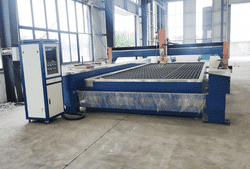
A waterjet cutting machine comprises several essential parts that must work together to deliver precise and efficient cutting operations. These include the following:
High-Pressure Pump
Known as the heart of the system, this pump creates the pressure of water necessary for cutting. Depending on the specifications, the pump typically generates pressures of approximately 40,000 to over 90,000 PSI. Such high-pressure water cuts a vast range of materials with precision.
Cutting Head
Its general purpose is to focus the pressurized water onto the working material. A jewel-type orifice, sapphire, ruby, or diamond, will characterize this water stream into a fine, high-velocity jet. Abrasives, when included, enter at this point from the mixing chamber to increase cutting power.
Abrasive Delivery System
This system feeds abrasive particles such as garnet to the mixing chamber at a controlled rate for abrasive waterjet cutting. Using abrasives enables the machine to cut extremely hard materials, such as metals, ceramics, and composites. The mechanism for delivering abrasives to the water stream must be precise for efficient material use and consistent cutting.
CNC Controller
The CNC controller is the brain behind the machine. The CNC controller also drives the movement of the cutting head, controlling its speed, direction, and the geometrical shaping of the cut according to the computer program of the design. Present-day waterjet machines offer an advanced CAD/CAM interface for integration of design-to-cut.
Workpiece Support Table
Also known as a cutting bed, the workpiece support table holds the materials to be cut. A grid or mesh structure may be installed to minimize water splashback and hold the workpiece during a cut. Some of these tables also feature water tanks for noise dampening and debris capture.
High-Pressure Tubing
The high-pressure tubing conveys the pressurized water generated by the pump toward the cutting head while maintaining system pressure. Built from highly durable materials like stainless steel, these tubes are specifically designed to withstand wear under extreme pressure.
Filtration and Recycling System
Increasingly, most waterjet machines are equipped with filtering and recycling systems to promote sustainability. It filters contaminants and recycles water for reuse, thereby reducing water consumption and promoting environmental responsibility.
Controller Software
Significantly more capable than the CNC controller itself, this advanced software enables exact programming of cuts, simulation of cutting patterns, and optimization of cutting paths. Most systems today are also integrated with touchscreen interfaces and real-time cut status for cuts monitoring functionalities, fostering productivity and user-friendliness.
When all these components are integrated, they form a highly adaptable and powerful cutting solution for a wide range of industrial and artistic applications. Further technological advances continue to optimize the performance, efficiency, and environmental impact of the waterjet cutting machines.
🟢 Advantages of Waterjet Cutting
- Precision Cutting: Waterjet cutting provides cuts with extreme accuracy and minimal tolerance, making it ideal for precise or intricate designs.
- Versatility: The process can cut a broad range of material types, including metals, glass, stone, plastics, and composites, all without any thermal damage.
- Cold Cutting Process: Since no heating is involved, waterjet cutting does not create heat-affected zones, ensuring the material’s structure is preserved.
- Environmentally Friendly: The process is almost waste-free and eliminates hazardous chemicals, minimizing its adverse environmental impact.
- Cost-Effectiveness: A single machine can cut various materials, thereby reducing waste and, in large measure, technically lowering production costs.
- Material Distortion Is Minimized: Without the application of heat, waterjet cutting lessens the potential for warping or distortion, ensuring a high-level finish.
🔴 Disadvantages of Waterjet Cutting
- Slower Cutting Speed: A slower cutting speed compared to other techniques, such as laser cutting, results in a longer production time.
- Higher Operating Costs: Higher operating costs are incurred since consumable abrasives and water treatment systems are required.
- Thickness Limitations: Being thick and brittle sometimes might prevent it from cutting very well.
- Environmental Concerns: Risks of environmental concerns posed by wastewater and abrasive disposal.
- Skilled Operator Required: A skilled operator is required to maintain dimensional accuracy and prevent damage to the material.
Benefits of Waterjet Cutting Over Other Methods

Waterjet cutting, by its exceptional capabilities and benefits, can be set against laser, plasma, or other cutting methods:
Material Versatility
Unlike laser or plasma cutting, which may struggle with certain materials, waterjet cutting can cut through virtually any material, including metals, composites, glass, and even heat-sensitive materials, without causing damage or alteration.
No Heat-Affected Zones (HAZ)
Perhaps the most significant benefit in waterjet cutting is the elimination of heat-affected zones. There is no risk of warping, hardening, or compromising the structural integrity of the material, as these issues are common in thermal cutting processes such as plasma or laser cutting.
Precision and Quality
A waterjet can produce fine, clean edges with precision and without burrs. This excellent level of accuracy may enable the work to be considered finished without the need for secondary processing, resulting in higher-quality outputs for intricate work.
Environment-Friendly
Another significant benefit is that waterjet cutting is environmentally friendly. Laser and plasma cutting, on the other hand, generally might generate harmful fumes or require toxic chemicals that pose an environmental hazard.
Range of Thickness
Like laser cutting, waterjet cutting faced difficulties with thick materials; however, waterjet cutting cuts efficiently through materials with greater thickness and size, thereby widening the application areas.
These benefits, when combined, make waterjet cutting a significantly better alternative in many industrial and manufacturing settings, thereby ensuring efficiency, precision, and sustainability.
Cutting Capabilities: Almost Any Material
With cutting capabilities across nearly any material, waterjet cutting remains the most versatile. Metals like steel, aluminum, and titanium, as well as non-metallic materials such as glass, ceramics, rubber, and composites, are suitable for use with waterjet technology, offering an acceptable level of industry-linked flexibility. This cutting process suits sensitive materials — potentially cracking or melting — that cannot withstand the heat of the traditional cut-and-dry method. And sometimes it would cut through 10-inch-thick materials, leaving a soft edge on the other end, either in thin or thick sections. These features make it adaptable for fancy and complex designs, prototyping, and all types of manufacturing work.
Fast Cutting and Precision
Quite unique in terms of speed and precision, waterjet cutting is rarely matched by other cutting techniques. The power of high-pressure water jets, with or without the addition of abrasives, enables rapid penetration of the material while maintaining the level of accuracy. It allows for tolerances within ±0.003 inches, which is suitable for applications where the cuts are very complex and detailed. Therefore, the waterjet can cut so efficiently as almost to require no secondary finishing, saving time and costs. Waterjet cutting is highly versatile and can work with a wide range of materials, including metals, composites, stones, and plastics, while maintaining the absolute precision required.
Waterjet Cutting vs. Other Cutting Technologies

The waterjet slicing is notable for its precision, flexibility, and lack of heat-affected zones. While heat distortion may be a possibility in laser cutting with certain materials, waterjet cutting is a cold process and is well-suited for heat-sensitive materials. Mechanically speaking, saws and mills are much simpler cutters than waterjet cutters. Waterjet cutters are capable of more intricate designs since there are fewer materials to consider-they can cut through metals, composites, even glass and stone. Waterjet cutters’ acceptable tolerances eliminate the need for secondary finishing, making it quite profitable and efficient.
Waterjet vs. Laser Cutting
When comparing waterjet cutting to laser cutting, it’s easy to say that the working environment defines its uses, depending on the type of material, and precision is also required for specific applications. Waterjet cutting utilizes high-pressure water and an abrasive to cut through materials, making it ideal for thick and dense materials such as metals, ceramics, stones, and composite materials. It can cut material that is approximately 10 inches thick or even thicker, depending on the setup, and has no risk of heat-affected zones, which is highly desirable for heat-sensitive materials.
The laser cutter, conversely, uses a focused laser beam to cut materials with utmost precision and speed. It is best suited for thinner materials, such as metal sheets, plastics, and wood. Laser cutting excels at intricate designs and edge finishing for thin materials, but is most significantly limited to a thickness of approximately 1 inch for metals, depending on the laser power.
| Feature | Waterjet Cutting | Laser Cutting |
|---|---|---|
| Heat Effect | No heat-affected zones | May produce heat-affected zones |
| Material Thickness | Up to 10+ inches thick | Limited to ~1 inch for metals |
| Material Compatibility | Almost any material | Best for thin metals, plastics, and wood |
| Precision | ±0.001 to ±0.005 inches | ±0.001 to ±0.005 inches |
| Environmental Impact | No harmful fumes | May produce fumes with certain materials |
| Operating Costs | Higher due to abrasives | Higher electrical energy consumption |
One significant difference between waterjet and laser cutting is the heat effect on the material. Laser cutting produces heat that may lead to the formation of heat-affected zones, whose properties differ from those of the unaffected materials. Thus, the waterjet is the best option for materials requiring structural integrity. Moreover, waterjet cutting does not produce harmful fumes, unlike laser cutting, which can be a concern when working with plastics or materials that have coatings.
In terms of precision, both can achieve tolerances of ±0.001 to ±0.005 inches, depending on the machine and material, although laser cutting may be faster on thinner materials. Regarding operational costs, laser cutting may require higher electrical energy, while waterjet cutting may incur expenses for abrasives.
Ultimately, the decision comes down to factors such as the material to be processed, the desired quality of the cut, the thickness, and special project requirements when choosing between the two. They remain essential tools in the modern manufacturing and prototyping world, affording good flexibility and efficiency in either direction.
Waterjet vs. Plasma Cutting
In an industrial setting, both plasma and waterjet cutting offer multiple methods for cutting various materials. Waterjet cutting utilizes a high-pressure water jet, usually mixed with some abrasive materials, to precisely cut through virtually any material. It does not generate heat and is therefore best suited for substances that may warp or be thermally damaged upon heating, such as some metals, composites, or even glass and stone. Waterjet cutting is capable of producing very smooth and clean edges across a broad spectrum of material thicknesses; however, the process is relatively slower and more expensive to perform.
Plasma, on the other hand, utilizes a stream of superheated, ionized gas to cut through electrically conductive materials, such as steel, stainless steel, and aluminum. It is significantly faster than waterjet cutting and is more suitable for cutting thin metals or applications that require speed. However, being a heat-generating process, the plasma technique can result in distortion of materials or coarser edges. Also, it is not suitable for very thick metals, nor does it maintain the level of precision required for intricate cuts.
The selection of waterjet or plasma cutting is dependent on the customer’s actual requirements, including the type of material, thickness, edge configurations, and cost constraints. Waterjet cutting is more versatile and precise, whereas plasma cutting is faster and more cost-effective for cutting metals. Both of these cutting methods are valuable in modern-day manufacturing, as each caters to very different operational needs.
Waterjet Cutting
Advantages:
- These jets provide excellent precision and smooth finishing since there are no heat-affected zones.
- Through these jets, we can cut almost any material: metals, plastics, ceramics, glass, or composites.
- The process is eco-friendly, as it generates minimal waste, and water serves as the cutting medium.
Disadvantages:
- Slower cutting; thus, it is not suitable for high-throughput projects.
- High operating costs arise from the consumption of abrasives and maintenance.
Plasma Cutting
Advantages:
- Breakneck cutting speeds, especially when working with thick metal sheets.
- Operational costs are lower compared to waterjet machines, with the initial investment being on the less expensive side.
- Smaller sizes and portable designs are made available for the mobile work environment.
Disadvantages:
- It can only be used on electrically conductive materials, such as metals, which reduces its versatility.
- Lower edge quality from heat-affected zones may require additional finishing with grinding.
- Not suitable for intricate shapes because of wider kerfs.
Each method has specific advantages and disadvantages, and the proper selection depends on particular factors such as the type of material, required precision, time, and budget available.
Limitations of Waterjet Cutting Technology

Material Thickness, Cutting Limits
Waterjet cutters can cut through a wide range of materials; however, their efficiency decreases when cutting through very thick substrates. As a thumb rule, cutting efficiency drops noticeably with materials over 12 inches thick. This occurs as the energy of the water stream dissipates through prolonged interaction with the material, resulting in reduced precision and cutting speed.
Tolerance Problems with Some Materials
Some materials, being either softer or excessively brittle, tend to exhibit more resistance in maintaining tight tolerances. This is primarily due to the high-pressure stream being able to cause microfractures in the material or uneven edges when the process is not carefully controlled. For instance, glass and ceramic materials may produce inconsistent results, depending on their composition.
High Costs of Operation and Maintenance
Operating the waterjet cutter incurs significant expenses for abrasives, water treatment systems, and wear-resistant parts. Garnet abrasives, one of the most commonly used types, result in a substantial increase in running costs and typically consume 0.5 to 1.5 pounds of abrasive per minute, depending on the specific cutting requirements. Meanwhile, the high-pressure pumps and nozzles wear out quite fast, generating costly maintenance bills.
Energy Consumption
The power requirements of waterjet cutting machines are tremendous, as high operating pressures must be maintained adequately. According to the machine specifications and cutting needs, a generic high-pressure pump can consume between 15 kW and 50 kW. This high consumption results in increased electricity bills, especially in industrial setups of a high magnitude.
Polluting Potential and Waste Management
Although they are sometimes labeled as “green” due to their cold cutting methods, waterjet systems do pose environmental threats, as they generate wastewater containing abrasives that require treatment or careful disposal to prevent environmental impact. Improper disposal of such waste leads to contamination of soil and water bodies, posing a significant ecological threat in the long run. Then, consider the use of expendable garnet abrasives, which produce copious waste during cutting operations.
Dependency on the Skilled Operator
The maintenance of precision combined with efficiency from a waterjet-cutting machine also lies in the hands of skilled operators who must manage certain variables, including pressure, abrasive feed rate, and cutting speed. If these are not handled properly, the result is flawed cuts, waste of material, and even damage to equipment. Businesses embracing this technology are facing the fundamental issue of retaining skilled personnel.
Having an understanding of the limitations and potentials of this technology will help manufacturers determine where waterjet cutting fits in their production workflows, weighing the pros and cons related to cost, material, and complexity of operation.
Cost Implications and Maintenance
The investment in this type of waterjet machine can range from approximately $50,000 to $400,000, depending on the size, configuration, and additional sophisticated features of the product. Such an upfront cost is inevitably compounded with operational expenses, including abrasives, electricity, and maintenance. For example, expenses related to abrasives can account for up to 60% of operational costs, with garnet standing out as the most commonly used abrasive due to its efficiency and recyclability.
Another factor to consider in maintenance expenses is that some system components wear out under severe operating conditions and thus require replacement on a fairly frequent basis. Such elements include high-pressure pumps and nozzles.
Maintenance Schedule and Costs
Pumps that operate at high pressure, which are the heart of the waterjet system, generally require servicing in the range of 500-2,000 hours of running time, depending on the manufacturer and the level of usage. Emergency breakdowns can be minimized through preventive maintenance, thereby extending the useful life of the equipment. However, maintenance requires the presence of specialized technicians and a commitment of time and resources to its realization.
That is not to diminish the role of energy consumption as a contributor to operational cost. Typically, waterjet-cutting systems require a substantial amount of power, which depends on the machine itself and the materials being cut by the waterjet. For example, cutting thicker, denser materials will always be accompanied by higher energy consumption, which in turn will affect overall efficiency and electricity bills.
For many companies, the power and versatility of this technology, together with the elimination of heat-affected zones, make these costs worthwhile investments. Hence, manufacturers can lower their operational costs by recycling abrasives, performing proper maintenance, and selecting the appropriate system configuration tailored to their production methods. This way, they will be able to come to a balance between the expenses waterjet cutting involves and the considerable benefits it brings to manufacturing.
Kerf Considerations in Waterjet Cutting
Kerf, or the width of the cut produced during waterjet cutting, is one of the important factors considered in precision manufacturing. The kerf width depends on several parameters, including nozzle size, water pressure, abrasive size, and workpiece material. Typically, the waterjet kerf ranges between 0.03 inches and 0.05 inches and can be fine-tuned depending on parameter alterations for different applications.
Minimizing kerf width variation becomes crucial in specialized industries that require tight tolerances, such as the aerospace and medical device industries. For example, optimizing abrasive feed rate while maintaining a constant water pressure can contribute to minimizing kerf width variation. Advanced systems, however, further enhance accuracy with precision nozzles and dynamic control, ensuring that kerf profiles remain constant even over complex geometries.
According to industry benchmarks, the latest waterjet technology enables the achievement of tolerances as low as ±0.005 inches, making it particularly favorable for intricate designs and eliminating the need for additional requirements. Likewise, software-based compensation techniques, such as taper effect compensation along edges, maintain consistent dimensions of the final parts. Proper handling of kerf factors will enhance cutting accuracy while minimizing material waste, resulting in cost-effective and eco-friendly manufacturing processes.
Weighing the Advantages and Disadvantages of Waterjet Cutting

Waterjet cutting offers a variety of benefits, but it also has some limitations. The most important ones are the ability to sever nearly anything while generating no heat during the cutting process, which would potentially affect the material structurally. It is exact, requiring little to no finishing; it is also eco-friendly, as it creates minimal waste and no hazardous byproducts to worry about. On the downside, it is more expensive to operate than other cutting methods, moves slowly when cutting thick materials, and is limited in terms of efficient 3D cutting. Evaluating these factors will help decide when the waterjet cutting process is best suited to particular manufacturing requirements.
Final Thoughts on Waterjet Cutting Benefits
Until recently, waterjet cutting has been able to outperform many others with respect to versatility and precision in modern manufacturing scenarios. Theoretically, tolerances as tight as ±0.001 inches can be achieved with waterjet cutters, thereby catering to designs requiring intricate details in various fields, such as aerospace, automotive, and medical device manufacturing. Besides serving such diverse industries, waterjet cutting can work with just about any material, including metals, glass, composites, and ceramics. It does all this without generating a heat-affected zone, thereby preserving the material’s integrity.
In recent years, in the wake of growing global environmental consciousness, waterjet cutting has been gaining attention for reducing waste and lowering material costs. A few studies estimate that waste reduction rates are about 30% higher than those achieved by conventional cutting methods. Eco-wise, the process stands out since it rarely relies on the use of harmful chemicals, thereby minimizing energy consumption; in fact, specific systems consume just 3 kilowatts per hour. While waterjet cutting requires a higher initial investment than other technologies, the associated savings over time, arising from shorter customization and conservation of raw materials, usually make up for the investment.
Decision-makers when investing in waterjet cutting should consider its sharpness and adaptability in relation to operational costs to ensure it meets the necessary requirements. Keeping pace with evolution has made this an eco-friendly solution for industries facing new-age manufacturing challenges.
When to Choose Waterjet Cutting
Waterjet cutting is the ideal choice in scenarios where precision, versatility, and material savings are the primary concerns. This technology is highly sought after by industries that involve intricate designs or materials sensitive to heat treatments, such as tempered glass, composites, or select metals. With tolerances of ±0.001 inches, waterjet systems enable precise cuts without thermal distortion.
At the industrial scale, the second research proves the potential of waterjet cutting in reducing material waste by around 20-30% compared to other typical cutting methods, all favoring a greener alternative. Steel, aluminum, ceramic, and even rubber-all in its cutting gamut-provide superb versatility to be brought to the table in aerospace, automotive, or construction. With modern improvements, such as enhanced pump efficiencies and software integration, the overall cost of running waterjet cutting has, in essence, decreased and will continue to decline.
Multi-Head Cutting Systems
Additionally, multi-head cutting systems can be utilized to expedite production by simultaneously cutting multiple shapes. For example, industries engaged in high-throughput manufacturing have reported significant time savings in production when using waterjet cutting in conjunction with other processes. This marriage of precision, versatility, and time savings renders waterjet cutting highly favored for custom manufacturing.
Future Trends in Waterjet Cutting Technology
I would argue that automation and AI are being increasingly incorporated into waterjet cutting technologies, representing a significant trend. Such advanced systems can dynamically optimize the cutting path, improve output, and minimize wastage. Furthermore, I envision a future evolution of methods for abrasive recycling, leading to a more sustainable path in cutting. With further advances in precision and speed, waterjet cutting is likely to continue growing as a vital tool for industries in the coming days.
Conclusion
Waterjet cutting technology represents a remarkable balance of precision, versatility, and environmental responsibility in modern manufacturing. While it comes with higher operational costs and slower cutting speeds compared to some alternatives, its ability to cut virtually any material without heat-affected zones, combined with exceptional precision and minimal waste generation, makes it an invaluable tool for industries requiring high-quality, precise cuts. As automation and AI integration continue to advance, waterjet cutting is positioned to become even more efficient and cost-effective, solidifying its role as a premier cutting technology for the future of manufacturing.
Reference Sources
2. Analyzing Costs of Space Debris Removal based on Three Kinds of Methods (2017)
Frequently Asked Questions (FAQs)
What are the advantages of waterjet cutting?
Waterjet cutting is advantageous in many fields because it can cut through various materials without compromising their internal structure. It is the best option for materials that require precise cutting into almost finished products, which may require minimal to no further finishing. On the other hand, it is an environmentally friendly option, producing the least amount of hazardous waste.
What is the working principle of waterjet cutting?
In waterjet cutting, a thin, high-pressure jet of water is directed against the surface to be cut. Sometimes, abrasives are added to the water stream to enhance cutting efficiency. The impact of the water jet against the surface develops both compressive and tensile stresses, leading to micro-cracking in thick materials, such as stainless steel, as well as in softer materials.
What materials can waterjet cutting cut?
A waterjet can cut metals, plastics, glass, and ceramics. With the versatility the process offers, the waterjet can cut materials of various thicknesses, so it is suitable for almost any cutting need.
What is the cutting tolerance of waterjet cutting?
The cutting tolerance is generally very high in waterjet, about ±0.005 inches. This superb precision enables the cutting of intricate designs and details in parts, making it a preferred choice for applications that demand tighter tolerances than conventional methods.
What are the disadvantages of waterjet cutting?
Although waterjet cutting has many advantages, several disadvantages are also associated with it. The equipment’s cost can be pretty high, and a considerable initial investment may be required for setup. Waterjet cutting may be slower than laser or plasma cutting for specific applications, especially during mass production.
How does it act when compared to the other cutting methods?
Waterjet cutting, when compared with other conventional cutting processes like laser or plasma, excels in being able to cut without heat, thus avoiding heat-affected zones and, along with it, heat-related material compromises.
Is waterjet cutting green?
Waterjet cutting is a green method because it utilizes a closed-loop system that generates zero sludge or hazardous waste. The waterjet machine used in the cutting process requires only water, while the abrasive used can be recycled, making this method sustainable.
What is the diameter of the jet stream in waterjet cutting?
The width of the jet stream in waterjet cutting can vary depending on both the nozzle used and the applied pressure. Generally, it ranges from approximately 0.010 inches to 0.035 inches, allowing for clean and precise cuts that can be tailored to meet the requirements of various materials and applications.