




The cylindrical grinding machines might well have remained the unnoticed heroes of precision engineering, for their finishing application transits a piece from raw material to a priori complexly shaped component. Cylindrical objects get shaped and finished by these machines. They are used to grind a surface for a finish, tolerance, and dimensional criteria specified by industries such as automotive, aerospace, and manufacturing. Why is there an absolute need for these engineering machines? This article goes on to encapsulate every conceivable aspect of the grit-award-winning cylindrical grinding machine, starting from the bare conceptualization to an intricate working of this machinery, all of which are needed for the refined precision. Whether an engineer, technician, or entering industrial machinery, this material will give you insights into how these machines are interfering into the scene of manufacturing and design of today. So stay across, as we peel thinazing on precision with these machines!!
Introduction to Cylindrical Grinding

What is Cylindrical Grinding?
Cylindrical Grinding constitutes a fine machining operation, which constitutes the shaping of external surfaces of cylindrical objects. During this process, each workpiece is rotated by a special grinding machine as the abrasive wheel removes material for an accurate and smooth finish. Cylindrical grinding is practically mostly done in shafts, rollers, or tools and finds major application in automotive, aerospace, and manufacturing fields.
Since these are the modern times, the cylindrical grinding machines are CNC-controlled. With such advancement, bar grinding machines made huge steps in accuracy, repeatability, and efficiency. Human error is eliminated, and complex geometries are easily customized. Using CBN or diamond grinding wheels only spells out more precision and longer life for grinding tools.
The possible advantages that cylindrical grinding has to offer include reaching a level of tolerance of ±0.0001 inch. Such precision is necessary to ensure a high-performance mechanical component is fit, functional, and durable throughout its life.
Advances in automation and monitoring within cylindrical grinding technology enable productive grinding processes with minimal downtime, placing increased emphasis on scalability and speed in modern manufacturing workflows.
Importance of Precision in Engineering
Precision is the foundation that promotes the advancement of engineering disciplines, as it brings about reliability, efficiency, and performance to a mechanical system. A higher degree of accuracy and precision indeed leads to the optimal working of a mechanical system, thereby reducing failures in its operation. Consider jet engine parts in the aerospace industry-no doubt their precise manufacture will resist fuel abrasion and extreme conditions. Likewise, in medical areas, precision-engineered surgical instruments and implants promise better outcomes to patients.
In other words, traditional machining techniques have been considered barbarian as one of the major rapid-spread technology forces in precision engineering. Variation in detail production and tolerance requirements has been a primary factor for process selection. Activities such as real-time monitoring, data analysis, and feedback have allowed continuous refinement of processes so that production meets quality requirements at all times. However, this tight networking between technique and precision is fostering innovation and rendering industries competitive with emphasis on quality, safety, and efficiency.
A General View on Cylindrical Grinding Machines
Cylindrical grinding machines enable the achievement of high precision in machining and manufacturing. These machines are produced to effectively and accurately grind the external or internal surfaces of cylindrical workpieces. Their importance is especially felt in the automotive, aerospace, and tools manufacturing industries, for they demand very tight tolerances and the best finishes on the surfaces being ground.
Some modern cylindrical grinding machines employ CNC technology, which offers advantages in automation, repeatability, and the ability to execute intricate geometries. This allows for the placement of the workpiece at varying positions or the use of multiple grinding wheel orientations for the grinding machines, which are configured through programs that also impart high flexibility in working with different raw materials and castings.
With giant CNC grinding machines, they can handle both ferrous and non-ferrous metals, while maintaining versatility in their production lines. Furthermore, recent developments focus on reducing energy consumption, minimizing downtime, and ensuring enhanced safety measures, thereby rendering these machines both cost-efficient and environmentally friendly solutions for precision engineering.
The manufacturing sector, with its accurate statistics and requirements, demonstrates that cylindrical grinding machines are becoming increasingly in demand in applications where the bearing of specific components, such as engine parts, achieves an extremely good surface finish with greater durability, thereby making them indispensable to competitive high-grade manufacturing industries.
Types of Cylindrical Grinding
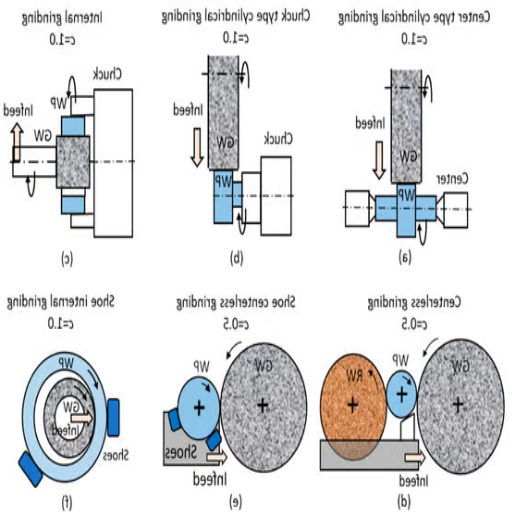
External Cylindrical Grinding
The external cylindrical grinding is one of the widely practiced processes requiring fine finishing of the external surfaces with high precision. It imparts both uniformity and a smooth finish that could serve either the purpose of functioning or of appearance. Hence, newer-generation cylindrical grinders now sport CNC controls for superior accuracy and repeatability in production.
The setup of the piece between the external grinding wheel and the chuck, which may either remain stationary or rotate. The fine abrasive surface of the grinding wheel gently erodes material, finally bringing the workpiece to the required dimensions and surface quality standards. Precision, as well as durability, takes precedence in the external cylindrical grinding for the manufacturing of components such as shafts, rollers, or cylindrical tools for the automotive, aerospace, and heavy machinery industries. Apart from that, automated monitoring systems are implemented to maintain peak performance and efficiency while minimizing human error and affecting operational downtime.
Internal Cylindrical Grinding
Internal cylindrical grinding is a highly specialized process used to machine the interior surface of a cylindrical component to precise dimensions and finish requirements. This technique is essential in industries where tolerances and surface finishes are extremely tight, such as aerospace, medical device manufacturing, and precision engineering.
Using a high-speed grinding wheel, the internal walls of the component will undergo material removal and finish to uniformity and accuracy. Contemporary techniques automatically monitor the grinding parameters real-time, implementing corrections when necessary, thus significantly increasing efficiency and reducing waste. Hence, they provide manufacturers with the capability to achieve high component quality faster and reliably meet the demanding performance specifications of their customers.
Centerless Cylindrical Grinding
Centerless cylindrical grinding remains a highly precise procedure for mass manufacturing parts with tight dimensional tolerances. Unlike regular cylindrical grinding, the workpiece is not held by centers; hence, it can be processed quickly and can accept almost any size and shape of parts. These days, with the implementation of smart sensor technology alongside AI-based systems, it has become possible to monitor real-time grinding conditions, achieving the maximum material removal rate while reducing defects.
Data further suggest that incorporating automation into centerless grinding allows for a 40% reduction in downtime, resulting in a significant increase in production efficiency.
Centerless grinding excels in automotive, aerospace, and medical manufacturing by providing ultra-smooth finishes and superb roundness for parts such as fuel injectors, surgical instruments, and bearing components. The use of top-grade abrasives and environmentally friendly coolant systems contributes equally to the sustainability and productivity of these operations, making centerless cylindrical grinding a critical output of modern manufacturing.
Cylindrical Grinding Processes

Knowledge concerning the Cylindrical Grinding Process
Cylindrical grinding is a machining process used to shape the outer surface of various components with extreme precision and a smooth surface quality. As the grinding wheel rotates, material is removed uniformly along the length of the workpiece, achieving a fine finish with tight tolerances. This process can be applied to virtually any material, including metals, ceramics, and plastics.
The last few decades have seen remarkable developments in making cylindrical grinding processes economical and consistent. For example, in high-speed grinding, materials are removed in a hurry without compromising the accuracy. Indeed it is much sought after in the aerospace and automobile domains. Adaptation control that allows grinding operations’ real-time adjustment for maintaining their precision and minimizing scrap is considered yet another advancement in cylindrical grinding.
Grinding wheels, produced from superabrasive materials such as CBN and diamond, offer optimal grinding characteristics that extend tool life and reduce heat generation in the workpiece, thereby limiting thermal damage. New systems of coolant working with these wheels aim to utilize fluids sparingly while dissipating heat to the utmost and maintaining environmental conditioning.
The new-generation cylindrical grinding has, therefore, become an indispensable operation for producing highly complex, high-accuracy components across various industries, driving performance and sustainability in the modern production scenario.
Grinding Wheel Phenomenon
Being an indispensable tool in cylindrical grinding, the grinding wheel sets the importance of the process where quality, efficiency, and consideration enrich themselves. It comprises abrasive grains enclosed in bonding material, which imparts hardness on them for cutting and shaping workpieces. It depends on the abrasive material chosen, grit size of the wheel, and bond type for the surface finish, rate of material removal, and life of the tool.
Driven by designers, advancements in grinding wheel technology have introduced novel features, the cubic boron nitride and diamond abrasives. Their abrasives are of greater rigidity and higher wear resistance for superprecision work on hard-metal alloys and hard-to-machine materials. Grinding of steel alloys is generally performed with CBN wheels, with diamond wheels being used mostly for ceramics and composites. Also, wheel profile modifications and porous structures help in further improving cutting, eliminating heat buildup, and evacuating the chips from the working area.
Statistical data exemplify the value of selecting an appropriate grinding wheel to enhance productivity. For instance, studies have observed that material removal rates can be improved by 30% with superabrasive wheels, while wheel life can be extended by 50%, resulting in fewer operational interruptions.
Combinations of such technological engineering improvements with adaptive control systems could provide high consistency and precision in manufacturing, cementing the grinding wheel as one of the fundamental elements of production efficiencies today.
Key Parameters of Grinding Processes
Several parameters govern the process at the main crucial points for achieving efficiency, precision, and productivity:
- Wheel Speed: Improper rotation can cause either insufficient material removal or damage to the workpiece.
- Feed Rate: The speed at which the material is fed into the grinding wheels. Higher feed rates will increase output, but may compromise the surface finish if not handled correctly.
- Abrasive Parameters: Grain size, bond type, and grit density all influence the result quality. Smaller grain size is used for fine finishing, whereas larger grain size is used for fast stock removal in rough grinding.
- Coolant Application: Necessary for controlling heat generated by grinding forces, preventing heat-induced damage or dimensional errors in the workpiece.
Last-generation technologies, for example, adaptive process control and real-time data analytics, are now being introduced to grinding operations. Such systems monitor process parameters in real time, including wear rates, vibration, and temperature, thus ensuring the machine is performing at an optimum level while minimizing wastages. Balancing these parameters allows producers to fulfill the ever-increasing production demands with consistency, longer tool life, and much better quality of products.
Applications of Cylindrical Grinding Machines

Precision Grinding in Manufacturing
Precision grinding is an essential process in today’s manufacturing activities that gives the utmost tolerance to components in different industrial applications and end up in surface finishing. Therefore, it is essential with accuracy for parts that go to aerospace, automotive, or medical device fields. For instance, a cylindrical grinding machine is famous for very accurate circularity, fine surface texture of component, and good dimensional control. Thus, the recent developments in grinding wheel material such as superabrasive wheels have accelerated the grinding action and reduced the wear rate.
Manufacturers who combine precision grinding with advanced technologies experience a production efficiency increase of almost 25 percent and a significant reduction in material wastage.
The presence of intelligent, computer-controlled systems, and AI-driven analytics in a grinding process leaves it very different from any other. They enable a manufacturer to foresee maintenance requirements, optimize operating parameters, and maintain the quality of output. Thus, with these sorts of developments, precision grinding ceased to be just a tool for dimensional accuracy. It instead became the heart of innovation and sustainability in the manufacturing industry.
Industries That Make Use of Cylindrical Grinding Machines
Automotive Sector
The automotive sector utilizes these machines to manufacture components such as crankshafts, camshafts, and transmission parts within specified tolerances, thereby ensuring safety and performance.
Aerospace Industry
Cylindrical grinding finds its way into aerospace applications, where it is used to balance and form precision turbine rotors, engine shafts, and critical fasteners under stringent quality standards.
Medical Field
It greatly benefits the medical field, enabling the manufacture of surgical instruments with utmost precision, orthopedic implants, and hypodermic needles.
Energy Industry
For large parts like generator shafts and hydraulic cylinders, the energy industry of wind and hydro applies these machines to ensure strength and efficiency.
Manufacturing & Tooling
Cylindrical grinding forms the backbone of general manufacturing and tooling industries, in conjunction with the production of high-quality components such as cutting tools, dies, and molds.
With recent advancements in technology, grinders now feature CNC controls, automated processes, and other similar enhancements that are being adopted by various industries to boost productivity, minimize downtime, and meet exacting standards.
Workpieces Machined Examples
Being the most versatile grinding machines, cylindrical grinders are capable of handling a variety of workpieces. Among common types are precision shafts, rollers, and spindles that must achieve high dimensional accuracy in automotive, aerospace, and machinery manufacturing processes. The same tools would work for grinding engine parts, the most prominent examples being crankshafts and camshafts, without which the performance and reliability of a vehicle are at stake.
| Industry | Common Workpieces | Key Requirements |
|---|---|---|
| Automotive | Crankshafts, Camshafts, Transmission Parts | High dimensional accuracy, surface finish |
| Aerospace | Turbine Rotors, Engine Shafts, Fasteners | Extreme precision, stringent quality standards |
| Medical | Surgical Instruments, Implants, Needles | Ultra-precise tolerances, biocompatibility |
| Manufacturing | Cutting Tools, Dies, Molds, Punches | Tight tolerances, fine finishes |
| Defense | Firearm Barrels, Precision Components | High precision, reliability, durability |
Industrial-sector molds, punches, and dies being produced with cylindrical grinding involve the work of various advanced manufacturing processes involved in mass production. Fine finishes, along with tolerances within tight limits, are classic benefits that can be gained from cylindrical grinding on surgical instruments or firearm barrels due to certain attributes required for the medical and defense sectors. Modern manufacturers are continuously developing new ways to increase the number of workpieces that can be ground while also addressing demanding specifications through CNC integration and advanced precision measuring systems. This, in turn, keeps the cost low, while providing consistency and reliability for highly important components utilized in very critical areas.
Benefits and Challenges of Cylindrical Grinding

Advantages of Using Cylindrical Grinding Machines
To my eyes, cylindrical grinding machines have an utmost precision and versatility for various manufacturing-related applications. The machines produce super-fine finishes and tolerances that are highly stringent for components used in aerospace, automotive, and medical disciplines. This ability for extremely high precision is particularly handy for ensuring concentricity of complex geometric forms in rotational components. This critical level of tolerance assures the proper functionality of service parts; hence, their application in heavy-duty service enhances durability and performance.
Another thing I noticed with cylindrical grinding machines is their job adaptability in terms of materials, length, and so forth. Whether it is for hardened steel, ceramic, or softer metal, the machine can achieve results to a consistently high standard. Advances such as CNC and automated grinding techniques have also greatly improved efficiency and productivity. For example, integrating CNC systems enables programmatic control of processes, reducing setup times and allowing production runs to be quickly repeated, thereby saving both time and costs. Based on my experience, this is what makes cylindrical grinding a highly dependable technique for ensuring consistency in work with heavy production.
Yesterday, I sort of described hypothetical characteristics attributing famous names in the manufacturing industry. And it would just about be orthogonal to think that if any of these attributes got to be interchanged. Truly, cylindrical grinding machines have served any purpose from conforming to the client’s challenging specifications inferred from lower-end dimensions to cutting down production times at higher-end ones. Real-time monitoring and measurement systems allow quality assurance, keeping errors so low that rework requires almost no realization. I think cylindrical grinding machines must be considered a tool in any setup that intends to make international-standard products.
Common Challenges and Solutions
One challenge I faced frequently in CNC cylindrical grinder operations in a highly voluminous setting was to maintain precision. In a temporal sense, deviations would arise as factors like tool wear, vibrations, or inconsistencies in the material begin working against the preset dimensions required by the working involved. Consequently, I developed a system for the machine. On a day-to-day basis, grinders were to be regularly maintained, with all parts, including spindles and grinding wheels, being checked for wear and calibrated on a very regular basis. These software applications have certainly helped in this area as they allow real-time feedback to pinpoint possible deviations, which can then be instantly corrected.
Yet another one emerges with the rise of temperature during grinding, which can cause thermal damage or distortions to the workpiece. One has to establish well-functioning systems of coolant, having also optimized grinding parameters for either speed or feed rates whenever applicable until these problems are alleviated. Besides, I keep watching the grinding process regularly, checking the sensor in line with temperature to retain heat control throughout production.
The following essential factor is ensuring uniform surface finishing on multiple components. It sometimes turns out to be tricky, especially when dealing with complex geometries or tough materials. I’ve, on the other hand, been concentrating on the abrasive materials for the grinding wheels and their dressing. Such automation of repetitive tasks has further improved the consistency by minimizing possible human errors and consequently increasing the likelihood of attaining top-quality consistent results.
Maintaining Tight Tolerances in Grinding
Grinding within tight accuracy limits requires being very precise, having experience, and being particular about deciding the correct equipment and process control. From my side, the first thing I do is to understand every single bit of detail about the specifications and requirements of the part being built. This involves studying design tolerances, surface finish requirements, and the challenges that the material being used may pose. Having this clear from the very beginning would allow me to customize the process efficiently toward stringent demands.
One of the more important things I make sure of is that the grinding machine and all its components are properly taken care of, tuning the machine as required during maintenance checks, and replacing worn-out parts before anything could affect the actual working accuracy. It also involves making correct adjustments to dressing parameters, wheel speed, or feed rates depending upon the accurate tolerances needed. Throughout production, the measurements are being monitored in real-time by working with sophisticated measuring instruments, and adjustments can be done immediately to ascertain that each workpiece will be made with the same kind of precision.
Ultimately, it was the implementation of automation and the use of more advanced technology that achieved the optimization of results in high-tolerance grinding operations. The use of automated systems eliminates human variability, while CNC-enabled machines and on-machine probing enable accuracy and repeatability. Alongside the careful planning and attention to detail exercised, these measures allow me ample time to ensure that parts are held to these tight tolerances for high quality.
Reference Sources
-
What is Cylindrical Grinding? | Advantages | Disadvantages – AM EDM
Explains the basics of cylindrical grinding, its precision, and efficiency in shaping and finishing cylindrical workpieces. -
Understanding Cylindrical Grinding Services: Applications and Best Practices – Minnesota Grinding
Highlights the role of cylindrical grinding in precision manufacturing, with a focus on accuracy and surface finish. -
Cylindrical Grinding Machines Sourcing Guide – Made-in-China
Discusses the types, uses, and applications of cylindrical grinding machines for optimized precision and performance. -
Understanding Cylindrical & Surface Grinding in Precision Engineering – Amon Engineering
Examines the challenges and techniques associated with cylindrical grinding in precision engineering. -
What Is a Cylindrical Grinding Machine? – JOT Oilfield
Provides an overview of cylindrical grinding machines and their role in precision machining.