




Being an extremely versatile and essential manufacturing tool, a radial drill press can perform just about any type of drilling operation efficiently and precisely. It is unique in that the arm can be swung and extended to reach zones inaccessible by standard vertical drill presses. But what is its function, and why does one find it in almost every workshop? This blog post will explore the radial drill press while discussing its working advantages and uses, thus providing a thorough insight into why it has become a reliable tool for professionals engaged in challenging and large-scale projects. In case you are either a seasoned machinist or someone venturing into the field of industrial tools for the first time, this article will give you the necessary insight to appreciate what this machine can accomplish.
Understanding the Radial Drill Press
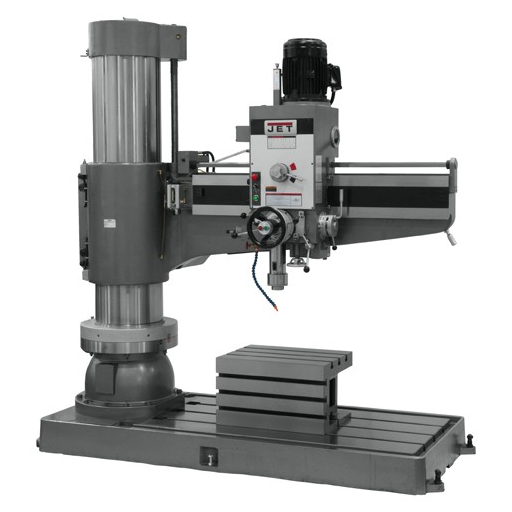
Definition and Overview
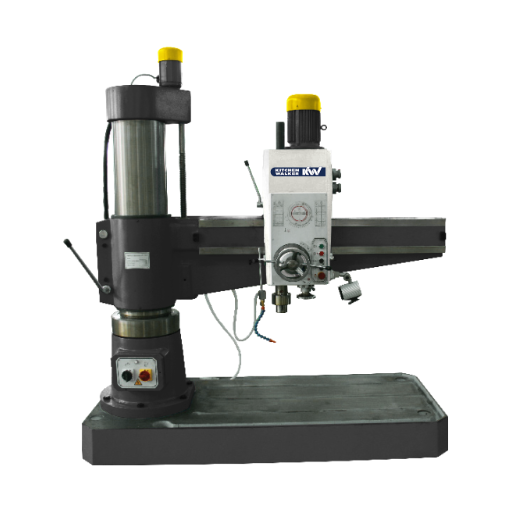
A radial drill machine is a highly versatile and powerful mass production machine tool that can perform all types of heavy, large, and complex drilling processes with precision and ease. Unlike a standard drill press, the arm is adjustable, thereby permitting horizontal and vertical movement of the drill head. This adjustability makes it highly suitable for machining big workpieces or materials that require drilling at different angles.
With variable-speed controls, automatic feeds, and digital readouts for accurate drilling, the modern radial drill press comes packed with features. Depending on the machine model, drilling capacity may lie within the small-scale arena or may deal with materials over 2 inches thick and with diameters beyond 50mm. Steel, cast iron, aluminum, and even composites may be drilled on the machine, thus making it a common fixture in all manufacturing industries, construction, and fabricating.
In the present market situation, these are still highly demanding due to their reliability and increase in productivity. Past inventions include that of CNC integration, vastly improving the powers of radial drilling. This integration allowed a fully-automated drilling system capable of implementing much more complex drilling paths. Whenever flexibility, consistency, and accuracy are required on demanding projects, these machines provide the strength to the professionals that make the jobs easier.
The Components of a Radial Drill Press
A radial drill press has several major parts that function together for accurate and fast drilling:
Base
The foundation that supports and stabilizes the entire machine. Generally made of cast iron to bear heavy loads and vibrations during operation, ensuring consistent and accurate functioning.
Column
The vertical structure connected with the base that supports the radial arm. Allows the arm to swing or rotate, making the drill press capable of coping with jobs of different sizes and position requirements.
Radial Arm
The component that gives the machine its name, fixed on the column and capable of traveling in horizontal and vertical planes. This maneuverability allows drilling from any angle to any position.
Drill Head
Comprises motors, gears, and the spindle assembly. Moves along the radial arm in forward and backward directions to enable accurate positioning of the drill.
Spindle
Holds and rotates the drill bit during drilling. Controls the speed, drilling pressure, and torque settings depending on the kind of material being drilled.
Table
Supports the workpiece with adjustable height and tilt capabilities. Generally features T-slots for secure clamping systems to keep workpieces steady.
Motor & Feed Mechanism
- The motor transmits power to the spindle and almost determines the power and efficiency of the machine. Energy-saving motors are employed in modern radial drilling machines so as to supply power constantly.
- The feed mechanism, on the other hand, controls the movement of the drill bit toward the material, and it can be manual as well as automatic, depending upon the operation required.
Recent Advancements
With technological advancement, radial drilling machines have been equipped with digital control systems, LCD touch screens, and automation facilities so as to increase productivity and accuracy. CNC enables the operator to enter highly complicated drilling patterns with very little operator intervention, reducing time and chances of errors. On the other hand, advanced materials that are light yet have a sturdy structure have also enhanced portability in the machines without affecting integrity.
Benefits of a Radial Drill Press
Advantages for Woodworking and Fine Woodworking
Radial drill presses provide many advantages in woodworking, where precision and versatility are prized, especially in fine woodworking. The capacity for the drill head to be adjusted laterally and in elevation gives such flexibility that artisans can exploit to carry out fine joinery, precise boring of angled holes, or work on large pieces that would simply not fit on any standard drill press.
Increased Accuracy
Less Material Waste
Recent innovations have allowed the incorporation of laser guides and digital readouts into radial drill presses. This upgrade allows operators to easily obtain millimeter-perfect alignment, making this adaptable radial drilling package a backbone for creative workshop endeavors that meet the highest standards of fine craftsmanship.
Advantages for Metalworking Applications
Advances in radial drilling embrace all manner of metalworking, making it a tool esteemed in the industries of automobile building, aeronautics, and manufacturing. The ability to handle large and heavy materials with precise drilling is one major advantage. The adaptable arm can set the drill to various angles and positions for drilling holes into intricate metal parts or huge workpieces.
Some CNC-enabled benefits for performance:
- Production efficiency was improved by 40%
- Setup time was greatly minimized, thus reducing operator fatigue
- Performs better with hard metals like stainless steel, titanium, and high-performance alloys
- Integrated safety ecosystem, interlocks inbuilt, and improved braking systems
Comparative Advantages Over Other Drilling Machines
| Feature | Radial Drill Press | Standard Drill Press |
|---|---|---|
| Workpiece Size Capacity | Large and irregular shapes | Limited to table size |
| Positioning Flexibility | 360° arm rotation | Fixed vertical position |
| Production Throughput | 30% improvement | Standard rate |
| Accuracy (with CNC) | ±0.01 millimeters | ±0.1 millimeters |
| Operator Fatigue | 20% reduction in downtime | Standard fatigue levels |
Applications of Radial Drill Presses
Industrial Manufacturing
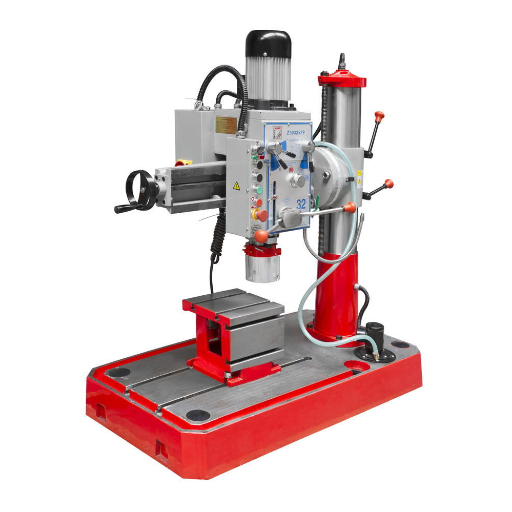
Due to their effectiveness in execution of heavy-duty drilling applications with great precision and efficiency, radial drill presses find extensive application in industrial manufacturing. These machines excel at machining large workpieces too difficult to handle using conventional drills.
Key Industrial Applications:
- Automotive Industry: Machining engine blocks and large metal parts where precision is the most important
- Aerospace Sector: Machining high-strength materials such as titanium and aluminum alloys for aircraft components
- Shipbuilding: Heavy drilling operations on large ships structures
Market analysis shows that integrating radial drills with CNC technology has enabled manufacturers to increase production rates by 25% while reducing human error in complex machining processes. State-of-the-art cooling systems in modern radial drills assist in precise operations and extend cutting tool life for large-scale industrial drilling.
Custom Woodworking
Custom woodworking projects have witnessed dramatic transformation with advanced tools allowing artisans to create detailed and gorgeous pieces with greater speed. Industry trends show increasing demand for custom-made furniture, elaborate cabinetry, and custom-designed decor.
CAGR Growth 2023-2030
Efficiency Increase with CNC
Modern Woodworking Innovations:
- CNC machinery for cutting and designing intricate patterns
- 3D modeling software for project visualization
- Advanced joinery tools and automatic saws
- Advanced dust collection systems
- Sustainable practices Welcome tothe use of reclaimed lumber and water-based finishes
Metalworking and Precision Drilling
Precision drilling is a significant metalworking process that creates highly exact holes for varied industrial and manufacturing purposes. It uses CNC drilling machines to obtain the most accurate specifications with repeatability in mass production.
Industry Applications:
- Aerospace: Critical components where deviation could compromise safety
- Automotive: Engine components and chassis parts
- Construction: Structural elements requiring precise connections
The CNC machining market is expected to grow to $128 billion by 2028, driven largely by growing demand for precision-driven manufacturing. High-performance materials such as carbide or diamond-coated drill bits greatly improve durability and capacity to penetrate hard metals like titanium and stainless steel.
Technical Specifications of Radial Drill Machines
Important Features to Consider
| Specification | Range/Details | Importance |
|---|---|---|
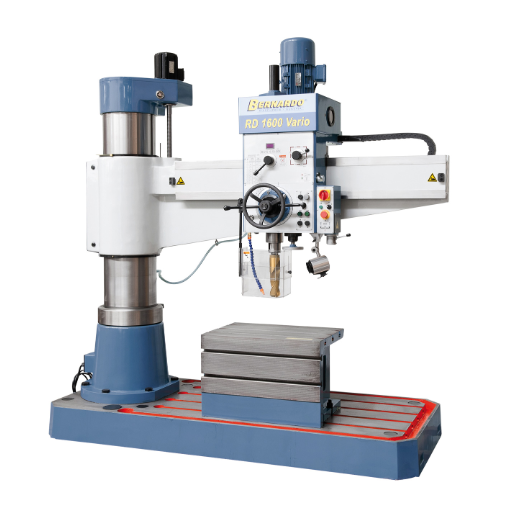
| Arm Length and Swing | Varies by model | Determines working radius and workpiece size capacity |
| Drilling Capacity | 25mm to 100mm diameter | Maximum hole size in various materials |
| Spindle Speed | 30 RPM to 3000 RPM | Variable control for different materials |
| Motor Power | 2 HP to 10+ HP | Determines capacity and continuous operation capability |
| Feed Rate | Manual/Automatic | Precision and repeatability in operations |
Additional Features:
- Digital Control Panel: Programmable Functions for Complex Drilling Patterns
- Laser Alignment: Positioning with Top Precision
- CNC: Automated Complex Drilling Operations
- Safety: Overload Protection, Emergency Stop, Guards
- Coolant: Coolant System for Added Tool Life and Precision
Common Types of Machines Available in the Market
Manual Radial Drilling Machine
For small-scale work or workshops where drilling has to be very precise and cannot conform to automated methods. A cheaper and quick method for sampling and small-lot drilling operations.
Semi-Automatic Radial Drilling Machine
One sort falls in the middle in transition between the fully manual and fully automatic systems filling in with a power feed or spindle automation system. Mostly used by medium-scale industries.
Fully Automatic Radial Drilling Machines
Being the most advance systems with PLC programming, CNC controls, and high levels of precision, large production lines exist with very little operator intervention.
Universal Radial Drilling Machine
It is very versatile and allows multidirectional drilling except for very soft materials. Very much in use for automotive manufacturing, civil works, and large fabrication works.
Heavy-Duty Radial Drilling Machine
The heaviest type of work for large constructions and high-capacity drilling ranges. Used for shipbuilding, mining, and power.
Industry Trends and Market Data
According to Market Reports, the global radial drilling machine market will clock in a CAGR of nearly 6 percent for the years 2023 to 2030. Growth of this market comes with the increasing importance of precision machinery in industrial manufacturing and advancements in automation systems. Asia-Pacific is getting vital because manufacturing industries in China and India are developing at a rapid pace.
Maintenance and Care for Radial Drill Presses
Routine Maintenance Tips
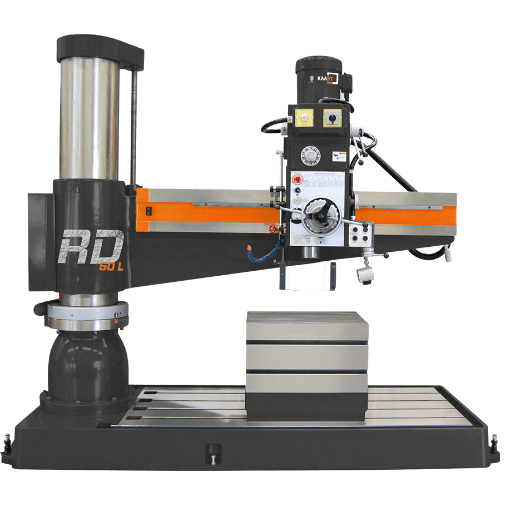
Proper maintenance is essential to maximize performance and lifespan of radial drill presses. Following recent industry research and best practices:
A Few Imperative Tasks to Be Ensured during Maintenance:
- Proper Lubrication: Lubricate all moving parts on a weekly basis as directed by the machinery manufacturer. A well-lubricated machine is 15% more efficient.
- Electrical Inspection: Any failures of the wiring, switches, and connections should be looked at on a regular basis. Over 30% of machinery downtime is attributed to electrical failures.
- Cleaning and Clearing Debris: Clean all surfaces at the conclusion of each operation to avoid accumulation of metal shavings, dust, and residues from the coolant.
- Alignment: Regular alignment and calibration of the spindle and table. With regular checks, tooling life can be increased by 20%.
- Replacement of Components: Check for worn-out components such as belts, bearings, and bits. Timely replacements decrease unexpected breakdowns by 40%.
- Maintain Coolant System: Prevent the system from getting clogged or contaminated. Efficient coolant systems increase machining accuracy by 10%.
Preventive Maintenance Benefits:
- 25% reduction in unscheduled repairs
- 15% improvement in operational efficiency
- 20% increase in tooling lifespan
- 40% decrease in unexpected breakdowns
Common Issues and Troubleshooting
| Problem | Possible Causes | Solutions |
|---|---|---|
| Excessive Vibrations | Unstable surfaces, worn bearings, misaligned spindle | Stable mounting, bearing replacement, spindle alignment |
| Drilling Accuracy Issues | Dull drill bits, improper clamping, misaligned components | Sharpen/replace bits, secure workpiece, align parts |
| Overheating | Extended use, insufficient lubrication, excessive pressure | Allow cooling periods, proper lubrication, reduce force |
| Motor Problems | Worn motor, loose connections, faulty wiring | Motor inspection, secure connections, replace wiring |
| Spindle Sticking | Debris buildup, rust, inadequate lubrication | Thorough cleaning, rust removal, complete lubrication |
Extending the Lifespan of Your Radial Drill
Key Strategies for Long Life:
- Routine Cleaning and Inspection: Set up cleaning sessions and check-wear for corrosion and damage
- To Lube and Avoid Rust: Use the lubricant recommended by the manufacturer, along with any rust-preventive solutions
- Don’t Sell Beyond Load Capacity: To stop stressing the motor and pre-maturely wearing down its parts, stay within those confines laid down for the machine
- Operator Training: Train operators in handling the machines to overly stress the components
- Follow Manufacturer Instructions: Adhere to maintenance schedule and approved replacement parts
Frequently Asked Questions
How Does a Radial Drill Press Work?
Generally speaking, they are rotary drilling-type machines. So, the drill bit rotates along its axis while the spindle of the radial drilling machine is placed in the radial arm allowing the drill head to be traversed through the arm to drill holes at varying places on the workpiece without repositioning the workpiece. The workpiece is clamped by the operator, depth adjustment is carried out to affect drill bit penetration, and the hole of the desired size is drilled. Radial drill presses accept drills of big diameters useful for drilling big holes in heavy-duty applications.
What Kind of Drilling Machines Are Used in Woodworking?
Many different types of drilling machines in woodworking such as benchtop drills and radial drills. On a smaller project, a benchtop drill press will be used because it occupies less floor space; a radial drill would be used on the larger projects because it is more versatile and can perform more complex drilling operations. Of course, the actual choice will depend on the particular woodworking application in question.
How to Drill Accurate Holes?
While drilling very fine holes on the radial drill press, one has to exercise great care with the set-up of the machine and job. Be sure that the drill bit of your choice is securely locked in the spindle. Next, place the job flat on the table and clamp it tightly. Now, adjust the height and tilt of the head so as to place it along the area you want to work on. Engage the drilling at a slow pace to ensure accuracy, and adjust as required.
Consider Before Buying a Radial Drill Press
Depending upon drilling capacity, answer, type of workpiece you will be working upon, and how much floor space you can afford in your workshop. Larger machines have higher drilling capacity and can allow larger drill diameters for heavy-duty jobs. Choose between floor or benchtop depending upon your space requirements and type of project. Consider versatility and tilting capabilities of the drill, as these will drastically cut down time spent on drilling angled holes.
Moving the Workpiece in a Radial Drill Press
The workpiece for moving on a radial drill press must be firmly clamped to the table to prevent it slipping during drilling. The radial arm, which adjusts in all three axes, allows free positioning of the drill head over various portions of the workpiece without re-clamping. When re-positioning of the clamping is required, the clamp has to be loosened and repositioning done before re-clamping and resuming drilling. This comes into good effect especially when drilling many holes with one clamping, thereby reducing adjustment time and increasing drilling efficiency.
Reference Sources
-
Drill Press Operator: Instructor’s Guide
This guide provides detailed insights into the operation and applications of various drill presses, including radial drill presses, making it a valuable educational resource.
Link to the source -
Radial Drilling Machine Overview
This document from Springer discusses the applications and functionality of radial drilling machines, offering technical insights into their purpose.
Link to the source -
Radial Drilling Technique for Improving Well Productivity in Petrobel-Egypt
This paper explores the use of radial drilling techniques in industrial applications, providing a practical perspective on their purpose and benefits.
Link to the source