




In the world of precision engineering, CNC machines have cemented themselves as a favorable manufacturing tool. Designed to perform sophisticated and demanding turning operations, these machines were developed to ensure utmost efficiency and precision. So, what is it that truly distinguishes these vertical turning centers from horizontal ones? How do vertical turning centers operate, and why do so many industries, ranging from aerospace to automotive, prefer them? This article examines the primary features, advantages, and applications of CNC vertical lathe machines, offering a comprehensive overview for those seeking to broaden their understanding of this crucial technology. Whether you are an experienced machinist, a manufacturing manager, or just an inquisitive mind interested in machining evolution, this article will surely give you several key insights.
Introduction to CNC Vertical Lathes

Definition and Overview
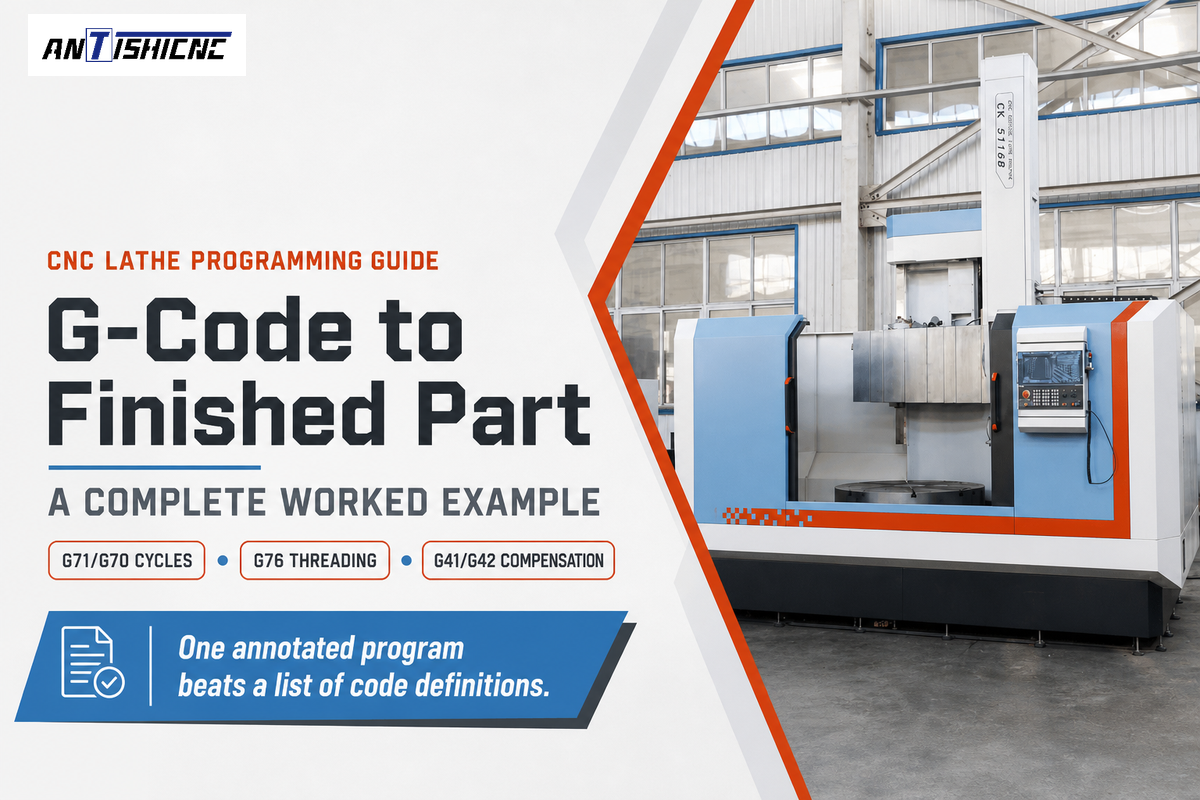
CNC vertical lathes are highly specialized machining tools for heavy general turning on large cylindrical workpieces under very high precision. Unlike conventional lathes, which have the spindle in a horizontal position, CNC vertical lathes have the spindle in a vertical position, making it easier to handle oversized or irregular parts. These machine tools, under CNC control, achieve the necessary precision and automation during cutting operations, maintaining quality consistency and productive efficiency.
A modern CNC vertical lathe features multi-axis capabilities, real-time monitoring, and automatic tool changers, as well as other advancements that enable manufacturers to produce complex geometries and high quantities with minimal to no interference. Recently, a market study indicated that CNC machine tools industry is expected to touch around $132-billion value worldwide by 2030, with vertical lathes devoting their remarkable inputs in fixtures like aerospace, auto, and energy.
A CNC vertical lathe processes materials, especially those that are harder to handle, such as steel alloys, titanium, and composites. With a strong build and heavy power, the machine takes on machining workpieces that may weigh several tons. For instance, CNC vertical lathe machine tools find application in manufacturing turbine components, aircraft wheels, and engine casings in the aerospace industry, which aptly highlights their versatility and dependability.
By embracing leading-edge technology and automation, CNC vertical lathes have become the architects of precision, scale, and economic operations for manufacturers competing across various sectors. Technological advancements continue to expand their applicability, thereby constantly encompassing the most forward-thinking machining solutions.
History and Evolution of Vertical Lathes
Vertical lathes date back to the late 1800s as a solution to larger and heavier workpieces that were previously impossible to machine using traditional horizontal lathes. Early machines were rudimentary, featuring manual controls, but were open to modern, large-diameter production for railways, shipbuilding, and construction. The introduction of the electric motor during the Industrial Revolution significantly enhanced its efficiency and performance, thereby accelerating its adoption in heavy-duty production.
Further advancements in vertical lathes began in the mid-20th century with the transition from manual to digital control systems. CNC marked a milestone in machining-related technologies in the 1950s, including vertical lathe. Communication, precision, and automation reached unimaginable heights with the CNC system. In the 1980s, the automotive, aerospace, and energy industries utilized CNC-controlled vertical lathes as their primary vertical machining tools, capable of accommodating both short lead production and high-level machining tasks.
Currently, vertical lathes are equipped with multi-axis, automated tool changers and real-time condition monitoring. These allow manufacturers to cater to a wide range of applications, from complex turbine blades to massive windmill components. According to recent market data, the global vertical lathe market is projected to grow at a CAGR of approximately 6% during the forecast period from 2023 to 2030, driven by demand from emerging sectors such as renewable energy and electric vehicles.
Modern upgrades are also concerned with energy saving and green sustainability. Currently, state-of-the-art vertical lathes utilize hybrid drive mechanisms and environmentally friendly coolants, resulting in up to 30% lower power consumption compared to older models. Furthermore, with the advancement of Industry 4.0, including IoT-based sensors and AI, their efficiency and predictive maintenance capabilities have been further strengthened.
From humble beginnings to become an indispensable tool in heavy manufacturing, vertical lathes have undergone a remarkable transformation. With vigorous innovations in technology and their applications creeping into other industries, there is light at the end of the tunnel for vertical lathes, proclaiming that they will remain the forefront machining solution for years to come.
Key Components of CNC Vertical Turning Machines
The CNC Vertical Turning Machine comprises several vital components that enable the machine to execute its machining operations precisely and efficiently with full reliability. Here are a few of its components:
1. Workholding System
The workholding system consists of chuck or faceplate holding the workpiece during the machining process. Hydraulic or pneumatic chucks are generally used to enhance clamping and ease of operation. They may also include quick-change fixtures to drastically reduce setup times and improve productivity.
2. Spindle
The spindle forms the heart of the CNC vertical lathe, enabling it to rotate the workpiece for machining operations. Modern spindles equipped with powerful drive motors can rotate at high speeds, with some machines reaching over 3,000 RPM, depending on the type of operation. Speed and torque of a spindle are essential parameters for working on soft aluminum or hardened steel, depending on the material being worked on.
3. Tool Turret
This holds several cutting tools for machine parts and allows the machine to change tools very quickly during machining. Such turrets can contain boring bars, drills, and turning inserts, which are all programmable for automatic machining operations. With servo drives for turrets, machines can achieve very rapid indexing during machining, thus reducing cycle time.
4. CNC Control System
The CNC control system is the brain of the machine, responsible for executing pre-programmed machining instructions. Modern CNC controllers such as FANUC, Siemens, or Mitsubishi provide precise motion control, real-time monitoring, and an easy interface for programming. CNC machines are now equipped with new software features, such as 3D simulations, to help optimize toolpaths and minimize errors in machining.
5. Column and Base
The column and base give structural integrity to the machine. Made of heavy-duty cast iron or steel, providing the stability to the machine and help absorption of vibrations during high-speed operations. The rigidity provided by these ensures that it can maintain high accuracy and surface finish quality during machining.
6. Cutting Tools
Cutting tools are designed according to the cutting processes and material to be machined. They could be carbide-tipped tools for wear resistance or ceramic tools intended for high-speed machining of quite tricky materials. Modern developments in tool coatings, such as TiAlN, increase tool life and enhance tool performance.
7. Coolant System
The coolant system assists in temperature regulation by directing coolants towards the cutting zone, thereby averting heat buildup, and also enhancing the durability of both the tool and the workpiece. Such delivery systems, which utilize high pressure for coolant, are popular these days, as they ensure better chip evacuation and faster cutting speeds.
8. Linear Guideways and Ball Screws
The linear guideways and ball screws coordinate smoothness and accuracy by moving the moving parts of the friendly machine. High-precision roller guideways minimize friction, and preloaded ball screws eliminate backlash in the machining process, ensuring repeatability and accuracy.
9. Automatic Tool Changers (ATC)
Most machines are also equipped with ATC systems to improve efficiency further. ATC systems can store multiple tools and automatically change them without operator intervention, thereby saving time and enabling continuous machining without breaks.
10. Advanced Features
Modern vertical lathes often leverage the latest advancements in IoT sensors, condition monitoring, and predictive maintenance. Advanced data analytics are used for process optimisation, to optimise downtime, and to improve overall efficiency.
Recent industry reports forecast that CNC Vertical Turning machining is experiencing significant development worldwide, with the market projected to rise to nearly $10.96 billion by 2028, driven by Industry 4.0 applications. The machines enhance operational efficiency by up to 30% compared to traditional turning operations. Innovative tooling and automation for CNC systems have enabled greater precision worldwide and have resulted in a defect rate drop of up to 20% in high-volume production environments.
Design and Functionality of Vertical Turning Centers

Structurally Designed Nature
Vertical turning centers (VTCs) feature sturdy structural designs that enable them to perform heavy-duty machining tasks with considerable precision. Common among these machines is the use of a heavy, one-piece cast-iron base, ensuring vibration-free operation and providing rigidity. The vertical nature of the machine facilitates the machining of larger and heavier workpieces, and many models can support loads of up to 10,000 kg, depending on the machine’s class.
VTCs have also been designed to incorporate systems such as linear roller guides or box-way constructions for the guideways, which increase durability and decrease wear over time. Manufacturers integrate thermal compensations to ensure that operations carried out over an extended period retain accuracy. For example, high-end models exhibit a thermal deviation of less than 5 microns, thereby ensuring consistent quality.
The hydrostatic bearing in the spindle is another advantage of the design, which minimizes friction and enhances the precision of rotation. Research shows that such hydrostatic spindles have an operational lifespan 40% longer than that of traditional spindles, hence they are the most economical option in industries.
Another positive aspect is that modern VTCs are designed to contain fully enclosed work envelopes, which provide safety from contaminants for operators. Accessibility features, such as wide doors and intuitive operator panels, have enhanced the maintenance and usability of these machines, thus speeding up setup times and minimizing downtime for other activities.
Working Principle of CNC Vertical Lathes
CNC Vertical Lathes function by securely fixing the workpiece on a horizontal rotating spindle, simultaneously allowing the turret equipped with cutting tools to move along controlled axes to perform desired cutting, shaping, or drilling operations. Their vertical structure enables superior handling of heavy or relatively large workpieces, which the chuck securely holds due to gravity.
Modern CNC Vertical Lathes consist of high-performance servo motors and drive systems that allow high precision and synchronous tool movements. Typically, these machines operate in two axes (X and Z axes), yet many newer models incorporate further axes for more intricate machining operations. They utilize CNC software packages that adhere to industry standards for programming and automation, such as FANUC, Siemens, or Heidenhain, which enhance adaptability and productivity.
According to recent industry data, advances in spindle speed and cutting tool technology have significantly improved machining efficiency. As modern spindles achieve rotational speeds of up to 5,000 RPM, human operators and machining centers have benefited from faster cycle times, consequently raising production rates. Furthermore, adaptive control systems enable current machines to fine-tune cutting parameters in their real-time environment, resulting in a reduction of tool wear by almost 20% and an improvement in product accuracy.
IoT-enabled sensors on CNC vertical lathes further enhance productivity by providing real-time information about temperature, vibration, and tool condition. Apart from improving predictive maintenance, these sensors cut downtime by almost 30%, according to a 2023 industry report. Hence, companies can rely on CNC Vertical Lathes for unparalleled precision and efficiency in industrial applications.
Types of Vertical Turning Centers
Vertical turning centers (VTCs) are primarily classified based on size, spindle orientation, and added functionalities. The separation of these categories enables manufacturers to purchase the right equipment for their various industrial applications. Here is an overview of the main types of vertical turning centers:
1. Standard Vertical Turning Centers
Standard VTC machines are for general-purpose machining operations on smaller components or components of mid-range. Typically, they feature a vertical spindle and are used in automotive and small-scale manufacturing applications. Various machine models also offer options for automatic tool changers (ATCs) and live tooling, increasing versatility and reducing processing time. In modern terms, some models can work on parts as large as 800 mm (approximately 31.5 inches) in diameter, offering solutions to multiple production requirements.
2. Heavy-Duty Vertical Turning Centers
Heavy-duty VTCs are designed for machining larger workpieces and heavier components, serving the aerospace, energy, and heavy equipment sectors. Structurally very rigid and equipped with potent motors, these machines deal with workpieces which often exceed 2,000 mm (78 inches) in diameter and weigh up to several tons. According to a 2023 market survey, innovations in AI-driven controls for this segment, driven by the increasing demand for large component manufacturing, aim to achieve further gains in both accuracy and productivity.
3. Multi-Tasking Vertical Turning Centers
Multi-tasking VTCs perform the entire machining work for turning, milling, drilling, and tapping, thereby shortening complex manufacturing processes. These machines are best suited for industry training requiring high-mix low-volume production given that they eliminate the need for multiple set-ups. For example, modern multi-tasking VTCs being IoT connected can track over 20 parameters in real time, allowing for efficiency improvements up to 25% over conventional systems.
4. Vertical Turning Centers having Dual Spindles
Dual-spindle VTC shall enhance productivity, working on two workpieces simultaneously or operations on both sides of one workpiece, bridging the gap between high-volume production. Recently designed ones promote synchronous control among the spindles, thus strongly reducing cycle time, and tolerances around ±0.01 mm are possible.
5. Specialized Vertical Turning Centers
Rare applications are what these VTCs cater for, such as gear cutting, ultrasonic-assisted machining, or hard turning of exotic materials. Manufacturers are increasingly building specialized VTCs to meet a variety of unique requirements, including robotic loading systems and high-precision measuring probes for in-process quality control. Reports from 2023 outline a 15% annual increase in demand for such machines due to their ability to operate in aggressive manufacturing environments.
The wide variety in the configurations of vertical turning centers provides them with the ability to remain an advantageous asset in present-day manufacturing, concerning being an agent of innovation, scalability, and precision. These machines, when interfaced with advanced software and IoT technologies, aim to serve the emerging needs of Industry 4.0.
Technological Capabilities of CNC Vertical Lathe Machines

Advanced Automation Technologies in CNC Vertical Lathes
The CNC vertical lathe has, in a sense, advanced automation methods to disrupt traditional manufacturing processes. The machines now incorporate exotic options, such as robotic arms, automated tool changers, and real-time monitoring systems, which provide significantly greater throughput and reduced reliance on human intervention. Recent studies indicate that significant CNC machining automation can boost productivity by up to 30%, with cycle times decreasing and accuracies increasing by nearly 25%.
AI integration enables predictive maintenance, a process by which operators can anticipate the onset of potential machine faults and proactively address them, resulting in nearly a 40% reduction in unplanned downtime and ensuring uninterrupted operations. IoT-enabled sensor technology collects enormous amounts of data and subsequently analyzes them in real-time, enabling in-depth insights into production metrics and workflow optimization.
Thanks to their technological compatibility and innovations, these newly modified CNC vertical lathes are now able to handle complex machining tasks at a much faster pace with tighter tolerances and reduced material wastage. This technology meets the increasing demand for precision in the aerospace, automotive, and energy sectors, where significant components are manufactured to exact quality standards.
Integration of CNC Control Systems
The integration of CNC control systems has proven to be a significant enhancement for modern manufacturing processes, offering precision, efficiency, and on-floor flexibility. The operators can accurately program intricate machining tasks by minimizing human error and maximizing productivity. CNC machines utilize advanced control software to perform complex operations, including turning, milling, and drilling, all in one setup, thereby drastically reducing downtime.
Recent data illustrate the ability of modern CNC Systems. For example, the Global CNC Machine Market is estimated to grow from $83.99 billion in 2023 to $115.10 billion by 2030, registering a CAGR of 4.6%. This growth can be attributed to the increased use of CNC Systems in prominent fields such as aerospace, automotive, and medical equipment manufacturing.
Real-time monitoring, combined with integration of IoT (Internet of Things) technology, enables predictive maintenance and data analysis. Hence, manufacturers can measure several indicators, such as tool wear, machine temperature, and spindle speed, to ensure that serviceability never ceases while implementing analysis-based countermeasures to reduce unplanned downtime. The implementation of CNC control systems and IoT connectivity within companies has increased productivity by 25%, resulting from optimized workflows and reduced human errors.
Apart from this, CNC systems also allow different languages of programming, supplying a relatively easy-to-use interface for operators without any deep technical knowledge. This has become behind-the-scenes accelerate transition activities from product design to actual production, enabling manufacturers in a shorter timeframe for prototyping and final product development.
All these make CNC control systems one of the manifestations of smart factories, contributing to innovation in the field and assuring exact and dependable manufacturing.
Precision and Accuracy in Vertical Turning
Vertical turning has evolved into an essential manufacturing process, primarily in sectors that require tight precision and timeliness, such as aerospace, automotive, and energy production. Modern vertical turning centers (VTCs) integrate advanced CNC control systems with cutting-edge tooling technologies to deliver an unprecedented level of accuracy. These machines achieve tolerances of less than 0.01 mm to ensure that components meet stringent design specifications.
According to recent statistics, vertical turning machines equipped with multi-axis control and real-time feedback systems can increase machining accuracy by up to 20% compared to traditional turning. Furthermore, high-speed spindle technologies lessen cycle times by 30-40% while achieving excellent surface finishes in the range of Ra 0.2 to Ra 0.8 micrometers. These precision levels are crucial in maximizing the efficiency and lifespan of complex components, such as turbine disks and engine housings.
Furthermore, with adaptive machining, machines are capable of compensating for deviations in material characteristics or thermal deformations autonomously, ensuring uniformity in results throughout extensive manufacturing programs. This highlights vertical turning as ideal for large-scale production without compromising on quality. Leveraging current capacities enables manufacturers to achieve the precision and cost-effectiveness required by today’s competitive industries.
Benefits of Using CNC Vertical Lathes

Improved Production Efficiency
In the domain of production, CNC vertical lathes represent a revolutionary development in enhancing production efficiency through automation and precision. Advanced computer numerical control systems in machines can execute the most intricate operations with minimal human intervention, thereby reducing cycle time and boosting output. Additionally, it has been demonstrated that vertical CNC lathes can achieve up to a 50% increase in production efficiency over conventional machining methods, due to the simultaneous execution of at least two machining processes in a single setup.
With innovations and features such as automatic tool changers, smart sensors, and real-time monitoring, modern vertical lathes ensure the smooth operation of production. These technologies help reduce downtime by scheduling predictive maintenance and issuing alerts for quick adjustments during production runs. Industry reports have suggested that production downtime has decreased by 30% since manufacturers began implementing CNC techniques, while productivity levels have risen by 20%. They create scenarios in which industries can meet achievable deadlines and increase production demands without compromising quality.
Furthermore, CNC vertical lathes achieved far more efficient material utilization, as they could optimize the cutting path to minimize waste. This helps reduce production costs and contributes to greener manufacturing. These exceptional features make CNC vertical lathes an indispensable tool in industries such as aerospace, automotive, and heavy machinery manufacturing, where precision and speed are paramount.
Cost-Effective for Industries
Vertical CNC lathes generate significant profits by streamlining manufacturing processes and minimizing waste materials. Recently, the industrial line has been informed that employing CNC technology has resulted in a 20-30% cost reduction in production, due to the efficient and accurate processing it enables. The CNC vertical lathe machines require minimal intervention from human hands, allowing industries to save on costs while speeding up their production processes.
In addition to generating high and consistent production, the CNC vertical lathe makes the industry better economically scalable. For example, the 2023 publication demonstrated that industries utilizing the most advanced CNC systems experienced 40% shorter downtimes compared to traditional manufacturing methods. Even more beneficial in this regard is the infusion of innovative technologies, such as IoT-enabled monitoring, which enables real-time tracking of machine performance and prediction of maintenance requirements, thereby minimizing the possibility of unexpected and expensive machine failures.
Such advancements give CNC vertical lathes a strong foothold in industries that seek precision machining and cost control, much like in aerospace, automotive, and energy sectors. Such machinery provides its beneficiaries with a competitive advantage, depending on their ability to supply high-quality outputs at competitive prices. CNC vertical lathe features have enabled these machines to continue making highly significant contributions in the world of manufacturing strategy to date.
Highly Precise and Controlled
CNC Vertical lathes provide unparalleled precision and control, serving as the foundation of modern manufacturing. The machines are highly controlled systems able to go up to micrometers in their accuracy, the error percentage being almost nil in production. For example, Modern CNC vertical lathes can set tolerances to ±0.0001 inches, which are required for the machines to perform with even the most complex components within acceptable specification limits.
Additionally, modern CNC operations have evolved to incorporate real-time quality control systems. Recent data suggest that the majority of CNC vertical lathes are equipped with integrated sensors and automated inspection facilities. These instruments can simultaneously measure and control machining parameters in production. With reduced manual interventions, the systems can enhance operational efficiency and reduce the possibility of machine-induced defects. A benchmarking report even indicates that embracing these state-of-the-art systems may propel CNC production quality by some 30%.
Industries such as Aerospace and Medical Device Manufacturing profit enormously from this class of CNC operations. For instance, the manufacturing of turbine blades for jet engines or surgical implants would require an unprecedented level of accuracy to ensure safety and functionality. Manufacturers of these CNC vertical lathes can, therefore, ensure critical components are produced with reliabilit,y adhering to strict quality standards.
The increased precision and control resulting from adopting CNC vertical lathes not only improve product uniformity, but also help reduce wastage of raw materials, save time, and minimize the costs of re-working. Hence, they remain in high demand in many high-tech and precision-dependent industries.
Applications Across Various Industries
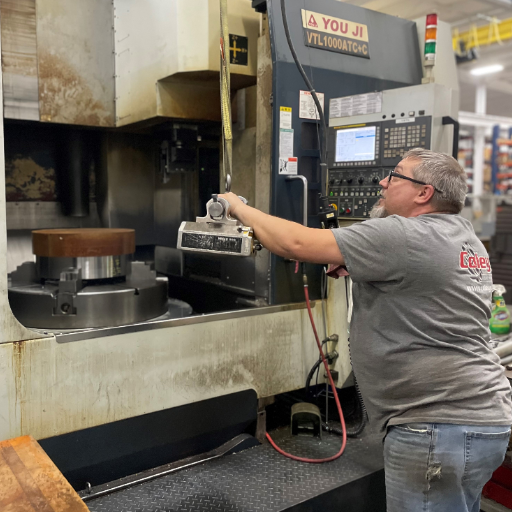
Aerospace Industry Examples
CNC vertical lathes form the backbone of the aerospace industry, where precision, reliability, and efficiency take precedence. Where CNC vertical lathes are found in action in aerospace is in the fabrication of turbine blades, aircraft engine parts, and structural components. While strong tolerance capacity is a prerequisite for the CNC vertical lathe performance, it is equally vital in the aviation industry, given the safety and performance concerns.
Modern aircraft engines often contain turbine blades that are subjected to extremely high temperatures and have to be balanced against very high rotational speeds. CNC vertical lathes thus become the perfect choice for manufacturing these components by utilizing multi-axis machining, thereby ensuring proper symmetry and cleanliness. The CNC machining market for the aerospace industry worldwide is expected to grow at a rate of 6.2 percent annually, reaching a valuation of $5.9 billion by 2030, indicating a rising demand for high-precision manufacturing.
Another avenue where CNC vertical lathes significantly make their impressions in weight-saving initiatives of aerospace concern the efficient machining of lightweight materials, viz., titanium, composites, etc., and conservation of material. Increasingly, these factors can lead to performance improvements and align with global sustainability goals, thereby highlighting the critical role CNC vertical lathes play in the aerospace industry.
Automotive Manufacturing Applications
CNC vertical lathes are essential in automotive manufacturing for the precise machining of critical components, including brake discs, wheel hubs, and transmission parts. This machinery is well-suited for manufacturing parts with tight tolerances, ensuring durability and reliability for actual vehicle applications.
With soaring interests in electric and hybrid vehicles requiring special lightweight components for energy efficiency, it is therefore forecast that the global automotive CNC machinery market will witness a 5.6% CAGR between 2023-2030. CNC vertical lathes are well-suited for machining aluminum and other lightweight alloys, which can further reduce vehicle weight and increase fuel efficiency.
Additionally, modern CNC vertical lathes offer real-time monitoring and IoT connectivity that producers can utilize to enhance production lines, reduce downtime, and increase output. With automation on the rise, these machines have recently cut production time for automotive components by 30%, which, in turn, has accelerated the time-to-market for new models.
Precision and versatility make CNC vertical lathes a prerequisite for the automotive industry’s pursuit of sustainable practices today and tomorrow, including the development of electric drivetrains, autonomous systems, and innovative materials. CNC vertical lathes will drive and bring about change in modern automotive production, thereby optimizing production methods and ensuring that every batch meets the set quality criteria.
Heavy Machinery Production Use Cases
From this comprehensive collection of industries, CNC vertical lathes stand out for their ability to produce heavy machinery that requires large, complex, heavy, and highly precise workpieces. Construction, mining, or energy will manufacture their works in turbine shafts, hydraulic cylinders, and massive gear systems.
Redefining the boundaries of the heavy machinery course and driving greater developments, the global heavy machinery market is expected to reach $560 billion by 2027, with a CAGR of 4.5 percent, driven by infrastructure development and renewable energy projects. CNC vertical lathes stand tall in the development of the heavy machinery sector by producing durable parts of the highest quality, which are fitted for heavy machinery under testing Conditions. For instance, by machining components with diameters of several meters, their massive and heavy equipment, the large wing turbine-engineers are assured of strength and recognition.
The latest technical features of CNC, such as multi-axis control and advanced sensors, would enhance the trade-off between production capacity and accuracy. Manufacturers will be able to maintain tighter tolerances while reducing high levels of material waste, which aligns with the market’s call for greater efficiencies and sustainability. Considering such advances, CNC vertical lathes will become a leading force in meeting the production needs of heavy machinery as it continues to evolve.
Choosing the Right CNC Vertical Lathe Machine
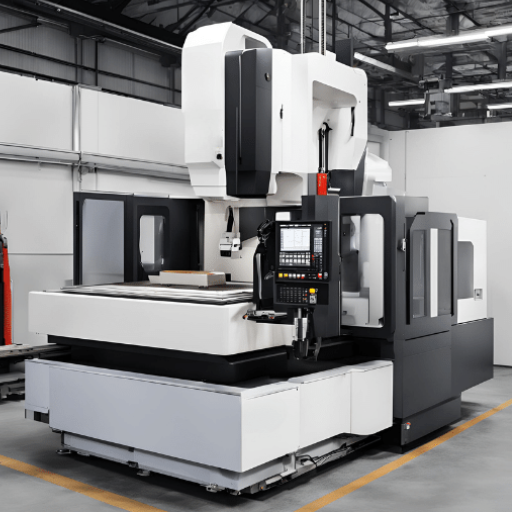
Budget Considerations
Budget considerations are paramount in choosing a CNC vertical lathe machine because it must be aligned with the specific activities to be performed. CNC vertical lathes vary in price, depending on the size of the machine, its capabilities, and features. For instance, entry-level vertical CNC lathe or CNC vertical lathe would cost about $50,000 for a small setup, while, for the higher level, multi-axis CNC vertical lathe with automation capabilities, it could go for $500,000 and upwards.
Conversely, the key factors that determine the cost of machine quality are build quality, spindle speeds, control system sophistication, and other features such as automatic tool change and in-process measurement. Therefore, high-priced Kutchmachines or CNC vertical lathes would save you money in operation and maintenance compared to low-priced ones, which may be inefficient, prone to frequent breakdowns, and have poor production accuracy. Recent market trends indicate that high-end CNC vertical lathes with IoT integration and intelligent monitoring systems are in high demand, as the manufacturing sector transitions toward Industry 4.0.
Consider operational costs for utilities consumption, maintenance, and tool wear. Some options for purchasing could include refurbished machines or flexible financing arrangements, thereby providing financial relief while maintaining the machine’s quality. The performance-costing option, also known as cost-benefit analysis, and consultation with experienced suppliers of machinery should guide you in selecting the most essential machine, taking into account both budget and production goals.
Machine Specifications and Capabilities
When selecting machinery, it is essential to place paramount importance on understanding the specifications and capabilities that suit production requirements. Most modern industrial machines come equipped with features designed to optimize efficiency and productivity. Here are some key requirements and capabilities to give some thought to:
1. Production Speed and Capacity
Operating speed has increased over time; some states claim that their high-performance machines can output up to 10,000 units per hour, depending on the type of product. Automated controls and flexible settings enable faster changeovers between production batches, thereby reducing downtime.
2. Energy Efficiency
Most manufacturers now emphasize energy efficiency in their designs. These include the implementation of energy-saving technologies such as using VFD (variable frequency drive) in their motor specifications, which reduces power usage by about 20-30%, as well as idle mode since the production is being paused.
3. Precision and Accuracy
With CNC systems, advanced machines provide the highest level of accuracy. Some machines are as precise as ±0.001 inches, ensuring that the quality of the specific degree remains consistent for every product.
4. Digital Integration and Smart Features
Technologies for Industry 4.0 enable the effective integration of machines into management software, thereby minimizing interruptions during operations and promoting overall productivity. Recent reports indicate that approximately 75% of newly purchased industrial equipment features IoT implementation.
5. Material Compatibility
Machines have been designed to work with numerous categories of materials, ranging from metals through plastics and even to softer composites. One example is the 3-axis CNC machines, which are currently capable of handling aluminum, titanium, and wood, making them applicable to a variety of industries.
6. Footprint and Scalability
Compactness of machine design enables easy saving of production floor space. Modular unit design allows for the addition of further components to scale up in the future. You can find machines with footprints as low as 50 square feet, which suits smaller businesses.
All of these characteristics demonstrate how technology has enhanced the capabilities of machinery to achieve greater productivity and lower operational expenses. It is essential to tailor the specifications of the same machines to current production needs and future growth, creating value and remaining adaptable in the long run.
Appraising Industry Needs
Industries need to appraise their needs for staying competitive in this fast-paced market. The worldwide industrial automation market is expected to expand at a CAGR of 9.2% from 2023 to 2030, according to a recent market analysis, driven primarily by the need for higher efficiency and reduced production costs. AI-based intelligent systems, IoT-enabled devices, and data analytics have become the focus of interest for manufacturers aiming to make better decisions and stay agile in a dynamically changing environment.
Energy efficiency has become one of the most critical factors influencing industry needs. According to a recent report, more than 40% of industrial enterprises are adopting green technologies to comply with environmental regulations and improve energy efficiency. Simultaneously, custom manufacturing, made possible by state-of-the-art machinery with a modular design, allows for the ability to respond to niche demands without forfeiting scalability.
The rapid growth of innovation and shifting times demand that industries equip themselves not only with cutting-edge technologies but also with sustainable and adaptable solutions to prevail in this rapidly evolving landscape. Knowledge of these trends will enable informed decisions in establishing a resilient business model that can withstand future challenges.
Reference Sources
-
Search Keywords: Use terms like “CNC Vertical Lathe Machine,” “Vertical Turning Centers,” or “Precision Machining” combined with filters for publication years (e.g., 2018–2023).
-
Filter Results: Focus on studies published in reputable journals or conferences within the last five years.
-
Summarize Findings: For each paper, review the abstract and methodology sections to extract key findings and approaches.
Frequently Asked Questions (FAQs)
What is a CNC vertical lathe machine?
A CNC vertical lathe machine, often referred to as a vertical turning lathe (VTL), is a machine tool used for machining large workpieces. These machines feature a vertical orientation that allows for the easy loading and unloading of heavy workpieces. The CNC aspect refers to the computer numerical control, which automates the machining process, enhancing precision and productivity. A typical CNC vertical lathe features a spindle that holds the workpiece, and various tools can be integrated for different machining processes, such as turning, drilling, and tapping. Manufacturers like Okuma offer advanced models with features such as high torque and rigidity, which are essential for stable machining of large-diameter workpieces. The versatility of these machines makes them ideal for a range of industries.
How does a vertical turning center differ from a CNC lathe?
A vertical turning center is a type of CNC lathe designed explicitly for machining workpieces vertically. While both machines serve similar purposes, the orientation of the spindle and workpiece in a vertical lathe allows for better gravity assistance during the machining process, particularly for heavy-duty applications. Vertical turning centers often have a larger working area, which can accommodate bigger workpieces compared to traditional horizontal CNC lathes. The automation features in vertical CNC lathes enable tasks like automatic tool changing and integrated loading and unloading systems, which enhance productivity and reduce manual labor. Additionally, vertical turning centers can achieve a superior surface finish due to the stable machining conditions provided by their design. Understanding these differences enables manufacturers to select the most suitable machine tool for their specific requirements.
What types of workpieces can be machined on a CNC vertical lathe?
CNC vertical lathes are capable of machining a wide range of workpieces, particularly those with large diameters and significant weight. Typical workpieces include components used in the aerospace, automotive, and heavy machinery industries. The ability to handle heavy workpieces is one of the key advantages of vertical turning centers, which are designed to accommodate high torque and rigidity. Additionally, these machines can perform various machining processes such as turning, grooving, and threading, making them versatile for different applications. The integration of optional features, such as C-axis programming, enables more complex operations, thereby expanding the range of workpieces that can be produced. Overall, the adaptability of CNC vertical lathes makes them an essential tool in manufacturing environments.
What are the benefits of using CNC vertical lathes in manufacturing?
Using CNC vertical lathes in manufacturing offers numerous benefits, including increased productivity and precision. The automation capabilities of these machines streamline the machining processes, reducing the need for manual labor and minimizing human error. With features like automatic tool changers and integrated loading systems, CNC vertical lathes enhance efficiency by enabling continuous operation and quick turnaround times. Additionally, their vertical design allows for better management of heavy workpieces, ensuring stability during machining. Manufacturers can achieve high repeatability and excellent surface finishes, which are critical for meeting stringent quality standards. The ability to integrate advanced technology, such as Fanuc controls, further enhances the performance of these machine tools, making them a valuable asset in modern manufacturing.
How to Select the Right CNC Vertical Lathe for Your Needs?
Choosing the right CNC vertical lathe involves considering several factors, including the size and weight of the workpieces that need to be machined. Assess the machine’s specifications, such as spindle power, axes configuration, and available tooling options, to ensure it meets your production requirements. It is also essential to evaluate the machine’s rigidity, vibration management, and thermal stability, as these factors significantly impact machining quality. If your operations require high productivity, look for models that offer automation features like tool changers and loading systems. Additionally, consider the manufacturer’s reputation and the availability of support services, as these factors can significantly impact your operational efficiency. Lastly, explore the range of CNC vertical lathes available on the market, including used CNC vertical options, to find a machine that fits your budget and performance needs.