





Face milling is a vital machinery operation, primarily known for precision and versatility. Essentially, this process is indispensable in the manufacturing field. For both expert machinists and novices, understanding face milling can make all the difference between the best and most effective projects. This article provides a comprehensive overview of the various tools, operations, and tips for maximizing the benefits of face milling. Key information, from cutting tool selection to machine settings, will be shared to help you achieve a perfect surface finish while enhancing production efficiency. So, deepen your knowledge of face milling finishes and begin to harness this knowledge in your machining techniques effectively.
Understanding Face Milling

A machining procedure to form flat surfaces on workpieces, mostly at right angles to the axis of a rotating cutting tool, is termed face milling. The cutter here contains multiple cutting edges, each capable of removing material at large volumes to attain a good finish. Usually, it is used to prepare or finish a large flat area with metals and composite materials. From the selection of the right cutting tool to setting the feed rates and spindle speeds, all factors determine the face milling process, which, in turn, translates into precision and finish.
What is Face Milling?
With several cutting edges on the rotary cutting tool, the face milling process removes material from the surface of the workpiece. It is essential in several manufacturing and engineering industries due to the elements used to create flat, smooth, and even surfaces. Typically, this is performed on a milling machine, with the cutter rotating perpendicular to the workpiece.
In modern face milling, carbide and ceramic inserts are features implemented to achieve better cutting action and longer tool life. Cutter selection, the number of teeth present, feed rate, cutting speed, and depth of cut all play essential roles in determining the finish quality and precision of the operation. To illustrate, HSS tools may be used for softer materials, but having carbide inserts for harder metals is preferable since they can withstand greater speeds and are less prone to wear.
Key Performance Parameters:
- Aluminum: Cutting speeds of 100-200 ft/min
- Stainless Steel: Cutting speeds of 60-80 ft/min
- Feed Rates: Between 0.004 and 0.012 inches per tooth
Moreover, these days, innovative milling technologies are equipped with CNC technology, facilitating the automation of the rest of the process and subsequent iterations. During the CNC machining process, manufacturers can maintain tighter tolerances, produce more complex geometries, and minimize machining time, resulting in a more substantial day-to-day productivity impact.
Difference Between Face Milling and End Milling
Face Milling and End Milling are two operations that are different and have different uses and tools.
| Aspect | Face Milling | End Milling |
|---|---|---|
| Primary Use | Creating firm, flat surfaces | Slotting, pocketing, shaping complex contours |
| Tool Design | Multiple cutters on the same face, cutting edges on periphery and face | Cutting edges on both tips and sides |
| Application | Machining large, flat areas, smooth finish | Detailed, three-dimensional shapes and profiles |
| Cutting Direction | Primarily planar surfaces | Multi-directional machining tasks |
Applications of Face Milling
The presence of face milling in many industries is predominant because free membranes help to provide flat, smooth surfaces on the workpieces. It is crucial when manufacturing processes require high precision and surface finish. Some common applications are found in the automotive, aerospace, and heavy machinery sectors.
Common Applications Include:
- Engine blocks – Ensuring flat mating surfaces
- Gearbox housings – Precision alignment requirements
- Structural plates – Heavy machinery components
- Automotive parts – Critical mating surfaces for functionality and longevity
By achieving very high precision and efficiency, advanced face milling techniques can utilize modern CNC machines. Industry information reports surface roughness as fine as 0.8 Ra micrometers by face milling, depending on the cutting parameters and tool selection. The latest face milling cutters enable higher rates of material removal, reducing machining times by approximately 20% compared to older technologies.
In addition to aluminum and steel, this face milling operation handles various materials, including titanium and composites, making it a versatile solution for multiple industries. The versatility of face milling, which allows for both high-speed and high-feed operations, enables manufacturers to strike a balance between speed and quality, depending on the demands of a particular project.
Choosing the Right Face Milling Tool

Factors to consider when choosing the appropriate face milling tool:
- Material Compatibility: Select a tool designed for the material being machined, for example, aluminum, steel, or titanium. This way, it works properly and lasts long enough.
- Machine Capability: The tool used must match the machine’s speed, power, and rigidity to ensure maximum efficiency and long tool life.
- Cutting Edge Geometry: The cutting geometry must be selected based on whether high-speed or high-feed operations are to be carried out.
- Coating and Durability: Fully coated tools can enhance wear resistance and improve heat management in high-performance operations.
- Application Needs: Identify whether surface finish, material removal rate, or versatility is desired and select a tool accordingly.
Considering the above factors for evaluation will help in selecting a face milling tool that yields excellent results for the application at hand.
Types of Face Milling Tools
Face milling tools come in various designs and specifications, all designed to ensure efficient machining according to specific application requirements. Below are the major categories and their properties:
1. Indexable Insert Cutters
These types allow for replaceable inserts to be exchanged without discarding the whole cutter body, which is a cost-effective operation when running big jobs. Heavy-duty applications are primarily their domain, and they offer a high material removal rate. As a rule, indexable cutters utilize carbide inserts that are capable of withstanding wear and heat during high-speed operations.
2. Solid Carbide Cutters
Renowned for their rigidity and precision, solid carbide tools are designed for applications that require high levels of accuracy and surface finish. They do well on stainless steels, titanium, and other heat-resistant alloys. These solid carbide face mills can be used for high-speed machining, which reduces downtime associated with frequent tool changes.
3. Face Mills with High Shear Geometry
High shear geometry tools are designed to reduce cutting forces, making their effectiveness most pronounced when used on soft materials, such as aluminum. They provide the surface with an excellent finish and are highly sought after in aerospace and other industries where stringent surface finish criteria are required.
4. Ceramic and CBN Face Mills
These cutters for machining hardened steels and superalloys are brought in when extreme temperatures are met, and on lower grains of ceramic and CBN, they need to be held. Although these cutters are costly, they are often used at the highest possible efficiency and highest possible wear resistance in those conditions.
5. Adjustable Face Milling Cutters
These cutters feature an adjustable system that allows for changing the cutter diameter or insert position. This feature enables the machinist to utilize the tool in various configurations, thereby optimizing inventory and reducing tooling costs in the long run.
6. Shell Mill
With shell mills, the cutter body is detachable and is mounted on an arbor. They are used for maintaining large surfaces and removing heavy materials. Shell mills, supporting large diameters, constitute the quintessential tool for heavy industrial machining.
By evaluating the available applications for face milling by material, tolerance, and finish, manufacturers can achieve greater productivity, cleaner finishes, and longer tool life.
Considerations for Selecting a Tool
Selecting a face milling tool involves the careful consideration of the following factors to maximize performance and efficiency:
- Material of the Workpiece: The tool material and coating must be suitable for the type of material being machined. For more challenging workpieces, such as stainless steel or titanium, a tool with greater hardness and heat resistance may be required.
- Tool Geometry: Select tools with proper insert geometries and cutting angles that match the expected finish, depth of cut, and chip evacuation requirements. When chosen well, geometry ensures minimal vibrations and maximum tool accuracy.
- Machine Capability: Depending on the milling machine’s capabilities, select a tool of the appropriate size and weight. Running a tool that overloads the machine results in tool failure and inconsistent outcomes.
- Cutting Speed and Feed Rates: Consider tools that are rated for the speed and feed being used; this will allow tooling to achieve the desired performance without reducing the tool’s life.
- Desired Surface Finish: For applications that demand higher dimensional accuracy or some exceptional finish, tools with more optimized coatings and sharper edges yield better results.
With these considerations aligned with your machining requirements, productivity increases, operational costs decrease, and the long-term tool life is sustained.
Indexable Face Mills vs. Traditional Tools
In contrast to regular solid-end milling tools, indexable face mills also have certain advantages and disadvantages, depending on the application. The main feature of indexable face mills is the greater freedom of choice for cutting operations. The interchangeable inserts, each of carbide or a similar, more rigid material, may be used. The inserts are rotated when worn or may be entirely replaced, cutting down on setup time and eliminating the need for tools to be reground, thereby reducing demand on traditional tools.
| Feature | Indexable Face Mills | Traditional Tools |
|---|---|---|
| Cost Efficiency | 20% reduction in tooling costs | Higher long-term costs due to regrinding |
| Cutting Speed | 30% faster cutting speeds | Standard cutting speeds |
| Setup Time | Reduced – insert replacement only | Higher – requires regrinding |
| Precision | Now comparable to solid carbide | Excellent for close tolerances |
| Best Application | High-volume operations | Precision work, intricate details |
Recent commercial developments of indexable face mills have improved surface finish quality to a point comparable to that offered by solid-carbide end mills, with special geometries and coatings enhancing their performance in fine-finishing applications. At the same time, optimal chip evacuation and heat dissipation capacity promote tool life and maintain process reliability even in roughing and semi-finishing jobs.
On a final note, selecting between indexable face mills and traditional tools depends on factors like production volume, material types, and required finishes, among others. For high-efficiency machining, with a direct goal of reducing cycle time and maintenance, indexable tools almost always present themselves as the better option.
Face Milling Process and Operations

Face milling removes material from the face of the workpiece with a rotating tool having multiple cutter teeth. The main objective is to provide a flat, smooth surface. In face milling, roughing operations involve removing metal as rapidly as possible to increase production, while finishing operations aim to impart the desired surface finish. From the perspective of operational efficiency and accuracy, feed rate, spindle speed, and cutting depth are the primary parameters that must be controlled during face milling. Face milling is a widely used machining process in industries that require better dimensional accuracy and surface finish.
Overview of Milling Operations
Milling operations remain vital in the manufacturing process when accuracy, detail, and component assemblies are demanded. Depending on the task at hand, various milling methods and techniques are employed to optimize milling for dimensional accuracy, speed, and surface finish.
Modern Milling Techniques:
- Precise End Milling: Multi-flute end mills increase productivity and reduce cycle times
- Planar Milling: Large tool diameters for efficient material removal, speeds exceeding 300 meters/min for aluminum
- High-Speed Milling (HSM): Can reduce production time up to 50% while maintaining tight tolerances
- Thread Milling: Offers fewer tool breakage chances compared to taps, especially in harder materials
- CNC Milling: Achieves tolerances as exact as ±0.005 inches with automated precision
Steps in the Face Milling Process
- Workpiece Setup and Alignment: The workpiece is securely clamped onto the milling machine table to prevent accidental movement or displacement during machining. Precise alignment is required so that the surface being milled maintains its flatness. Contemporary machines often deploy automated systems to achieve accurate setup.
- Tool Selection: The selection of the face mill cutter depends on typical conditions, such as workpiece material, finish quality, and machining parameters. Most tools feature multiple cutting edges with carbide inserts, which enhance their wear resistance and speed of metal removal.
- Determination of Cutting Parameters: The cutting speed, feed rate, and depth of cut are established depending on the physical characteristics and production requirements. For example, the cutting speed for aluminum is typically within the range of 800-1,500 surface feet per minute (SFM), whereas for harder metals like titanium, lower speeds ranging from 150-300 SFM are usually employed.
- Initial Roughing Pass: The first phase involves removing as much material as possible to achieve the rough preform on the workpiece. Here, time is of the essence. With a high feed and deep depth of cut, the finest material can be removed while maintaining tool stability.
- Fine Finishing Pass: A fine finish is applied after the roughing pass to achieve the required surface finish and remove any remaining surface irregularities. The fine finish feeds slowly and shallowly, typically producing a very smooth surface with surface roughness below 32 microinches (Ra).
- Coolant Application: Throughout the entire manufacturing process, coolants or cutting fluids are applied to cool both the cutting tool and the workpiece, thereby extending tool life and minimizing thermal deformation of the workpieces. If necessary, an MQL setup or a high-pressure coolant setup can be incorporated to achieve optimal performance.
- Inspection and Quality Control: After machining, the workpiece undergoes dimensional inspection and a surface quality check. Tolerances and surface profiles are confirmed within stringent limits using either CMMs or laser scanning.
- Post-Processing (If required): Depending on the application, further steps such as deburring, polishing, or heat treatment may be carried out to ready the finished piece for assembly or its use in a finished product.
Common Milling Techniques
| Technique | Description | Best Applications |
|---|---|---|
| End Milling | Cutting tool has teeth at the tip and sides, versatile for face and peripheral operations | Intricate contours, slots, precise holes |
| Face Milling | Produces smooth, flat surfaces perpendicular to cutter’s axis | Large flat surfaces, smooth finishes |
| Plain Milling | Circular cutter with horizontal axis rotation | Rapid material removal, flat surfaces |
| Angular Milling | Cutting tool positioned at angle to workpiece surface | Chamfers, grooves, inclined planes |
| Gang Milling | Multiple cutters on same arbor working simultaneously | Production milling, multiple surfaces |
Optimizing Face Milling Performance

Key Optimization Strategies:
- Tool Selection: Select tools made of the correct material with the right coatings and geometry in relation to the work material, to achieve maximum cutting efficiency and tool life.
- Maintain Correct Cutting Parameters: Vary feeds, speeds, and depth of cut according to material and tool specifications to achieve a good balance between output and surface finish.
- Maintenance of Tools and Equipment: Regularly inspect and maintain tools and other machine components to minimize vibrations and ensure consistent performance.
- Use Coolant: Use the correct quantity and type of coolant to minimize heat generation, improve finishing quality, and prolong tool life.
Practical Tips for Efficient Milling
1. Optimize Cutting Speeds and Feeds
To achieve efficient milling operations, it is essential to apply cutting speeds and feeds properly. For instance, the finer the cutting fineness, the more it transmits, thus increasing the wear of the tool. Modern machining recommendations advocate a compromise on speeds to enhance tool life, while also improving surface finish.
| Material | Recommended Speed (SFM) |
|---|---|
| Aluminum | 500-1000 |
| Hard Steel | 100-200 |
2. Leverage High-Performance Tooling
Investing in advanced carbide or coated cemented carbide tools for specific materials and applications is beneficial. These high-performance tools reduce machining cycles and withstand the high temperatures associated with machining tough materials, such as titanium alloys or stainless steel. It has been found that the application of coated carbide tools can increase tool life by 50% or more, particularly under highly demanding conditions.
3. Choose the Right Milling Strategy
Surface quality and tool deflection can be enhanced by using methods such as climb milling, which is opposed to straight conventional milling. The shear cut is comparatively clean in climb milling; less heat is generated, and tool life gets prolonged. For this, the machines must have minimal backlash to produce consistent results effectively.
4. Utilize Toolpath Optimization Software
Current CAD/CAM software suites often feature toolpath optimization routines designed to enhance efficiency. Adaptive milling, in particular, involves maintaining a constant load on the tool, which prevents it from undergoing sudden stress. This allows for up to 30% faster material removal compared to traditional tool paths.
5. Monitor Tool Wear
The integration with real-time monitoring systems can help vary tool wear and the quality of the part being manufactured. Sensors, as well as post-process inspections, enable the replacement of a tool at just the right time, thereby minimizing waste and downtime. Some research says that the proactive approach may reduce tool failures by up to 40%.
Understanding Workpiece Material
The choice of workpiece material significantly influences machining processes, as it sets the framework for tool selection, cutting speeds, and the process’s overall efficiency. Materials are subjected to different cutting forces and temperatures depending on their unique properties, such as aluminum, steel, titanium, and composites. For softer materials, such as aluminum, machining operations are relatively straightforward; however, one must take measures to achieve surface finishes, as aluminum tends to adhere to the tool. Harder materials require a whole range of varying conditions that necessitate different tools, cutting parameters, and techniques to prevent tool wear and overheating.
Key Material Considerations:
- Hardness – Determines cutting forces required
- Tensile Strength – Affects tool wear patterns
- Thermal Conductivity – Influences heat dissipation
- Machinability Rating – Overall ease of machining
Machine Setup for Optimal Results
An excellent machining result is achieved by proper machine setup. Initially, the first thing to be checked is machine cleanliness; any dust will affect the precision of the machining process. Set the workpiece with appropriate fixtures or vises to prevent it from moving during the operation. Set up the machine and the cutting tools, ensuring the cutting tools are appropriately sharpened for the material being machined. The coolant system should be checked to ensure it is working correctly, and the correct type and quantity of coolant should be applied to cool down the heat and reduce wear on the other hand. Lastly, the suitable cutting parameters will include speed, feed rate, and depth of cut to achieve the best material properties, tool geometry, and finish. Regular monitoring of these parameters will help ensure accuracy, increase tool life, and maximize efficiency.
Advanced Face Milling Techniques
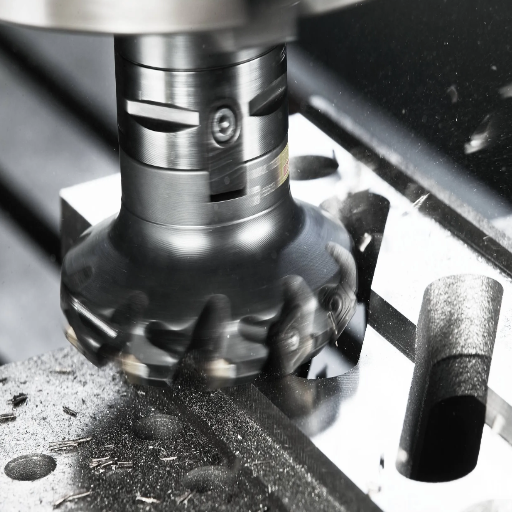
Below are the main factors that one should keep in mind to obtain the best surface finish during face milling:
Key Factors for Optimal Surface Finish:
- Use High-Quality Tools: Use sharp tools and those made from materials that can withstand the forces exerted by the workpiece.
- Select Proper Cutting Parameters: The speed, feed, and depth of cut should be selected to minimize vibrations and achieve a smooth finish.
- Maintain Tool Alignment: Check the tool’s alignment to prevent uneven cutting across the surface.
- Apply Adequate Coolant: A proper type and sufficient amount of coolant should be applied to maintain a low temperature and prevent damage to either the tool or the material.
- Inspect and Adjust Regularly: Since conditions change, inspect the process continuously and adjust as needed to remedy problems related to chatter or tool wear for consistent finishing results.
Implementing these factors into practice enhances the surface quality and efficiency of the machining process.
Utilizing Shell Mills in Face Milling
Shell mills are designed for use in typically one or two face milling operations, removing bulk material quickly while achieving a smooth finish. For optimal results, selecting a shell mill for your operation should be based on the material, the desired finish, and the machine’s capabilities.
Shell Mill Best Practices:
- Tooling: Use shell mills with the proper number of teeth, cutting diameter, insert material, and geometry that correspond to the respective operation and workpiece material, whether it is steel, aluminum, or composites.
- Setup: The shell mill must be properly mounted onto the arbor and must align with the machine spindle; otherwise, it may cause inaccuracies and vibrations.
- Cutting Parameters: Provide suitable speeds and feeds that strike a balance between efficiency and tool life. A lower feed rate can increase surface finish but reduce productivity.
- Coolant Usage: Apply coolant as needed for materials that generate excessive heat to protect the tool from wear and thermal damage.
- Regular Monitoring: Be vigilant for signs of tool wear, such as chatter and inconsistent performance, and adjust your approach accordingly.
Shell mills are highly efficient in creating flat surfaces and can be used to prepare material for further machining. Adhering to these practices will ensure increased machining efficiency, better tool life, and constant quality.
Peripheral Milling and Its Benefits
Peripheral milling is a machining process in which cutting occurs primarily along the periphery of the cutting tool. It is a preferred machining process, as it provides an excellent surface finish, a high metal removal rate, and efficiently machined complex contours. It is mainly used for the precise machining of components and large-scale jobs with utmost accuracy and consistency.
Benefits of Peripheral Milling:
- Excellent Surface Finish – Superior quality compared to other methods
- High Metal Removal Rate – Efficient material processing
- Complex Contour Capability – Handles intricate shapes effectively
- Precision Machining – Ideal for high-accuracy requirements
- Consistency – Reliable results for large-scale production
Innovative Milling Applications
Nowadays, milling applications have revolutionized manufacturing scenarios by offering enhanced precision, speed, and versatility. High-speed milling is an advanced technique that increases production efficiency by lowering cycle time while maintaining quality. Likewise, 5-axis milling has offered an entirely new way of completing complex parts by allowing movements along multiple axes simultaneously and is, thus, ideal for making aerospace and automotive components. Another hybrid milling treatment is gaining significant interest as it combines additive manufacturing with subtractive machining for even greater design freedom. This provides a clear view of how the treatment zones in milling continue to advance, thereby continually expanding the horizons of industrial engineering.
Modern Milling Innovations:
| Technology | Key Benefits | Applications |
|---|---|---|
| High-Speed Milling (HSM) | Increased production efficiency, reduced cycle time | General manufacturing, precision components |
| 5-Axis Milling | Multi-axis movement, complex geometries | Aerospace, automotive components |
| Hybrid Milling | Combines additive and subtractive manufacturing | Complex designs, rapid prototyping |
Conclusion
Face milling stands as a cornerstone of modern manufacturing, offering unparalleled precision and versatility in creating flat, smooth surfaces across various materials and industries. From understanding the fundamental differences between face milling and end milling to mastering advanced techniques and tool selection, this comprehensive guide has covered the essential aspects that determine machining success.
The evolution of face milling technology, including the integration of CNC automation, advanced cutting tools, and innovative milling strategies, continues to push the boundaries of what’s achievable in manufacturing. Whether you’re working with aluminum, steel, titanium, or composites, the principles and practices outlined in this guide will help you achieve optimal results while maximizing efficiency and tool life.
As manufacturing demands continue to evolve, staying informed about the latest developments in face milling techniques, tooling innovations, and process optimization strategies will ensure your machining operations remain competitive and capable of meeting the most stringent quality requirements.
Reference Sources
Optimization of Process Parameters of CNC Milling
Frequently Asked Questions (FAQs)
Please describe the face milling process.
The face milling operation refers to a machining process that uses a face mill to remove material from large, flat surfaces on the workpiece. Typically, the tool will rotate such that it is perpendicular to the surface of the working piece, efficiently removing large amounts of material and leaving behind a smooth surface finish.
How do I choose a tool for face milling?
Generally, the selection of tools for face milling should consider the material to be cut, the desired finish, and the type of milling operation intended to be performed. Face mills and end mills for general face milling are among the available options, typically equipped with either indexable or wiper inserts.
What are some advantages of indexable face mills?
Above all, doctoral edge options provide several essential advantages. Replaceable cutting edges, i.e., worn cutting edges, can be replaced without disposing of the complete tool. That saves on purchase and downtime. Additionally, they are versatile, as they can be used for processing a variety of materials and performing milling operations.
What is the difference between face milling and peripheral milling?
Face milling and peripheral milling are two different types of milling processes. Face milling predominantly machines flat surfaces and is done with a face mill. Peripheral milling, on the other hand, cuts along the periphery of the tool and is typically used for deeper cuts and more complex shapes.
What are the handy tips to increase face-milling efficiency?
To optimize face milling, consider adjusting the spindle speed and feed rate based on the material being machined. Utilizing high-performance face milling cutters can also improve efficiency. Additionally, maintaining a proper depth of cut and ensuring the tool is sharp will enhance the overall milling process.
What types of materials can be machined using face milling?
Face milling can be applied to a variety of materials, including metals like aluminum and titanium, as well as composites and plastics. The choice of face milling cutter and inserts should be tailored to the specific material to achieve optimal results.
How does the feed rate affect face milling operations?
The feed rate is crucial in face milling operations as it determines the amount of material removed per revolution of the cutter. A higher feed rate increases productivity but may compromise surface finish, while a lower feed rate allows for finer finishes but can slow down the process.
Can face milling be applied to heavy machining?
In general, heavy-duty face milling is indeed a machining technique that removes a massive amount of material. The face milling tools are designed to withstand high cutting speeds and forces, enabling them to operate in very demanding manufacturing environments.
What role does a milling machine have in face milling?
The milling machine is at the heart of all milling work, providing all the precision and control required. It allows for adjustments in spindle speed, feed rate, and depth of cut, enabling this final operation to be carried out efficiently and yielding good results.