

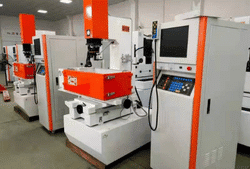



Discover the astounding benefits and applications of Wire Cut EDM technology
The industry has long regarded Electrical Discharge Machining for its precision manufacturing and complex cutting capabilities. With the increasing evolution of technology, Wire Cut EDM has emerged as a refined and efficient solution, offering advantages that are unimaginable in conventional EDM methods. This blog will cover the astounding benefits of Wire Cut EDM, enabling readers to understand why it is gradually becoming the preferred choice for machining intricate parts and achieving extremely high precision. From accuracy to minimizing material waste, we will discuss the basics of being different and how Wire Cut EDM enables manufacturers to accomplish their most challenging projects. Keep in touch to uncover how this could be your game-changer.
Introduction to EDM Technologies
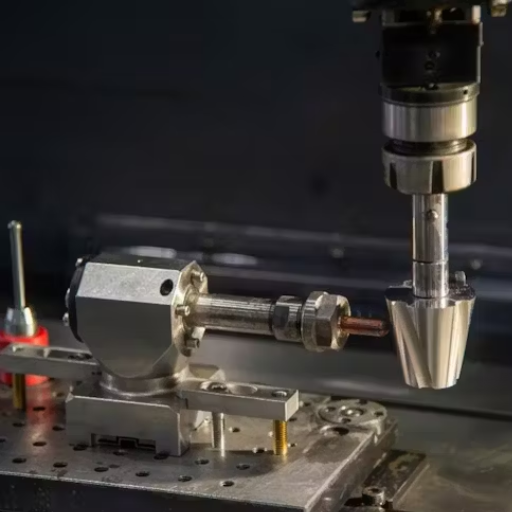
EDM is a technique used in manufacturing processes for shaping hard metals and creating fine components that are difficult to machine using conventional methods. It is a production process formed by electrical discharges, wherein sparks are generated and carry away portions of material from the workpiece. The main ones are Wire Cut EDM, Sinker EDM, and Hole Drilling EDM, all designed for specific machining operations. It finds use in the aerospace, automotive, and tool-making industries, among others, to handle complex geometries with tight tolerances and minimize material waste.
Understanding Electric Discharge Machining
Working Principle of Electric Discharge Machining
Electric Discharge Machining is a method of machining in which sparks are created and utilized in a controlled way to erode material from a conductive workpiece. Both the tool electrode and the workpiece are insulated while in contact with a dielectric fluid, which serves as both an insulator and a coolant. Upon applying a suitable voltage across the two electrodes, an electric field is created that causes a sudden, localized ionization of the dielectric. High-intensity sparks are generated, vaporizing or melting tiny amounts of material, enabling the removal of very fine material.
Key Benefits and Applications
These machines are precise and can exhibit tolerances that are suitable for manufacturability. The available capacities include Wire Cut EDM, which offers tolerances of up to ±0.001 inches, and Sinker EDM, used to manufacture complex cavities and undercuts. Due to these capacities, EDM finds significance in the manufacture of turbine blades for aircraft, the production of auto dies, and the medical field for surgical instruments.
Advancements in EDM Technology
In recent years, various technological upgrades have improved the efficiency and performance of EDMs. New EDM machines with CNC controls are now manufactured to enhance precision and productivity. From a safety and environmental standpoint, recent upgrades in dielectric fluids favor the use of environmentally friendly and less volatile fluids. EDM machining time has reportedly dropped by 20-30% over the last decade, thus enhancing its importance in the industry.
Material and Limitations
It works with conductive materials like titanium, steel, and exotic alloys; hence, it is applicable for various purposes. On the contrary, it is incapable of treating non-conductive materials such as plastics or ceramics. Secondly, considering its process of converting electrical energy into work and its lengthy machining time for larger components, this will actually lead to higher operational costs than traditional machines. Despite all these constraining factors, EDM occupies a crucial role in industrial machining that requires extremely fine precision.
Types of EDM Machines
Primarily, there are three types of EDM machines, each developed for particular applications:
Wire EDM (Wire Cut EDM)
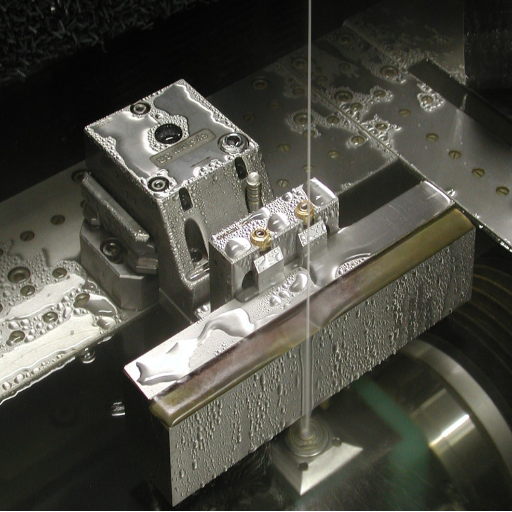
Wire EDM uses a thin electrically charged metal wire as the cutting tool to create fine, intricate shapes on conductive materials. This method is often used to manufacture parts with acceptable tolerance, such as dies, molds, and precision components. This type is ideal for work requiring high precision and a smooth finish.
Sinker EDM (Die-Sinking EDM)
In the Sinker EDM method of machining, a specially shaped electrode is immersed in a dielectric fluid and is used to erode material from the workpiece. This method is used for creating cavities or intricate geometries in molds and dies. The Sinker EDM works well with hardened materials and is ideal for complex three-dimensional shapes.
Hole-Drilling EDM (Small-Hole EDM)
Hole-drilling EDM creates precise holes in conductive materials. This method is intensely useful for applications such as cooling channels in turbine blades or for small starting holes for wire EDM operations. Its use of Hole-Drilling EDM through hard materials has great applications in the aerospace and medical fields.
Each EDM machine has specific benefits that cater to given industrial specifications; thus, giving EDM the versatility it holds and making it a must-have technology for industry of today.
Overview of Wire EDM and Conventional EDM
Wire EDM and conventional EDM are precision machining processes utilized in various industries. Wire EDM uses a fine wire, typically made of brass or copper, to create extremely fine incisions. It is particularly popular in cases involving complicated geometries on hard materials, such as tool steels, titanium, and superalloys, especially for work related to the aerospace, automotive, and medical industries. This method is quite stress-free on the workpiece, resulting in clean and precise cuts.
Conventional EDM employs an electrode, typically made of copper or graphite, that removes material from the workpiece through electrical discharges. It is appropriate for creating deep cavities, intricate molds, and dies. This enables indispensable high-precision manufacturing operations for the mold-making and die-casting industries.
According to some data, tolerances as tight as ±0.001 mm and surface finishes as low as Ra 0.1 µm can be achieved through Wire EDM; therefore, applications requiring micromachining often prefer this process. At the same time, depending on the electrode material and spark parameters, Conventional EDM has highly varying material removal rates. It is well-suited for large-scale material removal in 3D applications. Although both are highly versatile and display adaptability, they offer distinct advantages when considered for specific machining requirements, thereby driving innovation and efficiency in today’s manufacturing domain.
Advantages of Wire Cut EDM

- Precision Cutting: Wire-Cut EDM produces highly accurate and detailed cuts, making it ideal for parts with intricate shapes and tight tolerances.
- Minimal Material Distortion: It generates minimal heat, making the piece less likely to warp or change its properties during machining.
- Versatility: It cuts hard materials like titanium and tungsten carbide, as well as easy-to-cut materials, thereby widening its application.
- Smooth Finishes: It produces excellent surface finishes that usually do not require post-machining polishing.
- Complex Geometry Capability: Wire Cut EDM is best suited for machining complex, delicate, or intricate geometries that are hard or impossible to obtain by conventional machining methods.
Precision and Accuracy in Wire EDM
This is a precise engineering process, highly suitable for industries that demand tight tolerances and complex configurations. The tolerances may be as low as ±0.0001 inches, depending on the material and thickness. What gives this process its utmost accuracy is the fact that an electrical discharge is carefully controlled to remove material rather than applying force onto the workpiece, which may cause distortion. Modern Wire EDM machines are incorporated with CNC systems and sensors to attain uniformity during machining. The correct setups, in conjunction with a high-quality wire and optimal process parameters, will ensure a precise and repeatable result. This highest precision makes Wire EDM the best suited technology for manufacturing top-grade components in the aerospace, medical, and automotive fields.
Speed and Efficiency of Wire EDM Machines
Wire EDM machines merely function on sheer speed and efficiency to cut delicate and precise designs. They utilize fragile wires and electric charges to erode materials with utmost precision, resulting in minimal fallout and reduced machining time. An up-to-date Wire EDM system is typically equipped with high-speed servo motors, enhanced energy control, and adaptive power settings, all designed to increase cutting speed without compromising accuracy. Multi-axis capacity and in-put-into-operation setting capabilities also improve productivity for handling complex geometries and large projects. These configurations further help reduce lead times and operating costs, affirming Wire EDM as an indispensable tool in high-speed industries such as aerospace, medical, and automotive.
Material Versatility with Wire Cut EDM
Such material versatility marks Wire Cut EDM as the method of choice for manufacturers working with a vast array of conductive materials. Developers use the term “robust metals” to describe materials such as steel, titanium, or tungsten. On the contrary, they would regard aluminum, copper, or brass as more delicate metals. The technology is solving the problem of precision cutting, all without compromising the material’s integrity. Recent advancements have even opened the door to processing special alloys and composite materials, which are gaining increasing importance in newer industries.
Examples of recent developments in machining heat-resistant superalloys include Inconel and cobalt-chrome alloys in jet engines for the aerospace industry, as well as heat-resistant superalloys in prosthetics for the medical industry. Wire EDM can easily accommodate these extreme tolerances, requiring ±0.0001 inches, with ease. It also processes tough materials, most of them over 70 HRC, giving it another reason to be favored for making tools and dies.
Such versatility is complemented by the ability to provide intricate shaping and delicate geometry in a material where conventional machining may fail. In this manner, Wire EDM is fast becoming the go-to solution across all industries that require both material usage flexibility and precision.
Comparative Analysis: Wire EDM vs Conventional EDM
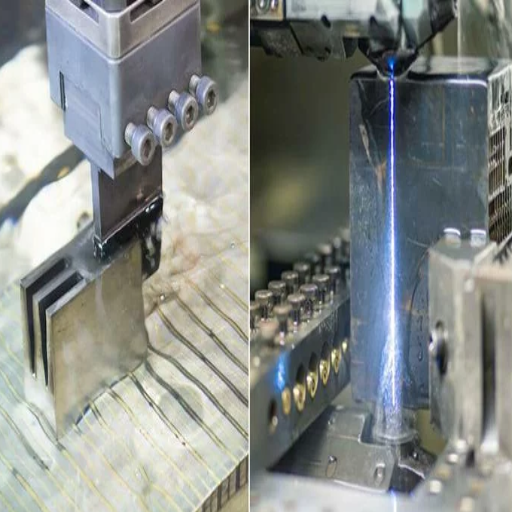
Wire EDM and Conventional EDM primarily differ in their modes of operation and applications. Wire EDM involves passing a thin wire electrode through the workpiece to cut precise and intricate profiles. Wire EDM is more suited to machining complex geometries and through-cutting hard-to-machine materials.
Conventional EDM utilizes a workpiece-shaped electrode to form cavities in the workpiece through the erosion of material. Generally, die-sinking is used in mold making when intricate depressions are required.
While, in essence, both processes use electric discharge for removing material, Wire EDM is the one suitable for very precise cutting of thin sections, and on the other hand, Conventional EDM is better for producing larger 3D cavities, that is, when they are utilized independently. Both methods possess qualities that make one or the other useful depending on the kind of machining that needs to be carried out.
Cost Considerations
Cyber-physical cost evaluation for Wire EDM versus Conventional EDM includes equipment purchase, maintenance, energy consumption, and operational time. Wire EDM machines typically have higher acquisition costs due to the use of advanced precision components and CNC systems. A new Wire EDM is priced somewhere between $50,000 and $200,000, depending on the brand and capability, whereas a Conventional EDM machine is usually the less expensive option, with starting prices nearer to $30,000.
The opposing operational costs differ greatly, indeed. In Wire EDM, material costs can be high, especially for the consumable wire, which can amount to a significant expense over time. The brass or coated wire typically costs between $8 and $15 per pound. For Conventional EDM, the electrode material is most often graphite or copper, which is probably a bit economical but still contributes to recurring expenditure.
And energy costs cannot be disregarded. Firstly, Wire EDM machines are typically power-hungry, utilizing precision motors and continuous processes, resulting in higher electricity bills compared to Conventional EDM. This, however, can usually be borne out by the increased productivity and reduced manual labor required due to the precision offered by Wire EDM, which, as mentioned, can also be performed unattended.
Summing it up, although spending on Wire EDM initially is higher, consider it the cheaper alternative for a job requiring heavy precision, along with minimal material wastage. Conventional EDM would form a great choice, meanwhile, for less expensive operations involving intricate cavity machining or less stringent accuracy tolerances.
Application Suitability
EDM Processes and Types have different industrial spheres, and adaptability depends on various factors, including material type, level of precision, volume of production, and the nature of complexity.
Wire EDM is best suited for fine detailing with exceptional precision requirements. It is common in industries such as aerospace, medical device manufacturing, and automotive, which often require tolerances within ±0.001 inches. For example, Wire EDM is particularly helpful for intricate parts, such as turbine blades, surgical instruments, and highly specialized molds. Since the wire is never in direct contact with the workpiece, materials with excellent hardness, such as tungsten carbide or titanium alloys, can be cut without causing any distortion. Industry reports suggest that Wire EDM can achieve finishes with surface roughness as low as 0.2 µm Ra, making it an ideal candidate when quality is of paramount importance.
On the contrary, conventional EDM systems are excellent choices for machining deep cavities or holes with shapes that are not accessible to cutting tools. These are common in mold-making and die-casting, as well as for hard materials such as hardened steel. EDM conventional can economically carry out complex machining processes, and electrode shapes may be flexed to accommodate different types of requirements. For instance, Conventional EDM produces injection molds or punch dies with lower precision and surface finishes, typically acceptable to 0.8 µm Ra.
In the context of production efficiency, Wire EDM is reported to be slower in terms of cutting speeds compared to its traditional counterpart, but it compensates for this loss by being more precise, producing less material waste, and requiring very little finishing work. Conventional EDM, with its faster material removal rates, is best suited for high-volume production at lower overall costs.
Both of these processes remain heavily invested in high-tech manufacturing, with advances in automation and machine control expanding their application scope and efficiency. The main decision is driven by a specific need, weighed against costs, and aimed at achieving a particular result.
Maintenance and Operational Differences
Consistent attention must be paid to several factors related to the upkeep of EDM equipment, regardless of whether it is wire EDM or conventional EDM. Among these factors is the management of dielectric fluid. This fluid should be filtered and topped up regularly to ensure optimal machining processes and prevent any contamination that could affect precision. Maintenance, including the use of high-quality wire and achieving proper wire tension, is another critical consideration for wire EDM systems, as it helps minimize operational interruptions and ensure cut accuracy.
From an operational viewpoint, electrode wear monitoring is essential, as electrodes in conventional EDM machines are gradually eroded with use. Budgeting becomes a more complicated process since the cost of electrode replacement should be taken into consideration. For wire EDM, however, since electrode fabrication is rendered unnecessary owing to the use of continuously fed wire, it demands constant wire consumption.
Marked by greater efficiency, modern EDM systems are integrated with automated and diagnostic control systems. Sensors that measure fluid levels, vibrations of the machine, and the efficiency of the electrical discharge reduce the number of manual inputs needed and help improve the reliability of the operation. Studies reveal that predictive maintenance, based on advanced monitoring tools, can reduce equipment downtime by approximately 20%, thereby benefiting cost reduction and improving overall productivity.
Keeping CNC-controlled EDM systems up to date with the latest software is a critical step towards achieving better machine performance. The more advanced the software is, the better control it provides over the entire process, machining times would be shortened, and subsequent integration with CAD/CAM systems would be much better, which is especially important when dealing with complex part geometries at precision. Setting up a planned maintenance regime and investing in the marketing of modern EDM systems with real-time monitoring and automation can reduce operating costs while maximizing both life and efficiency.
Disadvantages of Conventional EDM
- Low Processing Speeds: Conventional EDM can be very time-consuming, making it inefficient for high-volume production environments.
- Electrode Wear: Being subjected to wear means that the electrodes become irritated and must be replaced, resulting in additional costs and delays in production.
- Material Limitations: This procedure is primarily suitable for conductive materials, but for some non-conductive materials, it becomes less effective.
- High Energy Consumption: High energy consumption is typical of conventional EDM processes, ultimately resulting in higher operational costs for manufacturers.
- Workpiece Surface Damage: There is a risk of thermal damage to the workpiece due to the process nature, which requires further finishing of the work.
Limitations in Precision and Detail
While EDM is generally capable of producing intricate designs, it is not without its share of shortcomings concerning precision and fine details. Dimensional accuracy is a significant issue, influenced by electrode wear and dimensional changes resulting from thermal expansion. The literature cites tolerance levels during EDM operations that ostensibly range from ±0.005 mm to ±0.020 mm, which are deemed unsuitable for rather ultra-precise applications. The finish of the surface, however, is dependent on variable factors such as spark energy and machining parameter changes, ranging mainly between 0.8 and 3.2 µm Ra. These shortcomings must be addressed through careful parametric study, and, at times, due to excessive requirements, a secondary machining or polishing step is necessary to achieve the required detail and finish for these highly sensitive and intricate parts.
Slower Processing Times
One of the significant concerns associated with slower production rates is that they impair productivity. Inherently, the EDM process offers slower rates of production compared to conventional machining processes, as it relies on electrical discharges that erode materials at the microscopic scale. For one, research and industrial standards provide rates of material removal for EDM that generally vary between the knife-and-fork low rate of 2 mm³/min and 400 mm³/min, depending on the materials being worked on, electrode design, and spark energy. This also highlights its usefulness for exact and intricate parts; however, it tends to have very long machining times for large or complex parts.
Electrode manufacturing and maintenance are downtime issues that further aggravate the problem. Due to wear, electrodes must be designed with care, periodically replaced, and this adds a significant amount to the processing time. Therefore, manufacturers need to carefully weigh the excellent accuracy of EDM against its slower cycle times during production planning. High-speed generators and adaptive control systems to raise process speeds without compromising accuracy are the latest advancements that partially resolve these problems; however, industrial-level issues remain, balancing precision and speed.
Material Constraints and Waste
Material constraints and waste management are crucial considerations in manufacturing processes, with far-reaching implications for both cost and environmental impact. In manufacturing, certain materials may be too expensive or too rare to be freely consumed, let alone wasted; therefore, they require careful planning. For instance, titanium enjoys a high industrial value, having an outstanding strength-to-weight ratio in aerospace and medical industry applications; yet it is costly and in short supply.
Waste paint statistics suggest that approximately 2.1 billion tons of waste were generated globally in the manufacturing sector in a year, with a negligible portion being recycled. Proper waste management practices, such as recycling scrap materials, minimizing cut-offs through digital design, or even utilizing additive manufacturing, will significantly reduce waste generation. Additive manufacturing stores and fabricates components layer by layer; hence, excess material is limited considerably compared to traditional subtractive methods.
From the industry’s perspective, more emphasis is being placed on circular economy practices, enabling materials to be designed for reuse or repurposing, thereby reducing environmental stress caused by industrial waste. Thus, manufacturers adopt technologies and sustainable practices to combat material limitations.
Real-world Applications of Wire EDM
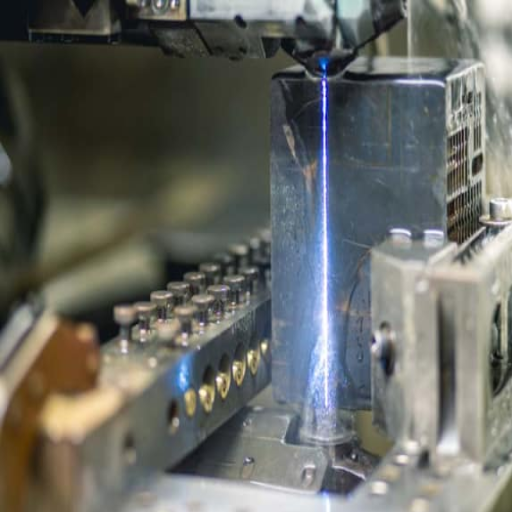
Wire EDM finds widespread use in areas needing utmost precision and accuracy. It is commonly utilized in the aerospace and automotive industries to manufacture intricate parts, such as those for engines and turbine blades. Being interestingly employed in the medical field for surgical instruments and implants, Wire EDM can tackle extremely complex designs with great precision. In the mold and die-making industries, when fine and delicate features need to be incorporated, it is put to use. Its capability to cut hard materials with minimal distortion has rendered Wire EDM an indispensable manufacturing process for these industries.
Industries Utilizing Wire EDM
Wire EDM technology is used for machining a wide variety of intricate and high-precision components, application-wise, from aerospace to the manufacturing industry:
✈️Aerospace Industry
Wire EDM is considered extremely important in aerospace manufacturing because components require very high strength and precision. Titanium- and nickel-based alloys are machined with Wire EDM for turbine blades, engine parts, and structural parts that must not only be precise but also be able to endure severe working conditions. The global aerospace machining market, which encompasses EDM machines, is expected to experience steady growth due to the increasing demand for lightweight yet durable materials in modern aircraft construction.
🏥Medical Sector
Wire EDM is used in the medical field because it is compatible with biocompatible metals, allowing for the manufacture of surgical tools and implants that are so delicate that even the slightest error in machining would render them unusable. Orthopedic implants, such as knee and hip replacements, as well as dental prosthetics, are examples of these applications. The medical-grade precision machining market is expected to experience growth as newer healthcare technologies necessitate more customized and complex medical devices.
🚗Automobile Industry
This industry utilizes Wire EDM extensively in the production of precision parts for transmissions, fuel injectors, and molds with intricate patterns. Precision parts are in high demand today in the production trends of electric and hybrid vehicles, further enhancing the need for Wire EDM.
🔧Tool and Die Manufacturing
Mold and die manufacturing is another primary sector utilizing Wire EDM. It is an ideal process for manufacturing complex molds, extrusion dies, and press tools with unparalleled detail, while incurring minimal surface distortion. The heightened need for accuracy is of great importance for both packaging and the electronics industry, where precision is critical.
📱Electronics Industry
With the increasing demand for miniaturized electronic and semiconductor components, Wire EDM is once again in the spotlight for producing precise, high-performance parts. Wire EDM delivers microscopic accuracy to connectors, microcomponents, and complex prototypes with standards that none else can meet.
⚡Energy Sector
In the energy sector, including in renewable energy, Wire EDM is used for manufacturing complex components for turbines and generators. Such parts require tight tolerances and are durable in high-stress environments and dynamic operating conditions, making Wire EDM an important machining solution.
This sustains Wire EDM’s relevance in the development of these industries, enabling the creation of innovative and precision-engineered products. With its non-contact machining and capability to machine difficult materials, the technology will continue to retain its significance in industrial design and manufacturing worldwide.
Case Studies of Wire EDM in Action
I have witnessed numerous cases where Wire EDM proved to be indispensable. They include the cutting of turbine blades with highly intricate shapes out of heat-resistant superalloys, achieved with utmost precision and durability. Likewise, the technology was used to manufacture surgical instruments and implants possessing the finest geometries with the highest quality standards on the medical side. These case studies demonstrate that Wire EDM consistently enhances manufacturing capabilities and fosters innovation across various industries.
Future Trends in EDM Technologies
It is in precision, automation, and material capacity that the future of EDM technologies shall be forged. Trends emerging appear to be the integration of AI and machine learning to optimize cutting parameters for both time and accuracy. Automation through robotics has also gained precedence for higher throughput and lessened manual dependency. There is innovation in dielectric fluids and electrode materials, offering more sustainable and greener options. Hybrid technology is being increasingly applied in modern EDM machines, which combine conventional technology with additive manufacturing for superior capabilities. With such technological advances, EDM is sure to remain a critical process in industries engaged in ultra-precision manufacturing.
🎯 Key Takeaway
Wire Cut EDM represents the pinnacle of precision manufacturing technology, offering unmatched accuracy, material versatility, and the ability to machine complex geometries that conventional methods simply cannot achieve. As industries continue to demand higher precision and tighter tolerances, Wire EDM stands as the game-changing solution for manufacturers ready to embrace the future of machining.
Ready to Transform Your Manufacturing Process?
Discover how Wire Cut EDM can revolutionize your precision manufacturing capabilities and help you achieve the impossible with unparalleled accuracy and efficiency.
Reference Sources
Electrical discharge machining
“An Overview of Major Research Areas in Wire Cut EDM on Different Materials” (2020)
“A Comprehensive Review on Wire EDM Performance Evaluation” (2022)
Frequently Asked Questions (FAQs)
What advantages does wire EDM have over traditional EDM?
There are several advantages that wire EDM offers over conventional EDM, including the ability to cut intricate shapes with extreme precision. It utilizes a thin metal wire as an electrode, allowing for more detailed work to be performed. Wire EDM machines heat treat many conductive materials without causing damage to the material, unlike conventional methods.
In what way is wire EDM different from conventional machining?
The wire EDM process utilizes an electrically charged wire to cut through materials, whereas conventional machining employs mechanical tools. As a result, wire EDM can deliver better accuracy and finish, especially in applications involving complex shapes and small holes. Furthermore, wire EDM can cut through harder materials that would otherwise be difficult for traditional cutting methods.
What types of EDM machines are used for wire cutting?
Types of EDM machines for wire cutting include CNC wire EDM machines and ram EDM machines. CNC wire EDM is more widely known due to its automation, which ensures precision and repeatability. Ram EDM is used for larger workpieces, but it does not achieve the level of detail that wire EDM does.
What are the wire EDM applications in manufacturing?
In manufacturing, wire EDM is implemented wherever high precision is needed, such as for aerospace components, molds, and dies. Wire EDM cuts intricate shapes and tiny holes, making it attractive for manufacturing complex geometries found in many industries. The process is also applicable to prototyping and smaller production runs where accuracy is paramount.
What is the drawback of wire EDM when compared with conventional EDM?
Although wire EDM has many advantages, it does have some disadvantages when compared to conventional EDM. The significant disadvantage is the slower cutting speeds, which can affect productivity on larger jobs. There is, however, the continuous consumption of wire, which generates additional costs, as well as the costs associated with maintaining the wire EDM machines.
How does wire EDM cut intricate shapes?
Wire EDM cuts intricate shapes efficiently because it uses a wire, which is essentially a thin metal wire, as the cutting tool. The wire is electrically charged and thus can travel through complicated configurations without exerting any mechanical force on the workpiece. Therefore, non-contact cutting results in minimized distortion and maximum integrity of the material being processed.
How does the electrical discharge cutting method in EDM machines work?
Electrical Discharge Machining (EDM) machines erode material from their workpiece by creating nonstop sparks of electrical discharges. In wire EDM, the wire electrode produces very fast electrical discharges as it moves inside the conductive material, thereby slowly cutting the material away. This method offers nearly unlimited precision and the ability to create extremely fine features that would be difficult to achieve with conventional cutting methods.
Does CNC play a role in wire EDM operations?
CNC plays a vital role in wire EDM operations as its methods allow the cutting process to be automated. The path along which CNC wire EDM machines cut is programmed for high precision and repeatability. This means that automation enhances accuracy to another level, reducing human error and increasing efficiency; hence, CNC wire EDM becomes a prime choice for manufacturing intricate parts and components.