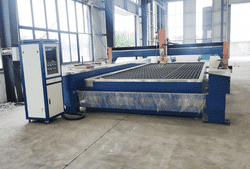
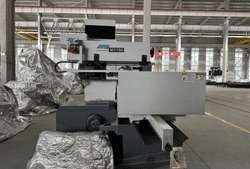


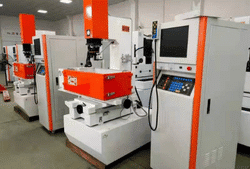
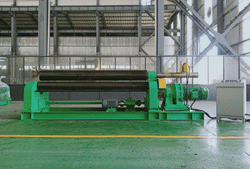



The CNC Vertical Machine Center stands at the forefront of modern machining, which is largely based upon precision, efficiency, and advancement. These milling machines represent the latest machine tools available: such machines being engineered with state-of-the-art axes control for amazing accuracy and high productivity, rendering these indispensable in industries as varied as aerospace work and automotive work. The article will take a hard look at the CNC Vertical Machine Centres from its core features downwards, focusing on the axes control to elucidate machining capability enhancement, plus ease of handling of complicated operations. The guide will shed light on why these machines are ushering in the future of manufacturing, aiming at both the experienced machinist and one beginning to wander into the CNC world.
Introduction to CNC Vertical Machining Centers
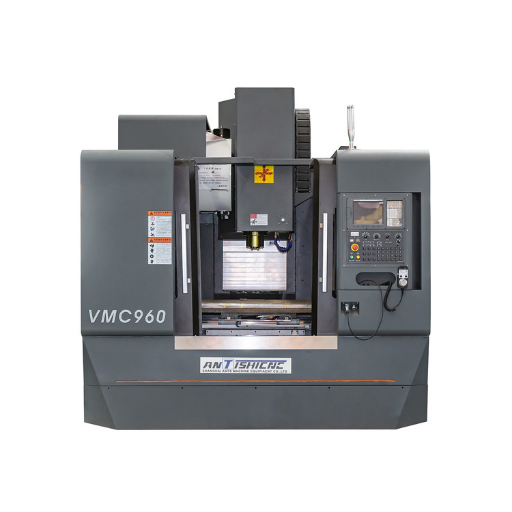
A CNC Vertical Machining Center, or VMC, is a computer-controlled manufacturing machine that is designed to perform precise milling, drilling, and cutting processes. The VMC machines work with high accuracy using vertical spindles and automated movements, along with several deviations from traditional methods carried out manually. These machines are most appreciated for their ability to produce complex and very accurate parts efficiently, and so are indispensable in industries such as aerospace, automotive, and medical manufacturing. VMCs facilitate production, reduce human error, and are also very flexible in utilizing different material types from metals to plastics to composites.
What are CNC Vertical Machining Centers?
CNC vertical machining centers are precise and advanced tools having a vertical spindle and multiple adjustable axes, with the capability of machining of materials. They are highly automated machines where CNC technology directs their operations, thus assuring high efficiency and accuracy during the manufacturing process. A VMC goes along the three major axes, X, Y, and Z, producing complex workpieces with extreme flexibility.
In the case of VMCs, they can work on diverse materials, including aluminum, stainless steel, titanium, and even advanced composite materials. Stats revealed that CNC VMCs accomplish more than 70% of precision metal machining in the aerospace and automotive industries, underlining their widespread use. Moreover, modern-day VMCs’ speed can exceed 20,000 RPM for speedy cuts and higher production without any compromise on precision.
Modern VMC further adds automation with features like tool changers. Some models can hold as many as 200 tools to limit downtime during complex manufacturing runs.
Integration with Industry 4.0 technologies, such as IoT-enabled sensors and real-time data monitoring, enhances reliability and scheduling of maintenance.
VMCs are employed where tight tolerances are necessary and often within a few microns of accuracy, required by parts for medical devices, aerospace components, and electronic circuits. VMCs still lead precision manufacturing because of the vast scope and continuous technological development in it.
Importance of Axes Control in Machining
It is the more demanding task of axes control in machining that determines how precise and complex the manufacturing can be for a particular item. A machining center may have several, from an average of three to five and sometimes more axes, depending on the application. For example, three-axis machines move along the X, Y, or Z axes to carry out simple operations like drilling, milling, or cutting. However, with the five-axis movements coming in and usually going around the A and B axes, one can perform intricate designs and access areas that would require much repositioning of the workpiece in the three-axis setup.
Slight deviations in axes movements can translate into defective parts, with the resultant material wastage or failure to assemble on the production line in critical industries such as aerospace, automotive, and medical device industries. It is said that machining with five axes can cut 25-30% of cycle times on and off manual setups, thus optimizing the process. Modern CNCs are capable of accuracies even finer than a fraction of a micron, and this high accuracy guarantees part interchangeability for high-performance applications.
The ability to control simultaneous motion on several axes enables the machinist to craft ultra-complex geometry with contoured surfaces and intricate patterns that cannot be generated otherwise. With the advent of automation and real-time feedback systems, axes control continues to establish new frontiers in precision engineering, moving manufacturers closer to satisfying the ever-changing desires of present-day industries.
Overview of the VMC960 Model
A highly sophisticated machining tool, this vertical machining center manages a growing number of precision engineering demands with unrivaled Bosch everything efficiency and reliability. The model, with its strong build, is able to offer a 12,000 RPM spindle speed, giving it a lot of accuracy in machining along with low-timed cycle times. The size of the table is 1000 mm x 500 mm, allowing for ample working space for various applications. While the load capacity can go up to 700 kg, this accommodates heavier workpieces very well.
The VMC960 uses a high-end CNC control system that can do simultaneous multi-axis operations, thus permitting more productive and intricate geometries. Quick-change tool times are approximately 1.8 seconds, with a tool magazine capacity of 24 to 30 tools, minimizing downtime so the operation flows uninterrupted. The machine’s state-of-the-art thermal compensation system improves accuracy even further by solving thermal expansion problems during lengthy machining cycles.
Ergonomics and operator safety were a priority in VMC960’s design, which features enhanced chip removal systems to keep the shop floor clean and efficient. Its powerful servo motors and ball screws provide an optimum torque and precision motion, rendering the VMC960 suitable for aerospace, automotive, and mold industries.
Key Features of the 5 Axis VMC960
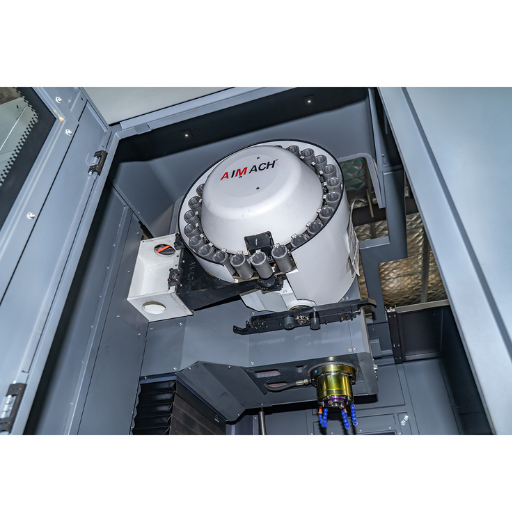
- High Precision Performance: Equipped with very advanced servo motors and ball screws to attain high-level precision with smooth motions throughout the truly complex machining activities.
- 5-Axis Versatility: Allows for machining complex parts with fewer setups, thereby increasing production efficiency.
- Robust Build: Made with materials that can resist tough industrial applications.
- Ergonomic Design: Operator comfort is the top-most priority, and safety features are integrated, ensuring a rewarding user experience.
- Enhanced Chip Management: Maintenance of the work area clean through the advanced removal systems enhances productivity.
- Wide Industry Applications: Applicability in major industries such as aerospace, automobile, and mold manufacturing.
Precision and Accuracy in Machining
Precision and accuracy must be maintained in machining, as they directly affect the quality and conditions affecting the manufactured parts. With respect to tolerances as narrow as ±0.0001 inches, CNC machines (Computer Numerical Control) have brought significant evolutions in this engineering field. Featuring really advanced software and hardware, CNC machines guarantee repeatability and consistency; not at all can this be afforded to vary when engineering in aerospace and medical, such utmost accuracies being of prime concern.
For example, in aerospace applications, parts such as turbine blades and engine parts must be extremely precise to guarantee safety and efficiency. Studies[6] have shown that advanced CNC systems tend to cut production errors by as much as 30%, streamlining the processes with the benefit of reducing waste of materials. Real-time monitoring systems are used in machining to detect deviations early on, improving the quality of outputs even further. With these modern developments, the need for precision engineering is emphasized, while still pushing industrial manufacturing forward.
Spindle and Motor Specifications
When looking at spindle and motor specs, I consider power, speed, and torque to genuinely fit the demands imposed by the machining tasks. High-power spindles allow the fast removal of material; meanwhile, having a flexible speed range offers handling for different materials. Torque is of equal importance, especially in heavy-duty applications, as it compensates for the load in performance.
Guideway Systems for Enhanced Performance
Guideway systems are crucial and fundamental elements in any machinery. They impart accuracy to other characteristics such as stability and capacity. The present-day machine tool guideway systems are chiefly put into the following three categories: box ways, linear motion guides, and hydrostatic guides. Box ways have exceedingly high rigidity and were perfect for heavy machining and high-load applications because the damping capability of vibrations is very high. On the other hand, linear motion guides are fast and can position accurately can fulfilling the purpose that performing fast movement with high precision. Hydrostatic guides, meanwhile, create a thin oil film between two sliding surfaces, eliminating metal-to-metal contact to reduce friction to almost zero and ensuring a longer service life.
For starters, linear motion guides could be used in CNC machining centers with positioning accuracies of ±0.001 mm. Hydrostatic guides also carry very heavy loads with micron accuracy and offer heavy wear reductions. The choice of a guideway system depends on the machining process in regard to load-bearing, speed, and precision requirements. Advanced guideway technology in machine tools ensures a smooth process, a longer life of components, and the best outcome in machining.
Applications of the 5-Axis VMC960 Across Industries
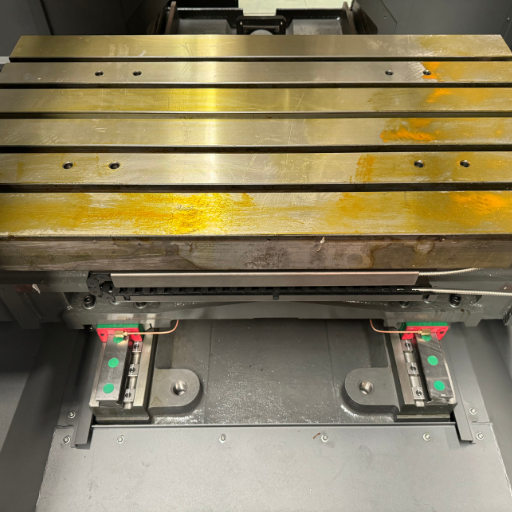
As a question of versatility and precision, we would find the 5 Axis VMC960 widely used across various industries.It can deal with complicated geometries and offer constant accuracy, thus finding application across these sectors.
Aerospace Manufacturing
Aerospace manufacturing is central to bearing the complex demands of the aviation and space industry. Characterized by technological nuances, the sector takes advantage of innovations such as additive manufacturing, CNC machining, and composite materials to produce components that are lightweight but strong. Per more recent industry insights, the global aerospace materials market is expected to cross the $23 billion threshold by 2028, steered by growing aircraft production and the usage of advanced materials such as titanium alloys and carbon fiber composites.
Aerospace manufacturing dies down for the integration of automation and robotics, adding greater finesse and efficiency to production. For assembly, robotic systems can create fuselages with extreme accuracy, so there is less chance for error and waste formation. Stirring this up is the employment of simulation and digital twin-based tools, allowing the best possible designs to be put on the table with an advantage over the others when it comes to performance and safety, be it a plane or a spacecraft.
Sustainable aerospace manufacturing is another fast-blooming area. Industry activities are becoming more and more concerned with environmentally-friendly solutions like engines designed with fuel efficiency in mind and recyclable materials to reduce environmental toxicity. With the growing trend of electric and hybrid planes, companies are thus producing better and better sustainable propulsion systems under global schemes aimed at curbing carbon emissions.
Automotive Industry Requirements
The base industry of aerospace manufacturing is expected to meet the complex requirements of the aviation and space industries. Having technological intricacies, this sector uses innovations in contemporary aerospace manufacturing systems like additive manufacturing, CNC machining, and composite materials to make components that are light yet strong. According to industry analyses, the global aerospace material marketplace is expected to exceed $23 billion by 2028, driven by increased aircraft production and the use of advanced materials like titanium alloys and carbon fiber composites.
In the aerospace industry, activity is decreasing because the integration of automation and robotics brings finer and more efficient production. Systematized equipment is potentially able to assemble fuselages with extreme precision, lowering the chances for errors and waste formation. Cooking this up is the employment of simulation- and digital twin-based tools so that the best possible designs are put forth, having an edge over all others when it comes to the performance and safety of a plane or a spacecraft.
Another fast-blooming area is sustainable aerospace manufacturing. Industry activities increasingly consider such environmentally-friendly solutions as engines for fuel efficiency and recyclable materials to decrease environmental toxicity. These companies, thus, follow the ongoing trend of electric and hybrid planes and the subsequent development of sustainable propulsion systems under worldwide schemes to curb carbon emissions.
Medical Device Production
Medical device production has undergone technological evolution with automation, robotics, and AI becoming key players. According to recent industry insights, the global market of medical devices was valued at almost 495 billion in 2022 and is projected to grow at a CAGR of 5–6% through 2030. This demand is fueled by the rising healthcare demands, the advancing technology of diagnostic tools, and the aging population across the globe, requiring novel medical solutions.
This growth is also fostered by trends such as 3D printing technologies that allow for the cost-effective manufacturing of custom prosthetics, implants, or surgical instruments. Additionally, IoT-enabled medical devices provide improved real-time patient monitoring and data collection. These systems link and integrate to ensure proactive patient care and smooth clinical workflows.
Stringent regulations have pushed manufacturers into extending their focus toward refining traceability and risk management practices along the entire production lifecycle. Considering this trend, sustainable materials and eco-friendly manufacturing processes have gained importance worldwide, in an effort to carbonize industry activities. In general, the realm of medical device manufacturing stands at the threshold of its own revolution, influenced by technology and changing healthcare needs.
Benefits of Using 5-Axis CNC Vertical Machining Centers
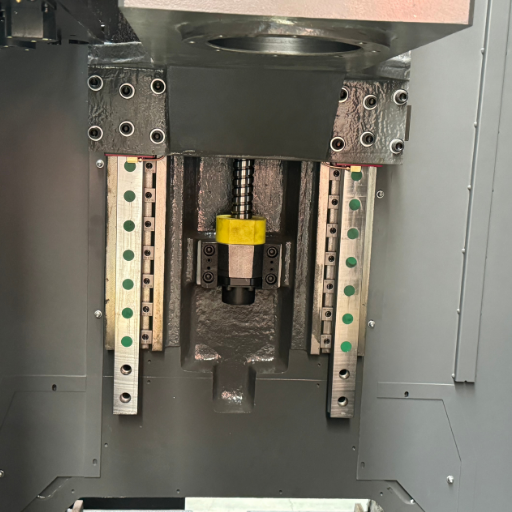
5 Axis CNC Vertical Machining Centers offer several significant benefits:
- Complex Geometry: These machines can work with complicated profiles and produce complex shapes in one single setup, thus saving the requirement for multiple fixtures.
- Enhanced Precision: Maximal levels of accuracy can be achieved, thus offering consistent and reliable results for intricate components.
- Time Efficiency: Considerably less time is required to manufacture a part since, in one go, it is machined on multiple sides.
- Cost Savings: Fewer set-ups plus faster production can bring savings on the total manufacturing cost.
- Versatility: This machine accepts a wide range of materials compatible with the needs of the aerospace, automotive, and medical industries.
Utilizing 5-axis CNC Vertical Machining Centers streamlines the production process with top-quality and highly precise results.
Enhanced Productivity and Efficiency
Advanced 5-axis CNC Vertical Machining Centers are really revolutionizing manufacturing because they have productivity enhancement and efficiency creation aptitudes forged through the new technology. One of the key elements that these centers put forth in industrialism is their capability to execute very complex machining operations in one setup, thus reducing production time by as much as 50%. It is also stated that the operation of these machines increases factory throughput by 30-60%, depending on the application, because their interruption time for tool change or re-alignment is lower due to shorter cycle times.
Furthermore, integration with automation systems has increased operational streamlining. Direct integration with robotic arms handling raw materials results in minimum downtime and allows for around-the-clock production. The integration of a system also increases the reliability, with precision often reaching a level of tolerance within ±0.001 inches. Aerospace and automobile sectors claim that the machine, along with a few other expensive machines, can achieve time savings of up to around half achievable in existing machining equipment.
Contrary to that, the introduction of improvements puts the work at efficiency while ensuring excellent results in all areas, which makes 5 Axis CNC technology indispensable in the present manufacturing.
Versatility in Machining Operations
With 5-axis CNC machines, the key advantage is versatility, allowing manufacturers to handle complex geometries and designs. Unlike the 3-axis classic machine, 5-axis machining allows the approaches to the workpiece from multiple angular orientations, thereby saving on setup time as well as on chances of human error occurring. This is of interest to aerospace and other such industries, where parts usually have curved surfaces or complex features. It has been reported in one study that machining time is reduced by 60% using a 5-axis machine for turbine blades and any other complex parts.
5-axis CNC machinery gets more versatile with the evolution of integration methods. CAD/CAM programs facility for simulation of machining with fine accuracy, hence reducing material wastage and increasing production efficacy in general. Handling a large range of materials from lightweight composites to hardened metals again shows the versatility of 5-axis systems. There are reports indicating that production yield may increase by almost 30% upon the use of these machines, establishing them as a necessary addition to any very demanding manufacturing setting. This versatility entirely accommodates the current needs and keeps a window open for scalable developments in industries such as medical, energy, and automotive.
Cost-Effectiveness in Production
The implementation of 5-axis machining systems in manufacturing brings along noteworthy cost savings in overall production. Due to the reduced time of processing and requirement for fewer setups, the systems help diminish the labor hours and expenses. Studies emphasize that using machines of this sort can diminish material wastage by 20%, with precision allowing for fewer errors and less rework. The other cost-adding factor is tooling, which gets lowered in the long run since most operations are completed under one setup. In systems like aerospace, where time is measured in precious hours and titanium is an expensive material, the cost savings allow 5-axis machining systems to channel into better profit margins and better resources.
Comparison with Similar Products
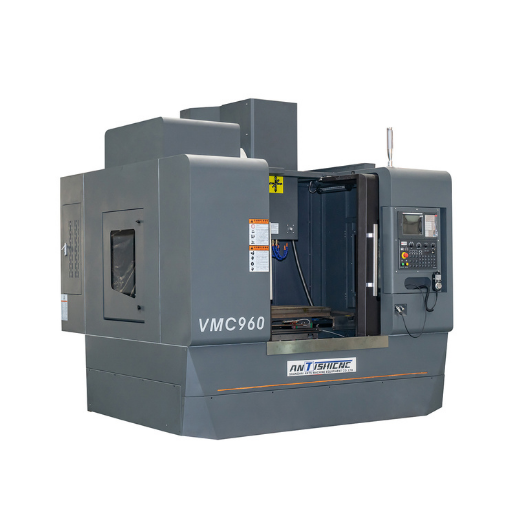
The difference between 5-axis CNC systems and traditional 3-axis machines really revolves around flexibility, efficiency, and precision. While 3-axis machines serve for simpler tasks, 5-axis systems get the job done in machining complex geometries that require much smoother finishes and less setup time. Instead of 3-axis work cells, 5-axis configuration setups are multi-sided in one setup, thus making the process quicker and less costly. They also provide the required flexibility for industries that require advanced machining solutions, such as aerospace and medical manufacturing. Another con with using 5-axis machining is its higher purchase price, but you can gain great savings and operational benefits down the road due to its abilities.
VMC960 vs. Other CNC Machining Centers
Where precision and productivity have to meet, the VMC960 stands in a class by itself when compared to CNC machining centers. High-speed spindle capabilities of up to 12,000 RPM enable VMC960 to perform surface finishing better than all others, with top-grade accuracy. With thermal stability, the machine can maintain its performance under lengthy service conditions.
Additionally, the VMC960 is constructed more solidly, which means less vibration and more durability, thereby increasing operational life. Its work envelope of 960mm in X-axis travel is well suited for mid-sized workpieces, giving it a distinct advantage over many of its competition in the same class. With integrated control systems such as the latest CNC controllers with better user interfaces, programming would be more straightforward, and setup times would be reduced.
Reportedly, across various industries, it has been widely accepted that the advanced capabilities of the VMC960, compared with those of traditional 3-axis machining centers, typically yield an improvement in production efficiency of 20% to 30%. Where lowering cycle times is concerned, faster cutting speed and superior toolpath management cement their goal: minimizing the operational costs and speeding up project delivery. On precision and cost aspects, the VMC960 has been able to fulfill its binding requirements in automotive design, aerospace, and the medical-device-making industries.
Advantages of the FV-960 Model
The potency of the VMC960, when compared with other CNC machining centers, lies in its ability to marry precision and productivity. Exceptional surface finish with the highest level of accuracy is attained by the VMC960 using its high-speed spindle options that reach speeds of 12,000 rpm. The same machine withstood advanced thermal stability tests and maintained performance consistency even when operations lasted for hours.
A further advantage includes a very sturdy structure that minimizes vibrations and enhances durability, thereby extending the operational life of the machine. An X-axis travel length of up to 960mm allows processing of mid-sized workpieces, hence granting it more versatility than many of its competitors in its class. Added to that, integrated control systems, such as the latest CNC controllers with improved user interfaces, enhance programming efficiency and reduce setup times.
Varying industries have reported on their advanced features capable of increasing production efficiency 20-30% over traditional 3-axis machining centers. By employing high-speed cutting and optimal program management for their toolpaths, companies enjoy shorter cycle times, lower operational costs, and faster project delivery. The VMC960 has proven its capacity for working on difficult precision assignments at a great price in automotive, aerospace, and medical device manufacturing.
Market Trends in Multi-Axis Machining
The growing multi-axis machining market has been buoyed by the development of manufacturing technologies and increased demand from sectors like aerospace, automotive, and medical devices. Recent industrial statistics state that the global multi-axis machining market is estimated to touch above $55 billion by 2030, growing at a slow-and-steady growth rate of about 6.5% CAGR from 2023 to 2030.
Since 5-axis and 6-axis systems produce more complex geometries with greater precision, demand for these systems is on the rise. Manufacturers also reduce setup time and, therefore, costs through these systems and enhance their overall efficiency. The integration of IoTs and smart factory solutions with multi-axis systems is making headway, providing valuable functions such as real-time performance monitoring and predictive maintenance.
Having very strong industrial growth in China, Japan, and India, the Asia-Pacific region emerged as one of the dominant held markets. North America and Europe boast of good shares with continued investments in high-end manufacturing technologies. With high emphasis on energy efficiency and sustainability, service personnel are also incorporating greener processes such as the use of energy-efficient motors and low power-consuming designs, making multi-axis machining a very important enabler in new-age manufacturing.
Integration with Modern Manufacturing Technologies
Modern manufacturing technologies are seamlessly interfacing with multi-axis machining systems to bestow precision and efficiency. Key advancements include automation via robotics so that production cycles are shortened and consistency is increased. Meanwhile, manufacturers use IoT and AI-process flow systems to monitor machining processes in real-time so they can reduce downtime and optimize machining performance. In this way, these integrations ensure that multi-axis machining continues to be relevant in manufacturing complex, high-quality components in industries such as aerospace, automotive, and medical equipment.
IoT in CNC Machining Centers
In CNC machining centers, IoT cannot enter without changing the face of manufacturing forever. Connected sensors and devices monitor the machine performance in real-time, measure the wear on the cutting tools used, and also collect interesting environmental data. These predictive maintenance systems help reduce equipment downtime by up to 30% and increase the lifespan of the equipment. They also track energy consumption in real-time, thus allowing manufacturers to reduce operating costs and strive to be more sustainable.
IoT-derived solutions provide improved process visibility, enabling operators to supervise and remotely adjust machining parameters for optimized efficiency. This level of control improves product quality and consistency, essential in industries where utmost precision and reliability are required. Furthermore, advanced analytics based on IoT data can analyze production bottlenecks and provide actionable insights so that decisions can be taken quickly and throughput increased. These developments keep IoT in a crucial role in enhancing CNC machining centers.
Automation and Its Impact on Production
Automation has truly changed the production rhythm across industries, attaining unprecedented levels of efficiency and scale. A recent report states that the global industrial automation market is expected to witness a CAGR growth of 9.8% to reach $395.09 billion by the year 2029. Advancements in the fields of robotics, AI, and IoT technologies are sustaining this growth, with smart factories utilizing these technologies to provide improved operational efficiency.
Another major impact of automation is that human errors are reduced based on sophisticated algorithms and machines that remove monotonous manual labor. For instance, there has been an increase in production speed and quality via automated assembly lines in industries such as automotive and electronics. Another set of systems that have brought automation to new heights are the real-time monitoring and predictive maintenance, which, in conjunction, reduce downtime while optimizing resource utilization, saving companies millions of dollars in operating costs yearly.
With automation, mass customization is now possible, wherein products could be tailored to meet the requirements of an individual while still running with high efficiency. At the consumer goods level, this trend is highly observable since such industries are considered one of the highest-growing sectors with mass customization. Innovations continue to advance the automation systems not just in the manufacturing of goods but also in the global supply chains for more flexibility to increase competitive advantage in the modern-day economy.
Future Trends in CNC Machining Technology
The characteristics the future CNC machining technology would have are more automation, more precision, and sustainability. One trend toward these directions is integrating AI and ML into CNC systems. These technologies enhance the decision-making process to allow machines to optimally select cutting paths, forecast tool wear times, and reduce downtimes. For instance, AI-aware predictive maintenance is said to be a tool that can reduce failure rates and machine breakdowns by 30%, augmenting productivity levels significantly.
Another major trend is adopting additive and hybrid manufacturing. When large 3D printing operations are combined with traditional subtractive CNC machining, an ever-increasing number of manufacturers can conveniently fabricate complex geometries with as little waste production as practically possible. The hybrid way strongly supports industries like aerospace and medical devices that require absolute precision and material efficiency.
Another example of how advanced materials increase the complexity of manufacturing is carbon fiber composites, titanium alloys, and high-temperature ceramics. These materials, while offering greater durability, force refinement in tooling solutions and further the development of multi-axis machining capability. For example, the worldwide market for multi-axis CNC machines is expected to grow at a CAGR of over 6% until 2030, indicating the requirement for highly complicated machining systems.
Finally, we see an emphasis on sustainability in manufacturing and green manufacturing practices. CNC technologies are being designed to work toward curbing energy consumption and waste of material, thus supporting this cause. These efforts are gaining momentum; recycling of chips and using green lubricants are making manufacturing processes more sustainable while neither degrading effectiveness nor quality.
Advancements like these are cementing CNC machining as an integral part of Industry 4.0, bringing forth changes in the manufacturing world. The CNC machining, by virtue of new technologies and materials, is placing the processes to revolve around fast, intelligent, and environment-friendly means of production in the coming years.
Reference Sources
-
Comparative Study of 3-and 5-axis CNC Centers for Free-Form Machining of Difficult-to-Cut Material
This study explores the differences between 3-axis and 5-axis CNC machining, focusing on their applications in machining complex surfaces.
Read on ScienceDirect -
Computer-Aided 5-Axis Machining
A detailed chapter discussing the principles and applications of 5-axis machining, including its advantages over traditional methods.
Access via Taylor & Francis -
CNC Programming Handbook: A Comprehensive Guide to Practical CNC Programming
A widely recognized resource for CNC programming and machining, offering in-depth insights into 5-axis machining techniques.
View on Google Books - Top VMC960 CNC VMC Machine Suppliers in China
Frequently Asked Questions (FAQs)
What is a 5-axis vertical machining center?
A 5-axis vertical machining center is a type of CNC milling machine that allows for the manipulation of tools along five different axes simultaneously. This capability is essential for intricate parts machining, as it enables the machine to reach complex angles and contours that traditional 3-axis machines cannot achieve.
How does the VMC960 differ from other CNC machines?
The VMC960 offers high speed and high performance compared to other CNC machine tools. It features advanced R&D technology and manufacturing processes, allowing for enhanced rigidity and stability. This model is particularly suited for high-efficiency production environments where precision and speed are critical.
What are the key features of the VMC960?
The VMC960 is equipped with a rotary table and a high-speed spindle capable of reaching 10,000 RPM. The whole machine is designed with excellent rigidity, utilizing roller linear guide ways for improved stability during operation. Additionally, it has capabilities for automatic tool changes, enhancing its efficiency in machining operations.
What materials can be processed with a 5-axis VMC960?
The 5-axis VMC960 can handle a variety of materials, including metals, plastics, and composites. Its robust design and high-performance CNC vertical machining capabilities make it suitable for casting and the production of intricate parts, ensuring versatility in different manufacturing applications.
Can the VMC960 be used for horizontal milling?
While the VMC960 is primarily designed for vertical milling operations, its 5-axis capabilities allow for some horizontal milling functions depending on the setup and tooling used. However, for dedicated horizontal milling tasks, a horizontal milling machine may be more appropriate.
What is the price range for the VMC960?
The price of a CNC machine, such as the VMC960, can vary based on configuration and additional features. Typically, the cost reflects the advanced technology incorporated, including high-speed operations and rigidity of the machine. It is advisable to consult with a manufacturer or distributor for detailed pricing information.
How does the rigidity of the machine affect performance?
The rigidity of the machine directly impacts its performance and precision. A high rigidity CNC vertical machining center like the VMC960 minimizes vibrations during operation, leading to improved accuracy and surface finish on machined parts. This is particularly important when working with high-speed milling operations.
What type of industries benefit from using the VMC960?
Industries such as aerospace, automotive, and medical device manufacturing benefit significantly from using the VMC960. Its ability to produce high-performance components with intricate details makes it an ideal choice for sectors that require precision engineering and high production capacity.
What support and service options are available for the VMC960?
Manufacturers typically offer comprehensive support and service options for the VMC960, including maintenance, training, and technical assistance. Users can also access new DN solutions for optimizing their machining processes, ensuring they achieve the best possible results from their CNC vertical machining center.