




Understanding Wire EDM Technology
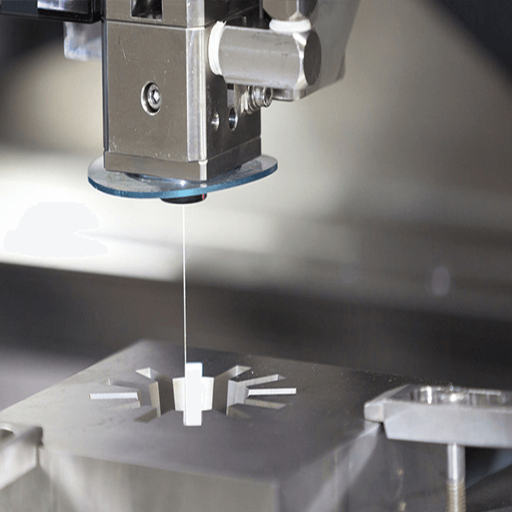
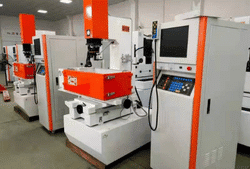
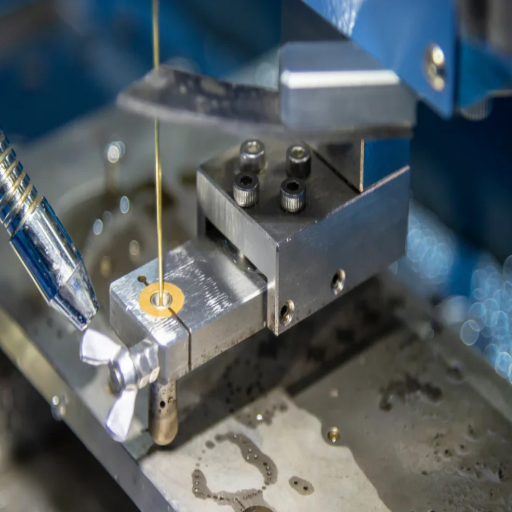
This description gives a high-level overview of wire EDM machinery. These machines utilize an EDM (Electrical Discharge Machining) process for cutting and shaping materials. The wire is usually relatively thin, measuring between 0.02 and 0.3 mm in diameter. It is typically brass- or copper-coated. The EDM machining operation involves the generation of electric sparks between the workpiece and the electrode. The discharge erodes the workpiece material. With this process, one can make very precise cuts in both hard and delicate materials without causing deformations. Wire EDM machines are renowned for their ability to create complex shapes with extremely tight tolerances, making them suitable for the aerospace, medical, and tooling industries.
Definition of Wire EDM
Wire EDM is a highly specialized machining process that cuts electrically conductive materials with ultimate precision. A thin wire, typically made of brass or copper, is used as an electrode to establish electrical discharges between the wire and the material. This cutting takes place in the presence of a dielectric fluid, such as deionized water, which cools and flushes away the debris. As the discharge occurs between the wire and the workpiece, the surface area is heated to melting and vaporization modes in local areas, resulting in material removal without the need for mechanical forces.
Known for its exceptional accuracy, Wire EDM is capable of tolerances as low as ±0.0001 inches (±0.0025 mm) and is a suitable choice for industries requiring intricate designs and complex geometries. Today, it is almost universally applicable in sectors such as aerospace, automotive, and medical, which require components that demand a high level of detail and precision. The Wire EDM is particularly adept in cutting materials that are difficult to cut, such as titanium and tungsten, as well as tungsten tool steels and Carbide, whereas traditional cutting methods often struggle with such materials.
One Wire EDM feature that remains cherished is the surface finish, which typically has a fine R_a ranging lower than 1.0 µm, depending on parameters and material, thereby minimizing finishing operations and ensuring component durability and reliability. Wire EDM machines are becoming faster and more efficient in processing workpieces, enabling anisotropic optimization of production setups in high-precision manufacturing, thanks to progressive wire advancement and software optimization.
Components of a Wire EDM Machine
A Wire EDM machine has essential components that work together to accomplish superior machining performance:
Wire Electrode
The wire electrode is a slender strand, typically made of brass, copper, or a coated material, and serves as the cutting tool. In modern Wire EDM machines, the wires measure approximately 0.1 mm to 0.3 mm in diameter, depending on the intricacy involved and the required tolerance. Coated wires have layers, such as brass-zinc or bronze-diffused, for enhancing cutting rate and precision through improved conductivity and resistance to wear.
Workpiece
The material is being machined while it is dipped in a dielectric fluid during the machining process. Wire EDM is well-suited for electrically conductive materials, offering versatility to applications across various fields, including metals such as steel, aluminum, and titanium, as well as exotic alloys.
Dielectric Fluid System
The dielectric fluid, essentially deionized water, is the primary component throughout the machining operation. It cools the work area, ads debris, and stabilizes spark generation. If the fluid is handled correctly, it will guarantee stable machining conditions and high precision; thus, its conductivity must be kept between 5-20 µS/cm at all times.
CNC Controller
The CNC (Computer Numerical Control) Unit drives the wire and workpiece motions with ultimate finesse. Advanced controllers are multi-axial and capable of fabricating complex three-dimensional geometries with the tolerances as tight as ±0.002 mm provided by modern machine degrees.
Power Supply Unit
The power supply generates controlled electrical pulses between the wire electrode and the workpiece, directly affecting machining speed, surface finish, and accuracy. New generation machines, therefore, employ adaptive power management systems to enhance performance while conserving energy.
Guiding System
The wire guiding system utilizes upper and lower guides, typically made from diamond or ceramic, to ensure the wire remains aligned during machining. These guides significantly impact the accuracy of the cuts and are crucial to achieving consistent results in intricate machining processes.
Wire Tensioning System
For the finest cutting quality and stability, the tensioning system ensures the wire remains at a consistent tension from the start to the completion of the machining process. This will further prevent the wire from deflecting and breaking, even during high-speed operations.
Cutting Control and Feedback System
Modern machines are equipped with sensors and feedback mechanisms to monitor parameters such as wire wear, spark gap, and machining progress in real-time. This enables process consistency while minimizing human intervention to achieve precise outputs.
Filtration and Recycling System
The filtration system for the dielectric medium filters machining debris and contaminants, simultaneously increasing the life of the fluid and machine components. This is complemented by efficient recycling systems implemented in numerous Wire EDM machines, which help curtail waste and reduce operating costs.
Servo Mechanism
The servo mechanism maintains the correct distance between the workpiece and the wire electrode, producing consistent sparks with the required accuracy. The modern servo system carries out on-the-fly adjustments based on the real-time evaluation of machining parameters.
Through the amalgamation of all of the above components working hand-in-hand with high technologies, the Wire EDM industry fulfills the rigorous requirements of aerospace, medical, and automotive manufacturing, offering unprecedented accuracy, perfect surface finish, and the capability of producing highly complex geometries.
How Wire EDM Works
Wire EDM functions by the principle of electrical discharge machining: an excellent wire, which is electrically charged, serves to erode the material from the workpiece. This wire, typically made of brass or copper-coated, serves as an electrode, and an electrical discharge is generated between the wire and the electrode of the machining material. These powerful, small discharges melt and vaporize the material at an intensely precise location.
The process must be submerged in a dielectric fluid, typically deionized water, which cools the workpiece, washes away debris, and conducts the electrical discharge. The wire is continually scrubbed through the machine to keep it fresh and maintain its cutting ability.
Maintaining tolerances as tight as ±0.0001 inches, Wire EDM is used for very specialized machining tasks that require maximum accuracy. And, since CNC controls enable modern Wire EDM machines to cut very complex geometries with ease, sharp corners, wonderful details, and variable taper angles are no problem at all. Some of the most advanced systems also integrate multi-axis machining or on-machine probing to enhance productivity and accuracy further.
The advancements appear to increase cutting speeds while maintaining energy efficiency. For example, specific models in a high-speed Wire EDM range can achieve a material removal rate of 30 in³/hour, equivalent to increased productivity for the aerospace and medical manufacturing industries. Hence, Wire EDM is necessary for creating injection molds, turbine blades, and surgical instruments due to its precision and speed.
Tolerances in Wire EDM Cutting

Wire EDM cutting can attain tighter tolerances, often within ±0.0001 inches. These machining accuracies enable the creation of impermeable, complex, and intricate parts according to the desired dimensions. Tolerance in the workpiece is influenced by various factors, including the material’s nature, the machine’s parameter settings, and the consideration of wire and dielectric fluid. Proper calibration of the machine and its maintenance, performed simultaneously, play a crucial role in maintaining the expected tolerances.
Understanding Tolerance in Wire EDM
Several key factors influence Wire EDM (Electrical Discharge Machining) tolerances. First of all, the material plays an important role here, as harder materials may further wear out the wire, which consequently affects precision. Secondly, machine settings such as wire tension, feed rate, and flushing pressure have a direct impact on accuracy. The third is wire and dielectric fluid condition-worn wire and contaminated fluid lead to inconsistencies. Calibration, maintenance, and careful monitoring in this regard ensure peak performance. Meanwhile, more advanced machines with auto-threading and adaptive controls will boost tolerance capabilities, even down to the sub-micron level. Combining these improvements thus allows Wire EDM to construct parts that are highly detailed and accurate.
Precision and Accuracy in Wire EDM
In recent years, there have been significant advances in Wire EDM, enabling it to achieve an unprecedented level of precision and accuracy. A tolerance of ±1 micron is at the top of the list, considering the aerospace, medical, and electronics manufacturing industries as examples where such precision is required. This is possible due to improvements being made in, for instance, the high-frequency power controls, which enable the cutting operation to continue smoothly and steadily with slight deformation of the materials.
The integration of AI software with real-time monitoring systems enables adaptive adjustments during machining, ensuring superior accuracy and precision. Wire EDM systems today also incorporate advanced dielectric cooling systems that help minimize thermal expansion, thereby maintaining performance stability even during long operations. These developments help improve part quality further while simultaneously reducing lead times and material waste.
New Wire EDM models produced by industry leaders have increased cutting speed and efficiency by as much as 30 percent while still maintaining accuracy for intricate geometries and tight tolerances. This equipment, therefore, represents one of the modern high-precision manufacturing processes.
Factors Affecting Tolerance in EDM Cuts
Several critical factors during tolerance determination are relevant for Electrical Discharge Machining (EDM) to have precise and repeatable dimensions.
Material Properties
The tolerance in EDM almost entirely depends on the nature of the workpiece material used. Materials with better conductivity, such as copper or aluminum, enable a more efficient transfer of energy and, consequently, more accurate machining. However, harder materials like tungsten carbide may cause slight deviations owing to heavy tool wear and slow cutting speeds.
Machine Accuracy and Stability
The accuracy of the EDM machine may be the foremost and most intuitive parameter. Higher-grade machines, constructed on a rigid frame and fitted with vibration-damping mechanisms, would maintain tighter tolerances than older or simpler machines. Research has shown that tolerances as low as ±0.001 mm can be ensured in high-performance Wire EDM machines, particularly for the manufacture of intricate geometries.
Electrode Quality and Wear
The quality and condition of the electrode will affect the machining process. Better electrodes, with increased conductivity and reduced wear, yield more consistent results. These improvements may be achieved, for example, by using coated electrodes or graphite electrodes to minimize wear during long operations.
Process Parameters
Primarily, process parameters such as discharge energy, pulse time, and gap voltage affect tolerances. By applying lower discharge energy and adhering to the principles of best flushing, finer details can be obtained. Studies have shown that by fine-tuning the conditions, dimensional deviation can be decreased by 20%, placing parameter adjustment in a place of great importance when tight tolerances are necessary.
Thermal Effect and Heat Dissipation
During machining, thermal stresses cause micro-deformations in the workpiece, especially when high accuracy is required. The use of efficient cooling systems, along with the best flushing technique, helps counter heat distortion and maintain dimensional accuracy.
Wire Tension and Wire Quality (Wire EDM)
Wire tension holds the key to stability, which, in turn, is characterized by less deviation during the cutting process. Wire quality, along with the diameter, may also influence the final tolerance; generally, pre-stressed wires of high quality with uniform diameters will yield a better surface finish.
If monitored and appropriately controlled, these factors enable manufacturers to consistently achieve high precision and reduce deviation to an extent that allows the EDM process to meet the stringent needs of modern industries, such as aerospace and medical device manufacturing.
Applications of Wire EDM

Wire EDM is associated with industries that demand utmost precision and minute detailing. Typical applications include the production of molds and dies, the manufacturing of aerospace parts, and the fabrication of medical instruments. Wire EDM is also used for cutting hard metals, such as tungsten and titanium, as well as achieving complex finishes that are relatively difficult to achieve with conventional machining methods. The procedure is primarily appreciated for the precision it affords, the ability to work on delicate parts, and the smooth finishes it produces.
Industries Utilizing Wire EDM
Engineering specifications, industries, and Wire EDM work hand in hand due to the supreme level of precision that it offers and the ability to manufacture complex geometries.
Aerospace Industry
Wire Electrical Discharge Machining is widely used in the aerospace industry to manufacture components such as turbine components and engine parts, as well as structural elements in superalloys that require high precision in surface generation. For manufacturing industries that utilize aerospace, the demand for machining services, such as Wire EDM, is expected to experience greater growth, as the global aviation manufacturing forecast is projected to grow at a CAGR of 4.1% through 2030.
Medical Industry
Wire EDM is a crucial step in manufacturing high-precision medical instruments and implantable devices, including orthopedic implants, surgical instruments, and stents. It cuts materials such as stainless steel or titanium with minimal thermal stress, thereby preserving the structural integrity of these materials. With the increasing number of minimally invasive surgical procedures and advancements in healthcare technology, Wire EDM is becoming increasingly popular in this sector.
Automotive Industry
Wire EDM has been widely employed in the automotive industry for manufacturing prototype parts, injection molds, and intricate components, including those for engines and transmissions. Due to the increasingly shifting production line of electric vehicles, Wire EDM manufacturers are producing lightweight and high-efficiency components to optimize powertrain systems. With the automotive sector growing through EV market expansion and an estimated 17.02% CAGR growth from 2023 to 2030, it highlights GE’s increasing significance.
Electronics Industry
The production or further manufacturing of microelectronic and semiconductor components, connector pins, and intricate molds is beyond the scope of this process, thus positioning Wire EDM at the forefront. The surge in global demand for consumer electronics, coupled with advancements in 5G technology, has further increased the demand for precision machining.
Tool and Die Industry
Wire EDM has been employed as a standard process in the tool and die industry for producing dies, molds, and punches with high accuracy. The ability it furnishes for machining hard materials and shapes of high complexity is what enables tool manufacturers to produce to the exacting quality standards and tolerances required by today’s industry.
Due to its adaptability and accuracy, Wire EDM continuously supports the advancement of critical industries, ensuring the manufacture of high-performance components that meet stringent requirements.
Specific Applications of Wire EDM
Wire EDM has numerous and varied applications due to its extreme precision and ability to handle intricate geometries. Listed below are some illustrative cases of its application and influence:
- Aerospace: Wire EDM is utilized in aerospace applications to manufacture components such as turbine blades, engine parts, and airframe components. Parts like these must be manufactured to very tight tolerances and are typically made from a heat-resistant alloy, making them difficult to machine conventionally. Wire EDM functions with precision and reliability in these applications where even the slightest trade-off could have severe implications.
- Medical Device Manufacturing: Wire EDM is widely used in the medical industry to manufacture implants, surgical instruments, and orthopedic instruments with complex shapes. Parts of minimally invasive surgical devices require edges that are both smooth and sharp, which Wire EDM can provide effortlessly. Its ability to machine biocompatible materials such as titanium and stainless steel further supports it in this role. According to industry reports, the global medical device manufacturing market has become increasingly reliant on advanced machining technologies, such as Wire EDM, to comply with stringent regulations.
- Automobile Industry: The automotive industry utilizes Wire EDM to produce molds and dies that manufacture components such as gears, engine blocks, and transmission systems. The machining of hardened materials is the main reason that Wire EDM produces durable and high-quality parts. Wire EDM is widely used for the prototyping and testing stages, making provisions for a reduction in the lead time and the overall production costs.
- Electronic Components: Wire EDM is used in the manufacture of micro-electronic components, including connectors, sensor components, and semiconductor molds. Ensuring a high level of finishing requires accuracy, which Wire EDM guarantees for the proper functioning of minute components. For example, its ability to machine parts thinner than 0.004 inches makes this technique indispensable in the electronics industry.
- Tool and Die Fabrication: Wire EDM is used in tool and die making to manufacture punches, dies, and multi-step stamping tools with exact precision. Such an application directly supports industries, including consumer goods, packaging, and heavy machinery, enabling mass production processes to be carried out with maximum consistency and quality.
By applying state-of-the-art advances in Wire EDM technology, the industries mentioned here can achieve more efficient processes, longer life, and utmost precision in their respective operations, thus indicating the indispensability of this machining method in current industrial practices.
Case Studies of Wire EDM Applications
Wire EDM consistently delivers the highest quality in manufacturing delicate automotive tooling parts, including transmission components for fuel injectors and tooling for body panel molds. For instance, leading automotive manufacturers are reported to have utilized Wire EDM to maintain tolerances as close as ±0.0001 inches, ensuring that high-stress components achieve optimal performance. It also allows working with materials that are difficult to machine, such as titanium and hardened steels, which enhance the durability and longevity of automotive parts, ultimately translating to improved vehicle safety and reliability.
Aerospace Sector Success Story
In the aerospace sector, Wire EDM has proved to be essential in the manufacture of complex components such as turbine blades, engine components, and prototype tooling. The process accommodates high-performance alloys such as nickel and carbide, which must withstand extreme temperatures and pressures experienced during flight. By adopting advanced wire EDM technology in their process, one aerospace company reported a 30% reduction in waste material, a 20% increase in production speed, and significant savings in time and money.
Medical Devices Manufacturing Excellence
Wire EDM is indispensable in making intricate surgical instruments, implants, and prostheses required in the medical field, where precision is of utmost importance. It can produce devices with smooth, burr-free edges, ensuring that medical instruments exhibit high biocompatibility and a low risk of contamination. Recent findings show that titanium implant manufacturers who adopted wire EDM had a 25% increase in precision and efficiency in production compared to casting and machining methods.
Electronics and Semiconductor Production
Wire EDM also plays a significant role in producing components for consumer electronics and semiconductors. Thin conductive pathways and microcomponents are the lifeblood of the high-performance devices that amuse modern techniques. A semiconductor company has achieved a 15% increase in micromanufacturing yield rates by integrating wire EDM, while maintaining remarkable accuracy down to the micrometer level. This advancement meets the requirement for smaller and more efficient electronic devices.
These case studies demonstrate the versatility and precision of Wire EDM across various industries, underscoring its ability to enhance productivity while minimizing waste, making it well-suited to meet the demanding requirements of modern manufacturing.
Benefits of Using Wire EDM
High Precision
Wire EDM offers extreme accuracy, making it attractive for intricate designs and tight mechanical tolerances.
Material Versatility
It can cut any kind of material, including tough metals, without affecting cut quality.
No Tool Wear
Being a form of machining that uses electrical discharges to cut metals, there is no tool wear, therefore guaranteeing consistency of results.
Good Surface Finish
A good finish is given by the process, reducing the number of finishes required or polishing.
Complex Geometry
Wire EDM is capable of producing intricate and delicate shapes that would otherwise be difficult to create with traditional machining methods.
Less Waste
Material waste is minimized through the touch of precision-based cutting method, leading to appreciable savings of cost and becoming environmentally friendly.
Advantages of Wire EDM Technology
Wire Electrical Discharge Machining (EDM) differs because its many benefits place it in high demand across disciplines. When exact shapes need to be cut into high-precision parts, the aerospace, medical, and automotive industries rely on this technique. The process is tightly controlled to ensure that tight tolerances and excellent accuracy are guaranteed. Wire EDM is useful when dealing with complex and extremely fragile materials (such as titanium, tungsten, and carbide) that cannot be machined using traditional methods due to their limitations. On the other hand, it is equally essential to mold making when producing die work and prototype work so that surface finishes can be enhanced, and lead times shortened. And bearing these stresses in mind, the stresses upon the workpiece caused by mechanical testing are combined; the process ultimately results in a very stress-free way to complete the task.
Cost Benefits of Wire EDM Services
The Wire EDM process offers significant economic benefits for manufacturers across various industries. To start with, Wire EDM offers excellent precision, which minimizes scrap and waste, thereby reducing all costs associated with raw material use and disposal. Secondly, it enables the prolongation of complex geometries with minimal setup requirements, resulting in reduced production time, lower labor costs, and greater economy in the case of intricate projects. Wire EDM equipment has always been way more expensive compared to other equipment. Still, it is, for all its qualities, better maintained by nature, keeping warranty and maintenance costs to a minimum as well. It also saves on tooling and secondary finishing costs, allowing the manufacturer to reduce expenses while maintaining quality and accuracy. Combining all these factors, Wire EDM becomes a much more strategic choice when it comes to the cost of manufacturing fine-precision components.
Comparison with Traditional Machining Methods
| Aspect | Wire EDM | Traditional Machining |
|---|---|---|
| Precision | ±0.0001 inches tolerance | ±0.005 inches typical |
| Material Hardness | Unaffected by hardness | Limited by tool material |
| Complex Geometries | Excellent for intricate shapes | Limited by tool access |
| Tool Wear | No physical tool wear | Significant tool wear |
| Surface Finish | Ra < 1.0 µm achievable | Requires secondary finishing |
| Cutting Speed | Slower for stock removal | Faster for bulk material removal |
| Setup Requirements | Minimal setup time | Complex tooling setup |
Among the advantages that Wire EDM enjoys over conventional machining methods is the ability to create intricate shapes and achieve tight tolerances. In contrast to traditional machining methods, which rely on physical contact with cutting tools, Wire EDM utilizes an electrically charged wire to cut conductive materials with minimal mechanical stress or distortion to the workpiece. This makes it suitable for manufacturing complex and delicate parts that would be difficult or impossible to produce using conventional methods.
Moreover, Wire EDM achieves better surface finishes and eliminates the need for tedious secondary operations, which are typically required with conventional machining. While traditional machining methods may struggle with harder materials, Wire EDM poses no difficulty, as hardness does not affect the electric discharge nature of Wire EDM. The only disadvantage, of course, is in cutting speed, where Wire EDM cannot compete with many conventional methods, making it more suited for precise work rather than speedy stock removal. All in all, Wire EDM finds its niche when high accuracy, less wastage, and complexity of design are of primary importance, thereby offering benefits that either complement or even surpass those of traditional machining in many applications.
The Future of Wire EDM Technology

The advancement in Wire EDM technology is focused on enhancing efficiency, accuracy, and versatility. In the future, new developments may lead to improved cutting speeds, software enhancements for machining optimization, and increased automation to enhance efficiency on the production floor. Apart from that, technology is also turning greener by conserving energy and reducing waste. These technological advancements will help keep Wire EDM at the forefront as a vital tool for industries that require the highest levels of precision in their manufacturing processes.
Innovations in Wire EDM
Wire EDM technology has experienced a significant surge in adoption by incorporating the latest, more advanced solutions to address the industry’s challenges of accuracy, speed, and sustainability. Nowadays, for example, Wire EDMs have adaptive control systems that monitor cutting parameters and make real-time adjustments, thus achieving up to 25% higher precision and speed in cutting times compared to older versions. High-performance types of dielectric fluids with improved thermal properties are being increasingly employed to minimize thermal distortion and maximize component life.
The automation aspect, on the other hand, represents another revolutionary approach, offering continuous operation and reduced downtime. Industry studies indicate that automated Wire EDM systems enhance production efficiencies by over 30%, thereby dramatically reducing total manufacturing costs. Green upgrades have also been introduced, including energy-efficient power supplies and closed-loop systems for recycling wastewater, among other similar features, to minimize environmental impact. These inventions are much more welcome in industries such as aerospace, medical device manufacturing, and automobile manufacturing, where machining processes require the utmost precision and efficiency.
Potential Developments in Wire EDM Services
- AI and Machine Learning Integration: The development of AI and ML will lead to more intelligent and adaptive machining processes, thereby reducing errors and enhancing precision.
- Advanced Electrode Materials: There could be further improvements in electrode material technologies, which would result in faster cutting speeds and reduced electrode wear, thereby increasing efficiency even further.
- IoT Integration: Other areas of interest include the integration of IoT for real-time monitoring and predictive maintenance, which significantly reduces downtime.
- Enhanced Automation: Increased automation capabilities for continuous operation and reduced human intervention.
- Sustainable Technologies: Green technology implementations for energy conservation and waste reduction.
Such developments align with our commitment to staying at the forefront of innovation while consistently delivering excellent results to our customers.
Impact of Wire EDM on Manufacturing Processes
Wire EDM has ushered in a realm of exact and widespread manufacturing in contemporary times. It enables the creation of intricate and complex designs that conventional machining methods cannot achieve. The aerospace, automotive, and medical industries greatly benefit from Wire EDM’s ability to cut hard materials, such as titanium and carbide, with extreme precision.
A very crucial benefit of Wire EDM lies in its ability to process tough materials without compromising on surface finish. Thus, secondary operations are eliminated, which reduces production time and overall production costs. On the other hand, since it uses electrical discharges rather than mechanical force to cut, delicate parts can be machined without any distortion. The precise cutting ability of Wire EDM ensures minimal material wastage, making it a sustainable solution for manufacturing.
With the development of Wire EDM, including the incorporation of high-performance electrodes, automation, and their utilization, tremendous improvements in speed and efficiency have been achieved. Coupled with real-time monitoring, it ensures manufacturers produce parts with consistent quality while minimizing machine downtime. By and large, the Wire EDM process is the foundation of productivity and innovation across so many industries.
Conclusion: Wire EDM as the Future of Precision Manufacturing
Wire Electrical Discharge Machining represents a pinnacle of precision manufacturing technology, offering unmatched accuracy, versatility, and efficiency. As industries continue to demand higher precision and more complex geometries, Wire EDM stands ready to meet these challenges with its exceptional tolerances, material versatility, and innovative capabilities. The future of manufacturing is precise, efficient, and sustainable – and Wire EDM is leading the way.
Key Takeaways
- Wire EDM achieves tolerances as tight as ±0.0001 inches (±0.0025 mm)
- Essential for aerospace, medical, automotive, and electronics industries
- Capable of machining hard materials like titanium and tungsten carbide
- Offers superior surface finish with Ra values below 1.0 µm
- Minimal material waste and no tool wear
- Continuous technological advancement with AI integration and automation
- Cost-effective for complex, high-precision components
- Environmentally sustainable manufacturing solution
Reference Sources
Electrical discharge machining
Frequently Asked Questions (FAQs)
How does the wire EDM process work, and what is it?
The wire EDM process utilizes a thin wire in continuous motion, electrically charged to act as an electrode that cuts peculiar shapes and components in the workpiece. The wire acts as a cutting tool, generating an electrical discharge with the workpiece that melts the material to achieve precise cuts. It is beneficial for machining complex shapes and achieving tight tolerances.
What are the different applications and advantages of using wire EDM?
Wire EDM has applications in various industries that require extreme precision, including aerospace, automotive, and medical equipment manufacturing. The advantages include cutting materials with extremely tight tolerances, as low as 0.0001 inches, cutting harder materials, and creating plasma-smooth finishes on materials that would otherwise require an additional polishing operation.
How do tolerances and precision in wire EDM compare to those obtained by other methods of machining?
Wire EDM is commonly used to maintain tighter tolerances and higher degrees of precision than in any traditional machining method. Although CNC machining can achieve fair accuracy, it is during the wire EDM method that tolerance and precision levels are maintained at close to 0.0001 inches, which is excellent for parts requiring tight exactness.
What are the elements constituting the wire EDM machinery?
The wire EDM machine includes a power supply, wire drive mechanism, electrode wire, workpiece holder, and flushing system. The power supply controls the electrical discharge between the wire and workpiece, while the wire drive mechanism is responsible for advancing the wire continuously during the cutting operation.
Wire EDM cutting has variable costs influenced by part complexity, the material being cut, the time required for wire EDM operations, and other factors. The charge may be higher than for conventional machining methods due to the precision and technology involved; however, the price may be justified given the excellent results and the reduced need for secondary operations.
How do you compare wire EDM with sinker EDM?
Wire EDM and sinker EDM are both types of electrical discharge machining; however, they differ in their applications as well as how they cut. While wire EDM cuts intricate shapes using a thin wire, sinker EDM cuts cavities or contours by employing a shaped electrode that is sunk into the workpiece. Wire EDM is most commonly used for cutting flat parts, while sinker EDM is used for making molds and dies.
What suppliers should I consider for wire EDM services?
When deciding upon a wire EDM service supplier, considerations you would want to include are the length of time they have successfully been involved in wire EDM, the capabilities of their wire EDM machines, and whether they can achieve the tolerances that you need for your project. You would also want to ask about past projects they have completed, turnaround times, and client recommendations.
What materials are suitable for processing with wire EDM?
Wire EDM can cut a wide range of materials, including metals such as steel, aluminum, and titanium, as well as hard materials that are challenging to machine with conventional methods. Wire EDM’s cutting capability has made it applicable to various industries for diverse purposes.