




Understanding the Universal Milling Machine

What is a Universal Milling Machine?
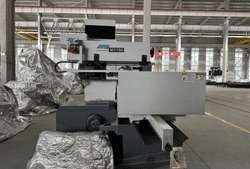
This machine is capable of doing all types of general milling work on various materials. Since the table swivels, one can place the workpiece at any required angle; therefore, it is used in the manufacturing requiring precision for complex parts. Hence, the flexibility of universal milling machines is their distinction: horizontal as well as vertical milling work can easily be carried out on them.
Areas of modernization introduced in universal milling machines, including automation and CNC control, make these machines realize accuracy and the efficiency of increased production. They will be able to work on steel, aluminum, or composite materials, with cutting speeds and feed rate parameters selected depending on the project requirements. Some will have multi-axis capability; exquisite machining is thus performed in aerospace, automotive, and tooling. Optimizing workflows, increasing productivity, and ensuring absolute precision as demanded by modern manufacturing standards.
Key Features of Universal Milling Machines
- Versatility in Operations: Universal milling machines are designed to perform a wide range of operations, including face milling, angular milling, and form milling. This adaptability makes them essential for industries needing precision and flexibility in production.
- Building and Durable: Constructed from heavy and robust materials of cast iron or steel to ensure long life even with vibration during its working, this, in turn, increases stability and guarantees consistency of dimension and accuracy in the finished products.
- Advanced Control Systems: Nowadays, universal milling machines are often integrated with CNC systems to automate and customize complex machining operations. These simple systems enable precise control of motion, cutting speed, and tool angles, yielding highly accurate results while enhancing process efficiency.
- Variety of Spindle Speeds: One feature of a universal milling machine is its ability to provide a selection of spindle speeds, ranging from very low speeds for coarse or rough cutting to very high speeds for finishing and delicate machining. The wide range can handle a variety of materials and diverse project requirements.
- Flexibility of Table and Workpiece: Equipped with adjustable worktables and rotary elements, these machines enable smooth multi-directional machining. In other words, the operator can clamp a workpiece at variable angles to achieve more complex operations, like helical cutting or gear machining.
- Energy Saving and Less Downtime: Most universal milling machines are equipped with energy-saving motors and intelligent diagnostics, which monitor and minimize energy consumption, heat output, and predict maintenance needs, thereby reducing unexpected downtime.
- Broad Scope of Industries: Universal milling machines cater to a wide range of industries, including aerospace, automotive, machinery manufacturing, and mold making. They are considered highly adaptable in specialized manufacturing processes, as they can handle intricate geometries while maintaining uniform accuracy.
Universal machines, which combine all these aspects, have remained a potent tool, helping industries meet contemporary manufacturing demands for precision, efficiency, and intricate processes.
Importance of Versatility in Milling
Milling processes must be versatile; that is an essential feature in today’s manufacturing scenario where adaptation and fine-tuning of applications stand intact with operational success. Milling machines, after CNC technology came into being, would be milling anything and everything-a spectrum of materials from softer metals like aluminum to harder metals like titanium. This implies that a manufacturer can further utilize the same setup to mill materials for medication implants, aerospace components, or automotive prototypes.
Statistical Impact: Studies show that multi-function machines have significantly increased industry adoption for complex manufacturing requirements, with 5-axis milling machines providing tremendous benefits in manufacturing complex geometries with virtually no retooling.
On the reverse side, the existence of multi-function 5-axis milling machines is a positive because of their ability to manufacture complex geometries with almost no retooling. These systems enable manufacturers to increase working time capacities either by drastically reducing setup time or by holding their tolerances within one single operation. Conversely, advances in high-speed machining have promoted the efficient manufacture of small, intricate parts, bringing about new developments in micro-manufacturing and electronics directions.
Ultimately, the synergy of technical innovation with the wide capabilities of milling machines is a testimony to their presence in the production sphere. The seamless integration of adaptability with precision enables manufacturers to meet complex demands swiftly in fast-paced markets.
Precision in Milling: Redefining Standards

How Universal Milling Machines Obtain Precision
Universal milling machines are designed and equipped with sophisticated features that confer precision, even in processes involving the most intricate tasks. In this context, one phenomenon of precision lies in the integration of high-grade spindle systems, which, aside from carrying tools at very high rotational speeds, exhibit stability with minimal deviations. The spindles are designed to accommodate multiple tool attachments, allowing a single tool to be used for various materials and designs; thus, the system provides precision.
Another major factor that contributes to precision is the use of digital measuring systems, such as linear encoders or rotary encoders, which provide feedback on position and alignment directly in front of the operator. The operator can then intervene with incredible accuracy for short resettling times, ensuring that the next cut, bore, or groove is made to its exact specifications, even in the case of complex geometry.
In addition, modern universal milling machines feature auto feed mechanisms, ensuring that the cutting velocity and depth remain constant throughout the entire cutting process. This ensures that operations are resistant to human errors and remain uniform throughout production runs. Advanced lubrication systems significantly supplement this purpose, with friction and thermal deformation being among the factors that compromise precision.
When CAD/CAM software complements universal milling machines, the overall precision capacity is enhanced. Through these software packages, manufacturers pre-program operations to the last detail, transforming digital designs into physical outputs with minimal deviation. This greatly aids universal milling machines, given that their machine construction is very rigid, preventing vibrations and allowing them to accomplish challenging projects in an exceedingly reliable manner.
By employing systems that utilize innovative technology, these machines have set a benchmark that is yet to be broken; manufacturers are now free to exceed expectations for very high-quality, finely detailed products across diverse industries.
The Role of CNC in Precision Milling
CNC precision milling brings forth the very increases in accuracy, control, and efficiency of the manufacturing industries. Such an accuracy, control, and efficiency level ensure that all the operations within industries are maintained within micron tolerance. Such a little misalignment in manufacturing would prove detrimental for safety or functionality in aerospace, automotive, and medical device industries.
The modern CNC milling machines feature modern upgraded capabilities that include multi-axis systems, automatic tool changers, and real-time monitoring to help realize optimal workflow. These changes have paved the way for very complex geometries to be realized with very little error in a mass-production environment. For instance, 5-axis CNC milling allows simultaneous movement along several axes so that a part may be machined from many angles during one setting, essentially saving production time and material shortcomings.
Furthermore, CNC technology is a good example of an Industry 4.0 approach in action. With IoT-enabled machines, CNC machining centers can communicate with other machines, record data related to production, and aid in predicting maintenance needs. This minimizes downtime while service levels are at peak condition. Effects from such integration translate to increased productivity, while also providing insight into fluctuating performance metrics for the generic manufacturer, allowing them to activate continuous improvement once more.
Because CNC technology guarantees the highest level of precision, speed, and reliability, it has remained at the forefront of modern milling solutions, equipping manufacturers to meet the exacting demands of today’s highly competitive markets.
Quality Machine Tools for High Performance
In the pursuit of a better-performing level of cutting, the enhanced performance level is closely tied to high-quality machine tools. Modern machine tools are produced with materials engineered in the lab, fine components, and high-tech CNC systems, resulting in improved performance. For example, 5-axis machining centers and automatic tool changers guarantee accurate, versatile, and fast working in other industries.
The statistics show that manufacturers achieve high productivity and lower operational costs by investing in expensive machine tools, given the tools’ dependability and durability. Additionally, leading-edge tools have sensors built in and harness IoT capabilities to track processes in real-time, adapting their production flow accordingly to fine-tune the process. In many industries, including aerospace and automotive, the availability of lethal machine tools equates to guaranteeing the consistency of output per stringent standards and offering scalability and options for innovative manufacturing.
Exploring CNC Milling and Its Benefits
What does CNC Milling Mean?
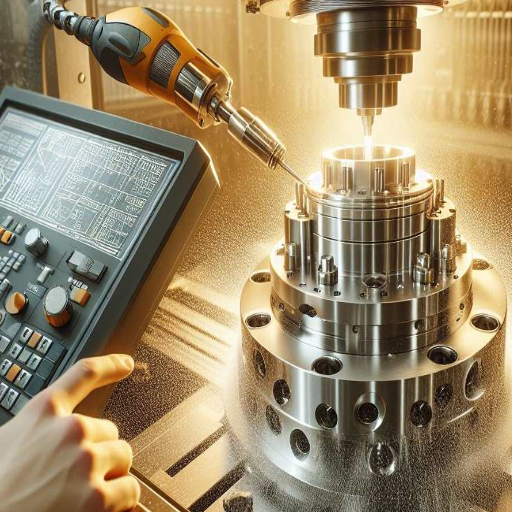
CNC milling typically refers to processes for manufacturing precision parts, where Computer Numerical Control (CNC) is employed to control and manipulate machine tools, removing material from a workpiece to fabricate complex shapes and components. It follows a pre-programmed software with instructions that guide the movement of the cutting tools in various axes, mostly X, Y, and Z, to accommodate both simple and complex designs. CNC milling machines are highly capable of manipulating both metals and plastics, including composites, which are required by various industries, such as aerospace, health, and automotive.
Precision Achievement: CNC milling tolerance can be as tight as ±0.001 inches, a crucial factor for applications of extremely high tolerance values.
Cutting and finishing systems include multi-axis machining, including 5-axis machining with high-end advanced features to produce parts with an extreme degree of accuracy and with less setup. Integration of CNC milling with the production line guarantees efficiency, consistency, and scalability without the specter of quality. CNC milling reduces human intervention during manufacture, lends selectivity to tool settings towards production of the best quality parts, and hence cuts down production time and material wastage.
Advantages Offered by a CNC Milling Machine
- Extended Operation Capability: One of the key advantages offered by CNC milling tools is that the machine can be operated for prolonged hours without continuous supervision, thereby significantly boosting productivity, particularly during high-volume manufacturing.
- Precision and Repeatability: Since CNC milling machines can produce components with the highest precision and repeatability, industries such as aerospace, automotive, and medical device manufacturing can impose tight tolerance requirements on components.
- Material Versatility: CNC milling offers the utmost versatility, working with virtually all materials, including metals, plastics, and composites. With this capability, manufacturers can accomplish the entire gamut of manufacturing, from creating prototypes to fabricating complex multi-axis components.
- Advanced Software Integration: The advanced software integration in CNC enables detailed design customizations, making it easier to meet exact client specifications.
- Cost Efficiency: From a cost perspective, CNC milling reduces labor costs and minimizes waste by optimizing the utilization of raw materials.
- IoT-Enabled Monitoring: Furthermore, with the inclusion of the latest technology, an IoT-enabled monitoring system supervises the machinery and aids in predictive maintenance, thereby increasing efficiencies and reducing downtime.
Material Utilization Improvement: Studies have cited material utilization increases of as much as 30%, thereby applying sustainable methodologies.
Cost-Effective Solutions in CNC Milling
The manufacturers, therefore, intend to adopt a strategy that maximizes cost-effectiveness in CNC milling. They would consider waste reduction, enhancing machine utilization, and improving workflows. The use of the best design software would enable accurate prototyping, which in turn decreases material wastage and reduces production time. For example, CAM software could be used to plot cutting paths that eliminate unproductive tool motions and maximize life.
Another way CNC machines can be cost-saving is energy savings. And these days CNC machines operate with lesser energy, incidentally reducing utility costs and further creating greener manufacturing environmentalism. Another approach would be batch processing that greatly reduces setup times by machining components together with standard fixtures and tooling systems.
Even further savings are achieved with the integration of a real-time monitoring system preventing downtime. Predictive maintenance based on IoT sensors identifies any possible failure in a machine and acts on it before it translates into too costly repairs. Hence, these technologies serve their purpose to keep the machine’s longevity up while reducing manufacturing and operational costs.
Also, by picking good-quality cutting tools with a longer tool life, the costs of replacement can come down sufficiently. Ideally wear-resistant materials like carbide or coated tools should be used as they will guarantee consistent output at relatively low cost. When combined, the impacts of these strategies combine to provide a comprehensive approach in reducing CNC milling costs while maintaining quality standards.
Enhancing Productivity with Universal Milling

Maximizing Output in Metalworking
Every operation in manufacturing aims at generating the best results in metalworking processes, for which advanced machinery with accurate machine-tooling is a must. Balancing rapid production rates yet accurate working is an essential factor with consideration to the 5-axis machining or high-speed machining methods. Classically, a modern CNC machine with dynamic optimization software produces smooth and quick movements, thereby lessening the operation time to a great extent while also improving the quality of the part greatly.
Apart from this, an important aspect of tool monitoring systems is improving production productivity. Such a system works on sensor data that can monitor tool wear in real-time so that an operator can compensate for tool failure and thus maintain cutting performance at all times. Through tool monitoring, cutting efficiency can be further enhanced by choosing materials like coated carbide or new ceramics, especially for carrying out operations on hard metals such as titanium or hardened steel.
Ultimately, by adopting workflow organization strategies such as lean manufacturing, one can minimize waste and utilize resources more efficiently. Applying these tools, methods, and technologies enables a firm to provide precision and reduce downtime while executing high-volume production consistently.
Swivel Head Mechanism for Enhanced Flexibility
The swivel head mechanism is a crucial innovation in contemporary machining technologies, offering precision and adaptability. The swivel head mechanism allows the cutting head to swing or pivot freely to some extent, thereby gaining access to complex geometries for multi-axis machining with fewer repositioning efforts required by the previously set fixture on the machine. Additionally, with such a provision, manufacturers gain sufficient flexibility to broaden their production activities and accommodate a much wider array of workpiece designs.
Besides, the swivel head mechanism reduces setting times and in return increases the efficiency of machining operations by smoothing transition between operations. Hence, this facility is granted especially to the aerospace and automotive industries that somehow entail the manufacture of complicated components with precision. Together with CNC programming developments, the mechanism provides the motion between axes to be fluent and accurate, thus leading to further improvements in cutting and surface finish quality. Therefore, this mechanism introduced into machining operations will give flexibility and productivity for complicated projects by industry.
Finding the Right Supplier for Your Milling Program
When selecting a milling supplier, there are several criteria that have to be considered to validate the best choice for operations. It is generally appropriate to evaluate them first in terms of technical competence. For example, can this supplier carry out intricate designs employing machinery such as CNC systems or swivel head mechanisms? A supplier with more modern equipment is generally synonymous with precision, uniformity, and lesser lead times.
Along with that, the experience of the supplier in the industry will also matter. Suppliers who work in your line of business, be it aerospace, automotive, or manufacturing, will be in a better position to understand the peculiar technical regulations and standards of quality expected. You may want to check their certification for ISO or AS9100 to ascertain that they actually practice quality assurance.
Bear in mind their scalability in relation to future demand. A supplier with flexible capacity can grow along with your needs. They produce prototypes, small-batch, and large-scale production. To run your production schedules smoothly, transparency on lead time and delivery performance, as well as the ability to meet tight deadlines, are vital benchmarks.
Planning ultimately should select vendors that are experts in communication and support. An active supplier that team will avoid expensive delays and chances of project success. Careful consideration in these matters will lead your company on a path to a strong partnership that will increase productivity and innovation on your milling operations.
Future Trends in Milling Technology
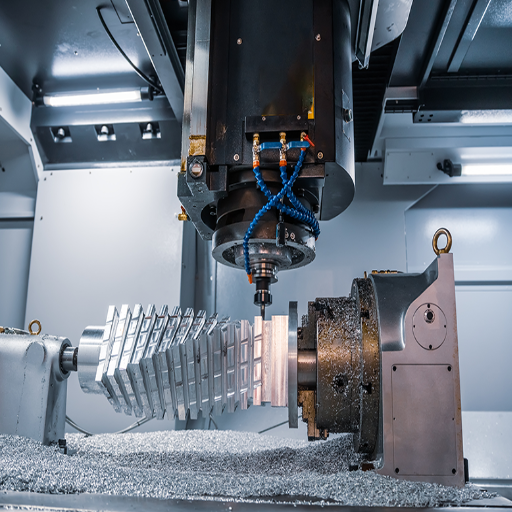
Innovations in Universal Milling Machines
I am always in awe of technological developments and how they manage to modify this indispensable machine whenever I think about universal milling machines. One such major innovation was the incorporation of the CNC. The CNC revolutionized milling with precision, repeatability, and efficiency. Various complicated milling patterns can now be programmed by the operators using the CNC software to manufacture highly intricate pieces that were considered impossible. This sophistication and productivity in CNC have only expanded with time, whereas the chances of error in the machining process have considerably diminished.
The slow and gradual adoption of automation and innovative manufacturing technologies into universal milling seems to be organizing for the promise these developments hold. A high-tech, sensor-equipped IoT machine is empowered to record and analyze performance in real-time via parametric determiners, indicating maintenance needs, scheduling workflows, and adjusting them autonomously. Such capabilities raise operational reliability; in the process, they also reduce downtime-an important scheduling phase where production must be kept competitive. In addition, automation quickens changes in tooling, reducing setup time and increasing throughput, thereby benefitting large-scale operations.
Eventually, I consider this to be the use of ecological materials and energy-efficient design-a trend of the future. Energy recovery, low-friction components, biolubricants are some new advances that help a machine become energy-efficient and reduce its environmental footprint. So, this whole idea towards sustainability fits well with the present manufacturing philosophy, so industries may stand up to modern regulatory standards and proudly accommodate eco-conscious customers. All of these make universal milling machines a requirement in a fast-track industrial setup.
Impact of Automation on the Precision and Versatility
In the world of automation, universal milling machines are at the nexus of precision and versatility. However, I have also seen it working for the good. The ingenuity of machining of today far surpasses any manual capacity, brought about by CNC or Computer Numerical Control. This equipment looks to intricate specifications from CAD (Computer-Aided Design) software and reflects “the perfection” into every single piece with absolute precision. In my opinion, such mechanisms hardly allow mistakes to creep in and rarely result in material wastage, thereby increasing efficiency in costing and saving time.
For me, this is how automation represents other machines increasing their utility. Moving from the first gen toward a universal milling machine, new generation milling machines that are programmable and have multi-axis movement are capable of performing basically everything-it can contour complex shapes, drill intricate patterns. Switching between materials and design requirements is relatively taken care of on its own-they are a common tool in many industries. I feel this kind of flexibility should empower the manufacturers to take on numerous projects with little requirement for retooling, which is an exponential increase in productivity.
Every machining process requires some milling operation, and with every step, the workpiece grows complex along one dimension or the other. It is capable of carrying out countless milling operations and can be varied in many parameters to obtain utmost precision, yet keep the milling operation flexible enough to be applied almost intuitively to new parts. Hence, universal milling machines have become one of the major constituents of modern machine manufacturing, combining the elements of precision, adaptation, and automation.
Adapting to New Challenges in Metalworking
While working in metalworking, one must develop flexibility, stay informed, and remain proactive when new challenges arise. Growing demands for so-called precision and efficiency required that the newest technologies be integrated into operations, CNC automation, and digital design among them. There can be no compromise on everyday operations that demand ultimate precision coupled with speedy teamwork, thus reducing lead time to meet strict deadlines and provide a competitive advantage. I keep abreast of new trends which allows me to foresee potential challenges such as material preferences or client needs and prepare myself accordingly.
In metalworking, attaining sustainability has been so vital that the clients have begun demanding eco-friendly processes more and more. I have, therefore, had to reconsider the whole issue of waste reduction and resource utilization. For instance, the use of recyclable materials together with energy-efficient production processes has benefited me in profitability and from a more sustainable direction. Sustainability is, in my mind, an industry buzz word especially from the ethical perspective I have pertaining to manufacturing.
The other factor is collaboration; never has it been more critical. It creates a space for working together with interdisciplinary teams or clients to come up with some original ideas to meet unique challenges-all the way to one-off prototypes-even the most complex design diagnoses. Technology, sustainability, and collaboration have ensured that I continue to adapt to the challenges posed by the ever-changing metalworking world, always giving my all to my clients.
Reference Sources
-
The Universal Milling Machine: Unleashing Precision and Versatility – Mehnajo
Discusses the unique design features like the swiveling table that enable both horizontal and vertical movements. -
Universal Milling Machines – United Precision Services
Highlights the precision capabilities of universal milling machines in creating intricate and complex machine parts. -
A Look into the History of Industrial Cutting Machines – Summit Machine Tool
Explores the evolution of milling machines, focusing on features like adjustable head tilt and movable quills for precision.
Frequently Asked Questions (FAQs)
What is a Universal Milling Machine and How Does It Achieve Versatility?
Since it can be applied in horizontal milling, vertical milling, and many other machining operations, it is an all-purpose milling machine. The design allows for the milling of fairly complex parts from raw materials and is suitable for different machining works in modern industries. Thus, a locating head allows the machine to be set at several angles and positions, offering flexibility. Such versatility finds more uses in industries requiring precise engineering and flexibility in assembling their products. The switching between various operating methods in milling is a critical feature of the universal milling machine because this ensures top productivity and efficient manufacturing.
How does a CNC Milling Machine Redefine Machining Precision?
Initially realized through CNC milling, the introduction of a higher level of computer integration into machining processes culminated in a fairly elaborate machining process, much like in manual milling. This precision gamified their very production, requiring very little error in most of them, even if their geometry was very complex. The path of the tool is programmed with precision, with the spindle used to maintain this path, ensuring that the quality of the workpiece is upheld. Within machining, this extreme precision is required by industries that have exacting requirements that must be strictly followed. An interface that is easy to use also enhances CNC machines, allowing operators to program complex tasks with greater ease, resulting in even smoother production.
What measures do machining centers adopt to optimize productivity?
Machining centers significantly assist in boosting productivity by integrating various machining functionalities into one capable system. These CNC machines can drill, mill, or tap all within a single setup. Hence, there is no need for several machines or setups; this saves time and other resources. Center machines have rigidity during heavy-duty operations and allow room for accurate machining on very hard materials. For industries with rapid turnaround and high output needs, machining centers are considered a key element in their industrial landscape, contributing immensely to productivity.
What are the advantages of vertical milling machines?
If space is limited, a vertical milling machine offers fewer benefits. The machine’s vertical spindle accommodates the machining of highly complicated shapes and delicate parts. Also, these vertical-type milling machines are purposely designed for operator visibility and accessibility. These machines work on various materials; thereby, they are used for precision machining in many industries. Their adaptability and the numerous configurations in which they can be set up render them an asset in any comprehensive machine shop. Also, they promote smooth workflow, as it is easy to change over from one job to the next.
How are horizontal milling machines compared with universal milling machines?
One main difference between horizontal and universal milling machines is their design and orientation of the spindle. Horizontal-type milling is basically meant for heavy material removal and finishing of flat surfaces. Universal being more versatile, since it can swivel and work horizontally or vertically, gives universal milling an advantage in manufacturing of intricate parts and executing a wide variety of machining operations. Since these two types of machines mutually complement one another, choosing which one to use depends on the machining operations required by the particular project. Hence, understanding the above differences between the two would help in smooth processing.
What materials can universal milling processes alter?
As a result of precision engineering, universal milling may convert waste materials composed of anything from metal to plastic into the most technically precise product. Thus, this machining acts as a support for the automotive, aerospace, and consumer goods industries. Machining different types of materials offers versatility to design and manufacturing and highly flexible machining of complicated parts for specific end uses. Due to their very high accuracy, universal milling machines are able to use the material removed from a workpiece with little wastage. As the industry develops, the never-ending need remains for machines performing various machining operations.