




Column Grinder: A Comprehensive Guide to Precision Grinding Machines
The importance of precisely-formed metal parts in the manufacturing processes of current factories cannot be overstated. This column grinder-focused article delves into how exactly they optimize quality and efficiency across sectors.
Introduction: What is a Column Grinder?
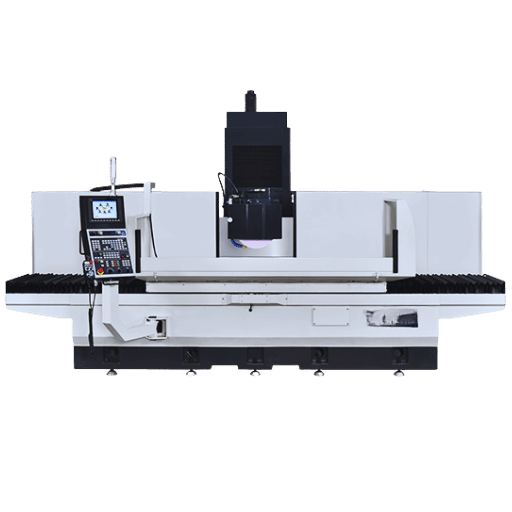
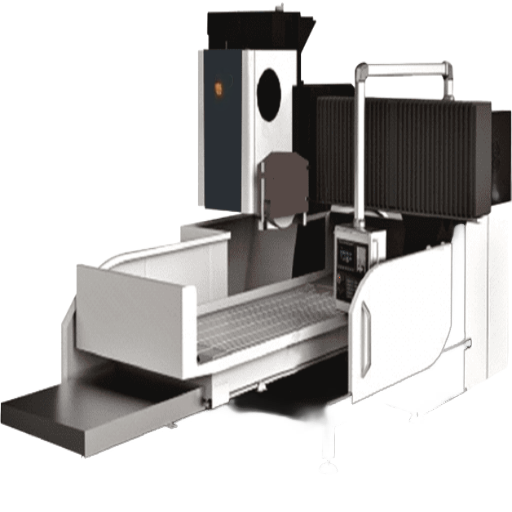
The Surface Grinding Machine is built in a manner that ensures high accuracy on workpiece polished surfaces. Its notable point is the vertical column structure, having a grinding head support, offering ensured continuous and accurate working. Such machines are widely utilized across the automotive, aerospace, manufacturing, and many other diverse fields, demanding proper and specific material clearance.
Key Point: Column grinders possess many adjustments throughout their build, which makes it simple to be used with various materials and all types of workpiece dimensions.
Primary Uses and Applications
Working with metal often requires a polished or detailed finish, which is where a grinding machine comes in. Column grinders serve as essential shaping tools for parts and are commonly used in metalworking and manufacturing trades. They are most regularly utilized in:
- ✓ Initial and finishing stages of assembly
- ✓ Refinement of individual pieces
- ✓ Production of aesthetically designed surfaces
- ✓ High-performance component fabrication (turbine blades)
- ✓ Tool and die-making work
Industries That Utilize Column Grinding
Automotive Sector
Fuel injection components and precision engine parts
Aviation Industry
Turbine blades for trans-sonic turbo engines
Medical Industry
Zero-defect components with carefully regulated specifications
Tool & Die Making
Specialist applications requiring refined technology
The Importance of Precision in the Grinding Process
Understanding precision requirements in grinding represents a major concern across various industries. To satisfy modern manufacturing demands, grinding must adhere to rigorous standards, especially in narrow markets where aerospace and medical applications require zero-defect components.
Key Benefits of Precision Grinding:
- Material and energy savings
- Eco-friendly grinding processes
- Compliance with industry regulations
- Enhanced product quality and reliability
Evolution and Impact of Column Grinders
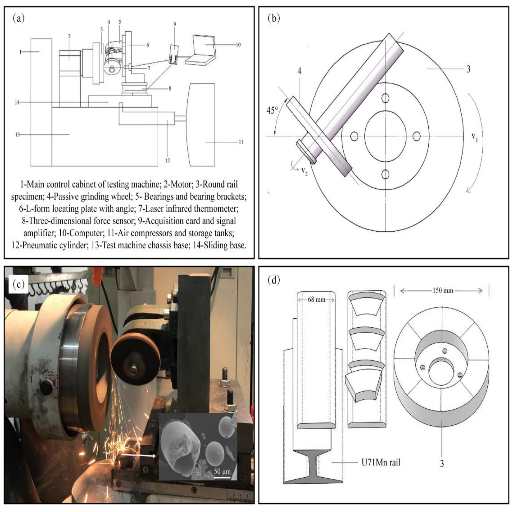
Historical Development
Grinders evolved from simple stone-based tools, with significant developments occurring during Leonardo da Vinci’s era in the 15th century, where he designated early versions as “needle grinders.” This foundation paved the way for modern precision grinding technology.
Modern Technological Improvements
Recent technological advancements in column grinders focus on:
Automation
Extremely precise automated systems reduce human error
Advanced Materials
Superabrasives, including CBN and diamonds
Sustainable Design
Improved dust handling and eco-friendly workflows
Enhanced Precision
Faster, more accurate machining capabilities
Types of Column Grinders
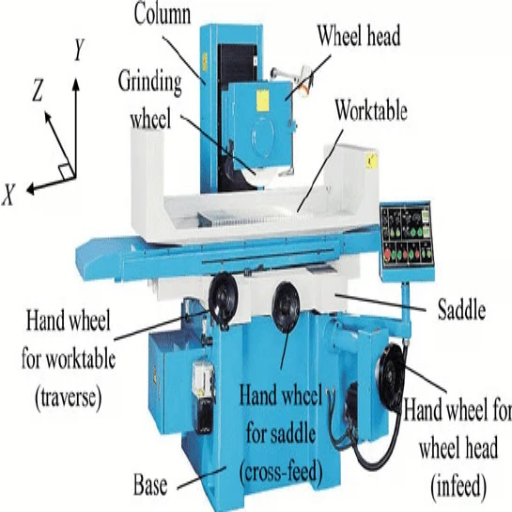
Manual vs. Automatic Column Grinders Comparison
Key Features of Modern Column Grinders
Advanced Feature Highlights
🔧 Diamond-Hard Precision
Advanced configurable cutting edges enabling fine contouring cuts with unmatched durability.
⚡ Smart Automation
Integrated AI controlling systems ensuring consistent quality and continuous production.
🛡️ Enhanced Safety
Comprehensive safety features including emergency stops and protective barriers.
📚 User-Friendly Interface
Ready-to-use memory features and educational programs for easy operation.
Specialized Column Grinders for Niche Applications
🛩️ Aerospace Industry Grinders
Double-column surface grinders essential for turbine blades and engine parts requiring micron accuracy.
🏥 Medical Device Grinders
Precision instruments and implants requiring exact material specifications and micron-level accuracy.
🚗 Automotive Grinders
Engine components, transmission parts, and gears with advanced numerical control precision.
💻 Electronics Industry
Small-scale electronic components for circuit boards and semiconductor fabrication.
🔨 Tool and Die Grinders
Advanced tools and molds production allowing faster replication with manufacturing accuracy.
🏗️ Heavy Duty Industries
Construction and energy sector component grinding for large-scale precision applications.
Applications Across Industries
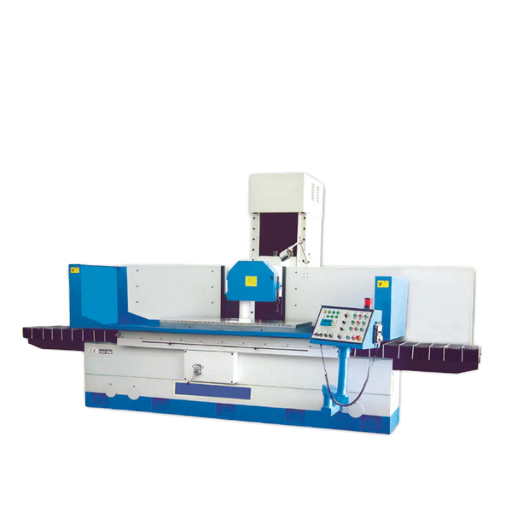
Column Grinders in Manufacturing
Precision material shaping and surface finishing require column grinders to produce components demonstrating high dimensional accuracy and smoothness. These versatile machines handle an extensive variety of materials, from metals to composites, enabling manufacturers to meet specific requirements and enhance product quality.
The Role in Metalworking
In metalworking, column grinders play a unique role in precise surface finish definition and dimensional control within the tightest tolerances. Their construction enables stable, high-efficiency processing of large and heavy workpieces while minimizing vibration effects on heavy components.
Supporting Construction Projects
The construction industry benefits significantly from column grinders when fabricating detailed and bulky metal pieces for large frameworks. The consistent finishing reduces material wastage while accelerating concrete and other finishing work, particularly beneficial for specialized buildings like healthcare complexes.
Comparison with Other Grinder Types
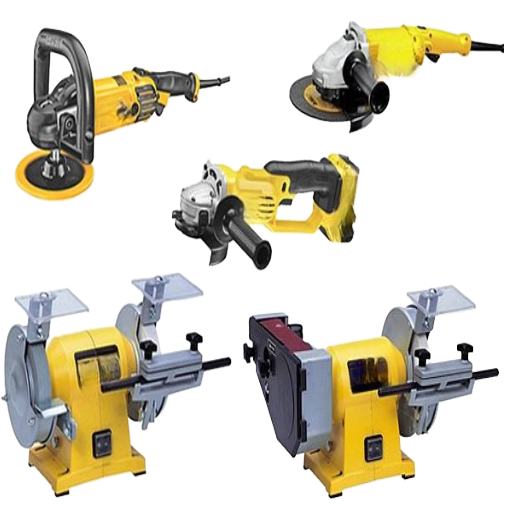
Column Grinders vs. Bench Grinders
Column Grinder vs. Surface Grinder
When to Choose Column Grinders: Column grinders prove more useful and convenient than surface grinders when focusing on high precision or robust task handling. They are purpose-built for industry-standard workflows and situations requiring consistent precision, strength, and superior working ability for large-scale, high-accuracy surface work.
Real-World Success Stories
Industry Success Highlights
💊 Pharmaceutical Excellence
30% production efficiency increase at a leading pharmaceutical lab through precise particle size creation for drug formulation.
🧬 Biotechnology Breakthrough
Enhanced sample protection for fragile materials, improving accuracy in protein analysis and DNA testing.
⚡ Petrochemical Innovation
Streamlined catalyst management resulting in improved efficiency rates during particle transformation processes.
☕ Food Industry Success
20% increase in customer satisfaction through consistent coffee grinding and improved taste profiles.
Selection Guide: Choosing the Right Column Grinder
Essential Factors to Consider
- 2
Machine Size and Work Envelope: Consider space requirements and workpiece dimensions compatibility - 3
Automation Features: Evaluate CNC controls and automated tool changing for workflow efficiency - 4
Speed and Power: Validate motor power rating and grinding speed ranges for your applications - 5
Load Capacity: Ensure carrying capabilities match workpiece size and weight requirements - 6
Durability and Build Quality: Look for resilient frames and high-standard components for consistent operation - 7
Safety Features: Verify emergency stops, safeguarding, and limiting controllers - 8
Energy Efficiency: Consider power consumption for cost efficiency and environmental compliance - 9
Cost and ROI: Assess price alongside anticipated return on investment for your operations - 10
Manufacturer Support: Evaluate warranty options, technical support, and maintenance parts availability
Maintenance Best Practices
Essential Maintenance Tips for Longevity
📋 Align With Manufacturer Instructions
By following the manufacturer, you ensure that you follow the maintenance programs set, thus ensuring that you avoid operating delays.
🔍 Fixed Observations
Counter downtime through the detection of issues during planned maintenance and equipment checks.
🧽 Cleanness of Equipment
Clean seals, filters, and any parts that can hinderthe efficiency of the machine and cause unwanted downtime after every shift.
🛠️ Approved Consumables and Materials
Use only consumables that are stipulated by the manufacturer and use original push/pull fittings and components to avoid and maintain the standard warranty,y together with the best performance.
⚙️ Appropriate Oiling
Use the appropriate oil on moving parts to increase their lifespan and to prevent unwanted wear and tear.
📊 System Check
Use the equipment to create a database for it. This allows us to see the system’s behaviour and the information to allow us to react beforehand.
⚠️ Critical Maintenance Reminders:
- Operator Training: Ensure comprehensive training for all operators on proper equipment use and basic maintenance
- Documentation: Maintain detailed records of all maintenance activities, repairs, and part replacements
- Preventive Scheduling: Implement proactive maintenance schedules to address issues before they worsen
- Secure Storage: Provide clean, dry storage areas protected from environmental hazards
Frequently Asked Questions
Reference Sources
1. Column Dynamics Analysis For an NC Bevel Gear Grinder
- Authors: Yong Wang et al.
- Published in: Key Engineering Materials, 2016
- Citation Token: (Wang et al., 2016, pp. 101–108)
- Summary: The use of high-efficiency mills and double-column grinders is crucial in modern manufacturing. The authors of this study illustrate the simulation perspective on column dynamics for a column in a numerical control (NC) bevel gear grinder. The focus of the study is on the importance of the column to grinding precision and stability. A simulation methodology is described that models the column dynamics under different operating conditions in order to anticipate vibration and stability concerns.
2. Reverse Engineering of MM52160 Gantry Rail Clamping Column
- Authors: Lionel Goodman
- Chapter: Mechanical Machining Journal, 2016
- Reference Identifier: (De-qian, 2014)
- Abstract: This document outlines the benefits of using a double-column grinder in manufacturing processes. In this research, the gantry rail clamping column is being studied, and the focus is on the optimization of essential features made from the very rigid MM52160 material. The study is based on reverse engineering principles. Thus, in this work, the focus is on how the structural aspects of the gantry rail column and slide bearing structure can be enchanced through the use of finite element analysis, and, in turn, to ensure the weight of the designed products is optimized through the use of finite element analysis.
3. Investigation of Vibrational Characteristics of the Grinding Machine’s Combination Column
- Written By: Ling Peng
- Published in: Machine Tool & Hydraulics, 2013
- Token of Quote: (Ling, 2013)
- Abstract: The document delves into the vibration characteristics of the combination column in gear grinders via ANSYS; it also integrates useful information, such as the design and development of grinding machines. The document proposes a useful method for referring to grinding machine configuration or in the manner in which structural design cases are formulated. The method includes the development of a model document, which is called the document of vibration, based on the other detailing or the document of a model vibration for double column surface grinders.
Conclusion
Industrial technology’s overall pinnacle is the column grinder—the equipment that is used to efficiently grind things to perfection. These grinders offer unquestionable stability in their precision and versatility; this is regardless of the industry in which their technology is applied. These machines are perfect for; anything from space technology where two parts need to be a micron apart, to the most recent models of robots that are still under trial, as they consistently achieve the best results. The available precision grinders combined with the businesses’ knowledge of the appropriate models that are available as well as the maintenance manuals allow them to achieve top results promptly and most importantly, cost-effectively.