




Metalworking lathes are at the heart of precision machining, where they are indispensable in a wide array of industries, including automotive and aerospace. These machines precisely refit complex parts with exactitude from metal raw materials to produce finely finished parts required for modern innovations. What makes lathes so famous for being indispensable pieces of equipment? How does it make precise industrial products from basic materials, capable of driving so many branches of industry further? This blog aims to delve deeply into the world of metalworking lathes, exploring how they function, the types of metals they process, and their role in precision machining. Whether you are a professional machinist or a curious mind, this blog will pique your interest in the genius behind the tools, thereby clarifying some aspects of a lathe while highlighting its importance in manufacturing and beyond.
Introduction to Metalworking Lathes
Metalworking lathes are essentially tools used to shape and modify materials, chiefly metals, by rotating them against cutting tools. These machines are precision machines: a machinist would create a component to exact specifications, including the surface finish. Generally, lathes are used for part production in the automotive, aerospace, and mechanical industries. From turning to drilling and threading, all operations are performed, keeping metalworking lathes vital in modern machining processes. Versatility and dependability make them fundamental for producing good-quality and durable products.
What is a Metalworking Lathe?
These machines manufacture various articles: one shape, cutting, and manipulation of metal, which make precise forms and dimensions. The workpiece rotates about a fixed axis during machining or turning operations, such as turning, facing, threading, or boring. Modern metalworking lathes can also benefit from enhanced engineering through the use of CNC controls, which yield improved precision and higher efficiency. CNC lathes can hold tolerance levels of up to 0.0001 inch and are therefore used by industries requiring very stringent specifications, such as the aerospace and medical manufacturing industries.
Significant changes have been introduced to the metal lathe industry, with innovations primarily focused on automation, flexibility, and ease of operation. High-speed metalworking lathes can reach rotational speeds of up to 6,000 RPM, depending on the material conditions and application involved, thereby ensuring significantly faster rates, particularly in large-scale manufacturing. These types of lathes also utilize robust materials, such as hardened steel or carbide, in their cutting tools, making the system capable of cutting tough metals like titanium or stainless steel.
In metalworking, lathes exist in a wide range for precision machining. For example, Swiss-style lathes are commonly used to produce small, intricate parts, such as those found in watchmaking or electronics. Metalworking lathes-the engine lathes, turret lathes, Swiss lathes, etc. -under manual control or CNC control, are at the heart of precision machining and continuously advancing various industrial applications.
History and Evolution of Lathes
The lathe is thousands of years old; its origins are believed to date back to Ancient Egypt around 1300 BCE. Turning lathes were the first examples of woodturning machines, and they were pretty primitive, typically operating by hand. Early turning lathes had a strap- or band-type driving mechanism; one person would hold the strap while another operated the lathe.
With the application of mechanical power during the Industrial Revolution in the 18th and 19th centuries, the lathe underwent rapid evolution. With the invention of the screw-cutting lathe, developed in 1797 by Henry Maudslay, the problems of accurate thread cutting were solved, laying the foundation for modern manufacturing. Thus, the new method of manufacture was developed based on proper, standardized machine parts, which in turn required the development of industries in textiles, railways, and steam engines.
Key Historical Milestones
- 1300 BCE: First lathes appear in Ancient Egypt
- 1797: Henry Maudslay develops the screw-cutting lathe
- Mid-20th Century: CNC (Computer Numerical Control) lathes introduced
- Present Day: AI and IoT integration in modern lathes
During the 20th century, lathes underwent rapid evolution. Transforming lathes from manual to an electric one increased the level of efficiency and precision. In the mid-twentieth century, CNC (Computer Numerical Control) lathes were developed, bringing about significant changes in machining processes. With CNC, the automatic control of a machine tool is made possible, and the replication of complex designs with 100% accuracy can be achieved—this shortens production time and reduces human error.
Nowadays, CNC lathes are equipped with sophisticated software, multi-axis capabilities, and real-time monitoring systems to fulfill the requirements of high-precision industries, such as aerospace and medical device manufacturing. Today, machining of materials ranging from aluminum to titanium to composite alloys is the domain of lathes, underscoring their importance in modern engineering.
With the rise of automation in manufacturing and custom machining, the global CNC lathe market continues to grow steadily. Recent studies have found the CNC lathe market to be valued at over $80 billion for 2022 and projected to continue growing with an anticipated CAGR of 6% through 2030. Technological breakthroughs, including artificial intelligence and IoT, will further refine the next generation of lathes to be more innovative and more efficient, while being suited for more applications.
Importance of Metal Lathes in Machining
The metal lathe embodies a modern concept, offering precise accuracy and the versatility required to meet the demanding requirements of metal manufacturing. These machines continue to play essential roles in the aerospace, automobile, and medical device industries, which demand highly mature components. It is worth mentioning that the global metalworking machinery market was approximately valued at $69.6 billion in 2022 and is expected to grow at a CAGR of 4.8% up to 2030, further underscoring the sustained importance of these tools in manufacturing and production.
Recent developments, such as CNC technology, have transformed metal lathes into powerful working tools that can now automate processes, thereby reducing the margin of error generated by human interference. This results in high levels of precision and efficiency, with tolerances of up to ±0.01 mm. Additionally, AI and IoT-based technologies are utilized for predictive maintenance and real-time monitoring of equipment, enabling maintenance teams to intervene before a breakdown occurs, while reducing downtime and increasing productivity.
In addition to slicing, drilling, and threading, metal lathes are also used to work on materials that range from dense steel to lightweight aluminum. Their great use for custom-made productions renders them a necessity in manufacturing turbine blades, engine parts, and surgical tools. Thus, we see the metal lathe at the forefront of machining for years to come, driving innovation and propelling global economic growth.
Types of Metal Lathes
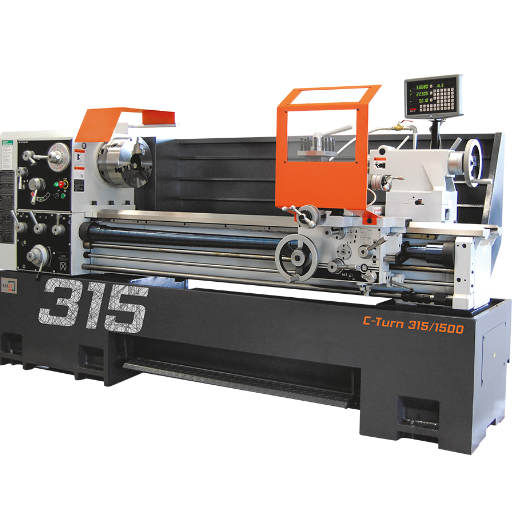
The various metal lathes are categorized by type, based on the machine’s design and its intended applications.
| Lathe Type | Primary Use | Key Features | Best Applications |
|---|---|---|---|
| Engine Lathes | General-purpose machining | Versatile, wide range of functions | Turning, threading, shaping |
| Turret Lathes | Repetitive production | Multiple tool positions | Industrial mass production |
| CNC Lathes | Automated precision work | Computer control, high precision | Complex operations, mass production |
| Toolroom Lathes | Precision work | High accuracy capabilities | Prototyping, toolmaking |
| Bench Lathes | Light applications | Small size, lightweight | Educational purposes, light work |
Each has its particular purpose, allowing for thorough application throughout all industrial areas.
CNC Lathes and Their Advantages
The manufacturing industry has transformed with the introduction of CNC lathes, offering precision, efficiency, and versatility. Pre-programmed software can run these machines to repeatedly and accurately make complex components. Another top advantage provided is:
Key Advantages of CNC Lathes
- High Precision – CNC lathes with tolerances of ±0.001 inch are capable of producing complex parts that require extreme accuracy.
- Efficiency – CNC lathes operate with automated processes almost all the time, allowing for minimal human interference, which reduces production time and labor costs.
- Consistency in Large-scale Production – Once created and tested, a CNC lathe can be programmed to repeat the manufacturing of identical parts without any variation in specifications, thereby maintaining quality on a massive scale of production.
- Versatility – These lathes are compatible with a wide range of materials, including metals, plastics, and composites, enabling businesses to cater to diverse applications and industries.
- Less Waste – Since cutting tools are generally under very tight control, there is little to no material wastage, which is both cost-saving and environmentally friendly.
- Safety – Since operators maintain a distance from the CNC machines, CNC lathes reduce the risk of injury compared to manual lathe operations.
Forecasts indicate that the CNC machine market will exceed $100 billion by 2030, with the aerospace, automotive, and medical device manufacturing industries serving as key drivers of demand for CNC technology. These demand statistics reflect the heavy reliance CNC technology has come to enjoy in meeting the ever-increasing need for modernized precision manufacturing.
Engine Lathes: Versatility in Metalworking
Running in a lathe is probably one of the most versatile and famous tools used in metalworking, capable of performing various operations, including turning, facing, drilling, and threading, all efficiently with a single stand-alone machine. Because the engine lathe is flexible, it can be used for small individual jobs and large production runs. Modern engine lathes feature variable-speed controls, enhanced precision mechanisms, and digital readouts, enabling higher accuracy and efficiency during operations.
Case in point, the ever-increasing demand for engine lathes and the service industries they support, serving numerous companies in the aviation, automotive, and heavy equipment manufacturing sectors. Globally, the trend shows that the use of engine lathes is increasing among small to medium-sized enterprises due to their cost-effectiveness and ease of maintenance. Industry reports estimate a compound annual growth rate (CAGR) of more than 4% for the lathe machines market from 2023 to 2030, with engine lathes accounting for a significant share. The growth is primarily attributed to the growing emphasis on precision engineering and machining, with engine lathes becoming an essential tool in modern production facilities.
Also, innovations in materials and machining techniques have created further possibilities in the applications of engine lathes. Now, therefore, they stand able to deal with a wider variety of complex materials, such as special alloys and composites, to meet the changing requirements of advanced manufacturing sectors. This versatility accounts for the fact that engine lathes remain among the essential assets in various industrial operations.
Big Bore Lathes for Heavy-Duty Applications
Big-bore lathes are designed for large, heavy-duty applications, making them an essential requirement for industries such as aerospace, energy, and shipbuilding. These machines are mid-sized, with an increased diameter of the spindle bore, allowing for the accommodation of larger and heavier materials, such as thick-walled pipes, heavy cylinders, and large shafts. Modern big-bore lathes can accommodate workpieces exceeding 20 inches in diameter and several meters in length, making them ideal for demanding applications that require strength and precision.
The key features that distinguish big-bore lathes in terms of accuracy and efficiency are CNC programmable controls, an automatic lubrication system, and enhanced cutting capabilities. Their spindle speeds vary, but typically range from 10 rpm to 1000 rpm. With motors powerful enough to generate torques of over 50 hp, these machines are perfectly equipped to work on tough materials such as hardened steel and titanium. They are the backbone of industries wherein high performance and consistent quality are required over long production runs.
Big-bore lathes prioritize operator safety as their top concern; key features include safety interlocks, protective shields, and enhanced chip management systems to ensure a safe working environment. Equally, their robust nature would factor in and prove its worth with modern innovations, while meeting the stringent standards of heavy-duty manufacturing today.
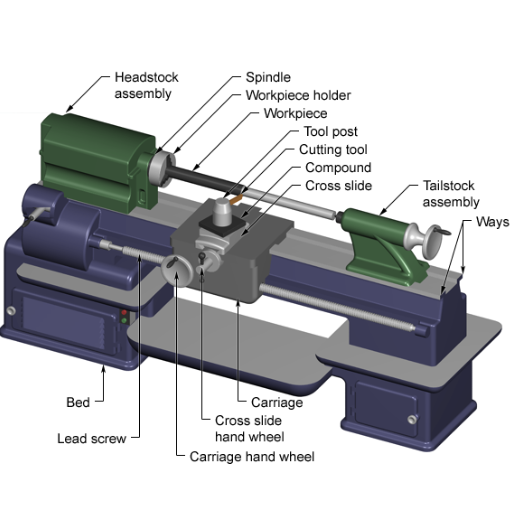
Lathe Components and Configuration

- The bed serves as the foundation of the lathe, supporting various components and aligning them.
- Headstock: carries the spindle and the driving mechanism, which rotates the workpiece.
- Tailstock: supports the workpiece on the opposite side for stability during machining.
- Carriage: It supports and moves the cutting tool along the workpiece.
- Chuck: A device for holding workpieces, grasping the material firmly between jaws.
- Lead Screw: Used in threading and cutting operations to produce accurate carriage movement.
Therefore, the machining process is done efficiently and accurately through a coordinated effort of these components.
Key Parts of a Metal Lathe
Headstock: The headstock is the main section of the lathe wherein the spindle and the drive mechanism are housed. Such rotation is necessary for cutting operations, allowing speeds to be varied according to the type of material and the machining operation.
Tailstock: The tailstock is set against the headstock end, which supports the other end of the workpiece during operation. It can also hold tools such as drills or reamers for machining along the axis, providing an axial tilt to maintain accuracy.
Carriage: The carriage, mounted on the bed of the lathe, is used to carry the cutting tool for performing various operations, such as turning, facing, and tapering. It is used to locate the tool accurately for the removal of material, whether by manual or power feed.
Chuck: A chuck is a workholding device that grips the workpiece tightly. There are many types, such as three-jaw or four-jaw chucks, giving you enough flexibility for many sizes and shapes of materials.
Lead screw: During threading and cutting, the lead screw drives the carriage with precise accuracy, allowing the tool to cut along its intended path. It is necessary so that we may have a uniform pitch on the threads and have consistent machining results.
Together, these components provide everything necessary for precision machining, thereby rendering the metal lathe a versatile and indispensable machine tool in industrial manufacturing and engineering applications.
Understanding Lathe Configuration
The configuration of a lathe primarily involves the orientation of the machine, the drive system, and the key operational components it contains. Conceptually, lathes are categorized into bench lathes, engine lathes, turret lathes, and CNC lathes according to their design and application. Most lathes have a headstock (containing the central spindle and the primary drive mechanism), a tailstock to support the longer workpiece, and a carriage that supports the cutting tool for cutting operations. The settings of the drive system for these machines include the belt drive, gear drive, and electronic drive control, which are commonly found in CNC machines.
Several factors determine the suitability of a lathe configuration: the material to be machined, the type of operation, and the level of precision required. CNC lathes use programmed instructions to automatically perform machining and are particularly useful for high-volume output or complex fabrication. Therefore, understanding lathe configurations would help determine the appropriate lathe for manufacturing, ensuring an efficient and precise approach to various applications.
Precision and Accuracy in Metalworking
In metalworking, precision and accuracy are paramount to producing high-quality parts according to exact specifications. Precision refers to the degree to which the measurements of a part are consistent with one another after being measured on multiple pieces within the sample, allowing for minimal variations. If a particular machined part has dimensions very close to those prescribed by either engineering drawings or design specifications, it would be deemed accurate. Advanced processes, achieved through computerized methods like CNC machines, help retain both precision and accuracy by eliminating possible human errors. There are factors such as the tooling used, adequate calibrations, and regular maintenance of the machines that matter in delivering the best cases. This way, with rigid control over the above parameters, manufacturing companies can produce parts with decent and superior performance, ensuring reliability through consistent adherence to industry standards.
Operational Techniques in Metalworking

Metalworking operations typically involve cutting, forming, and joining processes to accurately manufacture and assemble metal components. Cutting processes normally remove material for precise dimensional control; everyday cutting operations include milling and turning. Forming processes change the metal’s shape without removing any material; standard forming processes include bending and stamping. Welding and fastening are excellent joining methods used to make durable assemblies. Selecting the appropriate tools, materials, and techniques is crucial to achieving quality in any metalworking project. For components that require both cutting and joining, metal welding and machining services from Aubrik are a reference for discussing the machining and subsequent fabrication scope.
Turning Centers: Process and Applications
Turning centers are exact machine tools manufactured for engineering and manufacturing applications. Essentially, this machine rotates the workpiece while a cutting tool removes material to achieve the desired shape and size. With the help of CNCs, now commonly referred to as modern turning centers, these machines deliver the accuracy, repeatability, and automation necessary for bulk production.
Essentially, the turning center masters complex geometries with little to no human interfacing. Equipped with multiple working axes, the turning center can carry out advanced operations such as threading, knurling, grooving, and contouring. Some are dual-spindle or incorporate live tooling, allowing for simultaneous milling and drilling operations on one machine, thereby reducing cycle time and increasing efficiency.
Turning Center Applications by Industry
- Automotive: Engine components, shafts, and gears
- Aerospace: Precision parts for aircraft systems
- Electronics: Small, intricate components
- Medical: Surgical instruments and implants
These machines are utilized in several industries, including automotive, aerospace, and electronics, and are used for various activities, such as precise manufacturing. For example, in the automotive sector, turning centers are used to manufacture precision parts, such as engine components, shafts, and gears. According to recent industry information, the global CNC machine tools market is anticipated to exceed $100 billion by 2030, driven by the demand for precision manufacturing.
The renowned turning center is well-known for several positive attributes, including shorter production times, reduced waste, and improved surface finishes. Several issues determine the kinds of turning centers to be used. These are dependent on the materials being used, the quantity of production, and the degree of complexity of the specifications being produced when aided by direct machining. The integration of AI-based controls, IoT connectivity, and other technologies has taken modern turning centers to new heights, making them essential in present-day manufacturing.
Screw Cutting Techniques on a Lathe
Screw cutting on a lathe is very critical as it produces precise threads on any working piece. This technique includes rotating the spindle in synchronism with the translation of the cutting edge along or across the workpiece. The selection of the thread pitch is the first operation, for which one has to change the lead screw gearing suitably or, in the case of CNC lathes, select an appropriate threading program.
Various factors influence the success of screw cutting, including the selection of tool material, tool geometry, and cutting speed. HSS and carbide tools are commonly used, with the latter being especially suitable for high-speed machining of tough materials. The cutting depth may range from 0.1 to 0.3 mm per pass, depending on the thread profile and the material’s hardness. Proper lubrication is necessary to diminish tool wear and for a smooth thread finish, with cutting oils and emulsions being common choices.
Using CNC, multistart threading, taper threading, and quick switching between metric and inch threads are a few of the advanced features offered by modern lathes. These machines allow tolerance to remain within ±0.001 inches (±0.025 mm) in many cases, which is of utmost importance in critical applications ranging from aerospace to medical components.
Additionally, operators often used thread gauges and measuring tools, such as micrometers or optical comparators, to verify the correctness of the threads produced. With proper skill on the part of a machinist and working within the capabilities of a modern-day lathe, screw cutting can produce fine threads consistently to the given standards.
Boring Operations: Enhancing Workpieces
Boring operations are a core manufacturing process used to enlarge and smooth pre-existing holes in workpieces, thereby achieving dimensional accuracy and a better surface finish. The operation is usually performed on a lathe. Boring tolerances can be as close as ±0.0005 inches (±0.0127 mm), with surface finish values of Ra 3.2 or better, depending upon the tooling and setup of the machine. This process is crucial for applications that require precision, such as engine cylinders, hydraulic elements, or aerospace components that must be perfectly aligned and fitted.
An increase in efficiency and growth in accuracy have been achieved through the use of advanced boring tools, specifically fine boring heads and digital boring heads. With such tools, a machinist can make micro-adjustments that reduce the setup time while minimizing waste. For example, in CNC machining centers, an automated system monitors cutting conditions in real time, thus guaranteeing consistency of results for long runs of high production. Similarly, new insert materials, such as carbide and polycrystalline diamond (PCD), alter the tool life and performance when machining hard or alloyed materials.
During boring, one must keep in mind to set the cutting speeds, feed rates, and cooling systems. Cutting fluids are essential for heat dissipation and removing chips to protect both the tool and the workpiece. The boring operations have undergone constant evolution with the introduction of newly developed technologies and techniques, enabling the production of precision-engineered components of utmost importance across diverse industry spheres.
Applications of Metalworking Lathes
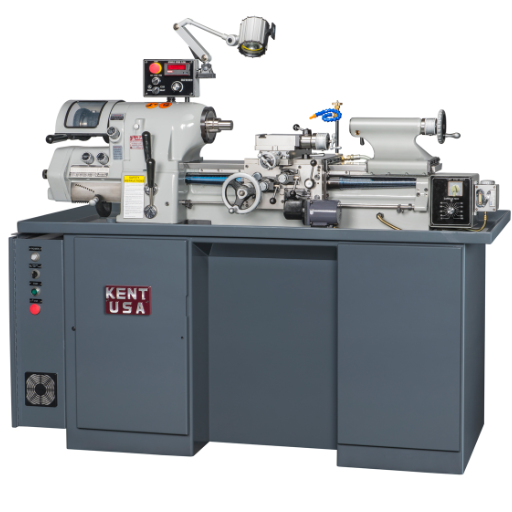
Below, you will find the interesting applications and possibilities associated with the use of metal woodworking lathes. Metalworking lathes are essential manufacturing tools, necessary in various industries to perform shaping, cutting, and drilling operations on metals. Usual operations such as the production of machine components, automotive manufacturing, and aerospace work are carried out. The machines are also utilized for making custom metal parts, repairing worn-out pieces, or creating prototypes. The versatility and precision of metalworking lathes guarantee high-quality and precise industrial and custom projects.
Toolroom Lathes for Precision Parts
Toolroom lathes, a class of high-precision machines, are perfected to manufacture excellent components with utmost accuracy. Equipped with top-notch capabilities, including digital readout (DRO), variable speed, and spindle accuracy, they enable skilled operators to produce highly detailed workpieces with precision. Toolroom lathes are used in aerospace, medical device manufacturing, and automotive industries, where tolerance levels are often specified to ±0.0001 inches.
With advances into modern times, toolroom lathes have evolved to include CNC capabilities that allow automated operations and design geometries considered very difficult or even impossible to achieve by manual operation. These machines come equipped with severe cast iron bases, often insulated with materials capable of absorbing vibrations to maintain utmost stability during high-speed operations, limiting any chances of error. Some machines offer a swing-over bed diameter of 18 inches, with a distance between centers exceeding 40 inches, making these machines versatile for accommodating various part sizes.
In manufacturing, such as engine components, surgical instruments, or custom prototypes, accuracy is a requirement. With tooling facilities and technology upgrades, toolroom lathes can either produce small batches or handle individual custom project work. Investing in a high-quality toolroom lathe would benefit any industry by reducing material waste, enhancing productivity, and ensuring a consistent quality of finished products.
Capstan Lathes in Production Environments
The capstan lathe is highly productive in production environments designed to fulfill repetitive tasks and medium-to-large batch operations. In my experience, the semi-automatic operating parameters teach us that immense production can be achieved while maintaining precision. These lathes turn, drill, and thread parts efficiently with consistent results, eliminating the need for minute adjustments across multiple parts.
Oil Country Lathes for the Oil and Gas Industry
The gardening machinery most commonly used in lathes is heavy-duty, which operates on machining parts of large diameters for use in the oil and gas industry, such as drill pipes, casings, and tubing, among others. Providing heavy torque, precision, and other specific features for handling long cylindrical workpieces can be quite demanding for these lathes. The definition-based features have large spindle bores, making it the most trustworthy and efficient lathe to tackle the typical materials in this line of work. Advanced CNC types of this lathe, on the contrary, promote and enable further automation of programming, thus conferring upon these lathes an essential status for tracking heavy, medium-, and small-scale works, thereby easing operations.
Industry Applications Summary
| Industry | Common Applications | Lathe Types Used | Key Requirements |
|---|---|---|---|
| Automotive | Engine components, shafts, gears | CNC, Engine, Turning Centers | High volume, consistency |
| Aerospace | Turbine blades, precision parts | CNC, Toolroom, Swiss | Extreme precision, exotic materials |
| Medical | Surgical instruments, implants | CNC, Toolroom, Swiss | Biocompatibility, precision |
| Oil & Gas | Drill pipes, casings, tubing | Oil Country, Big Bore | Heavy-duty, large diameter |
| Electronics | Small intricate components | Swiss, CNC, Bench | Miniaturization, precision |
| Energy | Power generation components | Big Bore, CNC | Durability, large scale |
Conclusion
Metalworking lathes remain at the forefront of precision manufacturing, driving innovation across multiple industries from automotive to aerospace, medical to oil and gas. With the continued advancement of CNC technology, AI integration, and IoT connectivity, these versatile machines are poised to meet the ever-increasing demands of modern manufacturing. The global market growth projections underscore their critical importance in maintaining industrial competitiveness and technological advancement. Whether for high-volume production or custom precision work, metalworking lathes continue to be indispensable tools that shape our industrial future.
Reference Sources
Frequently Asked Questions (FAQs)
What types of metalworking lathes are there?
There are various types, including engine lathes, CNC lathes, and toolroom lathes. Each kind is specialized for particular tasks, precision machining, cutting screws, or handling larger workpieces. CNC turning centers provide for automation, while a manual lathe now has the advantage of touch control.
How does quick change gears improve the working of a metal lathe?
Quick change gears allow the operator to select specific spindle speeds and feeds on a metal lathe quickly and easily. This feature enhances the productivity and efficiency of the operation. It is helpful in situations where different cutting conditions are required, as it reduces downtime between jobs.
What about the rigidity of CNC turning centers?
The significant advantage of these machines is their rigidity, which minimizes vibrations during machining to ensure the utmost accuracy in the machining operation. A rigid setup helps maintain the precise axis of rotation, thereby providing the surface finishes of the workpieces and extending the life of the tool.
What is the functionality of the tool holder in a metalworking lathe?
In a metalworking lathe, the tool holder secures the cutting tool during machining operations. The tool holder is crucial for aligning and stabilizing the cutting tool, ensuring that all cuts are made with the utmost precision. Hence, it guarantees equal treatment for all metals and workpieces in this respect.
What are large-diameter lathes used for in metalworking?
They are suitable machines for large workpieces that require precision and power. This means higher torque and even better stability for heavy-duty jobs- no oil country lathes there, where durability and strength come first.
How does a servo system work to improve the performance of CNC turning centers?
By enabling precise control over the machine’s movement, servo systems enhance the performance of CNC turning centers. This allows for faster positioning of the tool, thus enabling more accurate manipulation, especially when complex operations require multiple axes of the workpiece to be manipulated simultaneously.
What is the significance of a rotary guide bushing in a screw machine?
In the screw machine, the rotary guide bushing guides the tool and the workpiece as machining proceeds. It ensures the tool follows a set path, allowing for precision and a good surface finish, while also preventing the tool and workpiece from wearing out.
What is the difference between benchtop and full-sized metal lathes?
A benchtop lathe, by its nomenclature and in comparison to full-sized lathes, is smaller in dimension, portable, and more suited for hobbyists and small workshops. Larger lathes are capable of cutting, grinding, polishing, finishing, and otherwise working with greater power than smaller lathes. For instance, larger lathes can accommodate larger workpieces, and their beds are often equipped with higher-end accessories, such as quick-change gearboxes and larger tool holders.
What are the general functions of a capstan lathe?
Capstan lathes usually manufacture large quantities of small- to medium-sized parts. Being proficient in repetitive operations, such as screw-cutting or complex configurations, they find applications in industries like the automotive or aerospace sectors, where accuracy and efficiency are paramount.