


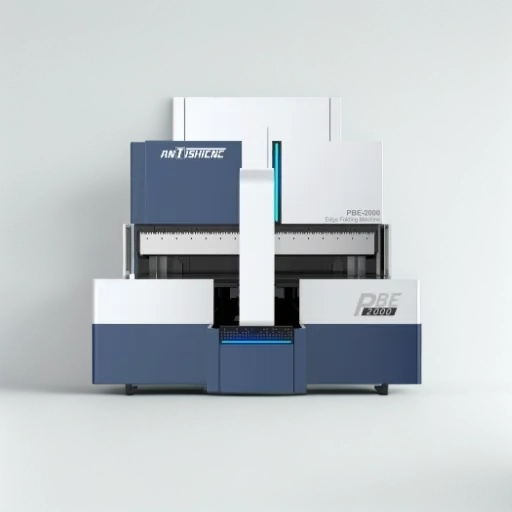
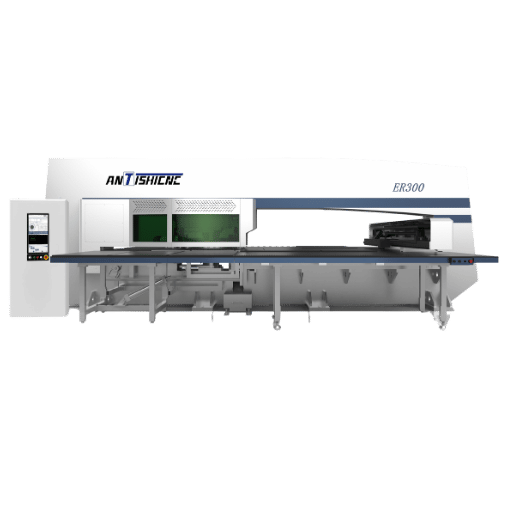
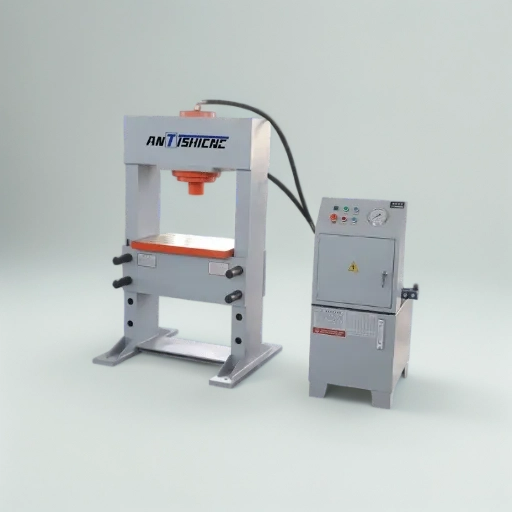


Manufacturers and fabricators often struggle to find a balance when choosing the most effective and accurate sheet metal processing method. The advantages of turret punching and laser cutting have revolutionized the way sheet metal is processed. But what method suits your individual needs? With this guide, I will explore the defining features, advantages, and disadvantages of each, so that you can make an informed decision. Whether it is speed, accuracy, or adaptability that you desire, this guide will ensure you evaluate all the critical factors, so you pick the optimal tool for your fabrication business. As we analyze this machinery, you will discover the winner in modern fabrication.
Understanding Turret Punching
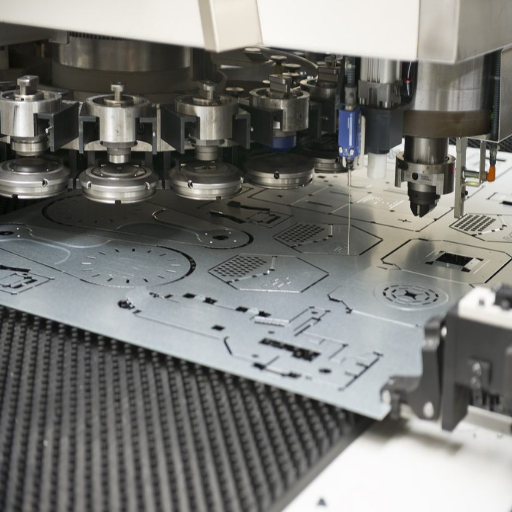
A turret punch press is a widely used metal fabrication process for cutting and shaping sheet metal, typically stainless steel and aluminum. Its name comes from its key feature: a turret loaded with various punching tools. The shaping process is highly adaptable and offers low tooling costs, making it suitable for short runs that require holes and cutouts on the sheets. It is the most cost-effective technique for large-volume repetitive work. Its consistent quality and speed make it an attractive option for the metal fabrication needs of the automotive, aerospace, and construction sectors.
What is a Turret Punch?
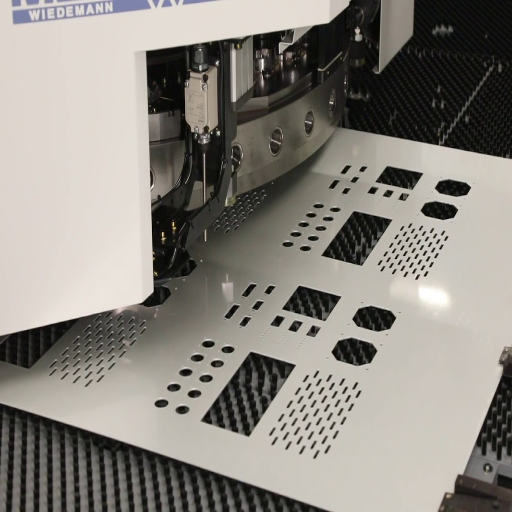
The turret punch is a sophisticated piece of equipment designed for the shaping of sheet metal. It enables the creation of intricate designs, apertures, and cutouts in sheet metal. This punch operates with a turret, a rotating holder that contains several punching tools of varying shapes and sizes. The turret rotates to position the required tool above the sheet metal, which is then pressed down onto the tool to stamp the sheet metal. Modern turret punches incorporate Computer Numerical Control (CNC) technology, enabling automation and enhanced precision. Depending on the model and sheet metal being used, these sheet metal works can operate at up to 600 strokes per minute. Additionally, the thickness ranges that they are capable of operating on is around a maximum of 0.25 inches (6 mm), with some industrial models going beyond that.
For advanced turret punches, the addition of automated material loading and unloading further optimizes the production workflow. They also have integrated software to create and program the punching sequences. This not only guarantees accuracy but also minimizes waste, which makes turret punching an economical option for mass production.
As advanced punching machines are used to process copper, steel, and aluminum, and as advanced multi-function geometries can be manufactured, many industries utilize them. The processing of copper, steel, and aluminum with advanced machine tools makes these machines essential for the modern industry.
How a Turret Punch Press Works
A turret punch press is equipped with a turret—a circular tool magazine—that holds various shaped punching tools for different cutting or forming operations. The press also includes an automated feeding system that accurately positions a metal sheet under the turret. Then, the appropriate tool is selected and lowered to punch, form, or cut the sheet, producing holes, slots, or detailed shapes.
Thanks to the incorporation of CNC technology, the latest turret punch presses can work with metals with precision of fractions of a millimetre. The punching force can vary significantly; some presses can exert over 20 tons of force, enabling the use of gears to process materials ranging from thin sheets to heavy plates. For more sophisticated models, CAD software can be used to generate CNC programs, enabling the processing of complex designs with minimal machine setup.
To optimize the manufacturing process, tool positions in the turret are typically arranged on revolving tool holders, enabling quick tool changes. Some can store more than 40 different tools, allowing the manufacturer to tackle multiple geometries in a single setup. Such tooling flexibility is instrumental for industries where production changes are frequent.
Moreover, many turret punch presses now incorporate servo-electric drives that are energy-efficient, thereby lowering power consumption during operation while maintaining high performance. The use of sensors and real-time monitoring improves safety and maintains quality control. With all these features, the technological advancements to the turret punch presses not only ensure high productivity but also keep the operational costs low, making the equipment vital in a broader scope of manufacturing industries.
Advantages of Using a Turret Punch for Metal Fabrication
Multifunctional Capabilities
The versatility of steel fabrication is amplified by the turret punch press, which is suitable for a diverse variety of tasks that require various materials and thicknesses. These tools are among the best, providing unmatched versatility for tasks ranging from cutting sheet metal to intricate pattern design.
High-Speed Efficiencies
With advanced automation and software integration, turret punch presses can operate at high speeds without compromising precision. This not only completes manufacturing tasks in a set time but also enhances overall productivity.
Cost-Effective Operations
The use of optimized tooling setups and energy-efficient servo-electric drives is effective in reducing energy use and tool wear, thereby decreasing operational costs over time.
Precision and Consistency
Turret punch presses are equipped with sensors and systems for monitoring the operations in real-time, guaranteeing stringent, repeatable results. This not only reduces material wastage but also improves the quality of the end product.
Reduction in Manual Labor
The automation of turret punch presses limits manual processes, thereby improving safety in the workplace and enabling employees to focus on other tasks.
Customizability
With modern turret punch presses, manufacturers can easily meet diverse client needs, as the machines are equipped with programmable tools and software, allowing for easy adjustment to custom designs and small batch production runs.
With the incorporation of such up-to-date technologies, turret punch presses not only simplify the manufacturing workflow but also enhance the quality of the results. This makes them invaluable to industries dealing with metal fabrication.
Exploring Laser Cutting Technology
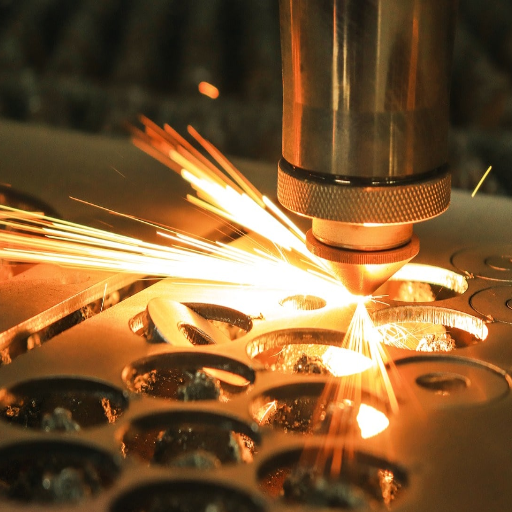
A laser cutter is a precise, efficient tool for cutting and engraving. A combination of heat and pressure burns through the material’s surface. It is effective on a variety of materials, including metals, plastics, and wood, and is capable of handling intricate designs. Laser cutting is beneficial for its high speed, low material wastage, and ability to cut complex shapes. This makes it valuable for the automotive, aerospace, and electronics industries, where quality and precision are essential.
What is Laser Cutting?
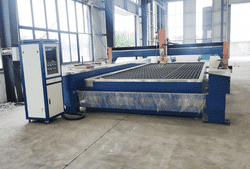
A laser cutting machine uses a focused and powerful laser beam to cut, engrave, or shape materials as required. Lens or mirror systems enable focusing and directing the laser onto the material surface. The energy of the laser is intense enough to melt, burn, or vaporize the material, allowing for cuts to be made with minimal effort and requiring minimal finishing.
Laser cutting has become highly efficient due to advancements in laser systems. Today, they can cut metals such as steel and aluminum, as well as non-metals like wood, and even specialty materials like carbon composites and ceramics. Fiber lasers are increasingly used to cut metals due to their speed and precision, while CO2 lasers are more commonly employed on non-metallic materials.
The benefits of laser cutting over traditional methods are abundant. For one, since the cutting is done without physical contact, there is no physical wear and tear on the machinery, and no risk of deformation to the material. Exceptional precision is also a hallmark of laser cutting; machine tolerances can be as low as ±0.1 mm, which is quite impressive. The machine also allows for complicated designs, as intricate geometry can be achieved much more easily than with traditional tooling.
Such technology is provided by machines constructed for use in fields such as the automotive, aerospace, and consumer electronics sectors. It was also recently marked that the global server market centred around laser cutting machines is expected to rise with a compound annual growth rate (CAGR) exceeding 7% from 2023 to 2030, as a result of growing needs for automated precision manufacturing. A cutting method, such as laser cutting, is also considered more eco-friendly because it generates less waste compared to traditional cutting methods.
Laser cutting is reshaping the manufacturing industry with unmatched solutions for both mass production and industrial use, as well as for complex custom work, by merging precision, speed, and multipurpose capabilities.
Types of Laser Cutters: Fiber vs CO2
In laser cutting technology, the two most common types of machines are Fiber and CO2 Laser Cutters. Both of these machines offer unique advantages that make them ideal for different instances, depending on the required materials, precision, and applicable industries.
Fiber Laser Cutters
When it comes to cutters, fiber lasers are exceptionally efficient and accurate, cutting metals such as stainless steel, aluminum, brass, and copper. They utilize a highly focused beam of light, combined with fiber optics, to deliver a large amount of energy. Their cutters are recognized for being energy-efficient, with low operating costs and minimal maintenance requirements. Lasers in general are known to be very fast, and fiber lasers easily outpace CO2 lasers by cutting thin metals at speeds up to three times faster. In addition to this, they also have a longer operating lifespan, with their diode modules typically lasting over 100,000 hours.
CO2 Laser Cutters
CO2 cutters are especially effective as general-purpose cutters, and their use is essential in non-metallic materials such as wood, acrylic, leather, and even glass. A CO2 laser, which consists of a gas laser filled with carbon dioxide, nitrogen, and helium, can produce a consistent beam that is smooth and clean. CO2 lasers are beneficial for engraving and cutting detailed patterns on materials that are beyond the grasp of fiber lasers. Although they consume more energy and require maintenance, their versatility is critical to the nonmetallic surface industries.
A Comparison of Performance and Applications
In industries such as automotive, aerospace, and metal fabrication, fiber lasers take the front seat alongside the rest with their incredible precision, speed, and efficiency. No other machine can cut materials as reflective as aluminum without causing damage to the optics, making fiber lasers a one-of-a-kind solution. On the other hand, CO2 lasers can cut a wide range of non-metallic materials, making them useful for creating signage, furniture, and artistic projects with precision. Fiber lasers lead the way in modern technology with their operational efficiency, while CO2 lasers, with their versatility and affordability, excel in serving a wider range of materials.
The materials, cutting thickness, and operational costs are the key factors in determining the suitability of these lasers. Every laser machine is designed with distinct strengths; therefore, by understanding the strengths of each, laser cutter manufacturers and users can collaborate in selecting the appropriate cutter for their specific needs.
Benefits of Laser Cutting in Sheet Metal Fabrication
The benefits of laser cutting far exceed those offered by conventional cutting methods. For instance, they offer accuracy that exceeds the ±0.005-inch tolerance, which is exemplary in traditional cutting methods. Such accuracy lessens the need for secondary machining, which is not only time-consuming but also incurs additional costs.
With modern manufacturing, the advent of high-speed laser cutters has also occurred. For example, contemporary fiber laser machines can cut thin metal sheets at over 1000 inches per minute, which would significantly boost productivity in mass manufacturing. In addition, such machines would not only cut thin sheets, but also cut other materials, such as stainless steel, aluminum, and carbon steel, which enables cutting to be conducted in various industries.
The use of the fiber laser, in particular, marks a new frontier in metal cutting, as it can operate at a higher energy efficiency compared to the CO2 lasers that were previously in use. There are even reports that shed light on the fact that the fiber laser can operate at up to 50% lower energy consumption while simultaneously achieving higher cutting speeds.
Apart from their energy efficiency, lasers offer unique features in terms of cutting, which include advanced design flexibility using a variety of materials, complex geometries, intricate details, narrow kerf widths, and the ability to produce detailed parts that may otherwise be impossible to design. This form of advanced cutting becomes crucial in the fields of aerospace, automotive, and medical device manufacturing due to their need for high precision and advanced-level cutting.
Minimizing material wastage is yet another significant benefit of laser cutting. With the use of narrow heat-affected zones, coupled with virtually no thermal distortion, material loss is significantly reduced. This translates to cost savings in production as well as making the production environmentally friendly.
Utilizing these features enables manufacturers to achieve superior performance, efficient production, and lower costs. Laser cutting offers a solution that cannot be ignored in contemporary fabrication of sheet metals.
Turret Punch vs Laser Cutting: Key Differences

Sheet metal fabrication methods, such as laser cutting and turret punching, are quite well-known. However, the two share notable differences:
| Aspect | Turret Punching | Laser Cutting |
|---|---|---|
| Operation | Uses a turret press equipped with differently shaped tools to physically cut out portions of metal | Uses a precise, focused beam to incise materials |
| Material Versatility | Limited to thin materials and pre-punched shapes | Works with various materials and thicknesses, significantly outperforming turret punching |
| Detail and Accuracy | Challenging for detailed work, relies on available tool sizes and shapes | Easily cuts designs that are intricately detailed and accurate |
| Efficiency and Speed | More efficient for uncomplicated, repetitive patterns | More sophisticated and multifaceted process |
| Cost Consideration | More economical in terms of machinery costs, but tends to incur higher material waste | More costly to install but tends to incur less material waste and is more efficient in the long run |
Key Insight: There are advantages to each method; the deciding one depends on the project’s needs—trim complexity, type of material, and the volume of production.
Precision and Accuracy Comparison
In comparing turret punching and laser cutting, accuracy and precision are pivotal metrics. In this regard, the use of laser cutting can be said to have an advantage as it can achieve intricate designs and tighter tolerances with its focused beam of light, outclassing turret punching. This is an optimal choice when complex and detailed shapes are needed. Whilst still underperforming compared to laser cutting, turret punching may not be as accurate due to its mechanical-based operation, especially for intricate work. Nonetheless, turret punching is sufficiently precise for many needs, particularly when standard shapes or simple patterns are involved. For such designs, laser cutting is not needed as the cost and time would be greater.
Material Thickness and Type Considerations
Selecting a method between laser cutting and turret punching depends heavily on material thickness and type. Through materials as thin as 0.4 inches (10 mm), laser cutting is effective. The precision that laser cutting offers makes it the preferred method for cutting certain delicate metals such as aluminum, stainless steel, and even brass, as it minimizes distortion and provides a clean edge. It also cuts non-metallic materials, such as wood and acrylic, very well, giving intricate finishes.
Medium to thin sheets, say 0.02 to 0.12 inches (0.5 to 3 mm), are best handled by turret punching. It finds its application in producing repeated patterns, such as holes, slots, or extrusions, in galvanized and mild steel. While it may not perform as well with thicker materials as laser cutting, turret punching remains the best choice in terms of cost for large-volume manufacturing runs, where price and efficiency are prioritized, and precision is of a lower importance level.
The type of material also affects the choice of methods. For example, laser cutting can be problematic with highly reflective materials like copper and gold, as the reflection can cause cutting issues and require specialized lasers or adjustments. If allowed by the design, turret punching may be used for such materials because it is not affected by reflectivity. Cost efficiency, durability, and product quality all benefit from selecting the appropriate cut or punch method based on the material’s properties.
Cost-Effectiveness of Punch Press vs Laser Cutting
Each method has unique requirements to evaluate when comparing the cost efficiency of punch presses versus laser cutting. Each method has unique operational costs associated with it, and the same applies to the volume of production. For simpler designs in high volumes, punch presses are the more cost-efficient option. The repetitive patterns in the designs can utilize pre-designed tooling. Their operational cost per unit is low, which further improves the punch presses’ efficiency. The average operating expenses for a punch press range from $20 to $50, depending on the equipment and labor costs. This makes it a good option for bulk and simple productions.
Contrastingly, laser cutting is superior when it comes to intricate designs, as it requires no separate tooling. The initial investment and operating costs are typically higher. They tend to range from $50 to $120 per hour. Nevertheless, this approach is efficient in scaled, complex design finishing and specialty materials. Likewise, laser cutting achieves much greater precision, which in turn reduces the amount of material discarded. This is especially beneficial in laser cutting, where materials need to be conserved.
Laser cutting and punch pressing can both be very effective in specific scenarios. As previously discussed, laser cutting would be more effective in matters concerning intricate design and specialized materials, as well as excessive cuts that would require the preservation of the materials and the cuts. Punch pressing and laser cutting would be highly effective in reducing operational costs in bulk. Deciding whether laser cutting or punch pressing would be better would be highly dependent on operational expenses and investment decisions.
Applications of Turret Punching and Laser Cutting
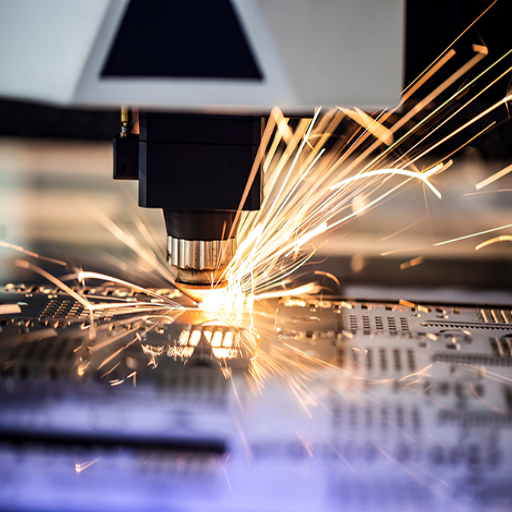
Turret punching machines are most beneficial where the rapid and cost-effective fabrication of parts, such as enclosures, brackets, and panels, is essential. Such processes are especially well-suited for straightforward and repetitive patterns in large-scale manufacturing. Conversely, laser cutting is advantageous when fine detailing, smooth finishing, and a wider variety of materials are required. The laser cutting process is prevalent in the automotive, aerospace, and custom fabrication industries due to its precision and adaptability. Each of these processes is important and valuable depending on the nature of production.
Industries That Benefit from Turret Punching
Sheet Metal & Fabrication Industry
Highly efficient and cost-effective for fabricating large volumes. Utilized to fabricate brackets, panels, and enclosures with high precision.
Electrical Industry
Relies on this method to manufacture refined components such as switchgears and electrical boxes with consistent quality.
HVAC Industry
Utilizes turret punching to fabricate air ducts, vents, and other system components with high degree of precision for fast, dependable fabrication.
Such industries as these require fast and dependable fabrication, and the turret punch is the ideal solution, as it can punch simple designs and repetitive patterns rapidly.
Common Uses for Laser Cutting in Metal Fabrication
The technique of laser cutting has become deeply ingrained as a fundamental approach in metal fabrication, appreciated for its accuracy, adaptability, and speed. Other methods are poor substitutes for the laser’s ability to produce small, detailed parts. The aerospace industry stands out as one of the most laser cutting-intensive sectors due to the need for swift production of light and strong parts that depend on unparalleled cutting accuracy. Such industries, which also include titanium and aluminum fabrication, highly value accuracy for the delicate precision, along with laser-cut parts for minimal scrap.
The automotive industry stands to gain significantly, especially in the mass production of body parts, including panels, exhaust systems, and engine components. The stringent quality and pace demanded in the production of parts are well catered to with laser cutting. The elimination of secondary finishing processes through the use of laser cutting yields smooth edges and consistent quality, which in turn reduces overall finishing time and costs.
Laser cutting is of immense value to the construction industry, which involves the fabrication of structural elements such as beams, panels, and brackets. Such large-scale projects require uniformity and strength, which laser cutting ensures. In addition to the industrial applications, laser cutting is used in crafting to create detailed designs in decorative metalwork, custom designs, and even signage.
In relation to improvements, newer fiber laser technology is exceeding expectations, as it not only offers even faster cutting speeds but also processes reflective materials like brass and copper. Additionally, CO2 lasers remain favored for cutting thicker materials due to their efficiency in deep-cutting applications. Such improvements and innovations continue to strengthen the position of laser cutting as a vital tool in metal fabrication, as it offers unparalleled versatility across various areas of application.
Choosing the Right Method for Your Project
The material, thickness, and project outcome determine the type of laser cutting method to use. During the cutting of copper or brass, fiber lasers are preferred since they cut with speed and precision. If your project involves cutting thick materials, a CO2 laser should be used, as it cuts deeply with high efficiency. It is easier to pinpoint the proper method after analyzing the materials to meet production objectives.
Factors to Consider When Deciding Between Turret Punch and Laser Cutting
Choosing between turret punch and laser cutting depends on the following considerations:
Decision-Making Framework
Material Type and Thickness
For materials up to 6mm in thickness, turret punches are preferable for making holes and patterned shapes. Laser cutting offers more advantages in cutting plastic, metal, and even wood. It also cuts thicker materials with greater precision.
Part Complexity
Laser cutting is preferable when fine details with smooth, precise cutting are required. It can make minimal finishing of complex shapes. For simpler parts and repetitive patterns such as perforations, turret punches are preferable.
Production Volume
With a low to medium production volume, especially for highly detailed or diverse parts, lasers are faster. In high-volume production, where speed is critical, turret punching may be the quicker method, as it can punch multiple holes and shapes in a single stroke.
Customization and Tooling Costs
Turret punching often needs specific tools for a pattern, which can increase tooling costs, especially for one-off designs. Since lasers cut without contact, they incur zero tooling costs, offering greater flexibility in design modifications.
Edge Quality and Secondary Processing
From what we can see, laser-cut parts tend to have cleaner edges, which means less, if any, finishing work is needed. Depending on the material and the type of punch used, turret-punched parts might need additional deburring or smoothing.
Decision Summary: Scrutinizing these determinants with those unique to your project will enable you to decisively pinpoint the method that best harmonizes efficiency, cost, and quality in your deliverable.
Case Studies: Successful Applications of Both Methods
In my experience, laser cutting stands out for its effectiveness when very detailed work and close tolerances are required—for example, in custom signs and delicate metal parts for the electronics sector. At the same time, for perforated panels and industrial enclosures that require high-volume production with repeated patterns, turret punching is indeed the best choice. I employ various methods, from which I have determined what works best for a particular job. I want to get the job done efficiently. Based on my experience, this is the best approach to the matter.
Future Trends in Metal Fabrication Technologies
The metal fabrication sector is undergoing a shift, with new technologies emerging and a growing emphasis on efficiency and sustainability. The combined use of automation and robotics is a significant trend, as it increases precision and reduces labor costs. The integration of AI and machine learning in machines represents a substantial advancement in metal fabrication, enabling predictive maintenance and enhancing workflow optimization.
Additive manufacturing, also known as 3D metal printing, is another major trend because it provides greater flexibility in design while also reducing material waste. This method of manufacturing is especially useful in the design and manufacture of prototypes, as well as in the production of complex shapes that are impossible to create with conventional methods.
The sustainability of eco-friendly practices is the other primary concern in the industry. In an effort to mitigate their negative environmental impact, an increasing number of companies are utilizing energy-efficient machinery and recycling scrap materials. The convergence of these trends suggests the potential for innovation, enhanced performance, and environmentally friendly practices in the field of metal fabrication in the near future.
Final Decision Framework: The choice between turret punching and laser cutting ultimately depends on balancing your specific requirements for precision, material type, production volume, cost considerations, and project complexity. Both technologies have carved out distinct niches in modern manufacturing, and understanding their strengths will help you make the most informed decision for your fabrication needs.
Reference Sources
Machine Learning-Based Autonomous Fire Combat Turret
An Overview Study on Laser Technology and Applications in Mechanical and Machine Manufacturing
Robot Control Overview: An Industrial Perspective
Frequently Asked Questions (FAQs)
How Does a Turret Punch Machine Function and What Is It?
A turret punch machine is an automatic sheet-metal working device. It employs multiple punches and dies to produce holes or other required shapes in metal sheets. Its turret enables it to change tools rapidly, which helps make parts with numerous holes. The machine functions by using servo-electric motors to drive the punches, which aids in effective and speedy metalworking.
How Do Turret Punches Function in Terms of Accuracy When Compared to Laser Cutting?
Turret punching presses cannot rival the accuracy of laser cutting presses. While turret punches and dies make contact with the metal sheet, the laser beam cutter does not touch the workpiece, allowing the laser to make much more complex shapes. Even so, turret punches can be accurate enough for the faster processing of larger quantities of parts that have numerous holes.
What Benefits Does a Punch Press Offer Compared to Laser Cutting?
Due to the lengthy setup times of laser cutting machines, punch presses are better suited to serve larger batch sizes. They make holes faster than laser machines can; additionally, punch machines have lower maintenance needs. For specific metal fabrication projects, these machines can also handle thicker materials, which makes them more suitable for use.
Can Turret Punches Process Different Materials Like Laser Cutters?
Yes, as previously mentioned, laser cutters can cut stainless steel and cold-rolled steel. On the other hand, punches are also capable of working on various types of sheet metals and operate efficiently on parts that require multiple holes and features to be fabricated in a single cycle.
How Does the Cost of Operating a Turret Punch Machine Compare to That of Laser Cutting?
When comparing the operating costs of a turret punch machine and a laser cutting machine, the latter’s fees will be higher. Besides having a higher setup cost, a laser cutting machine also has higher energy consumption compared to a turret punching machine. Additionally, laser cutting machines are more complex to maintain.
What Is The Effect of Modern Technology On Punch Machines?
The punch machines, which utilize modern technology, can be equipped with servo-electric power, which can improve efficiency and reduce operational noise. Furthermore, these technologies have enhanced the speed and accuracy of turret punching, enabling it to better compete with laser cutting technologies in the metal fabrication sector.
Do Turret Punches Need Additional Operations Post-Fabrication?
Even if turret punching produces holes and shapes with precision, it may still require secondary operations, such as tapping or deburring, to complete the parts, especially if they are intricate or need a smooth finish. Additional processing is less necessary with laser cutting, because the edges formed are relatively cleaner.
What Are The Use Cases For A Laser Cutting Machine Over A Turret Punch?
For larger batch sizes, where the production speed of hole-intensive parts is essential, a laser cutting machine is not preferred over a turret punch. The punch’s ability to rapidly change tools and its capacity to punch multiple holes in a single cycle make it suitable for sheet metal fabrication, where cost-effectiveness is necessary.