




Metal fabrication has entered a new era, one of maximum precision, speed, and innovation. Laser welding has been placed into the helm at this great transformation, as it threatens to bring change to every industry around the globe. Not so long ago, conventional welding practices were considered by some to be clumsy and not very precise. With the advent of laser welding machines, however, modern technological, yet versatile, strategies are brought forth that allow dealing with the most stressing industrial challenges. We shall find how these machines further enlarge the horizons of metal fabrication toward productivity and less waste in the greater production of quality. This guide will walk you through why laser welding is the current industry’s technological tool-if you happen to be in manufacturing or just have great interest in where fabrication is going. Stay tuned as we segue into understanding the philosophies and attributes of this wonderful technology as well as its applications.
Introduction to Laser Welding Technology
What is Laser Welding?
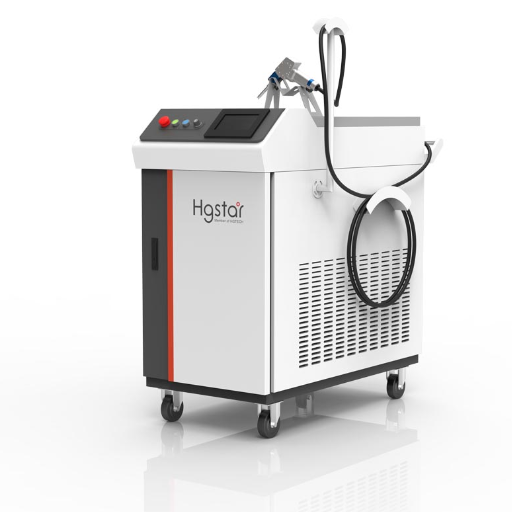
Laser welding is considered a highly exact and quick joining method that utilizes a converged laser beam to join materials, mostly metals or thermoplastics. Laser welding joins two pieces by melting them with the conversion of light into heat and by cooling and crystallizing of the materials. These industries need laser welding because absolute precision and very high speed are required: automobile, aerospace, electronics, and manufacturing of medical devices.
Laser welding is characterized by the capacity of forming welds that are deep with a very small heat-affected zone. For this, there will be less heat input and a consequent reduction in the possibility of distortion of the materials. The laser heat for welding is produced using fiber lasers (popular mode of laser welding) starting from 500 watts up to more than 10kW, thus bringing about multiple possibilities of application. When it comes to the global statistics of the laser welding industry, the market is projected to grow around a CAGR of 6.2 from 2022 to 2030 owing to the increasing usage of laser welding in manufacturing industries and automation sectors.
Laser welding can join parts very fast, moreover it can make complex geometry and join dissimilar materials; this makes it favorable for the construction of highly complex parts. This system is well suited for integration with robotic handling systems to achieve highly automated production environments. For example, laser welding is extensively used in the automotive industry to assemble thin steel sheets in car bodies to maintain structural strength while reducing weight. The fine balance between being state-of-the-art and very versatile makes laser welding a constantly evolving fabrication tool in present-day fabrication processes.
How Laser Welding Works: The Science Behind the Technology
The laser welding process concentrates a laser beam to join materials with precision and speed. It uses lasers of very high energy intensity such as fiber lasers or CO2 lasers. A very focused beam emits light toward the work surface of the materials to be welded from some distance. The surface absorbs the energy of the beam as heat and melts to form a weld pool; it then coalesces when the laser beam moves away or is shut off.
There are basically two methods in laser welding: conduction welding and keyhole welding. The conduction welding occurs when the energy of the laser is absorbed at the surface of the material resulting in shallow but wide welds. The other method-keyhole welding-is very much the best and more effective for deep penetration into thick materials, as it involves laser intensities high enough to vaporize the material. Structured in a way that modern apparatus finds both possible to use one or the other or both in order to serve a wide range of applications.
Exceptionally accurate, limiting the heat input so that distortion of even aesthetic and intricate designs is kept at a bare minimum. It is highly suitable for titanium, aluminum, and stainless steel where utmost precision is required and there should be least thermal interference. The versatile lower side allows the laser welding market to increase almost $5 billion in 2030, all thanks to great demands seen in automotive, aerospace, and electronics industries.
Furthermore, it offers value-added features such as real-time monitoring and automation. With current developments in robotics and AI, laser welding ensures an order of accuracy down to microns and repeatability to measure manufacturing with a high volume. Thus, this blend makes laser welding, undeniably the revolutionary technology in the heart of modern industrial fabrication, making it hard to resist.
Types of Laser Welding Machines: Fiber vs. Traditional
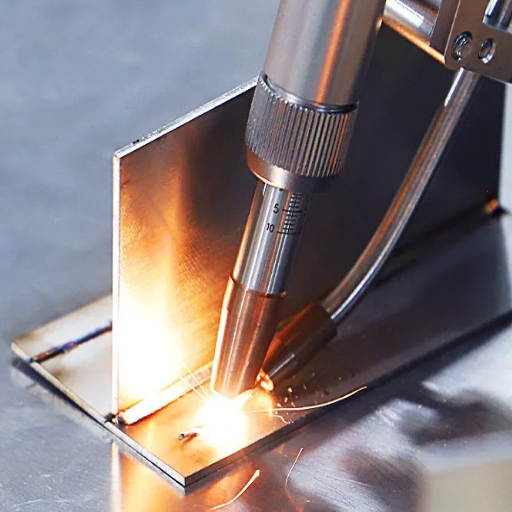
At a higher level, we can say laser welding machines are coming in two forms: fiber laser welding machines and traditional laser welding machines. Both have certain parameters defining them, catering to some special industrial needs, but with rapid developments, the focus has quickly shifted toward fiber lasers.
-
Traditional Laser Welding Machines
Traditional laser welding systems mostly use CO2 or Nd:YAG lasers. CO2 laser-producing mechanism involves a gas mixture, which, by producing a laser beam, is suitable for welding non-metallic things like plastics and ceramics and metals. Nd:YAG lasers have a crystal medium and are favored for their ability to work with most materials, such as highly reflective metals, including gold and copper. These machines were considered comparatively higher maintenance, mainly because of power supply inefficiency and continuous replacement of consumables such as laser lamps. Most often, traditional machines tend to have bigger footprints and slower processing speed than fiber lasers.
-
Fiber Laser Welding Machines
The fiber laser welding machines represent the furthest advancement in laser welding. Using a fiber optic cable as the laser generation medium, in terms of energy efficiency, these machines produce light with electricity conversion efficiency of up to 30%. It is the fastest and most accurate method for large scale production applications such as automotive or aerospace. Fiber lasers offer longer operation life exceeding 100,000 hours coupled with the maintenance requirement that is much less as opposed to the maintenance of traditional laser systems. Providing a better focus on the welding point, fiber lasers allow weld engineers to eliminate heat distortion, mainly for very delicate or thin materials.
Performance Comparison
When comparing these two types based on efficiency, fiber lasers outshine traditional lasers with their faster welding speeds and reduced energy consumption. Fiber lasers, for example, are able to weld 50% faster than the traditional CO2 counterparts in some applications, as per recent research. They therefore have a lower total cost of ownership in the long run, making it a better option for the companies that want to modernize their production lines.
Market Trends and Future Outlook
Global fiber laser welding adoption is on the fast track. Fiber laser market data suggests a projected CAGR of 7.9% from 2023 to 2030, being mainly propelled by demand coming from electronics, automotive, and metal fabrication sectors. While still serving some niche applications, the traditional laser systems are fast becoming a thing of the past, given that they offer little operational efficiency and quite steep running costs.
The choice between the technologies depends on exactly what the application requires. However, fiber lasers are increasingly becoming the go-to solution combining state-of-the-art performance with environmental friendliness and great economic benefits in the long run.
Applications of Laser Welding Across Industries

Automotive Industry: Improving Productivity and Accuracy
Laser welding has nursing precision, speed, and efficiency into the automotive industry. Precision and repeatability constitute the two necessary points in automotive manufacture today. Laser welding fulfills this need by attaining perfect accuracy while joining the parts without distortion. Due to the benefits of increasing EV adoption and manufacturing materials, market reports have recorded the CAGR of the laser welding systems for the automotive sector to be about above six percent from 2022 to 2030.
The laser welding technology finds application welding for multiple car parts, transmission parts, battery modules for EVs, etc. For high-speed production of thin and fragile materials with the utmost finesse, laser welding technology is essential to laser weld EV battery packs in order to provide them with structural integrity and thermal management. One of the merits of laser welding in automotive manufacturing is the reduction of time consumed during the manufacturing process and the expenses involved. This also includes processes like remote welding and multi-spot welding.
Fiber lasers are interesting, as these high-powered lasers facilitate lightweight car designs. In other words, welding aids the process of weight reduction by welding material such as aluminum alloy and high-strength steels. This, in turn, maximizes miles per gallon, generating a harmonious sustainability synergy. Research feels a possible 30 percent increase in productivity using laser technology compared with conventional welding technology, thus giving lasers quite a foothold in automotive engineering.
Aerospace: Dealing With Safety Requirements of Laser Welding
Due to extreme operating conditions existing in aircraft and spacecraft, the aerospace industry demands rigorous levels of precision and safety. Hence, laser welding has evolved into the most crucial enabler to bridge such stringent safety standards. Such exact welds guard against the imposition of any failure on the aerospace components in terms of damage to structural integrity; hence, materials like titanium and nickel-based alloys, considered to have a good strength-to-weight ratio and temperature resistance, need this precision for their welds.
Recent developments have been able to manifest that laser welding brings defect rates down to as low as 1%, very much less as compared to conventional welding techniques. The other factor that arms manufacturing with considerable efficiency is the swiftness of laser welding. Research from aerospace manufacturers has shown that introducing laser welding lifts productivity by some 25%, thus enabling faster production cycles without compromising the quality standards. The ability of laser welding to form deep and narrow welds without causing damage to the adjoining material also makes it apt to dismantle the complex joints which are so common in aerospace designs.
Through reduced consumption of filler materials and thereby cutting down wastes, laser welding supports the sustainability agenda of the industry. With the proficiencies of precision and flexibility, laser welding techniques have come forth in changing aerospace manufacturing and allowing aerospace manufacturers to meet strict safety and environmental standards.
Electronics: Laser Welders in Modern Manufacturing
Laser welders have emerged as a technology and implementation instrument for the electronics industry, where the question of accuracy and reliability is of utmost concern. Modern electronic devices, from cellphones to surgical instruments, require very precise joining of the components provided and guaranteed by laser welding. Small parts are welded in the laser welding process through the use of laser light, creating a fine weld that enables the fabrication of intricate circuits, batteries, and connectors without losing mechanical integrity.
In 2023, a MarketsandMarkets report projected the laser welding market to reach a valuation of $6.3 billion by 2027, instead of $4.1 billion in 2022, primarily driven by the applications of the technology in electronics, and other industrial applications alike. Manufactures continue to capitalize: laser welding can weld fragile materials such as aluminum and copper or metals of thin gauge, critical ingredients present in modern electronics. Thus, laser welding benefits lithium-ion battery assemblies for electric vehicles and wearable technology by keeping things sleek without compromising on performance.
Another main driver for the laser welding trend in electronics has all been the new perspective of automation and artificial intelligence. By merging laser technology with robotics and AI, manufacturers have been achieving speed and repeatability, all with the facility to reduce errors and waste. This type of automation that works to improve efficiencies also meets green manufacturing criteria through reduced material wastage and energy consumption.
Along with supporting the miniaturization trend in the electronics industry, laser welding must fulfil another role: advanced semiconductors and microchips may be getting smaller by the day but are growing fast in processing capability that requires the joining method to be very precise and far from intrusive at the same time. Laser welders provide this peculiar mix of coordination, offering just as much precision to tiny, densely packed components as they do to the immediate eradication of heat build-up in surrounding areas.
Crossing the chasm between innovation and precision, laser welding is setting an all-new talent bar into the process of electronics manufacture, thereby forcing alterations in keeping with the needs of today’s technology-driven industries.
Advantages of Laser Welding Machines
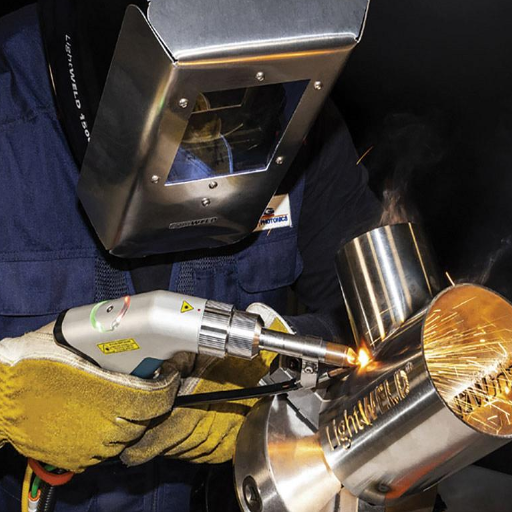
Precision and Accuracy: Contrasted with Traditional Welding Options
When you put laser welding alongside the traditional counterparts, the difference in precision and accuracy is tremendously large. Traditional welding methods, such as the arc type or TIG, usually involve manual or semi-automated procedures, thereby offering large variations and human errors on considerations. Laser welding, on the other hand, is impeccable with precision, welding materials in micrometers using focused laser beams, which are highly adequate for intricate applications.
For example, thermal impact on materials is drastically reduced with laser welding, while the said impact tends to widen much more with the traditional counterpart. Industry data claim the effect of traditional welding extends into millimeters, whereas that of laser welding is limited to a fraction of a single millimeter. This ultrathin heat-affected zone guarantees less distortion and thus greater integrity of the adjoining materials, thereby rendering laser welding suitable for extremely delicate applications.
Laser welding machines, however, would keep the quality consistent, eliminating the chances of errors that would otherwise occur during hand welding; a drop in quality as such would surely adversely affect the assurance of manufacturing. The data deeming laser welders able to achieve a weld that is 99.9% defect-free under controlled production methods therefore greatly assure increased efficiency and production.
Besides the main application of welding very thin sheet metals, the welding of dissimilar materials has recently been developed as a laser technology so difficult for the traditional methods to accomplish. Thus, developments in fiber laser and diode laser systems made it possible for laser welding of a wide range of metals, including aluminum, stainless steel, and titanium. Such advances have hence placed laser welding machines into very precise fields such as aerospace, medical devices, and microelectronics.
In general, laser welding has superior accuracy and repeatability than conventional methods, thereby putting manufacturers on the map to higher standards demanded by increasingly complex and high-performance applications worth alone, needless to mention, with less wastage and cost.
Speed and Productivity: Efficient Metal Fabrication
Laser welding machines enjoy great popularity for excessive speed and high productivity potential in metal fabrications. Because of the advance of laser technology, welding speeds in these welders would exceed meters per minute and would, in any case, considerably cut down the production time as opposed to traditional welding techniques. For example, depending on the material and thickness, continuous wave lasers are capable of accomplishing welding speeds up to 5 meters per minute, suitable for use in mass-production settings.
According to the industry studies, production efficiency can get a boost of 50% as a result of laser welding due to its inclination to combine automation with high-speed continuous operation. Along with this, features such as very precise energy control and low thermal distortion results in needing fewer reworks, which equate into time and cost savings.
When joined with automation, modern laser welding systems are mostly controlled by robotic arms and CNC automation. These systems allow multi-axis welding to be carried out parallely on rather complex components, thereby achieving an unprecedented level of accuracy, and consistency, and maintaining high throughput rates. Recent case studies indicate that automotive and aerospace companies have reported productivity increases of up to 70% since the implementation of these laser welding systems.
These technological breakthroughs illustrate the transformation of industries by laser welding into efficient, high-precision, and high-speed industrial manufacturing processes.
Reduced Heat Affected Zone and Material Distortion
Because of the low distortion in materials requiring thermal control area, laser welding stands as a great welding technique. The high concentration of the laser beam and the limited time of working gives heat just in the exact spot with hardly any lateral effects on the material. Such a feature gains high importance when structural integrity and tight tolerances are kept in aerospace and manufacturing industries.
Laser welding may halve the heat-affected zone compared to conventional processes like arc welding. Simulations have shown that post-laser welded materials have about 40% less thermal stress acting on them; hence, they display better mechanical properties and less secondary treatment after welding. For example, the Fraunhofer Institute in their research shows that laser welding of titanium alloys preserves about 95% of strength, which is far beyond that by other conventional welding techniques.
As a result, this leads to the production of lightweight, high-strength assemblies while cutting down costs related to rework and scrapping. Such laser welding systems will guarantee precision and durability for novel designs and enhanced product performance.
Choosing the Right Laser Welding Machine

Factors to Consider: Power Requirement and Material Compatibility
During the purchase or selection of a laser welding machine, power feature versus material compatibility comes paramount in giving competence. The power rating of a laser welding machine is measured in watts. The power required is determined upon the thickness of the material and the material type. A power rating between 500 and 1,000 watts is acceptable for welding thin materials like stainless steel or aluminum having below 1 mm thickness using lasers, yet higher powers of about 2,000-6,000 watts must be utilized to weld, fit, and work efficiently with sections thicker than 5 mm. A laser welding machine having power adjustment capability would provide flexibility when processing materials of various kinds.
Material compatibility is another key factor. Every material has its own thermal conductivity and absorption modes that would hamper welding quality. Welding highly reflective metals with high thermal conduction power-for instance copper and aluminum-would be best suited with higher power lasers or special laser sources such as fiber lasers. Hence, these fiber lasers hold promise to be the perfect laser precision welding tools for reflective materials due to their perfect beam quality and constant energy output. Stainless steel and carbon steel, on the other hand, possess low thermal conductivity and can generally be worked with by conventional laser systems with ease.
The advent of laser technology has greatly increased the variety of materials that can be welded. Hybrid laser welding–wherein the laser assists or supplements a second welding process-makes further performance gains in joining dissimilar materials or difficult applications possible. More insight from industry analysis in 2023 gives a positive outlook concerning the rising usage of wavelength-adjustable fiber lasers for multi-material manufacturing environments, enjoying around 15% CAGR within diversified industries like automotive and aerospace.
While carefully addressing the specific power requirements of your applications and assuring that the laser welding system you choose fits well with the materials involved, reliable weld quality can be attained, coupled with better production efficiency and great savings in terms of costs in the long run.
Cost Considerations: Budgeting for Your Welder Machine
When budgeting for a welder, it must consider the expenditure for purchase and the running expenses. Industrial laser welding machines, by type, brand, and specialty, can set you back with a starting price of $15,000 and more than $500,000. In certain industries, the higher-end machines, fiber laser welders for instance, bring about features for greater precision and faster speed, so well worth the high investment.
- Other operating costs include energy consumption, maintenance, and consumable materials, such as gas or replacement optics. For instance, laser welders consume electricity between 3–10 kW every hour, contingent on power setting and application, resulting in an operating cost of approximately $5,000 to $10,000 annually based on medium-scale operation.
- Another factor would be the cost of training your staff to ensure they’re able to successfully operate the equipment safely. According to the industry, training for teaching technicians proper and safe use of advanced laser-welding systems incorporated in such systems could cost anywhere from $1,000 to $5,000 for each technician.
Then consider return on investment (ROI) potential. According to a study published by McKinsey & Company in 2022, companies that adopted latest laser welding applications saw an upsurge of 25% in production efficiency and a drop of up to 20% in materials wastes. These enhancements generate cost savings down the line and eventually evolve into operational profits, thus making these machines very worthy despite their heavy upfront costs.
Analyzing both short-term and long-term costs while studying your specific application needs will gladden the heart of your preferred welder machine.
Intended Use: Laser Welding Guns or Portable Laser Welders
Choosing between these two laser welders mostly depends on what your particular application calls for: work environment, operational flexibility, and material demand. Both kinds of welders provide specific benefits; however, productivity and aim for the working scenario tend to dictate the choice.
Handheld laser welders stress the use and flexibility of one category welders. They aptly fit precision welding for various fields such as automobile repair, aerospace, and metal fabrication. These welders take very little setup time, thus were designed for finish welding jobs and small-batch output. Since there has been increased interest in a handheld laser welding system, power and speed have seen an upgrade-just a few of which can weld up to four times faster than TIG or MIG welding. Undoubtedly, these welders can increase the output with less post weld finishing as they assure better clean and quality welds.
Portable laser welders offer the increased mobility needed in on-site repairs and field applications and are thus more suited for portable surgeons. These welders are lightweight and highly portable, permitting users to render impeccable welding boiler suited jobs in remote or tight working environments. The portable model using fiber laser technology can sustain consistent precision welding for stainless steel, aluminum, and titanium. Recent developments show that construction and infrastructure adoption of portable laser welder applications for the portable laser welder mode are flourishing largely due to their efficient, flexible nature. The newest models have an IP54 rating for dust and water resistance to endure the demanding work environments.
Thus, the finer decision between handheld and portable laser welders is basically a trade-off between how much actual mobility is needed for the applications. Understanding the specific needs of your application win keep you guided toward the right fit, such as material type, expectations of weld quality, and convenience in operations.
Future Trends in Laser Welding Technology
Automation Developments: The Dawn of Smart Welders
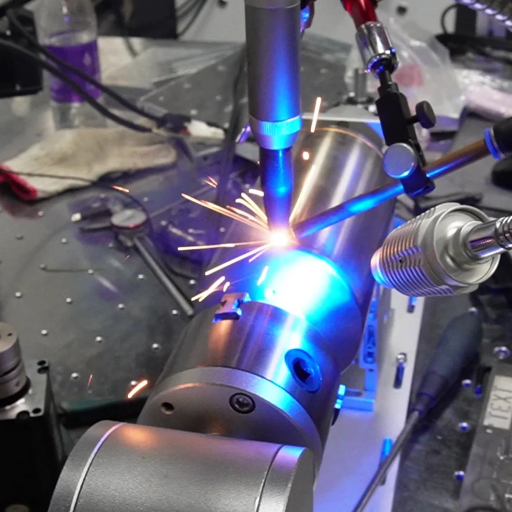
Automation advancement thus has changed tremendously the laser welding industry, resulting in the so-called phenomena of “smart welders.” The so-called “smart welders” using artificial intelligence (AI), machine learning (ML), and real-time data analysis for welding optimization. Smart welding machines have witnessed a drastic change in the formation of several smart sensors and cameras that track the welding process with utter precision. These sensors can detect very minute changes in material properties, joint alignment, or welding parameters and accommodate the same changes in real-time so as to maximize accuracy and efficiency.
Some recent studies state that the worldwide market for automated welding is projected to expand at a CAGR of 7.9% from 2023 to 2030, the reasoning primarily being in acceptance of the automation and robotic processes. These developments predominate in the automotive, aerospace, and construction industries where there is scope for faster welding with fewer errors and safer working welding practices.
On the other hand, the integration of IoT within smart welders presents a second interesting development. The IoT welding systems enable the ability to communicate with other devices and company networks to perform predictive maintenance and reduce downtime. For instance, automated reports about component wear prompt operators to maintain their components before they fail, thereby sharply improving operational efficiency.
Co-bots represent another milestone in the welding process. Cobots assist human operators, combining Pacific minutes of human intuition with machine precision. Increased flexibility and workshops are now a second option due to this collaboration.
The other possible smart welder is with cloud computing systems capable of storing and analyzing vast welding data histories. These businesses take advantage of that insight to improve quality control and generate innovations. In future, welding machines, backed by advances in AI algorithms, would be able to learn, adapt, and improve themselves among themselves, hence taking the art and service of laser welding to unprecedented heights.
With these improvements, the world views automation as a modern-day fabrication landscape paradigm, and with more rigorous applications for precision, efficiency, and innovation, smart welders are quickly becoming one of its key players.
AI Integration in Laser Welding System
This welding technique, fused with the peculiarities and principles of laser welding, describes software-controlled precision manufacturing, which opens up new fields for increased angulation and indeterminability in real-time adaptation. Laser welding machines installed with AI enable algorithms, sensors, and data-processing capability to set monitoring parameters and automatically contract them within time. It means systems adapt automatically to varying parameters such as materials, thickness, and environment to ensure that welds never fall short of being practically precise and durable.
It has been reported recently that an AI welding system could reduce manufacturing defects by 30% and increase throughput by 25%, mainly in high-demand industries, such as automotive and aerospace manufacturing. This demonstrates an upward trend for automation and intelligent manufacturing solutions, with the global market undergoing a CAGR of 15.2% for AI-enabled welding technologies from 2023-2030.
One of the foremost applications of AI is employing machine learning models to predict defects during a welding process. For example, thermal imaging coupled with AI detects meaning imperfections like porosity or misalignment and addresses them instantly. Besides increasing product quality, this prediction reduces material and operational costs.
Through the commissioning of an IIoT platform, AI-powered laser welding systems can be integrated between manufacturing networks that allow the sharing of data. This would help track and diagnose the system and schedule maintenance to increase the uptime of the equipment and limit sudden failures. These future systems will show the tremendous influence of AI on manufacturing processes as it broods over industry’s demands for precision, scalability, and sustainability.
Eco-Friendly Innovations: Sustainable Welding Technologies
Sustainable welding technologies are making the manufacturing sector greener as a result of this push worldwide for greener industrial setups. Welding activities are normally energy-intensive and hazardous; thus, its industrial pollutes air, thereby affecting the environment and people’s health on top of it. To curtail the effects of pollution brought about by such welding pollution methods, manufacturers have recently innovated environmentally friendly welding solutions that attempt to reduce the carbon footprint side by side with better operational efficiency.
- An example includes the energy-efficient technologies, including friction stir welding (FSW). This type of welding does not use filler material and less energy, giving it the edge over traditional welding in energy conservation. Studies reveal that FSW can conserve energy by as much as 30%, thus being attractive to industries looking to curtail operational expenditure while also eyeing sustainability.
- In addition, developments with materials for welding are laying further improvements in environmental factors. An antidote is welding wire and electrode made from recycled and low carbon feedstock cutting down its raw material utilization. It is estimated that USA by using recycled alloys in welding could reduce GHG emissions by almost 50%.
- Manufacturers are exploiting AI welding systems to provide maximum precision and reduce unnecessary wastage. Methods are in place whereby automated or robotic welders employ machine learning algorithms to optimize material use in welding operations, thus minimizing wastage. Data collected through these systems further provides real-time monitoring, which guarantees process consistency and reduces defects in an indirect way, thereby cutting costs from reworks.
- Moreover, the fume extraction machine and clean shielding gases, e.g., argon based-hydrogen blends, hold forth the prospects of a safer and cleaner atmosphere. These technologies thus equip the industries with the means to comply with stringent environmental safeguards and ensure healthful working environments for employees.
Now, these advanced sustainable welding technologies embody how technology can play a pivotal role in transiting traditional manufacturing to its green alternatives. Given sincere thoughts to such projects, industries would proudly proclaim profitability and sustainability to stand firmly towards a green future.