




Precision, efficiency, and innovation are the three must-haves in the world of modern manufacturing. In the armory of machining, countless finishing techniques find their applications. However, it is the centerless grinding machine that takes prominence due to the utmost precision and finish required. Could one delve into what makes this machine so special? How does it operate without huts or centers in traditional workholding? This article will walk you through the workings of centerless grinding and provide insight into why it is a major contributor to industries such as automotive, aerospace, and medical instrument manufacturing. The reader shall be educated about the basic workings and advantages of centerless grinding, including some of its modern manufacturing applications, thus providing knowledge into the making of contemporary manufacturing.
Understanding Centerless Grinding
Definition and Overview of Centerless Grinding
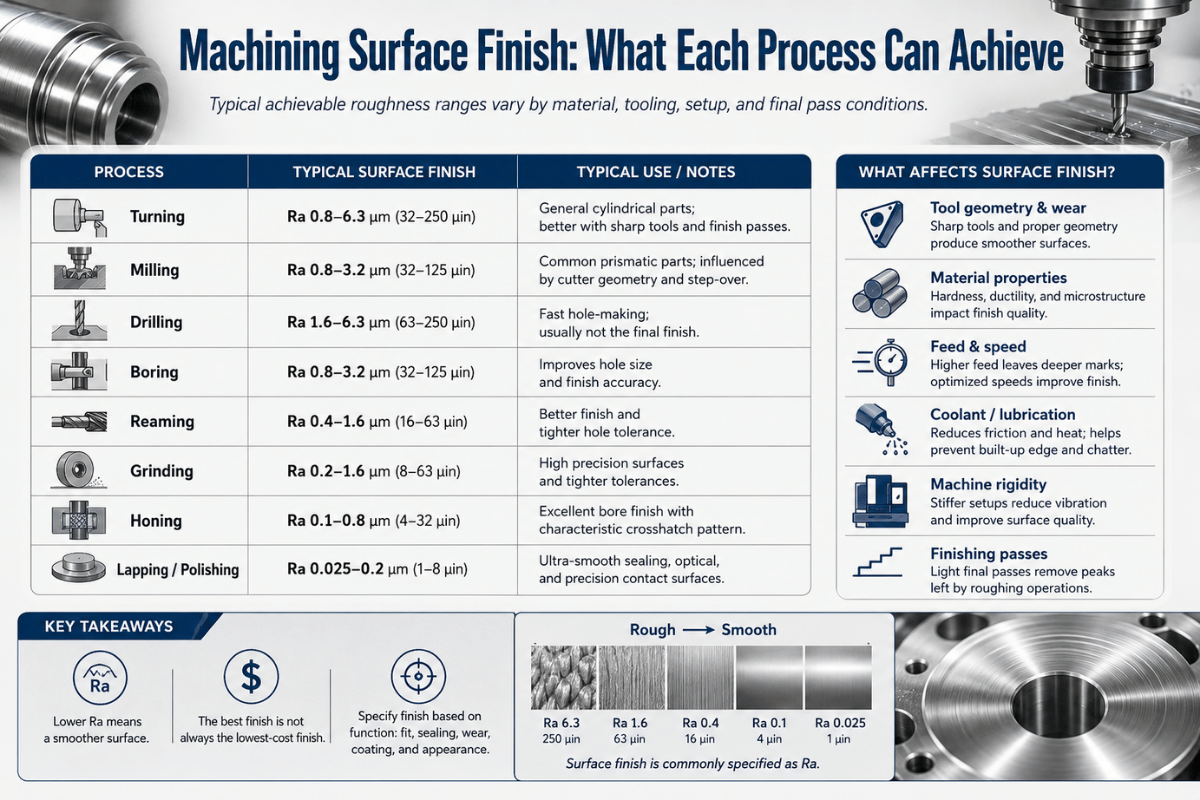
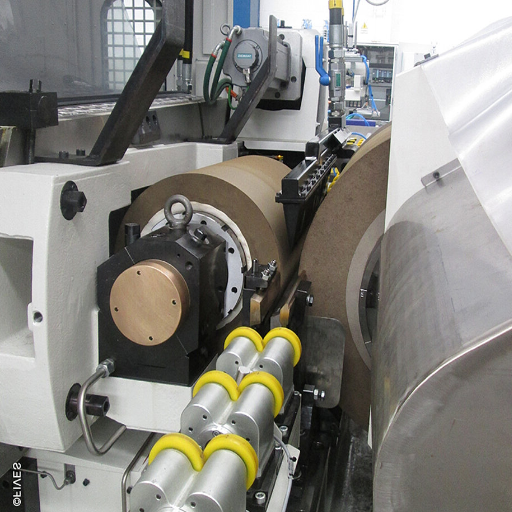
Centerless grinding is a machining treat, which removes material from the outside surface to bestow a smooth finish with tight tolerance. While, in cylindrical grinding, the workpiece is held between centers, no centers are used in this treatment. Instead, two rotary wheels are used-the abrasive grinding wheel and the regulating wheel, together with a work rest blade that remains stationary to support the workpiece during the operation. To put it simply, this is an operation in which the workpiece is continuously fed through the grinding machine, thereby making the grinding operation more efficient and reducing transit time.
Being capable of wide variations, centerless grinding holds an important place as a highly progressive manufacturing technique. It stands in production for slender, small-diameter parts and in high-volume production runs. As in centerless grinding, materials ranging from metals such as stainless steel and titanium to advanced composites are processed. Centerless grinding is conducive to automotive industries (camshafts and crankpins), aerospace (turbine rods), and medical technology (surgical instruments and implants), owing to its ability to maintain consistent processing of very intricate designs. Advances in grinding machines and process control, coupled with the evolution of related technological fronts, have raised a grinding process to new levels of precision with an aim to reduce wastage of material and time. Thus, high-performance industries find this process quite appealing.
Key Components of a Centerless Grinding Machine
A good number of components in a grinding machine come together to achieve high precision in grinding operations across various domains. The chief components include:
- Grinding Wheel – The grinding wheel is the primary tool of the machine, designed to remove material from the workpiece. Depending on the material to be treated, the grinding wheels are made from abrasive materials such as aluminum oxide or silicon carbide to achieve the best cutting action while maximizing durability.
- Regulating Wheel – This wheel rotates the workpiece during the grinding operation, controlling its speed and axis of rotation. Unlike grinding wheels that generally operate at high speeds, this wheel works at slow speeds and is mostly composed of rubber-bonded or resin-bonded abrasive materials to ensure stability.
- Work Rest Blade – Situated between the grinding and regulating wheels, and supported by a system for the workpiece with support rests, the work rest blades, depending on their material and angle of inclination, contribute to maintaining precision, especially when grinding sensitive or small-diameter workpieces.
- Machine Bed – Of the most critical parts of a centerless grinding machine, the machine bed offers structural stability and absorbs vibrations during operation. Making the bed too flimsy or not engineered properly will adversely affect the performance and life of the machine.
- Hydraulic or CNC Control System – In modern centerless grinding machines, feed rate, wheel positioning, and other process parameters are all set with utmost precision through either hydraulic systems or CNC controls. By providing for intelligent automation, these systems enable the minimization of operational errors and an increase in efficiency.
- The Coolant System – As the vital heat management system, it prevents drastic expansion of the workpiece, reduces tool wear, and ensures a smooth grinding operation. In sophisticated systems, filtration mechanisms are integrated to keep the coolant fluid free of contaminants.
Due to these components, these machines can perform exact, expendable, and variable processes, making them an indispensable tool in industries ranging from automotive to aerospace and medical manufacturing.
Basic Principles of Centerless Grinding
The centerless grinding process, based mainly on fundamental principles, does not need a center spindle or fixture to hold the workpiece. The workpiece rests with the grinding wheel and regulating wheel on a stationary work rest blade, which makes the workpiece rotate in one continuous motion to be ground by the grinding wheel. This system produces a component perfectly round in shape and improves productivity with more accuracy.
Primarily, the grinding wheel performs the cutting action, removing material with high accuracy. It acts by the abrasive surface opposite the rotating workpiece to achieve the required dimension and surface finish. The regulating wheel regulates the rotational speed and feed speed of the workpiece. By tilting it at a slight angle, the workpiece is advanced through the grinding zone in a steady, linear motion.
For optimum tolerance levels, it is necessary to maintain the correct alignment and distances between the wheels and the blade. In modern machines, these processes are automated with systems that take continuous measurements and adjustments, thus providing a constant output item with fewer interventions.
As a contemporary solution, centerless grinding incorporates CNC and smart sensors for greater efficiency. Allowing for, fine adjustments, consistent quality, and high repeatability that are required by industries with such ultra-tight tolerances, it can also work on anything from metal to ceramics to composites, fulfilling a multitude of production needs across industries. With fast throughput and precision working in tandem, centerless grinding remains the preferred method for manufacturing cylindrical components with the most accurate tolerances.
Types of Centerless Grinding
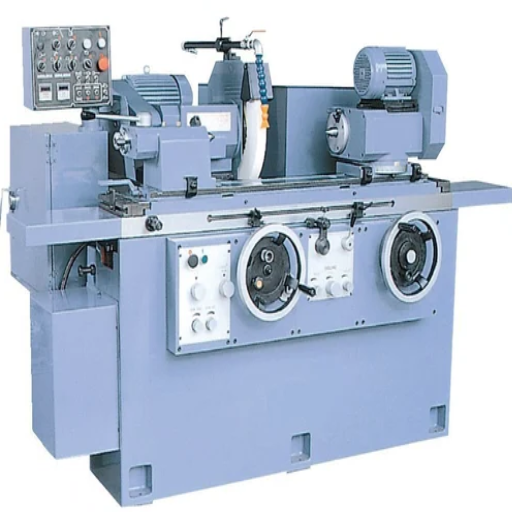
Various processes of centerless grinding
Centerless grinding is categorized into three main types, each featuring factory-specific modifications suitable for particular purposes and needs. Understanding these processes will certainly allow one to study the production efficiency for better results.
- Through-Feed Grinding: This is the most common method of grinding in centerless grinding, and it is specially suited to the extremely high production rate of cylindrical pieces. The workpiece is fed axially without interruption between the grinding wheel and the regulating wheel. Because of its ease and speed of operation, through-feed grinding is excellent for pins, shafts, and bars. It has the advantage of maintaining dimensions uniformly and with great accuracy; thus, it finds application in the automotive and aerospace industries.
- In-Feed Grinding: In-feed grinding is a grinding process that requires good control ability, and the workpiece movements are given in and out of radial directions until the grinding operations are completed. In-feed grinding is applied to workpieces that have irregular geometries on tapered areas, grooves, or any other features which cannot be done by through-feed grinding. Being an in-feed grinding offers precision and flexibility, therefore it is necessary while manufacturing components like gear hubs and camshafts.
- End-Feed Grinding: End-feed grinding is suitable for shoulder-style workpieces or those with a set stop position. This method comprises inserting the part at one end, grinding it to size, and withdrawing it from the same side. This method is particularly efficient for manufacturing small tubes or sleeves that require precise size accuracy.
Each of these processes in centerless grinding is equipped with advanced technology for super-fine finishing, reduced lead time, and improved overall efficiency. The correct method matched to the manufacturing requirements can yield businesses with maximum performance and high standards.
Through-feed vs. In-feed Grinding Comparison
Through-feed Grinding
The distinguishing factor of this grinding operation is with respect to performing high-efficiency grinding of cylindrical workpieces. These workpieces get fed in a grinding wheel axis all the time. Since the uninterrupted feeding is possible with the setup, this process generally gets advocated for the production of simple cylindrical parts in great quantity. Some of the pros are reduced cycle times and minimal or no setup changes through-feed grinding. This technique is very much in use during rapid mass production in industries such as automotive and aerospace. Therefore, it cannot accept workpieces that possess complex shapes or irregular profiles.
In-feed Grinding
In comparison to the other technique, in-feed grinding is more commonly used for workpieces that require complex detailing, such as external profiles, shoulders, or tapers. The workpiece is fixed relative to the grinding wheel while being accurately cut, whereas axial feeding mechanism lacks such precision. This way, complicated geometries are achieved, along with fine surface finishes. Medical equipment industries prefer in-feed grinding to make such parts as precision surgical instruments. Being versatile and precise, it entails comparatively lengthy setups and is not convenient for high-volume work.
Key Data and Insights:
In recent times, advances in centerless grinding have led to improvements in both methods. In through-feed grinding, modern CNC systems enable better control over feed rates, thereby minimizing material waste and reducing cycle times. In-feed grinding is advancing further with improved wheel compositions and dressing technologies, resulting in enhanced accuracy and reduced downtime on complex workpieces. Even loader technologies and advanced monitoring systems boost productivity in both methods.
Summary of Process Applications:
An organization must carefully assess its production priorities in choosing the application’s method. Through-feed may very well be the intended operation, in line with cost-saving objectives, speed consideration, and uniformity. In-feed grinding is suitably employed in custom machining, where variables can become critical to ensure the maintenance of component quality, given the intricate design. Hence, guaranteeing every approach a manufacturer applies would give the best balance between the cost efficiency of the production and the standard output.
Applications of Various Grinding Methods
Choosing between through-feed and in-feed grinding will mainly depend upon the application and the final specifications required. Through-feed grinding is more appropriate for heavy manufacturing, usually of such cylindrical parts as pins, shafts, or rollers. Hence, this process is used in the automobile and aerospace industries mainly for speed and uniformity of processes, as well as in batch processing. The way the system quickly handles parts without any fitting requirement saves a lot of time in production, thereby further intensifying process efficiency.
In contrast, in-feed grinding better addresses applications necessitating precision and flexibility. It is commonly employed in pieces with intricate shapes or varying thicknesses, such as cams, gear components, and plungers. For tight tolerances and outstanding surface finishes, the medical device and custom industrial equipment industries often rely on in-feed grinding. It can work on complex geometry parts with the highest precision, making it very attractive for precision manufacturing.
Identifying the necessity for further grinding can be achieved by properly selecting tooling or parameters. As grinding technology advances, the automation of these grinding processes paved the way for integrating intelligent control systems having real-time feedback, thereby granting enhanced accuracy and consistency. This, therefore, implies that pressing on through-feed and in-feed grinding where needed by modern-day industry offers speed, plus precision and quality for production to meet the many conflicting demands.
Advantages of Centerless Grinding
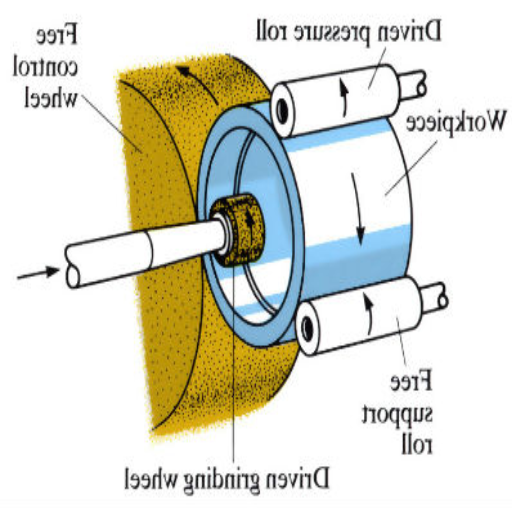
Advantages Over Traditional Grinding Techniques
Centerless grinding has evolved into the most preferred technology in environments with high manufacturing demands, offering further advantages over traditional grinding methods. No center hole is needed for processing parts, which means less setup time and, in turn, fewer production runtimes. With an efficient workflow, throughput is maintained at a high level, making it a key consideration in addressing tight production schedule issues.
Centerless grinding can be applied to most material types and a wide range of part sizes, thereby increasing versatility. It is an excellent operation for cylindrical parts where ultra-dimensioning and uniformity are required by industries such as automobile, aerospace, and medical. The process, in turn, helps in developing excellent surface finishes, thereby eliminating the need for secondary processes, considering cost and time factors.
Second to none in terms of repeatability, the centerless grinding certainly deserves the title. Smart elastic controls and real-time monitoring systems would ensure manufacturers meet the highest level of consistency across multiple components. By eliminating the need for clamping fixtures, the error margin is also curtailed, and, with it, part distortion, thereby improving product quality. No other grind method stands up to centerless grind when the factors under consideration are precision, speed, and cost-effectiveness.
Efficiency and Precision in Manufacturing
As a matter of fact, a company views manufacturing as fundamentally applying science and technology for the creation of products, and the term manufacturing is interchangeable with industry. The essence of manufacturing is considered an overarching term encompassing the entire process of transforming raw materials into products for markets and customers, including the development of ideas and inspiration, design, and manufacturing engineering. Manufacturing has often been subdivided into two types: production and assembly, depending on the nature or transformation of raw materials during the manufacturing process. Thus, the intermediate new materials are fabricated in production processes. On the assembly side, it is mostly the joining of two or more parts into a new product. The two processes are always necessary in the manufacturing process.
Cost-Effectiveness in Concurrent Production
In mass production, the ideal is searching for a tradeoff between operational efficiency and resource optimization. Today manufacturers favor more advanced automated processes, assembly in a robot-line type setting, to keep labor costs low and ensure output consistency. For instance, smart sensors might be used in production to monitor equipment performance in real time and reduce instances of downtime and costly repair. Procurement-wise, buying raw materials in bulk can create economies of scale, essentially ensuring that the lower per-unit costs increase the profit margin.
In the lean manufacturing principles, waste elimination occurs by foregoing any activities that do not contribute any value; thus, resources are optimally utilized. Proper inventory management systems control costs by maintaining optimal levels of inventory while minimizing overhead costs related to storage. Liable to save on costs, these systems further promote ecological sustainability, a matter increasingly becoming a concern for today’s businesses as they strive to satisfy customer demands.
Employing such solutions can help a company sustain competitive pricing, enhancing profitability, and meet increasing market demands even without compromising on quality.
Components and Their Functionality
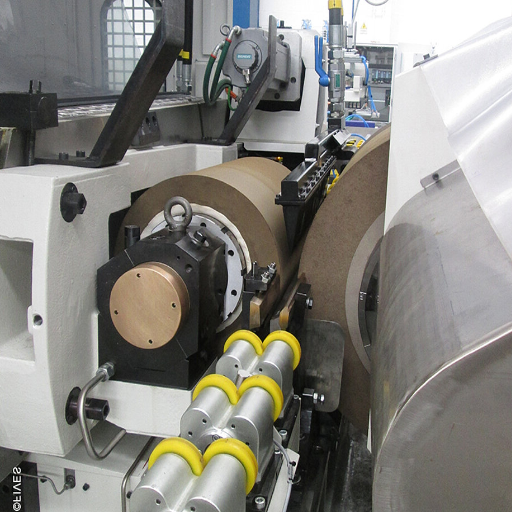
Grinding Wheel Specifications and Choices
In selecting grinding wheels, it is essential to check their specifications for each use application to make the grinding process more effective and efficient. Key factors include abrasive type, grit size, bonding, hardness, and wheel form.
| Component | Description | Applications |
|---|---|---|
| Aluminum Oxide | Suitable for grinding ferrous metals | Steel, iron-based materials |
| Silicon Carbide | Used for grinding non-ferrous metals and softer materials | Aluminum, brass, plastics |
| Cubic Boron Nitride (CBN) | High-precision settings for superalloys | Aerospace components, hardened steels |
- Grit Size: The grit size refers to the coarseness or fineness of abrasive particles, which largely determine the surface finish and material removal rate. Coarse grit sizes are suitable for heavy material removal, while finer grits provide a smoother finish.
- Bonding Material: The grinding wheel structure and abrasive performance are influenced by the choice of bond. The common types of bonds are vitrified, resin, and metal. The vitrified bond acts as the most precise and long-lasting tool; the resin bond acts somewhat flexible; meanwhile, metal bonds are reserved for the harshest machining operations.
- Hardness: The hardness grade determines the wheel’s resistance to wear and load. Softer grades are chosen for hard materials to ease grit shedding and avoid glazing of the wheel; on the other hand, harder grades are applied on softer workpieces to increase wheel life.
- Wheel Shape and Dimensions: Grinding wheels are available in various shapes, including straight wheels, cup wheels, and dish wheels, to accommodate different tool mountings or machining processes. Dimensionally, the diameter and thickness should be of the machine specifications.
By expertly aligning these specifications with the design requirements of an application, engineers can enter a realm of productivity enhancement, downtime reduction, and materials optimization, thus laying the building blocks for truly accurate and effective workflows in modern machining processes.
What the Work Rest Blade and Regulating Wheel Do
The work rests, grinding wheel, and regulating wheel are the essential elements of precision and efficiency in centerless grinding processes. Between the grinding wheel and regulating wheel lies the work rest blade, which supports the workpiece. Concerning stability affecting surface finish and dimensional accuracy, a few disgustingly important factors about the work rest blade are material, geometry, and alignment.
The regulating wheel acts as the mechanism controlling rotation and linear motion of the workpiece. By fine-tuning the speed and the angle of the regulating wheel, the operator selects the feed rate such that material is removed at an even rate during grinding. Cooperation between the work rest blade and the regulating wheel ensures proper contact with the abrasive wheel, while reducing possibilities for chatter marks or uneven surfaces.
The technological material development and design changes for work-rest blades have brought about significant improvements in wear resistance and thus require in very minimal occasions maintenance activities. Similarly, due to modern materials and coatings, the regulating wheels now retain this ability to grip better and thereby enjoy prolonged working life. Hence, production professionals can perform well in consistency on high-volume production. If manufacturers find, and take good care of, the best assemblies of these parts, they will support higher volumes at an improved quality of parts and a reduction in operating costs.
Importance of Machine Setup and Maintenance
Proper machine setup and maintenance proceed by specifying manufacturing processes with the intention of achieving performance and efficiency. When the machine is set up correctly, alignment and precision of outputs are maintained throughout the production process, resulting in a lower probability of defects or waste. The more maintenance is done, the more wear can be identified before the aforementioned wear and tear causes a major breakdown or an idle downtime period that is excessively costly in its own right. Case-based evidence shows that preventive maintenance improves equipment reliability by 40 percent, clearly indicating the investment and operational advantages that come with proactive care.
Since such automation tools and predictive analytics are used extensively, efficiency is guaranteed in setup and maintenance. These solutions are able to track the health of the machine in real-time, allow accurate adjustments to critical parameters, and intervene at crucial stages to abort errors. Alongside good setting and maintenance uses, this will ensure production quality is upgraded; the equipment is used for the utmost duration, in turn, reducing capital costs in the long haul.
Applications of Centreless Grinding in Industry
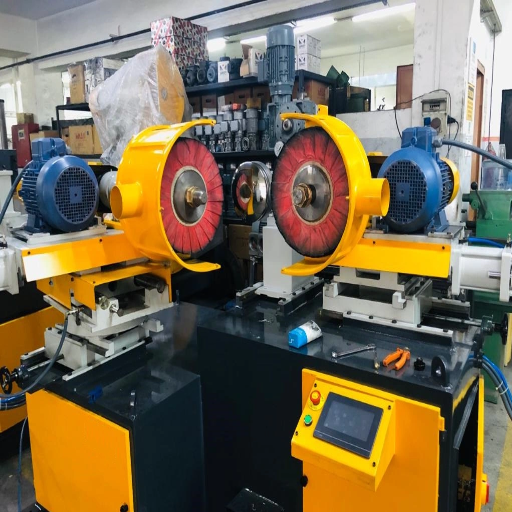
Common Industries Using Centerless Grinding
In a wide range of industries centerless grinding is considered crucial due to precision, speed, and versatility. Mainly the automotive industries employ this method to manufacture extremely high-tolerance components, including bearings, pistons, and transmission components. The method of centerless grinding is fully suited to producing nearly perfectly round surfaces in high quantities and giving the required specifications and standards of performance and endurance to automotive parts by work on automotive parts. Accurate enough for any car to be safe and fuel-efficient.
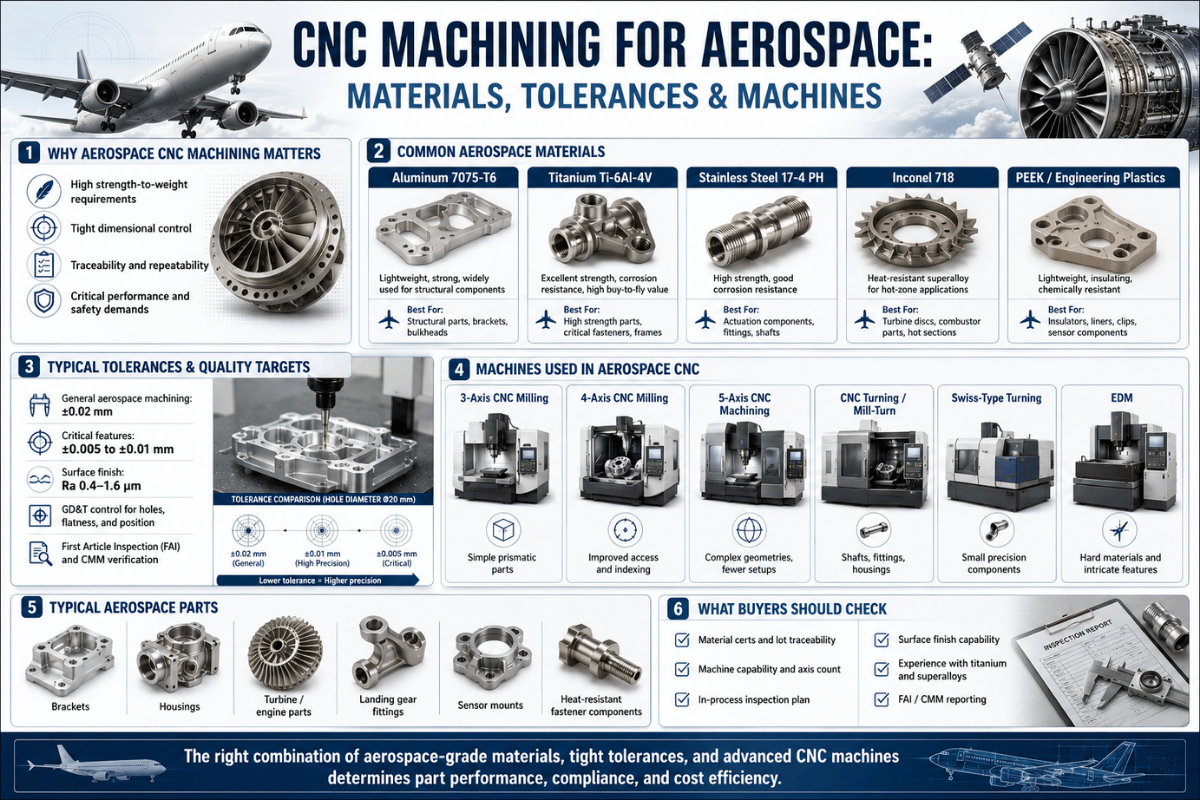
Centerless grinding holds an important position in the aerospace industry as far as manufacturing is concerned. Some of the aircraft and spacecraft components such as turbine shafts, landing gear parts, and other cylindrical parts demand incredible tolerances from the grinding process, requiring practically smooth finishes and dimensional accuracies to meet stringent aerospace quality requirements. Centerless grinding has also become very popular in the medical industry for making surgical instruments, implants, and orthodontic devices. The precision of the process and the ability to provide the features with contamination-free surfaces are paramount in assuring the reliability and safety of medical instruments and components.
In industries ranging from energy and electronics to construction and defense, increased scalability and precision are the foremost benefits of centerless grinding. Applications ensure that components are produced seamlessly in terms of both functionality and reliability, thereby emphasizing their indispensability for contemporary manufacturing.
Typical parts manufactured and products made
| Industry | Typical Parts | Key Requirements |
|---|---|---|
| Automotive | Engine parts, shafts, bearings, fuel injection system components | Precise tolerances, surface finishes, durability |
| Aerospace | Landing gear parts, turbine shafts | Absolute precision, durability, safety standards |
| Medical | Surgical instruments, prosthetic components, implants | Complete precision, contamination-free surfaces |
| Electronics | Connector pins, miniature precision parts | High precision, small tolerances |
The range of parts and products we undertake in centerless grinding is highly varied and is very important in many industries. In the automotive sector, for instance, we produce exact components like engine parts, shafts, bearings, and fuel injection system components. These parts require precise tolerances and surface finishes to function effectively under demanding conditions. On a similar note, we also work on aerospace components, such as landing gear parts and turbine shafts, where absolute standards of precision and durability must be met, with almost no compromise allowed on account of the safety and performance prerogatives imposed by the industry.
Applying its expertise outside its respective industries, the company manufactures medical tools and implants, including surgical instruments and prosthetic components. The healthcare sector requires complete precision and contamination-free surfaces, and centerless grinding effectively complements meeting these demands. We also handle products for the electronics industry, including connector pins and miniature precision parts, which are indispensable in modern electronic gadgets. Every part created by our company is a testament to the efficiency and accuracy that centerless grinding can bring to complex manufacturing applications.
Future Trends in Centerless Grinding Applications
I agree that, in my opinion, the future of centerless grinding shall be influenced by several key trends that will advance and duplicate its potential Industrial applications. First of all, advanced automation and AI technologies will provide for the centerless grinding machines. The information could include real-time monitoring of precision metrics and predictive maintenance protocols. The entire process of these improvements aims to maximize efficiency in manufacturing while ensuring quality. They reduce the human factor and increase the reliability of the process, thereby meeting the demand for top-of-the-line precision parts in the aerospace, medical, and electronics sectors.
There is another trend toward sustainable manufacturing practices. Essentially, one visualizes the centerless grinding processes with greener technologies in a global pursuit for sustainability-accenting measures-i.e., the energy-efficient machines and eco-friendly coolants. These are big steps toward industries trying to evolve with less harm to the environment as they race against regulatory and CSR norms. Hence, sustainability-oriented innovations have slowly pitched themselves as competitive differentiators for manufacturers-which very much goes to argue the case for investing in them.
Lastly, customization and versatility will continue to be the significant aspects in the application of centerless grinding. As additive manufacturing increasingly demands the production of odd-shaped and small components, grinding processes will need to be tailored more than ever for the specific needs of out-of-the-ordinary applications. Modern machine centers are being developed to handle unorthodox materials and workpiece geometries with precision never before achieved. I would say that maintaining relevance to these emerging needs shall cement centerless grinding among the cornerstones of fine precision manufacturing for a long time to come.
Reference Sources
-
Centerless Grinding: Principles and How It Works – Xometry
Explains the principle of centerless grinding, focusing on material removal without a center point. -
How It Works – Centerless Grinding – Universal Grinding
Describes the process of grinding surfaces without the need to support the workpiece. -
Centerless Grinding – an Overview – ScienceDirect
Provides an overview of the centerless grinding process, including the role of grinding wheels. -
Everything You Need To Know About Centerless Grinding Machines – Phillips Corp
Details the outside-diameter grinding process and its applications in manufacturing. -
Centreless Grinding – OpenLearn
Highlights the differences between centerless and conventional grinding processes.
Frequently Asked Questions (FAQs)
How does a centerless grinding machine function?
Two rotary grinding wheels (grinding and regulating) are at the basic premise of operation of a centerless grinder. In the absence of any spindle or fixture, the mechanism allows the workpiece to pass through grinding wheels for grinding. In operation, the grinding wheel removes material from the workpiece, while the regulating wheel supports the workpiece and controls its speed and rotation. Such an arrangement then frees cylindrical grinding from requiring very tight controls and is more suitable for mass production. Centerless grinding finds applications in the manufacture of a number of components that require very close tolerances.
What kinds of centerless grinding processes are there?
Refurbishing based on grinding is composed of three separate types: through-feed, end-feed, and in-feed. In through-feed grinding, the component is continuously passed through the grinding wheels; hence, it is applied for long cylindrical work. End-feed grinding, on the other hand, involves feeding the workpiece into the grinder up to a stopping point and is usually used for short or tapered workpieces. In-feed grinding can work on complex-shaped workpieces but requires more set-up time. The selection of any of the types of centerless grinding depends on the machining requirements and workpiece geometry.
What are the advantages of centerless grinding?
Some positive attributes of a centerless grinder are that it can handle very high production rates and does not require any form of workpiece fixturing. This speeds up the machining processes, hence lowering cycle times and increasing efficiency. Furthermore, with the continuous action of a grinding wheel, the centerless grinding setup can achieve high precision of workpieces with fine surface finishes. Such a design also enables the grinding of long and slim parts, which are otherwise difficult to handle by any conventional grinding method. This, among others, forms a set of attributes for which centerless grinding is preferred over other methods in industrial settings.
How are the grinding wheel and the regulating wheel used together?
The two grinding wheels are brought together and set to perform the grinding operations effectively. The grinding wheel revolved at a high speed, removing material from the workpiece as it went about its task. The regulating wheel, on the contrary, controlled the speed at which the workpiece was fed into the grinding zone. This relationship maintained the workpiece in a constant position, allowing for accurate diameter control. The regulating wheel could be tilted at an angle or moved from position, thus inducing better grinding action for various grinding operations. Hence, the combined action of these wheels results in synchronized grinding that speeds up the process.
What classifies the function of a grinding wheel in the centerless grinding process?
The grinding wheel is viewed as the most essential tool for aesthetic material removal in centerless cylindrical grinding. During the process of grinding, a high rotating speed is imparted to the grinding wheel to create friction for grinding from the material-side workpiece. The grinding wheel’s material and design largely influence the grinding process in terms of speed and quality of finish. Usually, abrasive materials are chosen to make the grinding wheel so that the desired surface finish and accuracy can be achieved. The dressing of grinding wheels is another requirement of the grinding wheel to maintain its crushing power so as to get the consistent result throughout machining.
What is the importance of the regulating wheel in centerless grinding?
In centerless grinding, this grinding operation sits highly on the regulating wheel in controlling the rate of feed or feed rate and orientation of the workpiece. Usually set at a slight oblique angle, the regulating wheel supports the workpiece, giving stability as the workpiece rotates against the grinding wheel. This ensures effective grinding and the achievement of the desired diameter. By moving the regulating wheel inward or outward and varying the speed, the operator can set specific parameters depending upon individual production circumstances. Therefore, the regulating wheel affords the centerless grinding machine all precision and utility required for its functions.