




Plate Rolling Machine: Types and Operation
Plate rolling machines are crucial equipment in the manufacturing industry and metalworking processes, enabling the bending and deformation of metal plates into any desired cylindrical or conical shape with high precision.
Introduction to Plate Rolling Machines

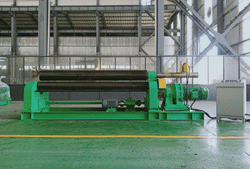
Plate rolling machines are industrial machines that shape and bend plate metals into curved, cylindrical, or conical forms. The shaping process involves passing metal between calibrated rollers that force the metal to bend into the desired curvature.
Three-Roll Machine
Generally features a fixed top roll with adjustable bottom rolls. Used for simple bending jobs and economical fabrication.
Four-Roll Machine
Features an additional roller for improved precision, making them suitable for complex operations and higher output.
Industry Applications

Key Industries Using Plate Rolling
- Construction: Structural elements like arches and beams
- Energy Sector: Pipelines and pressure vessels
- Manufacturing: Storage tanks, chassis, and custom parts
Types of Plate Rolling Machines

Classification Overview
Four-Roller Plate Rolling Machines
Key Advantages
- Pre-bending and rolling in one pass
- Enhanced precision and repeatability
- Handles materials from few millimeters to 100mm+ thickness
- Suitable for pressure vessels, wind towers, aerospace components
Four roller bending machines are known as versatile and efficient machines heavily used in modern metal fabrication. Consisting of upper, lower, and two side rolls, they provide utmost precision during bending and pre-bending adjustments. Advanced machines come with CNC operations to allow programmability, increase repeatability, and ensure consistent results.
Three-Roller Plate Rolling Machines
Cost-Effective Solution: Three roller plate rolling machines offer versatile and cost-efficient equipment for bending metal plates into cylindrical or conical shapes. They work with a fixed top roller and two adjustable bottom rollers, enabling pre-bending and rolling in one setting.
Material Capacity
Handle thicknesses from 2mm to 150mm depending on model and configuration
Applications
Ideal for construction, shipbuilding, and automotive industries
Advantages
Simple design, lower maintenance demands, cost-effective for small-medium production runs
Machine Operation Process

!
Step-by-Step Operation Guide
- 1
Preparation: Inspect the plate rolling machine and confirm material specifications - 2
Material Placement: Position the metal plate between rollers with proper orientation - 3
Adjust Roller Settings: Set rollers according to desired bend radius - 4
Initiate Rolling: Start the rolling process and monitor for consistency - 5
Final Adjustments: Inspect finish and make corrections if necessary - 6
Shutdown & Maintenance: Complete basic maintenance for next operation
Safety Precautions

Critical Safety Statistics
Manufacturing injuries are machine-related
Accident reduction with proper training
Essential Safety Requirements
- ✓Personal protective equipment (PPE)
- ✓Pre-operation machine inspection
- ✓
- Emergency stop system checks
- ✓Clear work area maintenance
- ✓Comprehensive operator training
- ✓Standard operational procedures
Best Practices for Plate Bending

💡Maintenance Impact
Regular maintenance can extend equipment lifespan by up to 40%, resulting in lower long-term investment costs and optimal operational performance.
Technological Advancements & Future Trends

Recent Innovations
Integration for high precision and reduced manual intervention
Smart sensors for real-time monitoring and predictive maintenance
Machine learning algorithms for dynamic process adjustments
Automation Benefits
Future Developments
Industry 4.0 Integration
Enhanced connectivity, data analytics, and real-time monitoring for predictive maintenance and reduced downtime.
Sustainability Focus
Energy-efficient systems with regenerative braking technology reducing consumption by up to 30%.
Advanced Software Integration
CAD/CAM software providing seamless design-to-production workflows for faster setups and complex geometry handling.
Frequently Asked Questions
What are the different types of plate rolling machines?
Plate rolling machines include three-roll, four-roll, hydraulic, and CNC plate rolling machines. Each type is suited for different applications and metal thicknesses, with specific advantages for various roll-bending tasks.
How does the operation of a plate roller work?
The plate roller operates through a rolling process where metal plates are positioned between rollers. The upper rollers press down on the plate while the lower rollers assist in bending it into the required shape, with adjustments possible for plate thickness and bending angle.
What function does the upper roller serve in a roll-bending machine?
The upper roller is the primary component that presses on the metal plate to achieve the desired bend in a roll-bending machine. This roller can be adjusted to alter rolling speed and bending angle, making it essential for accurate plate bending.
What materials can be processed with bending machines?
Bending machines can process various materials including steel plates, aluminum sheets, and other metal plates. Material selection depends on the machine’s capacity and required thickness specifications.
Why is rolling speed important in plate rolling machine operation?
Rolling speed affects both the efficiency and quality of the bending process. While higher speeds can improve productivity, they may impact the precision of the bend, requiring careful balance for optimal results.
Can four-roll plate bending machines handle thick plates?
Yes, four-roll plate-bending machines are specifically designed for processing thick plates. Their design and construction provide sufficient pressing force to bend heavy-duty materials effectively.
What is a hydraulic CNC plate rolling machine?
A hydraulic CNC plate rolling machine combines hydraulic power with computer numerical control (CNC) technology, enabling precise metal plate bending with automatic adjustments for different specifications and enhanced repeatability.
How do different plate rolling machine types affect the bending process?
Different types like three-roll and four-roll machines offer varying levels of control and flexibility. Each type is optimized for specific requirements regarding ease of use, precision, and material thickness handling capabilities.
What are common applications for plate rolling machines?
Common applications include creating cylindrical and conical shapes, metal structures for shipbuilding, construction projects, and manufacturing tanks and pipes across various industrial sectors.
How do plate rolling machines ensure bending accuracy?
Accuracy is achieved through precise roller adjustments and CNC technologies that enable operators to set exact curvature and bend angles according to specifications, ensuring consistent, high-quality finished products.
Key Takeaways & Summary
Essential Points to Remember
Machine Types
- Three-roll: Cost-effective, simple operations
- Four-roll: Enhanced precision, complex tasks
- CNC: Automated, high-precision applications
Safety Priority
- PPE requirements mandatory
- Regular training reduces accidents by 25%
- Machine inspection before operation
Future Trends
- IoT integration for smart monitoring
- AI-driven process optimization
- Sustainable, energy-efficient designs
Industry Impact Summary
Plate rolling machines are indispensable in modern manufacturing, serving critical roles across construction, energy, and automotive sectors. With advancing automation and IoT integration, these machines continue to evolve, offering greater precision, efficiency, and sustainability while maintaining the highest safety standards.
Enhanced Precision
Automation Ready
Future-Proof
Conclusion
Understanding the various types of plate rolling machines and their operational procedures is fundamental for maximizing efficiency in metalworking processes. Whether selecting a three-roll system for cost-effective operations or a four-roll CNC machine for precision applications, the right choice depends on specific project requirements, material specifications, and production demands. As technology continues to advance with IoT integration, AI-driven controls, and sustainable design principles, plate rolling machines will remain at the forefront of industrial innovation, delivering enhanced performance while meeting the evolving needs of modern manufacturing environments.
Ready to Optimize Your Metal Fabrication Process?
Select the ideal plate rolling machine for your specific requirements and join the revolution in precision metalworking.