





Threading pipe on a lathe needs precision, skill, and the right tools. An experienced machinist or even a willing beginner must appreciate that this difficult but worthwhile endeavor produces efficient workflows and fine products. Hence, against interfacing threads on pipe on the lathe, this cheat sheet looks at everything extending from the method and technicalities to issues that usually plague pipe threading, thrown in with some handy hints and tips for good measure. After going through this article, readers will understand the very basics about the theory of these concepts and will be able to apply them—either efficiently or accurately—to their projects. Let’s now explore some techniques that make threading fun.
Understanding Pipe Threads and Their Applications

What Are Pipe Threads?
These are helical grooves on the pipe’s outer surface designed to allow the secure joining of pipes and fittings. The threads act as an agent in producing a tight seal and a truly leak-proof setting, especially in gaseous or fluid dispersions within various industries such as plumbing, oil and gas, manufacturing, etc. Generally, the pipe threads are of two types, namely: parallel, which maintain a regular diameter throughout; and tapered, whose diameter gradually decreases to realize a tighter fit.
These thread standards control the thread design and compatibility, so that the standard thread can assure uniformity and dependable connection. Each standard designates thread pitches, angles, and depths of engagement to which the threads should be approximately cut in compliance. Properly cut pipe threads give strong and safe pipe systems that otherwise suffer pressure loss or system failure.
The General Pipe Threads
Threads receive names based on their design, purpose, and compatibility across systems. These are a few of the more commonly used types of pipe threads:
National Pipe Tapered (NPT)
In the U.S.A., pipe threads are used to seal equipment in applications under high pressure. These threads feature a taper that allows them to grip tightly, ensuring a leakproof connection. A thread sealant or tape is commonly applied. Once built to strict standards on dimensions, the NPT thread ensures equal compatibility among plumbing systems.
British Standard Pipe Parallel (BSPP)
BSPP threads are used worldwide for parallel-threaded connections and are mostly found in low-pressure applications such as water or gas lines. Since BSPP threads are straight, sealing is achieved by the washer or O-ring, ensuring an efficient and secure fit without exerting undue force on the threads.
British Standard Pipe Tapered (BSPT)
BSPT threads feature a taper similar to NPT, but with different angles and thread dimensions. These are commonly found in Europe and Asia, with BSPT threads achieving a pressure-tight seal generated by the taper and intended for use under high pressures where permanent connections are essential.
Metric Pipe Threads
The metric system is widely used in countries that have adopted it. These threads maintain a constant profile, specified by thread pitch and diameter, allowing for standardized compatibility in industrial applications. Metric threads are often used for mechanical fittings.
Dryseal Pipe Threads (NPTF)
NPTF threads, also known as Dryseal, aim to provide a pure mechanical seal without the use of sealant. Slightly different tolerances allow the threads to deform slightly upon installation, creating an airtight seal suitable for hydraulic and pneumatic systems.
ISO Taper Threads (R Threads)
The ISO taper threads are the internationally accepted standard, often used with pipe fittings and valves. These threads offer high sealing qualities and are used in diverse industries, ranging from oil import to gas.
Key Point: Each pipe thread serves specific functions in relation to its application, depending on the pressure conditions and regional standards. It is a matter of utmost importance to choose the correct thread type to ensure that the piping system is efficient, compatible, and safe.
Applications of NPT and NPT Thread
NPT (National Pipe Taper) threads are primarily used in applications requiring a tight seal and gripping contact involving fluid or gas systems, particularly in high-pressure conditions. Being leak-proof, these connections find applications in fields such as petroleum, chemical processing, and firefighting. Complementary sealing materials are not required for use, as they are tightly fitted by virtue of a taper. However, thread sealants or PTFE tape are usually applied for added safety.
The NPT thread application is quite peculiar in being used within hydraulic and pneumatic systems, wherein, to ensure utmost efficiency and safety, the system’s integrity must remain intact under high stress. NPT threads perchance find preference in HVAC systems for fluid and air flow connections among various components. In addition to industrial applications, NPT threads serve to provide long-enduring connecting solutions in settings that pose challenging operational conditions.
Adaptable enough, NPT threads are widely used in various piping systems, adhering to American standards for compatibility and uniformity in the manufacturing process. With strength and effective sealing capacity intrinsically built into NPT threads, these have recently come to be regarded globally as an industry-standard solution wherever a safe and standardized connection system is required.
Preparing Your Lathe for Thread Cutting
Choosing a Suitable Lathe Tool for Pipe Threading
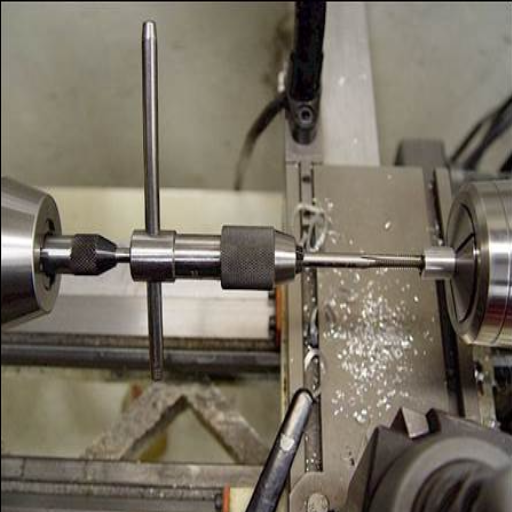
Precise and reliable threading requires an appropriate tool to be selected for the pipe threading operation. The tool material is a significant factor; high-speed steel or carbide tools are generally used due to their wear resistance when subjected to threading operations. HSS tools are suitable for low-speed applications and soft materials, whereas carbide tools are applied in high-speed threading of materials such as stainless steel.
Besides, wire geometry is essential. Ensure that the threading tool is profiled with the thread Standards in use, such as NPT. Use very sharp cutting edges and relief angles to facilitate cutting and minimize wear on the tool. The tool should also be matched to the lathe’s specifications, such as toolholder dimensions and spindle speed.
When it comes to ensuring precision and repeatability, one turns to a lathe furnished with threading aids, such as a digital readout system or a threading indicator. The accuracy of threads can only be maintained by synchronizing the speed of the machine and the movement of the tool. Periodic inspection and maintenance of lathe tools would eliminate instances of surface imperfections and ensure optimum tool performance. Considering factors collating with material, tool, and machine can go a long way in enhancing threading efficiency and consistency.
Preparing the Lathe for Precision Cutting
Working on beautiful lathe-cutting is an intricate and patient procedure that commences with workpiece preparation. First, always be sure that the workpiece is steady and will not vibrate or move during machining, as such action would degrade precision. The choice of chuck or collet will depend on the size of the material and the kind of tolerance to be achieved, contributing to the finishing accuracy. Tools must be sharpened and aligned parallel to the centerline of the workpiece to assure that the tool cuts well and shapes properly. This will ensure the material is not deformed and the tools do not wear away prematurely.
The setting of RPM is a major setup to be done for the process to begin-with, and this is to be based upon the material and type of cutting. For soft materials like aluminum, run it at a high speed to have a better finish; while for hard materials like steel, keep the speed low for fearing tool damages. The application of coolant or lubricant while cutting is very important, as it helps to minimize heat generation, maintain tool life, and improve surface finish.
In conclusion, other than observing the machine in operation, dry dirt or debris on all parts, e.g., bed, carriage, and cross-slide. Any precise instrument that goes with alignment or measurement, such as dial indicators, will really benefit the machining processes. After above-mentioned procedures, your lathe setup is ready for stable grinding and great work.
Important Safety Precautions for Machinists
Critical Safety Guidelines
In order of importance, safety is paramount for machinists working with heavy equipment and precision tools. Proper training and adherence to industry standards will help reduce risk and maintain a safe working environment.
Personal Protective Equipment (PPE)
- Safety glasses to protect against flying debris
- Gloves for handling sharp edges
- Steel-toed boots for protection against heavy materials
- Hearing protection when working in noisy environments
Workspace Safety
- Ensure that the workspace is clean and organized to prevent tripping hazards
- Follow all manufacturer directions for machine use, including speeds, tool changes, and maintenance requirements
- Keep safety guards and shields installed on all machinery
- Avoid wearing loose clothing or jewelry around spinning machinery
Equipment Maintenance
- Regular inspections of tools and machines are a must for machinists
- Check for worn or damaged parts such as frayed cables or under-sharpened cutters
- Follow lockout/tagout (LOTO) procedures strictly before maintenance work
Ergonomics and Health
An expert-note in ergonomics must be kept in view. Any awkward posture maintained over time can cause a person to suffer a musculoskeletal injury; likewise, an injury will occur if there are repetitive movements. Workstations and tools adjusted put persons in an ergonomic posture; hence they stay comfortable, healthy, and productive for a longer time.
Safety Culture
Likewise, setting up a safety culture at the workplace would be very important. Routinely, perform and carry out safety training drills, update employees on the current safety standards, and cultivate the mindset of always addressing any safety hazard openly. Proper documentation and reporting of accidents or incidents that almost take place must be maintained so that patterns of potential risks can be traced and confronted. Aware and alert, it is going to only keep machinists away from accident hazards and also ensure that they perform efficiently and safely.
The Process of Cutting Pipe Threads

A Stepwise Procedure in Pipe Threading on the Lathe
Since pipe threading tends to be exact work, every step calls for attention, proper tool setup, and adherence to safety standards. Below is a detailed guide that machinists can use to get the job done efficiently:
- Select a suitable pipe material for your project: ensuring it meets the correct specifications. Inspect the pipe for surface imperfections or damage, and clean it thoroughly to prevent contaminants from entering during threading.
- Select the Correct Thread Standard: Determine the thread standard required for your project (NPT, BSPT, or Metric). Check the threading charts for dimensions and specifications so that the threads meet the required standard.
- Set Up the Lathe: Engage the pipe securely in the lathe chuck, ensuring proper alignment; otherwise, it would wobble during operation. The lathe speed should be adjusted according to the pipe material and diameter, as well as the specific type of thread to be cut.
- Install the Threading Tool: Mount the threading tool on the tool post for cutting threads. Use a threading tool with a profile and angle compatible with the chosen thread standard. It may be necessary to sharpen the tool or set it into the tool post, depending on its condition, so that the threads cut are clean and precise.
- Align the Tool: Perpendicularly align the threading tool to the pipe, and adjust the height of the tool so that it is exactly in line with the axis of rotation for consistent and predictable thread profiles.
- Engage the Lead Screw: Set the lathe gearbox to the correct threading pitch according to the thread standard and transaction sizes. Place the lead screw in engagement so that this tool moves exactly with the rotation of the pipe.
- Test Cut: Perform a light test cut on the pipe to verify that the threads align with the desired pitch and depth. Check the thread with a thread gauge to confirm the dimensions before moving on.
- Threads Cutting: Overlay gradual cutting of the threads with multiple passes, each pass slightly adjusting the tool depth to refine the cut. Apply a lubricant compatible with the material to reduce friction and heat buildup during cutting, thereby allowing for a smoother finish.
- Inspect the Threads: Following the complete threading operation, use a thread gauge or caliper to thoroughly check the threads to ensure the depth, pitch, and fit meet the specifications requirements.
- Finishing Touches: Deburr and clean the threads with a fine file or wire brush. Clean the pipe again to remove any remaining metal shavings, and then apply a protective coating, if necessary, to prevent corrosion.
- Documenting the Process and Results: Record specifications, measurements, and other responses or observations taken during the process for later reference. Proper documentation may help identify the areas that need improvement in future projects.
Pro Tip: Through the following procedure, machinists can create beautifully precise pipe threads that enhance integrity and usability in the final product while maintaining good work efficiency. Long-term success will further be ensured by maintaining the equipment and consistently following best practices.
Setting Adjustments for Tapered Threads and Straight Threads
Tapered Threads
When adjusting tapered thread settings, it is essential to understand the difference to ensure an optimal result. Tapered threads are meant to form a seal and thus require angular adjustments, commonly using standard tapers such as 1 in 16. Dies or threading inserts must be carefully aligned to maintain the correct taper angle. Proper application of lubrication to reduce friction and allow smooth cuts will help prevent any damage to the threads.
Straight Threads
Straight threads, however, focus on consistency without taper and typically rely on other sealing methods, such as washers or O-rings. For straight threads, the machinist must be careful to maintain diameter consistency and ensure pitch accuracy. The threading tool should also maintain an even alignment throughout the process to accomplish the goal.
Both types of threads require close control of details; however, a slight difference exists in the machine settings and calibration inspection. Thread gauges for each type can be used to check if the threads are machined correctly. An advanced CNC machine offers further accuracy by providing automatic adjustments and corrective feedback during the threading process. Following these best practices will ensure efficiency and product integrity.
Tips to Achieve Smooth and Accurate Cuts
Choosing the Appropriate Cutting Tools
The selection of cutting tools must be suitable for the material being cut. Tools are more often of high-speed steel and carbide, depending on their ability to resist wear and provide accuracy. In every case, the appropriate tool specifications, including tool size and coating, should be chosen based on the application to minimize inaccuracies during usage.
Maintain Proper Tool Sharpness
Dull tools generate rough surfaces and more heat, compromising precision and the life of the equipment. Tools need to be kept sharpened or replaced for better finish cuts.
Optimize Cutting Speeds and Feeds
Proper speeds and feeds enable smooth cuts. Too high speeds cause tool chatter or overheating, while low feeds result in poor removal rates. Manufacturers typically provide recommendations for speed and feed, depending on the workpiece and tool.
Utilize Cooling and Lubrication
Cooling and lubrication help minimize friction and heat buildup during cutting. The proper use of cutting fluid prolongs the tool’s lifespan and enhances cutting quality.
Ensure Machine Stability
Cutting vibrations are severe and tend to affect accuracy to a great extent, as well as the finishing of the work. The better the work holding is done, the more stable the machine base and the elements involved, thereby preventing movement.
Regular Maintenance of Machine
Regular checking and calibration of the cutting apparatus is the means of ensuring that it retains maximum performance. Attending to wear-and-tear, such as having misaligned guides or worn-out bearings, will surely reduce the possibility of inaccuracy and costly downtime.
Apply Step-Down Cutting for Higher Precision
When making deeper cuts, high precision requires breaking the cut into several smaller passes, or step-down cutting, for better control and finishing. This method minimizes strain on the tool and guarantees accurate material removal.
Result: Following the above measures, it will be possible for machinists and manufacturers to achieve consistently high quality and ensure the superior integrity of their products and operating efficiency.
Troubleshooting Common Issues in Thread Cutting
Identify and Cure Common Threading Issues
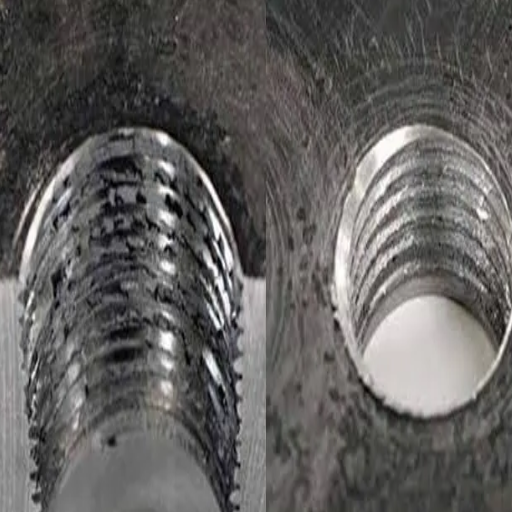
Threading problems might adversely affect the quality, introduce inefficiencies into production, and add to the cost of production. Identification of a threading error and addressing the causes guarantee accuracy and repeatability of manufacturing. These are some examples of threading problems and solutions owners can work on fairly:
| Issue | Cause | Solution |
|---|---|---|
| Wrong Thread Depth | Shallow threads will undermine the fitting’s holding power; conversely, if too deep, it will make the fitting incompatible | Set up the cutting tool properly and ensure that the machine parameters for feed rate and depth of cut are adequately set according to the material and thread specifications. Regular checking of the tool for wear. |
| Thread Pitch Deviation | Deviations can occur due to backlash in the machine or incorrect synchronization between the spindle and the cutting tool | Verify the machine’s alignment, utilize proper thread cutting cycles, and ensure that the leadscrew and nut systems are in good working condition. |
| Surface Finish Problems | Rough thread surfaces are most often caused by dull tooling; the coolant may be applied incorrectly, or vibration of the tool or workpiece occurs during machining | Use sharp tools coated accordingly. Apply appropriate coolant and minimize vibration by ensuring the workpiece is well clamped and that proper tool mounting arrangements are considered. |
| Undercutting or Overlapping Threads | Issues that become affiliated with tool deflection, misalignment or improper tool geometry | Verify that the thread cutting tool is centered and properly aligned relative to the workpiece. Use only tools with the correct geometry for the thread type to be cut and the highest cutting speed available, to minimize deflection. |
| Material Build-Up on Cutting Edges | Materials such as aluminum or soft metals accumulate on the cutting edge, resulting in poor threading | Use tools with anti-adhesive coatings while adequate lubrication is applied to prevent material adhesion. Check and clean the cutting tools on a routine basis to keep them effective. |
With the aforementioned troubleshooting methods put into action, along with a bit of forethought given to routine maintenance of the machine, thread-cutting errors can be practically mitigated. This, therefore, means attaining manufacturing accuracy, operating efficiency, and overall product quality.
Maintaining Tool Sharpness for Optimal Performance
Cutting tool sharpness is an important factor considered in precision manufacturing and for prolonging life of equipment. Such tools cause poor finishes on surfaces, improper dimensioning, and even cause additional strain on the machinery if they get dull. Therefore, there should be a systematic approach to tool care so that tools remain in a good, sharp condition.
Sharpening shall be performed as per the schedule, considering the material to be cut and the frequency of use. Sharpening methods may depend on the nature of the tool, such as grinding for HSS and honing for carbide-tipped tools. The newer abrasives like diamond or CBN grinding wheels offer great promise for sharper grinding in a shorter time.
Monitoring wear indicators is also another important maintenance practice. These include recognizing any familiar types of tool wear, such as chipping, blunting, or a change in the surface finish of the material. Real-time monitoring can alert an operator to potential dullness even before its effect on production quality is realized.
Improper storage techniques eventually bring their own grade of warelust into tools; hence, right ones will do good in preventing the wear of tools during these nonworking periods. Titanium nitride coating, where applicable, makes hardness affordable while rendering the surface finish smooth to retain the sharpness of tools for a longer time. In performing these tasks, routine machining will flow more comfortably and with lesser stops, ensuring more life for a tool.
When to Grind Your Lathe Tool
The grinding process of a lathe tool should be undergone whenever the cutting edge is dull or damaged, as this will affect the machining possibility. An overly dull tool will create heat, result in a poorer surface finish, and generate excessive wear on the workpiece. When one experiences resistance during cutting or when the tool chatters or vibrates excessively, that is a sure indicator to go for grinding.
Using a magnifying instrument, one can perform periodic inspections of the cutting edge to determine wear patterns or chippings that require grinding. However, the nature of the material to be worked on also determines the grinding schedule. For instance, harder or abrasive materials tend to wear tools quickly and hence require frequent regrinding. Conversely, when machining softer materials, one may expect some longer periods between maintenance.
Tools must be ground before their degradation can impair production quality and ensure outstanding blade quality and performance. The ideal grinding process restores the cutting angles and sharpness of the tool without generating excessive heat that could adversely affect the tool structure. Maintenance schedules for your grinding activities thus help to promote precision machining, longer tool life, and reduced downtime.
Advanced Techniques in Lathe Threading
Single Point Thread Cutting Process
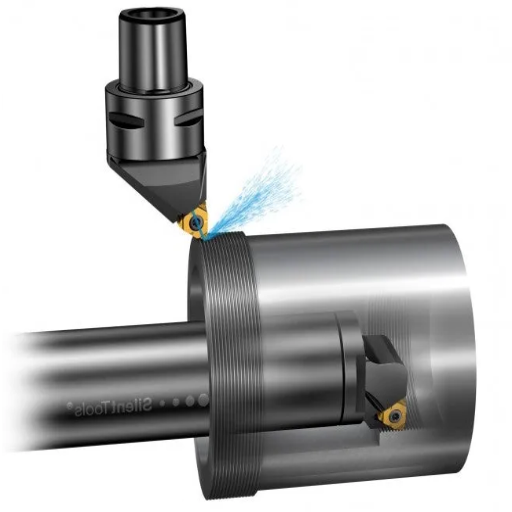
Single-point threading uses a single-point cutting tool mounted on the lathe with the tool bit mounted on the cross slide to thread a given workpiece. Very critical setup is there because all thread depth, thread pitch, and cross section are involved. First, the tool must be selected. Usually, for single-point threading, carbide insert or high-speed steel insert tooling is used, designed for a specific profile. After this, the tool is set to the workpiece to be threaded in an exact match to the profiles. Even the slightest misalignment can spoil the threads.
The operator sets the spindle speed as needed, then engages the traverse feed, which is synchronized with the lead screw to ensure even thread pitch spacing. In each pass, the cross-slide or compound rest hand feed is adjusted to increase the depth of cut gradually. This is done to avoid overloading the tool or the workpiece. Cutting fluid is often sprayed on the tool to reduce the temperature and help evacuate chips for clean cutting. These cuts, passed after pass, are done carefully to render accurate threads of high quality and to a very close tolerance.
Enhancing Efficiency with CNC Lathe Technology
When I think of increasing efficiency with CNC lathe technology, I think of precision and automation. Unlike threading by hand, CNC lathes let me dovetail the programming of operations with incredible accuracy. Very little guesswork is involved now, which also significantly reduces errors and, consequently, the waste of materials and time. Programs can even be saved for future use, which lends itself to greater ease whenever a task must be repeated, and faster production transitions when going into full-fledged runs.
Reference Sources
-
How to Cut Pipe Threads on a Lathe and Make a Gas Connection – YouTube
A video guide demonstrating the process of cutting pipe threads on a lathe with precision. -
Easy Method to Cut Tapered Threads on the Lathe – YouTube
Explains a straightforward method for cutting tapered threads on a lathe. -
How to Cut Threads on a Lathe – Blondihacks YouTube
A detailed tutorial on learning thread cutting techniques for lathe operations. -
Mastering Thread Milling: Precision Meets Versatility – BobCAD
Discusses thread milling as an alternative method for cutting threads with precision and flexibility. - antishilathe.com
Frequently Asked Questions (FAQs)
What are the tools necessary for cutting pipe threads on a lathe?
Several pipe threading tools are required for effectively cutting pipe threads on a lathe, such as a pipe die and a threading tool. Also included in this category of tools are useful devices such as taper attachments for the lathe, which allow you to cut an accurate taper and a pitch of the threads. Cutting oil may be applied to enhance the finish of the threads further and to conserve the life of the cutting edge. It makes an excellent combination to have a somewhat jaw chuck to firmly grip the workpiece while cutting the threads, and a tool holder for your cutting tools for even greater precision during the operation.
How do I set up my lathe for pipe threading?
There are several steps involved in setting up a lathe for pipe threading. Firstly, the workpiece should be securely mounted in the chuck so that it does not move during the cutting operation. Having the taper attachment means one could set it for the correct taper angle for the pipe threads. With the carriage and cross slide, further adjustments are required to achieve the desired depth of cut. Ensuring the correct alignment of the lead screw and its engagement in rotation should be a priority. Finally, choose a tooling for threading that is sharp; correct positioning of this tool is also crucial.
Is it possible to cut pipe threads on a lathe without a taper attachment?
Pipe thread cutting on the lathe can be performed without a taper attachment, although it may require multiple manual adjustments. When giving the correct taper to the threads, it is necessary to calculate the angles and offsets involved. A standard pipe die might be concomitantly needed to form the threads if the lathe does not automatically accommodate the taper. The bar should be moved with great care using the cross feed and depth of cut adjustments, as the threads may need to be cut directly for increased accuracy. While manual labor can often be considered inefficient, when applied carefully, it can yield very satisfying results.
What is the standard pitch for cutting NPT pipe threads?
The definition of standard pitch in NPT thread varies with diameter; typically, NPT threads are designated in number of turns per inch, with as low as 8 TPI for large pipes, and finer pitches with decreasing diameters. When threading in a lathe, consider providing a taper of 1 degree 47 minutes to ensure a perfect fit with the fittings. Always use the threading chart to verify if the correct thread form and other parameters are being used. Having pipe threading dies could also be useful to maintain pitch throughout cutting.
How can I ensure the threads are accurate when cut?
First, one has to measure the diameter of the workpiece with accuracy so as to determine the set of tools that have to be used for cutting threads on the lathe. The provision must be made that the tailstock is aligned with the headstock and is kept perpendicular to the workpiece. A dial indicator may be used to do this, for instance, measuring the depth of cut, and making adjustments accordingly. Carefully maintaining feed rates while applying equal pressure to the cutting edge will also help in making the thread form uniform. An excellent method of testing the quality and accuracy of the threads would also be testing the threaded workpiece with a fitting.
What is the difference between cutting threads and tapping threads?
Thread cutting and tapping are the processes used to create threaded holes or surfaces. Thread cutting refers to lathe machining, wherein the manufacturing of external or internal threads is carried out on a given workpiece, often employing a threading tool or a die. Tapping refers to the process by which internal threads are created by rotating a tap into the material to cut the thread. Both processes indeed give rise to threads, but cutting is usually applied when the project is somewhat larger, requiring precise control over thread form and pitch. Tapping is mainly used for relatively minor holes in which the thread needs to be formed quickly.