




Introduction to Milling Machines

Milling machines are typically used in manufacturing to shape and cut materials such as metal, wood, or plastic. The tool cutter rotates while the workpiece either remains stationary or moves in particular directions. They are used for the production of precision parts; these machines find applications in the automotive, aerospace, and construction industries. Milling machines are essentially organized into two types: vertical milling machines and horizontal milling machines. The vertical and horizontal Milling machines have different applications and requirements.
What is a Milling Machine?
Milling machines are versatile and handy machines in manufacturing, with operations that involve shaping and cutting with fairly tolerable precision. Generally, a milling machine uses its rotating cutting tool to take out material from a workpiece and produce custom shapes, smooth surfaces, and components. Being highly adaptable and capable of producing complex parts within a short timeframe, these machines find applications in various industries, including automotive, aerospace, medical device manufacturing, and construction.
Advanced milling machines utilize technologies such as CNC (Computer Numerical Control) systems for automated operations with exceptional precision and repeatability. CNC milling machines can maintain tolerances within the range of 0.001 inches or even less, giving excellent precision to the outputs, including very complex designs. Milling machines, depending on tooling, can work with metals, such as steel and aluminum, plastics, and even ceramics.
High-speed milling, according to contemporary technologies, is characterized by short cycle times that enhance productivity while maintaining the required precision. With the integration of multi-axis functions, such as 3-axis, 4-axis, and 5-axis systems, the machine’s capabilities are significantly extended to suit multi-angle machining. This flexibility enables the machining of truly complex parts, such as turbine blades, medical implants, and intricate molds.
Worldwide demand for milling machines has been steadily increasing due to the widespread use of computers and ever-increasing production requirements of various industrial sectors. Various manufacturing reports and research analyses indicate a growing trend toward hybrid machines that combine milling and additive manufacturing for enhanced versatility. With these advancements, milling remains a vital manufacturing tool today.
Types of Milling Machines
Depending on their function and the precision required, there are various types of milling machines, which primarily consist of simple horizontal mills, horizontal milling machines, and vertical mills.
| Machine Type | Description | Primary Applications |
|---|---|---|
| Horizontal Milling Machines | These machines have a spindle that is held in a horizontal position and are ideal for machining heavy and large workpieces. | Gear manufacturing, slot cutting, industrial applications |
| Vertical Milling Machines | As the name implies, vertical milling machines have a spindle that is vertically oriented, allowing them to cut with great precision and detail. | Intricate designs, tool shaping, die-sinking, contouring |
| CNC Milling Machines | Computer Numerical Control (CNC) milling machines represent the state-of-the-art in automation, used for precision and throughput improvements. | Aerospace, automotive, and medical device industries |
| Universal Milling Machines | These machines integrate capabilities of both horizontal and vertical milling, allowing for extensive use in various applications. | Helical milling, gear cutting, complex angle machining |
| Bed Type Milling Machines | These machines are constructed sturdily and provide stability for machining very heavy-duty parts. | Heavy-duty machining, massive workpieces |
Horizontal Milling Machines: These machines feature a spindle that is held in a horizontal position, making them ideal for machining heavy and large workpieces. These machines cut larger and deeper layers of materials for industrial applications such as gear manufacturing and slot cutting.
Vertical Milling Machines: As the name implies, vertical milling machines have a spindle that is vertically oriented, allowing them to cut with great precision and detail. They are used to create intricate designs, tool shaping, or machining of smaller or medium-sized workpieces. Their versatility makes them applicable to various jobs, such as die-sinking or contouring.
CNC Milling Machines: Computer Numerical Control (CNC) milling machines represent the state-of-the-art in automation, used for precision and throughput improvements. They are controlled by programmed instructions to create complex designs and are an excellent example of high repeatability, making them indispensable to the aerospace, automotive, and medical device industries.
Universal Milling Machines: These machines integrate the capabilities of both horizontal and vertical milling, allowing for extensive use in various applications. They do helical milling, gear cutting, and complex angle machining.
Bed Type Milling Machines: These machines are constructed sturdily and provide stability for machining very heavy-duty parts. The workpiece remains stationary while the spindle moves vertically and horizontally to make uniform cuts on massive workpieces.
Each type has its purpose, and the correct milling machine will depend on the materials, design, and accuracy needed for the project.
Importance of Milling in Manufacturing
Due to its ability to quickly achieve accuracy in any system, milling is a vital component of advanced manufacturing processes. Milling enables the creation of complex shapes and forms from a wide range of materials, including metals, plastics, and composites. Industries such as aerospace, automotive, and medical device manufacturing utilize milling machines that require tight tolerances and intricate geometries. Milling is yet another process of creating huge and complex components from relatively small and highly detailed parts for prototyping, mass production, and custom fabrication. Milling’s ability to ensure good repeatability and accuracy guarantees quality and consistency, thereby fostering innovation and productivity in various manufacturing sectors.
Vertical Milling Machines
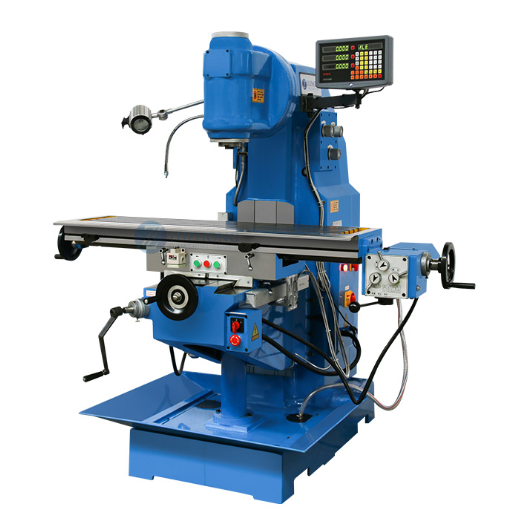
Vertical milling machines are incredibly essential tools in manufacturing, featuring a spindle that is vertically oriented. These can be used to create anything, from flat surfaces to slots or contours, with various cutting tools. Quite extensive in types of operations, including drilling, tapping, and face milling processes. Vertical milling machines are preferred for their simplicity, low cost, and versatility, as they work with almost all kinds of materials, including those used in metalworking, prototyping, and custom fabrication industries.
Horizontal Milling Machines

Horizontal milling machines are used for heavy-duty operations that require high precision and efficiency. Unlike a vertical kind, the cutting tool in this particular machine is fitted to a horizontal spindle, allowing it to cut along large and complicated parts easily. Large material removal applications are best suited for these milling machines, which are commonly used in the automotive, aerospace, and heavy equipment manufacturing industries. Some benefits include greater stability, faster production rates, and the ability to work on multiple sides of a part, truly making it perfect for mass production.
Overview of Vertical Mills
The spindle in vertical mills is positioned vertically, making them highly efficient for carrying out a variety of machining tasks. One of the chief advantages is that they allow for the accurate cutting of complex surfaces; industries such as aerospace, automotive, and tool manufacturing require this level of precision. Moreover, vertical mills can accommodate various cutting tools, including end mills, drill bits, and face mills. As a result, they are capable of undertaking a variety of operations, including slotting, contouring, and drilling.
Modern machines primarily utilize vertical mills, with advancements applied to enhance productivity and output. CNC systems, for example, improve functionality by automating operations, reducing human error, and enabling the fabrication of complex designs. It was reported that CNC vertical mills can produce parts with tolerances as tight as ±0.001 inches, basically fulfilling the standards required by the most demanding precision applications.
These machines are adaptable to various materials, including aluminum, steel, and titanium, and can power machines with variable speeds to optimize the working characteristics of each. In addition, their working tables are usually larger, with average widths ranging from 30 to 50 inches, thereby meeting the machining requirements for working with larger workpieces. Safety features and interfaces are incorporated into many present-day models to enhance operating control and reduce obstacles.
Their myriad benefits, such as flexibility, automation potential, and the capability of machining to high levels of accuracy, give them a primary role in the manufacturing process, directly contributing to productivity and cost reduction.
Key Features of Vertical Milling Machines
- Precision and Accuracy: Vertical milling machines are renowned for producing parts with extremely high accuracy and detail. Modern machines, equipped with DRO and CNC capabilities, enable precise control over the cutting operation, allowing for a tighter tolerance of ±0.001 inches.
- Versatility in Applications: These machines perform drilling, cutting, and tapering operations, and are widely used in various sectors, including aerospace, automotive, and metal fabrication. They are thus very adaptable, given their capability to accept several tool attachments.
- Ease of Operation: A majority of vertical mills feature ergonomically placed control panels comprising a straightforward interface. On the other hand, some vertical mills incorporate touchscreen interfaces and automation features with built-in capabilities that enable programmers to specify machining sequences, thereby reducing manual inputs.
- Variety in Sizes and Configurations: Since vertical milling machines come in many configurations, their sizes can range from small benchtop units suitable for small shops to industrial-sized machines. Table sizes generally range from 9 in. x 42 in. to 10 in. x 50 in.
- Durability and Material Support: Constructed with rugged materials such as cast iron and hardened steel, these are designed to take rough use in harsh working environments. Furthermore, most machines can handle a wide range of materials, including aluminum, steel, and titanium.
- Automation and Technology Integration: Modern-day vertical mills increasingly feature innovative technologies, such as IoT connectivity and advanced software integration, facilitating real-time monitoring of machine performance and workflow optimization, thereby enhancing productivity and maintaining consistent output.
- Advanced Safety Features: Accidents often occur without warning; therefore, the new mills prioritize safety through design features such as automatic tool changers, enclosed work areas, and emergency stop buttons, aiming to minimize accidents and maintain a safe working environment.
Vertical milling machines are evolving with technological improvements to meet the ever-growing demand for precision manufacturing, while reducing human effort and enhancing efficiency.
Applications of Vertical Milling Machines
Thanks to their flexibility and precision, vertical milling machines find applications in a wide range of industries. Some examples include manufacturing components for the automotive, aerospace, medical, and electronics fields. For instance, in the automotive industry, the vertical milling machine is used to manufacture precise parts with intricate designs, such as engine components and gearboxes.
In the aerospace industry, vertical milling machines are used to manufacture complex geometries required for turbine blades and structural components, all of which necessitate reliability assurance in demanding environments. The medical industry uses these machines to manufacture surgical instruments and implants, such as orthopedic screws or dental components, that require critical dimensions for proper functioning. The electronic sector also utilizes vertical milling for the precise machining of microcomponents used in circuit boards and semiconductor devices.
With advances in CNC technology, the capabilities of vertical milling machines have been further enhanced to achieve tighter tolerances and higher production speeds. For example, present-day clustering enables them to achieve brilliant surface finishes of 0.2 microns and tolerances of ±0.001 inches, thereby placing very high demands on quality industries. With this capability of flexibility, accuracy, and speed, the applications and usage of vertical milling machines expand across various disciplines.
Overview of Horizontal Mills
Horizontal milling machines are versatile tools with heavy-duty machining capabilities, widely applied throughout manufacturing. Featuring a spindle mounted horizontally, these machines promote optimal material removal, especially when working on larger and intricately designed parts. These machines are typically used in precision industries, including automotive, aerospace, and energy, where rapid execution is crucial. The most significant feature of horizontal milling machines is their capacity to remove material quickly while producing multiple sides of a part and increasing rigidity during machining.
Horizontal mills excel at slot cutting, grooving, or surface finishing, which is second to none when working with hard metals and large workpieces. Horizontal milling machines offer higher production rates compared to vertical mills and can handle large volumes with ease, making them indispensable in large-scale manufacturing operations.
Key Features of Horizontal Milling Machines
- High Material Removal Rate: The Horizontal milling machines are well known for rapid material removal. They allow machinery with multiple cutting tools, making the operations truly rapid.
- Improved Stability and Durability: High clamping forces contribute to providing high stability to horizontal mills during machining operations, thereby reducing vibrations and ensuring optimal results, even when machining large or heavy workpieces.
- Greater Versatility in Cutting: These machines handle complicated operations such as cutting deep slots, forming intricate grooves, and machining surfaces, especially on hard metals or large parts, with excellent proficiency.
- Efficient Chip Removal: The horizontal design facilitates the natural removal of chips and debris during machining, thereby avoiding interference and potential premature wear or overheating of the tool.
- Scalability for Large-Scale Production: Horizontal milling machines are designed for mass production and are capable of conducting bulk operations efficiently, making them very useful in the automotive and aerospace industries.
These features collectively indicate that the design of the horizontal milling machine offers unmatched performance in terms of capability, speed, precision, and reliability, which are essential for heavy-duty machining jobs in professional manufacturing settings.
Applications of Horizontal Milling Machines
Thus, horizontal milling machines are considered versatile due to their ability to perform extra-large, heavy-duty operations. Some of its major applications include:
- Automotive Industry: The automotive industry utilizes horizontal milling machines to produce components such as engine blocks, transmission housings, and axles. They have been able to contend with high volumes and exact operations, thus increasing production efficiency.
- Aerospace Industry: The aerospace industry utilizes machines for machining complex parts, such as turbine blades, structural components, and brackets. The capability to work with hard materials and create complex designs is crucial in this highly precision-based field.
- Tool and Die Making: These machines are used in the production of molds, dies, and specialized tools. They offer precision in shaping and cutting, producing high-quality outputs that meet industry requirements.
- Metal Fabrication and Construction: Horizontal milling machines are utilized in fabrication to produce beams, plates, and other structural components for construction and heavy machinery. Their ability to efficiently handle large, heavy materials makes them a big name in the industry.
- General Manufacturing: Horizontal milling machines are utilized for a wide range of general manufacturing applications, including machining grooves and slots, as well as producing custom components, all with greater speed and precision than any other method.
The industries that require high precision, heavy-duty performance, and production scalability can highly rely on these versatile machines.
Horizontal vs Vertical Milling: A Comparative Analysis
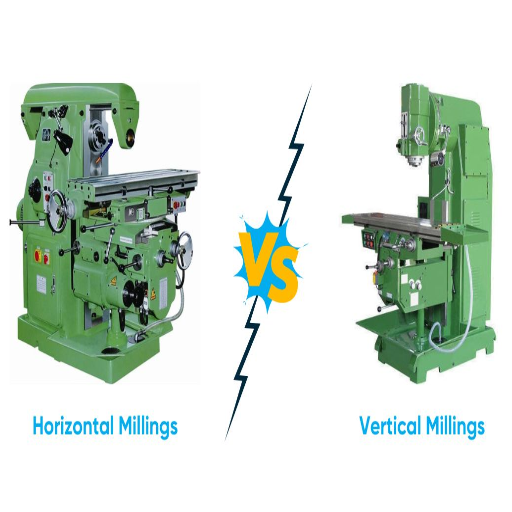
The significant difference between horizontal and vertical milling machines lies in the orientation of their spindles. Horizontal milling machines have their spindles mounted horizontally and are therefore commonly used for heavier jobs, mass production, and cutting thicker stock. Typically, they offer superior access to the work area and enhanced performance for the more complex or large-scale tasks.
With their spindles oriented vertically, vertical milling machines tend to be more flexible and easier to use for smaller jobs, prototyping, or lighter projects. They are best suited for detailed work and are often more cost-effective when dealing with smaller scales.
In practice, horizontal machines are typically used in high-performance applications, while vertical machines are preferred for their precision and versatility. Hence, the choice between the two depends on the particular application.
Differences Between Vertical and Horizontal Milling Machines
| Aspect | Vertical Milling Machines | Horizontal Milling Machines |
|---|---|---|
| Spindle Orientation | Vertically oriented spindle | Horizontally mounted spindle |
| Best Applications | Precision work, smaller details, prototyping | Heavy-duty cutting, large materials, mass production |
| Operations | Slotting, drilling, cutting patterns | Multiple angles and planes simultaneously |
| Size & Maneuverability | Smaller, easier to maneuver | Larger size, immense power |
| Cost | More affordable, lower maintenance | Higher initial investment |
| Production Volume | Low to medium volume | High volume, industrial scale |
| Workspace Requirements | Compact, suitable for smaller workshops | Requires larger workspace |
The term vertical and horizontal milling machines identify the tools differing in the orientation of the spindle and their function; vertical millers have a spindle oriented vertically for precision work on smaller or finer details and are good for operations such as slotting, drilling, and cutting patterns; horizontal millers, on the other hand, employ a spindle mounted horizontally, this being most apt to cut heavy or large-hardened materials at somewhat faster speeds, for heavier duties than could be undertaken satisfactorily by vertical machines due to their bigger size and immense power.
Hence, from a milling operations perspective, horizontal milling machines are capable of handling multiple angles and planes simultaneously, making them more productive for complex or mass production jobs. A vertical milling machine is smaller and thus easier to maneuver and operate for the layman; it is often also cheaper, making it an appealing candidate for smaller or established workshops with limited workspace. Hence, the criteria for selection hinge on the work that needs to be done: horizontal milling machines are primarily used in mass production and for demanding applications; vertical milling machines, meanwhile, are suitable for versatility, affordability, and accuracy in smaller jobs.
Advantages of Each Type of Milling Machine
Advantages of Horizontal Milling Machines
- High Efficiency for Large-Scale Production: Horizontal milling machines are capable of handling heavier and larger workpieces, making them suitable for mass production and industrial use.
- Faster Material Removal: Due to the machine’s design, the horizontal mill can engage in aggressive and faster cutting, thereby enhancing productivity.
- Stability and Durability: Thanks to the setup that is quite robust and stable, horizontal machines produce good precision in cases where bulkier materials are loaded.
- Superior Chip Evacuation: Horizontal machines evacuate chips more effectively than vertical mills, which can tend to cause overheating and result in better surface finishes.
Advantages of Vertical Milling Machines
- Versatility: Vertical milling machines are highly versatile and well-suited for a wide range of small-scale and complex operations.
- Cost-Effectiveness: In most cases, vertical machines come at lower initial and maintenance costs, therefore favoring smaller workshops.
- Ease of Use: The ease of operation shortens training time for vertical mills; thus, they are better suited for novices to face and handle.
- Precisely for Detailed Work: Vertical milling becomes ideal for detailed and intricate work in providing the control needed for precision manufacturing.
When to Choose Horizontal vs Vertical Milling
Horizontal or vertical milling can be chosen depending on various project demands, such as material, the desired degree of precision, and production volume.
Choose Vertical Milling When:
- Working on smaller jobs where precision is of utmost importance
- Performing drilling, slotting, and contouring operations
- Working with fragile or thin materials
- Operating in small workshops with limited space
- Handling custom jobs requiring flexibility
- Budget constraints require cost-effective solutions
Choose Horizontal Milling When:
- Large-scale production and handling methods of heavier materials
- Heavy cuts and removing more material efficiently
- Working on a piece from multiple sides simultaneously
- Mass production or machining against tough materials
- Industrial-scale projects requiring power and efficiency
- Complex manufacturing requiring multiple angles and planes
Then, based on the complexity of work and scale of production rests the choice; the vertical mill offers versatility and affordability for precision projects, whereas the horizontal mill offers power and efficiency for industrial-scale projects.
CNC Milling Machines: Vertical and Horizontal Options

Vertical CNC milling machines are characterized by their vertically oriented spindles, making them suitable for precision work, detailing, and intricate design. Price-wise, they are very affordable, and from an operator’s point of view, they are the easiest tools to use, especially when dealing with small-scale jobs that require dexterity and minor adjustments.
Horizontal CNC machines, with their horizontal orientation of the spindle, are capable of handling larger and heavier materials on an industrial production scale. They are more durable when cutting into hard materials and more efficient in working on those hard materials on both sides of a workpiece.
The choice of machine comes down to what the project demands, with precision, production scale, and material sides balanced.
What is a CNC Milling Machine?
A CNC milling machine is a precision manufacturing tool for cutting, drilling, and shaping metal, wood, or plastic. Its operation is based on preprogrammed instructions, which assure the highest level of consistency and accuracy. CNC milling machines use rotating cutting tools to remove material from the workpiece, employing coaxial movements to create a specific shape or design. There are many types of CNC milling machines available on the market, including vertical and horizontal models, which cater to different production requirements. These machines, capable of generating high efficiency and being quite versatile, are commonly used in aerospace, automotive, and electronics industries.
CNC Vertical Milling Machines
CNC vertical milling machines have their spindles oriented vertically and are ideal for precision and varied applications. Because they provide good visibility and control during operations, I consider them excellent for drilling, cutting, slotting, and other similar tasks. These types of machines are utilized across various industries for applications that require complex designs and the need to produce a high-quality finish quickly.
CNC Horizontal Milling Machines
CNC horizontal milling machines feature horizontally positioned spindles, providing an ideal setup for heavy work and high production. These deep-cut milling machines and relatively material-removal machines are adept at heavy work and can accommodate larger workpieces. More versatile horizontal mills can perform tasks such as contouring, slotting, and surface machining. Since these mills operate horizontally, chips separate from the workpiece, with gravity assisting their evacuation. This arrangement efficaciously prevents clogging. They are thus highly preferred by industries such as the automotive and aerospace sectors, where speed and accuracy are essential for manufacturing complex parts.
Reference Sources
Kinematic Modeling of 5-Axis Horizontal Milling Machine Emulated from Vertical Articulated Robot
Research on the Inner Wall of the Blind Hole Drilling Device
Frequently Asked Questions (FAQs)
What are the differences between vertical and horizontal milling machines?
Primarily, horizontal and vertical milling machines differ by the orientation of their spindles and the kind of operations they perform. Vertical milling machines feature a vertical spindle design, which facilitates a more efficient cutting process. On the other hand, since horizontal milling machines have a horizontal spindle, they are capable of handling heavier work and working on relatively large-scale workpieces. Choosing between the two would be based on the project requirements.
How do I select between vertical and horizontal milling machines?
Selecting between vertical and horizontal milling machines will primarily depend on factors such as the material being worked on, the complexity of the parts to be manufactured, and the degree of precision required. The vertical machine is capable of machining small parts with incredible detail, whereas the horizontal machines are used for machining bigger parts and components. Assess your machining needs, consider your production volume, and then make an informed choice.
What features do vertical milling machines offer?
Various features give vertical milling machines a great deal of flexibility, enabling them to perform multiple operations. These features include the adjustable vertical orientation with varying spindle speeds and the capability to attach various cutting tools. These machines are primarily used in machining environments to manufacture complex shapes with precision and are often employed for prototype work and small-scale production.
What is a CNC vertical milling machine?
A CNC Vertical Milling Machine is a computer-controlled machine that automates the milling process with the highest possible precision and repeatability; it uses a vertical spindle and can conveniently perform complex machining operations. CNC vertical milling excels in mass-producing complex parts with stringent requirements on consistency.
What are some benefits of horizontal milling machines?
Horizontal milling machines offer several advantages, including their ability to perform multiple operations simultaneously, such as milling and drilling. Given their horizontal spindle, these machines offer the best chip removal while providing a perfect space for taking heavy, continuous cuts. Furthermore, horizontal milling machines can handle massive workpieces, which, in themselves, imply increased productivity in the shop.
What categories of milling machines are there?
Two main categories of milling machines exist: vertical and horizontal. Then there are specialized machines supposed to work within each category, such as turret mills, bed mills, and CNC milling machines. Each type has been endowed with particular features that equip it to perform a specific milling operation, whether it involves fine details or heavy-duty tasks.
How does the orientation of the spindle affect milling operations?
The orientation of the spindle highly affects the milling operations. The vertical orientation of the spindle in vertical milling machines allows for precise control of the cutting tool’s depth, making it ideal for detailed work. On the contrary, the horizontal orientation of the spindle in horizontal milling machines provides it with substantial stability, making it better suited for heavy cuts on larger materials, which ultimately leads to an overall efficient machining process.
What is the significance of bed milling machines in machining?
Bed Milling machines are significant in machining for their sturdy design, which provides considerable stability during operation. These machines have a fixed bed that supports the workpiece being milled, thereby allowing for more precise milling. Bed mills are particularly useful for large and heavy components that require consistent accuracy through the milling process.
What things should I consider when selecting a CNC machining service?
Factors for consideration include the materials they work with, the range of milling machines they utilize, and their experience with specific projects when selecting a CNC Machining Service. Also, consider their capability to undertake vertical and horizontal milling operations, turnaround times, and quality assurance so that you would have services you can rely on.