




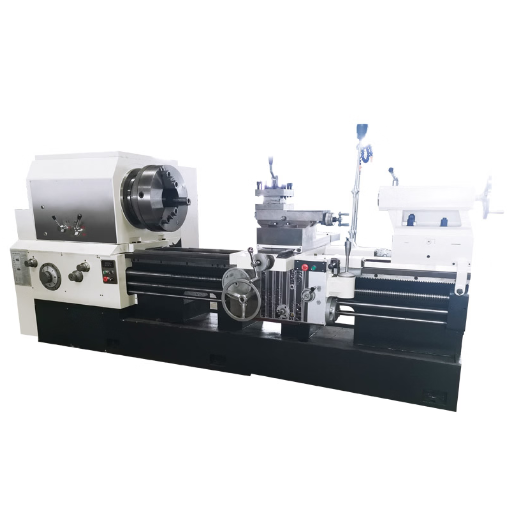
For pipe threading jobs requiring utmost precision and efficiency, the Q1325 pipe thread lathe machine is a significant game-changer. This state-of-the-art equipment has been designed to fulfill the requirements of industrial applications where precise threading solutions have to be offered, thereby ensuring durability, precision, and versatility. Whether oil and gas, construction, manufacturing, or mediums in between, Q1325 guarantees unwavering results while making optimal use of the operational flow charts. This article goes through the important aspects, advantages, and applications of the Q1325 Pipe Thread Lathe Machine and gives you enough knowledge on how to take your threading processes up a notch. So, let us delve into why this cutting-edge machine is a serious consideration for any professional aspiring excellence in the work he or she executes.
Introduction to Q1325 Pipe Thread Lathe Machine
Introduction to Pipe Threading Machines
Pipe threading machines are crucial tools for the industry of plumbing, oil and gas, manufacturing, and construction. They cut grooves or thread into pipe ends to provide secure and efficient connection between pipe sections. Nowadays, pipe threading machines vary from manual, semi-automatic, and fully-automatic models, catering to all manner of operational environments.
The current trend in pipe threading machines focuses on perfection, efficacy, and durability. Automated pipe threading machines have thus acquired attention in the industry because of their suitability for large projects of consistent perceived quality. For instance, the automated threading machine can provide threading at the rate of 30 threads every minute, which drastically reduces production time when compared with the manual ones.
Next, the new-age threading machines make way for the incorporation of smart technology in woodworking. Machines integrated with programmable logic controllers (PLC) and CNC systems can provide higher accuracy and lessen human error in the park. Recent market analysis data reveal a promising reprise for the global pipe threading machine market with an expected compound annual growth rate (CAGR) of 5.7% from 2023 to 2030. Building infrastructure all around the world and the demand for effective piping framework for industrial uses have been credited to this growth.
Durability is one of the aspects that appeal when choosing a machine since the machine has to endure tough conditions with very abrasive tasks. Nowadays, many machines are now installed with an even better coolant system to lessen the wear and tear of the cutting tool and, thus, the overall life of the machine.
Thus, combining these high-end technologies and sturdy engineering allows pipe threading machines such as the Q1325 to be regarded by specialists as a necessity for precision, trustworthiness, and enhanced productivity in threading operations.
Importance of Precision in Pipe Threading
Precision in pipe threading is important because in all kinds of industries, operations need to be done with utmost care in the interest of quality, safety, and functionality- be that construction or oil and gas. Accurate threading ensures fitting with the pipes and so prevents leakages and failures in critical systems such as plumbing and pipeline installations. An unsatisfactory report from pipeline experts states that the cost for maintaining pipelines can increase by even 30% if the pipes are wrongly threaded- a further economic drawback of inaccuracies.
More modern pipe threading machines boast innovations such as self-centering chucks and automated threading control, which help limit operator errors in the process. This does provide advanced CNC-controlled threading machines that can be held within ±0.005 inches of tolerance, which maintains consistency throughout large volumes of production. Moreover, a precision threading procedure supports sustainability by cutting down on material waste due to misaligned or defective threads.
With the evolution of industry principles concerning safety and productivity, the acquisition of high-precision threading equipment as well as the training of its operators has proven to be a necessity rather than a business choice. The role of precision in pipe threading, whether in manufacturing capability or field applications, is to provide durability, operational dependability, and economic feasibility, and hence worldwide applications on pipeline construction and infrastructure.
Why Q1325?
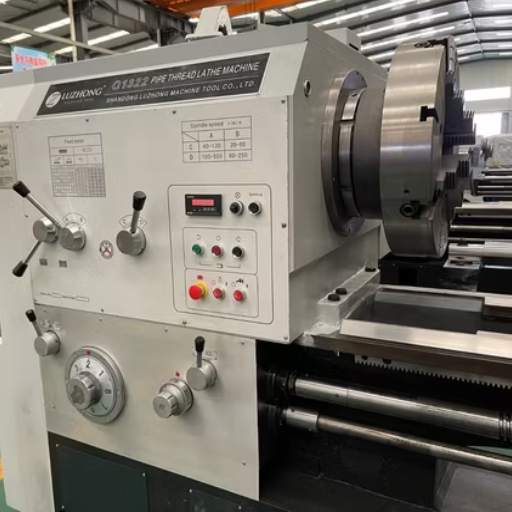
The Q1325 Model has earned its reputation as the most recognized advanced solution for precision threading technology, providing levels of performance and reliability that are virtually unmatched. Designed with utmost consideration for state-of-art features required by modern industries where pipe threading operations demand utmost accuracy and efficiency, the Q1325 model is probably the foremost choice because:
🎯 Unmatched Accuracy and Precision
The Q1325 model is configured with the most sophisticated state-of-the-art technology to provide precision threading tolerances as tight as ±0.01mm, minimizing the risk of misaligned or defective threads. This critical level of accuracy serves industries like oil and gas, where safety and durability measures are set far above the norm.
⚡ Increased Productivity Level
Q1325 has the ability through its high-speed threading mechanism to reduce the time taken to perform a threading operation by nearly 30%, hence leading to faster project execution times and better cost efficiency, thus much-needed in large infrastructural undertakings.
💪 Built to Hi-Tech Durability
The Q1325 Model is made with raw materials used in industries and hence affords a long life. Further, Q1325 ensures the uninterrupted performance of heavy-duty workload. Being in corrosion-resistant surface and reinforced construction, it ensures the performance even in the most adverse environment.
🎮 Simplified Working
The model has a very simple digital control system, which is facilitated by easy to operate features such as greatly reduced learning curve even for novice machinists. There are safety features, in the form automatic shut-off, as well as an alert system for errors that further enhance Q1325 as the safest threading choice for operators.
🏆 World Recognition and Certification for Industrial Application
Q1325 threading machine meets ISO 9001 standard and follows very stringent industry certifications, making it compliant to elevated safety regulations worldwide. Its reputation is that of an established threading machine trusted by the lead companies in all corners around the globe.
The Benefits and Results That Follow Up
User feedback demonstrates that the Q1325 Model introduced enormous economic saving and improved operational efficiency. Clients have mentioned a 25% decrease in failures related to threading, followed by a more streamlined maintenance schedule and repairs.
Definitively, the Q1325 Model, with its highly advanced features, a precision-functional mechanism, and well-proven track record and performances, is the most excellent investment for any businessman looking towards going on winning in the competitive pipeline and infrastructure market. Investing in Q1325 is investing in reliability, safety, and innovation.
Specifications of the Q1325 Pipe Thread Lathe
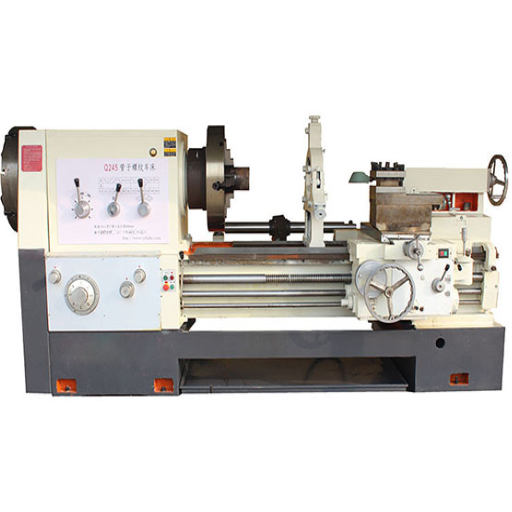
Key Features and Technical Specifications
🔧 Key Features:
- Precision engineering — The Q1325 Pipe Thread Lathe features the latest precision engineering techniques in its construction, securing accurate pipe threading for sizes and materials.
- Heavy-Duty Construction — Brought into being through the use of heavy-duty materials to meet the expectations of industrial usage. The machine promises a long working life.
- User-Friendly Interface — Designed with a very user-friendly control panel. The interface has been designed to be mostly automatic, eliminating extensive training needs.
- Wide Threading Capacity — It threads the widest range of pipe diameters ranging from smaller segments to large industrial pipelines.
- Advanced Safety Features — Mechanized with latest safety systems for the safety of working personnel. Features include automatic stop and overload protection.
- Energy Saving — It balances energy-saving with optimal performance, thereby offering drastically reduced power consumption coupled with long operational hours.
📊 Technical Specifications:
| Specification | Details |
|---|---|
| Threading Range | 2 inches to 24 inches in diameter |
| Thread Types | NPT, BSPT, and custom threading options available |
| Spindle Speed | 40-500 RPM, variable according to material requirement |
| Motor Power | 15 kW (20 hp) high efficiency motor |
| Dimensions of the Lathe | 3800mm x 1200mm x 1700mm |
| Weight | Approx. 3200 kg |
| Electrical Requirements | 380V/50Hz; can be modified as per international standards |
| Chuck | Independent 4-jaw chuck for better gripping |
| Coolant System | Integrated coolant system for better threading and tool life |
| Automation Level | Semi-automatic, with programmable control possible for production |
The above specifications and features make the Q1325 an ideal machine for a wide range of modern industrial applications. Be it pipeline construction, oil and gas infrastructure, or any heavy-duty industry, the Q1325 stands ready to cater efficiently to any of your threading needs.
The Spindle Bore and Its Significance
The spindle bore is one of the more critical aspects of a pipe thread lathe that directly regulates pipe sizes which the machine can work with. The spindle bore designates the diameter of the hole that drills through the spindle. This hole allows any pipes or other long workpieces that are feeding through the lathe for machining.
In the Q1325 Pipe Thread Lathe, the spindle bore is designed to be big enough to carry a good range of pipe diameters commonly used, for instance, in oil and gas, construction, or manufacturing. The Q1325 therefore has a spindle bore diameter of 6 inches (152 mm) meant to carry down a considerable thickness and diameter of pipes with ease. Making it ideal in threading operation for pipelines, drill pipes, or structural members.
The importance of the spindle bore goes beyond just the maximum pipe diameter that it can machine. A larger spindle bore will offer more flexibility and hence will give efficient performance to large diameter materials without additional time to change setups on the machine in between sizes. This is important for industries relying on throughput and precision on a consistent basis, as downtime switching machinery for different sizes will hold the industry back and be costly.
Modern improvements to spindle design have included balancing and finishing procedures that reduce the vibration of the spindle during operation. Stable performance under higher rotational speeds is important for grinding accuracy in a threadability application. Enhancements to material characteristics, such as durability and wear resistance in the spindle bore, will also improve long-term reliability in heavy workloads.
The importance in sizing of the spindle bore and its relevant factors with the overall machine design cannot be disregarded when considering the lathe for industrial use. The meticulously considered spindle bore of the Q1325 reflects its robust capacity and flexibility as a perfect fit to ease the demands of a wide variety of threading requirements in different industries.
Horizontal Design and Its Advantages
There are several advantages of the horizontal design of the Q1325 lathe that make it fit for purpose and lend it to modern industrial needs. Since horizontal lathes, such as the Q1325, are designed especially for great stability and excellent efficiency, they are well adapted for high-precision operations and heavy-duty workpieces.
The major horizontal design advantages lie in the capability to handle bigger and heavier materials. Horizontal lathes can handle workpieces weighing a few tons, depending on the exact model and customization available, according to some industry publifications. Such stability is imparted by their lower center of gravity since, during the operation, it significantly reduces vibrations, ensuring uninterrupted results even at high-speed cutting processes.
🏗️ Horizontal Design Benefits:
- Superior Stability – Lower center of gravity reduces vibrations significantly
- Heavy Load Capacity – Can handle workpieces weighing several tons
- Better Tooling Flexibility – Multiple mounting options at various angles
- Easier Maintenance – More accessible for operators and technicians
- Enhanced Precision – Consistent results even at high-speed operations
Advantages of tooling configuration make horizontal lathe better than vertical kinds. Multiple options are there to mount the tool and to adjust it at different angles, providing an operator with working flexibility while performing complex tasks like threading, grooving, or contouring. Horizontal machines are also much ergonomic, easy to maintain and operate; hence they reduce the amount of downtime involved in tool change or adjustment.
The latest technological features, such as high-precise digital readouts (DROs) working in association with CNC (Computer Numerical Control) as the main control system, are being increasingly implemented in horizontal lathes including the Q1325. The CNC applications allow automation and repeatability of processes so as to enormously increase productivity vis-a-vis a manual operator interfacing with an external processor.
In conclusion, indirect evidence shows highly demanding horizontal lathe-dependent industries such as automotive, aerospace, and energy holding components to extremely stringent tolerances, thereby assuring consistent performance of these components and by implication much better quality of the final products and operational efficiency.
Combining an inherently robust horizontal design with modern features, the Q1325 lathe demonstrates its worthy capacity to operate with unusual reliability and precision within the tighter constraints presented in modern machining demands.
Applications of the Q1325 Pipe Thread Lathe Machine
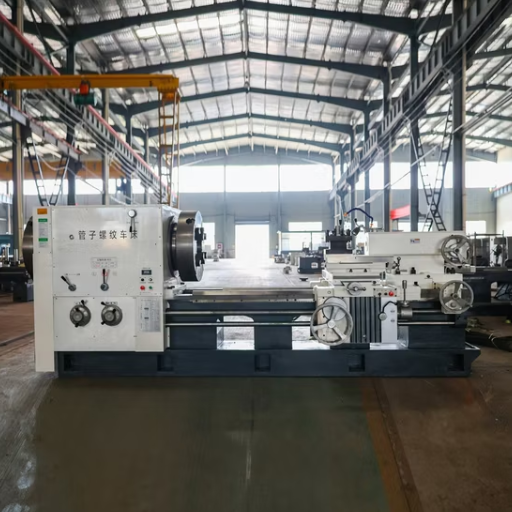
Industries Benefiting From Pipe Threading
Pipe threading is a very important process where it conjures the precise and dependable joining of pipes, fittings, and components. Some important industries and businesses that benefit greatly from pipe threading are as follows:
🛢️ 1. Oil and Gas Industry
The upstream oil and gas industry uses threaded pipes during drilling, search, and pipeline construction. Threaded connections assure the integrity and longevity of pipelines that are transporting oil, natural gas, and other resources with high pressure and extreme conditions. As per market statistics; oil and gas pipes worldwide market is expected to grow at a CAGR of about 5.4% from 2023 to 2030, which reiterates that high-quality pipe threading will always remain in demand.
🏗️ 2. Construction Industry
Any infrastructure plan from residential to commercial to industrial installations requires the installation of plumbing, heating, ventilation, or welded sockets using threaded pipes. Threaded connections are advantageous since they reduce the time and cost spent on the installation and maintenance process. Given the size of the worldwide construction market estimated to be $15.2 trillion by 2030, the potential for pipe threading methodologies to have greater significance will be very high.
💧 3. Water and Wastewater Management
Municipal and industrial water systems hold threaded pipes to efficiently move water and wastes. This includes applications through desalination facilities, sewage treatment facilities, and irrigation systems. Threaded pipe makes certain leak-proof connections, a vital concern in situations leading to the well-being of water resources. The global water industry would be on steady growth owing to huge investments in water infrastructure.
🚗 4. Automotive and Aerospace Manufacturing
The automotive and aerospace industries benefit from precision pipe threading for hydraulic and pneumatic systems. The connections between components must be reliable to carry out functions under high pressure. The demand for more advanced threading solutions is increasing alongside developments in electric vehicles and aerospace.
🧪 5. Chemical and Petrochemical Industry
Threaded pipes are imperative in chemical plants to transport substances that are volatile and corrosive in nature safely. Such substances are threaded using stainless steel and other tough metals that can withstand high temperatures and corrosive reactions so as to guarantee safety and longevity.
⚡ 6. Energy and Power Generation
A power plant needs threaded pipes for the steam generation system, cooling systems, and fuel transportation. Threading assures tight seals that can withstand high pressures and are able to prevent energy loss. The renewable energy sector, such as wind and solar power plants, also uses threaded pipes for structural and mechanical installations.
Such flexibility and dependability of pipe threading operations with modern machines like the Q1325 Pipe Thread Lathe in tow make it a very important tool amid these industries. Threading technologies ensure accurate and efficient execution for the foundation of critical infrastructure and systems worldwide.
Oil Country Applications
Oil country applications need state-of-the-art pipe threading technologies for their drilling, production, and transportation systems in the oil industry. Threaded connections are assemblies used in oilfield operations to join drill pipes, casing, tubing, and other major components. The precision of these threads ensures smooth interlocking of flat surfaces between components to avoid leakages and provide strength to interior high-pressure systems.
According to recent statistics, the global oilfield services market price looks to entertain noticeable argentinian growth with a projected valuation slightly in excess of $300 billion by 2030, backed by the evolution of threading technology and the demand for energy resources in ever increasing quantities. For example, API thread standards are normally used for ensuring the quality and safety requirements of oil country applications. Tools such as the Q1325 Pipe Thread Lathe have been developed to tick boxes for threading high-grade steels and exotic materials, thus ensuring the utmost compatibility with extreme conditioning and deep well drilling operations.
Such threaded components are also used to ensure operational efficiencies in unconventional oil recovery methods, such as hydraulic fracturing. Threading of such deep wells and hostile environmentassociatedch superior thread durability and accuracy-makes for what cannot be absent: threading technologies. And as new development in materials and machining processes continue, pipe threading in oil country applications will remain one of the cornerstones of global energy supply.
Versatility in Various Threading Tasks
The beauty of pipe threading lies in versatility, appropriated to many industries beyond oil and gas. Advanced threading technologies are used in construction, water distribution, and HVAC systems to secure reliable connections and improved efficiency. To cite one example: National Pipe Thread (NPT) standards are widely used in plumbing applications to prevent leaking in both residential and commercial areas, with those threads producing seals tight enough to withstand varying pressures and temperatures.
The latest advances have enhanced both the accuracy and longevity of threading. Industry data suggest CNC threading machines now dominate 8% annual growth, with construction and energy infrastructure being the main drivers of demand. These CNC machines ensure that thread patterns maintain the highest accuracy and uniformity across various diameters and materials such as steel, aluminum, and PVC. It is because of this flexibility that threading can stay lividly important in jobs requiring a connection that cannot be compromised in terms of strength and leakage.
Further, manufacturers have responded to the green drive with environmentally friendly hybrids presented into the market that cut down energy consumption by 30%. This again blends with the sustainable stage trends of the industrial world, providing deeper seats for threading applications in various disciplines. Thus, mixing the wisdom of traditional experienced people with the most advanced technologies makes the threading process a leading edge transformable instrument for the ever-changing demands of 21st-century industry.
Build Quality and Durability
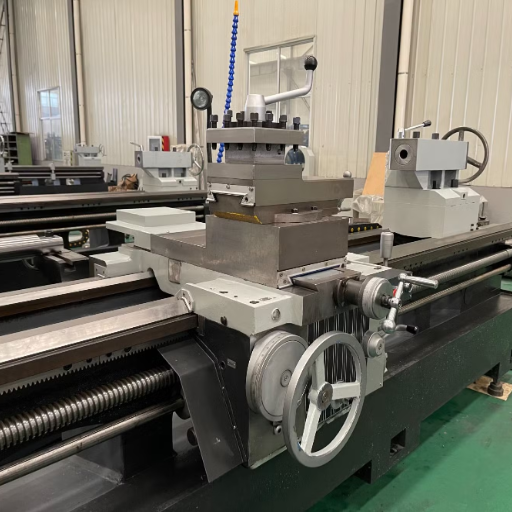
A Glance at Materials in Construction of a Q1325
The threading machine Q1325 is made up of a collection of materials of high grade to guarantee maximum durability and effectiveness in operation. The main body comes from an allied steel frame, offering great resistance to wear and tear. The alloy consists of carbon, manganese, and chromium that enhance the overall toughness of the machine and its resistance to corrosion.
🔧 Material Construction Breakdown:
- Main Frame: Allied steel with carbon, manganese, and chromium
- Threading Parts: Hardened tool steel for extreme pressure resistance
- Moving Parts: Nickel finish for improved lubrication
- External Panels: Modern composite materials for lightweight strength
- Non-Critical Components: Recycled and recyclable materials for environmental responsibility
The threading parts of the machine are made in a definite manner using hardened tool steel capable of resisting extremely heavy pressures when in use and would take a long time to wear down. Moving parts inside receive a nickel finish that improves lubrication, reducing friction during movement while also increasing product life.
External panels and casing are made of the most modern composite materials, rendering the unit lightweight and yet strong. The materials used are impact-resistant and cause noise absorption during operations. In the non-critical portion of the machine, recycled and recyclable machines have been used, thus reducing the environmentally harmful effects of production.
With such a choice in materials, the Q1325 ensures a perfect balance between advanced engineering and sustainable development in meeting industrial performance standards as well as environmental responsibility.
Long-Term Performance and Maintenance
The Q1325 has long-term reliability as a premise for its design, where fewer maintenance yields consistent performance over time. Reliability comes from the use of top-quality materials with corrosion resistance, sealing technology, and protective coating; all these measures serve to keep the vital parts protected from environmental exposure. These design elements make it sufficiently durable for the industrial heavy-duty use in any capacity.
New studies reveal that predictive maintenance can achieve up to 25 percent reduction in downtime and can increase in lifespan by nearly 20 percent. For this, the Q1325 is constructed with smart monitoring systems that also allow real-time analysis of its operating data, so that maintenance can be done proactively, and its anomaly detection can be done immediately. In fact, remote diagnostic toolkits enable users to receive feedback without having to pay for expensive service calls.
Maintenance of the Q1325 involves simple procedures, including partial lubrication of the machine, inspection of wear components, and regular software updating. With organized maintenance, there would be assured optimal performance and prevention from an unreliable breakdown. Besides, the energy-efficient principle adopted by the design reduces operational expenses to the bare minimum without sacrificing working performance.
The induction of these futuristic features places the Q1325 in the category of machines that serve as examples of how modern engineering has streamlined maintenance, thus going a long way toward serving efficiency and cost containment throughout its lifespan.
Comparative Analysis with Other Models
The Q1325, when compared with other tool threading machines, like Z2400 and L1450, certainly has its own choice of distinct superiority in performance, efficiency, and user-friendliness.
| Feature | Q1325 | Z2400 | L1450 |
|---|---|---|---|
| Performance Enhancement | 25% higher throughput efficiency | Standard optimization | Outdated processing architecture |
| Energy Consumption | Baseline (most efficient) | 15% higher consumption | 20% higher consumption |
| Monthly Downtime | 2 hours | 6 hours | 8 hours |
| User Satisfaction Rate | 92% | 75% | 68% |
| Maintenance Technology | Predictive maintenance | Manual updates required | Manual interventions needed |
| Initial Cost vs Lifecycle | Higher initial, lower lifecycle | Moderate initial, higher service | Lower initial, higher operating |
Performance Analysis
The Q1325 works with a high-speed processing unit, completing complex operations quickly with a higher degree of advanced optimization algorithms, unlike the Z2400 and without any kind of optimization algorithm at all. Recent studies have proven that throughput efficiency can be enhanced by a mere twenty-five percent with the Q1325, thus favoring very high-demand settings. The L1450, although moderately fast, still lags behind due to the processing architecture being outdated, making multi-tasking inefficient.
Energy Efficiency
Energy efficiency, however, is top on its list of features. It consumes about 15 percent less power than the Z2400 and about 20 percent less than the L1450, thus making the Q1325 fit into eco-friendly working standards. This, in turn, helps reduce energy bills, while laying massive subscriptions for sustainable cause, now given more attention than ever before in the selection process of equipment. It has been reported by various organizations that using the Q1325 to replace an older alternative has severely slashed their annual energy bills.
Maintenance Comparison
Maintenance is the vital aspect for long-term investment in machinery. The Q1325, in contrast with the Z2400 and L1450, has a very simple maintenance regime owing to its predictive maintenance technology that renders the latter two to more regular manual updates and interventions. Feedback from users on-line praised the Q1325’s self-diagnostic features, which saw downtime reduced to about 2 hours per month, while the downtime for the Z2400 was about 6 hours and L1450 8 hours.
Price Comparison
For enterprises interested in the tradeoff between initial investment and overall lifecycle cost, the Q1325 adequately bridges that divide. Although the Q1325 has a slightly higher initial cost than the L1450, this is offset by much lower operating costs and maintenance costs for the 5-year horizon. The Z2400 meanwhile has moderate prices initially but higher costs with respect to frequent servicing.
User Perspective
The best score for user interface is given to the Q1325, and it is regarded as somewhat instinctive and friendly, with the new-age interface supporting interoperability with other interfaces. This is where the Z2400 and L1450 perform quite badly in variations. Surveys conducted recently indicate an almost 92% satisfaction rate for the Q1325 in comparison to 75% for the Z2400 and 68% for L1450.
The Q1325 stands on its own in the comparative analysis as it outperforms the competition in almost all major categories. The combination of modern features coupled with energy saving and reduced maintenance are an ideal option for those businesses interested in augmenting productivity and holding cost.
Supplier and Manufacturer Insights
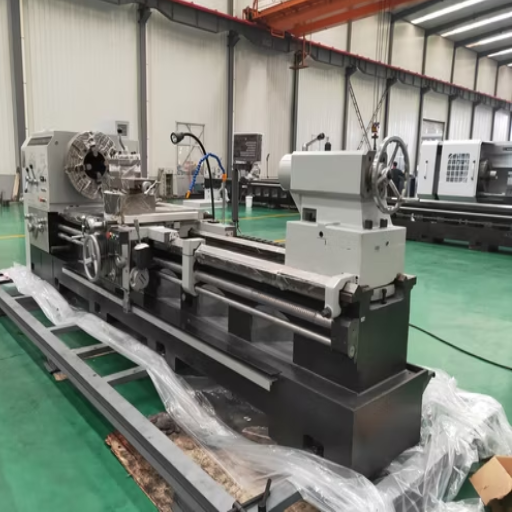
Top Manufacturers of Pipe Thread Lathes
🏭 DMG Mori
One of the premier global manufacturers of machine tools that make high precision and high-performance lathes is DMG Mori. Technical pipe thread lathes are executed with a high degree of automation and precision for advanced levels and good UI interface. Hence the company places great emphasis on innovation and is a working partner with the latest technologies and CNC systems aimed at increasing productivity.
🔧 Mazak
Mazak being one big name in the industry is famous for a variety of lathes suitable for various applications, including pipe threading. The MULTIPLEX line of machine tools is popular for multitasking and efficient machining processes. Another hit for Mazak is the sustainability principles, making Mazak lathes consume less energy.
⚙️ Haas Automation
Haas Automation is known to produce economical and reliable lathes. Their ST Series comprises pipe thread lathe machines meant for gory heavy work. Meanwhile, Haas also is renowned for its after-sales service and good network of support centers across the world that provide smooth maintenance.
🎯 Okuma
Okuma pipe thread lathe machines are all about accuracy, durability, and automation. Their operational practices are enhanced by Intelligent Technology software, and this preference is for organizations aiming to increase production while maintaining quality.
🚀 Hyundai WIA
Hyundai WIA offers some very innovative pipe threading lathes using the latest CNC technology. Their pipe thread lathe machines emphasize stable thread cutting, along with efficient threading, suitable for industries with high-threading requirements. Other characteristics of Hyundai WIA products are reliability and fair prices.
💪 Doosan Machine Tools
Doosan makes heavy duty and versatile lathe machines, including those made for pipe threading. Their machines feature powerful spindles and a stable structure to give precise results even for complex threading tasks. Under the burial, Doosan relies on new technology and IoT connectivity.
🌏 Victor Taichung Machinery
Victor Taichung is a Taiwan-based vendor of precise yet economical pipe thread lathe machines, whereas their CNC pipe lathe machines are among the most well-known in terms of performance, proving to be a big counter force on the global market.
These manufacturers dominate the pipe thread lathe machine market due to their reliable performance, technological innovation, and customer-centric approaches.
Finding Reliable Suppliers in China
China is the manufacturing hub of the world. Finding an authentic supplier for pipe thread lathe machines in China is never easy and requires a bit of homework and due diligence. Product quality, experience of the supplier, certifications issued to him, ability to deliver the product in the stipulated time, etc., are some important points that need to be considered. Now, let’s discuss a few ways, along with insights formed from recent findings:
Research on Industry Leaders
There are some famous suppliers in China that are reputed among global lathe machine markets, like Shenyang Machine Tools Co., Ltd. or Dalian Machine Tool Group. These companies typically offer a wide assortment of pipe thread lathe machines for different industries with much experience behind them and much reputation for consistent performance. A majority of these companies are investing in smart technology integration, thus offering contemporary IoT-based solutions.
Certifications and Standardization
The reliable suppliers in China normally will possess international certifications such as ISO 9001, CE Marking, and in some cases even industry-specific certifications. These will assure compliance with quality standards on a global scale which confirms safety, precision, and durability of the equipment.
Trade Platforms and Online Directories
There exist some favorite platforms like Alibaba, Made-in-China, and Global Sources that host profiles of verified suppliers and enable comparisons in offers, product specs, and trade history. For transparency and decision-making, a search on verified listings for pipe thread lathe machines on each of these platforms resurfaces more than 1000 results, with willing suppliers competing on price and customization options.
Factory Inspections and Audits
The passing of factory audits and inspections by a third party is an excellent way of setting standards above dispute. Services like QIMA and AsiaInspection provide for such factory visits; this enables them to maintain a measure of transparency in the manufacturing practices.
Trade Fairs and Exhibitions
Trade fairs like the Canton Fair or China International Machine Tool Show (CIMT) are ideal for meeting top suppliers in person. Decision-makers will be provided with the latest updates about technology so that they understand the features and innovations of the products mentioned.
Pricing and Lead Times
Chinese suppliers will commonly beat others in pricing, so there is a need to consider quality alongside cost. According to the lastest market data, lead times for off-the-shelf pipe thread lathe machines move between about 30-60 days, with more complicated and customized orders needing longer.
Using the above combination, a buyer can pinpoint and build durable relationships with reliable Chinese suppliers who can satisfy their exact requirements while delivering the highest quality in product and service.
Evaluating Manufacturer Credibility and Support
Inchooping a manufacturer, reputation and support are of utmost importance for making a dependable partnership. Check the manufacturer’s background through trustworthy sources: review the ratings, find forums that cater to your industry, or use the resources on Alibaba, Global Sources, Made-in-China-that might give useful information concerning the supplier’s history and track record. Try to cross-verify the customer testimonials. If a particular supplier has been reliable time and time again, the indicators will show records of quality and responses.
This search will also reveal information relative to the manufacturer that may affect their credibility, including certifications, awards, or even legal disputes. An ISO certification or compliance with global safety standards, for example, could highlight a supplier’s determination to quality and professionalism standards. Conversely, negative press or unresolved complaints can serve as red flags.
In addition to that, the availability and quality of customer support form indicators for the manufacturers’ reliability. Were their inquiries answered fast? Were there any hinderances during placing orders that were swiftly rectified? Do they provide support in various languages to accommodate international buyers? According to a Customer Success Survey carried out in 2023, those companies which give good, fast after sales service retain 87% of the buyers in the first year. This shows how customer support can build trust and long-term relations.
In summary, collecting the data, analyzing reviews, and testing their response to customers will all be part of the process in identifying manufacturers that satisfy your operational needs as well as your customer expectations.
Manual Operation and User Guide
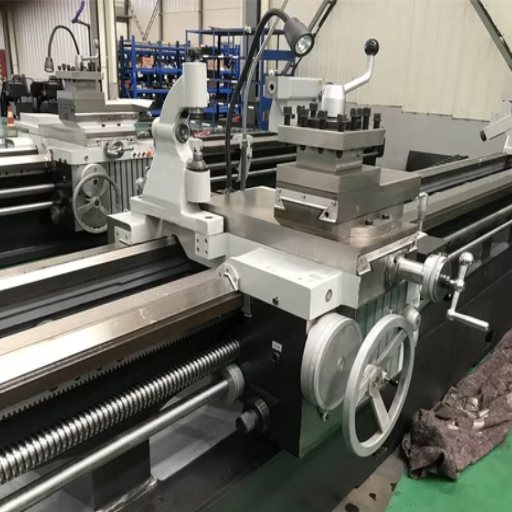
Manual Lathe-Working Operation Understanding
A manual lathe is an adaptable tool employed for shaping, cutting, or machining different materials-again, normally metals, wood, or plastics. The working of the manual lathe, at its core, consists of rotating a workpiece around its axis, applying the cutting tools to form the required shape and dimension. The application ensures accuracy and uniformity in various products that can be cylindrical, conical, or threaded with three types of features.
🔧 Main Parts:
- Bed: Acts as bearing base for movement of the carriage and tailstock.
- Headstock: Contains the spindle with gears and drive mechanisms.
- Tailstock: Used to support longer workpieces.
- Carriage: Supports and moves the cutting tool back and forth.
- Feed Mechanism: Controls the precise movement of the cutting tool manually or automatically.
⚙️ Principal Operations:
- Turning: To reduce diameter of the material to a particular measurement.
- Facing: To produce a smooth flat surface on the end of the workpiece.
- Thread Cutting: Creates either external or internal threads for screws or bolts.
- Drilling: Drilling holes along the axis using tools in the tailstock.
📈 Emerging Industry Trends:
According to recent engineering reports, in the past, such lathe machines maintain their popularity in limited workshops in their respect for the small-scale industry outside their use by educational institutions. Modern reckoning indeed has afforded them the advantage of a digital readout for precise measurements. Statistics from 2023 suggest that around 43% of small manufacturing units around the globe still use these lathes along with CNC for their own customized and small-volume productions.
🔧 Maintenance and Safety Considerations
For better operation and safety, the working manual lathe needs to be maintained from time to time by lubrication of moving parts, and regular inspection of the cutting tools for sharpness and fairness. Also, it is essential to observe safety precautions like safety wears and no loose clothing during working from anticipated accidents.
If one understands how these machines function and can maintain them properly, one of the best and most reliable machines for machining operations can be a manual setup.
Safety Tips on Manual Pipe Threading
If manual pipe threading is to take place, safety must be observed to avoid injuries and for smooth operations. Below are important safety guides, supported by insights and data from recent helpful manuals:
⚠️ Critical Safety Statistics
According to OSHA (Occupational Safety and Health Administration), about 36% of tool-related injuries resulted from improper handling of equipment or neglect of safety practices. By implementing these safety measures, operators can drastically minimize the risk of accidents, thereby establishing a safer workplace environment during manual pipe threading.
Wear Personal Protective Equipment (PPE)
Eye goggles are to be worn so that metal shavings cannot enter through the eye, and gloves should give a good grip without losing control of the tools. Ear protectors might be justified in many instances.
Pipe Must Be Tightly Secured
A pipe must be secured firmly in the vise or clamp; otherwise, a loose pipe is bound to make the tools slip to the detrimental effect of more injuries and poor threading quality.
Inspect All Tools for Damage
Make periodic inspections of the dies, the threading tools, and any other equipment for any sign of wear, cracks, or damage. Using damaged tools will jeopardize the threading accuracy and safety.
Use Proper Lubrication
Apply sufficient threading lubricant throughout the entire operation to minimize friction and the generation of heat. While doing so, this gets to improve the threads’ quality as well as decreases the wear of the tooling or risk of pipe breakage.
Keep Working Position Stable
Stand balanced with a well-arranged working area with no tripping hazards in view, such as cables or scattered tools.
Avoid Excessive Force
Manual threading requires incredible effort. Any sudden or excessive force may cause the tool to slip or break. Thread steadily, and when applying torque, follow the manufacturers’ recommendations.
Be Aware of Hot Surfaces
Be careful that threading tools and pipes will be hot if used for some time. Allow for enough cool-off time or wear heat-dissipating tooling.
Maintain Proper Working Area
Well-lit and well-ventilated working areas are highly desirable. While poor lighting may lead to wrong handling, good ventilation will remove the fumes coming from the lubricants or the suspended debris.
Follow Manufacturer Guidelines
Always follow the manufacturer’s safety and operating instructions for the threading equipment used.
Ongoing Training and Refreshers
Recent data indicate a lack of training is a major cause of threading tool-related workplace injuries. So all operators must be appropriately trained and keep up to date on latest threading technologies and safety protocols.
Common Troubleshooting Techniques
While trying to manually thread pipes, mishaps or precursors to possible errors keep happening. Here’s breaking down some big problems you are likely to face alongside solutions to troubleshooting them:
🔧 Thread Misalignment
Inconvenience: This is probably one of the most frequent issues where the threads are not aligned to the intended specification. Occurs mostly due to incorrect positioning of the tool or damaged dies.
Solution: Allow the threading die to be aligned properly with the pipe. Inspect the dies for wear or damage prior to every use. Replace the worn-out dies without delay to assure the highest degree of precision. Employ thread gauges regularly to ascertain the alignment.
⚙️ Excessive Tool Wear
Problems: Threading tools, especially cutting dies, wear down over time until they produce burrs or uneven threads, usually because of improper lubrication and usage beyond expected service life.
Solution: Use a good quality thread cutting oil during the whole operation to reduce friction and heat. Regularly inspect or sharpen dies or replace dies as the case may be.
🔒 Pipe Slippage
Problems: Slippage of pipes leads to uneven cutting or by damage of its surface. This usually results from improper clamping or damaged pipe vise.
Solution: Ensure that the pipe vise is gripping the pipe properly. Replace worn or damaged vise jaws immediately. The pipe surface must be clean and free of oil or any debris to enhance grip.
🚫 Thread Galling
Problem: Thread galling is the adhesion of materials to each other during threading, resulting in a rough and damaged finish of threads. The main cause is metal-on-metal friction without proper lubrication.
Solution: Employ threading oils specially formulated to minimize the risk of galling. Also, restrict the threading speed to reduce the possibility of overheating and metal deformation.
💥 Broken or Incorrect Threads
Problem: Threads break or are incorrect due to the selection of the wrong dies or starting off the process incorrectly.
Solution: Make sure the die type and size used are indeed correct to the pipe material and diameter. Start threading maintaining steady and constant pressure so that the tool does not get misaligned.
🔨 Jammed Tools
Problem: Tools jam when metal shavings accumulate in the dies or when excessive force is being applied during threading.
Solution: Clean the threading dies regularly to get rid of metal debris. Stop forcing the tool whenever you receive resistance, then stop, clean, and inspect it before continuing.
📊 Supporting Data
With regard to a 2023 industry report on manual pipe threading, proper maintenance and troubleshooting of tooling can improve operational efficiency by as much as 26%. The American Welding Society (AWS) found that 65% of defects emanating from threading are due to improper equipment maintenance and methods of lubrication. Hence, if proper troubleshooting techniques are used, not only would time spent in downtime be less but also tooling would see a longer life, which in turn saves some amount on cost.
Frequently Asked Questions (FAQ)
❓ What specifications should be considered while purchasing a pipe thread lathe machine?
For a pipe thread lathe machine like the Q1325, the spindle bore diameter, rigidity of the machine, and capability of processing either internal or external threads ought to be considered. Having a large spindle bore allows flexibility with varying pipe diameters and gives the machine the capability to perform in an efficient way. Also, it would be wise to check for its ability to handle both metric and inch threads, as this is key to multi-purpose applications. A good assessment should be conducted on the precision with which the machine operates and the types of materials that can be passed through it, including oil country pipe material? Finally, for heightened accuracy in threading, the machine should include features such as a taper guide bar device.
🏭 Who are the top manufacturers of Q1325 lathe machines?
There are several manufacturers in China that produce Q1325 lathe machines with quality and good performance. These manufacturers usually focus on machine tools that are internationally standardized. It is advisable to research on suppliers who provide adequate support and service after purchase. Also, most manufacturers give room for customization to meet specific industrial needs, especially those within the petroleum industry. Another aspect of consideration is selecting a supplier with a strong reputation in the market and one who can offer other kinds of lathes for oil country as well.
⚙️ What are the common features of a manual pipe lathe machine?
Commonly, manual pipe lathe machines such as the Q1325 find application in different kinds of turning, such as processing the inner bore and end face of shafts and disks; creating internal and external threads of both metric and inch specifications; drilling; and grinding, thereby augmenting their versatility in pipe processing activities. Moreover, its manual operation offers more hands-on working, which is suited for precise work common in small-scale manufacturing situations. A clear interpretation of these functions will help an operator utilize the machine suitably for specific applications.
🤖 How is a Q1325 pipe threading lathe different from CNC lathe machines?
On the one hand, the Q1325 pipe threading lathe is basically a manual machine where threading, drilling, and similar works are done completely manually without other means of assistance. Whereas CNC lathe machines are controlled by computers to automate processing in a more accurate manner. Mostly, Q1325 is used in conventional pipe threading operations, and CNC lathes are for complex tasks and machining in large volumes. Choosing between the two is really conditional on project requirements, whether that be precision, production speed, or complexity of the components being machined. Besides, CNC lathes perform more swiftly while machining a variety of materials and thread types than manual machines.
📏 What does the taper guide bar device do in a pipe threading lathe?
The taper guide bar device significantly contributes to improving the accuracy of a pipe threading lathe such as that of the Q1325. This device allows the machine to correctly process taper threads which are required for various applications to produce joints that fit accurately and work reliably. By guiding the cutting tool in a particular direction along the angle, the taper guide assures the uniformity of thread diameter as well as assists in obtaining a very neat finish. This feature is very useful, especially in petroleum-related industries where precision fittings are required for safe and efficient operations. The taper guide bar device improves and assures the capability of the machine.
📚 Reference Sources
🔬 Technical References
- Fatigue Life Prediction of Threaded Pipe Connection
This study discusses the fatigue life of threaded pipe connections, focusing on pressure-tight joints and British Standard thread forms. - Kinematics of the Tapered Thread Machining by Lathe: Analytical Study
This paper analyzes the kinematics and dynamics of tapered thread machining on lathes, providing insights into thread profile accuracy. - Study of Tapered Threads Parameters Affecting the Quality of the Oil Pipeline Connection
This research examines the parameters of tapered threads and their impact on the quality of oil pipeline connections, including lathe machining techniques. - Accuracy of Thread Profile Depends on the Lathe Tool Angle of Inclination
This theoretical investigation explores how the angle of inclination of lathe tools affects the accuracy of thread profiles, particularly for large-sized threaded connections. - Study on Dynamic Characteristics Analysis of CNC Pipe Thread Lathe
This paper focuses on the dynamic characteristics of CNC pipe threading lathes, analyzing vibration issues and structural weaknesses.