




The modern manufacturing industry has always put the CNC slant bed lathe at the very forefront of manufacturing processes, ensuring extreme accuracies, efficiencies, and variances. With a skillful complement of latest technologies and a novel design, the machine transformed the entire industry in turning and machining processes. But, what really differentiates the slant bed CNC lathe from the other manufacturing equipment? This article aims to shed light on what makes it unique, the benefits it offers the industry, and the various applications where it excels. Regardless of whether you are an established industry skeptic or someone at the very inception of machine technology investigation, this tool shall provide clarity on why the slant bed CNC lathe absolutely continues to top charts as the manufacturing choice of the whole world.
Introduction to Slant Bed CNC Lathes

What is a Slant Bed CNC Lathe?
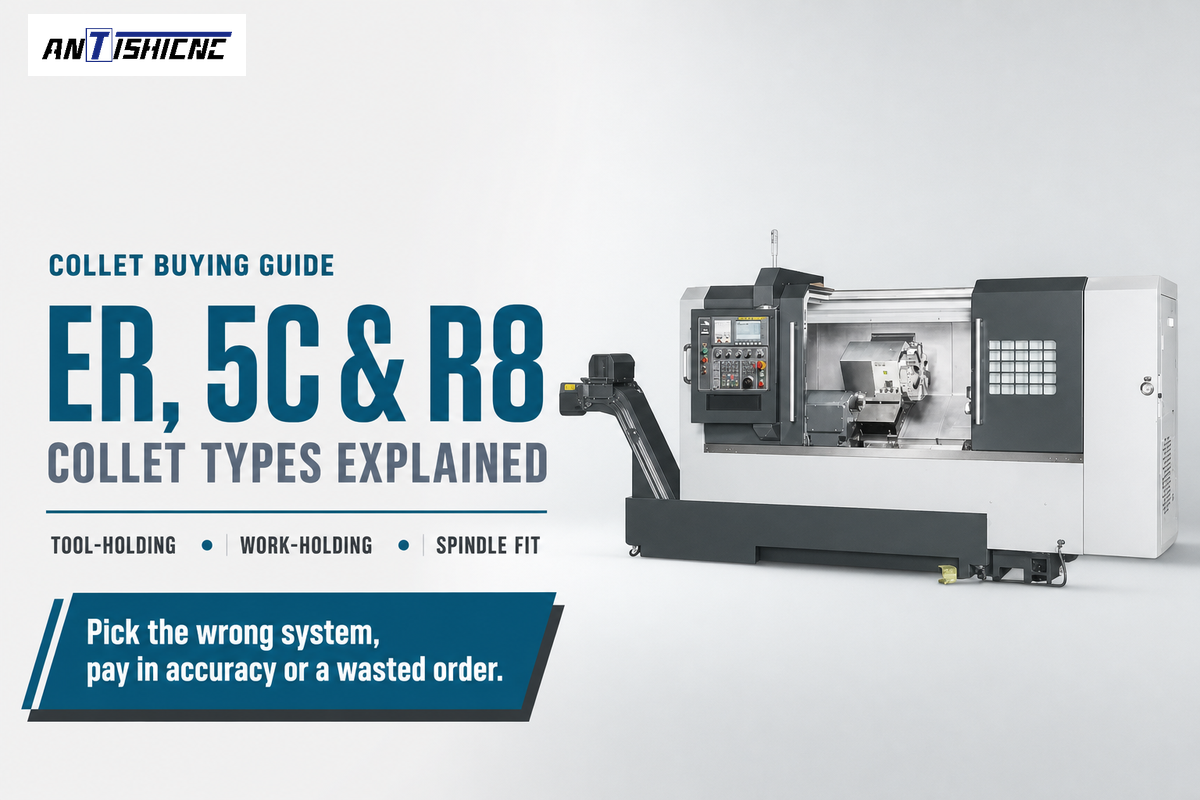
A slant bed CNC lathe is a special type of machine utilized for intricate turning and machining works. Unlike flat-bed designs, slant bed CNC lathes have their beds inclined, mostly from 30 degrees to 60 degrees. This prototype offers significantly improved rigidity, reduced vibrations during cutting, and thorough chip elimination, all of which greatly enhance machining accuracy and surface finish.
If any heavy tooling is to be used, the slant arrangement becomes particularly significant. Compact machine sizes along with larger workpiece capacities give the slant-bed machine a variety of uses in automotive, aerospace, and medical manufacturing industries. Typical items manufactured on these lathes include shafts, bushings, and geometrically complex components.
Slant Bed CNC Lathe Specifications
30-60°
3,000-6,000
6-15″
With the modern slant bed CNC lathe, we provide options such as servo-driven turret, live tooling, automatic bar feeders, and any other process-enhancing features one can think of. Most machines are installed with advanced control systems from eminent brands like FANUC, Siemens, or Mitsubishi to ensure operational comfort, yet without compromising on performance precision. This CNC also supports real-time monitoring and digital integration into smart manufacturing environments.
According to the Industrial Authority, depending on the model, spindle speeds of a slant bed CNC lathe range from 3,000 to 6,000 RPM or beyond. Chuck sizes from 6 to 15 inches are common, while depending upon the configuration, workpiece sizes may stretch for several meters. Such capabilities endear slant bed CNC lathes to those manufacturers intent on increasing productivity with the maintenance of stringent tolerances.
The Difference Between a Slant Bed CNC and Others
There are design, functional, and performance differences between slant bed and other CNC lathes. The key difference lies in bed arrangement. The slant bed is an inclined bed between 30 and 60 degrees, whereas the flat-bed lays horizontally. It is from the incline that several key advantages stem.
| Feature | Slant Bed CNC Lathe | Flat Bed CNC Lathe |
|---|---|---|
| Chip Evacuation | Gravity-assisted drainage from cutting area | Requires additional mechanisms or operator intervention |
| Rigidity & Vibration | Higher rigidity, less vibration, better stability | Strong but may struggle with heavy-duty precision |
| Ergonomics | Improved accessibility, reduced operator fatigue | Standard horizontal access |
| Tool Movement | Increased rigidity due to angled geometry | Limited for complex geometries |
| Applications | High-speed machining, precision industries | Large workpieces, simpler machining tasks |
| Initial Cost | Higher upfront investment | More cost-effective initially |
Key Advantage: It is with this comparison that we highlight the certain advantages of slant-bed CNC lathes in high-precision, high-volume manufacturing settings-an ideal place for companies that tend to emphasize quality and efficiency.
Slant Bed Design Overview
The slant bed design forwardly creates some CNC lathe differentiation by placing an angularity on the bed of the machine. This angle is typically located between 30° and 60°. Through this tilt, better ergonomics are possible for the operator, chip evacuation, and, finally, machine rigidity, which is very important in precision and manufacturing operations. Due to the diagonal alignment of the bed, the design helps in minimizing vibrations during high-speed cutting, hence aiding tool life and accuracy of machined parts.
Performance Improvements
25%
15-20%
High-precision operations being performed in aerospace, automotive, and medical device manufacturing industries usually require slant-bed CNC lathe operations. For instance, increased controls and higher accuracies of as much as 25% can be attained by having a slant-bed type versus a flatbed lathe during high-speed turning operations. These lathe configurations also possess better chip handling, with chip clearing assisted by gravity, minimizing stoppages caused by chip build-up, which can increase productivity by 15-20%.
Another paramount factor is space-saving. Usually, slant bed CNC lathes take less space, so they can be favored by industries looking to conserve maximum workspace. Further, modern advanced models implement the latest automation technologies, including but not limited to robotic loading and digital monitoring systems, to further elevate efficiency and propel down labor costs. These benefits have cemented the status of a slant bed as a place to go for manufacturers wishing for the highest precision, reliability, and operational life expectancy benefits.
Unique Features of Slant Bed CNC Lathes

An Angled Bed Laboratory Offers More Stability
With an angled bed, slant bed CNC lathes have never been granted such stability and precision of operation. The slanted orientation is set anywhere between 30 and 60 degrees, providing an excellent distribution of cutting forces on the workpiece during machining processes. This positioning restricts vibration and deflection in high-speed machining processes, which in turn provides smooth finishes and highly accurate components.
Enhanced Stability
The angled bed design optimally distributes cutting forces and has 20% fewer vibrations than a flat bed design.
Superior Damping
The rigid cast-iron base, combined with the angled bed, dramatically improves the damping of vibration in the machine.
Increased Productivity
Its ergonomic layout favors chip evacuation, reducing cycle time and maintenance, thus offering a 15% increase in productivity.
On the other hand, more engineering ingenuity comes into play toward the enhanced aspects of the design. For example, the introduction of a rigid cast-iron base for complementing the angled bed greatly improves the machine’s ability to damp vibrations. Research reports that the slant bed machines bear about 20% fewer vibrations than flat bed lathes; hence they are candidates for studies for very delicate and high-tolerance applications. Simultaneously, the angled bed’s ergonomic layout favors chip evacuation, lowering cycle time and maintenance, thus rendering a 15% increase in productivity.
These features alternative attest to the highest machining quality and consistency-related superiority possessed by the angled bed design; hence, it has become a feature indispensable to aerospace, automotive, and precision engineering sectors.
Machining for Precision and Accuracy
Precision and accuracy are of utmost importance in the modern age of machining procedures, inasmuch as industries demand higher tolerances and more accurate performance. Precision is lack of variation in measurements and repeatability of the process of manufacture, and accuracy is a measure of how close a dimension on the machined article is to the design intent or specification. Advances in control systems and spindle-enhancing technology are said to have led to CNC machines achieving their tightest ever tolerance of ±0.002 mm docked with present-day industrially reported data.
Precision Achievements
±0.002mm
25%
20%
In addition, further improvements generated in real-time intermediate error compensation, via the usage of high-precision encoders and state-of-the-art software algorithms, are being ensured really to clinch the best machining results. Industry literature studies show that for aerospace machining, for example, increased precision might have saved material wastage by 25% and increased the overall production efficiency by 20% over the last 5 years.
With adaptive machining techniques on the cutting edge, compensations concerning tool wear, thermal distortions, and environmental conditions are carried out automatically during the manufacturing process, thus maintaining precision and accuracy at all times. These improvements improve the product quality while reducing costs and downtime to such an extent that they are a must for every industry requiring immaculate finishing details like medical device manufacturing and high-performance automobile engineering.
Improved Chip Evacuation
Efficient chip evacuation is of paramount significance to the stability, quality, and life of machining equipment. At this juncture, CNC machines are fitted with enhanced chip evacuation mechanisms to prevent the build-up of chips: intensifier coolant flows, chip-breaking geometries are optimally designed, and evacuation mechanisms provide adjustability. In line with recent figures, it is known that an optimized chip evacuation system can promote machining efficiency by 30% and reduce machine downtime by 20% since the chips get away faster, in return, maintaining a cleaner environment for the process and continuous machining.
Advanced Technology: One of the most relevant improvements has been the incorporation of high-pressure coolant systems reaching pressures of up to 1,000 PSI so that chips can be flushed from deeper cutting zones, especially in the manufacturing of complex workpieces for aerospace and medical sectors.
Chip evacuation is then monitored by smart sensors in real-time, alerting operators to any blockage or inefficiency that could save a lot of time in maintenance and problem resolution.
The mechanics, together with intelligent monitoring, thus serve the purpose demanded by high-precision industrial applications. These improvements enable manufacturers to deliver reliability while minimizing equipment wear and tear, thus saving far more costs.
Benefits of Using Slant Bed CNC Lathes
✅ Key Advantages
- Up to 30% increase in efficiency against the flat-bed-type CNC lathes.
- Better chip evacuation due to gravity assistance.
- Considerably more rigid: reduced vibration.
- Better operator ergonomics and good accessibility.
- Compact space-saving design.
- Better precision when machining parts for high-tolerance applications.
⚠️ Considerations
- Efficiency-wise, 30% can be gained over flat-bed- or conventional-lathe-style CNCs.
- Better chip evacuation with the assistance of gravity.
- Stiffer by far: vibration reduced.
- Good ergonomics for operators and accessibility.
- Compact space-saving design.
- Better precision for machining parts in high-tolerance applications.
Increased Production Speed
Slant bed CNC lathes have come to be almost synonymous with increased production speed in the manufacturing lines. The slant bed creates a low clearance and high-speed chip evacuation system that allows the operator to work with precision at high speed. Comparing with the flatbed CNC lathe, the recent statistics show a proven increase of up to 30% in productivity. These industries that require a timed large-scale production, such as automobile and aerospace, reap great benefits from that.
Features like advanced tool changer systems and multiple axes on CNC systems provide, of course, further optimization of production speed. On the one side, it allows the present-day slant bed CNC lathe to perform a range of operations from setup 1 to setup N, thus minimizing the downtime involving operators’ adjustments. On the other side, throughput gains of 20-25% from improved automation of repetitive manual transactions on CNC machines make calculations that manufacturers save immense capital and time, which, of course, instigates the introduction of latest ideas and inventions that help the slant bed CNC lathe maintain relevance in industrial operations concerning efficiency and productivity.
Increased Accuracy in Manufacturing
With an increase in the precision levels of production done by slant bed CNC, that was the real change in the trajectory of modern manufacturing. With these lathe machines, software and automatic control systems are used to manufacture parts beyond ±0.01mm in tolerances. While this integration of CAD (computer-aided design) and CNC (computer-aided manufacturing) allows manufacturers to produce components having complex geometries with far greater levels of consistency.
Manufacturing Improvements
30%
±0.01mm
Based on surveys from the industry, recent information suggests that CNC applied to a process could reduce defect rates by a maximum of 30%. Obviously, this would be the reduction of wastes and reworks, consequently production costs being less. In addition, innovations continue on such fronts as adaptive control systems and real-time monitoring; they improve accuracy by making instant and continuous adjustments to cutting parameters based on actual feedback. Thus the manufacturers are able to meet extremely tight tolerances in aerospace, automotive, and medical device manufacturing, where either precision or reliability is non-negotiable.
Ease of Maintenance and Operation
According to the trend in modern manufacturing technology, machines should be easy to maintain and operate to ensure machine uptime. One of the main developments in this regard is predictive maintenance. Modern data show that predictive maintenance can potentially cut maintenance costs by 20-30% and conversely half unplanned outages. Using sensors and data analytic tools, such systems notify operators in real-time of a change in equipment conditions, enabling trouble-shooting options to be offered before a major and costly failure occurs.
Maintenance Benefits
20-30%
50%
24%
Besides an easy-to-use interface or automation software, a machine is also easy to operate. Nowadays, most modern CNC machines have touch screens with guided instructions to their operators, thereby drastically reducing the training time. These kinds of solutions improve operational efficiency by as much as 24%, according to research by Deloitte, because their user-friendliness promotes productivity and therefore makes complex machinery easier and safer to operate for workers.
Thus the new smart manufacturing systems might very well be an indicator that the industry wants to ensure that the tools it provides are not only cutting edge but also easy to maintain and operate, so they can further be leveraged for enhancement of the efficiency and reliability on a shop floor.
Applications of Slant Bed CNC Lathes Across Industries

Industry Applications Overview
🚗 Automotive Industry
Engine components, transmission parts, brake cylinders, and axles requiring extreme precision and high efficiency.
✈️ Aerospace Manufacturing
Turbine blades, landing gear parts, and engine housings with tight tolerances and superior surface finishes.
🏭 General Manufacturing
Precision tooling, molds, dies, jigs, and fixtures for various industrial applications.
🏥 Medical Devices
High-precision components requiring biocompatible materials and exceptional accuracy.
Automotive Industry Applications
CNC slant bed lathes play an essential role in the production of very high precision components by means of high efficiency in the automotive industries. They are large machining centers used to manufacture various types of engineering components used in automotive applications: engine components, transmission parts, brake cylinders, and axles. An absence of rigidity and precision would, therefore, cause the manufacturer’s stand to fall away from the standard so greatly required by the automotive field.
Automotive CNC Market Growth
5.3%
High Volume
The global automotive CNC machine market is counted at a CAGR of 5.3% between 2023 and 2030, according to commercial reports. By virtue of emerging trends in automotive CNC machinery are increasingly being sought after by automotive manufacturers to build production capability and thus reduce costs. Because of their abilities to undertake high-volume production with minimal setup time, slant bed CNC lathes are highly preferred among the automotive industry.
One of the top attractive things about slant bed CNC lathes applied in automotive use is that it can manufacture extremely complicated geometries with tight tolerances, which are required in modern vehicle designs. For example, in the production of precision gears, which need to be fine for the smooth and silent operations of a vehicle, these machines are very much necessary. Robotics can further exploit these machines for loading and unloading, cutting down on human error while increasing production efficiency.
New spirit has come in the slant bed CNC lathe for locking through the process and upsides of innovations newly entered into automotive engineering.
Aerospace Manufacturing Uses
In aerospace manufacturing, slant bed CNC lathes remain central, where exact tolerances requiring endurance and reliability are demanded. These CNC machines are usually used for machining very complex components such as turbine blades, landing gear parts, and engine housings with very tight tolerances and superb surface finishes. Their importance is further highlighted in the manufacture of aerospace components that require machining from high-strength materials such as titanium and nickel-based alloys for the sake of light yet sturdy.
Aerospace CNC Market Growth
7.5%
Multi-Axis
According to the latest statistics, the market in aerospace CNC machining is projected to grow at a CAGR of 7.5% from 2023 to 2030, with growing demand for commercial planes and advancements in defense technologies. Many benefits are bestowed by slant bed CNC lathes by making sure that the production time is at an absolute minimum and material wastage is kept low through exact machining. Further, they have become more flexible now than ever due to the introduction of multi-axis capabilities to these machines, providing manufacturers with an option to machine complex geometries in a single setup.
In essence, slant bed CNC lathes constitute the main backbone of the aerospace industry, enabling manufacturers to address requirements for technically high-performance aircraft components in an efficient and cost-effective manner. Their importance is increasingly reinforced by the progressing design, materials, and automation technologies in the aerospace sector.
General Manufacturing and Tooling
Manufacturing and tooling stand in the center of modern industrial activities for producing high-grade, precision-engineered components demanded by various industries. By leveraging growing advances made in technologies relating to automation, robotics, and artificial intelligence, the conventional manufacturing methods have metamorphosed into gargantuan efficient systems.
Global Manufacturing Market
$46.60T
$55.80T
2.74%
According to some report, the global manufacturing market was attributed a value of $46.60 trillion in 2021 and is expected to reach $55.80 trillion by 2028, growing at a CAGR of 2.74% over the forecasted period. This growth can be largely attributed to demands for advanced products in industries like automotive, aerospace, healthcare, and electronics.
Tooling is concerned with the design and manufacture of molds, dies, jigs, and fixtures, ensuring precision and efficiency in mass production. The tooling market, according to some market surveys, could probably extend to $368.5 billion by 2025, all developments in additive manufacturing and CAD technology being the reason behind.
Digital Integration: How digital tools will dovetail with manufacturing workflows remains a huge frontier for growth. Advanced CNC machines that operate synergistically with AI and IoT technologies allow manufacturers to track production data in real time, tweak machining parameters, and curtail material wastage.
Another frontier for growth is how digital tools will dovetail with manufacturing workflows. Advanced CNC machines that operate synergistically with AI and IoT (Internet of Things) technologies allow manufacturers to track production data in real time, tweak machining parameters, and curtail material wastage. For example, automated in-line inspection systems can take quality control to the next step by detecting micrometer-level defects, massively cutting down on production time delays and operational costs.
In the same vein, sustainable practices are fast gaining prominence in tooling and manufacturing. Hybrid machining techniques, which interpose both subtractive and additive manufacturing, are enabling organizations to reduce their carbon footprint while improving their operational efficiencies.
Hence, these entire developments in manufacturing and tooling are ever shaping the industrial landscape to forge an enabling environment for industries to cater to the ever-growing global demand for precision, speed, and environment consciousness.
Technological Advancements in Slant Bed CNC Lathes

Software Compatibility and Automation
The embedding of advanced software in slant bed CNC lathes has changed the landscape of the modern manufacturing paradigm. The Industry 4.0 movement has enabled numerous CNC lathes to be compatible with most commonly used software platforms such as CAD/CAM systems. This ensures an accurate design-to-production basis from literal fabrication. For example, FANUC or Siemens controller-powered systems can directly convert a digital design into a highly accurate physical component.
🔧 Advanced Controllers
FANUC, Siemens, and Mitsubishi systems provide seamless integration with CAD/CAM platforms for precise manufacturing.
🤖 Robotic Integration
Automated tool changers and robotic arms create autonomous machining centers with reduced human intervention.
🌐 IoT Connectivity
Remote monitoring and predictive maintenance capabilities reduce unexpected machine failures significantly.
The increase in production levels and decline in operation costs are therefore the objectives considered for automation. CNC lathes became advanced machining centers with the introduction of robotic arm attachments and automated tool changers. Recent records from industry sources show that businesses accepting automated CNC record a 25 percent downtime reduction and a further 30 percent increase in production rate. IoT-enabled slant bed CNC lathes further augment the usability of remote monitoring and predictive maintenance, which drastically reduce cases of unforeseen machine failures.
Yet, software developments like digital twin will enable manufacturers to virtually simulate machining before actual machining to guarantee the highest degree of precision in efficiency and material utilization. Amidst matching training speed, being automated and software-compatible CNC lathe tools are becoming an illative must for all industrial competitors focusing on cost efficiency and precision.
Energy Efficient Designs and Features
Energy-efficient designs for CNC lathes are in demand owing to the increasing demand for sustainable manufacturing processes. Modern CNC lathes come with energy conservation features, with VFDs (variable frequency drive) varying motor speeds in accordance with machining requirements to moderate energy consumption. The U.S. Department of Energy states that energy consumption can be reduced by 30 percent through the application of VFDs compared to limited-use non-optimized motor systems.
Energy Efficiency Benefits
30%
80%
15-25%
Another italicized energy-saving consideration is regenerative braking on CNC lathes, resulting in energy recovery, with reuse geared toward avoiding the wastage of power. The other style is LED lighting, which consumes almost 80% less energy when compared to conventional lighting.
Further, it is intended to perform monitoring and energy optimization-software-wise-which manufacturers can utilize. In some cases, for example, a CNC-machine-based energy management system can actually keep a record of the power consumption of CNC machines while also providing suggestions on how they can conserve energy. In adopting such systems, companies have enjoyed a considerable reduction in their operating costs and maximum compliance with environmental regulations.
McKinsey cited a case study stating that as a result of energy-efficient CNC investments, manufacturers report reduced energy costs typically home to around 15-25% phosphorus emissions reduction synergistic with worldwide industries joining hands for sustainability goals. Thus energy-efficient designs provide an operational cost advantage to contemporary manufacturing also for environmental responsibility.
Integration of Modern Manufacturing Technologies
Therefore, integrating energy-efficient CNC with modern manufacturing technologies is an important step toward smarter and sustainable production. IIoT, machine learning, and robotics are advanced manufacturing techniques, which are increasingly connected to energy-efficient CNC systems for the well-balanced production of accuracy and productivity while energy optimization.
Technology Integration Benefits
30%
20%
12%
Further, IIoT makes it possible for manufacturers to gather any field-of-machine operating conditions with energy-consumption-related data in real-time. A recent Deloitte report said that factories equipped with IIoT sensors and analytics realized an improvement of operational efficiency returns by 30 percent and energy-related returns by 20 percent. The collected data are analyzed by AI and ML algorithms to optimize tool pathing, predict maintenance, and minimize downtime; hence, real cost savings and more throughput.
Smart robotics act in parallel with energy-efficient CNC systems to provide precision machining with minimal power utilization. From a global perspective, the deployment of collaborative robots (cobots) in CNC machining operations has been one of the growth stimuli contemplated by global market research, which intends to forecast a CAGR of 12 percent until 2028. These technologies will thus sprint speed production capacity and the outlook for greener manufacturing at a global scale.
The integration of these technologies not only satisfies the changes demanded by modern industries, but it also equips manufacturers to innovate. Thus, this projection will connect set up highly efficient, sustainable, and data-intensive manufacturing ecosystems for the economy and environment.
Choosing the Right Slant Bed CNC Lathe

Size and Capacity Considerations
The size and capacity specification of a slant bed CNC lathe has to be understood to ensure the best performance and suitability in its assigned task. In that connection, below are key parameters and basic data to consider:
Key Specification Parameters
Swing Over Bed: The swing over bed governs the utmost diameter of the workpiece being handled by the lathe. For smaller lathes, it may be within 10-15 inches, in which case they may be used for very delicate machining of small components. On the flip side, the heavy-duty swings can go over 50 inches.
Distance Between Centers: This measurement refers to the length of the maximum allowable workpiece pertaining to the lathe. The lathes whose operations are usually brief will mostly stay between 20-30 inches; the ones working on the longer projects will go on to anchor 80 inches or farther in distance.
Chuck Size: The chuck size has a grip over the kind of materials a machine may handle. It usually ranges between 6 to 12 inches for medium-duties and allows chucks of 18 inches or more for heavy-duty machines.
Spindle Bore Size: The spindle bore size is the maximum diameter of material that can pass through the spindle for machining. Industries that require the manufacture of large hollow pieces would want a lathe with a spindle bore size larger than 4 inches, while a normal lathe offers that between 2 to 3 inches.
Weight Capacity: Evaluate the maximum weight that the slant bed CNC lathe has to carry. Heavy-duty ones accommodate workpieces with weight of more than 10,000 lbs., while the lighter ones can go for those below 1,000 lbs.
Having the size and capacity of the machine in alignment with your production requirements will go a long way in optimizing efficiency and saving unnecessary wear and tear. As such, a combination with some of the current CNC developments in machining technology, such as the automatic tool changer or ultra-precision control system, would highly enhance productivity for both small- and high-capacity operations.
Price Estimation of CNC Machines
When buying a CNC machine, budgeting process is very crucial for appropriate investment. Prices of CNC machines have been seen to differ with size, functionality, and features. If we talk about entry-level CNC machines or hobby CNC machines, then they usually cost $1,000-$5,000. Such machines are utilized for smaller projects that do not require a lot of precision. Generally accepted as mid-range CNC machines used in small- and medium-scale industries costing between $15,000 and $50,000, higher durability, workspace, and features such as automatic tool changes, and more precise controls for industrial applications can be found there. The pricey CNC machines range above $100,000 for heavy-duty, heavy-capacity production, with custom types crossing $500,000.
| Machine Category | Price Range | Target Market | Key Features |
|---|---|---|---|
| Entry-Level/Hobby | $1,000 – $5,000 | Small projects, hobbyists | Basic precision, limited workspace |
| Mid-Range Industrial | $15,000 – $50,000 | SMEs, prototyping | Automatic tool changes, enhanced precision |
| Heavy-Duty Production | $100,000+ | Large manufacturers | High capacity, advanced automation |
| Custom/Specialized | $500,000+ | Specialized industries | Bespoke features, extreme precision |
Additional expenses have to be taken into account alongside that standby investment and can amount to many thousands: tooling, software licenses, maintenance, and operator training. Software could be from a thousand to twenty thousand dollars, depending on the application and the brand. Also be aware of any operating expenses such as power consumption, or even possible upgrades to your premises to accommodate the machine.
Since things are moving very fast in CNC technology, considerations should always be made to purchase a model with state-of-the-art facilities such as an integrated system for advanced CAD/CAM software for enhanced workflow in design and manufacture and/or energy-efficient facilities that lower consumption and serve you in the long run. Comparing the upfront cost against the operational costs will provide you with a much better idea of the CNC machine that best fits your operation needs and financial limitations.
Manufacturer Recommendations: 15L Slant-Pro and Tormach
🔧 15L Slant-Pro
- 8-position automated turret
- Maximum spindle speed: 3,500 rpm
- Compact 3′ x 5′ footprint
- Processes steel, aluminum, and plastic
- Includes Tormach’s PathPilot control system
🏭 Tormach CNC Mills
- 770M: 26″ x 7.5″ working surface, 10,000 rpm
- 1100M: 18″ x 11″ x 16.25″ coordinates, 7,500 rpm
- PathPilot system integration
- Compatible tools and upgrade packages
- Ideal for detailed and larger fabrications
✅ Why Choose Tormach?
- Balance of value, quality, and ease of use
- Suitable for novice and experienced users
- Massive support and training programs
- Focus on flexibility and reliability
- Excellent for small workshops and prototyping
The 15L Slant-Pro, offered by Tormach, is a small size yet powerful CNC lathe made for small to medium projects. For quick and efficient tool changes, the machine utilizes an 8-position automated turret, and it can achieve a maximum spindle speed of 3,500 rpm, which ensures precision in machining complex parts. From steel to aluminum and plastic, the machine can process a wide range of materials and therefore is highly versatile. Its footprint rating of a mere 3′ by 5′ makes it a wonderful choice for a compact workshop. Included in the machine is Tormach’s PathPilot, an easy-to-understand control system that expedites programming and operation, even for newcomers to CNC machining.
The CNC Mills provided by Tormach are known to balance reasonably priced competitively with reliability. The 770M can provide spindle speeds to 10,000 rpm with the working surface in the area of 26″ x 7.5″ making detailed work on smaller parts excursions. The larger 1100M has 18″ x 11″ x 16.25″ working coordinates and 7,500 rpm speed, catering to the needs of the big fabrications. Both of these machines integrate well with the Tormach PathPilot system for precise control of milling operations. Compatible tools and performance upgrade packages are available for increasing the productivity of these machines.
Tormach is unique in CNC machine markets as it hits a good balance between value, quality, and ease of use. Their machines tend to be engineered for the novice and experienced alike, focusing largely on flexibility and reliability. On top of that, Tormach also has a massive support, resource, and training program that allows you to extract full value out of the equipment. This makes Tormach machines an excellent investment for small workshop owners and prototyping enthusiasts.
Maintenance and Performance Optimization

Regular Maintenance Best Practices
Tormach CNC machine maintenance will best leaves performance consistent with life long and with the best results. Here are the following more detailed best practices for maintenance:
Essential Maintenance Procedures
Daily Inspection and Cleaning: Once at the end of the workday, wipe down your machine to clean away chips, coolant residue, or dust and debris. These materials when accumulated can cause wear and tear over time. Use a soft brush or an air compressor to clean passages, but avoid using high-pressure air as it might blow particles into critical components.
Lubrication Schedule: Proper lubrication on the moving parts of the machine diminishes friction and allows smooth operating condition. Lubricate your machine as suggested by the manufacturers, along with either oil or grease applied weekly or monthly depending on use. Another proactive measure to keep an eye on is the oil reservoir levels in your machine; these should be refilled when necessary.
Inspect Belts and Drive Systems: Check the belts, pulleys, and drive components regularly for signs of wear and misalignment. Replace any worn belts immediately to prevent performance issues and potential damage. Proper alignment of these components guarantees consistent performance and precise cutting.
Check Bolts and Tighten Them: Bolt loosening can take place in the machine frame and its components over prolonged usage. Please check your bolts and fasteners regularly to ensure that vibrations will not occur and compromise machining accuracy. Tighten bolts to specification with a torque wrench.
Coolant System Maintenance: Check coolant system leaks, blockages, or the quality of the coolant. Change or filter coolant to ensure proper cutting temperatures. Industrial users reportedly change the coolant every 6 to 12 months or even earlier depending on contaminants and their amount of usage.
Alignment and Calibration: Keeping your machine’s axes and tools calibrated regularly is what guarantees precision. Use a dial indicator or test bar to assure alignment and then utilize Tormach’s PathPilot software that gives you useful diagnostic tools to help keep your alignment and performance at their best.
Spindle and Tool Holder Maintenance: Be sure that the spindle and tool holder interface is clean and free of dirt and debris. Dirty and worn tool holders will hamper the cuts, resulting in ruined tooling and unnecessary downtime. Check for runout from time to time; the excessive play of the spindle means servicing or repairs would be needed.
Detailed Logs and Documentation: Have a schedule or a logbook for every maintenance that shall be conducted. Inspections, replacements, and servicing recording will be instrumental in identifying recurring issues and increasing machine reliability. A lot of professional workshops use a digital system to track and generate reports.
When you apply these best maintenance practices with diligent routine inspection, you would be in a good position to extend the machine’s service life and preserve its performance. Taking services from manufactures will help. Still, engaging online freelance communities and forums such as Tormach’s user support groups will keep you in regard to current maintenance and performance optimization tips.
Troubleshooting Common Issues
In operation, CNC machinery, including Tormach machines, occasionally runs into minor problems. Knowledge of common problems and solutions does greatly in limiting potential downtime. Below are a few common problem scenarios and troubleshooting points updated according to best practices in the industry and current data from the reports:
| Issue | Possible Causes | Solutions | Success Rate |
|---|---|---|---|
| Spindle Not Turning On | Drive issues, loose wiring, wrong settings | Check drive settings, inspect wiring, verify speed settings | 60% resolved by recalibration |
| Abnormal Tool Wear | Misalignment, improper speeds, dull tools | Measure alignment, adjust speeds/feeds, replace tools regularly | 25% efficiency improvement |
| Poor Surface Finish | Vibration, wrong parameters, misalignment | Tighten components, reduce feed-rate by 10-15%, add damping | Significant surface improvement |
| Stalling or Losing Steps | Motor overloading, incorrect tuning, clogged axes | Clean axes, fine-tune motor parameters, avoid overloading | 40% of stalling cases eliminated |
| Connection Errors | Outdated firmware, wrong IP, faulty ports | Update software/firmware, troubleshoot network, change cables | Auto-updates prevent most issues |
Moreover, online forums and communities will be helpful, offering insights and share experiences from fellow operators with setting, experiencing, and running these machines.
Tips to Extend Machinery Life
A Tormach machine that lasts long and operates efficiently should be cared for regularly by following best practices. Outlined below are some comprehensive tips for you, backed by data and insights, that can help you extend your machine’s life:
Machine Longevity Strategies
Keep Maintenance Regular: Maintaining a regular schedule of maintenance helps to detect any early signs of wear and tear. Recent industry standards note that machines may last longer by up to 20-30% through preventive maintenance. From all evidence, determining a fixed maintenance period for belts to be checked, moving parts to be lubricated, and bolts and debris to be inspected should be adhered to.
Use Good Coolants and Lubricants: The use of recommended coolants and lubricants will ensure the machine works optimally and the least friction-related wear will occur. Improper lubrication is cited as the foremost cause of machine breakdown in at least 40% of industrial failures. So do not stray from recommended lubricant interval and always watch to keep fluids clean from contamination.
Keeping Operation Conditions in Check: Operating the machine beyond its working capability should be avoided. For example, maximum speed or overloading of a tool brings overheating and wear fast. If temperature and load sensors are installed, real-time data will be available for monitoring and to ensure that operations are always kept within safety margins; this will definitely extend life.
Give Superior Attention to Cleaning: Accumulation of flying debris, metal shavings, and dust in essential components clogs these components, resulting in reduced performance and increased downtime. This should be cleaned daily at least, especially after heavy operations. Special attention should be given when cleaning guides, rails, and spine areas.
Invest in Operator Training: An experienced operator cannot mismanage equipment. With thorough training of all employees, operators will be able to understand completely the capabilities and limitations of the machine. Avoidable errors that trained operators can minimize have been found to cut downtime by 50%.
Replace Worn Parts Early: Delaying the replacement of worn parts or faulty parts will allow them to cause malfunctions throughout the system. Always store essential spare parts such as belts, bearings, cutters, etc., so that there are no delays costing so much when replacements are made. Through regular inspections, such issues can be identified before they progress into more serious problems.
Smart Monitoring: Consider retrofitting smart IoT systems with diagnostic and predictive analytics. Studies reveal that predictive maintenance can reduce downtime by 30% and repair costs by 25%. Such monitoring tools alert you at the onset of an issue before it becomes detrimental.
Control the Environment: Control humidity and temperature within the workspace. Machines subjected to high heat or moisture are being rusted and oxidized. With a stable environment maintained, where humidity is below 50% as recommended, it will go a long way in protecting both electronic and mechanical workable parts.
Machine Life Extension Benefits
20-30%
50%
30%
25%
Using these tips will help you extend life significantly for your Tormach machine, saving you repair costs, downtime, and consistent productivity for years. The best will be the mix of preventive care, smart technology, and operator awareness.
Frequently Asked Questions
Reference Sources