




Top 15 Best Universal Milling Machine Manufacturers to Watch in 2025
In recent times, universal milling machines have become increasingly recognized as a distinct entity within machining. They are considered one of the most versatile units in the machining industry and have thus found application in numerous industries, including automotive and aerospace, which demand precise and flexible machining operations. With rapid technological evolution, newer and more high-performance universal milling machines are constantly sought, thus inducing manufacturers into deep research and development activities for innovating on the existing design.
Introduction to Universal Milling Machines
Overview of the Milling Machine Industry
The milling machine industry is considered an integral part of modern manufacturing processes involved in producing highly accurate components. Hence, the more one talks of the dependence of machine tools, the wider it becomes, ranging all the way from smaller workshops to bigger industrial plants. Two big areas wherein the reliance is chiefly laid down are:
- CNC milling machines and machining centers: Important for design intricacies with few manual interventions
- Cutting machines: Units utilized for efficient and accurate processes of production
The industry has witnessed the automation and CNC technologies take front seat, enabling operators, which has further resulted in the faster implementation of CNC milling in various sectors.
Importance of Universal Milling Machines
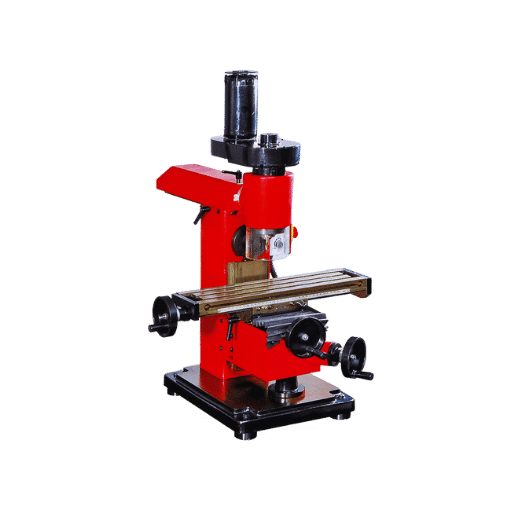
Universal milling machines are celebrated for their versatility and diverse ways in machining tasks. They are fitted with milling spindles, swivel heads, rotary tables, and other such attachments, enabling them to oscillate easily between horizontal and vertical milling operations. This capacity makes them ideal for working on complex workpieces, giving them the dual advantage of vertical and horizontal machining. Production of high-precision components without the utilization of these machines becomes unthinkable, as they form the support of any workshop in which flexibility coupled with efficiency for drilling and milling surfaces is the prime requirement.
Trends in CNC Technology and Automation
The incorporation of CNC along with automation has tremendously affected the milling culture in the recent past with enhanced capacities of universal milling machines. Along the lines of these developments, some major aspects become apparent:
- The modern CNC milling machines with their 5-axis milling and automatic feed system operations constitute a high-accuracy machining process for complex and fine details
- In addition, mechanisms such as universal milling heads and vertical machining centers create further opportunities by enabling the machining setup to change from one mode to another effortlessly
Striving towards ever-greater efficiency, sustainability approaches, and embedded automation will increasingly continue towards changing the horizon for the milling solutions.
Top Universal Milling Machine Manufacturers
1. ANTISHICNC
Not specified
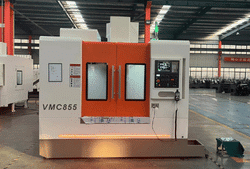
Introduction: A leading innovator in CNC and vertical milling technology, ANTISHICNC is renowned for its precision engineering and cutting-edge designs. It offers a wide range of metalworking machinery, including CNC lathes, milling machines, and hydraulic press brakes.
Main Products: High-performance vertical milling machines, CNC machining centers.
Key Advantages
- Advanced automation
- High precision
- Robust build quality
Key Disadvantages
- Premium pricing may not suit all budgets
2. Shandong Tsinfa CNC Equipment Co., Ltd
2005
Introduction: A Chinese company specializing in CNC machine tools with ISO-certified quality.
Main Products: Universal vertical milling machines, hydraulic presses.
Key Advantages
- Cost-effective solutions
- Diverse applications
Key Disadvantages
- Limited brand recognition outside Asia
3. DMG MORI
1948
Introduction: A global leader in CNC machine tools, offering innovative solutions for various industries.
Main Products: Vertical milling machines, horizontal machining centers.
Key Advantages
- Cutting-edge technology
- Global service network
Key Disadvantages
- High cost of ownership
4. Yamazaki Mazak Corporation
1920s
Introduction: A Japanese manufacturer known for its 5-axis and 3-axis milling machines.
Main Products: CNC milling machines, vertical machining centers.
Key Advantages
- High precision
- Compact designs
Key Disadvantages
- Expensive for small-scale operations
5. Haas Automation, Inc
1983
Introduction: An American manufacturer focused on affordable and user-friendly mills.
Main Products: Mini-mills, horizontal and vertical mills.
Key Advantages
- Affordable pricing
- Easy to use
Key Disadvantages
- Limited advanced features
6. Fanuc Corporation
1956
Introduction: A Japanese manufacturer known for highly computerized mills for complex industries.
Main Products: CNC milling machines.
Key Advantages
- High innovation
- Global reach
Key Disadvantages
- High initial investment
7. Makino
1937
Introduction: A Japanese company offering advanced vertical and horizontal mills.
Main Products: Vertical and horizontal milling machines.
Key Advantages
- Pioneering technologies
- High automation
Key Disadvantages
- Expensive for entry-level users
8. Okuma Corporation
1898
Introduction: A Japanese manufacturer with a long history in machining tools.
Main Products: CNC mills, multitasking machines.
Key Advantages
- Wide product range
- Affordable pricing
Key Disadvantages
- Limited advanced features
9. Bridgeport (Hardinge Inc.)
1938
Introduction: An iconic American brand known for its knee mills.
Main Products: Vertical knee mills, CNC machining centers.
Key Advantages
- Versatility
- Ease of use
Key Disadvantages
- Limited heavy-duty capabilities
10. TAICNC
2000
Introduction: A Chinese manufacturer with a high-level production facility.
Main Products: Horizontal and vertical mills, double-column mills.
Key Advantages
- High production capacity
- Global shipping
Key Disadvantages
- Limited advanced features
11. Hurco Companies
1968
Introduction: A US-based company offering over 70 models of CNC milling machines.
Main Products: CNC milling machines.
Key Advantages
- User-friendly
- Diverse product range
Key Disadvantages
- Limited global distribution
12. Amera-Seiki
1991
Introduction: A US manufacturer specializing in heavy-duty milling machines.
Main Products: CNC mills, vertical machining centers.
Key Advantages
- Robust build
- High productivity
Key Disadvantages
- High maintenance costs
13. Doosan Machine Tools
1996
Introduction: A South Korean manufacturer known for its advanced technologies.
Main Products: Vertical and horizontal CNC milling machines.
Key Advantages
- Automatic tool changes
- High precision
Key Disadvantages
- Expensive for small businesses
14. KNUTH Werkzeugmaschinen GmbH
1923
Introduction: A German company producing high-speed, precise mills.
Main Products: CNC milling machines.
Key Advantages
- High accuracy
- Durable construction
Key Disadvantages
- Limited customization options
15. GF Machining Solutions
1951
Introduction: A Swiss manufacturer offering comprehensive machining solutions.
Main Products: 5-axis milling machines.
Key Advantages
- Swiss precision
- Excellent customer support
Key Disadvantages
- High cost
Emerging Trends in Universal Milling Technology
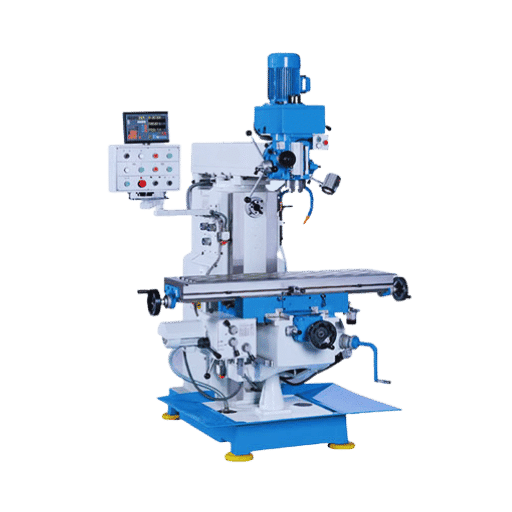
Advancements in CNC Milling
There used to be a time when the advancements ushered in by CNC milling were revolutionizing what universal milling machines could achieve. Because of these powers, CNC mills are now equipped with very refined features, such as 5-axis milling, which makes it possible to manufacture complex geometries at a very high precision level. Through intelligent CNC control integration, the systems are able to perform operations by themselves, which results in enhanced productivity and accuracy. Developing advanced milling spindles and universal milling heads further illustrates the expert level of advancement that these processes have undergone, enabling the machines to switch smoothly while performing different machining operations, thus enhancing the efficiency of the machining process.
Sustainability Practices in Manufacturing
In this age of late environmental crisis, sustainability has risen to prominence in the milling machine industry. Manufacturers are going green in carbon and are considering green technologies and green processes towards this end. In this regard, energy-efficient CNC machine tools and recyclable materials for machine tools are a common sort of innovation. Sustainable practices to underscore the green considerations of such an industry may comprise abstinence from waste in machining processes, or simply ensuring the rooms furnish energy-efficient consumption from detergents to measurement of energy. Such green operations foster sustainability and help keep milling functions cost-effective and efficient.
Traditional vs Modern Milling Solutions
The major technological change in the milling field is the one from conventional milling machines to modern CNC facilities. Precision and versatility make the CNC milling machine increasingly preferred compared to turret milling machines and type milling machines, which are still being used in a few applications. Modern solutions possess features such as an automatic feeding system and advanced milling cutters that greatly facilitate machining complex workpieces. A comparative view shows that with conventional milling, the machining process requires a lot of human intervention; with modern machine tools, CNC milling accomplishes automated, high-precision machining. Thus, it is the state-of-the-art choice for metalworking applications.
Conclusion
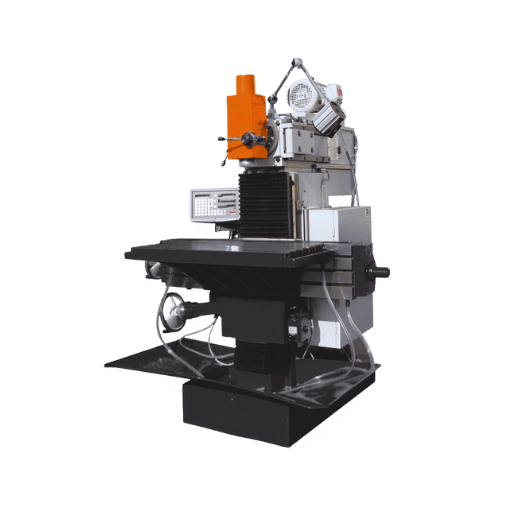
Summary of Key Insights
The analysis of the 15 leading universal milling machine manufacturers paints a picture of innovation and technological advancement. Each manufacturer brings a unique edge to the profession, be it special 5-axis milling machines by DMG Mori or turret milling machines by name from Bridgeport. It is with CNC that milling operations really excel in precision and efficiency. It can be said that automation and environmental concerns clearly reflect the current trends in milling system development. From vertical machining centers to horizontal milling machines and universal milling heads, the manufacturers produce fine machine tools to address every conceivable metalworking situation.
Guidance on Choosing the Right Manufacturer
Choosing a milling machine manufacturer depends on many factors, which include machining requirements and budget considerations, along with any other features one wants to incorporate. Makino and Haas Automation make the finest CNC systems for precision tasks and offer a number of special features, including automatic feeds and swivel heads, to name a few. Think versatility; Hurco and Knuth seem to have it covered for both conventional and CNC milling machines. For a touch of sustainability, choose a manufacturer that goes green—energy-efficient machines and recyclable materials feature highly here. Infinitely, the unique demands of the workpieces and machining tasks should influence the choice, making sure that, in fact, the manufacturer is in line with the operator’s operational objectives and industry standards.
Future of Universal Milling Machines
Universal milling machines have the future of being in full dynamic growth with the continuous advances in CNC technology and automation. Development of smart CNC systems will enable manufacturing processes at a newly improved level of adaptation in real-time, further improving the efficiency and accuracy of the milling operation. Thus, sustainability trends will see manufacturers practice eco-friendly processes, including energy consumption reduction and waste management. These technologies, on the contrary, will compensate for the conversion of traditional machining centers into smart, interconnected systems through digital technology like IoT and AI. As these technologies advance, universal milling machines will still be of notable importance to the metalworking industry: universal milling machines will, in turn, adapt dynamically to the needs of the manufacturer and set a new standard of innovation and excellence.