




Milling machines are crucial drying technologies that shape raw materials into precision components, sustaining various industries worldwide. However, when the time comes to determine which machine to use, the matter usually boils down to vertical vs. horizontal. Each carries its own set of advantages, suited for particular operations; without a basic understanding of these distinctions, one might find it hard to figure out which machine is the right one to divert investment into. This guide highlights the differences between horizontal and vertical milling machines, helping you understand their characteristics, benefits, and the types of machining tasks for which they are best suited. Whether you have been operating machinery for years or are just entering this realm, this detailed resource will provide you with the information you need to maintain your equipment correctly and optimize your machining workflow.
Introduction to Milling Machines

Milling machines are used in industries to perform shaping or cutting, whereby solid materials (usually metals) are worked upon. The cutting tool rotates and is moved against the workpiece to carry out delicate shaping and detailing. Essentially, there are two types of milling machines from a spindle perspective: horizontal and vertical. Horizontal mills are best suited for heavy cuts, while vertical mills are more suitable for detailed work or small jobs. The question ultimately comes down to which option best fits your application and production requirements.
Brief Overview of Horizontal and Vertical Milling
Horizontal and vertical milling machines, distinguished by the orientation of their spindles, cater to different application areas, capacities, and efficiencies. Horizontal milling machines feature a spindle positioned horizontally, enabling cylindrical-type cutters to be rotated against the work surface for heavy-duty operations such as grooving, slotting, or machining large surfaces. Often working with multiple cutters simultaneously, horizontal milling machines accelerate production. Horizontal milling installations are frequently utilized in very large-scale operations within the automotive and aerospace industries.
An actual vertical milling machine has its spindle vertically oriented, creating a tool position that can accommodate an end mill or any number of other tools; hence, the vertical mill excels at operations requiring precision, such as contouring or drilling. Vertical mills are smaller than their horizontal counterparts and are therefore suitable for smaller parts or operators working in a confined space. Although primarily used for prototype work, part customization, and small-component manufacturing, these sectors can vary.
Conversely, vertical milling machines are more versatile and less expensive to procure and operate, so they are the type most smaller job shops or custom CNC assignments will gravitate towards.
Considering production scale, type of material, and precision, businesses can pick the machine type most suitable for their operational goals. Both types of milling machines have been transformed with the introduction of modern inventions and CNCs that can further enhance their efficiency, accuracy, and automation potential. This ensures that both horizontal and vertical milling paradigms continue to hold key leadership roles in manufacturing across industries.
Importance of Choosing the Right Type of Milling Machine
The selection of a milling machine is crucial for increasing productivity, achieving precision, and reducing operational costs. Several advantages specific to horizontal and vertical milling machines are directed towards different applications. For example, horizontal milling machines are more suitable for heavy-duty jobs, such as cutting grooves or slotting, and handling large-volume jobs that require greater torque. In contrast, vertical milling machines are best suited for fine work, such as creating detailed components and custom designs, because their simpler configuration offers greater flexibility for smaller jobs.
On the other hand, horizontal machines are selected by industries that handle enormous workpieces or require heavy-duty capabilities in terms of material removal, such as shipbuilding or the manufacture of heavy equipment.
Additionally, the incorporation of CNC technology in both vertical and horizontal milling machines has helped optimize efficiency and usability. CNC-enabled mills ensure an even level of precision and repeatability while reducing lead times by eliminating the need for operators to perform manual tasks associated with working complex patterns of cutting or drilling. For manufacturing firms, the advantage of having these machines reprogrammed for different projects is that it lowers material waste, which they consider a significant benefit that can lead to a 25 percent efficiency gain in some industries.
Ultimately, a company must consider the specific requirements of the operation to maximize performance and maintain a competitive edge in the manufacturing landscape. Those considerations may include production scale, material type, spatial constraints, and precision needs.
Applications of Milling Machines in Various Industries
Milling machines provide support to various industries by accelerating production processes and enabling the fabrication of components with precise specifications. Among the essential sectors where precision machining is required are:
Automotive
Milling machines have a wide range of applications in the automotive industry, where they are used to manufacture engine parts, gearboxes, and molds for car frames. CNC milling ensures absolute precision and reduced production time, with some reports indicating a lead time reduction of approximately 40%. These milling machines are now capable of handling lightweight materials like aluminum, which is required to enhance fuel economy and meet sustainability regulations.
Aerospace
The aerospace industry demands stringent design tolerances and ultimate quality standards. Milling machines fabricate airframe components, turbine blades, and structural fittings. With the latest 5-axis CNC milling technology, machining complex geometries with optimum accuracy is possible, thereby offering a 30% increase in production efficiency for high-performance aircraft components. They are also capable of machining a wide array of materials ranging from titanium alloys to composites, thus ensuring that aerospace parts are dependable and durable.
Medical Device Manufacturing
In the surgical instrument, implant, and prosthetic manufacturing industries, milling machines are essentially required. Customized services, such as patient-specific implants, are provided through advanced milling techniques. Advanced 3-axis and 5-axis milling machines enable production with tolerances as low as 0.001 inches, ensuring the safety and functionality required for vital medical applications.
Electronics Industry
Milling machines are used to fabricate electronic components, including circuit boards, heat sinks, and housings. The shrinking of components, driven by consumer demand for smaller devices, has placed a clear emphasis on micromilling with utmost precision. Studies conclude that advanced milling has reduced costs by up to 20% in electronic component fabrication, while also increasing the production rate.
Renewable Energy Sector
In the renewable energy sector, including wind and solar, milling is heavily employed for the fabrication of critical components such as wind turbine blades and solar panel frames. Through sophisticated milling, the creation of large, durable, yet lightweight parts becomes possible, which is a prerequisite for clean energy systems in terms of overall efficiency. Reports acknowledge a 15% reduction in manufacturing defects, thanks to CNC milling, which has enhanced the reliability of renewable energy technologies.
Key Insight: While such advanced milling practices enable increased productivity, they also foster innovation by making the manufacture of complex and high-performance components possible. That makes milling machines a linchpin in modern industrial production.
Understanding Vertical Milling Machines

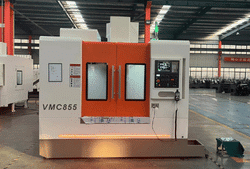
A vertical milling machine is a type of tooling equipment used for the precise cutting and shaping of materials, where the cutting tool is oriented vertically. It is widely known to be an excellent tool for drilling, slotting, and engraving. Vertical milling machines are highly versatile, as they can work on a wide range of materials, including metals, plastics, and composites. Due to their simple working mechanism and capability of generating highly accurate operations, they become essential in industries such as manufacturing, aerospace, and automotive. Vertical milling machines typically have adjustable settings that enable operators to work efficiently with intricate designs.
What is a Vertical Milling Machine?
Precision vertical milling machines are designed to manufacture and fabricate materials, including metals, plastics, wood, and composites, for various utility purposes. The cutting tool is held in a vertical spindle so that excellent cutting action can be performed for material removal from the workpiece. Typically, the spindle is allowed to travel along the vertical axis, providing it with flexibility to work for various depth cuts and angles.
Nowadays, these vertical milling machines come with Digital Readouts (DRO), CNC Systems, plus variable speed settings. These advancements make the machines increasingly accurate and efficient, with CNC ones capable of holding tolerances in the range of ±0.001 inches, depending on the complexity of the task at hand. Vertical mills have extensive applications in the aerospace and automotive industries due to their capability of producing complex and exact components.
Unlike most machines, they tend to come in varying sizes, ranging from small bench-top models suitable for hobbyists and light-duty work to industrial machines designed for heavy-duty manufacturing. Another great advantage is versatility. An operator can perform a variety of jobs using various tools, such as end mills, face mills, and drill bits, including drilling, contouring, slotting, and surface engraving.
These are the very machines that modern manufacturing needs: allowing high-speed operations with great accuracy and reliability, thereby fulfilling the requirements of machining detailed parts for intricate assemblies.
Components and Features of Vertical Mills
The reasons why a vertical mill has many key components and features are its high effectiveness and suitability for the whole range of manufacturing tasks. The principal component of a vertical mill is the vertical spindle, which holds and rotates the cutting tool. The spindle is usually oriented normally to the worktable to facilitate vertical cutting motions. The adjustable worktable provides further operational flexibility; the operators can set their workpiece holding fixture in any required angular position with respect to the machining.
Modern vertical mills now feature CNC (Computer Numerically Controlled) systems, enhancing accuracy and enabling automated and programmed operations. These CNC systems enable precise control over spindle speed, table movement, and cutting depth, allowing for the creation of highly complex designs and components.
Some vertical mills are also equipped with high-speed spindles that operate beyond 10,000 RPM, making them nearly perfect for fine finishing-level detailing and high efficiency in production. There are other features, such as tool changers that dispense with lengthy changeovers, coolant for heat control and its prolonging effect on tool life, and finally, rigid frames that offer vibration-free operations.
From small workshops to large factories, vertical mills hold a commanding position in producing high-quality parts for the aerospace, automotive, and medical device industries.
Advantages of Using Vertical Milling Machines
The very reason behind their applications in various industries is due to the advantageous properties they possess:
Key Advantages:
- Accuracy and Precision: A vertical mill is capable of manufacturing parts with a very high degree of precision and accuracy. Aerospace and medical device production are industries where tolerance is extremely tight. These mills perform very detailed and intricate work, making them ideal tools for creating complex geometries.
- Low-Easy Operation: These machines are equipped with easy-to-use and intuitive controls that simplify machining. Because it is easy to shift to another job, CNC facilities are sometimes included in newer versions of the machine to achieve higher accuracy and automation.
- Cost Comparison: More often than not, Vertical milling machines cost less than an equivalent horizontal machine while doing numerous tasks. They can save you tooling and energy for particular materials, thus becoming an economically good choice for a business.
- Multifunctional: One significant advantage of vertical mills is that they can machine a wide range of materials, including metals, plastics, and composites. Furthermore, they can carry out a variety of operations—drilling, cutting, boring, and mold making —all in one setup, thereby increasing output.
- Compact Design: Vertical milling machines occupy less floor space than horizontal milling machines; hence, they are suitable for workshops or factories with limited space.
Today’s vertical mills are designed to increase productivity and operate specific manufacturing systems, thanks to the advent of automation and innovative technologies.
Adaptable and reliable by any estimation, vertical milling machines remain of prime importance in machining, enabling the efficient and precise fulfillment of ever-evolving production demands in industries.
Exploring Horizontal Milling Machines

Horizontal milling machines are engineered for maximum efficiency and versatility in machining. In contrast to vertical mills, their cutting tools are oriented horizontally, allowing for more cutting action on larger or heavier workpieces. These machines are heavy cutters and slotters, often used in grooving, gearing, or forming other complex shapes. Horizontal mills are typically used by industries that require precision, while maintaining high production rates, as they are robust and can remain accurate over extended runs. Hence, they prove their worth in both large-scale production and specialized applications.
What is a Horizontal Milling Machine?
A type of machining tool that cuts and shapes material using a horizontally placed cutting tool is a horizontal milling machine. Unlike the vertical mills having the vertically oriented spindle, the horizontal mills have the spindle that runs parallel with the worktable, thereby allowing for the accommodation of large pieces of work and a variety of cutting techniques.
In these machines, the rotary cutters attach to a horizontal arbor, which helps provide form stability. This enables the machines to perform heavy-duty operations, including extensive slot cutting, keyway cutting, and gear profile cutting. It also offers greater resistance to deflection of the cutting tool, ensuring equally good reproducibility even under high pressure.
Being at the cutting edge, horizontal milling machines incorporate CNC technology for automation with high-level operational efficiency. For example, a CNC horizontal mill can hold a tolerance as tight as ±0.0005 inches, making it well-suited for applications in high-end industries such as aerospace, automotive, and medical manufacturing.
If one considers productivity as a parameter, the time-consuming nature of horizontal mills favors them. These include cutting speeds that can reach 6,000 RPM and multi-axis setup capability, which significantly reduce work time on complex projects. It also allows the parts to be machined on several faces simultaneously, thereby further enhancing efficiency and reducing material handling.
From the smallest workshops to large plants, horizontal milling machines play a vital role in jobs that require precision, power, and production. Horizontal machines are also suitable for machining hard materials, such as steel or titanium, and thus find wide applications in various industries.
Components and Features of Horizontal Mills
Machines engineered for horizontal milling carry components that assure the precision and efficiency necessary for machining. Horizontal mills feature horizontally oriented spindles, enabling machining with various tools through slotting, grooving, and contouring. The worktable allows movement of workpieces in multiple directions, including X, Y, and occasionally Z axes, which helps place the workpiece in the desired location for the cut.
The overarm comes in handy for heavy-duty operations by providing the necessary support to the arbor and keeping it as stiff as possible. Other tools that can be mounted on the arbor include cutters, end mills, and face mills, all of which can be used in various machining processes. Horizontal mills feature robust motors and gear systems, capable of delivering the high torque and power required to cut through hard materials. Many of the current horizontal milling machines incorporate CNC technology, thereby providing even more automation and accuracy while reducing common human errors. With all these features, the horizontal milling machine becomes a vital piece of equipment in industries that require precision machining of challenging and complex materials.
Advantages of Horizontal Milling Machines
Primary Advantages:
- Higher Material Removal Rates: Horizontal milling machines have a reputation for removing large chunks of material in relatively short time. Their rigid structure and horizontal structure promote quick chip evacuation; hence, heat buildup is kept to a minimum during carbide cutting operations. This becomes a crucial factor for industries that require heavy-duty machining, particularly in the aerospace, automotive, and energy sectors.
- Setup Time Reduction: Horizontal milling machines utilize integrated rotary tables with multiple cutting tools to simultaneously effect machining from various angles, eliminating the need to reposition the workpiece repeatedly for faster project completion, thereby increasing productivity.
- Application Flexibility: These machines are highly versatile and can undertake a wide range of applications, including slotting, gear cutting, and shaping surfaces. Horizontal mills are most promising for working with hard and large-scale materials, such as stainless steel and alloys used in industrial manufacturing.
- Surface Finish and Accuracy: CNC-driven horizontal milling technology brings about a modern finish on work surfaces. Such a finish is acceptable for the medical and precision engineering ranges, which require components with very close tolerances.
- Makes Smaller Investments and Offers Longevity: Horizontal mills are constructed with heavy-duty structures, ensuring durability and longevity. With a design that reduces vibration and wear, horizontal mills help maintain accuracy over a long period, thereby reducing maintenance costs.
This makes horizontal milling far more attractive in improving operational efficiencies and reducing lead times for manufacturers.
These advantages make horizontal milling machines a potent machining tool in manufacturing industries, combining strength, precision, and efficiency in tackling challenging machining requirements.
Horizontal vs Vertical Milling: Key Differences
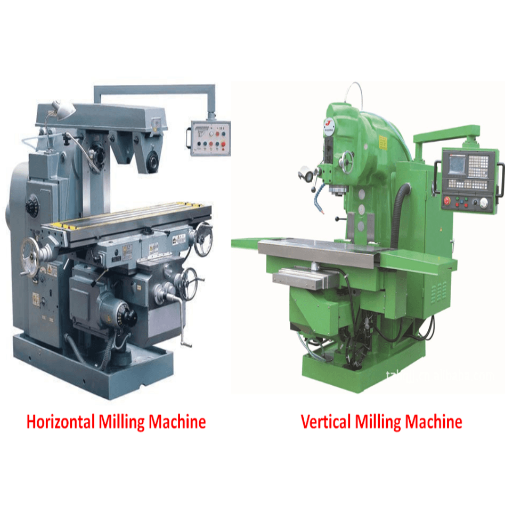
The horizontal and vertical milling machines mainly differ in terms of their design and functionality. Since the shafts of a horizontal milling machine are horizontal, it allows for material to be moved with precision and enhanced efficiency, even when it is heavy and bulky in nature. They accomplish highly complicated jobs, such as slot cutting and gear shaping, while carrying out two or even more operations in a single setup. For drilling or contour cutting, vertical mills offer more versatility due to their vertically placed spindles. Vertical mills are compact and easy to handle for smaller workshops, while their horizontal counterparts are far more rugged, powerful, and capable of carrying out large-scale manufacturing operations with ease.
Differences in Machine Design and Functionality
There are several differences between horizontal and vertical milling machines in their design and operation, which enable them to be used for various purposes. Longer and heavier, the horizontal mills are wider in build, with the spindle oriented horizontally, allowing them to work on heavy-weight and large workpieces. The design facilitates simultaneous work for the cutters, which would otherwise require multiple steps when performing high-volume or complex tasks such as slot milling or gear cutting. Vertical mills are oriented such that the spindle shaft is perpendicular to the working table and thus give higher precision and are more flexible for smaller operations and detailed work. The compact size of this machine makes it ideally suited for smaller workshops, especially for jobs that demand intricate drilling, contouring, or die sinking.
Essentially, horizontal milling machines are highly efficient at removing large quantities of material from workpieces quickly and are particularly effective at producing smoother finishes on flat surfaces. They are also more durable against harder materials. On the other hand, vertical mills are quick and easy to set up and operate, making them a good option for those with less experience in machining. Their design allows for excellent visibility during the milling process, making them a better choice for tasks that require continuous adaptation. Both types of milling machines have particular pluses; choosing one or the other depends almost solely on the magnitude of the work, the materials used, and the intricacies of what is being done.
Differences in Tools and Accessories Used
A considerable difference exists between the tools and accessories a horizontal mill sustains compared to those used by a vertical mill, in terms of their design and applications. Horizontal mills typically utilize thicker, heavier cutting tools, such as arbor-mounted cutters, side-and-face mills, or slab mills, which are generally employed for large-scale material removal and cutting wide grooves. These tools are crafted to exhibit maximum strength and efficiency against tough materials.
Vertical mills would use, however, usually end mills and drill bits. These tools are preferable in precision operations such as contouring and fine cutting because they are capable of producing intricate shapes. The accessories for a vertical mill often include rotary tables, collets, and adjustable cutting heads, which further enhance the mill’s flexibility for small, intricate operations.
Hence, while horizontal machines are primarily suited for heavy work, vertical machines are designed for precise machining, with tools and accessories emphasizing their respective niches in machining processes.
Comparative Analysis of Speed and Efficiency
When speed and efficiency are concerned, competing in a project requires the abilities that horizontal and vertical milling machines exhibit. In large-scale production and heavy-duty materials, horizontal mills usually prove faster than vertical mills. The basic design of a horizontal mill allows for the simultaneous engagement of multiple cutters with the workpiece, hence significantly reducing machining time for bulky jobs or hard metals.
On the other hand, vertical mills allow for greater precision and flexibility when performing more complicated or smaller-scale operations. Their setup makes for easier tool-changing and adjustment of machining parameters, which is particularly useful for finer cutting or prototyping. Of course, this does not mean that a vertical mill achieves throughput rates comparable to those of horizontal ones for high-volume jobs.
While efficiency depends on the operation, the horizontal mill proves highly productive and material-removing for industrial-size projects. In contrast, the vertical one offers a higher degree of flexibility and precision for specific or intricate machining.
Choosing Between Horizontal and Vertical Milling Machines

There will be considerations regarding the specific project requirements when selecting between horizontal and vertical milling machines. Horizontal milling machines are excellent for being one of the large-scale operations in which the removal of material has to be fast and a large output is required. These are heavyweight operations, in other words, subjected to maximum efficiency. Vertical mills are well-suited for more detailed and precise work, offering flexibility for slightly smaller or intricate designs. Weigh the size, difficulty, and scale of the work to assess which kind fits better for your operational explanation.
Factors to Consider When Selecting a Milling Machine
| Factor | Description | Impact on Selection |
|---|---|---|
| Type of Work | Assess the nature of your projects: Are they large-scale operations for heavy material removal, or are they specialized tasks demanding precise details? | Horizontal mills for heavy-duty operations, vertical mills for precision and intricate work |
| Material Compatibility | Consider the materials you will be working with—metal, plastics, or wood | Some milling machines work more effectively with specific materials, improving efficiency and lifespan |
| Machine Size and Workspace | Size of the machine in relation to your workspace | Larger machines may offer higher productivity but require more space; smaller machines are ideal for limited areas |
| Automation Level | Decide among manual, semi-automatic, or fully CNC machines | CNC machines provide accuracy and repeatability, but increase cost and require technical expertise |
| Budget and Maintenance | Consider purchase, installation, and maintenance costs | Expensive machines may offer more options, but require higher maintenance costs |
| Brand and Reliability | Research the reputation of manufacturing firms and read customer reviews to ensure reliability and support. | Well-known brands typically offer better warranties, more readily available spare parts, and superior technical assistance. |
Selection Guidance: The above factors should guide you in choosing a milling machine that complements your operational needs and ultimate goals.
Cost Considerations for Horizontal vs Vertical Milling
Another point I would emphasize regarding the difference in initial cost is the operational costs of horizontal and vertical milling machines. Horizontal milling machines generally carry a higher price tag due to their complexity and advanced features. Still, they are often capable of handling larger loads and increasing productivity in high-volume production, which could potentially justify the expense over time. On the other hand, vertical milling machines are generally less expensive to purchase and maintain, making them suitable for smaller operations and less demanding work requirements. I would, therefore, weigh my current budget against the production ability that would ultimately prove better for me.
Recommendations for Specific Applications
Application-Based Recommendations:
For Heavy Materials & Large-Scale Production: From an engineering standpoint, a horizontal milling machine is highly recommended for tasks involving heavy materials or large-scale production, such as automotive or aerospace manufacturing, as it can undertake these tasks on a large scale with great precision and efficiency.
For Custom Projects & Detailed Work: However, vertical mills are designed for smaller and more custom projects; therefore, they are used more frequently in areas such as prototyping and small-scale fabrication. For applications that place a high importance on detailed work, vertical machines are most suitable.
Decision Priority: When making your choice, prioritize your project needs—whether production speed, price, or specialized material type—above all else.
Summary and Conclusion
| Aspect | Horizontal Milling Machines | Vertical Milling Machines |
|---|---|---|
| Best For | Heavy-duty operations, large-scale production | Precision work, detailed components, prototyping |
| Spindle Orientation | Horizontal (parallel to worktable) | Vertical (perpendicular to worktable) |
| Material Removal Rate | Higher – up to 60% more throughput | Moderate – focused on precision |
| Space Requirements | Larger footprint required | Compact design, space-efficient |
| Initial Cost | Higher due to complexity | Lower, more economical |
| Tolerance Capability | ±0.0005 inches (CNC models) | ±0.001 inches (CNC models) |
| Market Share | ~40% (industrial applications) | ~60% (diverse applications) |
| Ideal Industries | Automotive, Aerospace, Heavy Equipment | Medical Devices, Electronics, Prototyping |
Final Recommendations:
Both horizontal and vertical milling machines serve essential roles in modern manufacturing, each optimized for specific applications and operational requirements. The choice between them should be based on your particular production needs, workspace constraints, budget considerations, and the nature of your machining tasks.
Consider horizontal milling machines when you need maximum material removal rates, are working with large or heavy workpieces, and require high-volume production capabilities. Choose vertical milling machines when precision, versatility, and space efficiency are priorities, particularly for detailed work, prototyping, and smaller-scale operations.
Regardless of your choice, modern CNC technology has enhanced both types of machines, making them more efficient, accurate, and automated than ever before. This ensures that both horizontal and vertical milling paradigms continue to hold key leadership roles in manufacturing across industries.
Reference Sources
“Kinematic Modeling of 5-Axis Horizontal Milling Machine Emulated from Vertical Articulated Robot”
“Research on the Inner Wall of the Blind Hole Drilling Device”
Frequently Asked Questions (FAQs)
What are the dissimilarities between horizontal and vertical milling machines?
The main distinctions between horizontal and vertical milling machines are spindle orientation and design. Horizontal milling machines feature a horizontal spindle, allowing for the placement of the cutting tool parallel to the workpiece. This design is suitable for heavy cutting and machining on larger workpieces, resulting in better efficiency. In contrast, vertical milling machines, with their vertical spindle orientation, are more flexible in machining operations, more so in mastering intricate designs and smaller parts.
How to choose between a Horizontal milling machine and a Vertical milling machine?
Choosing between horizontal and vertical milling machines purely depends on the nature of your projects. It is worth considering the type of materials you will be working with, the complexity of the parts, and the production volume. Horizontal machines are generally better suited for larger, heavier workpieces and achieve higher cutting speeds, whereas vertical machines are ideal for intricate work and offer a range of tooling options.
What do horizontal milling machines have in comparison with vertical ones?
Horizontal milling machines typically have a more substantial build, allowing them to handle heavier cuts and larger workpieces with greater capability. They will also enable horizontal-axis movements and, therefore, permit longer toolings to be used. Vertical milling machines, in contrast, utilize vertical tooling, which provides the flexibility required for intricate designs and adjustments.
What types of vertical milling machines are available?
A variety of vertical milling machines are available, including turret milling machines and bed milling machines. Turret milling machines are distinguished by their adjustable spindles, which enable versatile operation and are suitable for a wide range of milling operations. In contrast, bed milling machines are more rigid, allowing for the precision machining of heavier parts.
What exactly is a CNC vertical milling machine?
Simply put, the CNC vertical milling machine combines computer numerical control technology with vertical milling operations. Exact automatic machining may yield the best results, especially when manufacturing parts with extremely complicated geometry is required, ensuring repeatable quality in all cases. The CNC vertical milling machines are capable of processing a wide variety of materials and constitute the major types of machines used in contemporary manufacturing setups.
Can horizontal milling machines do the same things as vertical milling machines?
Horizontal milling machines can perform many of the tasks of vertical milling machines, but they are better suited for those applications involving heavy cutting or large workpieces. Vertical milling machines, however, may be better for elaborate shapes or machining techniques that are less complicated working processes.
What advantages are there of horizontal milling machines versus vertical machines?
Horizontal milling machines are much more stable during various machine operations, thus offering better precision and surface finish. They have a horizontal spindle that allows for the use of longer tools and the comfortable handling of larger workpieces. They can also perform certain machining operations simultaneously, thus saving time in a machine shop.
What are typical applications for horizontal and vertical milling machines?
Horizontal milling machines are typically used for heavy-duty machining of large parts in the aerospace and automotive industries. They are mainly used for slab milling and contouring. Vertical milling machines are more versatile and are often used for machining small parts, custom machining, and projects requiring intricate designs, especially in the fields of medical and electronics.