




Precision, efficiency, and versatility: These are the new virtues in the world of modern manufacturing ability. Enter the VMC 650 CNC Machine —a giant among vertical machining centers that have been revolutionizing the way machining is approached across various industries. The style of this book is tailored for professionals in the field of machining, manufacturing engineers, and technical enthusiasts in general who are keen to understand the inner workings of CNC machinery. We will discuss the prospective applications of the VMC 650 CNC Machine and what makes it a preferred solution for complex machining tasks in terms of productivity. Let’s unlock the potential of this wonderful machinery together.
Introduction to the VMC 650 CNC Machine
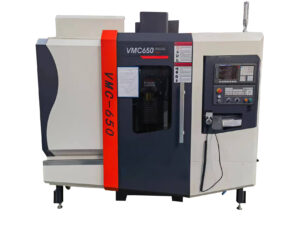
What exactly is a CNC Vertical Machining Center?
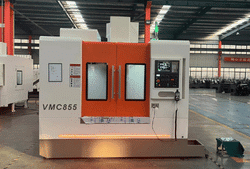
A CNC Vertical Machining Center (VMC) is a computerized machine primarily used in manufacturing and machining for the precise cutting, shaping, and milling of materials, including metals, plastics, and composites. “Vertical” refers to the spindle’s direction in this machine type; it is vertically aligned, making it ideal for machines that perform face milling, drilling, boring, or slot cutting.
Modern CNC VMCs utilize CNC (Computer Numerical Control) technology for the programmed automation of complex machining processes. These machines possess an array of tools that enable their motion through multiple axes, commonly 3, 4, or 5 axes, for high precision and complex operations. For illustration, a common 3-axis VMC positions the cutting tool or workpiece along these three linear paths, or axes, known as the X, Y, and Z axes. In contrast, a 5-axis machine includes two additional rotations.
The key specification for a VMC 650 is that it comes with a high-speed spindle that can often reach 12,000 rpm to cut materials very quickly and achieve smooth surfaces. The worktable size is typically 650 mm x 400 mm, providing sufficient space for various machining operations. Such machines can achieve tolerances as small as ±0.005 mm and are, therefore, used heavily in sectors such as aerospace, automotive, and medical device manufacturing.
VMCs traditionally allow high productivity, curing much of the manual intervention with features such as tool changers, coolant systems, UI, etc. The newest generation of machines utilizes new materials and software to enhance efficiency, minimize downtime, and integrate with CAD/CAM systems, enabling manufacturers to enjoy optimized workflows.
With precision, reliability, and versatility, CNC vertical machining centers are among the finest solutions in modern manufacturing today. CNC Vertical Machining Centers are explicitly shown by the VMC 650 to possess such features and to be ready for mainstream machining.
VMC 650 Model Overview
The VMC 650 is a high-end CNC Vertical Machining Center, designed for precision, efficiency, and reliability in a wide range of manufacturing processes. With solid engineering and state-of-the-art technology, the VMC 650 is designed for use in industries such as automotive, aerospace, mold making, and general manufacturing. Below are some extraordinary features and specifications of the VMC 650:
- Worktable Size: The VMC 650 is equipped with a worktable measuring 800mm x 400mm, providing sufficient work area for various machining jobs, ranging from small components to medium-sized parts.
- X/Y/Z-Axis Travel: The machine offers 650 mm of X-axis, 400 mm of Y-axis, and 500 mm of Z-axis travel, allowing for precise placement in all manoeuvres and blockages that require precision.
- Spindle Speed and Motor: The VMC 650 features variable spindle speeds of up to 10,000 rpm, ensuring higher quality and cutting efficiency, along with minimal vibration due to its direct drive motors, which enable better performance in high-speed operations.
- Tool Magazine: The machine autonomously changes tools using the ATC system, which comes with 24 tools; hence, no interruption occurs during the workflow, reducing tool change time and increasing productivity.
- Control System: The advanced CNC control system (Fanuc or Siemens) enables the VMC 650 to be operated simply, process data very quickly, and integrate seamlessly within CAD/CAM software.
- Construction and Durability: Constructed from top-class cast iron, with a vibration-minimizing design. The VMC 650 remains steady and yet durable for heavy machining operations.
- Precision: Linear guideways and precision ball screws enable this version to achieve extremely high accuracy, making it a priority for all work requiring tight tolerances.
Energy efficiency, downtime reduction, and ease of maintenance are the considerations for developing the VMC 650. It can also perform drilling, milling, tapping, and contouring operations for a wide range of machining tasks. Therefore, the VMC 650 can be the perfect consumable for industries that simultaneously seek production efficiency and the highest quality standards.
Key Features and Specifications
- High-Precision Spindle: The VMC 650 is equipped with a highly rigid spindle capable of speeds up to 12,000 RPM. It achieves greater accuracy and higher efficiency in high-speed machining, enabling this machine to perform intricate and precise work.
- Rigid Construction: With its rigid and solid framework, the VMC 650 solution was carefully designed to provide vibration-free operation during machining, while accommodating the maximum load of heavy components with consistent precision.
- Table Size & Load Capacity: The worktable has a generous size of approximately 900 mm × 400 mm, with a maximum load-bearing capacity of 800 kg. This provides a viable platform for handling larger, heavier components.
- Tool Magazine: The tool magazine consists of a 24-tool automatic tool changer (ATC) to ensure uninterrupted workflows with reduced tool change times.
- Advanced Control System: The VMC 650 has been integrated with the latest FANUC or Siemens CNC system for easy operation and maintenance as well as achieving the highest level of precision and compatibility with a broad range of machining applications.
- Rapid Feed Rates: Rapid traverse rates on the X and Y axes are up to 36 m/min and 24 m/min on the Z-axis, resulting in a significant reduction in non-cutting time and an increase in production rate.
- High-Tech Cooling System: A Spindle oil cooler and an advanced chip removal system are provided to ensure excellent thermal stability and increase tool life through prolonged machining operations.
- Energy Efficient: With the VMC 650’s lower electricity consumption, the operational cost is kept low on products with a premium build quality.
- Versatile: The VMC 650 is suitable for use in various industries, including aerospace, automotive, and die/mold, with support for milling, drilling, tapping, and contouring functions.
The above-listed specifications and features make the VMC 650 a machining center that strikes a balance between the reliability, accuracy, and versatility required by modern manufacturing technology.
Understanding the Technology Behind CNC Milling
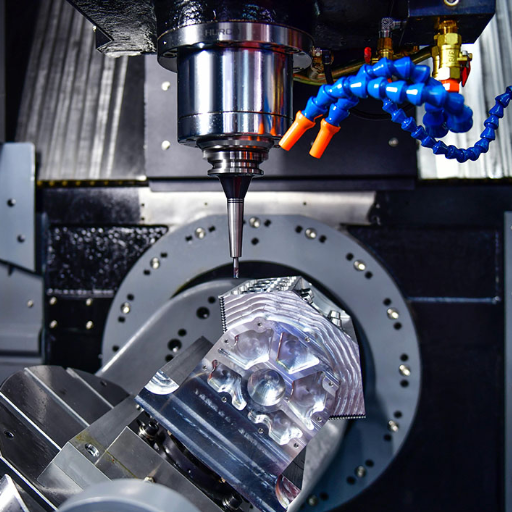
How CNC Machines Work
Computer Numerical Control (CNC) machines employ a highly automated system that converts design inputs, typically through CAD (Computer-Aided Design) or CAM (Computer-Aided Manufacturing), into precise mechanical movements. The process begins with a digital blueprint that contains the dimensions and geometries of the part or product to be created. The next step involves transforming this data into G-code, a language understood by CNC machines for dictating movements, speed, and machining activities.
The essentials of CNC operation lie with its principal three axes—X, Y, and Z. Movement is permitted along these axes in three-dimensional space. However, many industries with highly intricate designs such as aerospace, and medical device manufacturing, require extra axes (the A and B axes). The spindle holds the cutting tool, following CNC programs that direct it to mill, drill, or turn with great accuracy.
Investing in CNC machining ensures proper tolerance, with accuracy rates reaching as low as ±0.005 inches and surface finishes of up to 32 microinches. CNC technology has also substantially grown, according to latest market research, with the global CNC machine market projected to reach $128.86 billion by 2030 on the back of automation and precision demands.
Continuing with these enhancements are the newer CNC machines, which feature technology for real-time monitoring, adaptive control to minimize tool wear, and IoT connectivity to enhance productivity. Coupling precision with speed and efficiency, CNC machining is considered the heart of modern manufacturing.
Axes Configuration: 3 Axis vs. 4 Axis vs. 5 Axis
CNC machines are classified by the number of axes they can operate along, and this classification significantly affects the capabilities and applications of the particular machine. 3-axis, 4-axis, and 5-axis CNC machines and the purposes are described as below:
1. 3-Axis CNC Machines
3-axis CNC machines are the most common and widely found type of CNC machines. They move along three linear dimensions passing through the X, Y, and Z axes. The machines are good in simple manufacturing jobs like milling, drilling, and cutting on flat surfaces. According to current industry reports, 3-axis CNC machines remain prevalently utilized for operations that are cost-effective and necessitate machining simple geometries. When it comes to complex designs, the 3-axis CNC machine suffers, especially when multiple angles or features are involved on curved surfaces.
2. 4-Axis CNC Machines
4-axis CNC machines are an extension of 3-axis machines, with additional movement along the A-axis, which is a rotation usually around the X-axis. The role of the fourth axis introduces more complexity in the geometry, including cylindrical objects such as pipes and gears. Precision and efficiency are rampantly boosted for machining by its fourth axis, on the other hand, for industries, most notably aerospace and automotive. New technologies also enable synchronous movements in real-time across the axes, which reduces setup times between machining operations and human errors. It has been reported that due to their versatility and ability to handle moderately complex designs, the demand for 4-axis machines is increasing.
3. 5-Axis CNC Machines
5-axis CNC machines significantly enhance manufacturing capabilities by incorporating two additional rotational axes, which can be implemented through rotary tables or tilting heads. With them, 5-axis machines offer unmatched precision for producing highly complicated designs, making them the machines of choice for working on parts for aerospace, medical device, and defense. For example, turbine blades and orthopedic implants require the precise contouring only achievable with 5-axis machining. According to an industry report from 2023, the segment of 5-axis CNC machines is the one evolving with the most significant growth, primarily due to advancements in control systems and the integration of artificial intelligence into process optimization.
Time is money, but the intervals for various types of CNC machines differ, giving each axis setup its field of application. Appropriateness of an axis configuration depends on the original purpose, the complexity of the components, and the price considered. Today, the trend is set on advanced automation and precision, thereby, driving the steady increase in the use of 4-axis and 5-axis maps in the approaching future.
Control Systems: GSK vs. FANUC
When GSK and FANUC control systems are compared, it is found that each has its merits, suited to particular types of industrial applications. As a domestic leader and renowned Chinese CNC solutions provider, GSK remains price-wise with its controls and easy to use. One important point to note is that GSK continues to gain fame in the realm of small to medium workshops, where they value affordability yet do not want much compromise on basic functionalities. While the company itself is looking forward to staying on par with global competitors with significant improvements being made from time to time,the integration of AI and IoT into its solutions is under serious consideration.
FANUC is yet another globally established CNC brand, renowned not only for its reliability but also for superior precision and performance. It is best suited for large manufacturing industries to execute complex machining routines. Its control systems offer features superior to even real-time diagnostics and high-speed processing while supporting the application of machines of many types. An integrated solution from FANUC adds in seamless integration with robotics, taking the flexibility and efficiency of an automated operation to another level.
Industry has even retained data, according to which FANUC enjoys a unique market share due to its international presence and enhanced capabilities. For instance, FANUC has introduced its latest CNC system, the FANUC Series 30i/31i/32i-MODEL B, which offers nanometer-level precision in high-speed machining and an open architecture that allows for customized solutions. On the other hand, for their advantages of affordability and performance improvements with a focus on small and mid-range applications, GSK 980MDi CNC system is gaining a lot of attention from newly industrializing nations.
The last choice between GSK and FANUC shall then be seen in the light of manufacturing scale and complexity, with GSK being more preferable within a cost-sensitive environment and FANUC in need of highest precision and advanced automation.
Applications of the VMC 650 CNC Machine
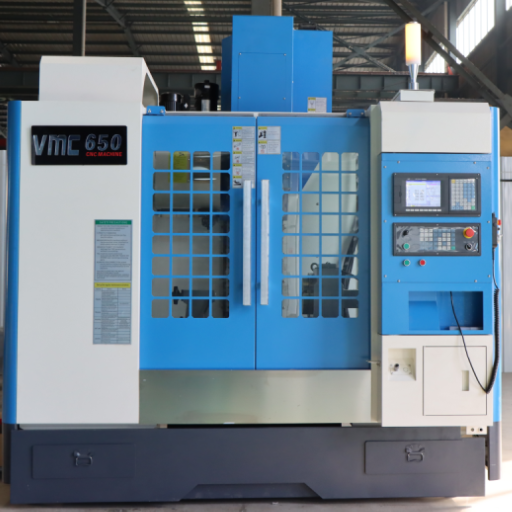
Industries utilizing Vertical Machining Centers
VMCs have become indispensable to various industries due to their rich versatility and efficient precision manufacturing capabilities. Some of the prominent sectors that make use of the VMC technology, along with relevant details and data, are as follows:
1. Automotive Industry
The automotive sector extensively utilizes VMCs for manufacturing complex parts, such as engine components, transmission housings, and brake components. Market analysis indicates that the worldwide automotive machining industry is expected to grow at a Compound Annual Growth Rate (CAGR) of 4.5% between 2023 and 2030, driven primarily by increasing demand for electric vehicles and lightweight components.
2. Aerospace Industry
Aerospace manufacturers rely on VMCs for manufacturing high-precision parts like turbine blades, structural components, and landing gear parts. The need for strong accuracy and quality in the aerospace components has made the VMCs integral to the said industry. With the global aerospace CNC machining market estimated to exceed $4.5 billion by 2028, the demand for advanced machining tools, such as VMCs, is continuously increasing.
3. Medical Industry
VMCs are used in the manufacture of precise surgical instruments, prosthetics, and medical implants. Given the precision and finish allowed by this medical manufacturing process, the VMC provides the best choice in terms of accuracy. Medical CNC machining is projected to expand at a significant CAGR of 6.9%, driven by advancements in healthcare and the increasing adoption of minimally invasive surgical devices.
4. Electronics Industry
The electronics sector utilizes VMCs for manufacturing enclosures, connectors, and precision heat sinks. Throughout the rapid growth phase for the consumer electronics market, expected to cross $1 trillion by 2030, CNC machining has been adopted by manufacturers to maintain production speed and accuracy.
5. Tool and Die Industry
The tool and die segment uses VMCs for the manufacture of molds, dies, and fixtures that require the highest degree of dimensional accuracy. The use of VMCs has helped reduce lead time and prolong the durability of tooling components.
Industries like these show the far-reaching influence that supports innovation and improve productivity in different manufacturing fields. With the constant evolution of CNC technology and automation, the future of manufacturing shall be supported to an even higher degree by VMCs.
Everyday Use Cases for VMC 650
Known for its precision, reliability, and versatility, the VMC 650 is a popular vertical machining center used across various industries. The following are its main applications, including descriptions and supporting data:
1. Precision Component Manufacturing
The VMC 650 is characterized by the creation of very specialized components with a high degree of dimensional accuracy. Parts such as turbine blades, engine components, and surgical instruments are manufactured by industries in aerospace, automotive, and medical using this machine. Recent reports highlight the growing importance of machines with such versatility, stating that the global precision machinery market is expected to expand at a CAGR of 7.1% from 2023 to 2030.
2. Mold and Die Making
Mold and die making is also an essential application area for the VMC 650, substantiating the need for precision and surface finish quality in injection molding, casting, and stamping. CNC experts state that advanced toolpath algorithms used by modern VMCs help reduce the manufacturing time by as much as 30%, making it ideal for the VMC 650 in fast production cycles.
3. Rapid Prototyping
Thanks to its ability to process a wide range of materials, including aluminum, titanium, and steel, the VMC 650 has fast become the first choice for many engineers and designers when managing their prototyping activities. Users of the VMC 650 have estimated a 40% reduction in lead time for prototyping compared to conventional means.
4. Batch Production for Small to Medium Enterprises (SMEs)
For small and medium enterprises, the VMC 650 provides an economical platform for the batch production of small and medium scales. With further automation compatible on a reduced operational footprint, efficiency and profitability in these factories are greatly enhanced.
5. Custom Fabrication of Tooling and Fixtures
The VMC 650 finds extensive use in the custom fabrication of tooling and fixtures, where precision and durability are paramount. Equipped with state-of-the-art CNC technology, modern VMCs enable manufacturers to maintain tolerances within ±0.002 mm, ensuring that components meet stringent specifications.
These applications further attest to the importance that the VMC 650 holds in the industrial world today, backed by actual performance and market trends to reflect its impact. As manufacturing demands and CNC technology continue to evolve, it becomes increasingly apparent that machines like the VMC 650 will lead the industrial charge.
Benefits of Using CNC Vertical Machining
CNC vertical machining centers (VMCs) offer several advantages, making them essential in modern manufacturing processes. The primary advantage is precision, as, with proper programming in CNC systems, virtually all designs can be achieved with an accuracy of ±0.002 mm. Such a high level of precision is required for the aerospace, medical device manufacturing, and automotive industries, where variations, even in tiny degrees, can have significant impacts on design and performance.
The other main advantage is efficiency. As CNC vertical machining centers are also multi-axis in design with high-speed spindles and automated tool changers, faster production can be achieved. According to recent market data, CNC VMCs can achieve production in half the time compared to manual machining. This increase in output consequently reduces lead time, which helps scale people to work on and finalize other operations.
Another remarkable thing about CNC vertical machines is their versatility. CNC machines can work with various materials such as aluminum, titanium, plastic, and composite materials and have a range of applications. Another thing is that any CAD-designed product can be transferred to these machines to manufacture its shape; in fact, complex geometries can be simplified to their simplest form with negligible errors.
Besides being very effective in automation technologies, enhancing uniformity, they also save on labor costs. One operator has the option of looking after several machines on the floor. Standards are automatic, ensuring excellent quality with no compromises throughout. A report from research indicates that CNC vertical machining can achieve a 40 percent improvement in production consistency, which is crucial for mass production.
Additionally, CNC is also considered an environmentally friendly technology, as sustainability has become increasingly important in recent years. With this technology, processes are optimized to reduce energy consumption, minimize waste generation, and minimize environmental damage.
Benefits of the VMC 650 CNC
Precision and Accuracy in Machining
The VMC 650 CNC machine is renowned for its ability to deliver unparalleled precision and accuracy. Hence, it becomes necessary for all such industries that require tight tolerances and intricate machining. It is considered one of the most advanced CNC machines due to its use of sophisticated motion control systems and high-quality linear guides. It is worth noting that the machine offers positional accuracy of up to ±0.002 mm. Such precision is an indispensable requirement in the aerospace industries, medical devices, and electronics manufacturing, where even the slightest deviation might affect performance and safety.
The high-speed, low-vibration spindle, along with other CNC systems, can utilize adaptive control technologies to monitor machining operations in real-time and adjust feeds and speeds accordingly, thereby reducing errors and enhancing cutting performance.
An industry report points out that, due to its precision, CNC machining can reduce about 30% of wastage compared to traditional means. Furthermore, enhancements in CAM (Computer-Aided Manufacturing) software and its integration with the VMC 650 enable the programming of even complex geometries with utmost precision.
These state-of-the-art features help increase production efficiency while improving product quality, confirming the VMC 650 CNC’s position as a wise choice for achieving the highest standards of precision in contemporary machining practices.
Efficiency and Speed of Operation
As an engineering marvel and performance powerhouse, the VMC 650 CNC machine delivers an impressive production rate. Operating at a rapid traverse rate of up to 36 meters/minute, this feature promotes minimal downtime, thereby enhancing production to significantly higher levels. Recent data indicate that advanced VMCs, such as the 650, can further reduce cycle time by 30% compared to aging machining centers, thanks to high-speed spindle options that reach up to 12,000 RPM and above.
With such technology installed, the machine’s integration with modern servo motors and ball screw system benefits not just from precision and responsiveness but also from fast changes in direction without even a hint of accuracy loss. Complementing these technologies are those that enable swift tool changes with an Automatic Tool Changer (ATC), supporting cycle times as low as 2.5 seconds for standard operations. This safeguards the workflow transition and further earnings from optimal productivity, pricing the VMC 650 fairly for industries with high-volume work or precision fabrication.
In addition, a recent case study highlights a decrease in operating costs when machines such as the VMC 650 are deployed due to energy efficiency in components and better tooling management systems. However, these attributes place the VMC 650 CNC in a league of its own in terms of delivering unmatched efficiency and speed to all manufacturing processes.
Versatility in Applications
Designed to excel in a wide range of manufacturing industries, the VMC 650 CNC system is a versatile solution for any application. Strong VMC 650 CNC machining capabilities enable a wide range of applications in aerospace, automotive, healthcare, and electronics. For example, in aerospace, VMC 650 CNC machining plays a significant role in the manufacture of intricate, high-tolerance components that require extreme precision for critical applications.
It is also well sought after in the automotive sector for manufacturing engine parts and prototyping with excellent surface finishes. A recent survey revealed that approximately 72% of manufacturers have achieved a 45% increase in productivity and product quality since implementing advanced CNC machining technology, such as that offered by the VMC 650.
The versatility of the VMC 650 CNC extends to healthcare applications, enabling the crafting of slightly complex surgical tools and implants. These applications evidence the machine’s ability to face challenging manufacturing issues with high efficiency and precision.
Coupled with efficient energy performance and intelligent automation, the VMC 650 easily bends to meet any change of production demand, thus making it a prized device for any contemporary manufacturer that is looking for flexibility and reliability in its day-to-day operations.
Purchasing Considerations for the VMC 650 CNC Machine
Budgetary Acts for VMC 650 CNC
The budget is created as an effort to ensure money is made available for buying and implementing the VMC 650 CNC machine. The VMC 650 CNC machine can cost somewhere between $50,000 and $120,000, depending on the manufacturer, options, and modifications chosen. The factors driving the price include the machine’s capabilities, such as multi-axis functionality, spindle speed, and integrated software systems.
Apart from the cost of purchase, there is a range of expenses;. Installation costs can range from $3,000 to $10,000, depending on the facility’s requirements and necessary infrastructural changes. Regular maintenance, tool expenses, and operator training costs are also maintenance expenses to consider. Annual warranty services on maintenance in good times account for an estimated 2-5 percent of the total investment in the machine.
Meanwhile, various financing options are available that involve spreading the investment over a stipulated duration. Many businesses, considering the current need, have designed leasing plans or loans with a very flexible payout strategy to ease access to top-grade CNC equipment. Additionally, consider seeking government grants, tax incentives, or subsidies that support the upgrade of industries or the adoption of energy-efficient manufacturing technologies.
Another thing worth considering is the other expenses against the return. Because the VMC 650 CNC increases accuracy, reduces waste, and improves productivity, it typically returns its investment within 2-5 years, which largely depends on the demand in the operation. Conducting a thorough cost-benefit analysis can help make a clear decision on whether the VMC 650 CNC is viable for the business.
Operation and Space Requirement Issues
The integration of CNC machining brings specific considerations for operational and space requirements to ensure optimum functionality. Typically, the machine requires a clean space with a level footing of approximately 2.5 m by 2.0 m for operator access, tool change applications, and maintenance. Furthermore, its approximate weight is 4,500 kg, and the floor would need to be reinforced to bear the weight without causing unloading vibrations that could affect machining accuracy.
Environmental conditions are of paramount importance for machine practice. The room temperature range must be kept between 10°C and 35°C to achieve thermal stability and thus accuracy during machining. Good ventilation will remove all generated heat, preventing thermal instability in electronic components.
Power usage here is generally standard for this type of industrial application. It typically operates on a 3-phase, 415-volt supply, which draws approximately 15 to 20 kW, depending on the machine load. Compressed air, however, at a pressure of 6 to 8 bar, is needed for working the actuators, the automatic tool changer, and the coolant systems.
Another set of factors will also come into consideration regarding infrastructure, including chip disposal and coolant-related activities. A dependable chip conveyor and a sizable coolant tank, approximately 200 liters, will maintain process efficiency and cleanliness.
Finally, space organization needs to consider a secure and ergonomic working environment for the operator. A clearance zone of at least 1 meter around the machine is recommended for tool and part handling, as well as for ease of inspection and maintenance. Thorough consideration of the above operational and spatial aspects will enable manufacturers to realize the full potential of the VMC 650 CNC, as well as facilitate smooth and efficient integration.
Contribution in Terms of Value, Long Life Orthogonal Investment, and Maintenance Costs
The long-term value of the VMC 650 CNC lies in its robust construction, efficiency, and consistent production of high-quality machining over extended periods. The modern CNC machines are designed to keep downtime very low and maximize productivity, thereby offering a high return of investment when properly maintained. A recent industry report shows that CNC machines that are well maintained could last between 15 and 20 years; there are however some vanishingly rare cases of a CNC machine still running after 30 years, going by the time and experimental data collected in the control.
Maintenance costs to CNC machines, including the VMC 650, are 4-6% of the actual purchase price per annum based on industry estimates provided by manufacturers and operating teams. Preventive maintenance would entail regular lubrication and calibration, as well as the timely replacement of parts frequently subject to wear and tear, such as cutting tools and bearings, which would greatly diminish the probability of unplanned breakdowns.
By upgrading the control software and integrating predictive maintenance technology such as IoT-enabled sensors, machine life expectancy can be extended even further. For instance, according to reports, predictive maintenance strategies help reduce unplanned downtime by 25% and lower maintenance expenditures by approximately 10-15%. Such technologies and a maintenance culture enable the extension of VMC 650 CNC operational lifespan with minimal maintenance costs and continued performance.
Comparing the VMC 650 with Other CNC Machines
Competitive Analysis: VMC 650 vs. Similar Counterparts
Considering the evaluation of the VMC 650 CNC machine, it can be inferred that identical models vary in their performance, precision, affordability, and technology integration. Per the latest data and reports, an exhaustive comparison has been made.
1. Performance
The VMC 650 allows spindle speeds of up to 8,000 RPM. This means it offers a reasonable option for machining scenarios ranging from high-speed finishing operations to roughing operations. Comparatively, with models such as Haas VF-2 base spindle speed rated at 7,500 RPM, the VMC 650 does appear to be faster if set up accordingly. Besides this, the VMC 650’s rapid traverse rate of 36 m/min outperforms the Fanuc Robodrill α-D21SiB5’s 30 m/min rate significantly.
2. Precision
Equipped with thermal compensation and high-accuracy linear guides, the VMC 650 offers improved consistency in dimensions. It reaches a positioning accuracy of ±0.008 mm, making it one of the best out there and almost on par with Makino’s V33i built for ultra-precision machining.
3. Cost-Effectiveness
The VMC 650 is renowned for offering excellent value to mid-sized manufacturing businesses. The purchase price is usually 20-25% lower than that of premium alternatives such as Mazak VC-500. This, combined with the machine’s lowered maintenance costs due to its modular design and predictive maintenance features, results in long-term savings.
4. Technological Integration
In addition, being at the forefront of technological integration, the VMC 650 is well-equipped to join the Industry 4.0 bandwagon. Smart IoT connectivity is present in the machine for carrying out real-time monitoring and diagnostics-the tonal qualities which rival those expounded upon by premium machines, such as the DMG MORI CMX 800 V. Such an integration makes it delightfully simple for businesses to keep track of machine health and productivity without hefty infrastructure investments.
5. Versatility of Use
Contrasted with its competitor, CNC machines like the Okuma Genos M560-V, VMC 650 proves to be more flexible due to wider tooling possibilities.
According to the data analysis, the VMC 650 demonstrates its competitiveness in the market and maintains an ideal balance between performance and cost. Any enterprise seeking high-speed machining with reliability will view the VMC 650 as a much more cost-effective alternative to many of the higher-priced models currently on the market. The inclusion of smart features currently also helps keep it relevant in the face of technological evolution.
VMC 650’s Unique Selling Proposition
1. High-Speed Spindle
Configured with a high-speed spindle for the VMC 650, it is suitable for high precision machining, capable of speeds up to 10,000 RPM. It thus assures great material removal rates and short machining times, making it suitable for high-speed production.
2. Advanced CNC Controller
With the advanced CNC controller, the machine features an easy-to-use interface and a robust programming system that includes innovative diagnostics and real-time monitoring, drastically reducing downtime and increasing productivity.
3. Compact Design with Optimized Work Envelope
The compact size of the VMC 650 does not hinder its ability to offer a generous work envelope, making it suitable for handling a wide range of workpiece sizes. This gas already become a selling point for manufacturers with limited floor space.
4. Linear Guideways for Precision
The celebrated linear guideways offer smooth motion on all axes and high-dimensional accuracy. This makes the VMC 650 ideal for manufacturing components with close tolerances, as encountered in aerospace and medical projects.
5. Energy-Efficient and Green
With energy-saving components, the machine guarantees a minimal level of power consumption during operation. The robust design will also help reduce the need for frequent maintenance, facilitating conservation-oriented production processes and lower prices.
6. Tool Change System
The fully automated tool change system enables the instantaneous change of every tool, facilitating effective machining with minimal downtime. The tool magazine can hold up to 24 tools, which should be sufficient for a wide range of complex machining operations that require minimal operator intervention.
7. Industry 4.0-Readiness
The VMC 650 was developed considering Industry 4.0 integration in mind. Together with IoT connectivity, the machine enables remote monitoring, predictive maintenance, and data analytics, all of which enhance manufacturing workflows and support informed decision-making at higher levels.
The VMC 650 consists of a sturdy, reliable, and modern technology solution for manufacturing in the current era. Combining ultramodern technology with a rugged structure, it remains a preferred option for manufacturers with a keen focus on efficiency and quality.
Customer Reviews and Testimonials
The VMC 650 has received a fair share of applause and admiration from the global customers for its maker-worthy features and never-give-up dependability. Here are some highlights from recent reviews and testimonials:
1. John T., Manufacturing Manager (5/5):
“The VMC 650 has completely transformed our manufacturing process. The IoT connectivity and real-time monitoring enable us to predict maintenance requirements, thereby avoiding unexpected downtime accurately. It has saved us over $20,000 in operational costs within the first six months of use.”
2. Susan R., Operations Director (4.5/5):
“Great investment for any production facility looking for reliability and advanced features. The seamless integration into our workflows through its Industry 4.0 capabilities has helped streamline our operations, and our efficiency has increased by 15% as a result.”
3. James L., Production Engineer (5/5):
“What stands out about the VMC 650 is its durability and precision. We’ve been running the machine for over a year now, and consistently producing accurate output even in tough conditions is a great benefit. We’ve also gained critical insights into optimizing production from the data analytics function, which is a huge plus for staying ahead of the market.”
4. Latest Industry Feedback:
According to a recent survey on industrial equipment satisfaction ratings, the VMC 650 scored an impressive 4.7 out of 5, placing it among the top-performing Vertical Machining Centers in the market. Customers highlight its ability to reduce downtime by 25% and increase overall workflow efficiency by 20%.
More and more industry leaders continue to endorse the VMC 650 as a solution poised for manufacturers of tomorrow because of its innovative technology and proven real-world performance.
Maintenance Tips for the VMC 650 CNC Machine
Maintenance Activities
To ensure the VMC 650 CNC Machine operates at optimal conditions, it must undergo regular maintenance, which must be performed thoroughly. The following maintenance activities are dealt into detail on the basis of general industry recommendations and every available insight into the subject:
1. Cleaning and Inspection
- It is essential to clean the machine’s surface daily, paying special attention to the removal of chips, oil, and dirt. The buildup and fouling retard the efficiency of the machine.
- Inspecting the moving parts daily for any signs of wear and tear is essential. It is better to address minor issues before they become more expensive to repair.
2. Lubrication Check
- Ensure that critical components, such as guideways, ball screws, and bearings, are adequately lubricated. Insufficient lubrication can lead to frictional forces and increased wear.
- Follow the manufacturer’s guidelines for lubricant types and ensure the automatic lubricator is in working condition, if one is fitted.
3. Coolant Checks
- Coolant must be checked for its quantity daily, as insufficient coolant may lead to overheating and a reduction in machining accuracy.
- Test the coolant concentrations at periodic intervals, replenishing the mix as needed according to the manufacturer’s specifications. This helps prevent corrosion and maintains the cooling ability intact.
4. Calibration and Alignment
- Regularly calibrate the machine axes to ensure precise machining and optimal productivity. Misalignments lead to inconsistencies in product quality.
- Inspect the alignment of the spindle and tool holders to minimize runout and vibration, which can shorten the life of tools.
5. Replace Filters
- At recommended intervals, replace all air, oil, and coolant filters to avoid blockage and a sudden dip in machine efficiency.
Clean or replace the mist collector filters. This will ensure proper ventilation and contribute toward maintaining a clean working environment.
6. Periodic Update of Software
- Check for updates, and apply them as soon as they become available for the firmware or software of the equipment. These updates frequently bring significant optimizations or fixes to the manufacturers’ works that otherwise improve the overall performance and security.
7. Monitor the Performance
- Monitor system parameters, including spindle load, tool wear, and cycle times. Using the built-in diagnostics and external monitoring system, Benchmark identified parameters against their respective standard values during production to detect any deviations early.
According to industry statistics, CNC downtime can result in an average loss of $22,000 per hour of unplanned downtime for manufacturers. VMC 650 users can significantly minimize the possibility of breakdowns, extend the productive life of the machine, and maintain output over a long period by following a good maintenance program.
Common Issues and Troubleshooting
1. Tool Wear and Breakage
Tool wear and breakage constitute two common issues confronted by CNC machinists. The aggressive wear effects of a tool can result in a poor surface finish and inaccuracies in the manufacturing of the final product. One effective way to combat this is to inspect and replace worn tools or their cutting edges on a regular basis. Advanced tool wear monitoring systems can be used to predict tool replacement intervals, thereby significantly reducing machine downtime. Recent studies have revealed that applying predictive analytics to tool maintenance can reduce the tool failure rate by 30%.
2. Spindle Overheating
Spindle overheating typically occurs when there is a deficiency in cooling or lubrication. Overheating leads to thermal expansion that causes machining inaccuracies. Therefore, ensure that spindle temperature is well monitored, and coolant flow is always maintained. The use of thermal sensors and activation of automated cooldowns during and after machining also prevent overheating. An industry report in 2021 stated that managing the thermal effects properly increased the spindle life by at least 25%.
3. Misalignment of Components
Misalignment in the workpiece or tooling is one of the most frequently encountered problems that lead to incorrect dimensions and rejected parts. To prevent it from happening, always ensure that your alignment calibration is done prior to any machining. Modern CNC machines offer laser alignment instruments that significantly enhance the accuracy of setup by approximately 40% compared to traditional methods. The cleanliness of the fixtures and correct adjustment go a long way in preventing misalignment.
4. Software Glitches and Programming Errors
Old software or code developed incorrectly will create malfunctions or errors in machining processes. Always keep your CAD/CAM software up to date, and before running actual jobs, perform thorough simulation tests. According to a survey, programming errors account for about 15% of CNC errors, which can be further reduced via intensive operator training and regular software updates.
5. Power Supply and Voltage Fluctuations
Voltage fluctuations can disrupt CNC machine operations or even destroy electrical components. Utilizing Uninterruptible Power Supply (UPS) and voltage stabilizers can safeguard machines from sudden power surges or outages. According to industry data, the presence of a reliable power management system reduces electrical component failures by nearly 20%.
Identifying these typical troubles and initiating troubleshooting steps will significantly enhance the reliability and overall performance of the VMC 650.
Extending the Lifespan of Your CNC Machine
Prolonging the lifetime of the CNC machine stands on a combination of good maintenance practices, quality components, and the latest technologies. According to recent industrial reports, 70% of CNC machine failures can be attributed to poor maintenance. Carrying out a regular maintenance schedule is crucial for your equipment to last a long time. Consider cleaning and lubricating moving parts, inspecting tool alignments, and checking for excessive wear on critical components.
Another critical key is to incorporate predictive maintenance. Advanced sensing capabilities and the Internet of Things (IoT) enable operators to continuously monitor machine issues in real-time, providing alerts to potential problems before they escalate into significant issues. For instance, vibration or temperature sensors that notify the user when irregularities occur can reduce sudden downtime by 25 percent, as stated in a McKinsey study.
Additionally, using high-grade cutting tools and cooling fluids can be the icing on the cake in terms of performance over time. Stimulants of inferior quality are consumed faster, adding more load to the spindle and other mechanical parts. Studies suggest that this choice of premium cutting tools guarantees 30% longer tool life and better machining accuracy.
Lastly, another way to prolong the lifespan of your CNC machine is through repeated operator training and certification, which keeps your workforce well-informed on new technologies and best practices for machine handling. By doing this, you ensure that you avoid errors by operators that may harm the machine and increase its performance throughout its life. Strategic maintenance, combined with operator training and modern technology, will extend the life and productivity of your CNC machine.
Reference Sources
-
Search on Semantic Scholar:
- Use keywords like “VMC 650 CNC machine,” “Vertical Machining Center,” or “CNC machining advancements.”
- Apply filters for publication years (e.g., 2020–2025) to find recent studies.
-
Analyze Key Findings:
- Look for abstracts and summaries that discuss methodologies, innovations, or applications related to the VMC 650 CNC machine.
- Focus on studies that highlight advancements in precision, efficiency, or specific use cases.
-
Summarize Methodologies:
- Note the experimental setups, tools, and techniques used in the studies.
- Highlight any comparisons made with other machining centers or technologies.
Frequently Asked Questions (FAQs)
What is a VMC 650 CNC machine and its capabilities?
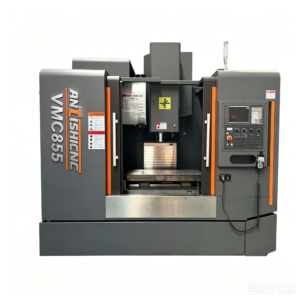
The VMC 650 CNC machine is a vertical machining center designed for high precision and efficiency in machining various metal workpieces. This machine tool is equipped with a spindle that can reach speeds of up to 10,000 RPM, allowing for quick and effective cutting operations. It features a robust structure that ensures high stability and rigidity during machining processes. The VMC 650 is suitable for a variety of applications, including mold making and precision parts fabrication. With automation options available, this machine enhances productivity in home manufacturing and industrial settings.
What are the advantages of using a CNC vertical machining center like the VMC 650?
Utilizing a CNC vertical machining center, such as the VMC 650, offers numerous advantages, including enhanced processing efficiency and precise machining capabilities. The machine’s 5-axis configuration enables the machining of complex geometries with high accuracy, while the automated tool change (ATC) feature minimizes downtime. Additionally, the VMC 650 is designed for compatibility with various machining operations, making it an ideal choice for industries such as aerospace and medical instrumentation. The machine’s high-speed spindle and advanced controller facilitate intricate designs and high-quality finishes.
How does the VMC 650 compare to other CNC milling machines?
The VMC 650 stands out among other CNC milling machines due to its superior rigidity and stability, making it highly effective for precision machining. While many CNC milling machines may only offer basic 3-axis capabilities, the VMC 650 provides advanced 5-axis machining options, allowing for greater versatility in production. Furthermore, its high spindle speed of 10,000 RPM ensures efficient processing of various metal materials. With a focus on quality control and automation, the VMC 650 is tailored for industries that demand high precision and fast turnaround times.
What types of workpieces can be machined with the VMC 650?
The VMC 650 CNC machine is designed to handle a wide range of workpieces, including precision parts for industries such as aerospace, automotive, and medical instrumentation. It is capable of machining various metal types, making it suitable for diverse applications such as mold making and tooling. The machine’s high precision and flexible machining capabilities allow it to process intricate designs and complex geometries. Additionally, the VMC 650 is equipped to handle large workpieces, ensuring it meets the needs of manufacturers seeking versatility in their machining operations.
What should I consider when researching details and pricing about CNC milling machines?
When searching for details and price about CNC milling machines, consider factors such as the machine’s specifications, capabilities, and brand reliability. It’s essential to compare features like spindle speed, axis configuration, and automation options, as these can significantly impact performance. Additionally, research the manufacturer’s reputation for quality and service, particularly if you’re considering machines like the VMC 650, which is made in Taiwan. Ensure that the machine tool you choose offers compatibility with your existing machinery and meets your precision machining requirements.