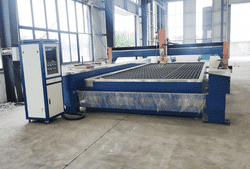


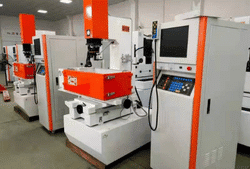



Electrical Discharge Machining (EDM) has served as a propellant for modern manufacturing, providing a solution for the creation of intricate and sturdy parts that were once believed to be unattainable. This non-traditional machining technique utilizes electrical discharges to erode metals and materials that are difficult to machine, making it an essential processing method in the aerospace, automotive, and medical industries. Like any process, however, EDM has its pros and cons. We will discuss the advantages and disadvantages of the EDM process, providing you with a much-needed understanding of how it works and when it applies to your projects. Any engineer, manufacturing enthusiast, or technologist will find this discussion to be of great value when seeking to understand the capabilities and limitations of EDM.
Introduction to Electrical Discharge Machining

EDM, or Electrical Discharge Machining, is a manufacturing process that utilizes electrical discharges to shape materials. This is achieved by sending sparks from the electrode (tool) to the workpiece, removing material from the surface accurately. EDM finds wider applications in creating complex shapes, intricate designs, and finely detailed parts in hard materials, such as metal alloys. Since it is a non-contact method, there are projects requiring high accuracy that conventional machining techniques cannot realize.
What is an EDM Machine?
An EDM, or Electrical Discharge Machining machine, is a highly specialized piece of equipment used to manipulate and shape hard materials, typically metals, through the discharge of electricity or sparks. These machines typically utilize a dielectric fluid and a spark erosion process to remove material from the surface of a workpiece, yielding precise and highly detailed results. EDM machines are broadly divided into two types: sinker EDM and wire EDM.
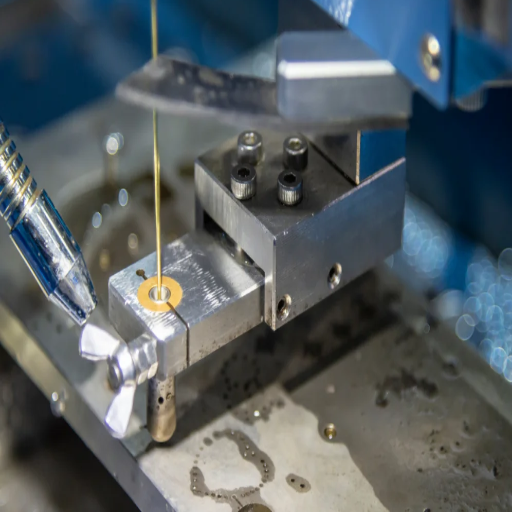
A sinker EDM machine employs an electrode that is custom-designed, often made of graphite or copper, to erode the workpiece material by forming the negative profile of the electrode into the part. Wire EDM, however, uses a thin wire (usually brass) as an electrode to cut profiles or contours with extreme precision. It is best used in the manufacture of complex, small, and fragile parts.
Make an example of the fact that with recent trends, automation and integration of CAD/CAM software have added a new dimension to EDM machining, allowing it to obtain high repeatability and shorter production times. And consider how wire EDM can cut with tolerances as tight as +/- 0.0001 inches, depending on the required ultimate application, and with a maximum thickness of 300 mm, thereby widening its application possibilities.
Therefore, non-contact processing and machining of any conductive materials, regardless of hardness, are some of the prominent features of EDM machines, ensuring they remain crucial tools for high-precision manufacturing.
How the EDM Process Works
Electrical Discharge Machining (EDM) uses a sequence of controlled electrical discharges to remove material from a workpiece. The workpiece and tool electrode are submerged in a dielectric fluid, and high-voltage pulses are applied between them. The dielectric fluid acts as an insulator till the voltage builds up enough to ionize the fluid and create an electrical spark between the tool and the workpiece. This spark generates intense heat—up to 12,000°C—that melts and vaporizes minute portions of the material being worked on, while the dielectric fluid simultaneously washes away the debris.
Wire EDM, a type of EDM, utilizes a thin-wire electrode that is given a high voltage and is shaped like a wire. Wire EDM finds uses in intricate cutting and processes that require tight tolerances and complex geometries. According to studies, current EDM can cut approximately 500 mm²/min while maintaining tolerances down to about ±0.0025 mm. Such advanced EDM machines are also equipped with automated features, including CNC controls and real-time monitoring systems, that enhance precision and productivity.
For a die-sinking EDM process, electrodes are typically made from graphite, copper, or tungsten. These materials are selected for good conductivity and resistance to wear, providing uniform sparking and erosion resistance. EDM improvements toward achieving a better cure have reduced electrode wear to less than 0.01 percent of the material removed for some systems, thereby increasing efficiency and reducing production costs in precision manufacturing for aerospace, automotive, and medical device industries.
Types of EDM: Wire EDM vs. Sinker EDM
The two major types of EDM — Wire and Sinker EDM — are specific to the applications for which they are used.
Wire EDM
Wire EDM uses an excellent wire as the electrode through which electric current is passed to cut the conductive material to great precision. Designing intricate shapes, fine details, and achieving closeness to tolerance are all typically associated with industries that lay out complex parts, such as aerospace and electronics. Wire EDM is particularly effective on hard materials and is well-suited for task-oriented applications such as die making and mold machining.
Sinker EDM
Sinker EDM, also known as conventional EDM, utilizes erosive processes to shape materials, thereby forming cavities of varying complexity with the aid of an electrode. This is the main difference from Wire EDM, where the shaped electrode, together with the workpiece, is submerged in a dielectric fluid. It is very well suited for making precise three-dimensional shapes on hard materials, such as injection molds and turbine blades, which require high accuracy and surface finish.
They are indeed both exact and are chosen based on the materials used, contour complexity, and the final use.
Advantages of EDM Machining
Precision
It has high precision, making it suitable for creating items with complex geometry that require tight tolerances.
Works with Very Hard Materials
It has the capability of machining materials that are difficult to cut by other means, such as hard steels, titanium, and carbide.
No Mechanical Stress
Since EDM utilizes electrical discharges to remove material, no physical contact or mechanical stress can be created on the workpieces.
Surface Finish Quality
EDM smoothens the surface, creating a fine finish that eliminates the need for further polishing or finishing.
Versatility
EDM is highly versatile and finds application in almost every industry, ranging from aerospace to medical manufacturing.
Precision and Accuracy in Machining
Modern machining processes require precision and accuracy to produce high-quality parts and components that meet stringent specifications. Due to several reasons, the EDM procedure is suitable in these areas: it is a non-contact cutting method and also works with hard-to-machine materials. EDM can achieve tolerances as tight as ±0.0001 inches and fit well in areas such as aerospace and medical devices, where standards are rigorous.
Repeatability permits the EDM process to produce complex geometries and intricate details repeatedly, while its computerized systems map machine paths and enhance accuracy with minimal operator intervention. EDM precision has risen in recent years through adaptive control, improved spark gap monitoring, and other enhancements, enabling manufacturers to cut the number of defects significantly. Several research works have demonstrated that, in terms of dimensional accuracy, EDM outperforms conventional processes, particularly in applications that require intricate features or acceptable tolerances. These capabilities make EDM extremely important in the current manufacturing setup for meeting both precision and accuracy demands.
Ability to Machine Complex Geometries
Electrical Discharge Machining (EDM) meets the need to produce parts with geometries and features that are too intricate and complex for conventional machining techniques to handle. Using controlled electrical discharges to erode material, EDM can make shapes with great precision that include sharp internal corners, fine cavities, and intricate contours. Such capability finds application in aerospace, automotive, and medical device manufacturing, where parts require extremely detailed and unconventional design. Another great strength of EDM is its ability to process hard materials, such as hardened steel and tungsten carbide, thereby augmenting its versatility. As stresses induced in the material by the conventional machining methods are absent in EDM, the process remains fairly unintrusive. Extrinsic factors, such as stress, rarely cause deformation; hence, it is suitable for machining delicate or thin-walled structures. This capability to machine intricate geometries makes EDM a vital player in modern precision engineering.
Minimal Mechanical Stress on Workpieces
A prominent feature of Electrical Discharge Machining (EDM) that endears it to users is its ability to minimize mechanical stresses on workpieces during machining. Basic cutting modes involve direct contact with the material being cut, whereas EDM uses electrical discharges for material removal; thus, no physical contact occurs between the electrodes and the workpiece. As such, the manufacturing process becomes non-contact, which means there is very little chance of deformation or damage to the workpiece; hence, EDM is used for delicate, thin, or highly precise components.
Recent technological advancements have improved the stress-free machining characteristics of EDM. Advanced pulse control systems maintain precise control over modern EDM machines, ensuring that the energy released remains within strictly tolerable limits. Results have shown that minimizing residual stress through the optimization of discharge energy and cooling rates promotes dimensional stability, even in delicate structures. Moreover, this process essentially eliminates stress development that arises from machining, as it is suitable for materials that tend to chill, such as those used in ceramic technology or brittle alloys prone to cracking under mechanical loads. This can assist manufacturers in producing precise results without compromising structural integrity.
This highly advantageous form of low-stress machining is highly sought after in the aerospace industry, as well as in medical device manufacturing and microelectronics, where delicate parts require extreme precision and accuracy. With hardly any mechanical impact, not only will product quality be improved, but also the life of complex parts will be enhanced simply because this process prevents the development of microcracks or other stress-induced damage.
Disadvantages of the EDM Process
Slow Material Removal Rate
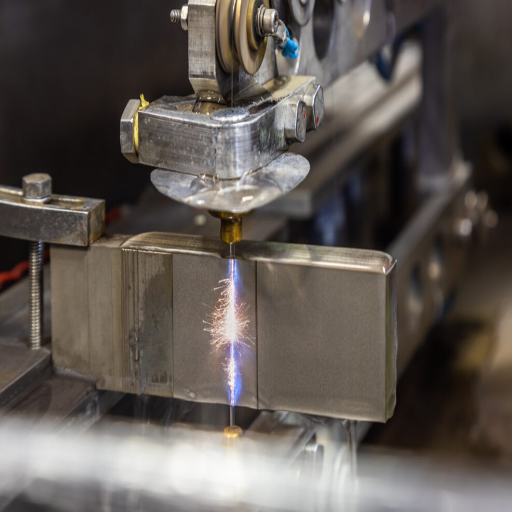
A slow material removal rate in EDM is comparatively slow compared to conventional machining methods and therefore is not suitable for large-scale production.
High Power Consumption
The process requires a considerable amount of electrical energy, thus increasing operational costs.
Limited Material Compatibility
EDM is only viable on electrically conductive materials and has certain types of workpieces in its application.
Tool Wear
Two electrodes employed in EDM begin to wear out with use, and replacements are required to maintain accuracy.
Surface Finish Concern
Although very precise, EDM may sometimes leave a rougher surface finish or areas affected by heat that may require additional post-processing.
High Operational Costs of EDM Systems
Several factors contribute to the high operational costs of EDM systems. Firstly, the purchase of an EDM machine is a significant investment, typically ranging from $50,000 to over $200,000, depending on the machine’s capabilities and precision. Coming to the electrodes, which must be made of materials such as graphite or copper, these are also very expensive and finite in life because they wear down during machining.
High-energy consumption adds to the expenses. EDM systems require a significant amount of electricity during machining, thereby increasing overheads, especially when the work involves high precision. To add to the continuous costs are the maintenance and periodic replacement of cooling systems, as well as the dielectric fluid for EDM. Dielectric fluids themselves can cost thousands of dollars annually, depending on the volume of consumption.
Other involved costs include labor, as the setup, operation, and maintenance of EDM machining require highly skilled operators and technicians. Studies reveal that labor and maintenance costs may constitute a significant majority of the total cost of owning an EDM system. Hence, while EDM offers excellent tolerance and machining for intricate parts, these operational costs keep it more within the realm of applications requiring a highly specialized nature, such as aerospace and medical device manufacturing.
Limitations in Machinable Materials
While Electrical Discharge Machining is indeed capable of providing an almost unparalleled degree of accuracy, the only limitation on EDM machining is, oddly enough, the sheer scope of machinable materials. The EDM is best suited for use on electrically conducting materials; non-conductive materials, such as plastics, ceramics, and some composites, cannot be processed by this method. Additionally, materials with low melting points are generally considered unsuitable because they may warp or become damaged by the heat generated during machining. Although EDM does well with titanium, tungsten, and tool steels, the relevant industries would have to carefully consider the capability-compatibility of the materials in order to exploit the apparatus thoroughly.
Slow Material Removal Rates
Being one of the most precise processes, electrical discharge machining requires longer material removal times. Such a limitation arises because an electrical discharge is produced in a controlled manner, resulting in the slow erosion of material from the workpiece. Compared to machining methods using cutting tools, EDM is relatively slow for very large workpieces. This nature of EDM slows down the production time and limits its application in large-scale manufacturing. Accordingly, industries use EDM from time to time for relatively high precision or delicate operations where speed is secondary to precision.
Applications of EDM in Various Industries
Aerospace
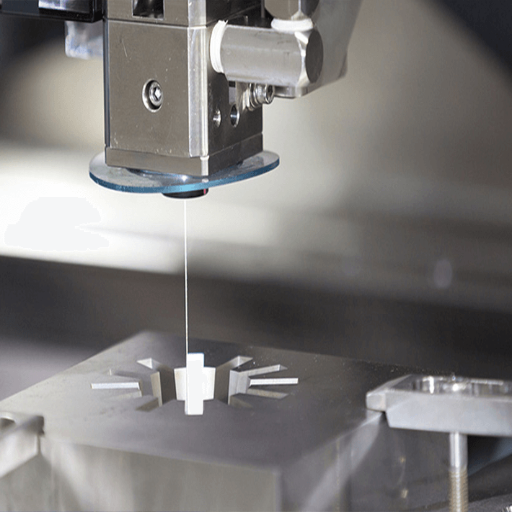
EDM is used to manufacture turbine blades and fuel system components that require complex shapes and tolerances.
Medical
The production of surgical instruments and implants is left to EDM due to the need for time ponderation and to achieve a smooth finish.
Automotive
The mold and die-making process for parts such as engine components and transmission systems is facilitated by EDM.
Tool and Die Making
EDM is used wherever high-precision molds, dies, and tools are needed, including in the electronics and plastics industries.
Electronics
It aids in the manufacture of intricate, detailed parts, such as connectors and microcomponents, that require precise specifications.
Due to the versatility of EDM, it is essential in any industry that requires complex detailing and precision.
Use of EDM in Medical Device Manufacturing
EDM is critical in the manufacturing of medical devices, where precision, accuracy, and repeatability are paramount. This advanced machining technique is utilized in the manufacturing of critical medical components, including surgical tools, orthopedic implants, and cardiovascular stents. For instance, EDM allows parts to be made with complex geometries within ±0.0001-inch tolerances, which is crucial for intricate features needed on medical apparatuses.
The other significant application is the production of micro-sized components for minimally invasive surgical instruments. EDM can machine small, precise holes and delicate structures, endowing these medical tools with functionality and reliability. Additionally, since it minimizes thermal damage to the workpiece, the technique preserves the integrity of materials, which is particularly important when dealing with sensitive medical-grade alloys, such as titanium and stainless steel.
The advent of wire EDM and die-sinking EDM in recent years has led to further enhancements in medical EDM applications. For example, wire EDM is used to produce thin profiles and sharp edges required for implantable devices. The projection of global demand for medical devices involving EDM manufacturing components indicates strong growth trends, fueled by increased healthcare demand and technological advancements. Hence, this makes EDM a foundational technology for advancing modern healthcare solutions.
EDM in Aerospace and Automotive Industries
EDM finds its application in the aerospace and automotive industries due to the need for extreme precision, durability, and complex designs. The manufacturing of complicated parts such as turbine blades, fuel injector nozzles, and transmission components, which all require high degrees of precision and reliability, is facilitated by EDM. These stringent demands were countered by the use of EDM technology to achieve a better surface finish and the machining of hard materials, such as titanium and superalloys, which are consistently used in the aerospace and automotive industries.
At the same time, further enhancements in 5-axis EDM machining have enabled the carving of complex geometries, thereby reducing waste materials and shortening production cycles. For instance, aeronautical turbine blades manufactured through EDM enhance engine performance through tight tolerances and aerodynamic perfection. Similarly, in the automotive sector, EDM is actively engaged in creating elaborate molds for lightweight components, supporting initiatives towards electric and hybrid vehicles. With the level of precision and flexibility, EDM still retains its position as a dominant player in driving innovation in these advanced technology fields.
Other Industries Benefiting from EDM Technology
Apart from aerospace and automotive, EDM is extensively utilized in the healthcare, electronics, and energy industries.
| Industry | Applications | Key Benefits | Market Impact |
|---|---|---|---|
| Healthcare Industry | Surgical instruments, implants, orthopedic devices | Micron-level precision, biocompatible materials | Medical device market forecast to reach $715B by 2030 |
| Electronics & Semiconductor | MEMS, connectors, high-frequency components | Micro-component manufacturing with high accuracy | Semiconductor industry surpassed $600B in 2022 |
| Energy Sector | Turbine components, cooling holes, and renewable technology | Enhanced efficiency, heat dissipation improvement | Renewable energy capacity projected to reach 4800 GW by 2030 |
Healthcare Industry
Size matters more often in the healthcare industry when it comes to creating complex and tiny components for medical devices. It can produce complex surgical instruments for operating on implants, such as those used in orthopedic and cardiovascular procedures. For instance, the technology is highly adept at manufacturing titanium implants with micron-level precision in terms of acceptance and durability. The global medical device market is forecast to reach over $715 billion by 2030, where EDM will facilitate necessary designs for advanced and patient versions.
Electronics and Semiconductor Industry
Being able to manufacture micro-components with high accuracy has made EDM indispensable to the electronics and semiconductor industries. It is mainly used for producing molds for MEMS, connectors, and high-frequency components in consumer electronics. The semiconductor industry alone surpassed the $600 billion threshold in 2022, underscoring the growing demand for finely machined components to drive innovations in 5G networks, AI, and IoT.
Energy Sector
The energy industry benefited through EDM, especially in machining turbine and engine components. These components are often precision-crafted to enhance the efficiency of electricity generation, wind turbines, and even renewable technology. Hydro- and gas-turbine companies utilize EDM to form and drill cooling holes in turbine blades, thereby improving heat dissipation and performance. With global renewable energy capacity projected to reach 4800 GW by 2030, demand for EDM-engineered components in this sector continues to rise steadily.
The consistent evolution of EDM technology, combined with its versatility across various industries, lies at the heart of modern manufacturing. Greater accuracy and efficiency stand testimony as key reasons why EDM remains a celebrated technological advance today.
Weighing the Pros and Cons of EDM Machining
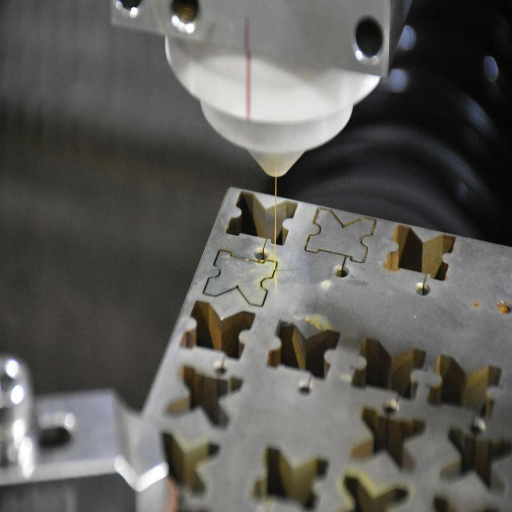
In evaluating EDM’s pros and cons, its most important advantages are considered to be accuracy and flexibility in processing complex geometries. The requirement to design complex parts with tight tolerances renders this method all the more valuable in high-precision industries. Another significant capability of EDM is that it can process hard materials that are not amenable to machining by more usual techniques. On the other hand, slow machining speeds when compared to conventional machining methods and high costs are some drawbacks of EDM machining. However, these drawbacks are sometimes offset by the advantages in applications that demand extreme precision.
Final Thoughts on Advantages and Disadvantages
Electrical Discharge Machining (EDM) remains a crucial technique for industries that require the most precise machining on hard materials. Accuracy is one such selling advantage, in addition to machining complicated geometries and hard materials that conventional means may not be able to process. However, consider also the disadvantageous aspects. EDM generally takes a longer time in production, as it’s inherently so. In other instances, the operational cost is too high to bear, hence it is deemed unsuitable for specific projects. These rare disadvantages notwithstanding, it finds preference for applications that do not compromise on precision and quality of work, from the aerospace, medical, and automotive fields, among others. Therefore, as soon as the process requirements necessitate heavy machining, the significant EDM advantages take over from its lesser side.
Future of Electrical Discharge Machining
I believe we can look forward to a bright future for Electrical Discharge Machining (EDM) as metrology advances towards more precise and efficient modes of operation and versatility. The integration of new technologies, including AI and automation, alongside sustainable processes, makes EDM far more efficient. These new processes maintain the ability for EDM to be used where intricate and high-precision components are needed, thereby maintaining its viability within the ever-evolving manufacturing landscape.
Choosing the Right Machining Process for Your Needs
Depending on factors such as the material, geometry of the part, precision requirements, production volume, and cost, a suitable machining process will be selected. In the case of the most intricate and complex components, EDM is the most appropriate, as it handles materials that are difficult to machine, such as hardened steel and superalloys. The ultimate application of component production is speed and cost efficiency; CNC milling and turning can manufacture simpler parts in large quantities, with a wide variety of applications. Additive manufacturing, such as 3D printing, is popular for fast prototyping and custom designs; however, it does not find much application when dealing with high-strength or high-performance requirements. To make the best decision, evaluate the specifications of your projects against the machining capabilities, and if in doubt, consult with an expert or manufacturer. This focused decision-making will ensure efficiency and guarantee the desired outcomes.
Conclusion
EDM machining stands as a cornerstone technology in modern precision manufacturing, offering unmatched capabilities for creating intricate components that push the boundaries of conventional machining. While the process has inherent limitations, such as slower material removal rates and higher operational costs, its advantages in precision, material versatility, and stress-free machining make it indispensable for high-tech industries.
As technology continues to evolve with AI integration, automation, and sustainable practices, EDM will undoubtedly maintain its critical role in aerospace, medical, automotive, and electronics manufacturing. The key to success lies in understanding when to leverage EDM’s unique capabilities and when alternative machining processes might be more suitable for your specific manufacturing needs.
For manufacturers and engineers seeking the highest levels of precision and quality in their components, EDM remains an invaluable tool in the modern manufacturing arsenal, delivering results that would be impossible to achieve through conventional means.
Reference Sources
A Review of Educational Data Mining in the Higher Education System
Linearization as a Solution for Power Amplifier Imperfections: A Review of Methods
Frequently Asked Questions (FAQs)
What are some advantages of EDM machining?
EDM machining processes offer several benefits when used. It machines hard materials with very high precision. The process of erosion of material by employing controlled electric sparks, thus enabling the machining of intricate designs and complex geometries that may otherwise be difficult via traditional machining methods. It can achieve tight tolerance levels, which are highly desirable in areas such as aerospace or medical device manufacturing.
What are some of the disadvantages of EDM machining?
Despite this immense applicability of EDM, some disadvantages can be listed in its favor. One of the main disadvantages is that the cutting processes tend to be slower relative to the conventional CNC methods. The process is time-consuming when working on larger parts. Higher operational costs can be incurred due to the requirement to use a dielectric fluid, primarily deionized water. Furthermore, with automated EDM machines, a higher initial investment may be required, which can pose a challenge to some manufacturers.
How are electric discharges set up in the EDM process?
The EDM process is essentially the creation of electrical discharges occurring between two electrodes separated by a dielectric fluid. These discharges are triggered the moment a voltage is applied in an electric field, thereby creating controlled electric sparks that erode parts of the workpiece material from its surface. This unique mechanism allows EDM to efficiently machine parts that are almost impossible to process by conventional machining routes.
What is the difference between wire EDM and traditional EDM?
Wire EDM, also known as wire erosion or wire cutting, involves scoring a thin, electrically charged wire as the cutting means. Ram-style or traditional EDM methods use complementary electrodes to form a better part. Wire EDM is best suited for intricate applications and those demanding high accuracy, whereas ram-style EDM is more suitable for cavity and form making.
What kind of materials can be machined by EDM?
EDM works best with hard materials, such as tool steels, carbides, and certain alloys that are difficult to machine using conventional machining methods. This process is increasingly attractive for producing exact parts and maintains very high levels of accuracy in the application process.
Can holes be drilled using the EDM machine?
Yes, EDM is capable of drilling holes, and there are specific applications where this process is referred to as hole drilling EDM. Hole drilling enables the precise creation of small-diameter holes in hard materials. This ability to drill deep holes with minimal burr formation makes EDM the preferred choice in industries that require complex hole patterns and precise components.
What does the dielectric fluid do in the EDM process?
The dielectric, mainly deionized water, has one of the most critical roles in the EDM process. First and foremost, it insulates the two electrodes from each other when the voltage and current are applied. It also purges the spark gap, which helps cool the machine table, electrode, and workpiece, maintaining temperature stability. It removes debris that is formed during the machining process.
What are the manufacturing sector applications of EDM?
In the manufacturing sector, EDM is used extensively across various applications. It finds suitable applications for firms that require high-precision components, such as those in the aerospace, automotive, and medical device industries. It is particularly effective in machining complex components, constructing molds, and producing parts that are difficult to machine using conventional machining methods. The versatility and accuracy of EDM render it ideal for advanced manufacturing applications.