




Understanding the differences, applications, and choosing the right machine for your needs
Choosing the right machining element for the work entails the final touch of efficiency and precision. The shapers and milling machines are both essential tools for machining purposes; yet, their mechanisms, constructions, and best-suited applications differ significantly. This post discusses and explores the machinery of a shaper, following components and functioning, while contrasting it with that of the widely versatile milling machine. You will have a clear understanding of the differences between the two machines and know when to use one or the other in your work projects. Thus, this article serves as a worthwhile read for both professional machinists and inquisitive learners, as the subject is a key to gaining a comprehensive understanding of the art of machining.
Introduction to Shaper Machines
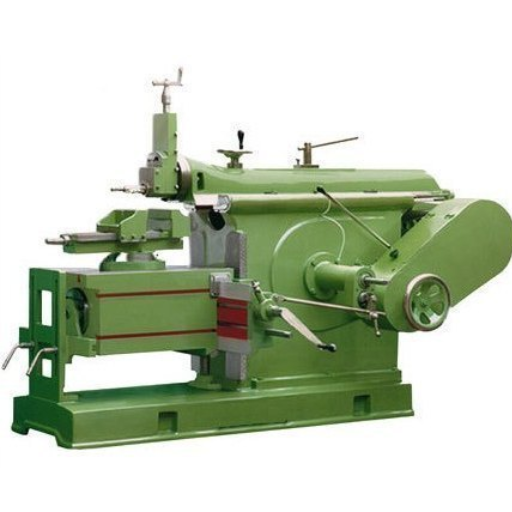
Shaping machines are metal-cutting tools designed to shape or cut material with exact size and form. The machine tool manipulates a single-point cutting tool or an indented punch to cut metal in a linear motion, either by cutting flat surfaces, grooves, or contours. The defining feature of the shaping machine is the reciprocal motion of the tool, which moves backward freely during its return stroke while cutting is performed in the forward stroke against the workpiece. Essentially, a shaper is used to shape flat and angular surfaces, marking its importance in machining operations where simplicity and accuracy prevail.
What is a Shaper Machine?
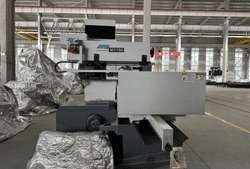
A shaper is a type of metal-cutting machine mainly used to cut straight lines on flat surfaces. Some other materials are given grooves or shaped straight by this machine. It typically features a single-point cutting tool that performs the cutting action in a reciprocating linear motion. It is a ram-type machine, meaning that the ram drives the tool horizontally back and forth during the cut, making it suitable for simple knife-edge operations that require good accuracy.
Modern shaper machines have specifications that range from 175 mm to 900 mm in cutting stroke length, provisions for stroking adjustment, and a speed range suitable for the materials at hand. The bed is generally very sturdy, supporting the workpiece, and shaper machines usually have a table with adjustable feeds, aided by a clamping device that allows for gluing operations to be carried out with accuracy.
Shaper machines find major utility for industries where it is required to produce well-finished complex grooves, keyways, dovetail slides, or planar surfaces for parts. While CNC machines are most preferred in the present age for precision work, the shaper machine remains a viable option in industries, primarily due to its cost-effectiveness. It is used mainly by workshops on a smaller scale and educational institutions for training purposes, owing to its simple operation and dependable nature.
History and Evolution of Shaper Machines
As a manufacturing machine, the shaper has its origins in the early 19th century, coinciding with the rise of the Industrial Revolution. The first practical shaper is often attributed to the Scottish engineer James Nasmyth, who developed it in 1836. This was designed to improve and standardize the production of precision parts required in significant quantities by industries such as railroads, shipbuilding, and machinery manufacturing.
Designs of shapers underwent a significant evolution with the advent of new materials, taking into account strength, ergonomics, and mechanical precision. Toward the end of the 19th century and in the early 20th century, manufacturers developed machines with improved clamping systems, automatic feeds, and greater versatility, thereby increasing productivity. Then, with the widespread adoption of electric motors in the early 20th century, shaper machines gradually evolved from being manually operated or steam-driven to becoming motorized, thereby becoming more efficient and widely adopted.
Modern machining technologies, represented by CNC machines, have overshadowed shaper machines in many respects. However, there are still applications wherein the shaper machines remain very important. These machines are still in use today in environments where cost is a factor, on a small production scale, and in technical education-oriented institutions. Because their running costs are very low and the maintenance of these machines requires little skill, it is apparent that these machines remain relevant today for machining operations that require keyway cutting and planar surface finishing. This transformation reflects the journey of the shaper machine from a very crude hand tool to a reliable and efficient modern industrial machine.
Key Components of a Shaper Machine
A shaper comprises several significant components that perform the machining and shaping of work material with absolute precision. When one understands these major parts, one then understands how the machine functions and the vast areas in which it could be used:
Base
Often made from cast iron, the base forms the foundation to afford stability and absorb vibrations during the machine’s varied activities. It supports columns, tables, and other components.
Column
The column, mounted vertically on the base, carries the ram and rocker arm, along with the entire arrangement responsible for the reciprocating motion. It provides rigidity to the machine and supports other operational parts.
Ram
A ram is a reciprocating part that holds the tool head and imparts a cutting motion to the workpiece. It slides horizontally back and forth above the workpiece, enabling the cutting tool to shape or carve off material from the surface.
Table
The table is an area where the workpiece is positioned and held firmly during machining. It can often move up and down or horizontally to position the workpiece properly underneath the tool head for efficient cutting. Clamps and fixtures are placed in the T-slots of the table for attaching the workpiece.
Cross Rail
The cross-rail supports the table and facilitates its vertical positioning. Through vertical setting adjustments to the cross rail, the machine can be balanced with workpieces of various sizes and thus level them to the view of the cutting tool.
Tool Head
The tool head is joined to the ram and holds the cutting tool, which cuts the material. It has provision for angular adjustments for cutting at different angles and is equipped with a clapper box that lifts the tool during the return stroke to avoid damage or interference.
Feed Mechanism
The feed mechanism controls the relative motion of a workpiece table in relation to the cutting tool, enabling the smooth removal of material and facilitating multiple passes for machining complex workpieces.
Stroke Adjustment Mechanism
The stroke adjustment mechanism determines the length of the arbitrary motion of the ram. This particular feature is equally vital for carrying out an optimum cutting process, depending on the size of the workpiece.
Driving Mechanism
The driving mechanism is generally composed of an electric motor, along with belts and gears, which generate the power to drive the ram and, consequently, the feed mechanism. Recently, variable speed drives have also been found installed alongside precision machines.
All these components share a common destiny, wherein they all contribute simultaneously to ensure the smooth operation of the machine through which the given work is done, shaping and cutting with the required crispness and accuracy. Modernities developed in both materials and setup raised the value of these machines in both industrial and educational sectors, thus underscoring the importance of these machines at their core.
Comparing Shaper and Milling Machines
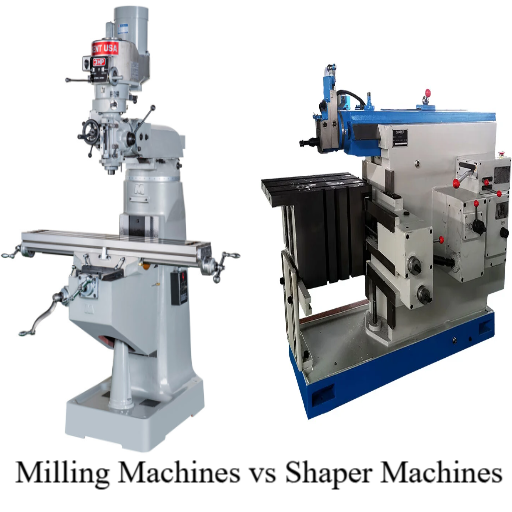
While shaper and milling machines may both cut and shape, they do differ in their functions and applications. A shaper machine performs essentially linear cutting operations, producing flat surfaces by dragging its cutting tool horizontally across the workpiece. Conversely, the milling machine is more versatile; it can accommodate multiple-direction cutting to create complex shapes, grooves, or curves with the rotating cutting tool.
Shapers are well-suited for simple, smaller jobs and are designed to operate at a slower speed due to the linear motion. Milling machines, on the other hand, offer greater precision and speed due to their advanced features, and are therefore used for larger and more complex jobs. The decision between one and the other depends on the complexity and scale of the work to be undertaken.
Fundamental Differences Between Shaper and Milling Machines
Both shaper and milling machinery are machineries of paramount importance to machiners and are distinct in purpose and intensive in detail according to the kinds of operations they carry out:
| Aspect | Shaper Machine | Milling Machine |
|---|---|---|
| Motion and Cutting Process | Reciprocating linear motion with a forward cutting stroke | Rotary motion with a rotating cutting tool around an axis |
| Speed and Efficiency | Slower operation due to linear motion | Higher speed with CNC automation capabilities |
| Complexity of Operation | Simple operation requiring minimal training | Highly versatile with a wide range of operations |
| Applications | Keyways, grooves, flat surfaces | Gears, molds, dies with precise tolerances |
| Material Handling | Medium to small-sized materials | Flexible size and material handling |
| Accuracy and Precision | Limited by mechanical constraints | ±0.001 inches tolerance with CNC systems |
| Cost Consideration | Lower cost, budget-friendly | Higher cost but greater productivity value |
Key Insight: These differences suggest that the choice of shaper milling is greatly dependent on project complexity, budget, speed requirements, and the degree of precision considered necessary. Business-oriented milling now takes precedence on a wide range of applications, even though shapers retain greater value in certain basic operations.
Applications of Shaper Machines vs Milling Machines
Shaper Machine Applications
- ✓ Flat, horizontal, vertical, and inclined surfaces
- ✓ Cutting keyways and grooves
- ✓ Small workshop operations
- ✓ Limited production runs
- ✓ Educational training purposes
Milling Machine Applications
- ✓ Drilling, contouring, and slotting operations
- ✓ Complex 3D shaping with high precision
- ✓ Aerospace and automotive industries
- ✓ Medical device manufacturing
- ✓ High-volume production environments
Industry Insight: Reports from the industry indicate that milling machines have been preferred from their first day of operation due to their speed and ease of incorporation into high-production environments. CNC milling machines can save machining time up to about 30% compared to hand-operated methods, making them favored by industries that look for efficiency and large-scale production.
Advantages and Disadvantages of Each Machine Type
Shaper Machines
✅ Advantages
- Simple enough to operate and maintain, ideal for smaller workshops
- Considerably cheaper and economical for smaller volume production
- Flexible about material processing (metal, wood, etc.)
- Straightforward jobs with good accuracy
❌ Disadvantages
- Limited to linear and straightforward operations
- Slower and less efficient for high-volume production
- Cannot interface with advanced automation or CAD/CAM systems
- Restricted versatility compared to milling machines
Milling Machines
✅ Advantages
- Produces complex shapes, contours, and differential parts
- Faster operation with high accuracy for mass production
- Compatible with CAD/CAM systems and advanced automation
- CNC systems offer superior productivity and precision
❌ Disadvantages
- More expensive to buy, operate, and maintain
- Requires highly skilled operators for CNC programming
- Higher energy demands and initial investment costs
- Complex setup for advanced operations
Working Mechanisms
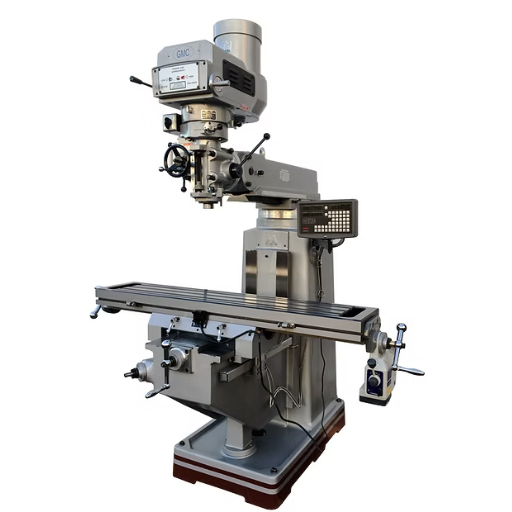
The operation of a CNC machine consists of computer programming and mechanical movements. The process initiates with the CAD model being converted to a CAM file. Such instructions are then fed to the machine specifying how to cut, shape, or engrave the material. The CNC machine executes the cuts and movements of the tooling and parts according to pre-programmed commands, ensuring high precision in the execution of the design. Controlled movements, such as rotations, cuts, or drills, are applied to the material being processed to produce the final product. This automated and precise process, therefore, reduces the chances of human error and assures highly superior results.
How a Shaper Machine Operates
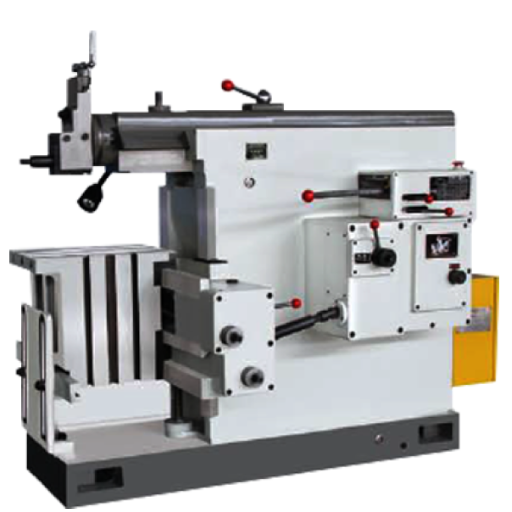
Shaping is essentially a machining operation in which a single-point cutting tool moves linearly over the workpiece. The essential parts of a shaper are the ram, worktable, tool head, and feed mechanism. The ram carries the cutting tool and moves back and forth in a reciprocating motion, where the cutting tool removes material on the forward stroke and retracts on the return stroke, typically without cutting.
Considerable modern improvements have enabled shaper machines to prioritize functionality and efficiency. These machines are capable of performing both horizontal and vertical cutting operations, and can therefore be used for machining flat, angular, and curved surfaces. The feed mechanism moves the worktable, allowing the operator to control the depth and area of material removal, depending on the amount to be removed.
Performance Data: A recent study shows that, with recent advances in materials and manufacturing techniques, the speeds of shaper cutting can advance to 20-50 m/minute, particularly with relatively softer materials like aluminum. Hardened steels may, however, require relatively slower speeds for precision and to prevent tool wear. Furthermore, the new-generation shaper machines with automatic controls require less manual intervention than before, thereby improving safety and significantly reducing operation time.
How a Milling Machine Operates
Milling machines consist of rotating cutting tools that remove material from a workpiece to achieve precise dimensions and a smooth surface finish. The cutting tool, which is generally a cylindrical cutter, moves in multiple directions along the X, Y, and Z axes, allowing for the creation of intricate and detailed cuts. Today, there are mainly two types of milling machines: horizontal and vertical, based on the orientation of the spindle where the cutting tool is mounted.
With the introduction of new innovations in this field, milling machines have also become significantly more capable. CNC technology, for instance, enables extensive automation, reducing human error and enhancing accuracy. High-speed milling machines are today capable of spindle speeds of up to 20,000 RPM and are ideal for machining small and detailed components or materials of extremely high hardness. Some models utilize advanced AI solutions to optimize tool paths, reducing machining time by up to 30%.
Due to their high versatility, milling machines can be utilized in numerous industries, including aerospace and automotive manufacturing. Depending on the material, adjustments to spindle speed, feed rate, or tool type are necessary to minimize cutting time and reduce tool wear. This means that milling aluminum will probably be performed at high speeds and low feed rates, while milling materials like titanium and other more complex alloys will demand relatively low speeds and tooling capable of withstanding the material’s strength.
Increasingly, automated tool changers combined with multi-axis configurations enable the automation of multi-axis milling in a single setup, thereby saving time and ensuring accuracy. The series of technological advancements that have taken place has solidified the modern milling machine as the cornerstone of precision machining, enabling the production of pieces according to the high demands of modern manufacturing.
Comparative Analysis of Operation Efficiency
Operation Efficiency in the manufacturing sector has dramatically improved with the advent of advanced technologies and automation. Traditional milling machines often required more than one setup-and-go operation while maintaining manual supervision; hence, it took longer hours to complete the work, escalated labor costs, and more. CNC machines, compared to these, drastically cut cycle times; machining processes could be 50% faster due to high-speed spindles and adaptive feed controls, according to some studies.
Automation emerged as another source of efficiency. Automated tool changes significantly reduce downtime between operations when switching tools, reducing the time from minutes to mere seconds. Additionally, multi-axis machining of complex geometries completes numerous operations in fewer passes, thereby negating the need for further operations on the workpieces by another machine. For instance, setup times for 5-axis milling machines have been reported to be cut by as much as 75%, easing production flows.
Lastly, real-time monitoring and data analytics bring in another efficiency factor. Advanced solutions monitor parameters such as spindle utilization and tool wear, which are then used to implement predictive maintenance to prevent unexpected breakdowns. Industry reports indicate that innovative manufacturing technologies enable companies to increase their efficiency and productivity by 20-30%.
In summary, utilizing state-of-the-art milling technologies will help ensure that these manufacturers minimize turnaround time and costs with great precision, meeting the increased demand posed by competitive markets while optimizing the utilization of available resources.
Versatility of Shaper and Milling Machines

Shaper and milling machines are very versatile and widely employed in manufacturing. Shaper machines are well-suited for producing flat surfaces, grooves, and detailed profiles, and are therefore suitable for minor work or jobs requiring precision applications. A milling machine, in contrast, can handle the shaping, cutting, drilling, and engraving of many materials faster and with greater precision than any other. Flexibility is a defining feature of all operations involving their use, as they also have many applications for different industrial processes. The machines are instrumental when combined with modern technology in upgrading their capabilities to support the development of technological industries.
Versatility of the Shaper Machine
In industrial applications, the shaper machine is very versatile and helpful. It is used to produce very flat, angular, and concave surfaces with ultimate precision. Unlike typical shaping machine designs that incorporate rotary actions, a shaper machine utilizes linear cutting motion for a fast and straightforward procedure of shaping metals, wood, and plastics. With the passage of time, modern shaper machines incorporate various technologies that enable the movement of their parts to span a wide range of cutting speeds, allowing for automation and CNC compatibility if desired.
The data show that shaper machines are used in numerous industries, including automotive, aerospace, and manufacturing. For instance, shaper machines are used in tooling shops to perform gear, keyway, slot, and groove work on more complex components. Moreover, the flexibility of handling both small and large jobs makes it an excellent machine for custom fabrication and production purposes. Greater accuracy, reproducibility, and versatility have made the shaper machine adaptable to diverse industrial purposes that require high-precision output.
Versatility of Milling Machines
Milling machines are considered to be essential tools in manufacturing due to their process versatility and their ability to shape and fabricate many types of materials accurately. They can perform various operations, such as cutting, drilling, contouring, and slotting, thereby serving as a bridge between prototypes and production. In this respect, modern advancements in milling technology have extended the potential of milling. Computer numerical control (CNC) milling machines ushered in a new age of machining by combining precision with automation to manufacture complex designs with minimal human interference.
Market Growth: According to recent data reports, CNC milling machines are a major stakeholder in the global machine tool market, which is anticipated to grow at a CAGR of 5.7% between 2023 and 2030. The increased need for precision parts in the aerospace, automotive, and electronics industries drives this growth.
Furthermore, over time, the versatility of tooling has improved, allowing for multi-axis machining of complex geometries. Five-axis milling machines, for instance, can treat parts from almost any angle, thereby freeing them from restrictions posed by multiple setups.
Milling machines also demonstrate their adaptability by working with a wide variety of materials, including metals, aluminum, steel, composites, and plastics, among others. This broad material compatibility ensures their usability in various industries for an extensive range of applications. From producing complex moldings to machining engine parts and even creating custom prototypes, milling machines remain at the forefront of modern manufacturing applications.
Choosing the Right Machine for Your Needs
Machine Selection Guide
Searching for the ideal milling machine requires the capacity to identify your use, budget, or production requirements. Begin by determining whether you will need a milling machine for vertical, horizontal, or CNC applications; each is suited for a specific purpose. Vertical milling machines are versatile and widely used for a variety of tasks, including detailed surface work. At the same time, their horizontal counterpart is more suited for heavy cutting work and shaping.
CNC Milling Advantages
A CNC-type milling machine offers its users unchallenged precision and efficiency. CNC milling machines essentially automate the production processes, thereby increasing accuracy and reducing human error. For example, modern 5-axis CNC machines now control all axes simultaneously, greatly easing the realization of complex designs.
Performance Impact: Industries using 5-axis CNC machines have experienced a decrease in production times of up to 50 percent and have seen a significant increase in output quality.
Technical Considerations
Furthermore, machine selection and tooling options should be considered. Machines operating at very high spindle speeds, namely 10,000-30,000 RPM, are better suited for cutting lightweight materials such as plastics and aluminum. Those operating at lower speeds but with better construction quality are more suitable for heavier materials, such as steels or titanium.
Cost Analysis and Investment Considerations
| Machine Type | Price Range | Best For | Target Users |
|---|---|---|---|
| Entry-Level CNC | $3,000 – $6,000 | Small shops, hobbyists | Price-conscious buyers |
| Industrial CNC | Six figures+ | High-precision manufacturing | Large-scale operations |
| Traditional Shaper | Low cost | Simple operations | Educational, small workshops |
Investment Advice: Whether you’re a small business, a sole enthusiast, or an industrial manufacturing team, weighing these issues carefully will ensure an investment in a milling machine that best suits your production needs.
Conclusion and Future of Shaping and Milling Technologies
Today, shaping and milling technologies continue to evolve due to ongoing advances in automation, precision engineering, and materials science. The translation of parallel design with manufacturing-CAD/CAM systems enables a significantly faster setup for prototyping as well as high-precision production. Innovative concepts, such as 5-axis milling and the application of environmentally friendly materials, continue to expand their scope of work. On the eve of tomorrow, greater access to incredibly high-end technologies, coupled with advanced environmental processes, will drive this sector, enabling these machines to become increasingly versatile tools. They will ultimately be found in practically every building, facilitating the efficient manufacture of goods to the highest quality standards.
Trends in Shaper and Milling Machine Technology
🤖 Automation and Smart Integration
Though shaping and milling machines have traditionally been considered manual operations, increasingly automated and innovative technologies, with advanced CNC implementations from IoT, are being incorporated. Such upgrades ensure greater precision, provide opportunities for real-time monitoring, and coordinate well with smart factories to produce maximum efficiency with minimum downtime.
🌱 Sustainable Materials and Processes
Environment-friendly materials and energy-efficient systems are gaining acceptance. Manufacturers are concerned with minimizing the environmental impact of their fabrications by making machines that use less power and use recyclable or sustainable cutting materials.
🔧 Additive and Hybrid Manufacturing
Combining subtractive manufacturing with additive manufacturing techniques such as 3D printing presents enhanced capabilities in milling and shaping. Hybrid processes offer design freedom, reduced material wastage, and increased customizability.
👥 More Accessible and User-Friendly
Shaping and milling machines have become accessible to smaller businesses and individual users with the development of intuitive software interfaces and compact designs. These user-friendly advances, therefore, are taking the industry beyond traditional manufacturing sectors.
Future Outlook: By highlighting these advancements, the shaper and milling machine industry has thus customized itself to achieve higher efficiency, sustainability, and adaptability, catering to the demands of modern manufacturing.
The Role of CNC Milling in Modern Machining
CNC milling enhances modern machining by providing the precision, efficiency, and versatility required in manufacturing. From my perspective, this machining feature enables the manufacture of very complex parts with consistent accuracy, which is crucial in industries such as aerospace, automotive, and medical devices. Computerized automation has increased manufacturing productivity; at the same time, however, it has reduced human error to the bare minimum, thereby making CNC milling the most essential tool in manufacturing today.
Final Thoughts for Machinists
Professional Development in Machining
Machining has become essential in modern manufacturing, as the success of any machinist depends on their ability to continually update their skills and adapt to changing demands. To remain competitive in the machinist profession, it is crucial to stay current and adaptable. Therefore, one must strive to learn the latest machine technologies, such as CNC machining, which provides consistent accuracy for complex designs. Always maintain your tools and equipment so that the job is done efficiently and costly external mistakes are avoided. Apart from that, programming and material knowledge will provide a professional advantage in almost all industries. Always be curious; continue your studies, and make use of the industry’s resources to stay ahead in manufacturing advancements.
Key Takeaways
Choose Based on Needs
Select shaper for simple operations, milling for complex precision work
Consider Budget
Balance initial investment with long-term productivity gains
Future-Proof Skills
Stay updated with CNC technology and automation trends
Reference Sources
Subcontracting: A strategic approach for SMEs development in Bangladesh
Six-Axis Linkage Strategy and Its Models for Non-Circular Helical Gears Based on Diagonal Hobbing
Frequently Asked Questions (FAQs)
What is a shaper machine, and how different is it from a milling machine?
A shaper machine is a type of machine tool that uses a reciprocating single-point cutting tool to shape a material into the desired form, most commonly metals. It usually moves the tool back and forth to shape flat surfaces, grooves, or other shapes. Milling machines, incorrectly called mills, are in reality the interfacing machining processes that use rotating cutters to remove material physically, and they are capable of much more complex operations, such as producing internal splines or taper cuts. Thus, while a machine shop cannot function without the other, the operations and applications of the two machines are very different.
What are the main components of a shaper machine?
The primary components of shaper machines are the base, column, ram, tool head, and worktable. The ram carries the tool head and moves it backward and forward to deliver motion to the single-point cutting tool. The work table holds the workpiece firmly and can be adjusted to control either the depth of cut or the feed motion. Having a working knowledge of these main components would help the machinist use the shaper efficiently.
How does the versatility of milling machines and shapers compare?
In terms of versatility, milling machines outperform shaper machines. Among the tasks that milling machines can perform are face milling, surface grinding, and producing complex shapes using CNC milling technology. Shapers are more specialized for specific tasks, such as creating flat surfaces or internal keyways. However, once a particular job requires a shaper, milling machines often take on various other functions, making them the first choice in many production environments.
Can a shaper machine perform the same work as a milling machine?
A shaper can only perform some types of jobs that a milling machine can, its capacity being limited compared to the milling machine’s versatility. For example, a shaper can produce flat surfaces and grooves, but might have difficulty with more complicated designs or deep cuts that require multiple passes from a milling machine. In comparison, milling machines, outfitted with cutters of various types, such as end mills and face mills, prove to be more effective choices for complex machining operations, allowing for a greater number of applications.
What types of operations can be performed on a lathe machine compared to a shaper?
Unlike the shaper machine, which primarily operates with linear motion, a lathe machine utilizes rotary action and can create cylindrical swages, threads, or other intricate contours with the aid of various tool bits. Both machines are essential in metalworking, but they differ significantly in terms of their operational focus and applications.
What is the role of the work table in a shaper machine?
The worktable in a shaper machine firmly holds the workpiece in place during operation. It is directed in one or more directions, depending on the operation, allowing the operator to control both the depth of cut and feed motion. The proper adjustment of the work table is entirely complementary to the shaping process, ensuring precision on the part and the proper finishing.
What is the importance of quick return in shaper machines?
The quick return mechanism separates itself from the other mechanisms by having a faster return time of the ram to its starting position, compared to the speed during the cutting stroke. The mechanism thus reduces the idle time for non-cutting motions and increases the overall productivity of the machining operation. The quick return mechanism will be of great advantage when the operation must be time-efficient.
How does the tool shape differ in shaper machines and milling machines?
Tools in shapers primarily consist of single-point tools that can be easily changed for different procedures. However, the tool shapes are always single cutting edge, arranged to reciprocate once or twice against the workpiece in shaper operations. A milling machine, on the other hand, has multiple cutting tools with varying tool shapes, such as end mills and face mills, which have multiple cutting edges and can perform tasks simultaneously. This somewhat broader scope of tool shapes allows milling machines to achieve more complex machining.
What advantages does CNC milling provide over people milling or shaping?
CNC milling offers several advantages, including improved precision, repeatability, and the ability to manufacture complex geometries with minimal intervention, compared to conventional milling or shaping methods. CNC programs typically carry out more than one operation in a single setup. This, in turn, significantly reduces the time required for production while maintaining consistency. While conventional shapers and milling machines require significant manual effort to operate, CNC machines make the job easier and are thus suitable for both single jobs and large-scale production.