




When it comes to precision and versatility in advanced manufacturing, Wire EDM stands as a true game-changer. An advanced cutting technology, Wire EDM has revolutionized the fabrication of intricate and high-tolerance components, offering a trifecta of accuracy, speed, and cost efficiency. Yet, is Wire EDM suitable for your particular application? This article aims to provide an in-depth exploration of the benefits, drawbacks, and most common applications of Wire EDM cutting. Whether you’re in the industry seeking the best production scheme or simply interested in the latest manufacturing methods, this one-stop shop guide will undoubtedly help you make informed decisions.
Understanding Wire EDM
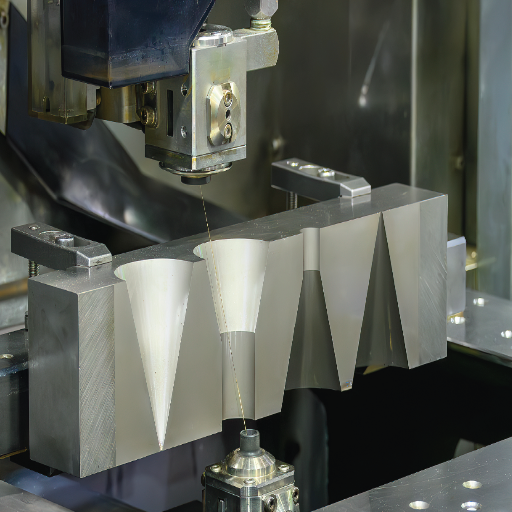
Wire EDM, or Wire Electrical Discharge Machining, is a thin wire that may be controlled electrically and employed in machining work. The process utilizes impulses of electric discharge to wear away material, allowing for the cutting of intricate shapes and wonderful details without making an actual cut. It works best for hard metals and difficult-to-machine components—high-end materials in demand in aerospace, medical, and automotive manufacturing.
What is Wire EDM?
Wire EDM, or Wire Electrical Discharge Machining, is a state-of-the-art manufacturing process that cuts materials with an excellent wire, held to an exact movement. This is a contactless method of vibration mechanism, wherein electrical discharges are controlled to erode conductive materials, making it suitable for machining harder metals and intricate, detailed parts. The ability of Wire EDM to produce complex geometries with tight tolerances and a smooth surface finish has made it dominant in the aerospace, automotive, and medical industries.
How Wire EDM Works
Wire EDM uses a thin, electrically charged brass or copper wire as an electrode. It is first established that the wire is positioned near the conductive workpiece, appearing as the front view of a spark gap. Controlled electrical discharges flow in the gap, generating intense heat that melts and vaporizes the material being processed. This erosion is performed without physical contact, ensuring the workpiece remains stress-free. The wire is fed endlessly from a spool, ensuring it is never worn during use, which allows for high-quality cutting operations.
The system utilizes a dielectric that provides a cooling effect on the spark, carries away the eroded particles, and stabilizes the spark gap. Computerized controls guide the wire’s movement with great precision, thus allowing for intricate shapes, tight tolerances, and good finishes. Wire EDM is one of the most effective techniques for cutting hard metals, such as tool steel, titanium, and carbide, and thus finds applications in advanced manufacturing fields.
Components of a Wire EDM Machine
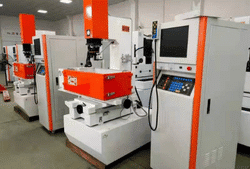
The Wire EDM machine is made up of several basic components working in tandem to allow for cutting with utmost precision and efficiency:
Wire Mechanism
Generally, the wire used in a Wire EDM machine is a very thin brass or copper wire with diameters ranging from 0.001 inches to 0.013 inches. During Wire EDM operation, the wire moves continuously across the machine, allowing a fresh part of the wire to be used for cutting at all times. This helps with cutting precision and away from overheating of the wire. Some advanced types allow coated wires for higher cutting speeds or delicate finishes.
Dielectric Fluid System
A dielectric fluid system is used to provide cooling and cleaning for the wire and workpiece during EDM. It uses de-ionized water for purposes of flushing away debris, preventing electrical arcing, and balancing the spark gap between the wire and the workpiece. The operating conductivity of the dielectric fluid ensures an accurate machining process and consistent cutting performance.
Power Supply and Generator
A power supply is a crucial requirement for generating electrical pulses in an EDM process. A modern Wire EDM machine features sophisticated pulse generators that accurately control the spark energy and frequency. This is crucial to meet tight dimensional tolerances ranging from 0.0001 to 0.0005 inches, respectively, and achieve superb surface finishes with a roughness average (Ra) of 0.1 µm or lower.
Worktable and Fixture System
Worktables are typically designed as X-Y tables to securely hold the workpiece. Fixtures or clamps are used for stabilizing the workpiece for precise movement during cutting. However, in advanced systems, rotary tables can be utilized for complex multi-axis operations, thereby enhancing the machine’s capacity.
CNC Controller
A sophisticated CNC system controls clock-wires, positions, and motions. Modern CNC controllers feature easy-to-use interfaces, enabling operators to input complex designs with an exceptional level of accuracy. They can control multi-axis and provide advanced programming options for profiled machining.
Filtration System
Very efficient filtration systems ensure complete removal of microscopic particles and debris from the dielectric fluid. Clean fluid is vital for ensuring good cutting performance and hence extending the plant life. Multi-stage filtration systems are more efficient and require little maintenance in modern machines.
Additional Component: Heat generation during the machining phase can affect the precision and longevity of the machine. Wire EDM machines have cooling systems for regulating the temperature of components, which is considered vital for smooth operation during long cutting cycles.
Since these components give an industry-level specification of precision, wire EDM is considered a must in fields such as aerospace, medical devices, and die making.
Pros and Cons of Wire EDM Cutting
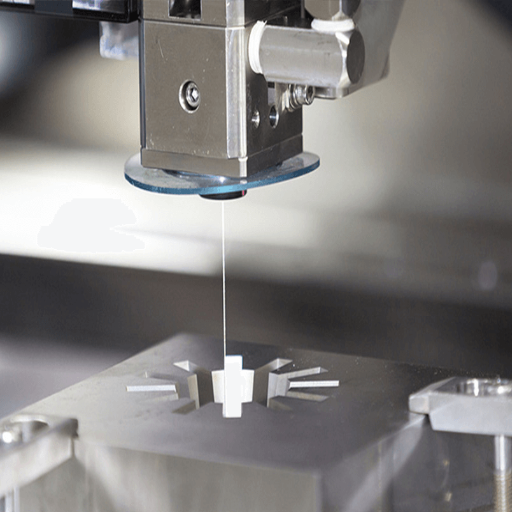
Advantages
- High Precision: Achieves exceptional accuracy, making it suitable for complex and detailed components
- Cuts Hard Materials: Can slice through Titanium, hardened steel, carbide, and other hard materials with ease
- No Mechanical Stress: Being a non-contact process, it does not exert mechanical stress or cause any deformation or damage to the workpiece
- Versatility: Used for shapes that are intricate, detail-oriented, and have a high tolerance
Disadvantages
- Slow Cutting Speed: This process is typically slower than other cutting methods; therefore, it may reduce the working rate for large jobs
- High Operational Costs: Expenses increase due to machine maintenance, wire usage, and dielectric fluid consumption
- Limitations on Materials: Only conductive materials can undergo cutting using Wire EDM
- Surface Finish Considerations: Additional finishing might be necessary depending on the application and the required surface finish
Advantages of Wire EDM Cutting
High Precision and Accuracy: Wire EDM is renowned for its exceptional precision in cutting intricate and complex shapes. Depending on the industry, the component requires detailed specifications to achieve tight tolerances of ±0.0001 inches, with applications in aerospace, medical, and electronics.
Minimal Distortion of Materials: Being a non-contact process, Wire EDM creates very little thermal energy. This lack of heat generation prevents material distortion or a change in physical properties of the workpiece, thus making the process very suitable for cutting delicate or heat-sensitive materials.
Cutting Hard Materials: Wire EDM is capable of cutting up to the hardest materials, including titanium, tool steels, carbide, and superalloys, and would probably be considered difficult by other machining methods.
Complex Geometries and Small Features: The process facilitates the fabrication of micro-parts, sharp corners, and intricate contours that are essential for industries, such as intricate mold and die making.
Theoretically Free of Burrs or Secondary Processes: Wire EDM offers a clean finish with no burrs, unlike mechanical cutting, which means eliminating or lessening secondary processes of deburring.
Flexible Application Across Industries: The technology is utilized across various industries due to its exceptional precision and versatility, ranging from the automotive industry, where it’s used to manufacture gears and engine parts, to healthcare, where it is employed in the production of surgical instruments.
Cost-Efficient for Prototypes and Small Batches: While not the fastest mass-production method available, Wire EDM excels in the fine creation of components for prototypes or small production runs where accuracy is paramount.
Thus, Wire EDM, offering the highest precision available, the ability to cut hard and complex materials, and the lowest secondary operation time, is a cutting method that brings significant value to modern manufacturing needs.
Disadvantages of Wire EDM Cutting
It also has some limitations that are to be considered while deciding on its suitability for specific applications:
- Slower Cutting Speed: Amongst the various materials-cutting means, wire EDM is slower, making large-scale productions or high-volume batch productions demanding from an efficiency perspective. For example, depending on several factors, such as material and wire EDM machine parameters, cutting speeds are typically in the range of 5-50 mm²/min, which limits processing speeds.
- Material Conductivity Requirement: Wire EDM is restricted to materials that can conduct electricity, such as aluminum, steel, or titanium. Non-conductors, such as plastic and most ceramics, are outside its ability to work, hence requiring other cutting methods for processing.
- Thin Wire Limitation: The most common size for wire is thin, with a diameter ranging from 0.05 mm to 0.35 mm. This parameter can limit the thickness of the material itself. It becomes a challenge to cut very thick workpieces or tough sections-one efficiently has to go around multiple passes, which then increases machining time.
- Environmental Considerations: Wire EDM machines work with de-ionized water or a dielectric fluid. Disposal of these fluids in an environmentally safe manner is expensive and subject to rigorous environmental regulations.
- Surface Finish Troubles in Some Situations: Wire EDM has generally provided smooth and accurate surfaces; however, on very large or unusually shaped components, a specific surface finish can sometimes require post-processing, thereby slowly detracting from its principal selling point: time savings.
It is these disadvantages that enable a manufacturer to decide on and ensure the overall cost of Wire EDM for their projects, compared to other cutting methods.
Comparing Wire EDM to Conventional EDM
While sharing common principles, Wire EDM and Conventional EDM serve different purposes, with notable differences particularly in their use, precision, and capabilities.
Key Differences Between Wire EDM and Conventional EDM
Wire EDM (Wire-Cut EDM): Works on conductive materials by passing a thin wire electrode through them. It is of high precision for creating exceptionally complex shapes with fine details and intricate geometries, and can achieve tolerances as tight as ±0.002 mm. These fine details make it suitable for precision components, such as molds, dies, and parts used in aerospace and medical applications, where fine details are required. It is a non-contact process; therefore, the surface can never be damaged, and it enables the processing of thin or fragile parts.
Conventional EDM: A shaped electrode is plunged or sunk down into the workpiece to cut or form cavities. Hence, it is appropriate to build three-dimensional shapes, internal contours, and features such as deep cavities in conductive materials. It is solid and can deal with thick and bulky workpieces. However, the tolerances, although precise, are generally less stringent than those of Wire EDM, typically being about ±0.01 mm.
Having some factors that differ in the realm of operational efficiency and surface finish. Different parameter considerations and material considerations can allow wire EDM to achieve a surface finish as smooth as 0.1 µm Ra. This advantage is exercised when the application demands fine finishes. Conventional EDM can also accomplish this, but generally only without extra operations-its surface finish is in the range of 0.3-0.5 µm Ra. Given the intricacies of its processes, Wire EDM is typically slower in terms of cutting speed; however, its ability to cut an engineer’s design without tool wear marks presents a decisive advantage over its counterpart, Conventional EDM, in specific applications.
Both methods have their advantages, but the application requirements and conditions of the working material, as well as the desired tolerance and part geometry, will dictate the option best suited for any given work.
Applications of Wire EDM
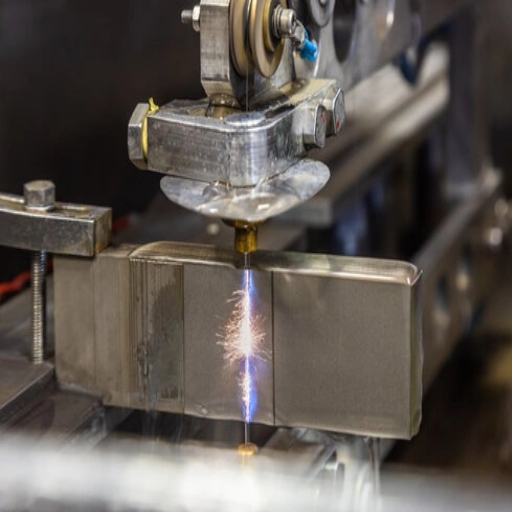
Wire EDM is most often used in industries that require precise and intricate detailing. Its primary applications include:
Tool and Die Making
Perfect for producing molds, dies, and punches with tight tolerance requirements
Aerospace Industry
Used to manufacture complex components from difficult-to-machine materials
Medical Field
For precision-making surgical instruments and implants
Automotive Sector
For making specialized gears and complex parts for engines and transmissions
Such applications demonstrate Wire EDM’s suitability under demanding conditions, providing utmost accuracy and reliability.
Industries Utilizing Wire EDM
Wire EDM is a highly versatile technology that caters to various industries, each of which requires a precise and efficient EDM machining process to produce intricate components.
Aerospace Industry
The aerospace sector relies heavily on Wire EDM machining to manufacture lightweight, high-strength components for high-tech materials, such as titanium and nickel-based alloys, that can withstand extreme temperatures and pressures in jet engines and spacecraft. Recent projections for growth in the aerospace machining industry state that Wire EDM machining will be an indispensable contributor, especially for working with highly complex geometries.
Medical Field
Whereas ultimate precision is sought in the manufacture of surgical tools, orthopedic implants, or dental prostheses due to their inherent imperative value, Wire EDM enables the manufacture of parts that often require microscopic tolerances for their finish. For example, modern design techniques aim to manufacture surgical instruments with sub-millimeter accuracy, allowing their safe use in life-threatening operations. Wire EDM is finding increasingly wider applications in the medical field due to the growing demand for minimally invasive medical technology.
The Automotive Industry
Wire EDM revolutionizes the production of crucial automotive components, including engine parts, transmission gears, and fuel injector systems. With the automotive industry shifting toward electric vehicles (EVs) and highly efficient internal combustion engines, Wire EDM has become essential for designing high-precision, lightweight parts that aim for better overall performance. One can say that manufacturing processes, such as Wire EDM, are supporting the industry in satisfying the market’s need for durable, lightweight automotive parts in these highly competitive market spaces.
Electronics Industry
The electronics industry requires the manufacture of components with great precision and intricacy, such as connectors, micro-molds, and circuit boards, due to the miniaturization of electronic devices. Wire EDM has made the precision necessary for today’s electronics achievable without damaging the delicate materials used in them. The use of wire EDM is expected to increase as demand for small, efficient devices rises.
Tool and Die Manufacturing
Having long been one of the major users of Wire EDM, the tool and die industry utilizes this technology to produce accurate molds, dies, and punches for mass production. Because Wire EDM can create very intricate shapes and exercise close tolerance, it fosters efficiency in making tools for different manufacturing processes, ranging from plastic molding to metal stamping.
These industries emphasized Wire EDM as a key component for innovation in various sectors, with the level of precision and reliability required by new-age technologies.
Specific Applications of Wire EDM
Wire EDM has become the key to precision and intricate detailing operations in various industries. A few of its widely known applications are:
Aerospace Industry
The aerospace sector considers Wire EDM indispensable for the fabrication of turbine blades, fuel injector nozzles, and other complex engine parts. A tolerance of ±0.0001 inch enables the inner facing of maximum performance and safety in aerospace applications. Being more inclined toward lighter materials such as titanium and superalloys, Wire EDM assumes importance for cutting materials that challenge traditional machining methods.
Medical Device Manufacturing
Wire EDM is crucial in manufacturing complex medical devices, including surgical instruments, implants, and stents. Wire EDM can precisely machine stainless steel and nitinol materials, which is critical in biomedical engineering. For instance, Wire EDM’s micro-machining capability makes possible the fabrication of highly complex multi-leaf collimators, which are vital in cutting-edge radiation therapy systems.
Automotive Industry
Used in manufacturing everything from engine components to transmission components, Wire EDM is extensively applied in automotive production. It aids in manufacturing parts with high strength and minimal thermal damage, making them durable. With the rapid adoption of electric vehicles (EVs), battery housing and powertrain components require complex designs and precise tolerances, making Wire EDM a valuable tool in automotive technology.
Tool Making and Die Making
One of the oldest and most significant applications of Wire EDM in Tool and Die making involves the creation of high-generation molds, precision cutting tools, and stamping dies. These dies and molds need to be very accurately reproducible because the industries that depend on them will be engaged in high-volume manufacturing. Those industries would range from electronics to consumer goods.
Silicon Wafer Cutting and Electronics
Wire EDMs are increasingly used in the electronics industry to cut silicon wafers into precise shapes for semiconductor components. With the need for smaller and more compact devices, Wire EDM’s capability to cut fragile materials accurately has become indispensable in the mass production of electronics. According to industry data, the global semiconductor market, which is expected to reach over $1 trillion by 2030, heavily relies on such manufacturing advancements.
Wire EDM is a highly versatile and indispensable tool, offering cutting-edge solutions to industries that demand precise and reliable performance. This flexibility has enabled it to remain at the forefront of servicing both traditional manufacturing and emerging technologies, with ongoing improvements in automation and productivity.
Wire EDM in Metal Part Manufacturing
Wire EDM is a revolutionary process in the production of intricate metal parts, offering the highest levels of accuracy, speed, and versatility. This process is the best fit for generating complex geometries and extreme tolerances that are otherwise impossible with traditional procedures. Particularly when working with hard materials such as titanium, tungsten, and hardened steels, EDM wire provides manufacturers with the flexibility to cut precise shapes without mechanically stressing the material.
Wire EDM is a relatively new technology, and as such, it continues to grow in the aerospace, automotive, and medical device industries. Its relevance is evident in the manufacturing of small, intricate components, such as turbine blades, injection mold cavities, and surgical instruments. Technologies for automation, intelligent control, and adaptive manufacturing processes continue to advance, improving productivity and cost efficiency in Wire EDM, making it a preferred choice for high-value manufacturing.
With Wire EDM, the finishing capability is retained, allowing for surface finishes as smooth as 0.3 microns, for instance, which requires extreme detailing. The use of fine conductive wires enables a high degree of control, allowing for cutting accuracies of ±0.001 mm, which is crucial in areas such as electronics and precision engineering. This ability keeps Wire EDM as one of the foremost contemporary manufacturing techniques, capable of handling present and future challenges.
Wire EDM Process Overview
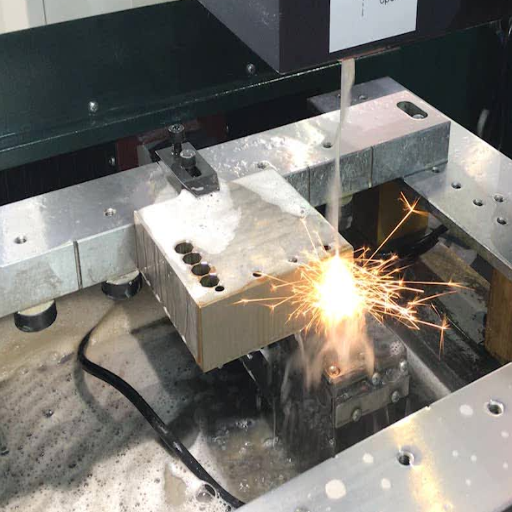
Wire EDM is a non-contact cutting process, wherein a thin electrically charged wire makes cuts on the materials with extreme precision. In this process, the wire is positioned near the workpiece, enabling the discharge of electrical sparks that generate heat and melt or vaporize the material. A continuous flow of dielectric fluid is used to flush away debris and maintain process stability. This technique is primarily used when designing intricate shapes with high accuracy on complex or delicate materials.
Steps in the Wire EDM Process
Complete Wire EDM Manufacturing Process
- Workpiece Preparation: The workpiece is first secured on the machine’s worktable. The alignments must be proper and should be clamped well to ensure the cutting is done with complete precision and stability. Though any material of choice can be used, it needs to be conductive for the electrical discharge process.
- Wire Setup: A thin, electrically conductive wire, typically made of brass or coated with zinc or copper, depending on the application, is provided through the machine. Wire diameters are almost always between 0.001 and 0.012 inches, varying according to the required accuracy and part geometry.
- Programming the Path: The CNC system is programmed with the exact path of the cut as defined by the geometric design and specifications of the part. Along with wire and workpiece movements along the programmed path are automated and very accurate, allowing the creation of the most complex shapes.
- Cutting Begins: The wire-electrical discharge system works at a close distance from the workpiece. The intense heat is formed due to the electrical discharge that melts or vaporizes the material at the microscopic level. No physical contact exists between the wire and the workpiece during the whole process, minimizing mechanical stress or damage.
- Dielectric Fluid Application: The cutting zone is flushed with high-pressure water, often deionized water. It cools the workpiece and stabilizes the electrical discharges while removing debris in the cutting zone. It also prevents undesired electrical arcing.
- Precision Monitoring and Control: A range of sensors, along with a modern control system, tracks process parameters such as voltage, current, and wire tension throughout the entire procedure. Highly controlled operations enable tolerances as tight as ±0.0001 inches, a tolerancing level suitable for aerospace and medical manufacturing, as well as other industries requiring extreme accuracy.
- Final Inspection and Finishing: After cutting is complete, the part is gently removed and checked to ensure its dimensions conform to the required specifications. Modern Wire EDM can produce a surface finish of approximately 8 to 16 microinches, eliminating the need for secondary finishing operations. Some very few applications, however, may require additional polishing or heat treatment.
The precise elaboration of this sequence enables Wire EDM to offer high precision, great versatility, and maximized efficiency for complex designs in challenging materials such as hardened steels, titanium, or carbides. Advances in Wire EDM technology continue to further enhance its capacity, keeping it abreast with the ever-growing requirements of the precision manufacturing industries.
Choosing the Right EDM Wire
Choosing a suitable EDM wire is essential if you are to achieve precision, efficiency, and cost-effectiveness in your Wire EDM process. Such basic items are the material, wire diameter, and coating. Brass wires are used in the majority of applications due to their versatility; however, coated wires, such as zinc-coated or diffused wires, tend to provide better performance in certain areas. The wire diameter ranges approximately between 0.001 inches and 0.013 inches. Thinner wires allow better cutting accuracy for intricate designs, while bigger or thicker wires yield faster cutting speeds. Coated wires are better for flushing and conductivity; hence, they are quite suitable for high-speed and high-precision needs. Considering this, wire selection depends on the material being cut, the required surface finish, or the complexity of the design. Verify specifications and testability to ensure compatibility with the machine and project requirements.
Factors Influencing Wire EDM Efficiency
The Wire Electrical Discharge Machining (WEDM) process efficiency is dependent on the synergistic effect of variables such as machine parameters, wire type, and working conditions. Some of these variables are:
Wire Material and Coating
The superior-grade wire materials, such as brass, coated, or composite wires, can improve cutting speed and accuracy. Zinc-coated cables, for example, offer better conductivity and flushing, which in turn translates to faster cutting and finer finishing.
Cutting Conditions
Thickness, hardness, and type of material offer the most significant variations to efficiency. Faster cutting is afforded to softer materials, while harder or thicker materials require a balance between increased power and precision to prevent errors or excessive wear on the wire.
Machine Setting
The spark settings, flushing pressure, and tension control should ideally be optimized at all times for maximum accuracy and speed in the machining process. Incorrect application would cause wire breaks or reduce accuracy.
Flushing and Debris Removal
Efficient debris flushing from the cutting zone enables maximum spark generation and build-up, which improves the cutting process. High-pressure flushing may enable continuous high-performance work, while filtration of choice should be acceptable.
Temperature and Stability
Considering environmental arguments such as temperature changes may affect the stability and accuracy of machines. If the environment remains controlled, one should reduce thermal expansion and limit the number of quality repetitions.
If these are well managed, higher precision, reduced cycle times, and overall efficiency will prevail in Wire EDM work. Based on material, design complexity, and desired output quality, each work should have customized settings and parameters.
EDM Technology Developments
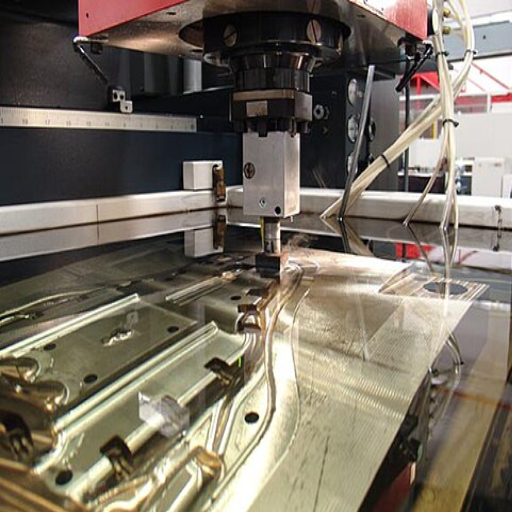
Recent advances are primarily centered on automation to increase efficiency and precision. Today, automated systems are equipped with smart sensors, real-time monitoring, adaptive controls, and optimized machining processes to minimize human intervention. These improvements result in minimizing tolerances, errors, and ultimately unfruitful operations, thereby evolving into more reliable and cost-effective EDM.
Advancements in Wire EDM Technology
The Wire EDM process is continually evolving to improve accuracy, efficiency, and material compatibility. Developing newer machines with finer wire diameters enables the machining of intricate and precise components. Dynamic wire tension control systems and threading automation are setting new standards of operational stability while also reducing machine downtime. Wire EDM machines now feature multi-axis machining software that can handle complex geometries and achieve superior surface finishes. Innovations also encompass dielectric fluid optimization and environmentally conscious power supplies, two methods that reduce both environmental impact and the cost of operation, thereby making Wire EDM an accepted yet growing tool in industries such as aerospace, medical, and automobile manufacturing.
Future Trends in Electrical Discharge Machining
The Future of EDM Technology
Looking forward, I view future trends in Electrical Discharge Machining as more toward greater automation, precision, and sustainability. AI and machine learning would ensure more innovative EDM systems with self-correction, thus minimizing errors and maximizing efficiency. Furthermore, material science and electrode technology innovations will make the whole process faster and less expensive. On the other hand, sustainability will be increasingly considered, with energy-efficient systems and eco-friendly dielectric fluids making their way in. Together, all these development-oriented aspects will stretch EDM well beyond its current boundaries, adapting it to ever-evolving modern-day industries.
Comparing Wire EDM with Other Cutting Methods
One of the unique features that sets Wire EDM apart is its ability to cut intricate, small shapes with accuracy in hard materials, with no contact between the tool and workpiece. Milling out represents traditional cutting methods, wherein contact with the surface may develop mechanical stresses.
| Cutting Method | Advantages | Best Applications | Limitations |
|---|---|---|---|
| Wire EDM | Extremely precise, cuts hard materials, no mechanical stress, complex geometries | Hard materials, intricate shapes, tight tolerances, conductive materials | Slower cutting speed, limited to conductive materials, higher costs |
| Laser Cutting | Faster cutting, good for thin materials, high-volume production | Sheet metal, thin materials, mass production | Less precise than Wire EDM, heat-affected zones |
| Waterjet Cutting | Versatile materials, no heat effects, good accuracy | Heat-sensitive materials, thick sections, various materials | Slower than laser, less precise than Wire EDM for fine details |
| Traditional Milling | Fast material removal, versatile, cost-effective | General machining, larger parts, high-volume production | Mechanical stress, tool wear, limited complexity |
Compared to laser cutting, Wire EDM is more precise and can create complex geometry with tighter tolerances. However, laser cutting is slightly faster and is best suited for thinner materials and high-volume production demands.
Waterjet cutting works better for Wire EDMs due to accuracy and surface finish, especially when considering detailed work. Conversely, waterjet is more versatile, as it can cut a wider variety of materials without compromising their structural integrity, including some sensitive heat materials.
There are some negatives to all methods, so Wire EDM remains the method of choice in cases where precision, intricate shapes, hard materials, or conductive materials have to be considered.
Conclusion
Wire EDM cutting represents a pinnacle of precision manufacturing technology, offering unmatched accuracy and versatility for complex, high-tolerance components. While it may not be the fastest cutting method available, its ability to machine hard materials with exceptional precision, create intricate geometries without mechanical stress, and achieve superior surface finishes makes it indispensable in industries where quality and precision are paramount.
The technology continues to evolve with advancements in automation, AI integration, and sustainable practices, ensuring its relevance in future manufacturing landscapes. From aerospace turbine blades to medical implants, from automotive precision parts to electronic components, Wire EDM has proven its worth across diverse applications.
For manufacturers considering Wire EDM, the key lies in understanding when its unique capabilities align with project requirements. While the initial investment and operational costs may be higher than conventional methods, the precision, quality, and reduced need for secondary operations often justify the investment for critical applications.
As manufacturing demands continue to push toward greater precision, complexity, and material challenges, Wire EDM stands ready to meet these evolving needs, cementing its position as an essential tool in the advanced manufacturing toolkit.
Reference Sources
1. Surface Integrity Analysis of Wire Electric Discharge Machining of Nitinol Shape Memory Alloy
2. Investigation of Nanoporosities Fabricated on Metallic Glass Surface by Hydroxyapatite Mixed EDM
3. Digital Topology Optimization Design and Manufacturing Based on the Level Set Method
Frequently Asked Questions (FAQs)
What are the advantages and disadvantages of wire EDM cutting?
When it comes to wire EDM cutting, it offers precision and versatility for intricate designs. Wire EDM cutting has its advantages, including high precision, the ability to cut complex shapes, and minimal material wastage. On the other hand, its disadvantages may include higher costs compared to traditional cutting methods and a longer time to complete a job, particularly as the material thickness increases.
How does the wire-EDM process work?
In the wire-EDM process, a thin metal wire is used as an electrode to cut the workpiece. Tiny electrical discharges between the wire and the conductive metal being cut generate high temperatures that melt and vaporize the metal, facilitating the formation of precise cuts along the wire path.
What are typical applications of wire EDM?
Wire-EDM is mainly used in sectors where high precision is needed, including aerospace, automotive, and mold-making. It is suitable for manufacturing complex geometries, sophisticated features, and fine details, which can pose challenges for conventional machines.
How would wire EDM compare against the usual style of EDM?
Wire EDM differs from EDM primarily in terms of cutting methods. While wire EDM uses a continuous strand of metal wire, the other style of EDM uses a solid electrode. Wire EDM is therefore best suited for cutting thin sections and achieving tight tolerances, whereas conventional EDM is more suitable for bulk removal.
Why does wire thickness matter in wire EDM?
In wire EDM, the thickness of the wire electrode is vital as it affects the cutting speed, the precision of operation, and the quality of the cut. Hence, a thinner wire, say a metal wire 0.004″, allows more intricate cutting with thick wires used for faster removal of the material in less demanding applications.
What are the disadvantages of wire EDM?
Wire EDM has several disadvantages, including a slower cutting speed compared to other methods, such as laser cutting, and the need for specialized machines. Wire cutting may even be more expensive than the cost of the wire electrode and the maintenance of the EDM machines.
Can wire EDM machines perform hole drilling EDM?
Yes, some wire EDM machines are capable of performing hole drilling EDM. The holes produced are incredibly accurate, especially in hard materials. This makes it more versatile than wire EDM in cutting operations, as it can now also perform drilling operations as part of EDM manufacturing.
How does automatic wire threading help to streamline wire EDM?
Automatic wire threading helps streamline wire EDM by reducing downtime caused by manual wire loading. This ensures continuous operation, as cutting will never lack wire, a benefit for production environments with relatively high volumes.