




Choosing and investing in a vertical machining center is a very critical decision that any manufacturer makes to further strengthen productivity, precision, and efficiency. Depending on whether you are putting up a workshop for further capabilities or modifying what you have, the tool will be pivotal in the job. The wide array of machines to choose from, all having varied features and specifications and quoted at diverse prices, makes the selection of the right model for your need an arduous task. This should make that decision easier by providing practical tips, key points to consider, and direct advice to guide you toward making an informed choice. This guide covers everything from understanding configurations of a machine to performance considerations to assure instant value and long-term win from an associated purchase.
Understanding Vertical Machining Centers

What is a Vertical Machining Center?
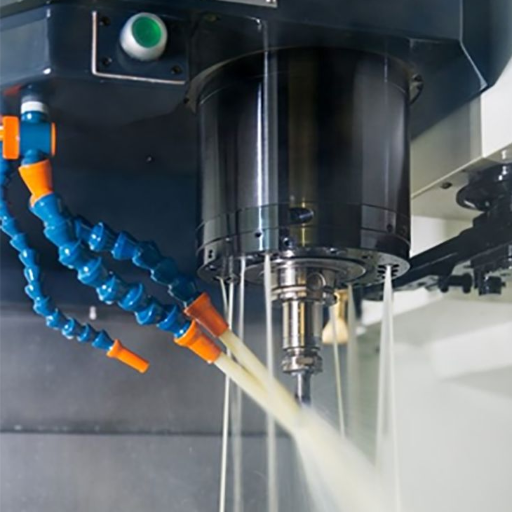
A vertical machining center is a CNC machine tool designed for precise machining operations, including drilling, tapping, and cutting. These machines are unique for their vertical spindle orientation-an arrangement where the tool moves downward onto a workpiece held on a horizontal table. These VMCs represent one of the fundamental machining tools in the CNC machining industry, as they offer high-level precision and accuracy at speeds and with the quality expected by aerospace, automotive, electronics, and medical device manufacturing industries.
Increased spindle speeds and coolant systems to control temperature were some of the recent technical developments that shared the stage with the topic of sensors for performance monitoring. Usually, modern VMC has a user-friendly interface for direct operator programming, which helps increase production. Some machines have automation integrated in the control system, e.g., robot tool changers and robot pallet systems, wherever possible, to allow several processes to be performed in a single setup, thereby maximizing production cycle times.
The performance of the VMCs is generally assessed with variables considering spindle torque, table size, and axis travel in any direction, each of which could be drastically different depending on the specific features of the machine. Besides the improvement of CNCs, other qualities such as connectivity to Industry 4.0 systems are now becoming important in the eyes of manufacturers for remaining competitive in the age of data-driven manufacturing. Hence, VMCs present themselves as one of the most important options for high-precision machining. This offers to the company a chance to produce complex parts at a regular quality and speed.
Key Features of CNC Vertical Machining Centers
Numerous state-of-the-art features are available in CNC Vertical Machining Centers, explicitly designed for precision generation, added efficiency, and increased adaptability. Foremost are the multi-axis control systems, which themselves craft very complex cutting paths through geometries of difficult shape. High-speed spindles accelerate productivity by swiftly removing material, yet still allow for the mastery of tight tolerances.
Automatic tool changers have been installed to minimize operational downtime and maximize process efficiency. On the other hand, thermal management and vibration-dampening mechanisms have sometimes required upgrades to ensure continued optimal functioning, even during extended machining days, as this is crucial in maintaining machine precision over time.
Whatever the case, and therefore be an operator-oriented interface, it shall give touch and programmer controls for immediate alteration with minimal time in learning. Real-time monitoring systems, on the other hand, give penetrating insight with actionable intelligence on machine performance, tool wear, and operating conditions for manufacturers to make good decisions. Hence, being compatible with Industry 4.0 shall provide better interconnectivity for remote diagnostics, predictive maintenance, and into the best manufacturing ecosystems. Together, all the features will stake claim for the CNC vertical machining centers to become the highest category when designing production flow that will ensure quality, efficiency, and scalability.
Advantages of Vertical Machining over Horizontal Machining Centers
Vertical machining centers are more advantageous than HMCs in a way that makes them very popular among manufacturing platforms processing a variety of applications. Perhaps one of the most compelling selling points is their cost efficiency. VMCs are most attractive to the small continuum of manufacturers, as the upfront investment cost and general operating costs are lower; hence, the opposing agencies are optimizing their budgets in greater numbers.
These also have another advantage: the smaller footprint. VMCs occupy less floor space than HMCs, thus granting them a favorable position when considering the workspace in a facility. This great design promises ease of use, fitting well into existing shop floors with minimal rearrangements or expansions.
The VMC is known for its user-friendly design and operation. Often, the vertical orientation of components and workpieces renders the VMC ergonomically convenient for processes such as setup and tool changes. Such accessibility means reduced preparation times, and thus, machining operations become more productive.
Moreover, VMCs can be used to manufacture a wide range of components. For detailed applications on the face side of parts, such as milling, drilling, and tapping, VMCs serve exceptionally well. Besides, the vertical spindle orientation offers good chip evacuation, reducing the chance of recutting and is favorable to surface finishes.
Several advancements have been made to improve the very capabilities of VMCs. Most modern VMCs are now equipped with high-speed spindles, advanced control systems, and sophisticated machining automation systems, including robotic tool changers. Hence, machining operations are rendered more efficient, and manufacturers are assured of increased accuracy and reliability in their machining operations.
Thus, while HMCs may be preferred for complex, higher-volume production work, the natural advantages of VMCs, such as affordability, compactness, ease of use, and versatility, ensure their continued existence as providers of high-quality output in many manufacturing setups.
Factors to Consider When Selecting the Right Machining Center

Good Machining Needs Assessment
When selecting machines is evaluated for production requirements, it is one of the most essential considerations so that the decision is based strictly on the operational objectives. The complexity of parts being manufactured, the volume of production, and the degree of precision are the primary elements considered. Machining processes for making aerospace and medical components carry a high degree of precision. However, the automotive field goes in favor of speed, with consistency coming in second, for mass production processes. Then, one should also take into account the type of material in question, whether metal or non-metal, along with exact varieties of cutting involved with the process. For instance, aluminum is quite different from titanium, and composite materials present quite the challenge.
Here goes one more: the aspect of available floor space and plant layout. Small and compact VMCs are best suited for small production areas; on the other hand, large HMCs may require more space but offer larger-scale automation capabilities for continuous volume operations. Additionally, how customized will you be, or how will you handle secondary operations (multi-axis machining may be required?), should be highly aligned with your long-term manufacturing ambitions.
There are many considerations in budgeting a project: upfront costs, maintenance, power consumption, and training. On top of that, the injection of some high-tech features like real-time monitoring or Industry 4.0 connectivity would provide an additional layer of value to process control and achieve full productivity with data-driven decision-making. To drive implementation through these attributes, the balance of investment output and profit will ensure that every manufacturer is willing to put its weight behind it.
Understanding the Different Axes of Movement
Modern machinery, especially CNC machines, works across numerous axes of movement, each contributing to precision and capacities. Primary axes work in linear motion, wherein the X works in the horizontal direction, Y in vertical, and Z in depth. Furthermore, more advanced machines have rotational axes, such as A, B, or C axes, to perform angular operations at varying angles and execute multi-faceted machining within a single setup.
As is well known, 5-axis machines combine linear and rotary axes, offering greater flexibility and efficiency. They allow for very complex part geometries, with fewer setups and less human intervention. This stands for fewer errors on the technology side, shorter cycle times, and a better surface finish of parts. Using these high-tech axes of movement, manufacturers can take on intricate designs to stay competitive in the precision engineering field.
Importance of Spindle Speed and Power
Advanced manufacturing places paramount importance on two parameters: spindle speed and power, which affect precision-related issues, working time, and finishing quality. The speed of the spindle in revolutions per minute is directly responsible for cutting efficiency and surface finishing. Logically, the faster the speed, the faster the cutting tool goes into the material. Up to here, higher spindle speeds make for easier machining of softer materials, whereas lower speeds give better control over cutting harder materials. The spindle power comes into action during hard or arduous machining operations. For instance, it would need to cut heavy metals or undertake operations at a high feed rate.
An upsurge of innovations has permitted machines to exhibit fine traits of precision and stability under the presence of varying operating conditions. For example, these days high-torque-high-rpm spindles can perform to an embellishment of quality while keeping tool wear and vibrations at their lowest. Per-diagnosis operated by sensors integrated at a spindle-monitoring level keeps output consistent and sends early alarms if any fault rafts up.
By combining adequate spindle speed and power, producers can secure a compromise between production modulation and tool life. This aspect is particularly crucial in complex geometries or in precision industries such as aerospace and medical device manufacturing, where even minor errors can lead to product defects.
Types of Vertical Machining Centers
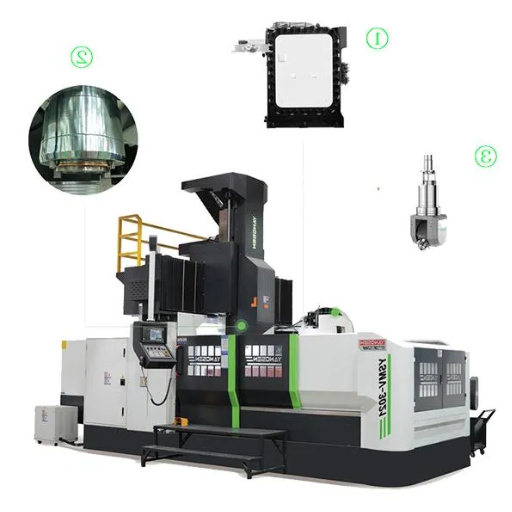
Two-Axis vs. Five-Axis Machining Centers
| Aspect | Two-Axis Machining Centers | Five-Axis Machining Centers |
|---|---|---|
| Design Complexity | Simpler in design, move in X or Y direction | Ultimate versatility with X, Y, Z axes plus two rotational movements (A and B axes) |
| Best Applications | Flat operations: drilling, cutting, or milling | Complex geometries, undercuts, and non-linear shapes |
| Cost Factor | Inexpensive solution for standard parts | Higher investment but greater capabilities |
| Setup Requirements | Cannot accommodate intricate geometries or angled surfaces | Single setup for complex shapes, minimizing manual repositioning |
| Industries | High volume of standard parts | Aerospace, automotive, medical industries requiring tight tolerances |
| Production Benefits | Suitable for simple geometries | 30% reduction in production time, enhanced surface finishes |
The latest survey shows manufacturers investing increasingly in five-axis technologies for the promise of shorter lead times, a reported 30% reduction in production while enhancing the quality of surface finishes. This trend illustrates how manufacturing institutions have grown to rely upon advanced machining techniques as they face the demands of precision and efficiency in the highly competitive market.
Choosing Between Standard and High-Speed Machining Center
- General-purpose gadget, highly versatile
- Capable of producing various types of parts at moderate speeds
- Inexpensive and desirable for applications where cycle time is not primary concern
- Designed with sturdy construction and high reliability
- Suitable for operations requiring reliability over extended periods
- Better for firmer materials and varying part geometry
- Rigidity and adaptability support broad operational requirements
- Emphasis on efficiency and production speed without compromising precision
- Advanced spindle technology, lighter tooling, and improved control systems
- Operate at higher cutting speeds with shorter cycle times
- 40-50% reduction in production time for complex components
- Ideal for aerospace and electronics industries
- Capability for high surface finish and high-speed manufacturing
- Best for intricate details and tight tolerances
The choice of other concurrent decisions as far as material, tooling, and budget is concerned has to be made. Machining centers of standard-type nature may be considered for harder materials and part geometry of a differing nature since their rigidity and adaptability permit more general-purpose use. However, high-speed centers are mostly preferred in highly specialized fields with capabilities for high surface finish and manufacture speed, like aerospace and electronics.
Nevertheless, there is a need to align each choice of machine with the production objectives, the available resources, and long-lasting scalability for optimized performance in upscale precision manufacturing challenges.
Consider Special Vertical CNC Machining Centers
Continuous evolution in technological entrainment of CNC vertical machine technology has brought options for specialized industrial requirements. Contemporary CNC vertical machining centers nowadays are laden with features including multi-axis operation, intelligent automation, and real-time monitoring systems. Such systems have their applications in automotive, aerospace, and healthcare industries which demand consistent precision and highest operational efficiency.
The use of 5-axis CNC vertical machining centers is growing primarily because these machines can mill complex geometries in a single setup, significantly reducing cycle time while improving accuracy, making them essential for manufacturing intricate aerospace parts or medical implants. Hybrid systems that combine additive manufacturing and vertical machining are also gaining popularity, offering the capability to manufacture near-net-shape parts followed by precision finishing within a single workflow.
Spindle speeds are highly variable, with newer models capable of reaching speeds of 20,000 RPM or more, thereby providing a superior finish and enabling rapid material removal. Such machines operating at very high speeds find application mainly in die and mold manufacturing. Moreover, based on AI techniques, such controls promote predictive maintenance, thereby minimizing downtime as the operator is warned of any faults that may arise before they mature.
Hence, production capacity has been improved by these changes. Thus, under sustainable manufacturing practices, material storage, energy conservation, and other such aspects are being optimized. By viewing machined parts options available today, manufacturers can find equipment that resolves their operational problems so they can lay a foundation for future success in precision manufacturing.
Budgeting for Your CNC Vertical Machining Center
Cost Factors to Consider
When setting a budget for the CNC vertical machining center, various cost factors are considered, which affect the amount of investment required.
- Machine Size and Specifications: The price depends on the size and capability of machining centers. A large machine with enhanced features, such as higher spindle speed, multi-axis capabilities, and the ability to handle heavier loads, is generally more expensive.
- Technology and Automation: The latest technological CNC machines, such as those with automated tool changers, software insertion, and IoT-enabled monitoring systems, can demand a bigger initial investment. Nevertheless, such efficiency improvements lead to long-term savings due to reduced downtime.
- Material Compatibility: This encompasses the types of materials the machine can treat; aluminum, titanium, or hardened steel may all affect costs. Machines designed for particular material needs may require additional customization or tooling.
- Maintenance and Upkeep: Maintenance must be included in the cost analysis, which means spare parts will eventually have to be replaced, and the machine will need lubrication. The less upkeep required, the less long-term operational cost will be.
- Manufacturer and Brand Reputation: Well-established brands tend to price higher on account of their reputation for reliability, service support, and performance aspects. Even if a manufacturer of lesser-known configurations is inexpensive, the trade-off in the lesser realm with regard to service or machine longevity should be thoroughly examined.
- Power Consumption: An energy-efficient model might cost a little more up front, but will save you money on utility bills over time. Opting for energy-efficient machinery is a sustainable choice that cuts operational costs.
- Financing and Delivery Options: Look at the financing options available, along with shipping and installation fees. Some manufacturers include these services in the price, while some charge separately.
Building these elements into your budget will help ensure you get a maximized return on your investment while still maintaining a balance between performance and cost.
Machinery Purchase Financing Options
When purchasing machinery, exploring financing options is a critical step to reduce upfront costs without compromising cash flow. Depending on your business’s needs, several forms of financing are available to provide convenience and flexibility.
Equipment Loans
Equipment loans are a popular option for businesses to borrow money for machinery purchases. Generally, the machinery serves as collateral for the lender; therefore, a low risk is associated with that loan. This, in turn, may lower the interest rate charged. Terms can range, but generally fall anywhere between 3 years on the low side and 7 years on the high side, during which time there can be some manageable monthly payments.
Leasing Options
Depending on the purpose for which equipment is required, leasing can grant businesses temporary occupancy of the same without outright ownership. An operating lease is structured with lower payments monthly whereas, by the end of it, one may have options of furthering to buy newer technology or to purchase in outright; hence, capital leases are meant for outright ownership. Leasing frees up working capital, needing short-term projects.
Manufacturer Financing
Many machinery manufacturers or dealers offer in-house financing solutions tailored to their equipment. They sometimes offer lower interest rates and may also include a service package, such as maintenance or warranty, with flexible payment terms. Manufacturer financing combines purchasing and funding into one step for simplicity.
Small Business Administration (SBA) Loans
An inexpensive way for businesses in the U.S. to finance machinery purchases is through SBA loans. The SBA works with lenders to provide below-market interest rates, more extended repayment periods, and partial guarantees on loans that may assist with approval. The 504 Loan Program is ideal for purchasing equipment.
Lines of Credit
A business line of credit offers revolving funds that can be used for multiple purchases, including machinery. The flexibility to borrow and repay as needed enables businesses to utilize such an instrument for unforeseen expenses or as a supplementary source of financing.
Tax-Incentivized Options
Investments in machinery are encouraged in some governments through tax incentives. Such a program, the Section 179 in the U.S., allows a business to take a deduction for the full cost of qualifying equipment purchased in the same year it’s bought. Considering available tax incentives can go a long way toward lessening the overall cost of machinery investments.
Peer-to-Peer Lending and Alternative Financing
Online alternative finance platforms offer alternatives to traditional sources of financing, including peer-to-peer lending, which is characterized by shorter approval times and looser lending criteria. Such platforms can serve businesses with non-traditional credit profiles or particular financing needs to obtain funding swiftly.
By careful comparison, businesses discern the more cost-efficient or suitable financing solution for their machinery investments. Balancing interest rates with repayment tenure and possible added benefits will ensure that fees for the machinery bring immediate budgetary realization while also achieving long-term operational success.
Long-Term Cost Considerations
Machinery Investments must decide what upfront costs mean to them in the context of long-term costs. The company may require consideration for maintenance and repair costs due to its efficiency and longevity. For example, energy-efficient machines may have a steep purchase price, but on the other hand, they can save significantly on utility bills. Design and ease of maintenance may also help curb repair costs, at least with some kind of warranty.
The selecting parameter that comes to the fore in determining long-term costs are depreciation costs. Hence, a knowledge of how much the asset’s value would dwindle with time would help arrange replacements or upgrades. A better technology, with automated features or improved productivity outputs, would generate better returns to meet long-term bearing of expenses of equipment. It is when these issues are put into consideration that a business can fully appreciate the value of a machinery purchase along with supporting considerations for long-term business operations.
Maintenance and Support for Your Machining Center

Regular Maintenance Practices
Basically, I ensure strongly that a machining center undergoes a consistent and thorough maintenance schedule. An essential prerequisite to running and post-running inspection stands out as one of the crucial phases. The inspection procedures included are: checking abnormal wear, testing different components for they are firmly in place, and lubricating moving parts whenever required to reduce friction. By following such maintenance, problems can be reviewed in time, thereby increasing the chance of major repairs being averted.
Weekly cleanup and inspection of all filters, coolant systems, and air supply lines are important to ensure that these are working properly. Cleanliness has been tested to reduce contamination that could result in machine malfunctions–or even worse, output of inferior quality. I keep a detailed record of maintenance, organize service schedules, and track every replacement of parts, noting any abnormalities occurring at maintenance. The records, in turn, can help in determining usage patterns and future needs.
The preventive routine sometimes applies only to an occasional maintenance. Through a service contract, employed technicians have a guarantee for adjustment, deep cleaning, and calibration. The combination of regular service in the plant and occasional servicing from relatives will lengthen the period of the life of the machining center and keep it working effectively and reliably for the advantage of production requirements.
A Reliable Support and Service Provider Matters
When selecting a reliable support and service company for our machining center, I consider several key factors to make the right choice. I think a provider’s track record as the first thing to test. Reputation counts, and I check first to see if the service provider has received good reviews or testimonials or has much experience with similar equipment. That way, I am assured that they are familiar with the specific requirements and intricacies of my machinery.
Another critical factor is their availability and responsiveness: downtime in production is costly, and so I insist that the provider will provide services on demand and be flexible in scheduling the maintenance and troubleshooting.
Good providers are those with excellent customer support and clear communication, which gives me peace of mind that they will be able to respond to the issue promptly and effectively when it arises.
Now I sorted off their list of everything they do and specialization. A “reliable” program should cover from basic repairs and maintenance to more advanced-level diagnostics and calibration. Next would be the use of the best of tools and technologies monitoring their work so that they can do it accurately, meaning that the equipment should be running at peak performance. I will then take all these points into careful consideration to choose the one supplier with whom I can enter into partnership for working effectively toward good long-term reliability and productivity of the machining center.
Practical Operation Training for CNC Vertical Machining Centers
To make CNC vertical machining centers work efficiently, I prefer to opt for comprehensive training that encompasses both theoretical and practical concepts. I believe that this is what makes training proper: going through the main components of the machine, their functions, and their control systems. Having acquired these basics gives me the confidence to assess the machining center according to its capability and to make decisions during the actual operation of the machine. Finally, I next consider learning how to program, a critical skill in generically engineering machining processes for both generation and editing of G-codes in ways that render machining suitable and highly productive toward any project.
Hands-on experience correlates highly with acquiring mastery over CNC operations. During my training sessions, I ensure that I allocate sufficient time for practicing machine setup, part alignment, tool selection, and cycle testing. I see the advantage of looking into real cases where fixing machinery and all those things concerned with the parameters of machining are second nature. With these refined skills, I will be able to minimize errors, increase productivity, and consistently produce high-quality results.
Last but not least, keeping up-to-date is crucial, along with all modifications in CNC technology. I attend numerous workshops, explore websites, and seek advice from experts on specific topics. It is through committed, continued practice and learning that I ensure the maximum exploitation of CNC vertical machining centers for ever-growing operational success.
Reference Sources
-
Vertical Machining Center Buying Guide – Techspex
Discusses critical considerations, such as spindle speeds, torque, and horsepower, when selecting a VMC. -
How to Choose the Right CNC Vertical Machining Center – LinkedIn
Offers a detailed guide on understanding machining requirements and other key factors for choosing the right VMC. -
Shopping for a Vertical Machining Center – What to Look for – Kent CNC
Highlights the importance of identifying available options and understanding their benefits in relation to your specific needs. -
How to Choose Vertical Machining Centers – Ants Machine
Covers essential systems, such as CNC, electrical, and lubrication systems, to consider when purchasing a VMC. -
Choosing a Vertical Machine Center – Eng-Tips
Provides insights on prioritizing factors beyond price when selecting a VMC for long-term value.