






Machining cast iron is one of those jobs that scares newer machinists and bores the veterans. Here’s the short version: yes, you can machine cast iron, and gray iron in particular cuts more easily than mild steel. The trouble is that it does it while throwing off an abrasive black dust that wears tools and coats everything in the shop. Get the grade, the tool grade, and the dry-versus-wet decision right, and the rest fall into place.
Quick Specs: Machining Cast Iron at a Glance
| Easiest grade to cut | Gray iron (ASTM A48) — short, crumbly chip |
| Default tool material | Uncoated or Al₂O₃-coated K-grade (ISO 513) carbide |
| Default coolant | Dry for gray iron + carbide; flood only for dust/chip control |
| Typical carbide speed (gray) | ~250–450 SFM |
| Main failure mode | Abrasive flank wear; edge chipping on hard spots |
| Key hazard | Respirable iron-oxide dust — OSHA PEL 10 mg/m³ |
This guide pulls together what you actually need: a grade-by-grade machinability map, the tool grades that survive cast iron, real starting speeds and feeds with a worked example, a decision flow for coolant, and the operation-specific tricks for milling, turning, and drilling. These numbers come from ASTM specs, the ASM handbook, vendor data, and machinists who run iron every day. We also build gray-iron machine bases in our own shop, so a few notes here come straight off our floor.
The Graphite Paradox: Why Cast Iron Machines the Way It Does
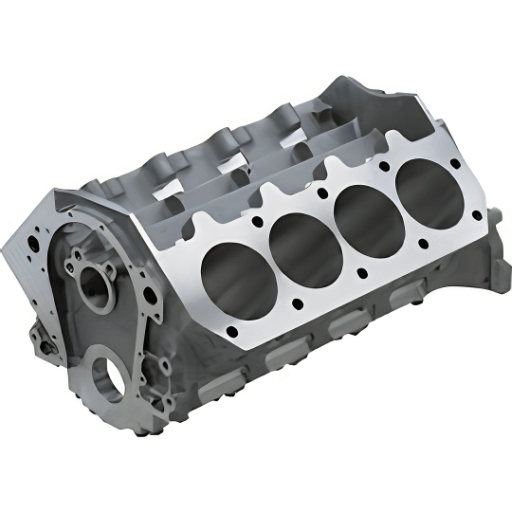
Cast iron is hard, brittle, and full of carbon, by instinct that should make it a nightmare to cut. In practice gray iron is among the friendliest ferrous materials on a metal turning lathe. We call this the Graphite Paradox, and it comes down to where the carbon sit.
In gray iron, the high carbon content, roughly 2.5–4% — precipitates as flake graphite scattered through a matrix of ferrite and pearlite. As the cutting edge advances, those flakes act as built-in fracture planes: the chip snaps into small pieces instead of curling into a long ribbon, and the graphite smears a thin solid lubricant across the tool face. That is why the ASM Metals Handbook and ISO 513 file cast iron under the “K” (short-chip) group, separate from steel.
So what does the paradox cost you? The same flakes that break the chip turn the chip into an abrasive powder. There’s no coolant film on a dry cut and no long chip to carry heat away, so the tool grind through fine, sand-like grit pass after pass. Cutting forces stay low while tool wear runs brutal. Once you accept that trade, low force, high abrasion, every other decision in this guide make sense.
“On our own gray-iron machine bases, the first roughing pass below the cast skin is where the edge takes its worst beating. We size that cut to clear the skin in one go, then the rest of the part cuts like butter. People expect iron to be tough on the spindle, it is gentle on the spindle and rough on the insert.”
ANTISHICNC technical team (we machine gray-iron bases for our own lathes and mills)
Cast Iron Grades and Their Machinability: The Grade Decoder
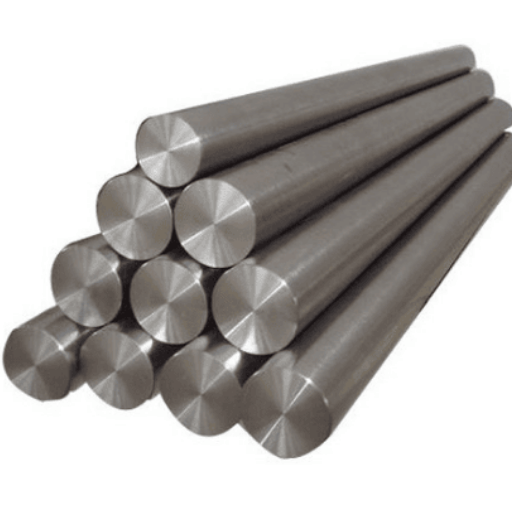
“Cast iron” is a family, not a material, and the family members cut very differently. Before you pick a tool or a speed, you need to know which iron is on the table. Here the reader question is simplewhich cast iron am I cutting, and how hard will it be? Our Cast Iron Grade Decodera 9-grade selection matrix, maps each class to hardness, relative machinability, graphite form, and a tooling starting point.
The 9-Grade Cast Iron Selection Matrix
| Grade / class | Hardness (BHN) | Machinability | Graphite form | First-choice tool | Carbide speed (SFM, m/min) |
|---|---|---|---|---|---|
| Gray iron — A48 Class 20 | 150–180 | Highest (~200%) | Flake graphite | Uncoated K-grade carbide | 350–450 SFM (107 m/min) |
| Gray iron — A48 Class 30 | 180–210 | Very high | Flake graphite | Uncoated/coated K-grade | 300–400 SFM (91 m/min) |
| Gray iron — A48 Class 40 | 200–235 | High | Flake graphite (pearlitic) | Coated K-grade carbide | 250–350 SFM (76 m/min) |
| Ductile — A536 65-45-12 | 150–200 | Good | Nodular (spheroids) | Tough coated carbide | 250–400 SFM (76 m/min) |
| Ductile — A536 80-55-06 | 180–250 | Moderate | Nodular (pearlitic) | Tough coated carbide | 200–330 SFM (61 m/min) |
| Ductile — A536 100-70-03 | 240–300 | Lower (steel-like) | Nodular (pearlitic) | Coated carbide / CBN finish | 150–280 SFM (46 m/min) |
| Compacted graphite iron (CGI) | 190–240 | Hard (abrasive, hot) | Worm/vermicular | Coated carbide; ceramic w/ care | 150–350 SFM (46 m/min) |
| Malleable iron | 110–230 | Good, fine finish | Temper carbon | Carbide (C2-class finishing) | 250–400 SFM (76 m/min) |
| White / chilled iron | 400–600 | Grind only (~60%) | Carbides (no free graphite) | CBN or grinding | CBN < 150 SFM (46 m/min) |
Hardness is given in Brinell (BHN) as typical starting figures; grade designations per ASTM A48 (gray) and ASTM A536 (ductile). Verify the heat’s certificate for your casting. Independent academic work backs these rankings, see this Purdue study on high-speed CGI machinability.
Two practical reads from the Decoder. First, the ASTM class number for grey cast iron is its minimum tensile strength in ksi, Class 40 means 40 ksi (276 MPa) minimum, and higher classes run harder and more pearlitic, so they cut slower. Second, ductile cast iron grades like 65-45-12 spell out the property set directly (65 ksi / 448 MPa tensile, 45 ksi / 310 MPa yield, 12% elongation); the more steel-like the grade, the more it chips like steel rather than crumbling like gray iron. And steer clear of white cast iron entirely on a cutting tool, with its carbon locked as carbides and no free graphite, it is a grinding job above 400 BHN.
Hard spots are the silent killer. A localized fast-cool region in a casting forms white iron (those carbides above 400 BHN) hiding inside otherwise soft gray iron. Hit one with a finishing edge and it chips instantly. Poorly sourced castings carry more of them — machinists who run iron daily are blunt about it: buy from a reputable foundry or quote the scrap in.
Cutting Tools for Cast Iron: Carbide, Ceramic, and CBN
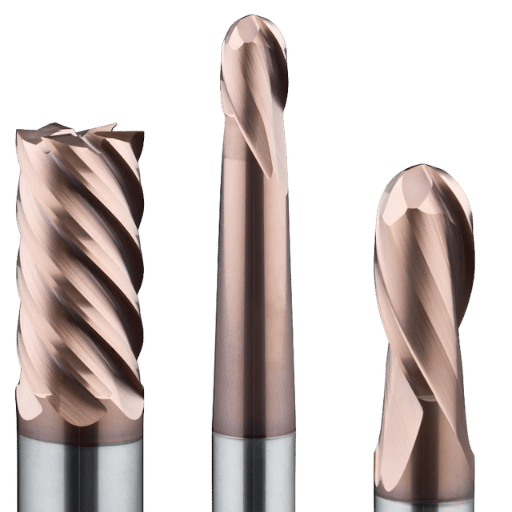
Because abrasion, not heat or built-up edge, is the enemy, tooling for cast iron is chosen for hardness and edge stability, not chip control. There are three families worth knowing, and they line up with how fast and how hard you want to run.
| Tool material | Speed band (gray iron) | Best for |
|---|---|---|
| HSS | ~80–120 SFM | One-off features, manual work; iron eats HSS fast |
| Straight (K-grade) carbide, uncoated or Al₂O₃-coated | ~250–450 SFM | General turning and milling, interrupted cuts, unstable setups |
| Silicon-nitride / SiAlON ceramic | ~1,000–4,000 SFM | Stable, heat-dominated high-speed roughing/finishing of gray iron |
| CBN | ~1,000–1,500 SFM | High-volume finishing (brake rotors, engine bores); tight size control |
Speed bands are typical starting ranges from published tooling charts; always confirm with your insert supplier for the specific grade and operation.
One detail trips people up: grade chemistry. A cast-iron carbide grade should be “straight” — uncoated carbide (or a simple Al₂O₃ coat) without the additives steel grades use to resist heat and built-up edge, because those additives lower transverse rupture strength and make the edge more prone to chipping on iron’s interrupted, gritty cut. Geometry matters too: cast iron favors a slightly negative rake angle for edge support. Pair that with the right edge prep: hone a small radius (around 0.002–0.003 in / 0.05–0.08 mm) on carbide, and run a T-land on ceramic and CBN. A flat-top insert with a negative land survives cast iron far better than a molded chip-breaker, which only weakens the edge on a material that already breaks its own chips.
For gray-iron finishing where size matters, a negative-rake insert with a honed edge and a larger nose radius (e.g., 0.8 mm) lowers surface roughness toward Ra 1.6 µm and spreads abrasive wear over a longer edge. Note that a negative rake or a worn edge raises the unit cutting power, one USPTO filing on high-energy cutting (US 7,637,187 B2) puts the factor at about 1.25× — so budget spindle load accordingly.
Cutting Speeds, Feeds, and Depth of Cut for Cast Iron
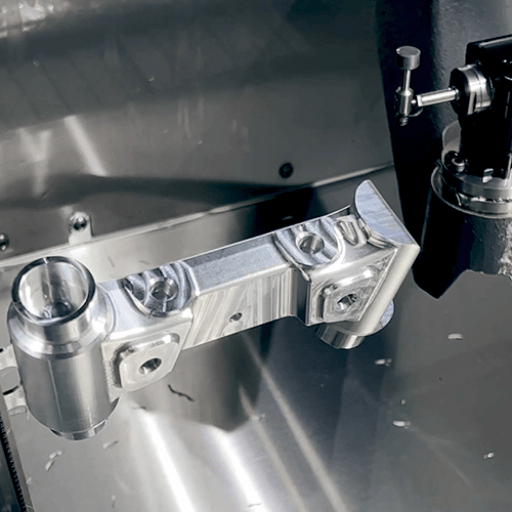
Numbers without a method are just trivia, so here’s both. Start conservative, watch the flank wear, and climb. That reader questionwhat numbers do I start with?is answered grade by grade in the table, and then we convert speed to spindle RPM with a worked example. Two settings drive the result: cutting speed (SFM) controls wear, while a steady feed rate keeps the chip, and the heat, under control. Index both to the workpiece hardness in Brinell (BHN), and remember most of this is done as dry machining unless you’ve a reason to flood.
| Grade | Speed (SFM) | Feed (in/rev or in/tooth) | Depth of cut |
|---|---|---|---|
| Gray iron (Class 30–40) | 250–450 | 0.010–0.015 | Below the skin; up to ~0.150 in |
| Ductile iron (65-45-12) | 200–400 | 0.008–0.014 | Moderate; watch tougher matrix |
| CGI | 150–350 | 0.006–0.012 | Lighter; runs hot |
Roughing feeds around 0.010–0.015 in/rev keep chips manageable; only light finishing cuts produce the fine dust. Values are starting points, confirm with our feeds and speeds guide, published university machining speed tables, and your tooling charts.
Worked example: turning a gray-iron flywheel face
Spindle speed comes from the standard shop formula RPM = (SFM × 3.82) ÷ diameter. Say you’re facing a 6-inch (152 mm) gray-iron flywheel (Class 40) with a coated K-grade insert and pick 350 SFM (107 m/min) as a safe start. Then RPM = (350 × 3.82) ÷ 6 = 1,337 ÷ 6 ≈ 223 RPM. Run that at a 0.30 mm/rev feed and a 2.5 mm depth, check the edge after a few parts, and if flank wear is gentle, step the speed up toward 400 SFM (122 m/min, ≈ 255 RPM). If the edge chip, the casting likely has hard spots, drop speed and inspect rather than feeding harder.
On tool life: machinists running production iron report roughly 60 to 120 min per edge in stable conditions, with the short numbers almost always tracing back to vibration. A thicker insert in a rigid holder absorbs heat and lasts; a long, whippy boring bar doesn’t.
Coolant or Dry? The Dry-First Flowchart
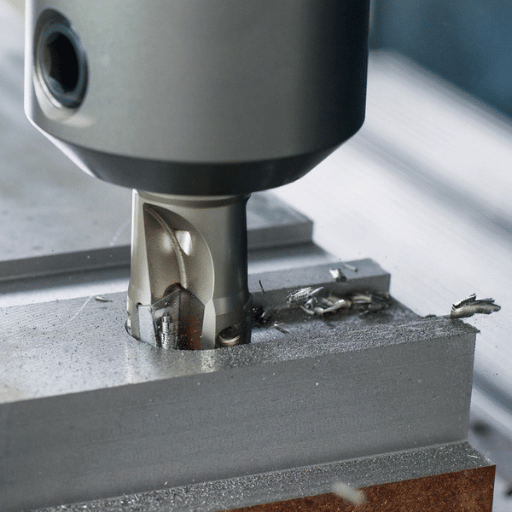
Here’s the most counter-intuitive part of machining cast iron: most shops cut it dry. That breaks the habit every machinist build on steel and aluminum, where coolant is reflexive. With gray iron and carbide, dry is the default, and getting this wrong is an expensive lesson.
Why? Carbide hates thermal cycling. A steady dry cut keeps the edge at one temperature, but intermittent coolant, splashing on and off as the tool enters and exits, heats and quenches the carbide repeatedly until it cracks. Many machinists put it plainly: it’s dry or flooded, never in between. The Dry-First Flowchart sorts the cases:
- Gray iron + carbide, general work → run dry (default).
- Ceramic inserts, any grade → always dry (thermal shock will shatter ceramic).
- Need dust suppression, tight-tolerance bores, or deep-hole drilling → flood consistently (never intermittently), and plan for sludge cleanup.
- Ductile-iron finishing where finish/heat matter → flood is acceptable.
- Can only deliver coolant intermittently → go dry instead; partial coolant is worse than none.
So why do plenty of shops run iron wet anyway? Almost always for dust control, not tool life, flooding washes the abrasive swarf off the ways and out of the air, and keeps painted parts clean. That’s a legitimate choice, but be honest about the reason: you’re buying a cleaner machine, not a longer tool life, and you’re taking on coolant-sludge maintenance in return.
- No thermal-shock cracking of carbide/ceramic
- Clean, paint-ready parts; no coolant sludge
- Lower energy and disposal cost per part
- Abrasive dust airborne, needs extraction/PPE
- No chip washing; manual cleanup of ways
- Heat builds in deep holes/bores → size drift
Dry cutting throws fine iron-oxide dust into the air. OSHA sets an 8 hr iron-oxide permissible exposure limit of 10 mg/m³ (8-hour TWA), and NIOSH recommends a tighter 5 mg/m³. Sand-cast skin can also carry crystalline silica, which falls under OSHA’s respirable silica standard. Use local exhaust, a shop vac with a fine-dust bag, and a proper respirator — not compressed air, which only aerosolizes the dust.
Milling, Turning, and Drilling Cast Iron
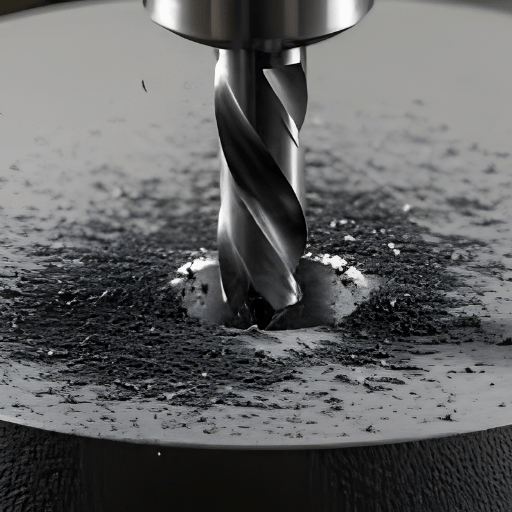
Same material, different tactics by operation. Across all three, one rule hold, the Below-the-Skin First Cut: the as-cast surface is a hard, sandy scale that destroys edges, so set your first roughing pass deep enough to get fully under it in one go rather than skimming the skin twice.
For milling on a metal milling machine, conventional milling on the roughing pass attacks the abrasive skin first and spares the cutter; many shops switch to climb milling once they’re below the scale, a trade-off detailed in university milling-operations guides. Manage exit-edge chipping by easing the feed as the cutter leave the part. For turning, the first facing or roughing cut should clear the skin, and a rigid setup matter because interrupted cuts (spokes, webs) hammer the edge. For drilling, expect a burr at breakthrough; a sharp point and a steady feed beat pecking, and coolant genuinely helps clear chips and heat in deep holes. If you’re programming these for CNC machining on a CNC lathe machine, keep your G- and M-codes tidy so speed and coolant changes land exactly where the geometry change.
What is the best tool for cutting cast iron?
For most shops, the best all-round tool for cutting cast iron is a straight (K-grade) carbide insert, uncoated or aluminum-oxide coated, with a honed edge and a flat top, not a chip-breaker. It handles gray and ductile iron, tolerates the interrupted cut and hard spots of castings, and costs far less than ceramic or CBN.
Step up to silicon-nitride ceramic when the setup is rigid and you want high-speed, heat-dominated roughing, and to CBN only for high-volume finishing such as brake rotors or engine bores, where its size control pay for the premium. A poor choice is a steel-cutting grade with a molded chip-breaker, which chips quickly on iron’s gritty, broken chip.
Common Problems, Hard Spots, and Surface Finish
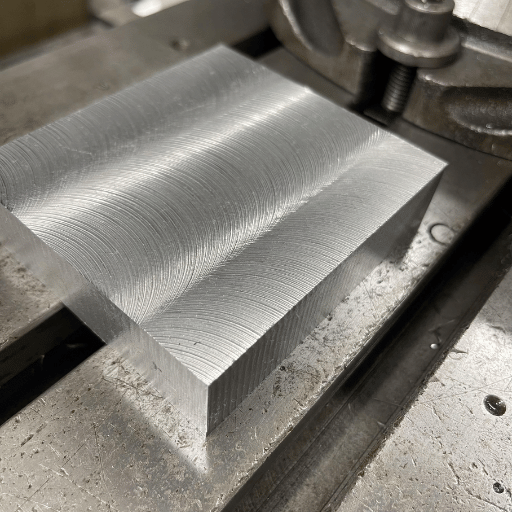
Three failures show up again and again. Knowing the cause turn each into a quick fix.
- ✔Edge chippingusually a hard spot (localized chill/white iron) or a chip-breaker insert. Switch to a flat-top honed grade with a negative rake (a geometry documented in USPTO US 7,637,187 B2), lower speed, and inspect the casting.
- ✔Fast flank wearthis is normal abrasive wear, the dominant failure mode in iron. Accept a realistic tool-life target and use a more wear-resistant grade rather than chasing it with coolant.
- ✔Poor finishsharpen up: larger nose radius, lighter finishing depth, consistent feed, and a rigid, low-vibration setup. PCD can take gray iron to a near-mirror finish where it’s justified.
Should you use coolant when machining cast iron?
Usually no, gray iron with carbide is cut dry by default, and the most damaging mistake is intermittent coolant, which thermally shocks and cracks the carbide. Valid reasons to flood are practical, not tool-life-driven: dust control, washing swarf off the machine, clean parts for paint, and clearing heat in deep-hole drilling.
If you do flood, flood consistently and plan for the coolant-sludge maintenance that iron dust create. One more caution from the field: cast iron conducts heat poorly, so a bore measured warm can grow or shrink several tenths once the part settles to 20°C, gauge after the part stabilizes.
Industry Outlook: Ceramic, CBN, and Dry High-Speed Machining
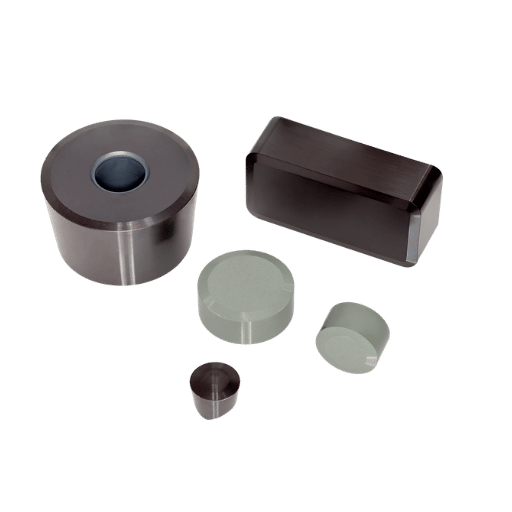
The direction of travel in cast iron machining is set by what the automotive world is casting. As engines downsize for efficiency and emissions targets, more parts move from gray iron to compacted graphite iron (CGI), which is markedly stronger, and markedly harder to cut. Peer-reviewed work confirms the squeeze: a Purdue study on high-speed CGI turning found tool wear only fell at very high speeds with assisted machining, and research on dry face milling shows how quickly high-strength irons burn through tools. For buyers, the takeaway is concrete: if your mix is shifting toward CGI or high-grade ductile, budget for tougher tool grades and shorter edge life, and re-test your speeds, last year’s gray-iron numbers won’t carry over.
A second shift is happening on the tooling side. Faced with tungsten supply and cost pressure, toolmakers are pushing ceramic (alumina/SiAlON) and CBN into operations once owned by carbide, specifically the stable, heat-dominated cuts where ceramics hold hardness that carbide can’t, while carbide stays put for interrupted and unstable work. Trade reporting in 2026 frames this as intelligent allocation rather than wholesale replacement. For a shop, the action item is to identify your steady, high-volume gray-iron operations and pilot a ceramic grade there for dry high-speed gains, while keeping carbide for everything that sees shock.
Why We Wrote This Guide
As a builder of CNC lathes and milling machines, ANTISHICNC machines gray-iron (Meehanite-class) bases and beds in-house, so the notes here on cast skin, dry cutting, and rigidity come from our own floor as well as from ASTM specs, the ASM handbook, and machinists who run iron in production. Where a number depends on your specific grade and tooling, we have said so rather than pretend a single value fits every casting. Reviewed by the ANTISHICNC technical team.
Frequently Asked Questions
Can you machine cast iron?
View Answer
Yes, and gray cast iron is actually one of the easier ferrous materials to machine. The graphite flakes in the iron break the chip into small pieces and lubricate the cutting edge, so cutting forces stay low. The trade-off is an abrasive, dusty cut that wears tools and makes a mess, so the real skill is choosing the right grade, the right carbide, and the right dry-versus-flood setup rather than fighting the material itself.
In practice, a class 30–40 gray iron on a K-grade carbide insert run dry at 250–450 SFM is a forgiving starting point for most turning and milling jobs, and you adjust from there once you see how the flank wear behaves.
Do ductile iron and gray iron need different inserts?
View Answer
Should you use coolant when machining cast iron?
View Answer
Is cast iron harder to machine than steel?
View Answer
What cutting speed should I use for gray cast iron?
View Answer
Why is machining cast iron so dusty and dirty?
View Answer
References & Sources
- Iron Oxide Fume, Permissible Exposure LimitOccupational Safety and Health Administration (OSHA)
- NIOSH Pocket Guide, Iron Oxide DustCDC / NIOSH
- Respirable Crystalline Silica StandardOSHA
- Cemented Carbides and Cermets (ISO R513 K classification)ASM International, Metals Handbook
- Tool life of high-strength cast iron alloys in dry face millingJournal of Manufacturing Processes (ScienceDirect)
- High-Speed Turning of Compacted Graphite Iron (CGI)Purdue University e-Pubs
- US 7,637,187 B2, Cryogenic cooling for high-energy cuttingUSPTO
- Engineering Cast Iron Machining with Strategic Ceramic ApplicationCutting Tool Engineering
- ISO 513:2012, Classification of hard cutting materials (K-group)International Organization for Standardization
- Speeds and Feeds, recommended surface speeds by materialUniversity of Florida, Dept. of Mechanical & Aerospace Engineering
- Milling Operations and Types of Milling MachinesCarnegie Mellon University
Related Articles
Cutting cast iron in volume? Match the job to a rigid machine built for it.