




Machining stainless steel turns easy jobs into broken-tool jobs faster than almost any other workshop metal. Machining stainless steel is the work of cutting, turning, milling, drilling, and tapping stainless alloys whose tendency to work-harden and trap heat makes them far harder to cut than carbon steel. That reason is simple to say and hard to beat: stainless work-hardens under the cut, holds heat at the edge, and sticks to the tool. Get the grade, the speed, the tool, and the coolant working together and stainless cuts cleanly. Get one of them wrong and you cook an edge in minutes. This guide walks through the why and the how, with starting numbers you can take to the machine. Before setting cutting parameters for stainless steel products from Baling Steel, confirm the actual grade, delivery condition and stock dimensions from the order and mill documentation.
Quick Specs: Machining Stainless Steel
| Easiest common grade | 303 (free-machining) / 416 martensitic |
| Hardest common grade | 316 and duplex (2205) |
| Starting speed, 304 (carbide) | ~150–300 SFM turning · 100–250 SFM milling |
| Tool of choice | Sharp TiAlN/PVD-coated carbide, positive rake |
| Number one rule | Keep feeding — never let the tool rub (work hardening) |
| Thermal conductivity, 304 | ~16 W/m·K (about a third of carbon steel) |
Why Stainless Steel Is So Hard to Machine
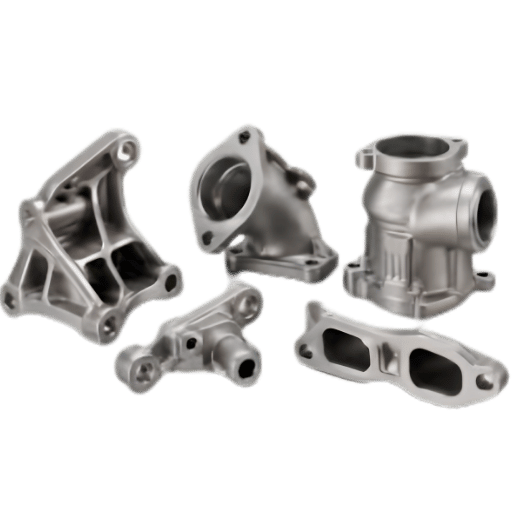
Three physical traits make stainless steel hard to cut: it work-hardens under the edge, it traps heat at the cut because its thermal conductivity runs about a third of carbon steel, and its gummy chips weld to the tool as a built-up edge. Every tactic later in this guide traces back to one of those three.
It work-hardens fast. Austenitic grades like 304 and 316 strain-harden at the surface roughly twice as fast as ferritic or martensitic stainless. If the cutting edge rubs instead of cutting, a light pass, a dwell, a tool that has gone dull, the skin of the part gets glass-hard, and the next pass has to reach under that hardened layer or it just polishes it harder. A University of Kentucky study on AISI 304 surface integrity tied the surface hardness rise directly to this work-hardening, and also noted austenitic stainless has a high tendency to adhere to the cutting tool material.
It holds heat in the cut. 304 conducts heat at about 16 W/m·K, roughly a third of plain carbon steel’s ~45 W/m·K. Heat that a carbon-steel chip would carry away instead stays at the cutting edge, so the tool run hotter at the same speed. That single fact is why coolant strategy matters more in stainless than in mild steel.
All stainless owes its corrosion resistance to chromium, at least about 10.5% — and the austenitic grades add nickel and (in 316) molybdenum, which is exactly what lowers their machinability. These grades aren’t especially hard; 304 sits around 180 Brinell hardness. They’re difficult because of how they behave under the cut, not because of bulk hardness.
It’s gummy and sticky. The same low-carbon ductility that makes 304 easy to form makes its chips want to weld to the edge as a built-up edge (BUE). BUE ruins the surface finish, then breaks away and takes a chunk of carbide with it. Poor surface finish on stainless is almost always a built-up-edge problem, not a feed rate that’s too high. Notch wear at the depth-of-cut line is the other classic failure mode.
So the job isn’t “cut harder.” It’s “keep the edge sharp, keep it fed, and get the heat out.” Hold those three and stainless behaves.
Stainless Steel Grades Ranked by Machinability
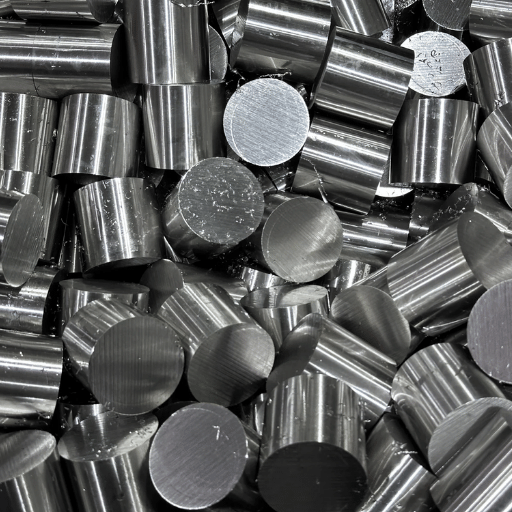
Not all stainless cuts the same. Picking the grade is the first lever you’ve, and it’s the cheapest one. A free-machining 303 stainless steel bar and a tough 316 stainless steel bar can differ by nearly two-to-one in how fast you cut them and how long the edge lasts. We call this ranking the Stainless Machinability Laddergrades sorted by how freely they cut, with the trade-off each one cost you in corrosion resistance or strength.
| Grade (UNS) | Type / family | Machinability | Trade-off you accept |
|---|---|---|---|
| 416 (S41600) | Martensitic, free-machining | ~85–90% | Easiest stainless overall; lower corrosion resistance |
| 303 (S30300) | Austenitic, free-machining | ~72–78% | Sulfur/selenium added; lower corrosion resistance, poor weldability |
| 430F (S43020) | Ferritic, free-machining | ~65–75% | Magnetic; moderate corrosion resistance |
| 17-4 PH (S17400) | Precipitation-hardening | ~43–45% annealed | Machine in Condition A (annealed); much harder after aging |
| 304 (S30400) | Austenitic | ~40–45% | Default workhorse; good corrosion, fair machinability |
| 304L (S30403) | Austenitic, low-carbon | ~40% | Weld-friendly but gummier; slightly worse than 304 |
| 440C (S44004) | Martensitic, hardenable | ~35% annealed | High hardness after heat treat; machine annealed only |
| 316 (S31600) | Austenitic | ~36–40% | Adds 2–3% molybdenum for chloride/marine; toughest common grade |
| 316L (S31603) | Austenitic, low-carbon | ~36% | Most marine/medical work; lowest of the common grades |
| 2205 (S32205) | Duplex | ~28% | About 20% below 316; needs a rigid setup and stable clamping |
Machinability ratings synthesized from cross-referenced machining data (Machining Doctor reference table and SSINA).
One source lists 303 at 72% and another at 75%; 304 shows up as both 40% and 43%. That is not sloppiness — the number depends on the baseline. Industry’s classic AISI system sets free-cutting B1112 carbon steel at 100%, while many stainless tables set 416 stainless at 100%. Read the ratings as a ranking, not a target. That order (416, 303, 430F, then 304, 17-4 PH, 316, duplex) is what holds steady across sources. A 2024 comparison of austenitic and duplex machinability in the Journal of Materials (JOM) follows the same ranking.
Is 304 or 316 easier to machine?
304 stainless steel is easier. Both are austenitic, but 316 stainless steel adds 2–3% molybdenum, which raises strength and toughness and drags machinability down by roughly 10–15% relative to 304. In practice that means 316 wants a slightly lower cutting speed, a sharper edge, and tighter attention to coolant and chip control.
If a part will live in fresh water or indoors, 304 is usually enough and cuts faster. Save 316 for chloride exposure, marine, or medical work where its corrosion resistance earns its keep, and budget the extra cycle time and tool wear that come with it.
Speeds and Feeds for Stainless Steel
Speeds and feeds are where most stainless jobs are won or lost. The trap is running carbon-steel numbers: stainless wants a lower cutting speed but a firm, steady feed. Cut too slow on the feed and you rub, which work-hardens the surface and kills the edge. The table below give carbide starting points; treat them as a place to begin, then tune by the chips and the sound.
| Grade | Turning (SFM) | Milling (SFM) | Notes |
|---|---|---|---|
| 303 | 250–400 | 150–300 | Free-machining; most forgiving |
| 304 / 304L | 150–300 | 100–250 | Start ~200 turning; raise once chips run blue-brown |
| 316 / 316L | 120–250 | 80–200 | Lower than 304; sharp edge essential |
| 17-4 PH (annealed) | 150–250 | 100–200 | Slower again once age-hardened |
| 416 | 300–450 | 150–350 | Closer to alloy-steel speeds |
Cross-referenced starting ranges; premium coated carbide with high-pressure coolant on a rigid machine can run higher.
For chip load, a common carbide range runs from about 0.0005″ per tooth on a 1/8″ end mill up to ~0.006″ on a 1″ end mill. This classic shop formula ties it together:
Spindle speed: RPM = (3.82 × SFM) ÷ tool diameter. At 200 SFM on a 0.5″ tool, RPM = (3.82 × 200) ÷ 0.5 ≈ 1,528 RPM.
Feed: IPM = RPM × chip load × flutes. With a 4-flute tool at 0.002″ per tooth, feed = 1,528 × 0.002 × 4 ≈ 12.2 IPM. Start there and creep up, don’t creep down, or you’ll rub. For the full formula breakdown, see our guide to feeds and speeds.
Choosing Cutting Tools and Inserts
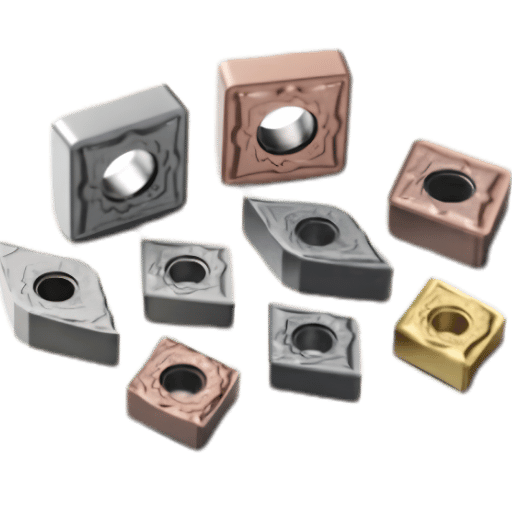
Your best tool for stainless is sharp, coated carbide with a positive rake, a chip breaker to curl the gummy chip, and enough chip room. Here’s how the pieces fit together.
Two details earn their keep. A TiAlN coating, a PVD coating that grows a heat-resistant alumina skin as it warms, buys you speed a bare edge can’t survive, and good edge preparation (a light hone) keeps a sharp edge from chipping on the first interrupted hit. For turning, a slightly larger nose radius spreads the load and improve finish, while the rake angle should stay positive so the edge shears rather than pushes. Cermet inserts can give an excellent finish on light finishing passes in 303 or 304, though they’re too brittle for interrupted roughing.
| Decision | For stainless, choose | Why |
|---|---|---|
| Substrate | Fine-grain carbide (HSS only for light/manual work) | Holds an edge hot; HSS gives up at ~35–65 SFM |
| Coating | TiAlN PVD (or thin-layer CVD) | Heat barrier; TiAlN builds an alumina skin as it heats |
| Geometry | Positive rake, sharp/honed edge, chipbreaker | Shears instead of rubbing; cuts BUE and cutting force |
| Turning insert | CNMG/DNMG, M-class grade, medium chipbreaker | Tough enough for interrupted cuts; controls stringy chips |
| End-mill flutes | 4 for slotting/roughing, 5–7 for finishing/HEM | Low count = chip room; high count = finish + feed |
One real example show the flute trap. A machinist tried a 7-flute end mill to slot 304 and burned it almost immediately. The problem wasn’t the speed, it was that a 7-flute tool leaves nowhere for the chip to go in a heavy cut. Choosing the right cutting tool for the operation, dropping to 4 flutes and raising the feed, fixed it. Tooling makers keep pushing this forward: patents such as US8596935B2 cover inserts with internal cooling channels and built-in chip control, a direct response to the heat-and-chip problem stainless creates.
“Size your feeds and speeds so a cutting edge lasts about fifteen minutes between index changes. Pushing the edge harder than that rarely pays once you count the lost time indexing and the scrap from a worn corner.”
Cutting Tool Engineering magazine, “Turning Stainless Made Painless”
Coolant and Heat Control: The 3-Lever Heat Budget
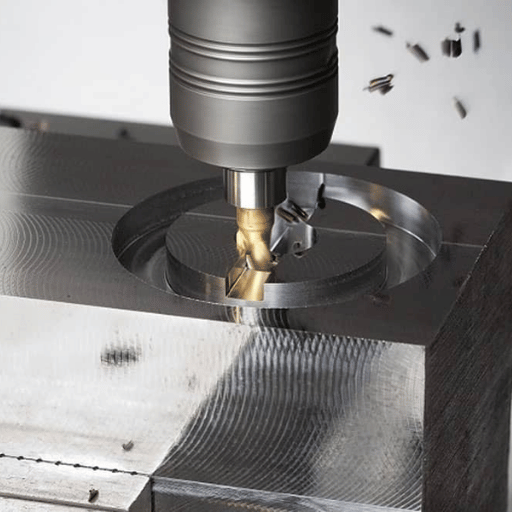
Because stainless keeps heat at the edge, cooling isn’t an afterthought, it’s one of three levers you balance on every job. Think of it as a heat budget: heat goes in from cutting speed, comes out through coolant, and the tool’s coating decides how much of what’s left it can survive. Move one lever and you’ve to adjust another.
- Lever 1, Cutting speed (heat in). Higher SFM makes more heat. This is the lever to back off first when the tool run hot.
- Lever 2, Coolant delivery (heat out). Where and how the coolant lands decides how much heat leaves with the chip instead of soaking into the part and tool.
- Lever 3, Tool coating and geometry (heat tolerated). A TiAlN edge survives heat a bare edge can’t, and a sharp positive edge makes less heat to begin with.
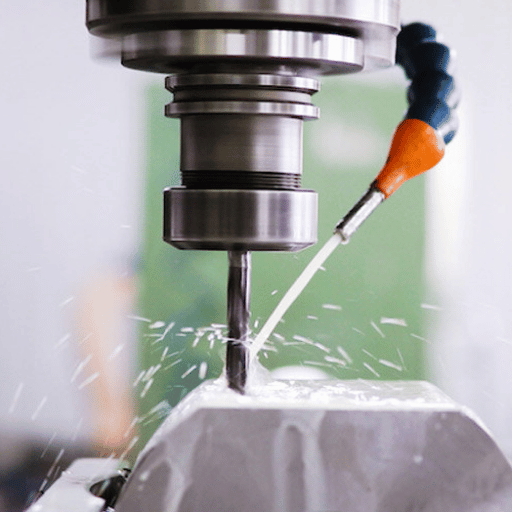
Coolant delivery has a twist most beginners miss. Flood is excellent for turning and drilling, where the cut is continuous and the stream stays on the edge. But in interrupted milling, flood can cause failure: the edge go hot-cold-hot-cold every rotation, and that thermal shock cracks carbide. Many shops run high-speed milling in stainless dry or with an air blast for exactly this reason. Where heat is the limit, a 2026 ASME review of cryogenic cooling reports markedly longer tool life than conventional flood. Pick the cooling method to the operation:
| Method | Best for | Watch out for |
|---|---|---|
| Flood | Turning, drilling, continuous cuts | Thermal shock on interrupted milling |
| High-pressure (1,000+ psi) | Chip breaking in turning, deep holes | Needs machine capability and budget |
| MQL (near-dry mist) | Milling, lower coolant cost | Too little cooling for heavy turning |
| Cryogenic (LN₂/CO₂) | Hard grades, longest tool life | Upfront cost and plumbing |
| Dry HSM | High-speed milling toolpaths | Needs proper chip evacuation |
How to Avoid Work Hardening: The No-Dwell Principle
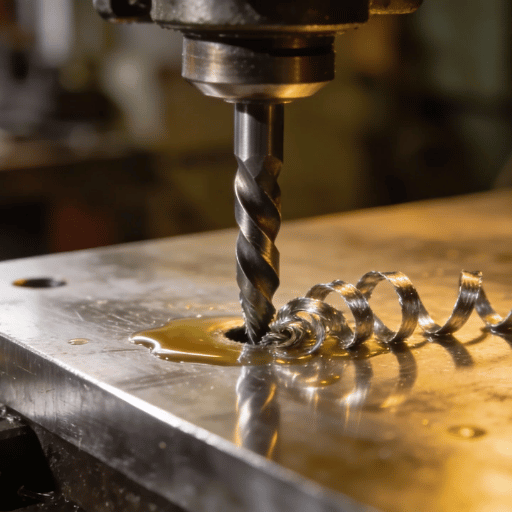
If there’s one habit that separates clean stainless parts from scrapped ones, it’s this: never let the tool ride without cutting. We call it the No-Dwell Principle. The moment an edge stops removing metal — when it dwells in a corner, spring-passes a few thousandths, or goes dull and rubs — the surface work-hardens into a layer harder than the bulk material itself.
A University of Kentucky study on surface integrity in AISI 304 machining ties that surface hardness spike directly to work-hardening.
When you do take a cut, take a real one. On a finishing pass in 304, keep the depth of cut above roughly 0.010″–0.015″ so the edge stays under any previously hardened skin rather than skating on top of it. This same logic kills the “sneak up on size with light passes” habit: each light pass hardens the surface a little more, so the final cut fights a tougher layer than the first. Commit to a feed and stay in the cut.
This checklist follows straight from the principle:
- ✔ Keep a steady chip load, feed firmly, never feather the cut.
- ✔ Change the edge before it dulls; a worn edge rubs, and rubbing hardens.
- ✔ Vary the depth of cut slightly to spread notch wear off one line.
- ✔ Use positive-rake, sharp tooling so the edge shears rather than pushes.
Turning, Milling, Drilling and Tapping Stainless
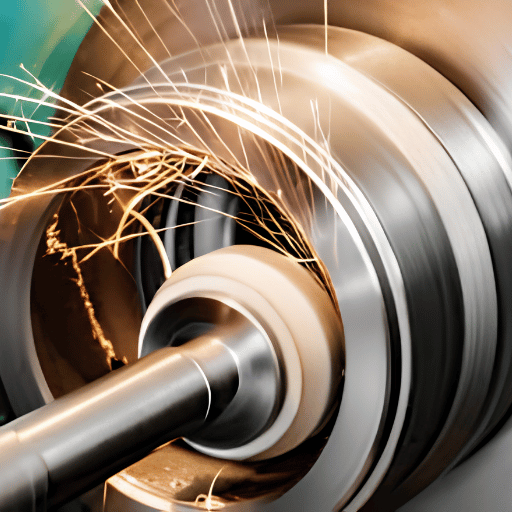
Those principles stay the same across operations, but the tactics shift. Here’s what changes when you move between a metal turning lathe and a mill.
Turning
Turning is the friendliest stainless operation because the cut is continuous and coolant stays on the edge. Use a rigid setup, a tough M-class insert with a medium chipbreaker, and constant surface speed so the SFM holds as the diameter shrinks. Flood freely here, this is where it helps most. Modern CNC lathe machine with high-pressure coolant will break the stringy chip that otherwise nest around the part.
Milling
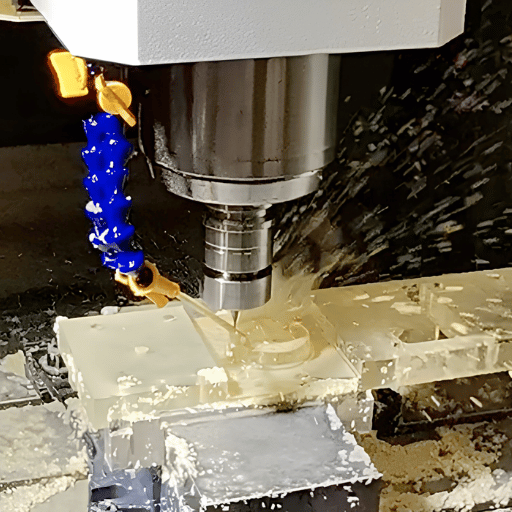
Milling is the interrupted cut, so thermal shock and chip evacuation rule. Use climb milling, keep radial engagement light enough to avoid recutting chips, and consider running dry or air-blast for high-speed toolpaths on a metal milling machine. A solid, rigid vertical machining center (VMC) matters more here than peak spindle RPM, flex causes tool deflection that lets the edge rub and harden the surface. For small precision parts run in volume, swiss machining (a sliding-headstock lathe) supports the work right at the cut and holds the rigidity stainless demand.
Drilling and tapping
Drilling stainless is where work hardening bites hardest, because a slow start let the drill rub. Use a sharp cobalt drill or coated carbide, full recommended feed from the first contact, and apply peck drilling only enough to clear chips, not so often that the drill dwells and rubs. Tapping is the most fragile operation: galling (the tap cold-welding to the thread) is the usual killer, so use form taps where the material allow, or spiral-point taps with plenty of lubricant, and back the speed down. Breaking a tap in a finished part is the most expensive mistake in the shop.
What is the easiest way to cut stainless steel?
For a one-off cut, the easiest path is a free-machining grade (303 or 416), a sharp carbide tool, a firm feed, and flood coolant on a continuous cut like turning. For sheet, a cold saw or waterjet beats trying to mill thin stock that chatters.
By far the single biggest “easy button,” though, is grade selection: choosing 303 over 316 for a non-corrosive part can nearly double how fast and how long you cut before the edge gives up. Match the grade to the real corrosion need and most of the difficulty disappears before you ever touch the machine.
Maximizing Tool Life and Cost-per-Part
In production, the goal isn’t the fastest cut, it’s the lowest cost per finished part. That balance is why the 15-minute rule of thumb is so durable: size the cut so an edge last about fifteen minutes of cutting between index changes. Run faster and you might shave cycle time, but if edge life drops from fifteen minutes to five, you index three times as often, and the lost time plus the risk of a worn-corner scrap usually erases the gain. Tooling has evolved to push that limit — patents such as internal-cooling carbide inserts aim squarely at the heat that ends an edge.
| Wear mode | Likely cause | Fix |
|---|---|---|
| Built-up edge | Speed too low, edge not sharp | Raise SFM, sharper/positive edge, better coolant |
| Notch wear at DOC line | Work-hardened layer at one depth | Vary depth of cut; tougher grade |
| Edge chipping | Thermal shock (flood on interrupted cut) | Air blast/dry HSM; tougher grade |
| Rapid flank / abrasive wear | Speed too high for the grade | Back off SFM (Lever 1) |
Common Mistakes When Machining Stainless (and How to Avoid Them)
These come up again and again from machinists working stainless every day.
- Running carbon-steel feeds. Too light a feed rubs and work-hardens. Stainless wants a firm chip, not a gentle one.
- Flooding an interrupted milling cut. The hot-cold cycling cracks carbide. Air blast or dry HSM the cut instead.
- Ignoring rigidity is another: a A flexing part or long tool lets the edge deflect and rub, the fastest route to a hardened surface. Shorten the tool, support the part. Academic machining studies on surface work-hardening in 304 confirm that rubbing, not cutting, is what hardens the skin.
- Reaching for 316 by default also wastes money: Spec it only when corrosion needs it; otherwise 304 or 303 cuts faster and cheaper for the same part.
What’s Changing in Stainless Machining (2026 Outlook)
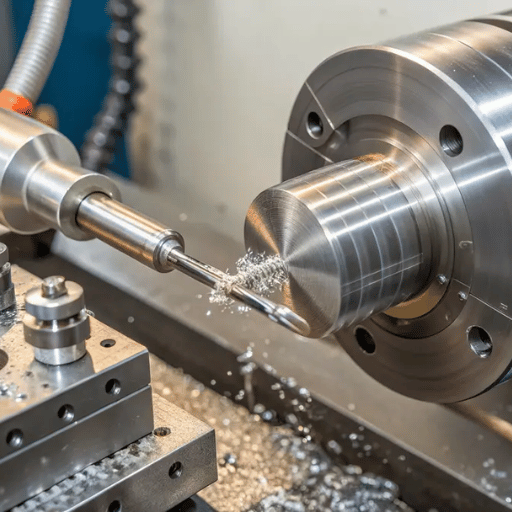
By far the biggest shift on shop floors right now isn’t a new grade, it’s how the cut is cooled, and it’s driven by cost and disposal pressure as much as by performance. Cutting-fluid purchase, filtering, and disposal are a real line item, and they’re pushing shops to ask whether flood is still the default for stainless.
Two directions are gaining ground. Minimum-quantity lubrication (MQL) trades the flood tank for a fine mist, cutting coolant volume sharply while still carrying heat off a milling edge. And cryogenic cooling, liquid nitrogen or CO₂ at the cut, is moving from the lab toward production: a 2026 ASME review of cryogenic cooling in sustainable machining reports it meaningfully extends tool life and improves surface quality versus conventional cutting fluid, and 2025 work in MDPI Lubricants studied cryogenic and MQL combinations for hard-to-cut materials.
What this means for a buyer: if you run repeat stainless jobs, the practical move in the next year isn’t to retrofit the whole shop, but to pilot MQL or high-pressure coolant on one steady 304 or 316 job, measure edge life and finish, and let the cost-per-part number decide. That technology is ready; the question is whether your part mix pays for it yet. For a supplier comparison after these process requirements are defined, evaluate CNC machining services from Zhenling against the specified stainless grade, drawing tolerances, finishing scope and inspection requirements.
Frequently Asked Questions
Q: Is it difficult to machine stainless steel?
View Answer
Q: What is the hardest metal to machine?
View Answer
Q: What is the best stainless steel for machining?
View Answer
Q: Do you need coolant to machine stainless steel?
View Answer
Q: Why do my cutting tools wear out so fast in stainless?
View Answer
Q: Can you machine stainless steel on a manual lathe?
View Answer
References & Sources
- Analysis of Surface Integrity in Machining of AISI 304 Stainless SteelUniversity of Kentucky (UKnowledge)
- Cryogenic Cooling in Sustainable Machining: A ReviewASME Journal of Tribology (2026)
- Progress on Sustainable Cryogenic Machining of Hard-to-Cut MaterialsMDPI Lubricants (2025)
- Comparative Machinability of Austenitic and Duplex Stainless SteelJOM (2024)
- Turning Stainless Made PainlessCutting Tool Engineering
- ASTM A276/A276M, Standard Specification for Stainless Steel Bars and ShapesASTM International
Why We Wrote This Guide
As a builder of CNC lathes, milling machines, and turning equipment, ANTISHICNC sees the same stainless problem from the machine side: low thermal conductivity and work hardening punish any setup that lets the tool rub, which is why we stress rigidity and a steady feed over chasing peak RPM.
The speeds, grades, and coolant guidance here are synthesized from published machining references and peer-reviewed cooling research, framed for shops choosing how to cut 303, 304, and 316. Reviewed by the ANTISHICNC technical team.
Related Articles
- Feeds and Speeds: RPM, Feed Rate and SFM Formulasthe math behind the numbers in this guide
- Essential Lathe Cutting Tools for Beginnerschoosing inserts and tool geometry
- Understanding the Basics of Lathes and Mills
- G and M Code List for CNC Programming
- Benefits of Digital Readouts for Lathes
Setting up a shop to cut stainless without fighting it?
ANTISHICNC builds rigid CNC and universal lathes, VMCs, and milling machines suited to stainless work. Talk to our engineers about the right machine and spindle for your grade mix.