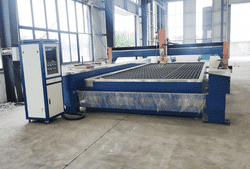
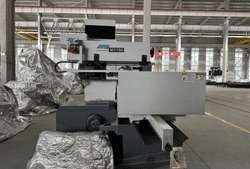


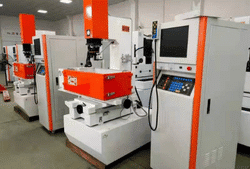
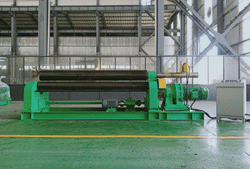



Precision and efficiency are the premises of modern manufacturing, and so CNC milling and boring machines are at the forefront of this evolution. These advanced machines have essentially changed the approach to machining industries, allowing for precision, perfection, or consistency, and high productivity. But what separates these machines, and why are they seen as the future of precision machining? The article aims to explore the technology behind CNC milling and boring, as well as their impact on various industries and the exciting possibilities they offer. Whether you are a seasoned machinist, manufacturing professional, or simply curious about the world of precision engineering, this dive into CNC innovation promises intriguing insights into the tools that will shape tomorrow.
Introduction to CNC Milling and Boring Machines

What Is a CNC Milling Machine?
Computer Numerical Control (CNC) milling is a computer-aided control system that controls tool movements, enabling the precise cutting of materials to shape and size. The machine uses control based on a computer program or pre-set computerized computer program that guides the tool, enabling precision and repeatability without any human intervention. Thus, it distinguishes CNC milling machines from traditional manual milling machines. The advantages that CNC machines offer in terms of versatility far surpass those of manual milling machines.
CNC milling machines are classified based on the configuration of their motion. They include 3-axis, 4-axis, and 5-axis configuration types. The simplest 3-axis machines allow movement in the X, Y, and Z directions, while 5-axis machines add rotation, providing greater machining flexibility and complexity. These flexible systems are being more widely applied in high-technology fields such as aerospace, automotive, electronics, and medical devices where even metrological imperfections could translate into large deviations in the working qualities of a product.
Global CNC Market by 2030
CAGR (2022-2030)
Recent market studies have shown that the global CNC machine tool market size is expected to reach $134.5 billion by 2030, registering a CAGR of 5.9% from 2022 to 2030. It is estimated that the growing adoption of CNC milling machines is because of their advantage of manufacturing the most intricate parts in the least possible time and material. Tool change features, automatic operation of the CNC milling machines, and the presence of a CAD/CAM system installed in the machine render it essential to a modern manufacturing system.
Today, further technological innovations are instilling in CNC milling machines the ability to incorporate IoT capabilities and real-time monitoring systems catering to operational efficiency enhancement and predictive maintenance. Such innovations ensure that CNC milling machines meet the capabilities demanded by today’s manufacturing trends, while laying the foundation for a smart factory in the future.
Understanding the Boring Machine
The boring machine is a crucial tool in precision machining, explicitly designed to enlarge holes that have already been drilled, cast, or forged. Boring enlarges an existing hole to a greater diameter, improves the surface finish of that hole, and holds closer tolerances. It is generally used in the aerospace, automotive, and heavy equipment manufacturing industries, where components must meet strict specifications.
The boring machine brings in modern technologies to enhance productivity and precision. CNC-based systems are integrated into boring machines to enable automated and highly accurate operations. These are men on the rise, utilizing an IoT-enabled boring machine that enables real-time parametric monitoring of temperature, vibration, and tool wear. According to market data from recent industry reports, the global boring machine market is projected to witness significant growth that would be contributed to by increasing demand for customized and highly complex parts in various sectors.
Differences Between CNC Milling and Boring
Both CNC milling and boring are fundamental and essential processes in the machining industry, but they differ significantly in their formation, purpose, and application. It is important to understand such distinctions before deciding on the most applicable process for a given manufacturing application.
| Aspect | CNC Milling | CNC Boring |
|---|---|---|
| Primary Function | Material removal to create complex shapes | Enlarging and finishing existing holes |
| Tool Type | Rotating multi-point cutters | Single-point cutting tools |
| Applications | Engine housings, precision gears | Turbine parts, heavy equipment components |
| Market Growth (CAGR) | 8.7% (2023-2030) | Steady growth with deep-hole innovations |
| Precision Level | Complex 3D geometries | ±0.001 inches accuracy |
How CNC Milling and Boring Machines Work

The Technology Behind CNC Machines
A pair of CNC machines takes pre-programmed software instructions and converts them into exact movements and operations. They take the most current hardware and software technology to deliver results with high precision and repeatability. These manufacturing machines use axes of movement, commonly labeled X, Y, and Z, to controllably guide the tool to carry out tasks such as milling, boring, turning, and cutting. CNC machines of the modern era may include additional rotational axes (A, B, and C) to handle more complex shapes and 3D geometry.
Advancements in technology have also impacted CNC machines with the inclusion of adaptive machining technologies, IoT connectivity, and AI-based optimization. Latest research studies report that equipping CNC machines with sensors and IoT capabilities has facilitated implementation of predictive maintenance and real-time performance monitoring, reducing downtime in production by as much as 20%. In parallel, AI algorithms have been put to use to maximize tool-path efficiency by as much as 10-30% in volume manufacturing.
Key Components of CNC Milling and Boring Machines
CNC milling and boring machines comprise complex mechanical systems with a few key components designed to maximize precision and efficiency. The components mentioned below are well-described in detail, explaining their working in modern manufacturing:
The machine bed acts as the base of the CNC milling and boring machine. The bed is made of heavy materials, such as cast iron or steel, to provide rigid support and dampen vibrations produced during machining processes, thus allowing for finer tolerances to be achieved.
The spindle is at the heart of the process, rotating either the cutting tool or the workpiece. Modern spindles are powered by motors of high efficiency and attain speeds of either a few hundred RPMs or over 30,000 RPMs with the application being a determining factor.
The CNC controller serves as the brain of the machine, executing programmed instructions and controlling all machine operations. Recent CNC controllers have incorporated touch-screen interfaces and real-time monitoring.
One of the most valuable features of contemporary CNC systems is the ability of automatic tool changers (ATC) to allow the machine to switch between several tools during a machining operation. Some tooling systems now have tool change speeds of 1.5 seconds or less.
Cutting tools used in CNC milling and boring machines are typically made from materials such as high-speed steel (HSS), carbide, or ceramic. Multi-axis machines are capable of using enhanced tools coated with titanium nitride (TiN).
Linear guides and ball screws, which provide very high levels of precision, are essential for the smooth movement of the machine axes. These components have been designed to take massive loads yet maintain sub-micron accuracy.
Operation Process of CNC Machining
The process of CNC machining contains multiple interrelated operations with each stage essential for relative precision and efficiency. The operation process is detailed below:
- Design and Programming: The first step involves making a design using CAD software. Engineers prepare a 2D or 3D model of the part to manufacture. The design is then transformed into G-code instructions using CAM software. Recent studies indicate a 30% decrease in programming errors due to AI-powered CAM tools.
- Machine Setup: Once the program is ready, an operator sets up the CNC machine. The workpiece is placed in an appropriate workholding device, and cutting tools are installed. Advanced CNC machines can target 50 or more tools with minimum manual intervention.
- Machining Execution: The CNC equipment initiates milling, boring, drilling, or turning operations. New wave machines attain astounding degrees of precision, with a tolerance of ±0.001 inch. High-speed machining can achieve spindle speeds up to 20,000 RPM.
- Quality Control and Inspection: After machining, parts undergo measurement checks using automated systems like coordinate measuring machines (CMMs). Real-time quality checks can reduce defective parts by 25%-50%.
- Post-processing: Final steps may involve finishing operations such as deburring, polishing, or coating. Advanced CNC systems can carry out post-processing operations within the machining workflow.
Industrial Applications of CNC Milling and Boring

Automotive Industry Applications
CNC drilling and milling find applications in the automotive industry to produce components with extremely high precision, which directly affects the performance and safety of assembled vehicles. These processes are used for some of the automotive parts such as engine blocks, cylinder heads, gearboxes, and brake systems.
CAGR Growth (2023-2030)
Improved Uptime with IoT
A significant new trend within the automotive industry is the push toward EVs, which offers new challenges for the production of components. CNC machines have evolved to meet the demand for manufacturing highly specialized parts, such as battery housings, components for electric motors, and lightweight materials that enhance vehicle efficiency.
Aerospace Manufacturing Use Cases
In the aerospace industry, where precision, reliability, and safety are of utmost consideration, CNC machining has gained much importance. Due to aerospace component requirements being stringent, CNC machines are used to fabricate highly intricate parts with super-tight tolerances leading to excellent quality.
- Aircraft Structural Components: CNC machining manufactures vital structural components like fuselage frames, wing spars, and bulkheads from lightweight materials such as aluminum and titanium.
- Engine Components: CNC manufacturing involves producing complex parts in turbine blades, combustion chambers, and exhaust components that must withstand extreme temperatures and forces.
- Prototyping and R&D: CNC machines empower rapid prototyping in aerospace, enabling testing and finalizing designs for new aviation and space exploration technologies.
- Spacecraft Parts: CNC machining manufactures satellite systems, rocket components, and modular spacecraft parts with highly accurate components that can fit into larger systems.
- Helicopter and UAV Components: From rotors to precision gears, CNC delivers consistent and high-standard results required for operational safety.
Medical Equipment Production
From CNC machining comes the medical equipment industry, which relies on precise components for modern healthcare. Worth approximately $495.46 billion in 2022, the medical device market is forecasted to grow at a 5.5% CAGR between 2023 and 2030; advancements in manufacturing technologies, such as CNC machining, partly drive this growth.
CNC machining enables the creation of complex geometries with very tight tolerances, which are required for surgical instruments, prosthetics, and diagnostic machines. CNC machines, for example, manufacture titanium implants, for instance, joint replacement and dental implants, with precision. Additionally, working with biocompatible materials, such as stainless steel, ceramics, and medical-grade plastics, ensures the safety and longevity of these devices.
Advantages of CNC Milling and Boring Machines

Precision and Accuracy in Machining
CNC milling and boring machines are renowned for their unparalleled precision and accuracy, which is why they are often selected as the production hubs of modern manufacturing. These machines consistently operate to tolerances within ±0.0001 inches, enabling the manufacture of highly detailed and complex components.
Efficiency and Speed in Production
Modern CNC milling and boring machines combine speed, high functional efficiencies, and intelligent automation to deliver the best results. The forefront processing capacity of these machines has meant short production time without compromising output.
| Performance Metric | Improvement | Impact |
|---|---|---|
| Cycle Time Reduction | 20-30% | Faster production throughput |
| Material Waste Reduction | 15% | Cost savings and sustainability |
| Production Downtime | 20% reduction | IoT-enabled predictive maintenance |
| Tool-path Efficiency | 10-30% | AI algorithm optimization |
Scalability of CNC Operations
Today, CNC approach’s advances make CNC machines an integral part of aerospace, automotive, and medical manufacturing. These days, CNC machines accommodate changes in production volumes with remarkable consistency and precision due to their current developments in automation and software integration.
Global CNC Market by 2030
CAGR (2023-2030)
Maintenance Tips for CNC Milling and Boring Machines

Routine Maintenance
Regular maintenance practices are therefore crucial for the long-term life and optimal performance of CNC milling and boring machines. Some critical maintenance tips are discussed below based on data and industry knowledge:
- Daily Cleaning and Inspection: Studies reveal that inadequate cleaning procedures account for over 45% of CNC machine problems. Operators should ensure cleaning of machine surfaces, tool holders, and work area at the end of each shift.
- Check the Lubrication System: A properly serviced lubrication system can increase the life of CNC machines by at least 25%. Regular checking of oil levels and filter conditions is essential.
- Alignment and Calibration: Manufacturers suggest that machines be calibrated every 500 hours to avoid deviations and retain their accuracy.
- Coolant Maintenance: Improper coolant maintenance may reduce tool life by nearly 20%. Monitor pH level, temperature, and contamination status.
- Spindle and Tool-Holder Maintenance: Be aware of abnormal noises or vibrations, and ensure proper cleaning and tightening of tool holders.
Common Issues and Problem Solving
There are some common issues faced during CNC work that, if not taken care of instantly, can put production in jeopardy. Below are some of the most common problems encountered and troubleshooting tips:
| Issue | Cause | Solution | Impact Data |
|---|---|---|---|
| Tool Wear and Breakage | Improper cutting parameters | Regular inspection, quality tools, monitoring systems | 15% of all downtime |
| Overheating | Extended running, poor cooling | Maintain lubrication and cooling systems | 30% thermal error reduction |
| Misalignment | Mechanical wear, calibration drift | Routine alignment checks, professional calibration | 20% of CNC defects |
| Software Glitches | Outdated systems, bugs | Regular updates, backups, predictive maintenance | 25% downtime reduction |
| Power Supply Issues | Fluctuations, outages | Voltage regulators, UPS systems | 10% of machine failures |
Best Practices for Prolonging Machine Lifespan
To ensure the long life of CNC machines and minimize downtime, it is essential to adopt effective maintenance practices. Here are proven best practices with supporting data:
- Implement Routine Preventive Maintenance Programs: Preventive maintenance can curb unplanned downtime incidents by almost 30%.
- Keep Workspace Clean & Debris Free: Maintaining clean working conditions can contribute to increasing machine tool lifespan by almost 15%.
- Monitor Machine Calibration: Companies that calibrate machines quarterly experience 20% fewer quality-related issues.
- Train the Operator: Approximately 25% of machine failures can be attributed to operator errors, making training programs essential.
- Utilize Quality Replacement Components: OEM parts increase machine longevity from 10-20 percent against generic parts.
- Leverage IoT and Predictive Maintenance Technology: Predictive maintenance reduces breakdowns by 50% and decreases maintenance cost up to 25%.
- Control Electrical System: Electrical disturbances account for approximately 12% of CNC machine malfunctions.
Current Trends and Innovations in CNC Technology

AI Integration in CNC Machines
Artificial Intelligence (AI) is transforming the CNC machining sector to ensure greater precision, efficacy, and operational control. In modern times, CNC machines are increasingly equipped with AI technologies for adaptive learning, predictive maintenance, and informed decision-making.
AI-driven CNC Market CAGR
Reduction in Machine Failures
Improved Machining Accuracy
Predictive maintenance is one of the significant use cases of AI in CNC machines. The AI algorithm analyzes the real-time sensor data and detects any instances of wear and tear or potential malfunctions before they occur. Another leap of innovation is the use of AI for process optimization, where machine learning-based algorithms examine machining data and suggest adjustments to speed, feed rates, and tool paths.
Factory Automation
Vehicle automation has gained significant momentum throughout the past decade, impacting numerous industries worldwide. According to a 2023 report from the International Federation of Robotics, factory floors have approximately 3.5 million industrial robots, their peak for global automation.
- Cost Savings: McKinsey research estimates manufacturing costs reduced by 20% through automation
- Safety Improvements: Automated systems handle dangerous tasks, reducing workplace injury risks
- Smart Factories: IoT integration promotes real-time data collection and analysis
- SME Adoption: Small and Medium Enterprises increasingly integrate affordable robotics solutions
Sustainable Practices in Machining
As the industry shifts toward greener solutions, sustainable machining practices have become a pressing issue for manufacturers. By investing in energy-saving technology and environmentally friendly solutions, companies reduce their consumption of resources and minimize their environmental footprint.
| Sustainable Practice | Benefit | Impact |
|---|---|---|
| Minimum Quantity Lubrication (MQL) | Reduced coolant usage | 50% reduction vs. flood cooling |
| Additive Manufacturing Integration | Optimized material use | Market growth to $62B by 2030 |
| Metal Chip Recycling | Closed-loop material system | Valuable material recovery |
| IoT Energy Monitoring | Real-time energy tracking | 30% energy consumption reduction |
Frequently Asked Questions (FAQ)
A CNC milling machine is a type of machine tool that uses computerized numerical control to automate the milling process. It operates by removing material from a workpiece using rotary cutters, which can be adjusted to create various shapes and sizes. The CNC control allows for precise movements and can handle complex machining tasks with high accuracy. Milling machines typically have a vertical or horizontal milling spindle, enabling them to perform a variety of operations, including boring and milling. This versatility makes CNC milling machines essential in the manufacturing industry for producing precision parts.
Types of industrial milling machines include vertical milling machines, horizontal milling machines, and universal milling machines. Each type serves a specific purpose in machining tasks, such as creating flat surfaces, grooves, and intricate designs. The universal type milling head is particularly versatile, allowing for a range of angles and cutting capabilities. Additionally, CNC milling machines and CNC boring machines provide automation and programmability, enhancing efficiency in production. Understanding the different types can help manufacturers choose the right machine tools for their specific needs.
A boring and milling machine combines the functions of both boring and milling, allowing for more complex machining tasks in one setup. While a standard CNC machine primarily focuses on milling operations, a boring and milling machine can create precise holes and profiles, making it ideal for manufacturing components like engine blocks. CNC boring machines are equipped with specialized tooling to handle these tasks efficiently. The integration of boring and milling capabilities not only saves time but also enhances the accuracy of the final workpiece.
The spindle in a CNC milling and boring machine is a crucial component that holds and rotates the cutting tool. It can be designed for either a vertical or horizontal orientation, depending on the machine’s configuration. Spindles can also vary in terms of power and speed, with some offering variable speed capabilities for different machining tasks. A robust spindle design ensures a long service life and maintains precision during operations. Whether using a horizontal boring spindle or a vertical milling spindle, the spindle’s performance directly impacts the quality of the finished workpiece.
A CNC horizontal boring mill is designed for high precision and efficiency in machining large workpieces. Key features include large traverse paths, robust construction, and the ability to perform multiple machining operations such as drilling and milling. Many machines are equipped with an automatic tool changer, allowing for quick transitions between different tools and reducing downtime. Additionally, these machines often incorporate automatic servo feed systems for precise control over the cutting process. With extensive customization and automation options, CNC horizontal boring mills are essential for achieving high-quality production in various manufacturing sectors.
CNC boring and milling machines provide numerous advantages in manufacturing, including enhanced precision, speed, and automation. The use of computerized numerical control allows for intricate designs to be produced consistently, minimizing human error. These machines also feature automatic feeds on all axes, enabling them to handle complex workpieces with ease. Furthermore, the versatility of CNC machines means they can perform various operations, such as milling boring and drilling, all in one setup. This efficiency significantly reduces production time and increases output, making them invaluable in modern manufacturing environments.
Reference Sources
- New Jersey Institute of Technology – Introductory Guide to Bridgeport Series I CNC Milling, Drilling, and Boring Machine
This thesis provides a detailed guide on working with CNC milling, drilling, and boring machines, focusing on the Bridgeport Series I. - Erie Institute of Technology – Introduction to CNC Turning
This resource discusses the applications of horizontal CNC lathes, including their use in turning and boring operations. - University of Florida – Boring on Mill
This guide explains the process of boring on a mill, emphasizing precision and attention to detail for successful operations.