




Considered one of the most innovative and precise manufacturing processes of modern times, EDM is known to shape and machine the most difficult materials. Hence it becomes central to industries that demand reliability and precision, aerospace being no exception. But how does this ground-breaking technology operate, and why is it so essential in hard fields like aeronautics, defense, and others? Fundamentally, this read will unravel the concept of EDM, its work in aerospace engineering, and how its distinct strengths can create a new brewing advanced manufacturing frontier. As an industry professional, an engineering fan, or an inquisitive mind wondering about the cutting-edge HQs behind the every-day tools, this article will delve deep into EDM and its strategic footprints in the very modern world.
Introduction to Electrical Discharge Machining (EDM)
Definition and Overview of EDM
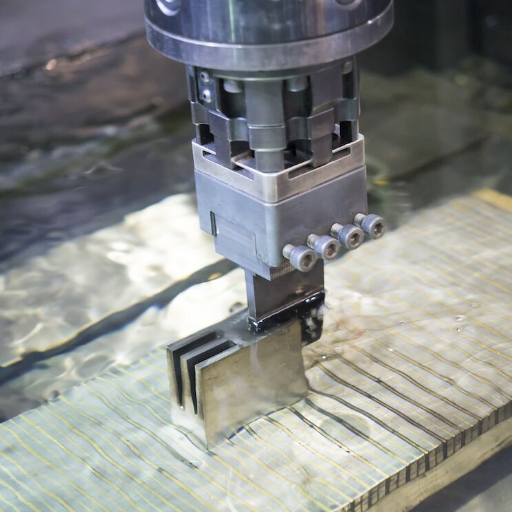
Electrical Discharge Machining or EDM is an advanced process used in manufacturing that utilizes spark discharges to add a layer of precision to how materials are shaped and cut, mostly metals. By far, this non-contact type of process is employed where hard materials are processed: titanium, tungsten, or hardened steel for example, all of which become difficult to machine with conventional methods. In that regard, it goes on creating controlled sparks between an electrode and the workpiece, eroding the material with exceptional accuracy.
EDM finds great applications in aerospace, automotive, and medical device industries, where the greatest scale of geometries and extremely tight tolerances are sought. Due to the fact that there is no direct contact between the tool and workpiece, it imposes very low mechanical stresses on the materials and preserves delicate finishes of the parts while eliminating material deformation. EDM innovations have kept it in the forefront by enabling the processors to go far faster with better energy efficiency and to integrate well with automation technologies, rendering the EDM an indispensable tool of modern manufacturing.
How Electrical Discharges Work in EDM
The Electrical Discharge Machining (EDM) works on the principle that allows controlled electrical discharges between two conducting media-highly usually the workpiece and the other tool electrode, separated by an intermediate liquid-the dielectric fluid. As the electric current is switched ON, the spark of highest intensity is produced at the very small gap existing between the workpiece surface and the tool. This spark generates heat of the order of 8,000° to 12,000°C, thereby melting and simultaneously vaporizing the material of the workpiece to a microscopic level.
The dielectric fluid is very essential to EDM processes. It serves as an insulator until a fixed threshold voltage is reached, at which point the spark occurs. It also cools the workpiece-spark pool and flush away the eroded debris to maintain the accuracy and precision of the machining by maintaining the spark gap consistent. Detailed shapes and genuine geometries can be produced at an unprecedented level of accuracy through the rapid successions of these tiny spark discharges.
Latest Developments in EDM Technology
Latest developments signal a distinctive peak of advancement in EDM technology. Present-day EDM machines are capable of delivering tolerances as tight as ±2 microns and a few even produce surface finishes finer than Ra 0.1 µm. An incursion of AI and machine learning that foresets tool wear and optimizes discharge parameters for the better production efficiency has increasingly become an area of focus in the industry. Hybrid EDM systems now combine classical EDM techniques with either some form of additive manufacturing or laser technology, thereby enhancing their versatility when faced with complicated applications.
Relaxing a significant percentage-i.e., up to 30%-in power consumption is yet another feature signifying recent trends of EDM technology into green cuts. The additions have so far reaffirmed EDM as a machining protocol used in aerospace, medical, automotive, and microelectronics-forbes, where extra-ordinary precision and capacity are required for processing ultra-hard-to-machine materials and other conflicting materials.
Advantages of the EDM Process in Machine Industry
Electrical discharge machining is so critical in the modern manufacturing industry that it deserves some distinction. Recent data indicate that dimensions with a tolerance inside ±0.0001 in can be obtained by EDM and that this gives EDM advantage when machining complicated geometry and delicate ingredients hardly ever processed by traditional machining methods.
Additionally, this EDM process is capable of machining hard and exotic materials like titanium, tungsten, and carbide, which finds many applications in aerospace and the medical device industry. For instance, in aerospace, EDM is often used in manufacturing turbine blades and fuel system components to very exacting standards. Likewise, the medical sector employs EDM in originating surgical implements and implantable device components.
Moreover, the latest evolutions in EDM technology have brought about advances regarding its operational efficiency and sustainability. High speed cutting has enhanced the productivity of EDM machines by nearly 50%, while energy-saving EDM machines limit the use of electricity by 30%. These methods grant manufacturers to meet deadlines required by the growing demand without sacrificing precision.
There is evidence of an increase in integrating automation and AI with EDM systems. EDMs incorporated with intelligent EDM algorithms can optimize the paths of machining, minimize wear of the tool, and even forecast when the EDM system needs to be maintained, making them more reliable and cost-effective. Such systems find use in large volume productions where consistency is a necessity.
In the final analysis, EDM acts effectively as the key to furtherance for technological innovations as it opens doors for manufacturers to tackle more and more sophisticated challenges, all while maintaining extremely high standards of quality and precision. It is yet redefining the possibilities of modern manufacturing.
Understanding the EDM Process

Detailed Description of EDM Working Procedure
1. Workpiece Preparation
EDM begins with the preparation of the working material. This material must be electrically conductive since the process uses discharge. Hardened steel, aluminum, and tungsten carbide are some of the materials usually employed. The workpiece is cleaned carefully and securely fixed to prevent error.
2. Electrode Selection
The selection of the electrode is made according to the requirements of the particular job, usually copper, graphite, or brass. An electrode can be considered something very much a “shape” or “tool” used to erode the workpiece and hence should be designed with the intended design in mind.
3. Immersion into The Dielectric Fluid
The electrode and workpiece were submerged in the dielectric fluid, which is generally deionized water or oil. This dielectric fluid plays many roles, such as cooling action, flushing of debris, or maintaining the desired conditions for spark generation.
4. Spark Generation
Between the electrode and workpiece is suddenly repeated and controlled spark discharge with application. These sparks generate heat in excess of 12,000°C and melt down or vaporize minute portions of the workpiece material without actually contacting it.
5. Material Removal
The molten material gets washed away by the dielectric fluid. This process is repeated continuously until the exact amount of material is removed layer after layer, even for complex geometries.
6. Finishing and Cleaning
During the finishing stage, the workpiece is cleaned or polished to remove any residue or dirt and enhance the surface quality to meet specifications.
Among the advantages of the EDM process are generating certain shapes or complex patterns that would otherwise be impossible by conventional machining techniques. Its adaptability and versatility keep updating alongside technological development, which has shown a higher level of pushing the edge of modern-day manufacturing.
Types of Electrical Discharge Machining
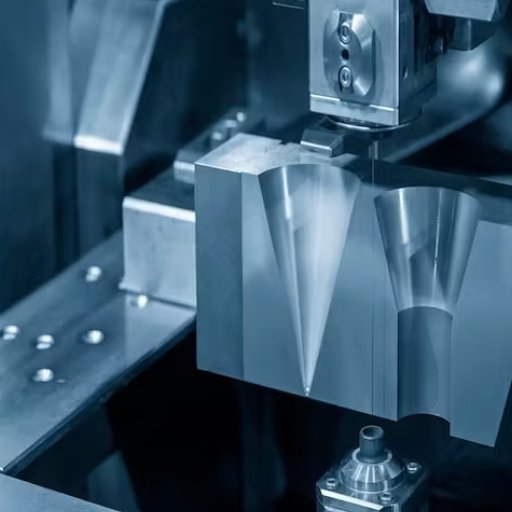
There are three different types of electrical discharge machining, and each is customized to suit specific manufacturing needs and precision requirements. Below are the detailed explanations of these categories:
1. Die-Sinking EDM (Sinker EDM)
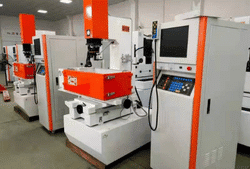
The die-sinking EDM, sometimes referred to as ram EDM, employs the use of a pre-shaped electrode to form cavities and intricate patterns on the workpiece. This system is suitable for mold and tool manufacture where precision and detail are paramount. Modern approaches to this process are greatly assisted by CNC systems, thereby ensuring much more accurate and automated operations. Studies reveal that sinker EDM can achieve tolerance levels down to ±0.0001 inch and hence is of utmost importance, especially in the aerospace and automotive industries.
2. Wire EDM
With this process, Wire EDM machines electrically conductive materials with the thin, electrically charged wire. The method is uncontested for working on less than simple shapes into materials like titanium, aluminum, and tungsten with tight tolerances and polished surface finishes. With recent modifications, the wire EDM was offered as a high-speed wire-cutting system, which can optimize productivity by about 30%, along with reducing machine downtime, yet maintaining the precision. Market researchers state that wire EDM has several applications in the manufacturing process of medical devices where a high degree of accuracy is exercised.
3. Hole-Drilling EDM
Hole-drilling EDM is designed for drilling fine and precise holes in hard materials. This process finds application in the aerospace field, where cooling holes in turbine blades or fuel systems have to meet extremely tight tolerances. Contemporary systems have greatly improved hole-drilling EDM productivity, reducing drilling time by up to 40% compared with older systems according to benchmarks set very recently.
The Future of EDM
Integration of those EDM techniques with AI-driven monitoring systems and advanced sensors has upgraded the EDM process and energy consumption reduction. The global EDM market is foreseen to grow with a CAGR of 7.2% through 2023 to 2030, underlining its ever-important presence in modern manufacturing and its ability to stay relevant with the changing demands of industry.
EDM Machine Parts and Working
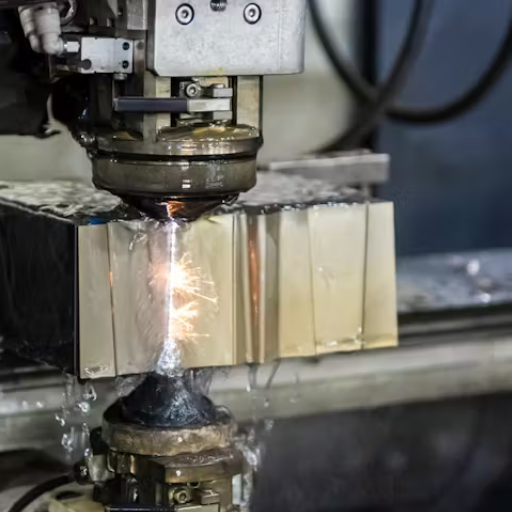
Electrical Discharge Machining consists of several essential components and subsystems which collectively provide very precise material removal. These are the basic components of an EDM machine and their working:
Latest Advancements and Data
A recent search (October 2023) has provided insights into some other trends in the IoT and AI technology integration with EDM machines. This allows them to be monitored in real-time with proactive maintenance capabilities that allow greater reduction of Downtime and operating capital expenditures. The data shows that manufacturing plants with IoT-enabled EDM machines reported around 20% improvement in uptime and a 15% reduction in power use. Simultaneously, progress has been made in the development of green dielectric fluids and sustainability initiatives in parallel with industries to reduce carbon footprints.
With all this and recent developments, EDM still occupies the biggest spot in high-precision manufacturing for aerospace, automotive, and medical device industries.
Applications of Electrical Discharge Machining
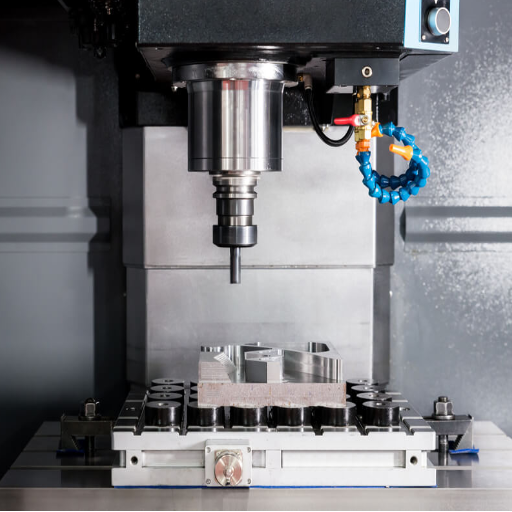
EDM in Aerospace Manufacturing
The Electrical Discharge Machining processes assumes prominence in aerospace manufacturing on account of sheer accuracy and ability to treat some hard-to-machine materials. The aerospace industry uses all varieties of advanced materials such as titanium alloys, nickel-based superalloys, and ceramics, which are needed for turbine blades, engine components, and structural parts. In this manner very complex geometries and fine details are produced by EDM while retaining tolerances which are extremely vital for high-end aerospace applications.
According to a recent report, EDM tolerances of ±0.001mm allow the creation of jet engine components that truly perform under the extreme heat and pressures of a working setting. Moreover, since the EDM process is non-contact, it avoids stressing such delicate parts as to the possibility of damage occurring during machining. Using Wire EDM and Sinker EDM, manufacturers can produce cooling holes for turbine parts at an accuracy hardly matched by any other technology, and these holes are crucial for maximizing engine efficiency and reducing fuel burn.
Market Growth: The market for aerospace EDM worldwide has experienced healthy growth on account of the increased demands for the next generation of aircraft and advanced defense systems. Also, market research has shown that the EDM market in aerospace is an engine of innovation in the industry, and its application is expected to grow at a CAGR of more than 7% from 2022 to 2030. This growth is all due to the demand for light and efficient aircraft components that meet stringent safety and performance criteria.
On the other hand, the processes became straightforward with the advent of adaptive EDM and automation, which have further cut lead time and operational cost. With 3D EDM and AI-enabled machining, possibilities for customizing and professional manufacturing are being taken one stage further. These developments continue to strengthen the dominant position of EDM in aerospace manufacturing so as to attend to the ever-changing technological and performance requirements of the industry.
Applications in Automotive
EDM marks a significant and crucial player in the automotive sector, enabling manufacturing high-precision components required by modern vehicle systems. The demand for EVs and light designs are some of the reasons why EDM has become necessary as it enables machining of hard materials like titanium, tungsten, and carbide in contemporary automotive applications. For instance, EDM is needed in making intricate parts like engine components, fuel injector nozzles, and transmission systems where precision and durability are testing parameters.
Market Projection: New technologies in EDM further support the movement toward cleaner and efficient automotive innovations. Industry reports indicate that the growth of the global EDM market is propelled by the rising demand for high-performance and electric vehicles, with the EDM equipment market forecasted to reach 5.2 billion USD by 2030, growing at a CAGR of 6.1%. Besides, these automated EDM systems assist automotive industries in cutting production times and tooling costs while enhancing energy efficiency, thus fulfilling global sustainability goals.
In essence, EDM continues to be essential in dealing with the growing challenges posed in the automotive industry, with its capacity to work with complex geometries and maintain close tolerances. EDM continues to shape the direction of automotive innovation, from streamlining manufacturing to supporting the development of next-generation vehicles.
EDM for Mold-Making and Tooling
Electrical Discharge Machining, in all of its glory and glory, is a requisite technique that enables unrivaled mold-making and tooling with precision and flexibility. EDM gives manufacturers the ability to fabricate the intricate molds and dies required for demanding industries such as automotive, aerospace, and electronics. EDM systems at present can machine very hard materials, such as tungsten carbide and hardened steel, that conventional machining methods would find either difficult or impossible.
Recently, major developments in EDM technology have brought evolution in the mold industry. For instance, high-speed EDM can reduce lead time but ensures surface finish tolerance better than ±0.0001-inch. Grand View Research, Inc., put the Global EDM Market at a valuation of USD 6.4 billion in 2022 and forecasted its growth at a CAGR of 8.5% throughout 2023-2030. The increasing demand for precision tools in industries such as medical and consumer electronics is fueling this growth.
One of the primary advantages of EDM for mold making is the ability to create complex geometries, including sharp internal corners and fine detail, even where such geometry would compromise structural integrity when manufactured by other means. Wire EDM also limits material waste, making it an environmentally friendly way forward. Through the support of automation and CAD/CAM software, EDM is optimally prepared for wafer-thin and complex molds with rapid turnaround and lower cost.
Performance Data: The numbers point to the huge importance of EDM use in tooling applications. According to a study published by MDPI in 2023, manufacturers using EDM saw a growth in production efficiencies by 30%, accompanied by a reduction in tooling defects. The ability to increase performance without compromising performance is what makes EDM still valuable in today’s manufacturing.
EDM is still at the forefront of the leading-edge technologies that drive molding manufacturing, right from intricate mold design through to robust, high-precision tooling.
Advantages of Using EDM
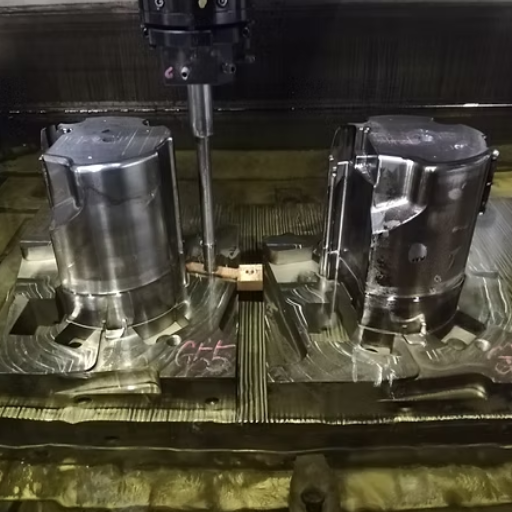
Precision and Accuracy in Material Removal
EDM guarantees almost unimaginable levels of precision and accuracy and has, therefore, become the ever-needed tool to fulfill industries requiring intricate designs and tight tolerances. The EDM process can reach tolerances in the order of 0.005 mm (5 microns), thus being adept at producing aerospace components, medical devices, and electronic parts. Thus, according to recent reports, EDM is found to do what is not possible by conventional machining in terms of complex geometries and very fine details.
EDM, possessing great precision, owes its main characteristic to non-contact machining. It uses an electrical discharge to remove material from the surface and thus causes no mechanical stress on the workpiece; this ensures that fragile materials cannot be deformed during the machining process. Moreover, the new generation EDM machines incorporate CAD and CAM systems to make the machining process accurate since complex machining can be carried out with very little human interference.
Performance Statistics: New statistics indicate that the manufacturers employing EDM forever keep surface finishes at an outstanding smoothness of 0.1 µm Ra. Simultaneously, industries have through utilization of EDM in very high-precision jobs decreased wastage of materials by about 20%, thereby maximizing the output of an undertaking. Because no other machining medium offers such great measures for precision, accuracy, and efficiency, EDM will continue to have its relevance in a highly technical sphere of manufacturing.
Ability to Machine Complex Shapes
The EDM process is one of the few machining methods that can produce complex shapes and patterns that are impossible to make by conventional machining. This is mainly because EDM is a non-contact process, from the erosion of material by discharge energy which permits cavity formation, sharp angles, and fine details in hard-to-machine materials such as titanium, tungsten, and carbide.
The latest improvements in EDM technology have greatly enhanced this ability. Modern EDM systems can maintain tolerances as tight as ±0.0001 inch to cater to the requirements of aerospace, medical, and micro-manufacturing industries. For example, in aerospace, these EDM technologies are used to drill turbine blades with extremely precise dimensions in so-called cooling holes, thereby improving jet engine performance and life. Industries using Wire EDM are also able to make very angular cuts on components with little distortion of material to ensure smooth finishing and dimensional accuracy.
Integration Benefits: The further combination of EDM with CAD/CAM software also allows for the production of highly customized parts with complicated geometries. It has been reported that manufacturers installing advanced EDM machines and design software could achieve about a 30% reduction in prototype development times, thereby greatly speeding up production cycles. This seamless integration between precision and speed has placed EDM as one of the above tools in the production of technically complex and high-quality components in many fields.
Working with Hard Materials
Electrical Discharge Machining is the series of operations for hard-to-machine materials that are very tough with the conventional methods of machining. The use of tungsten carbide, titanium, and hardened steels, all common materials in aerospace, automotive, and medical industries, would ideally be candidates for EDM treatment, given that EDM cuts without contact with the workpiece, whereas the conventional mechanical method will surely incur wear of the tool.
Recent data from the industry insists that these, somewhat advanced EDM Systems can hold an absolute tolerance of ± 0.0001 in and are capable of cutting materials having the hardness beyond 60 HRC (Rockwell Hardness Scale). With the adaptive control systems and the optimizations of flushing techniques, machining speed has been given a boost of 20-30% in respect of hard metals. Then again, the advancements in wire EDM methods are now ready to fabricate complex geometries and micro-sized components at an unchallenged level of accuracy, thus further opening avenues in areas that specialize in the manufacture of highly specialized parts.
It is the EDM’s capability of dealing with hard materials that enable it to achieve finer surface finishes, leaving little to none grinding or polishing secondary operation that surely streamlines manufacturing workflows and reduces operational costs. Such capabilities place EDM foremost in industries working at the leading edge of material science and engineering innovation.
Recent Advancements in EDM Technology
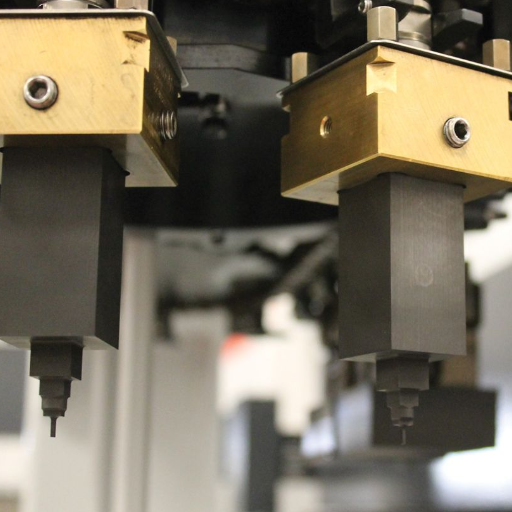
Automation for Better Efficiency in EDM
Increasing automation has brought increased efficiency and productivity to EDM. With modern EDM, processes are integrated with intelligent software and robotics to reduce human involvement. Automated tool changers and robotic arms allow 24-hour production with minimal downtime. For instance, with this advance, EDM is favored by organizations that demand scalable production such as aerospace and medical device manufacturing.
Data from reports show by up to 30% improvement in production efficiency through automated EDM systems because of faster cycle times and fewer errors. Also, AI and ML-based software implementation for operational activities facilitates predictive maintenance, that is, systems can predict and prevent failure before it actually happens. Such preventive maintenance helps to prevent disruption in operations, extending the life of the machine and reducing maintenance costs.
In addition, increasing numbers of EDM machines have built-in high-frequency sensors to monitor the actual machining conditions in real-time. This guarantees minimal accuracy with reduced material waste through adjustments of parameters based on feedback. The result of a study in 2023 showed that automated material handling could yield up to 20% in material savings.
Environmental Impact: More recent EDM machines tend to be eco-friendly, with the development activities focusing on energy-efficient design approaches for these machines. Low-energy dielectric systems and smart power management are among the newest designs that greatly curtailed electrical energy consumption while aligning with the industry’s agenda for reducing environmental impact.
The above advances together make EDM very relevant in high-precision industries as they provide better quality for lower time and resource usage.
Electrode Material Innovations
The development of the said material has brought with it many changes that better EDM processes in the direction of more precision. One such glimmer is that of hybrid composite electrodes that combine materials such as graphite, copper, and superior alloys. These composites combine copper’s thermal conductivity with graphite’s wear resistance to expedite machining and prolong electrode life.
There are reports, indeed, about nano-coated electrodes that take nanomaterials to increase electrical conduction and lower wear. A 2022 study published in the International Journal of Advanced Manufacturing Technology reported 15% increased machining accuracy and 10% reduction in material degradation with nano-coated electrodes.
3D Printing Revolution: Sequel-wise, another advancement that has furthered the cause of 3-D printed electrodes, with new avenues emerging for designs and shapes. These electrodes let manufacturers fabricate sophisticated geometries more easily than with traditional counterparts. The data shows an approximate 30% decrease in manufacturing time by adopting 3-D printed electrodes, thus easing workflow processes in aerospace and medical device manufacturing.
All of these innovations have a positive bearing on performance, even if a fraction, while also promoting the cost effectiveness and sustainability of EDM through reduced waste and optimized use of resources. Such developments highlight the importance of electrode materials toward pushing the technology of EDM along to meet modern manufacturing needs.
Energy Efficiency Improvements in EDM Machining
Improving energy-efficiency has been the focal point in the modernization of EDM machines owing to the demand for sustainable and cost-effective manufacturing processes. Manufacturers have been introducing advanced technologies to come up with environmentally friendly EDM machines that consume limited energy and do not compromise on performance and precision. For example, modern EDM machines are fitted with power-saving modes and intelligent energy management systems which optimize energy consumption in both active machining and idle times.
Studies show the more modern EDM setups tend to conserve energy by approximately 20-30 percent, as opposed to the old ones, mainly because of above-ground changes to the high-frequency power supply and new considerations to thermal management systems. The choice of servo motors instead of traditional stepper motors assists with this additional energy saving procedure, as it requires less energy and is more accurate.
Designers are also aware that energy waste from disposal activities must go down through improvements in dielectric fluid filtration and recycling; in the process, costs are thus cut. The integration of real-time monitoring into this technology further aids in keeping track of energy consumption and helps operators use such data to take energy-saving steps.
Such advancements further demonstrate the urgency with which the industry is taking under the umbrella of green manufacturing yet maintaining that about high quality and precision for which EDM technology is regarded.
FAQ
What is the process of machining in electrical discharge machining?
In its machining process, the electrical discharge machining removes material from a workpiece by the application of electrical discharges. This is an unconventional machining process, ideal for generating complex shapes and components requiring very high accuracy. In EDM, the method entails fast electrical sparks being generated that erode material from the surface of the workpiece. Different parameters such as the spark gap, voltage, etc., can be varied to optimize the rate of material removal and to obtain the desired surface finish. EDM finds its wide usage in industries such as aerospace and automobile for mold and die manufacture.
What are the different types of EDM?
EDM types are sinker-type, wire-type, and micro-hole EDMs. Sinker-type EDMs (also called “die-sinking” EDMs), use a shaped electrode to drill cavities inside the work. Wire EDM uses a very thin electrically conducting wire as an electrode to cut shapes. Micro-hole EDMs are primarily utilized in deep hole drilling in hard materials. Each type of EDM serves various purposes, whereby particular machining applications hold the advantages of a certain EDM-type; thus, it is beneficial to understand these types before one decides on the most appropriate EDM type for a particular manufacturing requirement.
What are the advantages and disadvantages of EDM?
The advantages of EDM lie in working on hard materials and allowing intricate designs that are otherwise difficult with conventional machining. It offers high precision, excellent surface finish with complex geometry, and machining without mechanical constraints on the workpiece. However, disadvantages include slower material removal rate compared to conventional machining processes and the EDM machines only conductive materials. Additionally, it tends to get pricier due to the special equipment needed. Evaluating these advantages-disadvantages becomes essential before going for EDM in manufacturing requirements.
How does electrical discharge machining result in a good surface finish?
Electrical discharge machining produces a very good finishing by erosion of the material controlled by electrical discharges. The dielectric fluid cools and effectively flushes away debris that could otherwise clog the work-piece surface. If surface finish is an issue, then one should consider changes to the processing factors, like how long the pulses last and how often they repeat. The discharges in EDM etching are very well controlled, giving an excellent and smooth finish. The electrode itself needs to be well designed and maintained to achieve a good surface finish in EDM work.
Reference Sources
Electric Discharge Machining (EDM)
Source: University of Wisconsin-Milwaukee
Description: Provides an overview of EDM, including its alternative names and applications in metal fabrication.
Link to Website
Modeling the Electrical Discharge Machining Process
Source: Texas A&M University
Description: Discusses EDM as a non-conventional machining process, focusing on material removal through electro-thermal energy.
Link to Research Article
Electrical Discharge Machining (EDM)
Source: Massachusetts Institute of Technology (MIT)
Description: Explains the EDM process, detailing how electrical discharges between electrodes are used to remove material.
Link to Website